Learn What Is Impacted Tooth: Your Guide in Fair Lawn
Discover what is impacted tooth, its causes, symptoms, and treatment options at our Fair Lawn, NJ clinic. Get expert care today.
Discover what is impacted tooth, its causes, symptoms, and treatment options at our Fair Lawn, NJ clinic. Get expert care today.
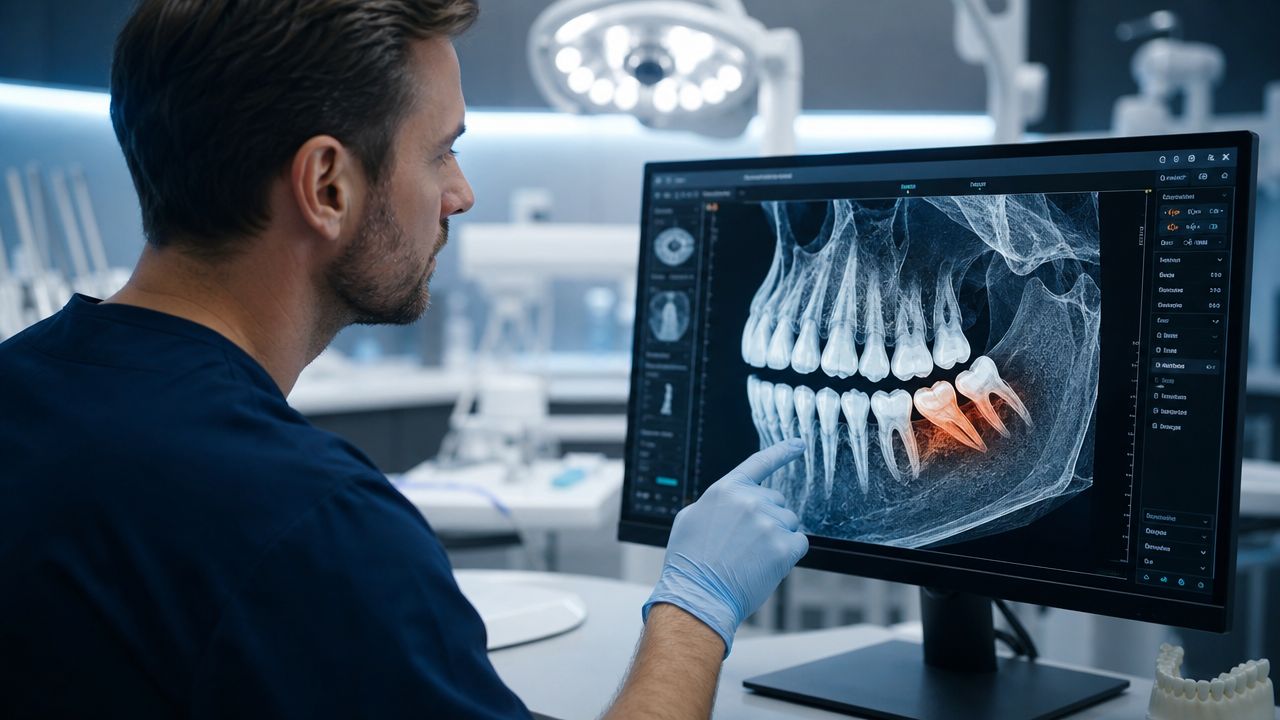
If you're feeling a dull ache in the back of your jaw, noticing gum tenderness that won't settle down, or hearing during a routine exam that a tooth is “impacted,” it's normal to feel uneasy. Many patients in Fair Lawn first learn about an impacted tooth when they expected a simple cleaning and exam, not a conversation about oral surgery, tooth extraction, or dental X-rays.
The good news is that an impacted tooth is a common dental problem, especially when wisdom teeth are involved. It can often be found early, understood clearly, and treated in a way that protects your comfort and long-term oral health. For families and adults looking for a dentist in Fair Lawn, NJ, knowing what this term means can take away a lot of the fear.
A common Fair Lawn appointment starts with a simple concern. A teenager comes in before the school year because the back of the jaw feels sore. An adult schedules a visit for pressure near the molars that comes and goes. Then the exam and X-rays show the underlying issue. A tooth is not coming in the way it should.

That is often the first time someone hears the term impacted tooth. The name sounds technical, but the idea is straightforward. The tooth is blocked and cannot fully move into its normal position. In many cases, the tooth involved is a wisdom tooth. According to Cleveland Clinic's summary of impacted teeth, the American Association of Orthodontists reports that nearly 85% of people will have a wisdom tooth extracted during their lifetime.
Hearing that can still feel unsettling.
Common questions include:
An impacted tooth works a bit like a door that cannot open because something is blocking the frame. The tooth is there. It is trying to follow its normal path. Bone, gum tissue, or another tooth gets in the way.
Practical rule: An impacted tooth may not be an emergency today, but it does deserve a clear diagnosis.
For people in Fair Lawn, the first need is usually reassurance through explanation. Our goal at Dental Professionals of Fair Lawn is to help patients in Fair Lawn and nearby communities understand what the tooth is doing now, what risks matter, and what kind of relief makes sense. That clarity matters whether you came in for a routine exam or because the back of your mouth suddenly started hurting.
If you have been told a tooth may be impacted, asking questions is the right response. It means you are catching a problem that dentists see regularly and can treat with a step-by-step plan.
Patients in Fair Lawn often hear the term during an exam and immediately want a clearer answer. What is impacted tooth supposed to mean?
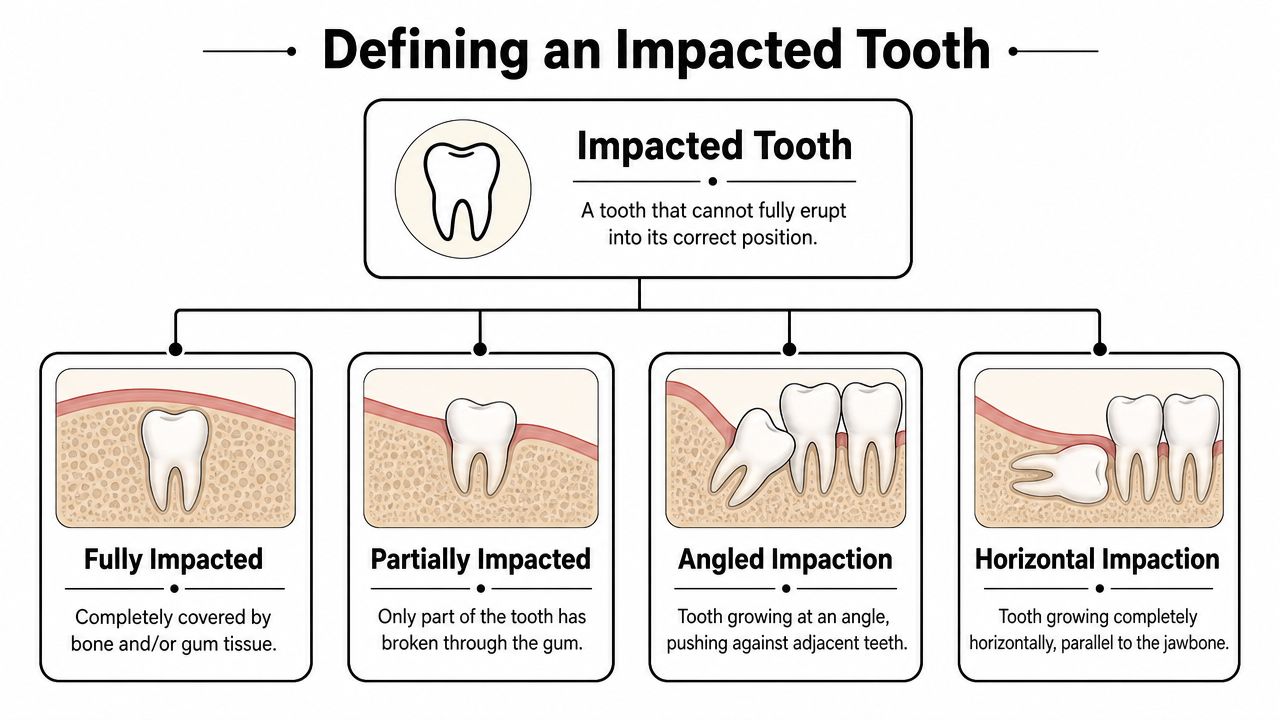
An impacted tooth is a tooth that cannot come fully into its normal position because gum tissue, bone, or another tooth is blocking the way. The tooth is present and developing. It just does not have a clear path to erupt the way it should.
That can sound technical, so it helps to translate it into everyday terms. A tooth normally follows an eruption path, almost like a train following its track into the station. If the track is blocked or the angle is off, the tooth may stop short, come in only partway, or stay trapped under the gums or bone.
Dentists usually describe an impacted tooth in two ways. First, we look at how much of the tooth has come through. Then we look at which direction the tooth is pointing.
| Type | What it means in plain English |
|---|---|
| Soft tissue impaction | The tooth has come in partly, but gum tissue still covers part of it. |
| Partial bony impaction | Part of the tooth is visible, but some of it remains stuck in the jawbone. |
| Full bony impaction | The tooth is fully enclosed in bone and has not erupted into the mouth. |
Direction matters too. A tooth may lean forward into the tooth beside it, tip backward, or sit almost sideways. That is why patients sometimes hear words like angled, mesial, distal, or horizontal. Those terms do not describe a separate disease. They describe the tooth's position, which helps us judge whether it may stay stable, irritate nearby tissue, or damage the tooth next to it.
Wisdom teeth are the teeth patients hear about most often because they erupt last and often have the least room. If you are already wondering whether your back tooth symptoms match this pattern, our guide to signs you need your wisdom teeth removed can help you compare what you are feeling with what dentists commonly see.
Other teeth can be impacted too, especially canines. That matters because canines help guide your bite and support the shape of your smile. An impacted front tooth raises different concerns than an impacted wisdom tooth, so the name of the tooth is part of the diagnosis.
Some impacted teeth stay completely hidden. Others break through only halfway, which creates a small pocket where food and bacteria collect easily.
That partial eruption is one reason patients sometimes say, “It feels like the tooth is coming in, but it never finishes.”
The type of impaction helps shape the next step. A tooth covered mostly by gum tissue may call for a different approach than one buried deep in bone. A wisdom tooth in the back may be managed differently from a canine that plays an important role in your bite.
At Dental Professionals of Fair Lawn, careful imaging and a local, patient-focused plan make a difference. We explain what kind of impaction you have, whether the position is likely to create trouble, and what treatment options make sense for your schedule, symptoms, and goals here in Fair Lawn.
Most impacted teeth don't happen because someone did something wrong. Usually, it comes down to how the tooth is developing, how much room is available, and whether something physically blocks the path.
The major causes include overcrowding, an incorrect eruption angle, and obstructions in the eruption path, according to the American Association of Orthodontists' explanation of what causes an impacted tooth. In everyday terms, the jaw may not have enough room, the tooth may aim in the wrong direction, or another structure may be in the way.
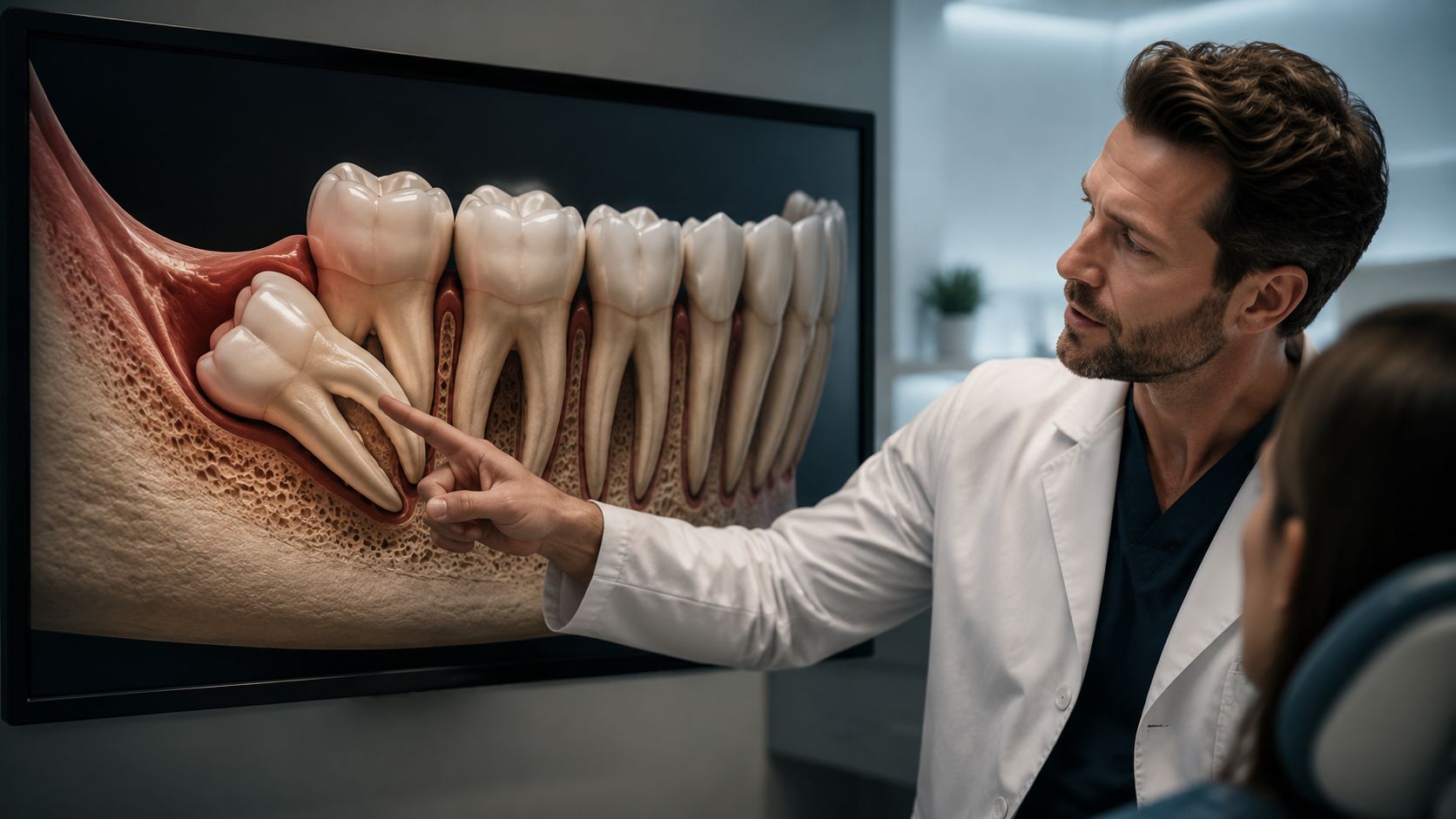
A few patterns show up often:
This is one reason preventive dental care matters. A patient may feel fine, while the tooth progresses toward trouble unnoticed.
This confuses people all the time. They assume that no pain means no problem. With impacted teeth, that isn't always true.
Some are discovered only during routine dental X-rays at a checkup. Others don't become noticeable until the surrounding gum gets inflamed, bacteria collect around a partially erupted area, or pressure builds against a neighboring tooth.
If you want a fuller look at when wisdom teeth become more than a watch-and-wait issue, our guide on signs you need your wisdom teeth removed can help you compare what you're feeling with common warning signs.
When an impacted tooth does cause trouble, patients often describe one or more of these:
If a back tooth area keeps getting irritated, don't assume it's just “one of those things.” A partially erupted tooth can create a pocket where plaque and bacteria collect.
That matters because impacted teeth can be linked with pain, swelling, infection, and plaque trapping, which can increase the risk of decay and gum disease on nearby teeth. Sometimes the symptom is obvious. Sometimes it's just recurring irritation that never quite settles.
Relief starts with a clear answer. Is the tooth impacted, meaning something is blocking its path, or is it just erupting later than expected?
That difference guides treatment. A blocked tooth often needs active care. A delayed tooth may only need watchful follow-up.
An impacted tooth is not just a tooth that is taking its time. Clinical literature describes true impaction as failure to erupt because of a physical barrier or an abnormal eruption path, which differs from primary or secondary retention, as explained in this review on the diagnosis of impacted and retained teeth.
That is why imaging matters.
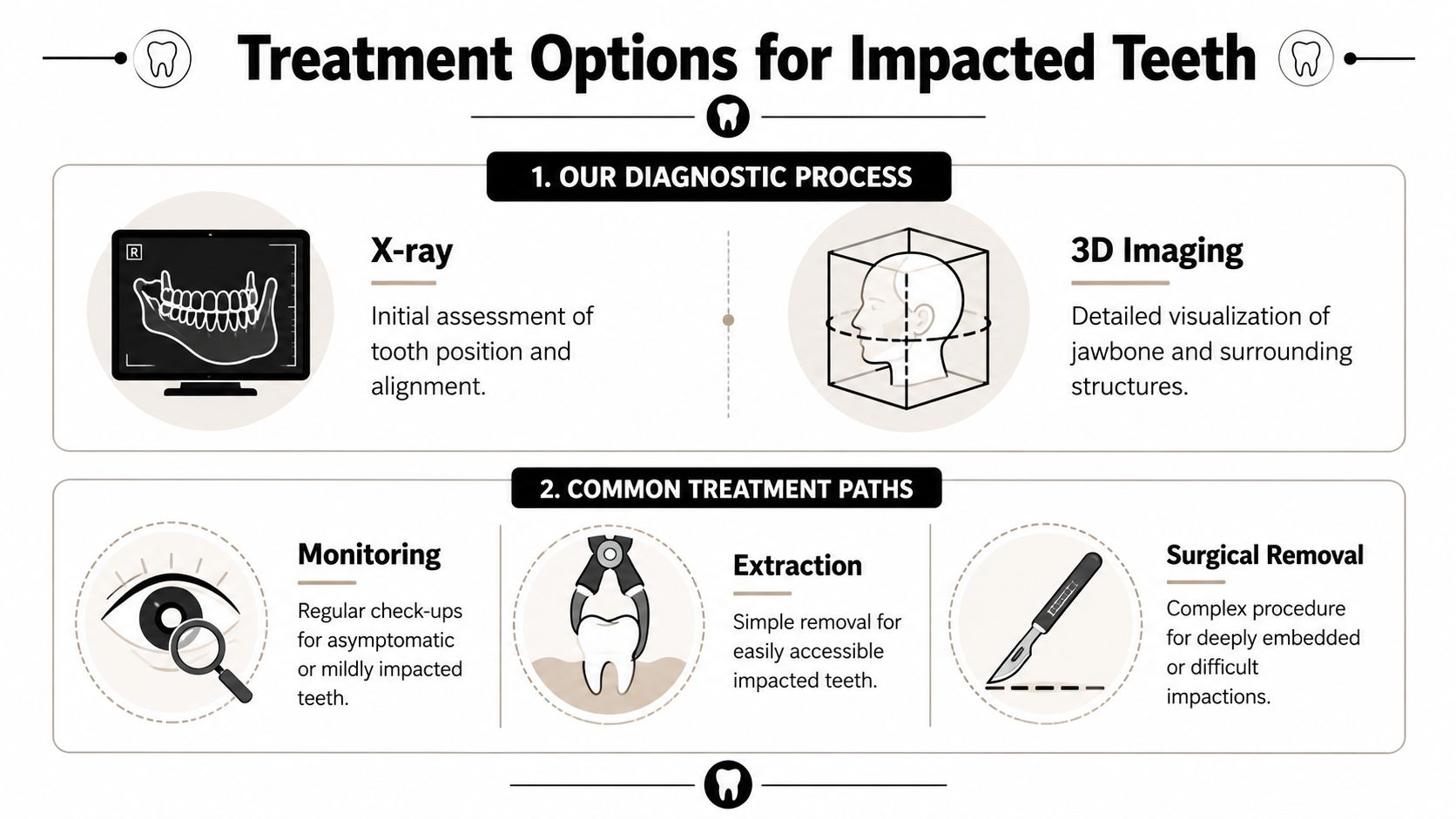
A clinical exam and digital dental X-rays usually show whether the tooth is pressing against bone, gum tissue, or a neighboring tooth. In some cases, a 3D scan gives a more detailed map, especially when the tooth sits close to nerves, sinuses, or the roots of nearby teeth. It works like checking both the street view and the full map before deciding the safest route.
The right plan depends on the tooth involved, your symptoms, and whether nearby teeth and gums are at risk. At Dental Professionals of Fair Lawn, care may include monitoring, extraction, or coordinated surgical and orthodontic treatment, based on what the exam shows.
If an impacted tooth is quiet and does not appear to be harming nearby structures, periodic monitoring may be the best next step. That usually means scheduled exams and follow-up imaging.
Monitoring is active care. You are not waiting and hoping. You are checking for specific changes, such as shifting position, pressure on another tooth, or signs of inflammation.
If a wisdom tooth is causing pain, repeated swelling, food trapping, or infection risk, removal is often the most direct way to stop the cycle. For many Fair Lawn area patients, this is the point where daily irritation starts to make sense. The tooth is not failing to settle down on its own because it does not have enough room to function normally.
If your dentist determines removal is the best choice, our oral surgery and tooth extraction care in Fair Lawn explains how that process is planned and performed.
Dental Professionals of Fair Lawn also provides digital imaging, oral surgery planning, and sedation dentistry for patients who feel nervous about treatment. For someone in Fair Lawn, Ridgewood, or Glen Rock, that means care can be explained and arranged close to home, without adding more stress to an already uncomfortable problem.
Some impacted teeth, especially canines, are too important to remove without careful thought. They help support your bite and the appearance of your smile. In those cases, treatment may involve uncovering the tooth and then guiding it into place with orthodontic care.
This approach takes more coordination, but it can preserve a tooth that plays an important role in long-term function.
A simple way to view the decision is to match the condition of the tooth to the goal of treatment.
| Situation | Likely direction |
|---|---|
| No symptoms and low risk | Observation with periodic imaging |
| Pain, swelling, infection, or damage risk | Removal is often considered |
| Important tooth for function or alignment | Surgical exposure and orthodontic guidance may be considered |
Many patients feel calmer once they understand there is a process. First, identify exactly what the tooth is doing. Then choose the least invasive treatment that still protects your comfort, nearby teeth, and long-term oral health.
Clear communication helps with that. For patients interested in how better dental communication improves the experience, these Hyperleap AI insights on patient communication offer useful background.
Individuals looking for a dentist near me, cosmetic dentist near me, or emergency dentist, are often trying to solve two problems at once. They want treatment, and they want to feel comfortable with the team providing it.
A visit for a possible impacted tooth should feel clear and calm, not rushed. That matters because many patients arrive already worried that they'll be told they need immediate surgery before they even understand the issue.

The appointment generally begins with a conversation about what you've noticed. Maybe it's back tooth pressure, swelling, a tooth that never came in, or a concern raised at a prior exam. From there, the team reviews your history and takes the needed digital imaging to see what the eye alone can't see.
After that, the findings are explained in plain language. You should leave understanding where the tooth is, why it's a problem or not a problem yet, and what your options are.
For patients who want a little background on how strong communication improves the dental experience, these Hyperleap AI insights on patient communication offer a useful overview of what respectful, understandable care should feel like.
People tend to relax when they know the appointment won't be a sales conversation. A good consultation gives you space to ask practical questions.
Patients considering extraction can also learn more about the surgical side of care in this page on oral surgery and extraction services.
A strong dental visit leaves you with a plan you understand, not just a diagnosis you're worried about.
Families in Fair Lawn, Ridgewood, and Glen Rock often need more than a one-time answer. A teenager may need monitoring. An adult may need a tooth extraction followed by restorative care. Another patient may want to talk about Invisalign, cosmetic dentistry, or long-term replacement options such as dental implants if another missing tooth is part of the bigger picture.
That's why the visit should feel coordinated. The goal isn't only to address one impacted tooth. It's to support your overall mouth health and comfort from the first appointment forward.
A few questions come up in nearly every consultation. Straight answers help patients feel more prepared and less overwhelmed.
Sometimes nothing changes for a while. In other cases, the tooth can contribute to pain, swelling, infection, or hard-to-clean areas that affect nearby teeth and gums. Partially erupted teeth can be especially frustrating because they tend to trap bacteria under the gum tissue.
The safest approach is evaluation, not guessing. If the tooth is quiet and low-risk, monitoring may be enough. If it's threatening your oral health, your dentist may recommend treatment before symptoms get worse.
No. Some impacted teeth are monitored over time. Others are removed because they're causing active symptoms or creating a clear future risk. The answer depends on the type of tooth, its position, and what it's doing to the surrounding area.
This is why imaging matters so much. The treatment plan should fit the tooth, not just the label.
Recovery varies from person to person and depends on how the tooth is positioned and how involved the procedure is. Many patients do well when they follow post-operative instructions closely, rest, and keep the area clean as directed.
The most important thing is to understand your aftercare plan before treatment. Patients usually feel more confident when they know what swelling, soreness, and eating restrictions to expect.
Coverage depends on your dental plan, the tooth involved, and the treatment recommended. Exams, dental X-rays, and extraction-related services may be handled differently depending on your benefits.
The practical step is to ask for a benefits review before treatment begins. That way, you understand both the clinical plan and the financial side of care.
Call promptly if you have worsening pain, swelling, signs of infection, or trouble opening your mouth comfortably. Those symptoms deserve timely attention, especially around the back molars.
If you're in Fair Lawn and you're tired of wondering whether that back tooth pain is serious, getting examined is the fastest way to replace uncertainty with a real plan.
If you have questions about an impacted tooth, jaw pain, wisdom teeth, or whether you may need a tooth extraction, schedule a consultation with Dental Professionals of Fair Lawn. Patients in Fair Lawn, Ridgewood, and Glen Rock can get clear answers, thoughtful imaging, and a treatment plan built around comfort, function, and long-term oral health.