Oral Surgery Extraction in Fair Lawn, NJ: A Patient Guide
Need an oral surgery extraction in Fair Lawn, NJ? Our patient guide covers types, recovery, and sedation options at Dental Professionals of Fair Lawn. Call us.
Need an oral surgery extraction in Fair Lawn, NJ? Our patient guide covers types, recovery, and sedation options at Dental Professionals of Fair Lawn. Call us.
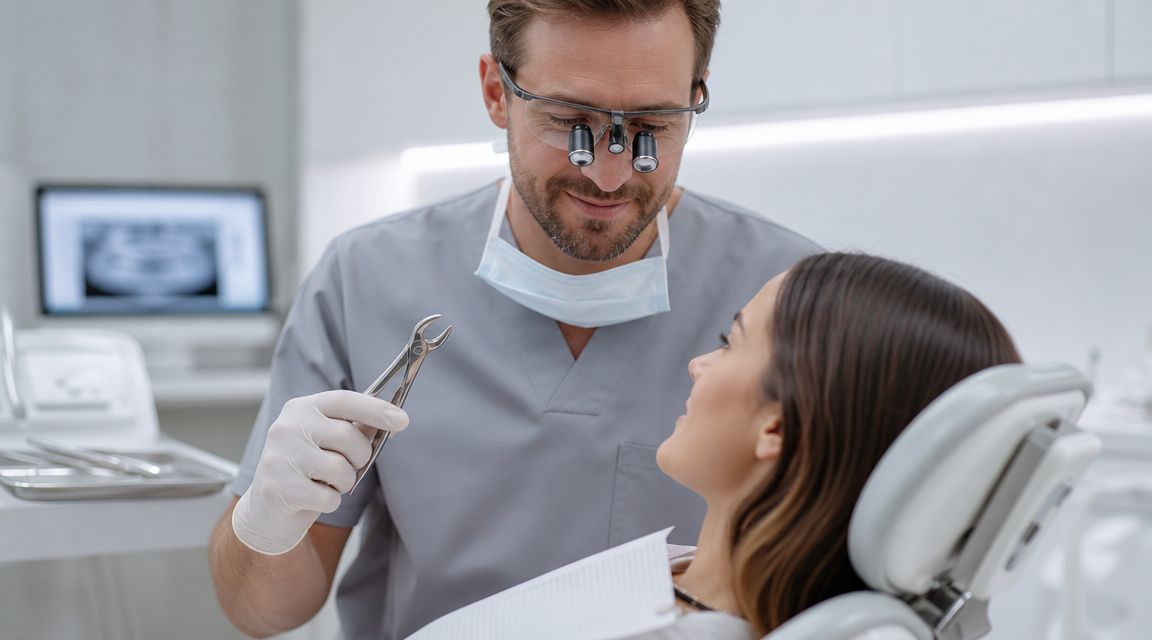
If you're reading this with a sore tooth, a swollen gum, or a referral slip in your hand, you're probably not looking for theory. You want to know what happens next, whether an extraction will hurt, and who you can trust to make the process feel manageable.
I'm Dr. Bardash, and I want you to know something right away. Needing an oral surgery extraction is common, and it doesn't mean you've done anything wrong. It usually means your mouth needs help getting out of pain, preventing infection, or making room for healthier treatment ahead.
It is 8 a.m., and a patient walks into our Fair Lawn office after a long, restless night with a broken tooth and a lot of worry. What they usually need first is not a lecture. They need a calm explanation of what oral surgery really involves, what their options are, and how we will keep them comfortable from start to finish.
At Dental Professionals of Fair Lawn, oral surgery is approached the way it should be. Carefully, clearly, and with respect for the person in the chair. For many patients in Fair Lawn, Ridgewood, and Glen Rock, the biggest relief comes from learning that an extraction is often a controlled, routine procedure supported by local anesthesia, digital imaging, and a team that talks you through each step instead of leaving you guessing.

Oral surgery extraction is one of the routine procedures dentists perform to protect overall oral health. Researchers reporting in Frontiers in Dental Medicine found that about 80% of privately insured adults had at least one tooth extraction by age 25, and roughly half had at least one wisdom tooth extraction by age 25 in a large dental claims dataset.
Fear often grows in silence. Once a patient understands that an extraction is a familiar part of dentistry, the procedure usually feels less mysterious and more manageable.
You do not have to force yourself through it. You need clear answers, good anesthesia, and a dentist who takes your comfort seriously.
Patients in our area often come in with one main concern. They want to know whether the tooth can be saved, whether removal is the safest choice, and what life looks like after the procedure.
In our practice, that conversation is never rushed. We review imaging, explain what we see in plain language, and discuss where the tooth sits, how easy it is to access, and whether sedation would make the experience easier for you. You can learn more about our approach on our oral surgery services page.
One way to look at it is this. Removing a damaged tooth is often like taking out a splinter that has gone too deep. Leaving it in place can keep the area irritated, infected, or painful. Removing it carefully creates space for healing and for the next phase of treatment, whether that means preserving nearby teeth, planning a replacement, or helping you get comfortable again.
Patients who want another plain-language overview can also review this outside resource on Wilmington DE dental extractions.
A tooth is usually removed only after your dentist determines that keeping it would create a bigger problem. That problem might be pain today, or it might be a risk that grows subtly over time, such as infection, bone loss, or damage to nearby teeth.
In adults, the most common reasons are advanced decay and gum disease. A systematic review found that caries accounted for 36.0% to 55.3% of extractions across studies, while periodontitis accounted for 24.8% to 38.1% (PMC systematic review). In plain terms, when a tooth is too damaged or too unstable to function safely, removing it can protect the rest of your mouth.
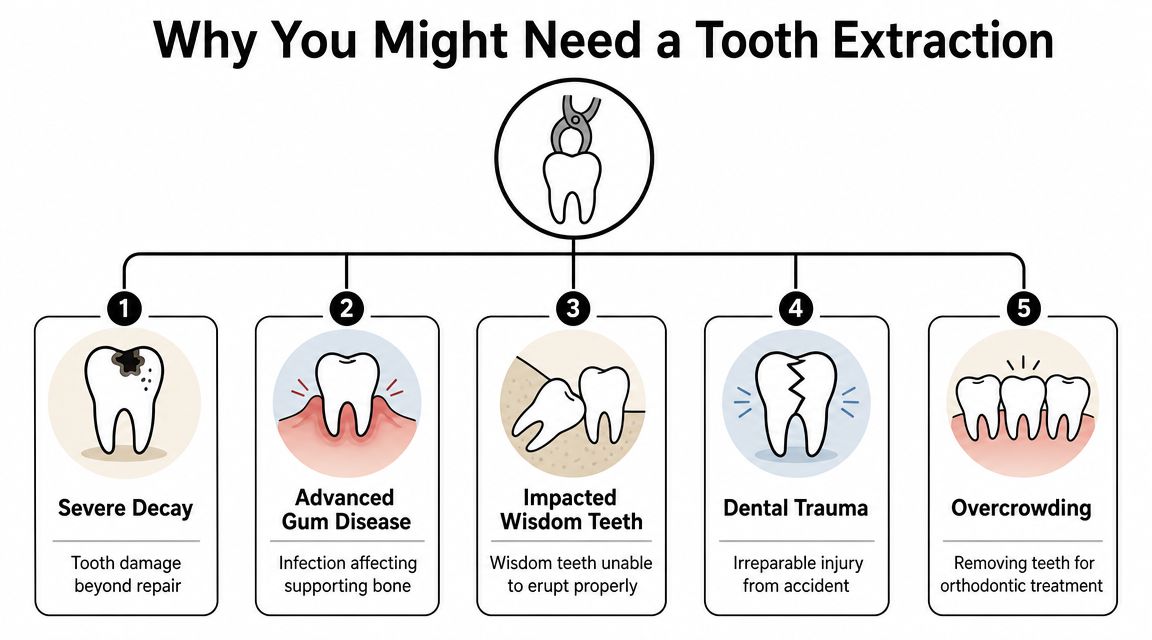
Here are the situations I explain most often in the chair:
Not every tooth that needs extraction hurts all the time. Some warning signs are obvious. Others are subtle.
You may need prompt evaluation if you notice:
If the problem is sudden, this can also fall under emergency dental care. In those cases, our first goal is simple. Relieve pain, identify the source, and decide whether the tooth can be treated or should be removed.
Practical rule: Extraction isn't the first choice when a tooth can be predictably saved. It becomes the right choice when leaving the tooth in place puts your comfort, neighboring teeth, or oral health at risk.
Patients often assume a "surgical" extraction means the tooth is dangerous or that something has gone wrong. That's not what the term means. The actual difference is technique.
According to the American Dental Association, a simple extraction (D7140) is used for an erupted tooth or exposed root removed by elevation and forceps, while a surgical extraction (D7210) is used when bone removal and or tooth sectioning is required to remove the tooth (ADA CDT guide).
A simple extraction is usually possible when the tooth crown is visible and accessible. The dentist can loosen the tooth and remove it without cutting bone.
This often applies to:
A surgical extraction is used when access is limited or the shape of the roots makes standard removal unrealistic. Sometimes the gum is opened. Sometimes a small amount of bone is removed. Sometimes the tooth is sectioned into parts so it can be taken out with less stress on the surrounding area.
This often applies to:
| Aspect | Simple Extraction | Surgical Extraction |
|---|---|---|
| Tooth position | Usually erupted and accessible | May be impacted, broken, or hard to access |
| Primary method | Elevation and forceps | Flap access, bone removal, and or sectioning |
| Tissue involvement | Less tissue manipulation | More tissue management |
| Typical planning | Often straightforward | Usually requires more detailed planning |
| Recovery needs | Often simpler aftercare | May involve more swelling and closer follow-up |
| Patient expectation | Tooth is loosened and removed directly | Tooth may be uncovered or removed in pieces |
A patient might hear "surgical" and think "major operation." In dentistry, it often just means the tooth can't come out safely with forceps alone. The plan is still controlled, local, and focused on minimizing trauma.
The day of your procedure should feel organized, not mysterious. Patients usually relax once they know the sequence.
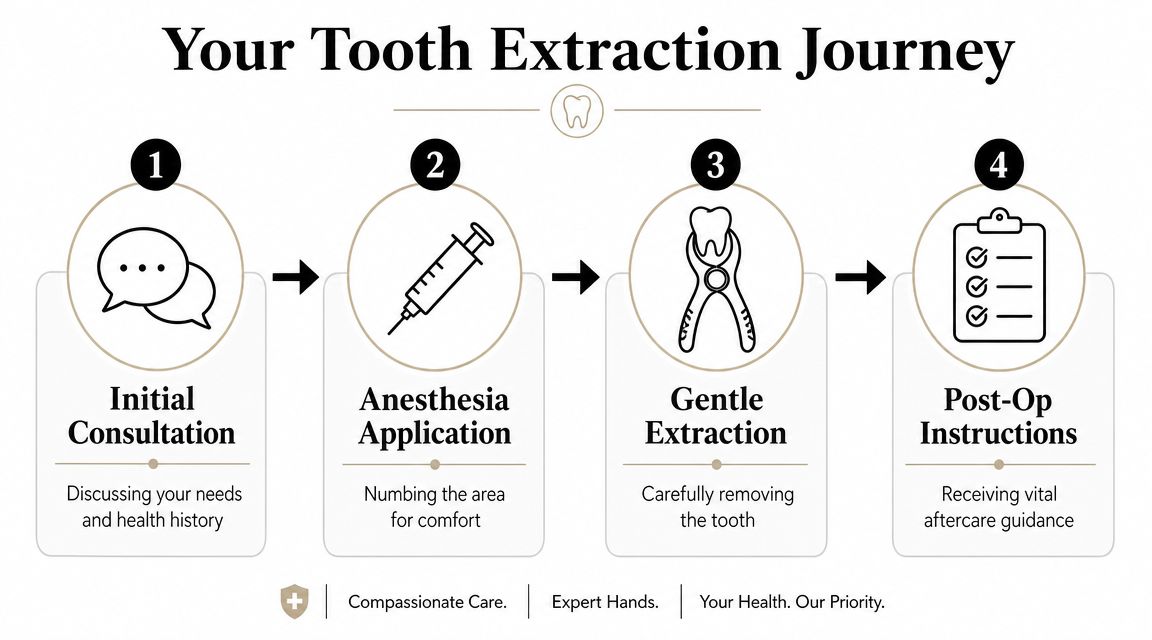
We begin with a review of your symptoms, health history, medications, and imaging. If you're nervous, say so. That isn't a side note. It affects how we pace the visit, explain each step, and discuss anesthesia or sedation options.
You'll then receive local anesthesia so the area becomes numb. You may feel pressure during the procedure, but you shouldn't feel sharp pain. If something doesn't feel right, we stop and address it.
A successful extraction relies on control, not brute force. StatPearls explains that low-trauma extraction depends on specific instrument positioning and measured movements that sever the ligament and expand the socket before the tooth is delivered (NCBI StatPearls on exodontia).
That principle matters to patients because it changes the whole feel of the procedure. We don't "pull hard." We loosen the tooth in a planned sequence so the surrounding bone and tissue are treated as gently as possible.
From your perspective, it often appears as follows:
The quiet part patients don't see is the decision-making. Every movement is chosen to protect the bone, gum tissue, and neighboring teeth.
Once the tooth is out, we'll place gauze and review aftercare in plain language. If the extraction was more involved, stitches may be used. You'll leave with instructions on bleeding control, eating, cleaning the area, and what symptoms should prompt a call.
Many patients ask wisdom tooth questions before they commit. For a general outside reference that answers some of those concerns in patient-friendly language, Newtown Dental's wisdom teeth resources can help you compare what you've heard elsewhere with what we discuss in our Fair Lawn office.
For some patients, the hardest part isn't the extraction. It's the days of worrying beforehand. They dread the sounds, the numb feeling, the loss of control, or being in a dental chair.
That fear is real, and it deserves treatment too.
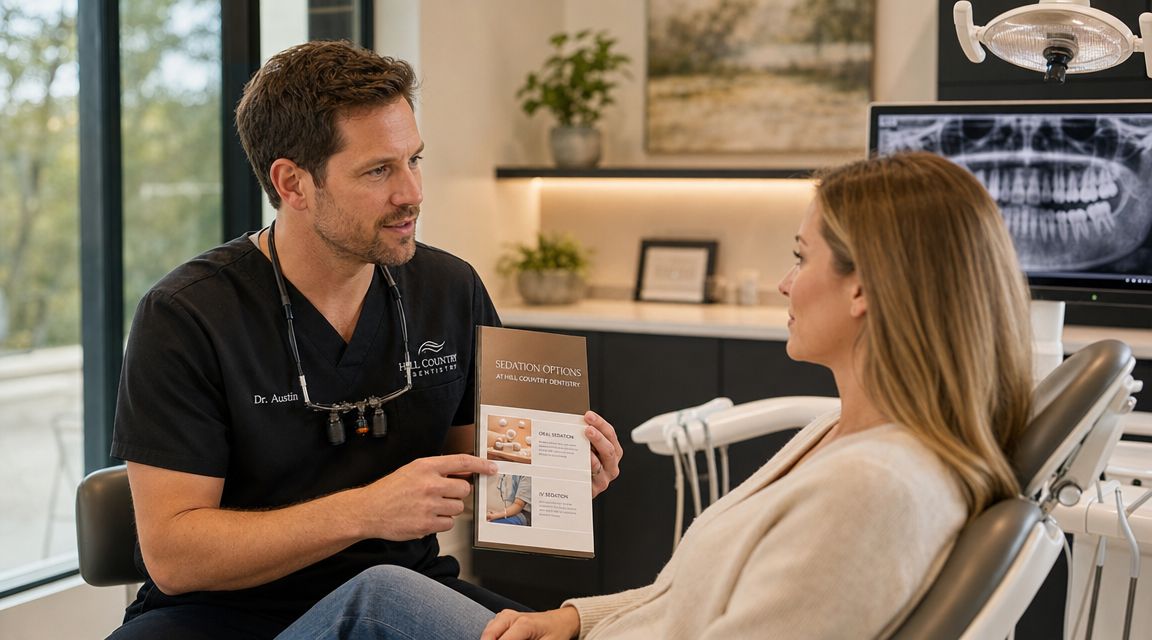
Sedation dentistry can make oral surgery extraction feel far more manageable for anxious patients, those with a strong gag reflex, or people who need longer appointments. Instead of spending the entire visit tense and bracing, you can move through treatment in a calmer state.
At Dental Professionals of Fair Lawn, sedation dentistry is available as part of patient comfort planning for appropriate cases. If you'd like a plain-language overview of how this kind of care works, our guide on sleep dentistry defined explains the concept in more detail.
Comfort isn't just about medication. It usually involves a combination of:
Some patients need sedation. Others just need a slower pace, clear explanations, and confidence that they won't be rushed.
If you've avoided the dentist near me search for months because of fear, this is the part I want you to hear clearly. Anxiety doesn't disqualify you from care. It tells us how to deliver care more thoughtfully.
Recovery tends to go best when patients keep things simple. Protect the blood clot. Control swelling. Keep the area clean without disturbing it. Follow the instructions you were given for eating, rinsing, and activity.
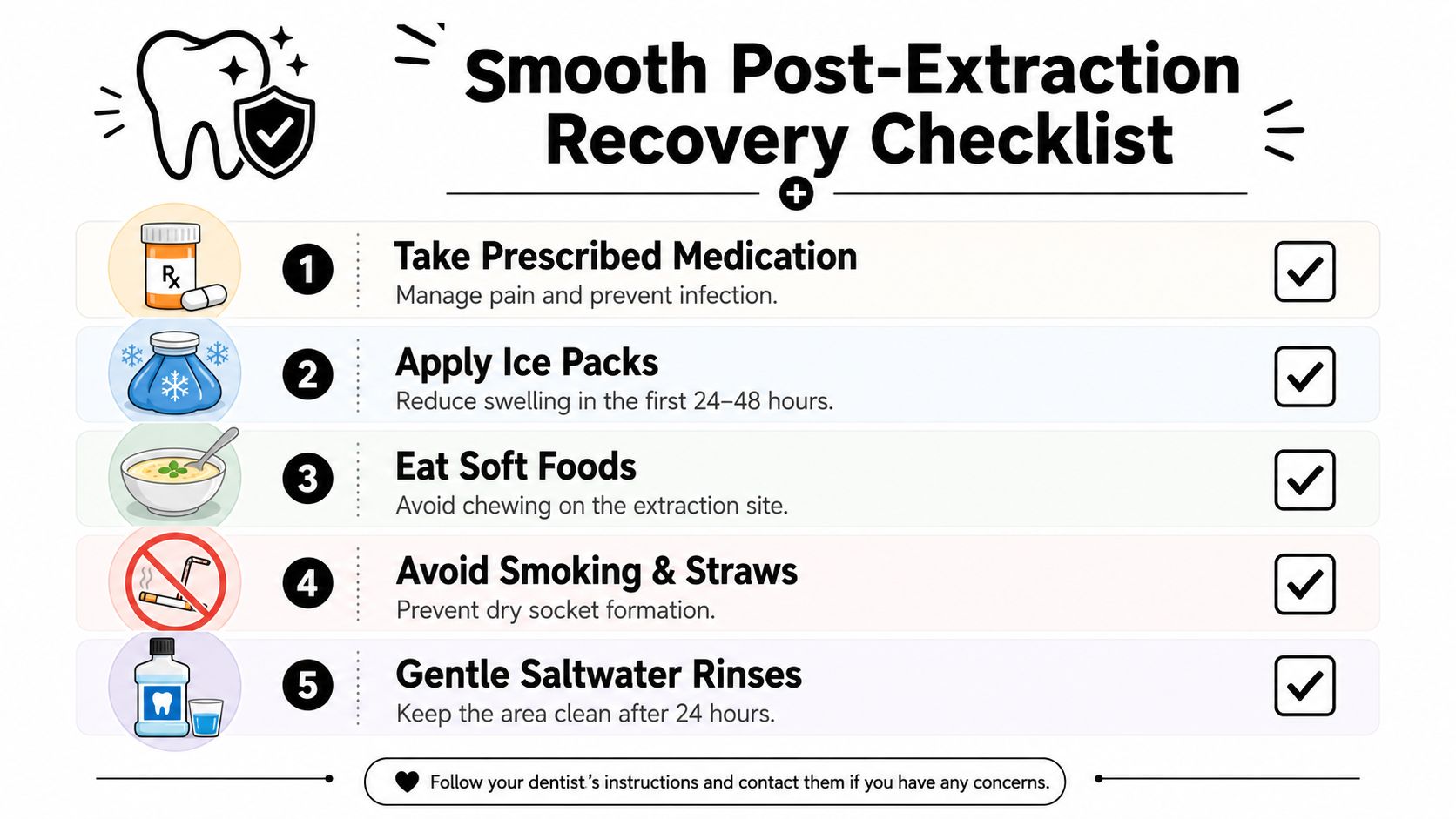
For the first part of healing, I usually tell patients to focus on protection, not productivity.
One habit matters more than many people realize. Avoid straws and smoking because suction and irritation can disrupt the clot.
After the initial period, your job shifts from protecting the site to supporting clean healing.
That usually means:
Many patients inquire whether soda is an acceptable beverage choice. This article on carbonated drinks after extraction offers a helpful general discussion of why fizzy beverages may not be ideal early in recovery.
For a quick visual overview, this short video covers common aftercare reminders:
Some soreness, mild swelling, and limited jaw stiffness can be part of normal healing. Call if pain sharply worsens after seeming to improve, if bleeding doesn't settle, or if you develop symptoms that concern you.
Healing is smoother when patients ask questions early. You never need to "wait it out" if something feels off.
If the removed tooth needs replacement, recovery is also the time to discuss next steps such as restorative dentistry, bridges, dentures, or dental implants near me searches you may already be making.
Not always. Patients often assume that an impacted tooth should either come out immediately or be left alone forever. The answer depends on anatomy and risk.
For asymptomatic impacted teeth, the decision can involve nerve proximity, future infection risk, and possible damage to adjacent teeth. A 3D scan (CBCT) helps create an individualized plan by weighing removal against monitoring (NCBI StatPearls on impacted and unerupted teeth).
This is a common and important question. Access to dental care isn't equal, and public health literature notes that low-income, uninsured, immigrant, and rural populations often face worse oral health and reduced access to care. Some people need time to arrange finances, find a referral, or explore safety-net clinics, dental schools, community health centers, or hospital-based oral surgery services.
In some cases, careful monitoring while you arrange care may be reasonable, especially if the tooth is asymptomatic and your dentist says a conservative approach is safe. In other cases, delaying can allow infection or structural damage to worsen. The right next step is an exam where we can tell you which situation you're in.
Usually, yes. If the tooth affects chewing, appearance, or bite stability, we can discuss replacement after healing. Depending on the location and your goals, that may include a bridge, denture, or dental implant.
If you need an oral surgery extraction, clarity helps. You want to know whether the tooth can be saved, what the procedure will involve, how recovery will feel, and what your options are afterward.
Patients in Fair Lawn, Ridgewood, and Glen Rock don't need a rushed answer. They need a careful exam, a direct explanation, and a treatment plan that fits both their dental needs and comfort level. That's how I approach extractions, whether you're dealing with a painful emergency, a broken tooth, or wisdom teeth that need closer evaluation.
For a dentist in Fair Lawn NJ, a tooth extraction, or an emergency dentist who will take the time to explain things, schedule a consultation and let us help you move forward with confidence.
If you're ready to talk with a local dental team about pain, wisdom teeth, oral surgery extraction, sedation, or tooth replacement options, contact Dental Professionals of Fair Lawn to schedule your consultation.