Scaling and Root Planing Procedure
Get the scaling and root planing procedure you need in Fair Lawn, NJ. Learn what to expect from our deep cleaning for gum disease. Reassuring care awaits!
Get the scaling and root planing procedure you need in Fair Lawn, NJ. Learn what to expect from our deep cleaning for gum disease. Reassuring care awaits!
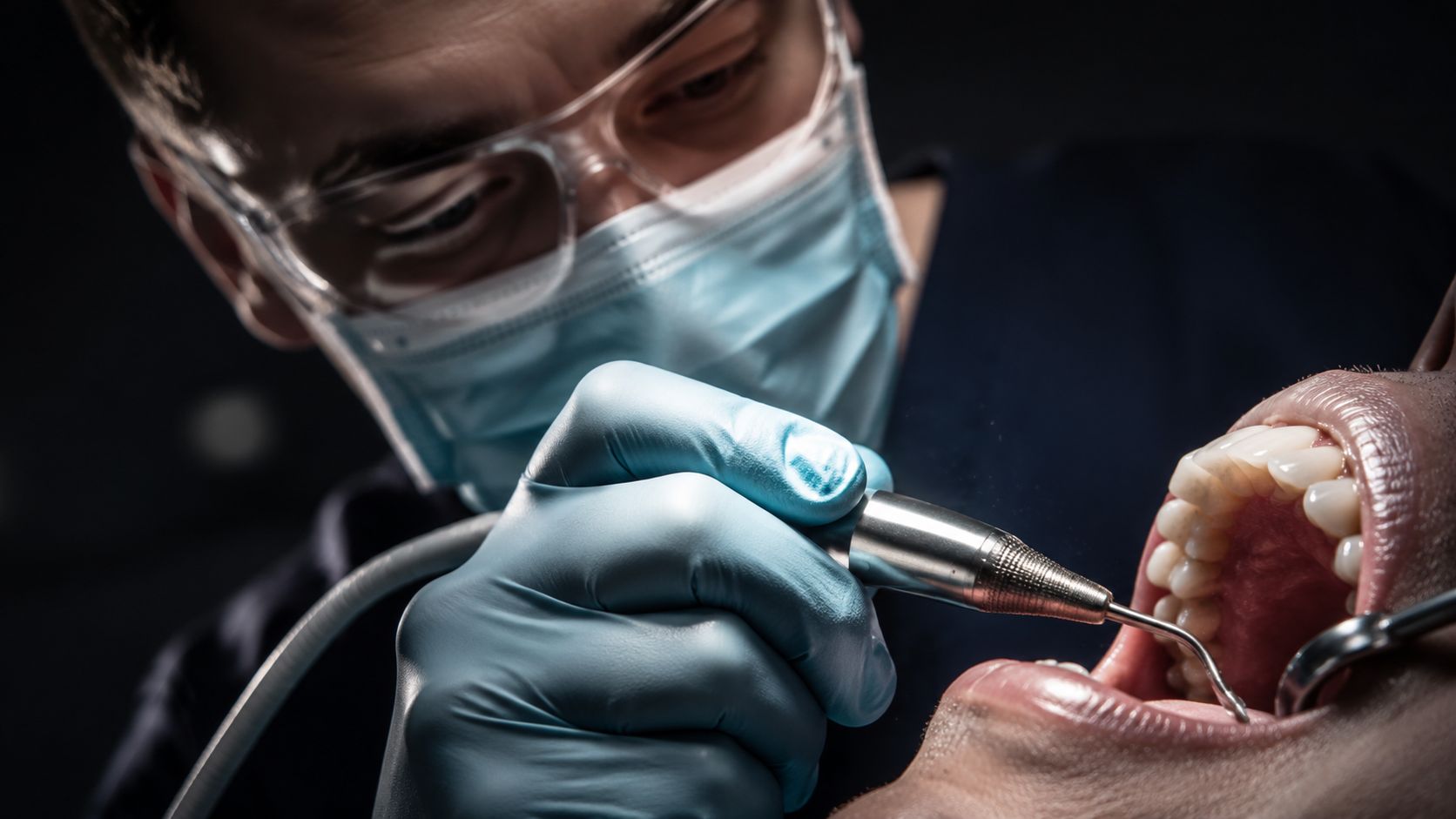
Hearing that you need a “deep cleaning” can make your stomach drop. Many patients in Fair Lawn, Ridgewood, and Glen Rock come in expecting a routine cleaning and leave wondering if something serious is wrong, whether the procedure will hurt, and if they waited too long.
That reaction is normal. Gum treatment sounds intimidating when no one has explained it in plain language.
A scaling and root planing procedure is not a punishment and it isn't a sign that you've failed. It's a focused way to clean below the gums where a regular cleaning can't reach, and for many people, it's the step that helps protect teeth, calm inflammation, and get their mouth back on track. If you've been searching for a dentist near me, an emergency dentist, or a dentist in Fair Lawn, NJ because your gums bleed, feel tender, or your breath hasn't improved, this is often the kind of care that answers the problem at its source.
A patient might sit down in the chair, hold the treatment estimate in both hands, and ask the same question we hear all the time: “Do I really need this?”
Usually, that question isn't only about the procedure. It's about fear. Fear of discomfort. Fear of bad news. Fear that gum disease means tooth loss is already on the way.

Gum disease is common, and needing treatment is not unusual. Chronic periodontitis, the primary condition treated by scaling and root planing, affects 47.2% of adults aged 30 and older according to Roots and Gums.
That matters because it helps put the recommendation into perspective. If you've been told you need deep cleaning, you're not in some rare situation. You're dealing with a dental condition that many adults face, often subtly, because gum disease doesn't always cause sharp pain early on.
At our Fair Lawn office, patients are often surprised to learn that bleeding when brushing, puffy gums, tenderness, or persistent bad breath can point to a problem below the gumline. The good news is that this is something we can address with a careful, structured plan.
Patients looking for a dentist in Fair Lawn, NJ usually want two things at once. They want clear answers, and they want someone gentle enough to make the process manageable.
You deserve to know what will happen before treatment starts, what you'll feel during it, and how your gums can heal after it.
That approach matters for families from Fair Lawn, Ridgewood, and Glen Rock who want one office for preventive visits, cleaning and exams, dental x-rays, new patient exams, and treatment when a problem goes deeper than a standard cleaning. If you're also comparing offices online, resources about patient communication, like these FB ads for dentists, can show how practices try to educate and reach local patients before they ever call.
For someone anxious about a deep cleaning, the most helpful first step is often a calm conversation. We look at what your gums are doing, explain why the recommendation was made, and help you understand what comes next without rushing you.
Healthy gums act like the firm seal around each tooth. Think of them as the foundation around the base of a fence post. When the foundation stays snug and clean, the post stays stable. When bacteria build up along the edge and under the surface, that seal weakens.
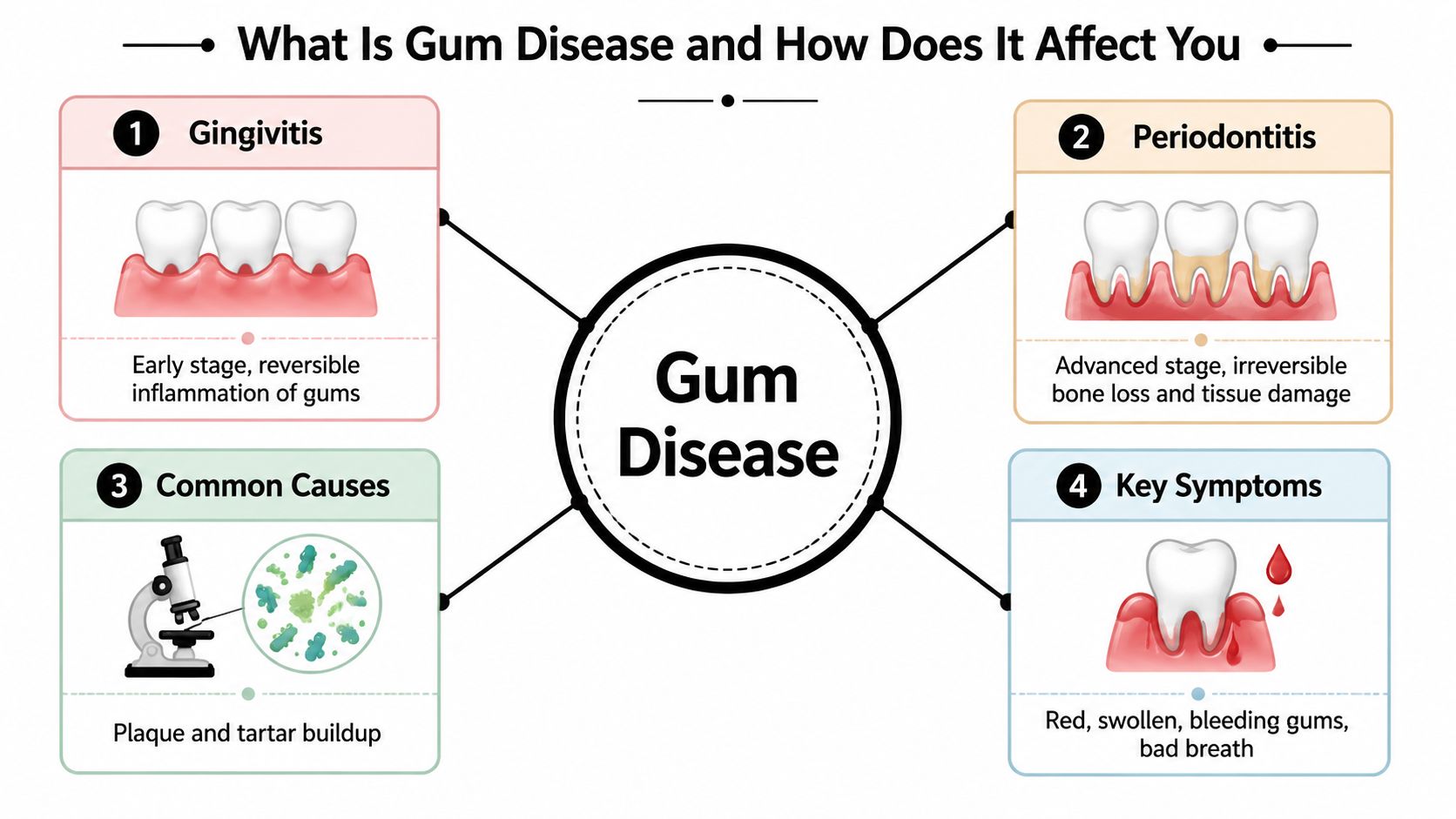
Gingivitis is the early stage. Gums may look red, feel irritated, or bleed during brushing and flossing. At this point, the inflammation is still limited to the gums, and early care can often turn things around.
Periodontitis is more advanced. The gums begin pulling away from the teeth, creating spaces where bacteria settle deeper. Those spaces are called periodontal pockets.
Once those pockets deepen, the problem isn't just surface irritation anymore. Bacteria and hardened buildup can sit below the gumline, where home brushing can't reach.
A periodontal pocket is the gap between the tooth and gum that has become too deep because of inflammation and tissue damage. In a healthy mouth, that space stays shallow and easier to keep clean. In gum disease, it becomes a hiding place.
What often happens:
Practical rule: If your gums bleed regularly, feel sore, or look like they're pulling away from your teeth, don't assume it's “just sensitive gums.”
That deeper stage is why a regular prophylaxis cleaning may not be enough. If you'd like to learn more about early warning signs before treatment is recommended, our guide on the signs of gum disease can help you recognize what your mouth may already be telling you.
Gum disease doesn't only show up in the mirror. It can affect how your mouth feels day to day.
| What you notice | What may be happening |
|---|---|
| Bleeding when brushing | Inflamed gum tissue |
| Bad breath that lingers | Bacteria collecting below the gumline |
| Tender or swollen gums | Ongoing irritation and infection |
| Teeth that seem longer | Gum recession exposing more tooth surface |
People often wait because they aren't in severe pain. That's one reason gum disease can progress unnoticed. By the time a person starts searching for a dentist near me or emergency dentist for bleeding gums or tenderness, the issue may already need more than a routine cleaning.
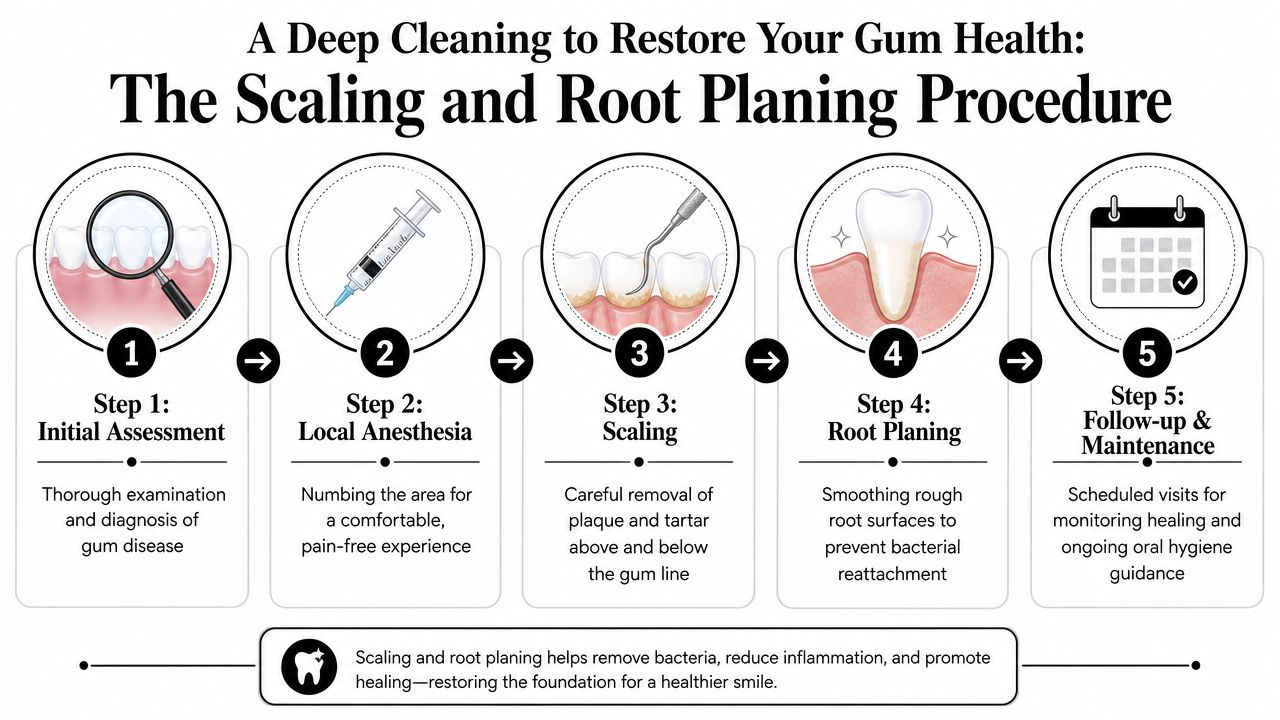
When dentists recommend a scaling and root planing procedure, they are talking about a non-surgical deep cleaning designed to treat gum disease below the gumline. It's more targeted than a regular cleaning because it addresses the bacteria, tartar, and rough root surfaces that keep inflammation active.
A simple way to picture it is this. If the side of a boat has collected barnacles, you don't just rinse the surface and hope for the best. You remove what is stuck on, then smooth the surface so new buildup has a harder time clinging.
The procedure has two distinct parts. As explained by Cosmetic Dentistry of Las Colinas, scaling removes tartar from above and below the gumline, while root planing smooths the rough root surfaces to help discourage bacterial reattachment and support healing.
That difference matters because many patients think “deep cleaning” just means a longer cleaning. It doesn't. It is a medical treatment for areas that have become unhealthy below the gums.
For patients who feel more comfortable seeing the process, this short video gives a helpful visual overview before your visit.
If bacteria and tartar stay under the gums, the mouth stays irritated. The goal of treatment isn't to make your teeth look cleaner for a day. The goal is to create an environment where the gums can calm down and hold more firmly around the teeth.
That can also connect to other services over time. Some patients who start with gum therapy later ask about cosmetic dentist near me options such as teeth whitening, bonding, or gum reshaping once their gum health is stable. Others may need restorative dentistry, tooth extraction, or dental implants near me if disease has already caused more damage. Treating the gums first helps create a healthier starting point for all of that.
Most anxious patients feel better when they know the order of events. The unknown is often worse than the treatment itself.
A typical visit begins with an exam and a conversation about what your gums are doing. If areas under the gums need deeper cleaning, we explain where the buildup is, how many areas need treatment, and how to make the appointment comfortable. For patients with dental anxiety, this is also the time to talk about sedation dentistry options so you don't feel like you have to “tough it out.”
Before the cleaning starts, the area being treated is numbed. According to Dorion DDS, local anesthesia is required for comfort in 70 to 80% of patients, and full-mouth treatment often takes 2 to 4 visits, with each session typically lasting about one hour.
That timing often relieves people. You usually aren't sitting through one overwhelming marathon appointment. Treatment is often divided into smaller, more manageable visits so each area can be cleaned thoroughly and comfortably.
During the procedure, you may notice:
Some patients ask why the whole mouth can't just be done all at once. The answer is care and accuracy.
When treatment is divided, your provider can numb one section well, clean that area thoroughly, and let you recover in stages. That's often easier physically and emotionally, especially if you're already nervous or have several deeper areas to treat.
If you're worried about discomfort, say so before the appointment starts. That's not being difficult. It's part of good care.
At Dental Professionals of Fair Lawn, the goal is to reduce surprises. You should know when we're numbing, when you'll feel vibration, when we're moving to another tooth, and what to expect once you leave. That kind of communication can make a big difference for patients who have delayed care because of fear.
Many people who search for a dentist near me because they're overdue aren't only looking for a convenient office. They're looking for a place where nobody shames them for waiting. The same is true for patients who come in for emergency dentist visits, restorative work, or consultation about Invisalign or Six Month Smiles. They want a team that explains things clearly and treats them with patience.
A scaling and root planing appointment should feel methodical, not rushed. When it's handled with clear communication, numbing, and attention to your comfort, most patients leave saying the anticipation was worse than the visit.
The biggest benefit of a deep cleaning is simple. It gives your gums a chance to heal instead of staying in a constant cycle of irritation.
That matters because untreated gum disease doesn't stay still. It can continue damaging the support around the teeth. Clinical evidence summarized by Lowcountry Family Dentistry shows that the pocket depth reduction achieved through scaling and root planing correlates with a 60 to 70% decrease in tooth loss risk over 5 years for patients with moderate periodontitis.
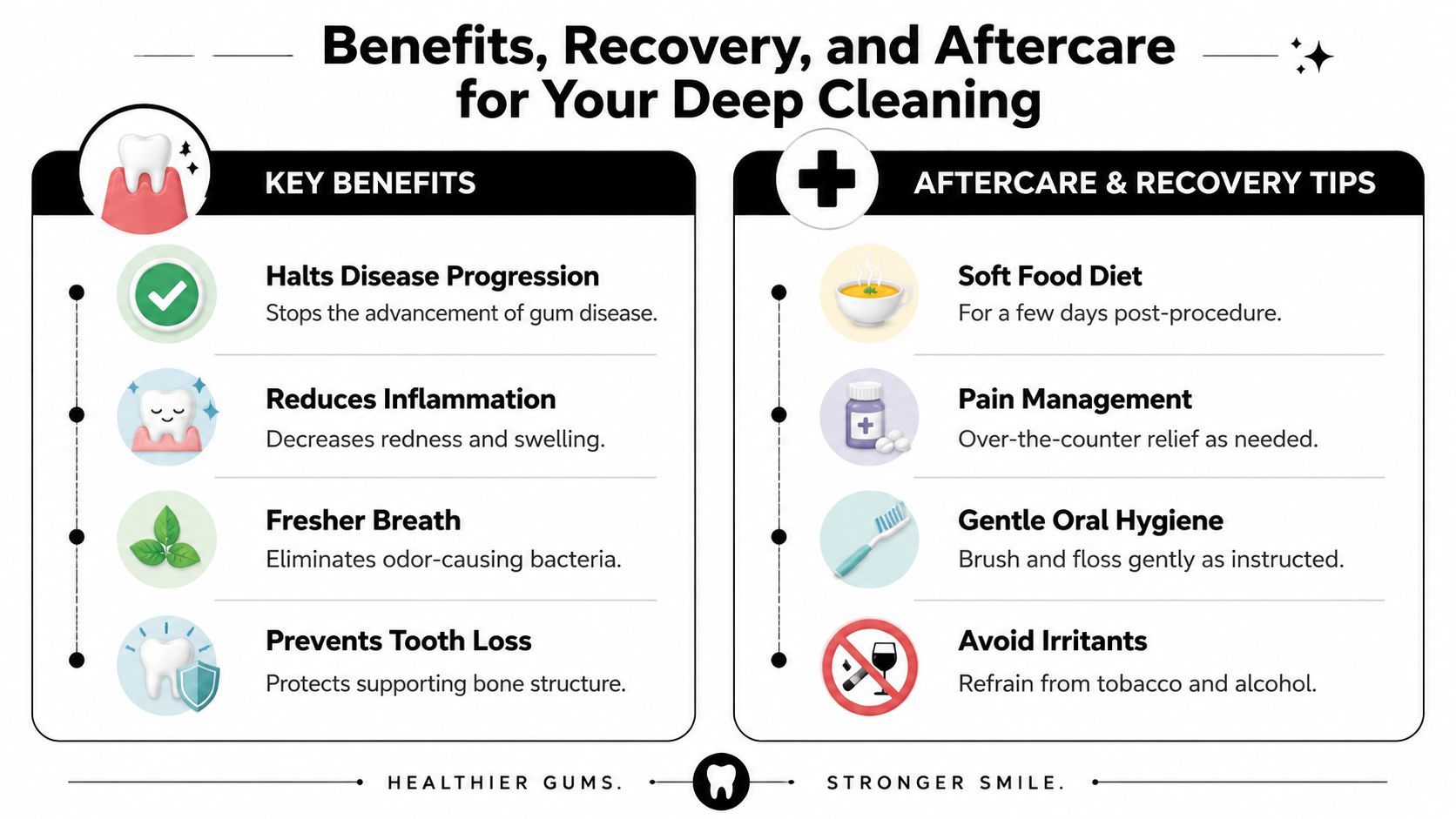
Patients usually notice benefits in stages. First, the gums often feel less puffy and irritated. Then brushing becomes easier because there's less bleeding and tenderness. Over time, the larger goal is stability.
A deep cleaning can help with:
Healthier gums make every other kind of dental care more predictable.
Healing after treatment is usually straightforward. Some soreness, tenderness, or tooth sensitivity can happen for a short time while the gums settle down.
Many patients find it helpful to keep the next day simple. Softer foods, gentle brushing, and following your home-care instructions can make the recovery period much easier.
Here are practical aftercare habits to follow:
A little soreness isn't unusual. If something feels stronger than expected, if you have questions about what you're feeling, or if you're unsure whether a symptom is normal, checking in is always the right move.
Patients often recover best when they don't guess. They ask. That keeps the healing period calm and helps you stay on track with the long-term goal, which is keeping your natural teeth healthy and stable.
Choosing where to have gum treatment matters. A scaling and root planing procedure is technical, but the patient experience matters just as much as the instruments being used.
In Fair Lawn, many patients want one office that can handle preventive care, periodontal treatment, cosmetic goals, and restorative needs without sending them in multiple directions. That becomes especially important if you're anxious, have a busy family schedule, or know you'll want continued care after your gums improve.

Dr. Jody Bardash brings 30+ years of experience to patient care, and that kind of experience often shows up in the calm, practical parts of treatment. Patients want someone who can recognize gum disease, explain it in plain terms, and offer comfort options when anxiety is part of the picture.
The office also offers a broad mix of services, which helps when your needs go beyond one procedure. A patient may start with periodontal therapy and later want cosmetic dentistry, a crown, Invisalign, Six Month Smiles, tooth extraction, or dental implants near me solutions. Having those services in one setting can make long-term planning simpler.
Sedation dentistry can make needed care feel more approachable for people who have avoided treatment. Some patients are comfortable with local numbing alone. Others do better when additional comfort support is part of the plan.
That matters in a family-centered office serving Fair Lawn, Ridgewood, and Glen Rock. People aren't all starting from the same place. Some are routine hygiene patients. Some haven't had a dental visit in years. Some arrive because a painful issue forced the call.
The right dental office doesn't just treat the disease. It helps the patient feel safe enough to keep coming back.
For practices trying to improve how they connect with people who are actively seeking care, resources like Transactional LLC dental SEO offer a useful look at how patients find local service providers online. That's relevant because many new patients begin with searches like dentist in Fair Lawn, NJ, cosmetic dentist near me, or emergency dentist before they ever speak to a team member.
For patients comparing options, Dental Professionals of Fair Lawn is one local choice that provides periodontal care along with sedation options, restorative treatment, cosmetic services, and implant planning in the same practice.
One of the most common questions after diagnosis is cost. That's understandable. Patients want to know what the treatment will involve financially before they commit.
According to CareCredit's overview of scaling and root planing costs, the national average cost is $242 per quadrant, and most dental insurance plans cover about 50% because the treatment is considered medically necessary for gum disease. A quadrant means one section of the mouth, so your total cost depends on how many sections need treatment.
Not every patient needs the same amount of care. Some only need treatment in one or two areas. Others need more complete periodontal therapy. The amount of buildup, the condition of the gums, and the number of visits all affect the treatment plan.
If you're trying to understand what deep cleaning may cost before your consultation, our article on the average cost of deep cleaning teeth can give you helpful background in plain language.
A written estimate after your exam is always more useful than guessing from online averages alone. It reflects your specific needs, your insurance details, and whether follow-up maintenance will be part of your care plan.
A deep cleaning isn't the end of gum care. Once the gums have been treated, ongoing maintenance helps protect the progress you've made.
That usually means keeping up with professional follow-up visits and home care instructions designed for periodontal health. It also means not waiting until your gums bleed again to return. Stable gum health is something you maintain, not something you fix once and forget.
Here are the practical questions worth asking at your visit:
If you've been looking for a dentist near me in Fair Lawn and want answers you can use, the next step is simple. Schedule a consultation, get a clear diagnosis, and let the office walk you through your options without pressure.
If your gums are bleeding, tender, or you've been told you need a deep cleaning, contact Dental Professionals of Fair Lawn to schedule a consultation. Patients in Fair Lawn, Ridgewood, and Glen Rock can get clear guidance, compassionate care, and a treatment plan that supports long-term oral health.