No Cavities but Teeth Pain? a Fair Lawn Dentist Explains Why
Experiencing no cavities but teeth pain? Our Fair Lawn dentists explain hidden causes like cracked teeth, gum disease, or sinus issues & how we provide relief.
Experiencing no cavities but teeth pain? Our Fair Lawn dentists explain hidden causes like cracked teeth, gum disease, or sinus issues & how we provide relief.
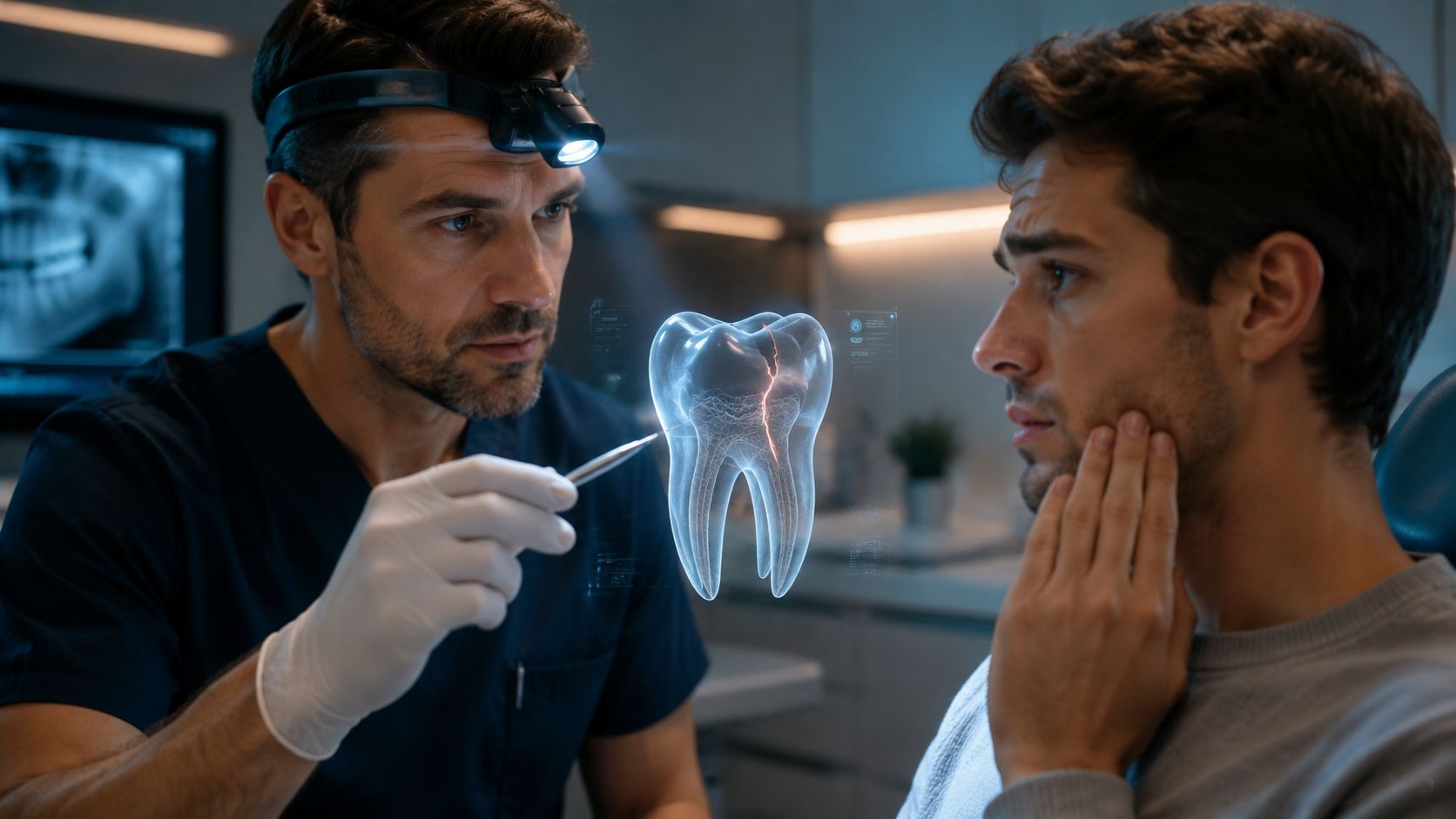
When you have tooth pain and your dentist says there's no cavity, the experience can feel confusing fast. Many patients in Fair Lawn come in expecting to hear, “It's just decay,” and instead learn that the tooth looks intact. That doesn't mean the pain isn't real. It means the cause may be hiding in the root surface, the nerve, the bite, the gums, or even outside the tooth itself.
The good news is that this problem is common, and it's usually diagnosable once someone looks at the pattern of your symptoms carefully. If you've been searching for a dentist near me or an emergency dentist in Fair Lawn because something hurts and you can't see why, the next step isn't guessing. It's getting the right exam.
A common story goes like this. You drink cold water and one tooth sends a quick jolt. Then nothing. Later, you chew on that side and feel a sharp catch, but only once in a while. You look in the mirror, don't see a hole, and wonder if you should wait it out.
That's exactly where many people get stuck with no cavities but teeth pain. The symptom is real, but the cause isn't obvious from the bathroom mirror or even from a basic look at the tooth.
In Fair Lawn, Ridgewood, and Glen Rock, patients often want two things right away. They want relief, and they want a clear answer. Dr. Jody Bardash and the team focus on both. The first job is to listen closely to what triggers the pain, what makes it stop, and whether it feels like temperature sensitivity, pressure, throbbing, soreness, or a bite problem. Those details are more significant than commonly understood.

Pain without visible decay often comes and goes. That makes it easy to dismiss for a few days or weeks. Patients may try avoiding cold drinks, chewing on the other side, or switching toothpaste, only to have the pain return.
A hidden crack, exposed root surface, inflamed nerve, clenching habit, or jaw issue can all behave that way. The tooth may look normal at first glance. The symptoms don't always read like a textbook.
Pain without a visible cavity is still a signal worth taking seriously. Waiting sometimes helps. It also sometimes gives a crack, bite problem, or inflamed nerve more time to worsen.
For patients looking for a dentist in Fair Lawn, NJ, what matters most is finding someone who won't rush to a guess. The right appointment should feel less like a sales pitch and more like careful problem-solving. That includes a detailed new patient exam, dental x-rays when needed, and a discussion of what's most likely based on your symptom pattern.
When the diagnosis is accurate, treatment gets simpler. That may mean a conservative fix, an adjustment to your bite, treatment for sensitivity, or a plan to protect a tooth before it breaks further.
Tooth pain without visible decay is not unusual. Dentine hypersensitivity affects an estimated 40% of adults according to a peer-reviewed review in the NIH/PMC database, which helps explain why a tooth can look healthy but still react sharply to cold or sweet foods (NIH review on dentine hypersensitivity).

This is one of the most common answers when patients say, “My tooth hurts, but there's no cavity.” If enamel wears down or the gums recede, the inner dentin becomes exposed. That dentin contains tiny tubules that transmit cold, sweet, air, and acidic triggers toward the nerve.
This pain is usually quick and stimulus-linked. It often starts with ice water, cold air, sweets, or brushing near the gumline. It doesn't always mean the tooth is infected, but it does mean the surface needs attention.
A cracked tooth can act like a hairline fracture in pavement. From above, everything looks fine. Under pressure, the weak point opens and complains.
This pattern often causes pain on biting, or even more specifically, on release after biting. It can come and go, which is why people often think they imagined it. A routine exam may not show much at all, especially in the early stage.
Bruxism loads teeth and supporting structures over and over, often at night. Some patients wake up with sore teeth, tight jaw muscles, or a feeling that one tooth is “off” even though there's no decay.
The trade-off here is important. Over-the-counter night guards may seem convenient, but they don't always fit well enough to control the force pattern. A custom approach is usually more precise when clenching is driving the problem.
Pain doesn't have to start inside the tooth. Inflamed tissue around the tooth can create soreness, tenderness at the gumline, or discomfort when chewing. When recession is present, root surfaces can become very sensitive.
If bleeding, swelling, or tenderness near the gums shows up with the pain, the gums deserve as much attention as the tooth itself.
Not every toothache starts in a tooth. Banner Health notes that tooth pain can be referred from problems such as sinus disease, trigeminal neuralgia, and TMJ disorders, and that upper tooth roots sit close to the sinuses while TMJ pain can radiate into the teeth (Banner Health overview of tooth pain and referred pain).
If jaw soreness, clicking, facial tension, or temple headaches are part of the picture, the source may be functional rather than structural. Patients who want a broader look at jaw-related pain may find this guide on TMJ in Boston useful because it explains how often jaw pain can mimic other problems.
For additional local reading on symptom patterns and dental discomfort, see these common causes of dental pain.
Practical rule: If pain is mostly triggered by cold, sweets, or air, sensitivity moves higher on the list. If pain is tied to biting or releasing pressure, a crack deserves more suspicion.
When a tooth looks normal, diagnosis becomes a process of elimination and confirmation. The challenge is that different problems can feel similar. A cracked tooth may produce sharp pain with chewing, while sensitivity tends to react to temperature. Dental sources note that these issues can appear normal on routine exam and may require targeted clinical tests or digital imaging to confirm (digital dentistry discussion of hidden causes and crack versus sensitivity patterns).

The first clues come from your history. We want to know:
Those details often tell more than patients expect. “It hurts when I bite almonds, but not soft food” is very different from “cold water stings for two seconds.”
A careful exam usually combines several methods rather than relying on one image or one guess.
| Test or tool | What it helps identify |
|---|---|
| Clinical exam | Wear, recession, gum irritation, bite marks, visible fractures |
| Bite testing | Pain on pressure or release that suggests a crack |
| Thermal testing | Whether cold or heat points toward sensitivity or pulp irritation |
| Digital dental x-rays | Hidden decay, bone changes, prior dental work, some root issues |
| Transillumination | Fine crack lines that are easier to see with light |
| CBCT 3D imaging in selected cases | Complex anatomy, hard-to-see root or structural problems |
A normal-looking X-ray doesn't always rule out the cause. That's one of the biggest misconceptions patients bring to the visit.
If symptoms suggest the pulp is inflamed, the conversation changes from surface sensitivity to the health of the inside of the tooth. That doesn't automatically mean root canal therapy is needed, but it does mean the nerve needs closer evaluation.
Patients who are wondering what signs point in that direction can review how to tell if you need a root canal.
A good diagnosis doesn't start with treatment. It starts with proving what the pain pattern fits, and ruling out what it doesn't.
If you're hurting now, there are safe ways to reduce irritation before your appointment. These steps won't fix the underlying problem, but they can make the wait more manageable.
Some patients also look for topical options to numb irritated tissue briefly. If you're comparing over-the-counter approaches, this overview of advanced topical pain relief explains one type of product people often ask about. It's still smart to treat that as temporary support, not the solution.
Call an emergency dentist in Fair Lawn promptly if you have any of these signs:
Trying random home remedies usually delays the answer. So does assuming that no cavity means no real problem. Cracks, bite trauma, and nerve inflammation often worsen unnoticed.
If pain is escalating, don't wait for it to become obvious. Emergency dental services are meant for exactly this kind of uncertainty when symptoms are moving in the wrong direction.
Once the source is clear, treatment becomes much more straightforward. The right plan should match the actual cause, not just the symptom. That's where many people finally feel relief, because they stop trying five different things that don't fit the problem.

When exposed dentin is the main cause, the most useful options are usually conservative first. Desensitizing toothpaste can help reduce the stimulus response over time. Fluoride-based remineralization can strengthen vulnerable areas. If there's actual structural loss near the gumline, bonded restorations may be the better long-term fix.
What usually doesn't work is switching products every few days. Sensitivity treatment needs consistency and, in some cases, protection of the exposed surface.
Cracked teeth need support. Depending on the depth and location, that may mean bonding, an onlay, or a crown to hold the tooth together and reduce flex during chewing. If the crack has irritated the pulp significantly, root canal therapy may become part of the plan before the final restoration.
The important trade-off is timing. Treating a small crack early is often simpler than waiting until the tooth breaks more severely.
For bite-related pain, the goal is to reduce repeated overload. A custom night guard can protect teeth from pressure and microfractures. In some cases, bite adjustment or TMJ-focused care is also part of the discussion.
Dental Professionals of Fair Lawn offers services that may be relevant here, including TMJ/TMD evaluation, custom oral appliances, restorative care, and cosmetic dentistry when worn or fractured teeth need both protection and appearance repair.
After a diagnosis discussion, it often helps to see a treatment process explained visually.
When the pulp inside the tooth is too inflamed to recover, root canal therapy may be the most predictable way to save the tooth and stop the pain. When the problem is in the gums or deeper periodontal tissues, treatment shifts toward periodontal therapy, improved home care technique, and controlling inflammation around the roots.
Here's how the decision-making often looks in practice:
The best treatment is the one that matches the pain pattern, protects the tooth long term, and doesn't overtreat a problem that could have been handled more simply.
You wake up with a tooth that hurt last night, then feels almost normal by the time you sit in the chair. That is a common reason patients feel frustrated before they even arrive. They worry the pain will be hard to explain, or worse, that no one will find the cause.

The appointment starts with the story of the pain. We want to know what sets it off, whether it is sharp or dull, whether it lingers after cold, whether chewing on release hurts more than biting down, and whether the discomfort moves from one area to another. Those details often point us toward a crack, gum inflammation, bite overload, nerve irritation, or a non-dental source before we even begin the exam.
From there, the visit may include:
That process matters because different symptoms call for different tests. A tooth that zings with cold and settles quickly is evaluated differently from a tooth that hurts when you chew on one spot, or one that throbs without much warning. The goal is not just to say what the problem might be. The goal is to narrow it down carefully enough that treatment makes sense.
Patients with unexplained pain usually want three things. Relief, an answer, and a plan they can trust.
At Dental Professionals of Fair Lawn, that means taking the time to sort out confusing symptoms instead of jumping straight to the biggest procedure. Sometimes the visit confirms a simple sensitivity issue. Sometimes it shows a cracked cusp, a bite problem, or irritation around the roots that would not have been obvious at home. If the picture is still incomplete on day one, that is explained directly so the next diagnostic step is clear.
Comfort matters too. Sedation dentistry can be discussed for anxious patients, and digital tools such as the Itero scanner can make parts of treatment planning easier and cleaner than traditional impressions. Dr. Jody Bardash's years in practice show up in this part of care. Experienced dentists know that subtle pain patterns often need patience, careful testing, and a willingness to avoid overtreating a tooth that may respond to a more conservative option.
A good visit ends with a working diagnosis, a reason for it, and a practical next step.
The office experience also depends on timely communication before and after the appointment. Patients often notice the difference when scheduling, reminders, and follow-up are handled well. For a behind-the-scenes example of how practices strengthen that part of care, this case study on virtual assistant services for dentists gives useful context.
If you have no cavities but teeth pain, don't ignore it just because the cause isn't obvious. Pain is your body's way of asking for a closer look. In many cases, the fix is simpler when the problem is caught early.
Regular dental cleanings and exams help uncover the issues patients can't see on their own, including wear, recession, bite changes, gum inflammation, and early structural damage. That matters whether you're looking for an emergency dentist, restorative dentistry, cosmetic dentist near me, Invisalign, Six Month Smile, tooth extraction guidance, or a trusted dentist in Fair Lawn, NJ who can start with the basics and diagnose accurately.
If your pain is triggered by cold, sweets, chewing, pressure, or it keeps returning without a clear reason, schedule an evaluation. Patients in Fair Lawn, Ridgewood, and Glen Rock don't need to keep guessing.
Contact the office by phone or visit the practice website to request an appointment online. A careful exam, the right imaging when needed, and a treatment plan based on the actual cause can move you from uncertainty to relief.
If you're dealing with unexplained tooth pain, schedule a consultation with Dental Professionals of Fair Lawn to get a clear diagnosis and a practical treatment plan.