How to Tell If You Need a Root Canal: A Fair Lawn Guide
Experiencing tooth pain in Fair Lawn, NJ? Learn how to tell if you need a root canal, what signs to watch for, and what to expect. Get expert advice.
Experiencing tooth pain in Fair Lawn, NJ? Learn how to tell if you need a root canal, what signs to watch for, and what to expect. Get expert advice.
A tooth that nags you during breakfast, then throbs through a work call, can be easy to dismiss at first. A lot of people hope it is just a little sensitivity, something that will settle down by tomorrow.
Then tomorrow comes. The tooth hurts with coffee, hurts with ice water, and starts to feel sore when you chew. That is usually the moment fear sets in. Not just fear of pain, but fear of hearing the words “you need a root canal.”
If you are in Fair Lawn, Ridgewood, or Glen Rock and that sounds familiar, the most important thing to know is this. Tooth pain is a message, not a moral failing. You did not do anything wrong by feeling nervous, and you do not need to guess your way through it alone.
Knowing how to tell if you need a root canal starts with understanding which symptoms point to an irritated nerve, which ones may still be manageable with a filling, and which ones mean you should call an emergency dentist right away. The good news is that modern diagnosis is very specific, and modern treatment is built to relieve pain, not add to it.
A common story goes like this. A patient notices one back tooth feels “off” for a week or two. It is not unbearable. It just seems more sensitive than the others.
Then the pattern changes.
The cold drink stings and keeps hurting after the sip is gone. Chewing on that side becomes a bad idea. Sleep gets interrupted. By the time the pain is strong enough to stop daily life, many people are still asking the same question. Is this just a cavity, or is it something deeper?
That uncertainty is normal.
Teeth can hurt for a few different reasons. A minor cavity, a cracked filling, gum irritation, tooth grinding, or a deep infection can all create discomfort. What matters is not just that the tooth hurts, but how it hurts.
Pain that keeps returning, lingers after heat or cold, or feels deep and throbbing often raises concern that the pulp inside the tooth is inflamed or infected. That is the soft inner tissue where the nerve and blood supply live.
When that tissue is damaged, the tooth cannot “rest” and recover the way a sore muscle might.
Tip: If your pain is getting more frequent, more intense, or more disruptive, that is a strong reason to stop waiting and get it evaluated.
One of the hardest parts for patients is that tooth pain can come in waves. A tooth may flare up for a day, calm down, then return more aggressively. That temporary quiet can give false reassurance.
In practice, that on and off pattern often means the problem is evolving, not resolving.
People looking for a dentist near me, an emergency dentist, or a dentist in Fair Lawn, NJ are usually not searching because the pain is small. They are searching because they know something has changed. The right next step is not to self-diagnose with certainty. It is to get a clear answer before a treatable problem turns into a more complicated one.
The clearest clue is usually severe, persistent tooth pain. It is the most common reason patients seek root canal treatment. Root canals are also common, with over 14 million performed annually in the U.S., and long-term outcomes are strong, with 85 to 93 percent of treated teeth surviving 10 or more years according to data summarized in this review on root canal prevalence and outcomes.
That does not mean every toothache needs a root canal. It does mean ongoing pain deserves respect.
Brief sensitivity can happen with worn enamel, exposed roots, or a small cavity. What raises more concern is pain that has a deeper, more “stuck” quality.
Watch for symptoms like these:
Not every warning sign is dramatic pain. Some clues are visual.
A tooth may begin to look darker than the teeth around it. The gum near that tooth may appear swollen, shiny, or puffy. Some people notice a small bump on the gum that looks like a pimple. That can be a drainage point for infection.
These changes matter because they suggest the inside of the tooth may no longer be healthy, even if the pain comes and goes.
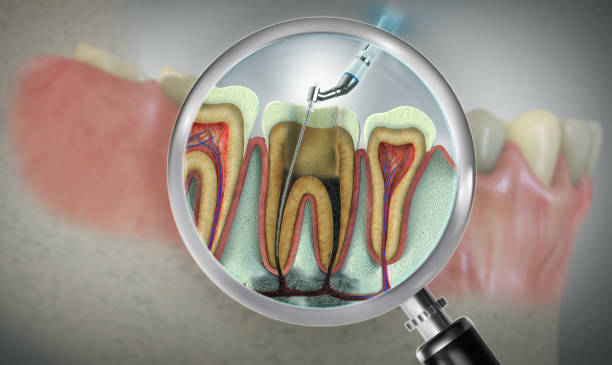
Inside each tooth is a small chamber filled with pulp. When deep decay, a crack, repeated irritation, or trauma reaches that area, the pulp can become inflamed. Once that inflammation becomes irreversible, the tooth generally will not heal on its own.
That is when a root canal becomes a tooth-saving treatment. The goal is to remove the damaged tissue, disinfect the inside of the tooth, and keep the tooth in place.
A short visual explanation can help make that easier to understand.
A few patterns deserve fast attention:
SymptomWhat it may suggestLingering hot or cold painDeep nerve irritationPain with chewing or tappingInflammation near the rootGum swelling or drainagePossible infectionDarkening of one toothLoss of vitality after trauma or infection
Key takeaway: Symptoms can point toward a root canal, but a diagnosis still requires testing. The safest plan is to treat these signs as reasons to book an exam, not reasons to panic.
The question most patients ask is not only “do I need treatment?” It is “do I need a root canal, or do I just need a filling?”
That is a fair question, and there are a few safe things you can observe at home before you come in.

Use a mirror and good light. Do not poke hard at the tooth or test it repeatedly.
You can look for:
One practical distinction matters here. Pain lingering for over 30 seconds or throbbing with pressure often signals nerve involvement needing a root canal, while brief sensitivity might only need a filling, according to this patient guidance on telling whether you need a root canal.
This comparison is not a diagnosis, but it helps frame what you are noticing.
More often points to a fillingMore often points to root canal evaluationBrief sensitivityLingering temperature painMild discomfort around sweetsDeep aching or throbbingNo pain on bitingPain with pressure or chewingNo swellingSwelling, gum bump, or darkening
Self-diagnosis has limits. The same source notes that 20 to 30 percent of cases misjudged by patients lead to prolonged infection or unnecessary extractions. That is why home checks should stay simple and non-invasive.
Do not “watch and wait” if you have any of the following:
These are the situations where an emergency dentist visit makes sense.
Tip: If your face is swelling or you cannot get comfortable even after over-the-counter pain relief, call right away. Dental infections can escalate faster than people expect.
A few common habits usually delay real help:
A filling works when the problem is limited to the outer tooth structure. A root canal works when the pulp has been damaged beyond recovery. The only reliable way to tell the difference is an exam, imaging, and nerve testing.
Most anxiety about root canals starts before treatment. People are often more worried about the unknown than the actual testing.
A proper diagnosis is deliberate. It is not based on one glance, one X-ray, or one symptom.
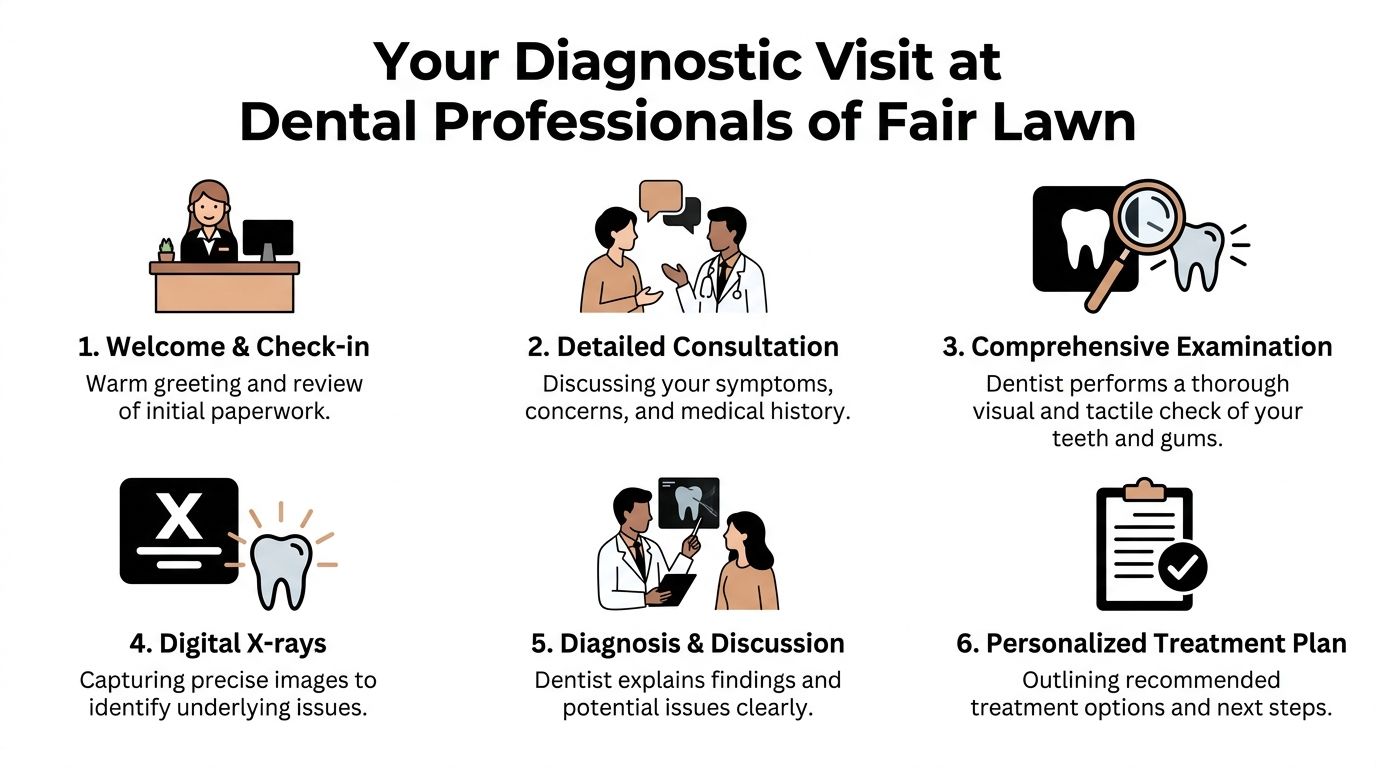
The visit usually starts with conversation, not instruments.
You describe what you are feeling, when it started, whether heat or cold triggers it, whether chewing makes it worse, and whether the pain lingers. That history matters because certain patterns point more strongly to pulp inflammation than others.
Then comes the clinical exam. The dentist looks for deep decay, cracks, old restorations, gum changes, and signs of a draining infection.
If you want an overview of the type of exam used to evaluate concerns like this, the practice offers oral exams.
Dentists do not diagnose root canals by guesswork. A multi-step process is used that includes history, percussion testing, thermal testing, and imaging. Combining three or more positive tests achieves over 95 percent diagnostic accuracy, as described in this guide to recognizing whether a root canal is needed.
Common tests include:
A single symptom can mislead.
A cracked tooth can mimic a nerve problem. Sinus pressure can feel like upper tooth pain. A very inflamed tooth can respond differently than a dead nerve. That is why dentists build the diagnosis from a pattern, not a hunch.
This matters for anxious patients because it means the goal is not to rush you into a procedure. The goal is accuracy.
Key takeaway: Good diagnosis protects you both ways. It helps avoid unnecessary root canals, and it helps catch the teeth that need prompt treatment.
For many families in Fair Lawn, the hardest part is walking through the door with pain and uncertainty. A calm diagnostic visit should slow things down.
You should expect clear explanations in plain language. If the tooth can be treated with a filling or crown instead of a root canal, that should be discussed. If the nerve is involved and root canal therapy is the best tooth-saving path, you should hear why, what the steps are, and what happens next.
That kind of visit often changes the tone of the whole experience. Fear drops when the situation becomes specific.
A root canal is a treatment to remove infection from inside the tooth and preserve the tooth itself. It is not a punishment for having pain. It is a way to stop the pain source while keeping your natural bite intact.
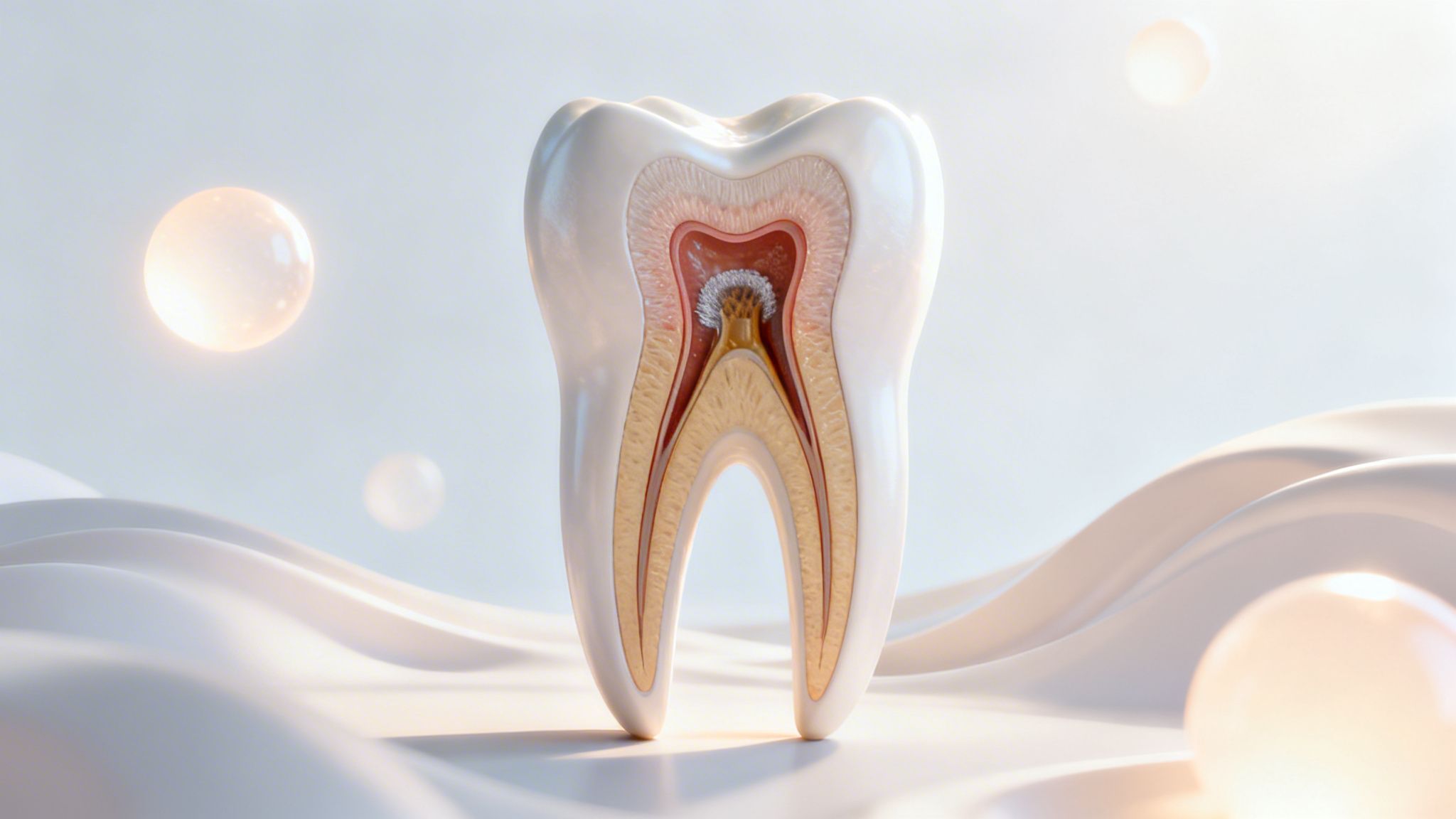
During treatment, the dentist opens the tooth, removes the damaged pulp, cleans the internal canals, and seals the space. In many cases, the tooth is then protected with a final restoration, often a crown.
That last step matters. According to this review of root canal success and tooth preservation, root canal-treated teeth have a 97 percent retention rate after 10 years, and teeth restored with a crown after treatment can last 20 years, compared with 6.5 years without proper restoration. The same source notes that 94 percent of adults prefer to keep their natural teeth.
Patients who are considering treatment can review the practice’s endodontics and root canal therapy service.
Saving the tooth is usually preferred when the tooth is restorable. But that is not the only valid option.
Here is the practical trade-off:
OptionMain advantageMain trade-offRoot canalKeeps your natural toothRequires restoration and follow-up careExtractionRemoves the problem tooth completelyLeaves a gap that usually needs replacementExtraction with dental implantStrong long-term replacementMore involved process than saving a healthy-restorable tooth
The same source reports 98.3 percent survival for implants, which is excellent. Still, when a natural tooth can be predictably saved, preserving original tooth structure is often the simpler and more conservative path.
A root canal works best when:
Extraction and replacement make more sense when the tooth is too damaged, too fractured, or too compromised below the gumline to save reliably.
Tip: The best treatment is not the most dramatic one. It is the option that gives you a stable, comfortable result with the healthiest long-term outlook for that specific tooth.
The infection is usually what hurts. The treatment is designed to remove that source of pain.
Modern local anesthetic makes the procedure far more comfortable than many people expect. For patients with dental anxiety, sedation dentistry can also help make care feel manageable and calm.
Patients often feel soreness rather than sharp pain after treatment. The tooth and surrounding area may feel tender for a short time, especially if the tooth was badly inflamed before care.
You will usually be asked to avoid chewing hard foods on that tooth until the final restoration is complete. Following those instructions matters.
Children can get deep decay, traumatic injuries, and tooth pain too. Parents should not assume a child will always describe symptoms clearly.
If a child avoids chewing, reacts strongly to cold, wakes with mouth pain, or has swelling, the safest move is a prompt exam. Pediatric concerns are evaluated based on the specific tooth, the child’s age, and whether the tooth is primary or permanent.
That is common, and it is manageable.
Tell the team exactly what worries you. Some patients fear needles. Others fear bad news, gagging, or the sound of instruments. When the office knows that in advance, the visit can be paced differently, explained more clearly, and adjusted with comfort options.
Costs vary based on the tooth, the complexity of the case, and the restoration needed afterward. The practical question is not only what treatment costs today, but what delay may cost in added pain, lost time, and more extensive repair later.
If you have tooth pain, lingering sensitivity, swelling, or a tooth that suddenly looks darker than the rest, it is time to get a clear answer. Schedule an appointment with Dental Professionals of Fair Lawn for an evaluation and treatment plan that fits your symptoms, comfort level, and long-term oral health goals.