8 Common Causes of Dental Pain: Get Relief Now
Experiencing tooth pain? Learn the 8 common causes of dental pain and get relief from your trusted Fair Lawn, NJ dentist. Schedule today.
Experiencing tooth pain? Learn the 8 common causes of dental pain and get relief from your trusted Fair Lawn, NJ dentist. Schedule today.
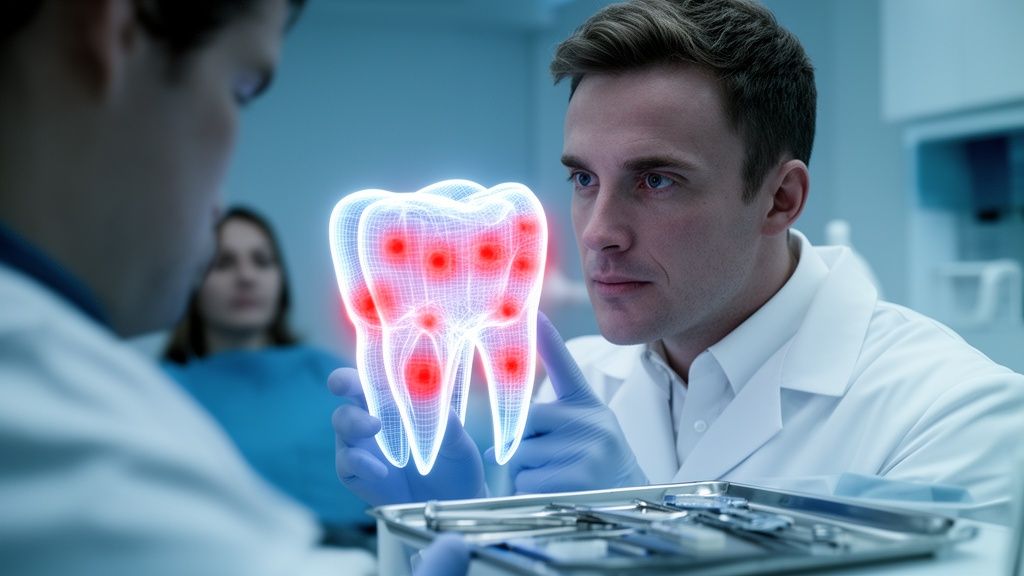
That sharp zing from cold water. The ache that starts after dinner and gets worse when you lie down. The soreness that makes you chew on one side and hope it goes away by morning. Dental pain often interrupts your day before you have time to think clearly about what is causing it.
At Dental Professionals of Fair Lawn, we see this every week. Some patients need an emergency dentist because the pain is severe. Others are looking for a long-term dentist in Fair Lawn, NJ who can finally solve a problem that keeps returning. Either way, the first priority is the same. Find the source, calm the pain, and protect the tooth and surrounding gum tissue before the problem grows.
Dental pain is also very common. In the United States, nearly one in four adults experiences occasional or frequent oral pain within a year, according to an NHANES-based analysis of oral pain and productivity loss. That matters in a community practice because pain affects sleep, eating, work, school, and peace of mind. It also creates anxiety. If you are trying to decide whether to call now or wait, the safer choice is usually to get checked.
As a practice serving Fair Lawn, Ridgewood, and Glen Rock, Dental Professionals of Fair Lawn helps patients with emergency exams, tooth extraction, root canal therapy, restorative dentistry, Invisalign, dental implants, and ongoing preventive dental care. Dr. Jody Bardash and the team focus on comfortable, practical treatment that addresses the cause, not just the symptom.
If you like to prepare before any medical appointment, this guide on how to master your doctor visit with a review of systems can help you organize your symptoms clearly.
Cavities remain the most common reason people develop tooth pain. They often begin without immediate symptoms. A tooth can look mostly normal from the outside while decay is already moving through enamel and into deeper tooth structure.
Globally, dental caries is the leading cause of toothaches, accounting for 43% of cases in a cross-sectional analysis, while periapical infections account for 14%, according to this review of toothache causes and epidemiology. That lines up with what most general dentists see in daily practice. A cavity is often the first step in a chain that leads to pulpitis, infection, and emergency treatment if it is ignored.
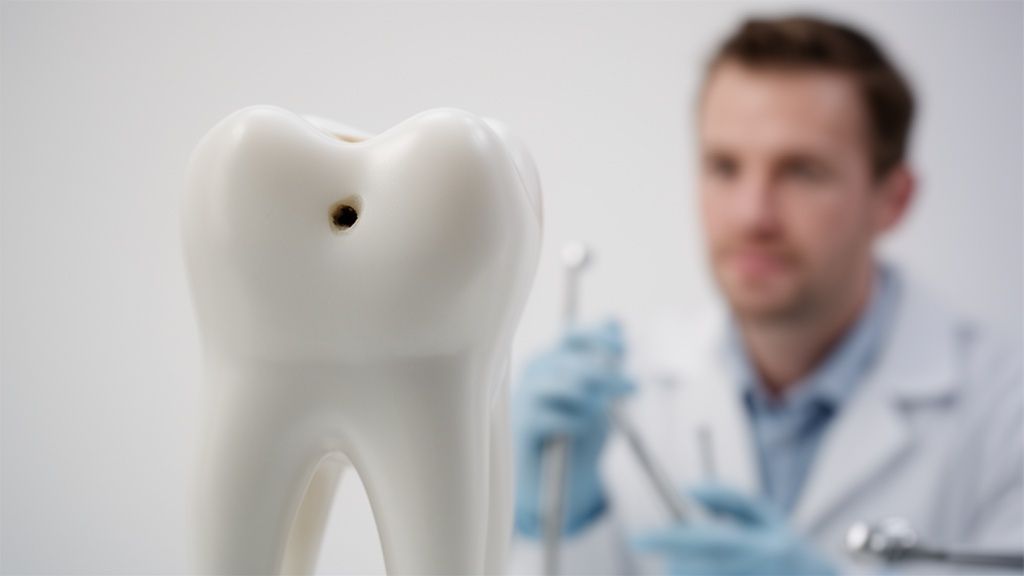
Early decay may cause no pain at all. Once the tooth becomes sensitive, patients usually describe one of a few patterns:
The biology is simple. Plaque bacteria feed on sugars and produce acids that erode enamel. If the cavity keeps progressing, the nerve becomes less protected and pain becomes more frequent.
A small cavity can often be treated with a tooth-colored filling. That is the best-case scenario. It is conservative, efficient, and usually very manageable for the patient.
What does not work is trying to “watch” an actively painful cavity at home. Mouthwash may freshen your mouth. Sensitivity toothpaste may dull symptoms for a while. Neither stops active decay once a tooth has developed a true hole or deeper structural damage.
A few practical examples we see often:
If a tooth hurts with sweets or cold more than once, schedule an exam. Repeated triggers usually mean the tooth needs treatment, not just a different toothpaste.
For families looking for a dentist near me in Fair Lawn, routine cleaning and exams, dental x-rays, fluoride treatment, and tooth-colored fillings are the tools that stop cavity pain before it becomes a bigger restorative problem.
Not all dental pain comes from the tooth itself. Sometimes the gums and supporting bone are the primary issue.
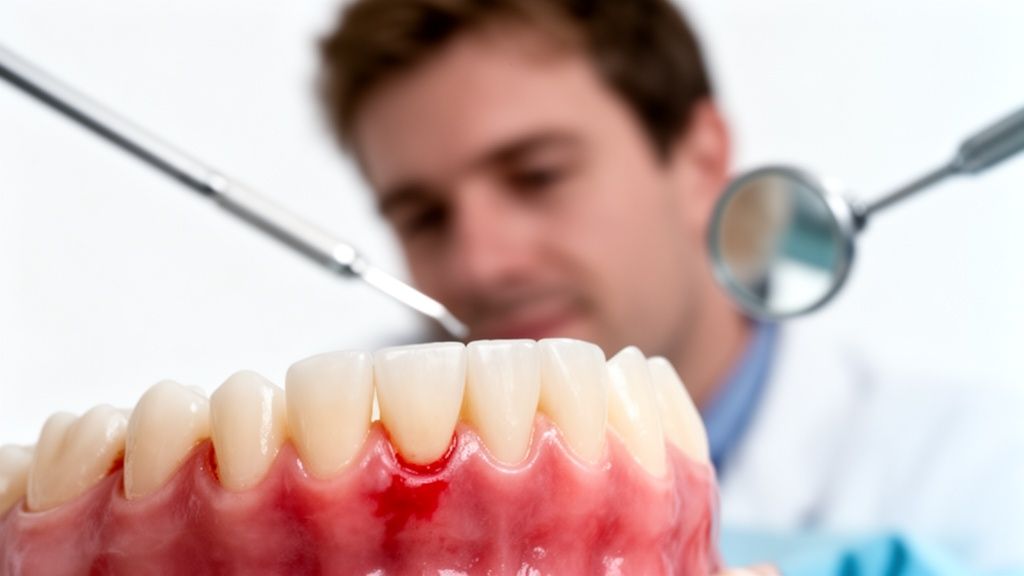
Gum disease usually begins with plaque buildup at the gumline. The earliest stage, gingivitis, can cause redness, swelling, tenderness, and bleeding when brushing or flossing. If the inflammation continues, the problem can advance into the structures that support the teeth.
Cavity pain is often triggered by temperature or sweets. Gum disease feels different. Patients more often describe:
In everyday practice, this is one of the most overlooked common causes of dental pain because people normalize bleeding gums. They assume a little blood means they brushed too hard. In reality, healthy gums should not bleed routinely.
Poor oral hygiene raises the likelihood of toothache. Infrequent brushing carried an odds ratio of 1.05 and lack of flossing an odds ratio of 1.96 for toothache occurrence in the same broad review of dental pain causes previously noted. Clinically, flossing matters because gum inflammation and trapped plaque often start where the toothbrush cannot fully reach.
That does not mean brushing harder. Aggressive brushing can irritate gum tissue and contribute to recession. The better approach is consistent, gentle home care plus professional maintenance.
Useful habits include:
A practical trade-off matters here. Mild gum inflammation often improves with better home care and a professional cleaning. More advanced disease may require deep cleaning, targeted periodontal therapy, or restorative planning if teeth have already become compromised.
For patients in Fair Lawn, Ridgewood, and Glen Rock looking for a dentist in Fair Lawn, NJ who provides preventive and advanced periodontal care, early treatment usually means simpler treatment.
Pulpitis is what happens when irritation reaches the nerve inside the tooth. This is the pain many patients describe as intense, deep, and hard to ignore.
The most common pathway is untreated decay, but cracks, trauma, and leaking older restorations can also inflame the pulp. Once the inside of the tooth is involved, pain often changes character. It may linger after cold, wake you up, or pulse without any trigger at all.
One important distinction is whether the nerve can recover.
Reversible pulpitis tends to cause shorter pain after a trigger. Irreversible pulpitis causes pain that lingers for minutes after the hot, cold, or sweet trigger is gone. That difference is clinically important because it often determines whether a tooth can be managed with a filling or needs root canal therapy.
Patients usually notice one of these patterns:
If you think a nerve is inflamed, timing matters. Over-the-counter pain medication may help you bridge the gap until your appointment. A cold compress on the cheek can also help with comfort. What does not solve the problem is avoiding that side of the mouth for weeks and hoping the nerve settles down permanently.
Sometimes it does not. Sometimes it dies, and the pain shifts into infection.
If you are not sure whether your symptoms point to a root canal, this page explains how to tell if you need a root canal.
A common real-world scenario is the patient who had mild cold sensitivity for months, then one night the pain becomes severe and keeps them awake. That is often the point where a simple filling is no longer enough.
When the tooth can be saved, root canal therapy removes infected or inflamed tissue from inside the tooth and allows the tooth to be restored. When the tooth is too damaged, tooth extraction may be the safer option.
Lingering pain after hot or cold is a warning sign. Short sensitivity can sometimes be monitored. Lingering pain usually needs prompt treatment.
An abscess is an infection. This is not the kind of problem to “wait out” over a weekend if symptoms are getting worse.
A dental abscess often develops after untreated pulpitis, but it can also follow trauma or severe gum disease. The pressure from infection can create constant, throbbing pain and noticeable swelling. Some patients also report a bad taste if the area begins to drain.
Abscess pain is usually more constant than simple sensitivity. It may come with:
Periapical infections contribute 14% of toothache cases in the broad analysis cited earlier, which is one reason emergency dental care remains so important in a community practice.
The right treatment depends on whether the tooth is restorable. If it is, root canal therapy may remove the infection source and preserve the tooth. If the tooth is fractured beyond repair or structurally unsound, extraction may be the better choice.
The trade-off is straightforward. Saving a tooth is often ideal when the foundation is sound. Keeping a severely damaged tooth can delay definitive treatment and prolong pain.
Do not press on the area, do not place aspirin directly on the gum, and do not assume antibiotics alone will solve it. Antibiotics may support treatment in some situations, but the source of the infection still needs dental care.
A realistic example is the patient who had a cavity for months, then wakes up with swelling and cannot chew. Another is the patient with a previously traumatized tooth that darkens and becomes painful much later. Both need prompt evaluation.
If swelling is increasing or swallowing or breathing feels affected, that requires urgent medical attention.
Cracked teeth can be frustrating because the pain is often inconsistent. You bite down and feel a sharp stab. Then the next bite is fine. A day later, cold water causes another jolt. This stop-and-start pattern is why cracks are easy to miss.
A crack can flex under pressure. That movement irritates the inner tooth structure and sometimes the nerve. Some cracks only involve enamel. Others extend deeper into dentin or toward the root, where the long-term outlook becomes more complicated.
Patients commonly notice:
This is one of those common causes of dental pain where delay creates real risk. A small crack may be managed with bonding or a crown. A deeper fracture can progress until the tooth splits, and then the options become much more limited.
Treatment is not one-size-fits-all.
A common scenario is the adult who has a large, older filling and starts feeling pain on one side while chewing nuts, crusty bread, or ice. Another is the athlete who takes a hit during sports and does not realize a front tooth has been structurally compromised until sensitivity appears later.
What works best is early diagnosis. What works poorly is chewing around it and hoping the crack does not spread. It often does.
If you play sports, a mouthguard matters. If you grind at night, that matters too. Repeated force is one of the biggest reasons a crack gets worse.
Some patients come in convinced they have a cavity, but the pain originates from clenching, grinding, or strain in the jaw joints and muscles.
Bruxism wears teeth down over time. It can also create fractures, sensitivity, morning headaches, and sore chewing muscles. TMJ and TMD problems add another layer. The joint may click, feel tight, or become painful when opening and closing.
This pattern feels different from decay or infection. Patients often describe:
The Haleon overview of dental pain causes notes that bruxism can cause a dull jaw ache and contribute to TMD symptoms such as radiating pain and headaches. In practice, this matters because treating the “tooth pain” alone will not solve the problem if the bite forces remain high.
To help patients understand this pattern better, Dental Professionals of Fair Lawn also explains how do I know if I have TMJ disorder.
A custom nightguard protects teeth. It does not fix every underlying cause, but it reduces direct damage from grinding.
For some patients, bite alignment is part of the issue. In those cases, orthodontic treatment such as Invisalign or the Damon System may help when crowding or malocclusion contributes to uneven force. That is one of the advantages of choosing one office for emergency care, restorative dentistry, and orthodontic evaluation. The treatment can be connected rather than pieced together.
A short educational video may help if jaw symptoms are part of your pain pattern.
A real-world example is the patient who keeps breaking dental work on one side and assumes the crown was the problem. Often the bigger issue is heavy clenching. Another is the teen or adult with a bite issue who notices jaw fatigue, headaches, and edge wear.
If your teeth hurt most in the morning, think beyond cavities. Nighttime grinding and jaw tension are common causes.
Tooth sensitivity is sharp, fast, and specific. Cold water hits one spot and the tooth answers immediately. The pain is usually brief, but it can be strong enough to make people avoid certain foods altogether.
This happens when dentin becomes exposed. Dentin contains tiny tubules that communicate with the nerve inside the tooth. When enamel wears down or gums recede, those tubules become easier to stimulate.
Sensitivity often follows:
One useful detail from the NHANES-based dental pain review is the recommendation of a 45-degree brush angle to reduce recession that can expose tubules and increase dentin hypersensitivity. Technique matters. Scrubbing harder does not clean better. It often makes sensitivity worse.
Sometimes patients have broad, unexplained sensitivity without a visible cavity. In those cases, enamel erosion from reflux is worth considering. A consumer dental article discussing this connection notes that stomach acid reaching the mouth, especially at night, can erode enamel and contribute to sensitivity, and that this possibility is often overlooked in routine discussions of tooth pain causes in this overview of tooth pain without a cavity.
That does not mean every sensitive tooth is related to reflux. It means persistent, widespread sensitivity may need a broader conversation.
What helps depends on the cause:
A practical example is the patient who starts whitening and notices short-term zingers. That often improves. Another is the patient with recession near the gumline who feels cold sensitivity every single morning. That may need in-office treatment, not just a toothpaste swap.
A common Fair Lawn scenario goes like this. A patient gets a filling, crown, root canal, implant, or Invisalign adjustment, feels some soreness that night, and then wonders whether to wait it out or call. The answer depends on the pattern of pain.
Some post-treatment discomfort is expected. Inflamed ligaments around a tooth can stay tender for a few days after dental work. Gum tissue can also feel sore after procedures that require retraction, impressions, injections, or surgical healing. What matters is whether symptoms are gradually settling.
Pain deserves a recheck if it is getting stronger, waking you from sleep, making it hard to bite, or showing up with swelling, fever, a foul taste, or numbness that does not fade. The American Dental Association notes in its guidance on dental pain and swelling that these symptoms can require prompt evaluation because the cause may be infection, bite trauma, or another complication that needs treatment rather than time alone: ADA oral health topic on toothache and swelling.
In practice, I look for a few patterns:
Referred pain adds another layer. A back tooth can send pain toward the ear, temple, or side of the head, which is why patients sometimes assume the problem is sinus pressure or an ear issue first. This overview of an earache causing headache explains how head and neck pain can overlap, but symptoms that start with chewing, temperature changes, or pressure on a tooth still need a dental exam.
The trade-off is simple. Waiting can spare you an unnecessary visit if the soreness is normal and improving. Waiting can also turn a minor adjustment into a larger problem if the bite is off, the socket is not healing well, or the tooth has a crack that was not obvious at the first appointment.
That is why post-treatment follow-up matters. At Dental Professionals of Fair Lawn, the solution may be as small as adjusting a crown, changing aftercare, and checking healing, or as advanced as emergency root canal retreatment, crack evaluation, implant assessment, or orthodontic modification. The goal is not just to confirm that pain exists. It is to identify exactly why it is happening and relieve it fast.
| Condition | Treatment complexity | Resource requirements | Expected outcomes | Ideal use cases | Key advantages |
|---|---|---|---|---|---|
| Dental Caries (Cavities) | Low–Moderate (preventive to restorative) | Oral hygiene, fluoride, dental exams, fillings, X-rays | Highly preventable; early treatment preserves tooth with good prognosis | Early enamel lesions, sensitivity to sweets/temperature, routine checkups | Preventable; conservative, aesthetic restorations available |
| Periodontal Disease (Gum Disease) | Moderate–High (scaling to surgery; ongoing maintenance) | Professional deep cleanings, periodontal specialist care, frequent recalls, possible grafting | Gingivitis reversible; periodontitis controllable but bone loss irreversible; requires maintenance | Bleeding/swollen gums, pocketing, systemic risk factors (diabetes, smoking) | Professional therapy halts progression; improves oral/systemic health risk |
| Pulpitis (Tooth Nerve Inflammation) | High (urgent endodontic therapy) | Emergency evaluation, root canal therapy, pain control, crown restoration | Root canal relieves pain in most cases; untreated → necrosis/abscess | Severe throbbing pain, extreme temperature sensitivity, trauma-related pain | Rapid pain relief and tooth preservation with timely root canal |
| Dental Abscess (Periapical Abscess) | High (emergency surgical/medical care) | Emergency drainage, antibiotics, root canal or extraction, possible hospital referral | Infection control expected with prompt treatment; risk of systemic spread if delayed | Facial swelling, fever, constant severe pain, difficulty swallowing or breathing | Definitive treatment prevents systemic complications and relieves severe symptoms |
| Cracked or Fractured Teeth | Variable (simple bonding to extraction) | Imaging/intraoral camera, bonding, crowns, endodontics, possible extraction | Minor cracks repairable; deep/root fractures may require extraction; earlier = better prognosis | Sharp pain on biting, visible crack after trauma or large restorations | Restorative options preserve function and aesthetics; crowns durable for severe cracks |
| Bruxism & TMJ Disorders | Moderate–High (multidisciplinary, long-term) | Custom nightguards, TMJ therapy, orthodontics, sleep evaluation, stress management | Nightguards prevent further damage; TMJ therapy often improves function; may need ongoing care | Worn teeth, morning jaw pain/headaches, TMJ clicking/locking, suspected sleep apnea | Protects dentition, addresses underlying causes, non-invasive first-line options |
| Tooth Sensitivity (Dentin Hypersensitivity) | Low–Moderate (conservative to surgical) | Desensitizing toothpaste, fluoride gels, bonding, gum grafting for severe recession | Often quickly manageable with conservative care; enamel loss irreversible if present | Sharp pain with cold/acidic foods, multiple teeth sensitive, post-whitening sensitivity | Multiple low-cost, effective treatments; fast symptomatic relief possible |
| Post-Treatment Dental Pain (Referring Pain & Complications) | Variable (expected healing to complex retreatment) | Post-op care, analgesics, follow-up visits, possible retreatment or surgery | Most post-op pain is temporary; complications require additional intervention | Recent procedures with prolonged/worsening pain, signs of complication (fever, swelling) | Predictable healing protocols; many complications preventable with proper care |
Understanding the common causes of dental pain helps, but relief usually comes from one thing. Getting the problem diagnosed while it is still manageable.
Some causes are relatively straightforward. A small cavity may need a tooth-colored filling. Mild sensitivity may improve with fluoride, bonding, or a change in brushing technique. Jaw-related pain may respond best to a custom appliance and a bite evaluation. Other problems need more immediate treatment. Lingering nerve pain may require root canal therapy. A non-restorable tooth may need tooth extraction. A missing or hopeless tooth may lead to a discussion about bridges or dental implants near me if you want a stable long-term replacement.
The advantage of being seen by a dental office offering a wide range of services is that the next step does not have to be guessed. Dental Professionals of Fair Lawn provides preventive care, emergency treatment, restorative dentistry, cosmetic dentistry, periodontal care, Invisalign, Six Month Smiles, Damon System orthodontics, oral surgery, TMJ therapy, and implant dentistry in one practice. That matters when pain is connected to more than one issue. A cracked tooth may also need a crown. A bite problem may also be driving grinding. A failing tooth may need extraction now and implant planning later.
If you are visiting for the first time, the appointment should feel clear and organized. At Dental Professionals of Fair Lawn, that typically means a thorough new patient exam, digital x-rays, and a detailed discussion of your symptoms with Dr. Jody Bardash and the team. The goal is not to rush you through a generic answer. The goal is to locate the cause, explain what is happening in plain language, and recommend treatment that fits both the urgency of the problem and your long-term oral health.
Patient comfort matters too. Many people delay care because they are worried about pain, noise, or past experiences. Sedation dentistry can make needed treatment much easier for anxious patients. That can be especially important when someone has postponed care until a cavity, infection, or broken tooth becomes difficult to ignore.
The practical message is simple. Dental pain rarely rewards waiting. Some problems stay stable for a short time, but many get deeper, more expensive, and more disruptive. The sooner the cause is identified, the more likely it is that treatment stays conservative.
If you are in Fair Lawn, Ridgewood, Glen Rock, or a nearby New Jersey community and searching for a dentist near me, emergency dentist, cosmetic dentist near me, Invisalign provider, or help with tooth extraction and restorative care, Dental Professionals of Fair Lawn is one relevant local option for evaluation and treatment.
When a tooth hurts, your body is asking for attention. Acting early protects your comfort, your time, and often your tooth.
If you are dealing with tooth pain, sensitivity, swelling, a cracked tooth, jaw pain, or a dental emergency, contact Dental Professionals of Fair Lawn to schedule an emergency visit or new patient exam. The team serves Fair Lawn, Ridgewood, Glen Rock, and nearby New Jersey communities with preventive, restorative, cosmetic, implant, orthodontic, and TMJ-focused dental care designed to relieve pain and restore comfort.