Lip Tie Treatment in Fair Lawn NJ a Complete Guide
Searching for lip tie treatment in Fair Lawn, NJ? Learn about signs, laser vs. scalpel procedures, and aftercare. Contact our dentists for a consultation.
Searching for lip tie treatment in Fair Lawn, NJ? Learn about signs, laser vs. scalpel procedures, and aftercare. Contact our dentists for a consultation.
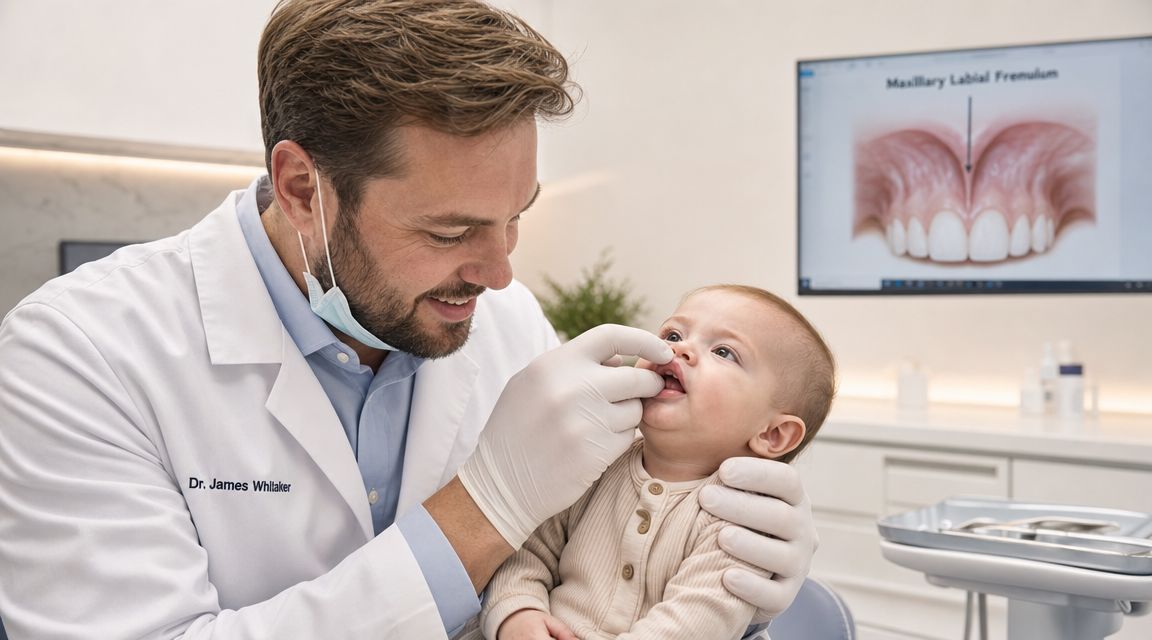
If you're reading this in Fair Lawn, Ridgewood, or Glen Rock, there's a good chance you're exhausted. Your baby may be feeding for a long time but still seeming hungry. You may hear clicking during nursing or bottle feeding. You may be dealing with pain, worry about weight gain, and the constant question every parent asks at some point: “What are we missing?”
A lip tie can be part of that picture. It can also be only part of the story.
That's why parents need more than a quick glance inside a baby's mouth. They need a careful evaluation, a calm explanation, and a plan that starts with function, not fear. Lip tie treatment should never feel rushed. It should help you understand what's happening, what may help first, and when a procedure is worth considering.
Many parents arrive feeling like they've already tried everything. They've changed nursing positions, switched bottles, asked friends, searched online late at night, and still don't have a clear answer. Some have already been told their baby “definitely has a lip tie.” Others have been told it's nothing at all.
Both situations can leave families stuck.
At our Fair Lawn practice, the conversation starts with what you're seeing every day. Is your baby struggling to flange the upper lip outward? Are feedings messy or tiring? Is nursing painful? Are you worried because something just doesn't seem right, even if nobody has explained why? Those details matter more than a label alone.
A visible upper lip frenulum doesn't always mean a baby needs treatment. Nearly every baby has tissue connecting the lip to the gums. What matters is whether that tissue is restricting movement enough to affect feeding or oral function.
That distinction matters because treatment decisions should be based on function, not just appearance.
Many families feel relief once they learn that a diagnosis is only the beginning of the conversation, not the automatic end point.
Parents looking for a dentist in Fair Lawn, NJ often want one place that can answer questions clearly and guide next steps without pressure. That's especially true when the patient is an infant and the concern affects feeding, comfort, and growth.
Dr. Jody Bardash brings more than 30 years of experience to family-focused dental care, and that depth shows in how concerns are evaluated and explained. If lip tie treatment is appropriate, the process should feel calm and thoughtful. If conservative care makes more sense first, parents deserve to hear that too. For families in Fair Lawn, Ridgewood, and Glen Rock, that balanced approach can make a stressful situation feel manageable again.
A lip tie involves the maxillary labial frenulum, the small band of tissue that connects the upper lip to the gums. When that tissue is unusually tight or restrictive, the upper lip may not lift and flange well during feeding.
A simple way to think about it is this: if a rope keeps a boat tied too tightly to the dock, the boat can't move where it needs to go. In the same way, a tight frenulum can limit how the upper lip moves and seals during feeding.

Awareness of lip ties has grown quickly. In a 2023 parent survey on infant frenulum awareness, 59.8% of parents had heard of lip tie, and 91.2% associated it with breastfeeding problems. That helps explain why so many families begin researching this topic as soon as feeding becomes difficult.
Common signs in babies can include:
Mothers may notice:
For parents who are still navigating your breastfeeding journey, practical feeding guidance can help you ask better questions and feel less alone while you sort out what's causing the difficulty.
Diagnosis should be gentle. It isn't a scary test and it doesn't rely on one quick look.
A proper evaluation includes looking at the tissue, but also watching how the lip moves, asking about latch and feeding patterns, and understanding whether symptoms line up with the finding. That functional view is one reason parents often find pediatric oral evaluations helpful, especially when they want a broader picture of infant mouth development and feeding-related concerns through pediatric dental care in Fair Lawn.
Practical rule: A lip tie diagnosis should answer two questions. What does the tissue look like, and what is it actually doing during feeding?
Not every baby with a visible lip tie needs a procedure. That's one of the most important things parents can hear.
In a Harvard Medical School summary of multidisciplinary feeding evaluation findings, 62.6% of infants referred for tongue-tie and or upper-lip tether surgery ultimately did not undergo surgery after proper evaluation, and all improved after a multidisciplinary feeding assessment. That finding supports a conservative-first mindset. It reminds us that feeding problems can have more than one cause, and careful assessment can prevent unnecessary procedures.

For many infants, the first step isn't surgery. It's support.
That may include working with a lactation consultant, adjusting feeding positions, checking bottle mechanics, and improving oral function with guided exercises or bodywork when appropriate. Sometimes the issue is a combination of latch mechanics, tension, positioning, and oral restriction rather than one isolated problem.
Here's how conservative management often helps:
| Approach | What it tries to improve |
|---|---|
| Feeding position changes | Better latch depth and seal |
| Lactation support | Milk transfer and maternal comfort |
| Oral exercises | Lip mobility and coordination |
| Bodywork or functional support | Overall feeding comfort and tension patterns |
A procedure becomes part of the conversation when symptoms persist and the frenulum appears to be contributing meaningfully to the problem. The decision should be based on a pattern, not a guess.
A frenectomy is the procedure used to release restrictive upper lip tissue. In practical terms, it creates more freedom of movement so the lip can lift and seal more effectively.
A small 2023 case series on isolated upper lip tie and breastfeeding outcomes found improvement in latch, nipple pain, breastfeeding satisfaction, and weight gain after frenotomy in 7 infants, while also noting that larger prospective studies are still needed. That's a balanced message. Some babies improve with treatment, but the evidence still requires careful interpretation.
Parents shouldn't feel pushed toward surgery or talked out of it without explanation. Good lip tie treatment involves weighing the severity of symptoms, the feeding history, and the baby's response to non-surgical support.
One care setting that may be part of that discussion is Dental Professionals of Fair Lawn, where families can seek evaluation for oral restrictions along with related services such as laser dentistry and oral surgery. What matters most is that the recommendation fits the child, not the trend.
When a frenectomy is the right next step, parents usually have one immediate concern. “How gentle is this going to be for my baby?”
That's where technology matters. A CO2 laser is a soft-tissue tool used to release restrictive frenulum tissue with precision. Compared with traditional cutting methods, it allows the provider to remove tissue in a controlled way.

According to clinical guidance on CO2 laser lip tie release, the CO2 laser can release a restrictive frenulum with minimal bleeding and typically without the need for sutures, which can reduce procedural trauma and simplify recovery.
That matters for several reasons:
If you'd like a simple background explanation of how this technology works, Omega Lasers' CO2 laser guide gives a general overview in plain language.
The word “laser” can sound intimidating, but for parents it often helps to think of it as a focused light tool designed for delicate soft tissue. The goal isn't to make the process feel high-tech for its own sake. The goal is to make tissue release more controlled.
Families who want to understand how this type of technology fits into dental care more broadly can also review laser dentistry at our Fair Lawn office.
This short video can also help make the idea feel more familiar before your visit.
A procedure sounds less frightening when you know what the tool is doing and why it was chosen.
For most parents, anxiety comes from not knowing how the appointment will unfold. Once the process is clear, it often feels much more manageable.
A visit for lip tie treatment in Fair Lawn usually begins with conversation, not instruments. You'll talk through feeding concerns, what you've already tried, and whether symptoms have changed over time. The exam is focused and gentle, with close attention to movement and function.
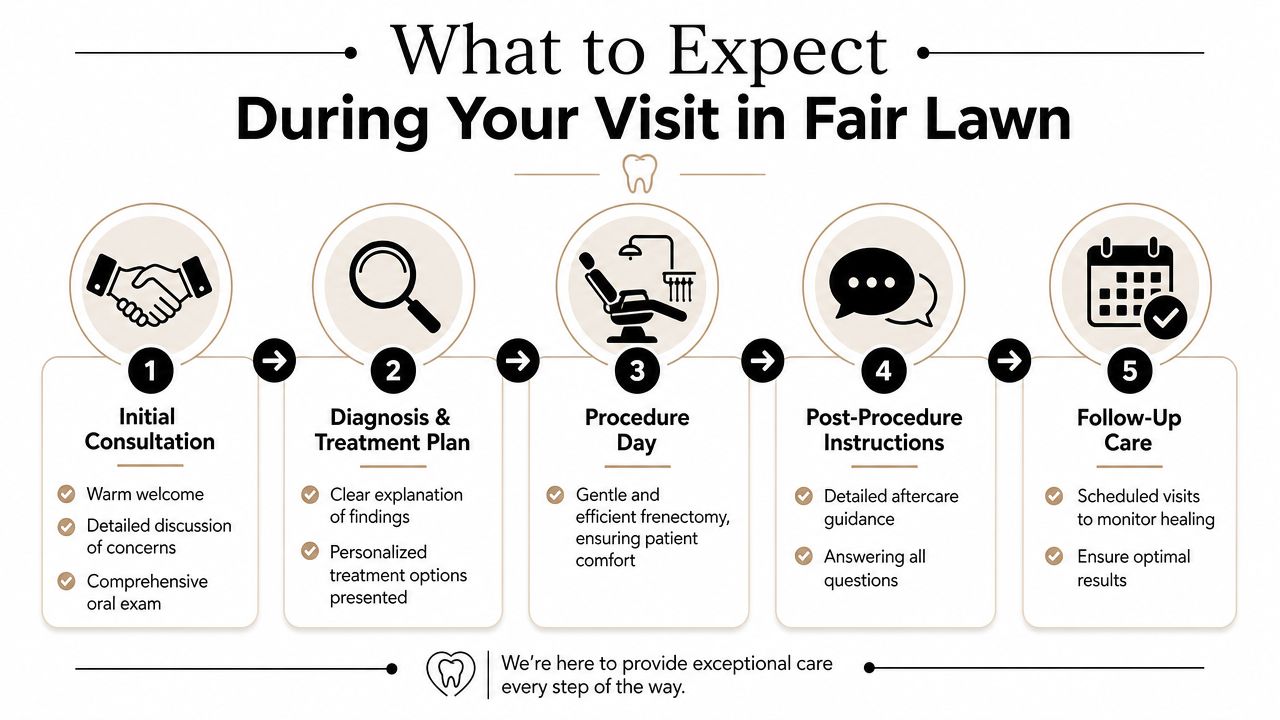
Most families can expect a sequence that feels straightforward:
Initial consultation
Your concerns come first. Feeding history, latch struggles, pain, and previous evaluations all help shape the discussion.
Functional exam
The upper lip is examined visually and functionally. The question is whether the tissue is restricting normal movement enough to matter.
Treatment recommendation
Some families are advised to continue conservative care. Others may be offered a frenectomy if the restriction appears clinically significant.
Procedure if appropriate
If treatment is chosen, the release itself is quick. Parents are typically present and involved in understanding each step.
Immediate guidance
You'll leave with aftercare instructions, feeding guidance, and a plan for follow-up.
Parents often worry that the procedure will be long or chaotic. In reality, when a frenectomy is indicated, it is usually brief. Babies are kept secure and comforted, often with swaddling and close parental presence.
The atmosphere should feel calm and organized. You should know what's happening before it happens.
For older children who need oral surgery or who feel especially anxious in a dental setting, it can also be reassuring to know that some practices offer sedation dentistry as part of broader family dental care. That doesn't mean sedation is typical for infant lip tie treatment. It means anxious patients of different ages may have comfort options when other procedures are needed.
Many parents ask whether feeding can happen soon after the release. In many cases, babies can attempt to feed shortly after the procedure. That first feed isn't a final exam. It's an early opportunity to begin using the new range of motion.
Some babies show changes quickly. Others need time, practice, and support before feeding feels easier.
The procedure is only one part of successful lip tie treatment. Healing and function afterward matter just as much.
This is the stage where parents often need the most support. You're caring for a baby, trying to remember instructions, and wondering whether every small change is normal. Clear aftercare helps reduce that stress.

Aftercare usually focuses on keeping the released area from healing back too tightly and helping the baby learn to use the lip more effectively during feeding.
That often involves:
The treated area may look different during healing. Many parents notice a white or yellowish patch and worry that something is wrong. In many cases, that appearance is part of normal healing rather than a sign of infection.
Stretching instructions should be demonstrated clearly. Parents shouldn't be left to figure them out on their own. The motion needs to be deliberate enough to keep the area mobile, but still gentle and controlled. If you're unsure whether you're doing them correctly, that's a reason to call the office, not a reason to stop.
A simple home routine often works best:
| Time period | Focus |
|---|---|
| Early healing | Comfort, feeding, and learning the stretches |
| Following days | Consistency with mobility work |
| Ongoing follow-up | Monitoring function and healing progress |
Some families ask about general wound-care products while thinking through healing. If you're trying to understand broader skin-healing considerations, FindMyScript's guide offers general background reading. For your baby's mouth, though, always follow the specific post-procedure instructions you were given for oral tissue.
Keep these principles in mind:
Healing isn't just about the tissue closing. It's about the lip healing with the movement your baby needs.
Lip tie treatment works best when it follows a complete path. That path starts with a careful exam, includes conservative support when appropriate, uses precise treatment when needed, and continues through healing with close follow-up.
That kind of care matters because parents are not just choosing a procedure. They're choosing how their concerns will be heard, how clearly options will be explained, and how supported they'll feel after they leave the office.
A provider for lip tie treatment in Fair Lawn should offer more than technical skill alone. Families benefit when the office can:
For parents searching for a dentist near me or a family-focused dentist in Fair Lawn, NJ, those qualities often matter more than any marketing language. The right office helps you move from uncertainty to a plan you understand.
Dr. Jody Bardash's decades of clinical experience and family-centered approach can give parents a steadier way to make decisions when feeding concerns feel urgent. For families in Fair Lawn, Ridgewood, and Glen Rock, experience, clear communication, and thoughtful care can make a real difference.
Parents usually describe the hardest part as the anticipation, not just the procedure itself. A lip tie release is typically quick, and comfort measures are used throughout the visit. Some babies are fussy afterward, while others settle quickly. Mild soreness can happen, but parents are given specific instructions for comfort and feeding.
Coverage varies by plan and by how the treatment is classified. The most practical next step is to contact your insurer and ask about benefits for frenectomy or infant oral restriction treatment. If you're unsure what to ask, the office can usually help you understand which details may be needed before treatment.
Yes, it can in some cases. In older children or adults, a restrictive frenulum may be part of concerns involving oral hygiene, lip movement, or spacing near the upper front teeth. Evaluation still matters, because not every visible frenulum causes a functional problem. The right recommendation depends on symptoms and exam findings, not appearance alone.
Some families notice changes quickly. Others see gradual improvement as the baby adjusts to the new movement and as feeding support continues. That's one reason aftercare and follow-up matter so much. A procedure can create mobility, but feeding is still a learned function that may take time to improve.
If you're worried your baby may need lip tie treatment, the next step is a calm, thorough evaluation. Dental Professionals of Fair Lawn offers family-centered care for patients in Fair Lawn, Ridgewood, Glen Rock, and nearby New Jersey communities. Schedule a consultation to get clear answers, understand your options, and move forward with confidence.