Pediatric Dental Care in Fair Lawn: A Parent's Guide
Your guide to pediatric dental care in Fair Lawn, NJ. Learn about milestones, preventive tips, and emergency care from Dental Professionals of Fair Lawn.
Your guide to pediatric dental care in Fair Lawn, NJ. Learn about milestones, preventive tips, and emergency care from Dental Professionals of Fair Lawn.
If you're reading this in Fair Lawn, Ridgewood, or Glen Rock, there's a good chance you're in one of those familiar parenting moments. Your baby just got a first tooth. Your child says cold water hurts one side of the mouth. Your teen has started asking about straighter teeth. Or maybe you're typing “dentist near me” because you want a dental office that feels calm, clear, and trustworthy.
That search can feel bigger than it should. Parents aren't just looking for a cleaning. You're looking for someone who can explain what's normal, catch problems early, and help your child feel safe in the chair.
Pediatric dental care works best when it feels manageable. Small choices made early, like cleaning the first tooth, scheduling the first visit on time, and treating a tiny cavity before it grows, can shape how your child feels about dental care for years. If you're also trying to sort through products at home, Mouthology's expert guide for parents is a helpful starting point for thinking through kid-safe toothpaste options in plain language.
A parent in our area might notice a white spot on a toddler's front tooth and wonder, “Is that normal?” Another may hear from a school nurse that a child should have a dental checkup before the next sports season. These questions are common, and they matter because children's mouths change quickly.
Pediatric dental care isn't only about fixing pain. It's about watching growth, protecting baby teeth while they still have an important job to do, and helping permanent teeth come in on the right path. It also means knowing when a problem can wait a day and when you should call an emergency dentist right away.
New parents usually want the basics explained clearly. How hard should brushing be? Are thumb-sucking and pacifiers affecting the bite? Is a dark groove on a molar a cavity or just a stain? Families with older children often have different concerns, like sports injuries, orthodontic timing, or a child who has become nervous after one difficult appointment.
That's why a good local dental home matters. It gives you one place to return to for preventive care, tooth-colored fillings, dental x-rays when needed, guidance on growth, and help during urgent problems like a chipped tooth or swelling.
Practical rule: If you're unsure whether something is “serious enough,” call sooner. In pediatric dental care, early guidance often prevents a bigger, more stressful visit later.
Most families don't need a lecture. They need a calm plan. That plan usually includes:
For families in Fair Lawn, Ridgewood, and Glen Rock, the goal is simple. Keep care consistent, keep explanations clear, and make each visit easier than the last.
Children don't move through dental development in one big jump. It happens in stages, and each stage changes what parents should watch for at home.
Major U.S. professional guidance recommends a child's first dental visit by age 1 or within 6 months of the first tooth's eruption. That early visit matters because it shifts care toward prevention. Younger children are also the group most likely to miss care. The Cleveland Clinic notes that dental visits for children ages 1 to 4 fell from 58.6% to 51.3% in 2020 in the CDC data summarized in its pediatric dentist guidance, which is one reason early habit-building matters so much in real life, not just in theory, as explained in this pediatric dentist overview from Cleveland Clinic.
| Age Range | Key Milestones | Parent & Dentist Actions |
|---|---|---|
| Infancy | First tooth erupts, teething begins, feeding habits affect oral development | Clean gums and new teeth gently, schedule the first dental visit by age 1 or within 6 months of the first tooth, discuss bottle and feeding habits |
| Toddler years | More baby teeth erupt, brushing becomes part of daily routine, early habits form | Help with brushing every day, watch for white spots or brown areas, keep regular exams and cleanings |
| Preschool and early school age | Full baby dentition, bite patterns become easier to assess, thumb-sucking effects may show | Reinforce brushing and flossing, ask about fluoride and sealants when appropriate, monitor habits and spacing |
| School age | Baby teeth loosen, permanent teeth erupt, molars need extra protection | Track tooth loss and eruption, support healthy home care, evaluate crowding and chewing-surface cavity risk |
| Teen years | More permanent teeth in place, sports and diet affect teeth, orthodontic concerns become more obvious | Discuss alignment options such as Invisalign when appropriate, consider mouthguards, monitor wisdom tooth development and cavity risk |
In infancy, the first visit is mostly about education. Parents often expect a long treatment appointment, but usually the focus is on a gentle exam, risk review, and home-care advice.
During the toddler years, many parents need help with cooperation. That's normal. At this age, consistency matters more than perfection. A quick, well-supported brushing routine every day does more good than an occasional long struggle.
For preschoolers and early school-age children, spacing, bite development, and cavity prevention become more important. To understand what “normal” tooth spacing looks like at this age, this guide to 3-year-old teeth can help you compare what you're seeing at home with common patterns.
Baby teeth matter. They help children chew, speak, and hold space for adult teeth. Treating them as “temporary” often leads to avoidable problems.
Teen dental care isn't just about cavities. It's often about confidence, sports safety, and long-term planning. Some teens are good candidates for orthodontic options such as Invisalign. Others may need monitoring, restorative dentistry after an injury, or extra attention to hygiene around busy school schedules.
The goal through every stage is steady care, not panic care.
Preventive dental care is where the biggest wins usually happen. It's easier for a child to sit through a short exam, cleaning, and fluoride treatment than to need a longer visit later for pain or repair.
That matters because routine attendance alone doesn't tell the whole story. Even with high rates of dental visits, 15% of children ages 5 to 11 had untreated dental caries in 2017 through March 2020, according to America's Children data on dental care and untreated decay. A child can technically have “been to the dentist” and still have disease that needs attention.
At a practical level, preventive pediatric dental care usually means a combination of simple, repeatable steps:
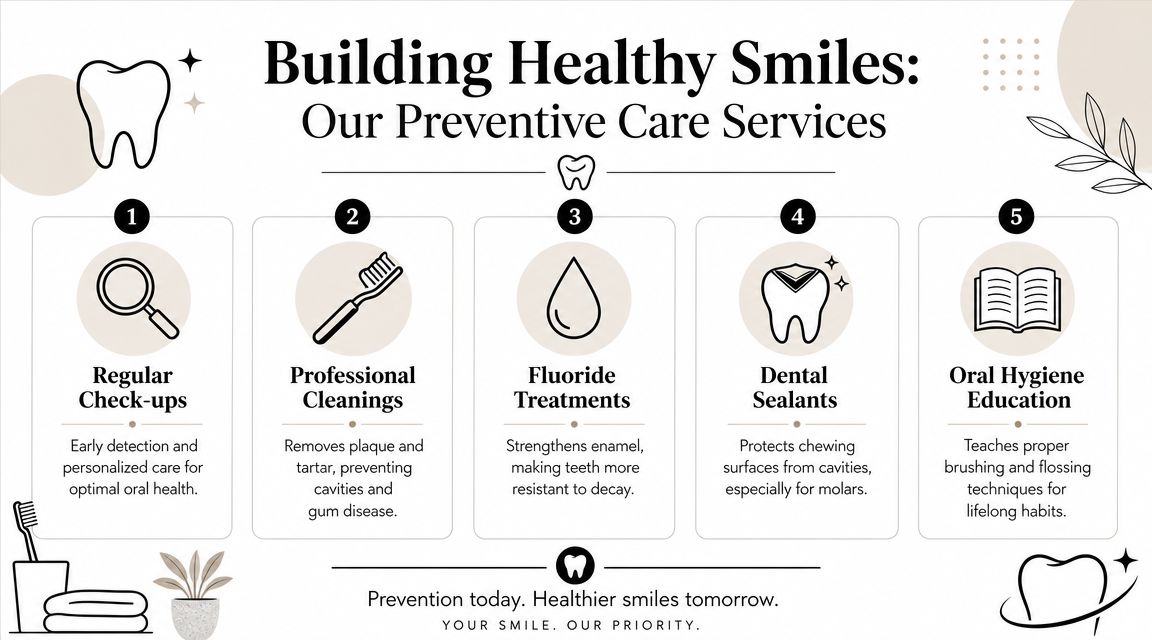
Many cavities in children don't start with dramatic pain. They start in spots that are easy to miss. That's why prevention is so valuable. It gives the dental team the chance to intervene while the problem is still small.
Parents sometimes ask whether cleanings and exams are really necessary if their child brushes every day. The answer is yes. Home care is essential, but children often miss the same tricky areas over and over. Professional visits fill those gaps.
Key takeaway: Preventive care protects more than teeth. It protects your child's comfort, confidence, school routine, and future treatment options.
Preventive care also gives parents a regular place to ask questions. You can bring up thumb-sucking, mouth breathing, crowding, a new sensitivity, or whether a dark line in a groove needs treatment. Those conversations are part of good care, not an interruption to it.
When a child needs treatment, most parents want one thing first. A plain explanation. The names of procedures can sound intimidating, but many pediatric treatments are straightforward and focused on comfort.
A tooth-colored filling repairs a spot where decay has softened part of the tooth. I often describe it to parents as fixing a small pothole before it gets deeper. The damaged area is removed, and the tooth is sealed with a material that blends with the natural tooth color.
For children, the main benefits are simple. The tooth becomes smoother, stronger, and less likely to trap food. Most importantly, treatment can stop sensitivity or pain from getting worse.
Sometimes a cavity or fracture is too large for a filling alone. In that case, a pediatric dental crown covers and protects the tooth more completely. Parents sometimes worry that a crown sounds extreme, but it can be the most conservative choice when the goal is to save the tooth and avoid repeated breakdown.
A crown can be useful when a baby tooth still needs to stay in place for a while. Keeping that tooth stable may help with chewing, speech, and space for the adult tooth that will come later.
Some visits focus on function rather than decay. A child may need monitoring for eruption problems, evaluation after a dental injury, or guidance about alignment. In a family practice setting, parents may also ask about future services like Invisalign for teens, restorative dentistry for damaged teeth, or tooth extraction if a tooth can't be saved or is affecting eruption.
Common reasons a child might need a treatment visit include:
If your child needs treatment, ask two questions first. What problem are we fixing, and what happens if we wait? Good explanations reduce fear for both parents and kids.
The best pediatric visits are not rushed. Children do better when they know what to expect, hear calm language, and get breaks when needed. A gentle pace can make even a restorative visit feel manageable.
That's one reason early prevention is so helpful. Smaller problems usually mean simpler procedures.
For many children, the hardest part of a dental visit isn't the exam. It's uncertainty. They don't know what a tool does, what a sound means, or whether something will hurt. Parents feel that too, especially if they've had a tough appointment somewhere else.

A calm pediatric dental care experience starts with communication. Children usually respond better when the visit feels predictable, step by step, instead of fast and unfamiliar.
Many pediatric teams use a simple rhythm often called tell, show, do. That means explaining in child-friendly words, letting the child see or hear something first, and only then doing the step itself. It sounds basic, but it works because it lowers surprise.
Parents can support that process before the appointment by keeping their own language neutral and steady. If you want a good overview of how clear communication improves care across health settings, essential tips for healthcare providers offer useful reminders that apply to pediatric dental visits too.
Some children also benefit from practical accommodations such as:
Modern pediatric dentistry includes tools and techniques that can make treatment more comfortable. Practices may use digital imaging, 3D scanning, laser dentistry, and distraction strategies to reduce stress and improve precision. In some offices, that can mean less time in the chair and a gentler experience for selected procedures.
For children with severe anxiety, sensory sensitivities, special health care needs, or difficulty staying still, sedation may be part of a safe treatment plan. The American Academy of Pediatric Dentistry states that sedation can improve cooperation and reduce anxiety for children who cannot remain still, which can make necessary care possible and help prevent negative experiences, as outlined in the AAPD's policy on care for vulnerable populations in a dental setting.
Parents who want to understand how that option fits into children's care can review this overview of sedation in pediatric dentistry.
Here's a short look at how a child-friendly visit can feel in practice:
Some children need extra time. Some need fewer sensory triggers. Some need sedation. Matching the approach to the child is part of good care, not a special exception.
Dental Professionals of Fair Lawn provides pediatric dental care along with sedation dentistry and laser dentistry, which gives families in the Fair Lawn area one local option when a child needs a gentler or more individualized treatment setup.
A dental emergency with a child can feel chaotic fast. There may be tears, blood, swelling, or a lot of fear over a broken tooth. In those moments, parents don't need complicated instructions. They need a calm first step.
If your child has a severe toothache, rinse the mouth gently with water and look for anything obvious trapped between the teeth. Don't place aspirin on the gums. Call an emergency dentist if the pain is strong, swelling is present, or your child can't eat or sleep comfortably.
If a permanent tooth is knocked out, handle it by the top part, not the root. If it's dirty, rinse it gently. If your child is old enough and calm enough, the tooth may be placed back into the socket carefully. If not, keep it protected and call for emergency dental care immediately.
For a chipped or broken tooth, save any pieces you can find, rinse the mouth, and use a cold compress on the outside of the face if there's swelling. Even a small chip can hide a deeper crack, so it's worth having checked.

Call promptly if you notice any of the following:
Urgent reminder: If your child has swelling, fever, trouble swallowing, or trouble breathing, seek immediate medical attention.
Families in Fair Lawn, Ridgewood, and Glen Rock often search for an emergency dentist only after something has already happened. It helps to know in advance where you'll call if your child wakes up with facial pain or comes home from sports with a dental injury.
Parents usually aren't looking for a long list of services by itself. They want a practice that can care for their child today and continue caring for the whole family as needs change. That might mean cleanings and exams now, Invisalign consultations for a teen later, or restorative dentistry and emergency care when life gets messy.

A family dental office in Fair Lawn should make care easier, not more confusing. That means clear explanations, modern tools, a calm environment, and practical support with scheduling and payment questions.
Dental care also works better when the office can keep up with changing needs over time. A young child may start with preventive visits. Later, that same family may need cosmetic dentistry, tooth extraction, emergency treatment, or discussions about orthodontic options such as Six Month Smiles or Invisalign for an older sibling or parent.
Nationally, 1 in 4 children did not receive preventive dental care in the past year, and preventive visit rates have declined since 2019, according to the CDC data brief on children's dental examinations and cleanings, summarized here in the National Center for Health Statistics report. That's one reason having a dedicated local dental home matters. Consistent care helps families stay on schedule instead of waiting until discomfort forces an appointment.
Parents in Fair Lawn, Ridgewood, and Glen Rock also want to know who is caring for their family. Dr. Jody Bardash brings decades of clinical experience, and the practice's broader approach includes preventive, restorative, cosmetic, orthodontic, implant, periodontal, laser, and emergency services in one setting. For families, that often means fewer handoffs and more continuity.
A good fit often comes down to a few practical questions:
The right dental practice doesn't just treat teeth. It becomes part of a family's health routine.
If you've been searching for a dentist near me in Fair Lawn, NJ and want a place that understands first visits, prevention, anxiety, and emergencies, it helps to choose a practice that can grow with your family.
If your child is due for a first visit, a routine cleaning and exam, or urgent care for a tooth problem, Dental Professionals of Fair Lawn welcomes families from Fair Lawn, Ridgewood, Glen Rock, and nearby communities. Reach out to schedule an appointment, ask questions about pediatric dental care, or get guidance on the next best step for your child's smile.