How Does Laser Dentistry Work: Your Questions Answered
Learn how does laser dentistry work from our Fair Lawn dentists. Experience gentle, precise, pain-free care. Book your visit near Ridgewood, NJ today!
Learn how does laser dentistry work from our Fair Lawn dentists. Experience gentle, precise, pain-free care. Book your visit near Ridgewood, NJ today!
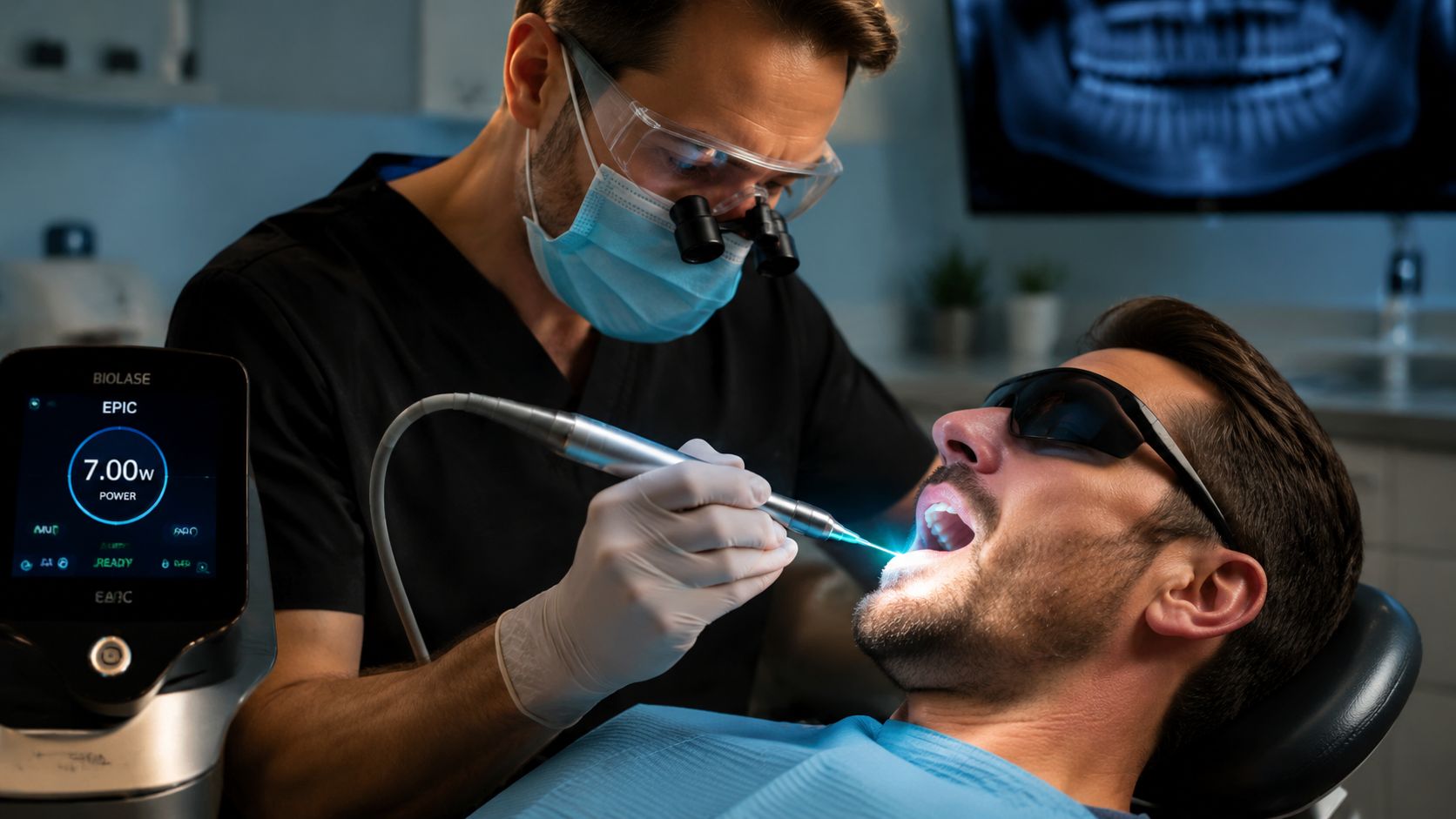
If you're reading this because the sound of a dental drill makes your shoulders tense up, you're not alone. A lot of patients start searching for a dentist near me because they want care that feels calmer, gentler, and a little more modern than what they remember from years ago.
That's one reason people ask, how does laser dentistry work? They've heard it can be quieter, more precise, and easier on sensitive gums and teeth, but they want a plain-English explanation before booking anything. If you're looking for a dentist in Fair Lawn, NJ, this guide will walk you through the science, the comfort benefits, and what that experience can look like close to home.
A patient comes in for a visit after putting treatment off for a long time. Not because the problem didn't matter, but because they remembered the vibration, the noise, and the uneasy feeling of traditional tools. That reaction is common, especially for people who already feel nervous about cleanings and exams, tooth extraction, or any kind of restorative dentistry.
Laser dentistry changes that conversation for many patients. Instead of relying only on conventional instruments, your dentist may use a focused beam of light energy to treat specific areas with a high level of control. For someone who's anxious, that difference matters. The appointment can feel less intimidating from the start.

Patients aren't typically curious about dental technology for its own sake. They want to know what it means for them.
Usually, questions sound more like this:
Those are practical questions, and they deserve practical answers.
A simple way to think about laser dentistry: it's a treatment tool designed to work with precision, so your dentist can target the area that needs care without disturbing as much nearby tissue.
For families in Fair Lawn, Ridgewood, and Glen Rock, that can make routine and advanced care feel more manageable. It can also be useful in a range of services, from gum reshaping and periodontal treatment to some restorative and whitening-related procedures.
At Dental Professionals of Fair Lawn, laser technology is one of the tools used to support more comfortable care in a modern office setting. If you've been putting off treatment, switching dentists, or searching for a cosmetic dentist near me who offers newer options, laser dentistry may be one of the reasons a visit feels less stressful than you expected.
The word laser can sound high-tech, and for many patients that makes it feel a little mysterious. In simple terms, a dental laser sends a tightly controlled beam of light energy into a very small area, so your dentist can treat tissue with more precision than broader instruments allow.
Light may not sound strong enough to shape gum tissue or help remove unhealthy material, a point that often confuses people. The key is concentration. A room light spreads energy everywhere. A dental laser concentrates that energy into a specific spot, which lets it create a controlled reaction in the tissue being treated.
At the right setting, that concentrated light can warm tissue, remove a thin layer, reshape an area, or help seal small blood vessels. The result depends on the type of laser being used, the wavelength, and the tissue your dentist is treating.
Here is a simple way to understand it:
| What the laser does | What that can mean during treatment |
|---|---|
| Delivers concentrated energy | Targets a small area with control |
| Interacts with water and other tissue components | Helps remove or reshape selected tissue |
| Seals small blood vessels in some procedures | Can reduce bleeding in soft-tissue treatment |
| Limits contact with nearby tissue | May support comfort and healing |
A laser does not work by "burning everything in its path." It is adjusted for a specific purpose. That is one reason training and case selection matter so much.
Different tissues respond to laser energy in different ways. Gum tissue contains a lot of water and blood supply, so certain lasers can trim or contour it with impressive precision. Tooth structure responds differently, which is why laser dentistry is not one single tool used one single way.
For patients at Dental Professionals of Fair Lawn, this matters because the science connects directly to the experience in the chair. If a procedure calls for careful work around the gums, a laser may allow your dentist to treat the area cleanly while limiting trauma to nearby tissue. That can make care feel more manageable for patients in Fair Lawn who are nervous about bleeding, soreness, or a long recovery.
Most patients are not looking for a physics lesson. They want to know whether the treatment will feel gentler and heal well.
That is a fair question.
Precision is the main reason laser dentistry gets so much attention. When your dentist can focus treatment on a smaller area, there may be less disruption to surrounding tissue. In practical terms, that can mean a more comfortable visit for some procedures and a smoother recovery afterward.
A laser is still just a tool, though. It is not used for every treatment, and it does not replace every traditional instrument. At Dental Professionals of Fair Lawn, the goal is not to force laser use into every appointment. The goal is to choose it when it improves your care, your comfort, or the final result.
A simple way to understand dental lasers is to sort them by what they are meant to treat. One group works on the tooth itself. The other works on the gums and other softer tissue around the teeth.
That difference matters in the chair at Dental Professionals of Fair Lawn. If you come in for a procedure near the gumline, the laser choice is different from the one used for decay inside a tooth, because the target tissue behaves differently.
Hard-tissue lasers are designed for teeth and, in some cases, small areas of bone. Teeth are made of dense mineral structure, so these lasers are tuned to interact with the materials found in enamel and dentin, including water and hydroxyapatite.
You can picture it like choosing the right setting on a tool. A setting that works well on a delicate fabric would not make sense for wood, and the reverse is also true. In dentistry, the laser has to match the job and the surface.
That is why a hard-tissue laser may be used for work such as:
For some Fair Lawn patients, this category is the more surprising one. Many people expect lasers to be used only on gums, then learn they can also help with precise tooth treatment in selected cases.
Soft-tissue lasers are used on gums and other oral tissue. These lasers are chosen when your dentist wants to trim, reshape, or treat soft tissue with control and a clear view of the area.
If your gums look uneven, a soft-tissue laser may help refine the shape of the gumline. The same category can also be useful in periodontal care, frenectomies, and removal of extra tissue that gets in the way of comfort or appearance. If gum disease treatment is one of your concerns, our guide to laser treatment for gum disease pros and cons explains where this approach may fit.
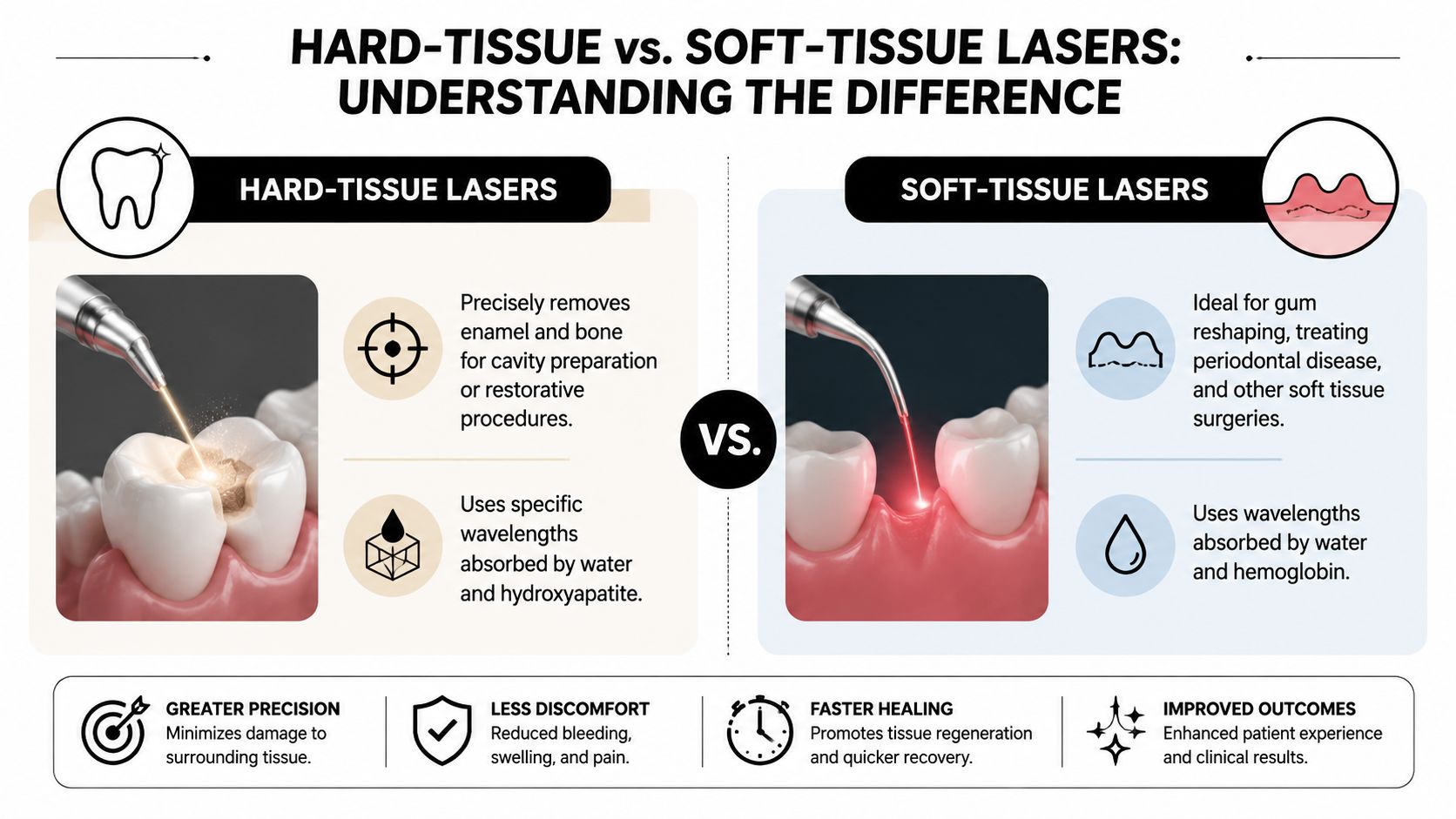
| Type of laser | Main target | How it works | Common uses |
|---|---|---|---|
| Hard-tissue | Teeth and sometimes bone | Interacts with water and hydroxyapatite in enamel and dentin | Cavity preparation, decay removal, certain restorative steps |
| Soft-tissue | Gums and other oral tissue | Targets soft tissue for cutting, reshaping, and coagulating | Gum reshaping, periodontal treatment, frenectomy, tissue removal |
The deciding factor is usually the tissue being treated and the goal of the procedure.
If the problem is inside the tooth, your dentist may choose a hard-tissue laser. If the treatment involves the gumline or another soft area, a soft-tissue laser is often the better fit. Some visits even involve planning around both, but each part of the mouth still calls for the proper instrument.
For patients in Fair Lawn, NJ, the takeaway is reassuringly simple. Laser dentistry is not one mysterious tool that does everything the same way. It is a set of carefully chosen tools, and at Dental Professionals of Fair Lawn, that choice is based on what gives you the safest, most precise, and most comfortable care for the specific treatment you need.
Once you understand the two main laser categories, the next question is practical. What can they be used for in a real dental office?
Some of the most common uses fall into two groups. One involves the gums and other soft tissues. The other involves teeth and selected hard-tissue applications.
A patient may come in because their gums look uneven in photos. Another may be dealing with tenderness from inflamed gum tissue. Someone else may have a tight frenum that affects comfort or oral function. These are very different concerns, but laser treatment can be relevant to all of them.
Common soft-tissue uses include:
If gum disease is one of your concerns, this overview of laser treatment for gum disease pros and cons explains where laser care may fit into treatment planning.
Laser dentistry can also help when the issue is inside the tooth or along its surface. In some cases, the experience feels different from what patients expect because there may be less of the vibration or sound they associate with a traditional drill.
Examples include:

Patients don't usually walk in asking for a “soft-tissue laser procedure.” They say things like, “My gums are puffy,” “I hate how short my teeth look,” or “I think I have a cavity and I'm nervous.”
That's where the conversation becomes personal. Laser technology may support treatment within:
The right question isn't “Can a laser do everything?” It's “For my specific problem, would a laser make treatment more comfortable, more precise, or easier to recover from?”
That's the kind of decision your dentist makes after an exam, dental x-rays if needed, and a discussion of your goals.
When patients compare laser dentistry with traditional methods, they usually care about one thing first. How different will this feel?
The strongest advantages are tied to comfort, precision, and recovery. Those benefits don't mean every procedure is effortless or that every patient has the same experience. They do mean laser treatment can change the tone of a visit in a very meaningful way.
According to this clinical summary on laser use in dentistry, a key advantage of laser dentistry is reduced treatment trauma. That source notes that lasers can minimize collateral damage, postoperative bleeding, and pain, and may reduce the need for anesthesia and pain medication while lowering swelling during recovery.
For patients, that often translates into a few practical upsides:
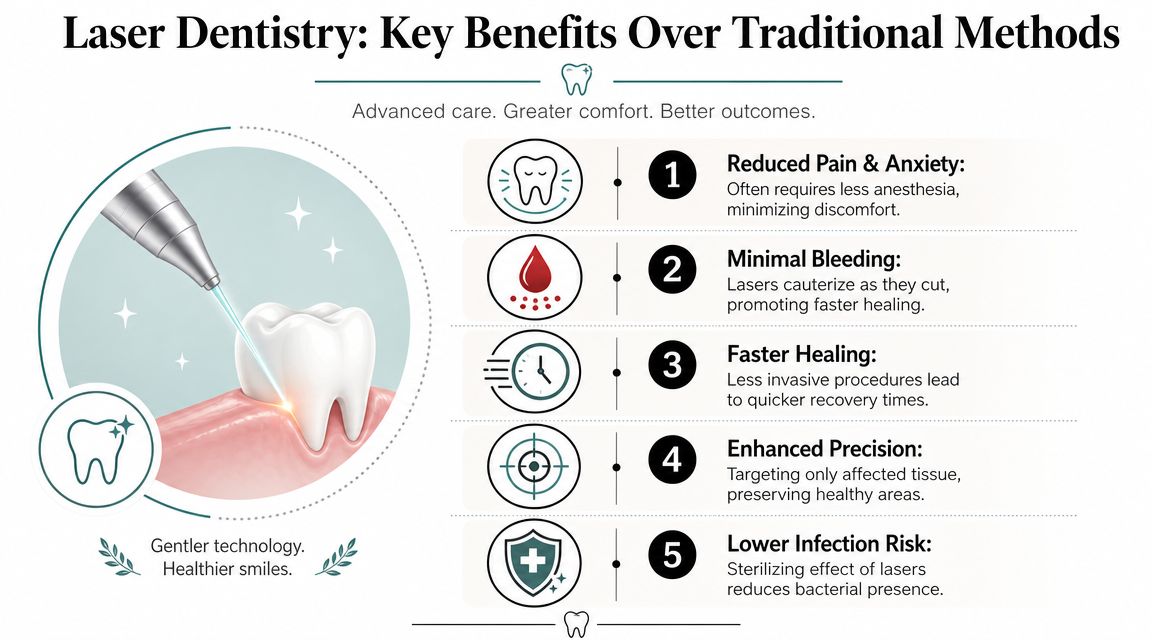
Precision sounds like a technical word, but patients feel its effects in simple ways. If your dentist can remove diseased tissue while preserving more healthy tissue, that can support a gentler overall experience.
This is especially important in soft-tissue care. Gum tissue is sensitive. Small changes in technique can affect bleeding, soreness, and healing.
For readers interested in the cosmetic side of this technology, how injectables and lasers are shaping the future of dentistry shows how these tools may fit into modern smile-focused treatment.
If you avoid the dentist because you're worried about pain, the idea of a quieter and less invasive option can make it easier to move forward. That doesn't mean laser dentistry is completely sensation-free. It means the treatment experience may feel less aggressive.
Many patients aren't looking for “high tech” care. They're looking for a visit that feels manageable. Laser dentistry often appeals to them for that reason.
For someone choosing a new dentist in Fair Lawn, NJ, or searching online for a cosmetic dentist near me or emergency dentist, comfort can be the deciding factor that finally gets the appointment scheduled.
Knowing how the visit unfolds often helps more than knowing the science. Once patients understand the steps, they usually feel less nervous.
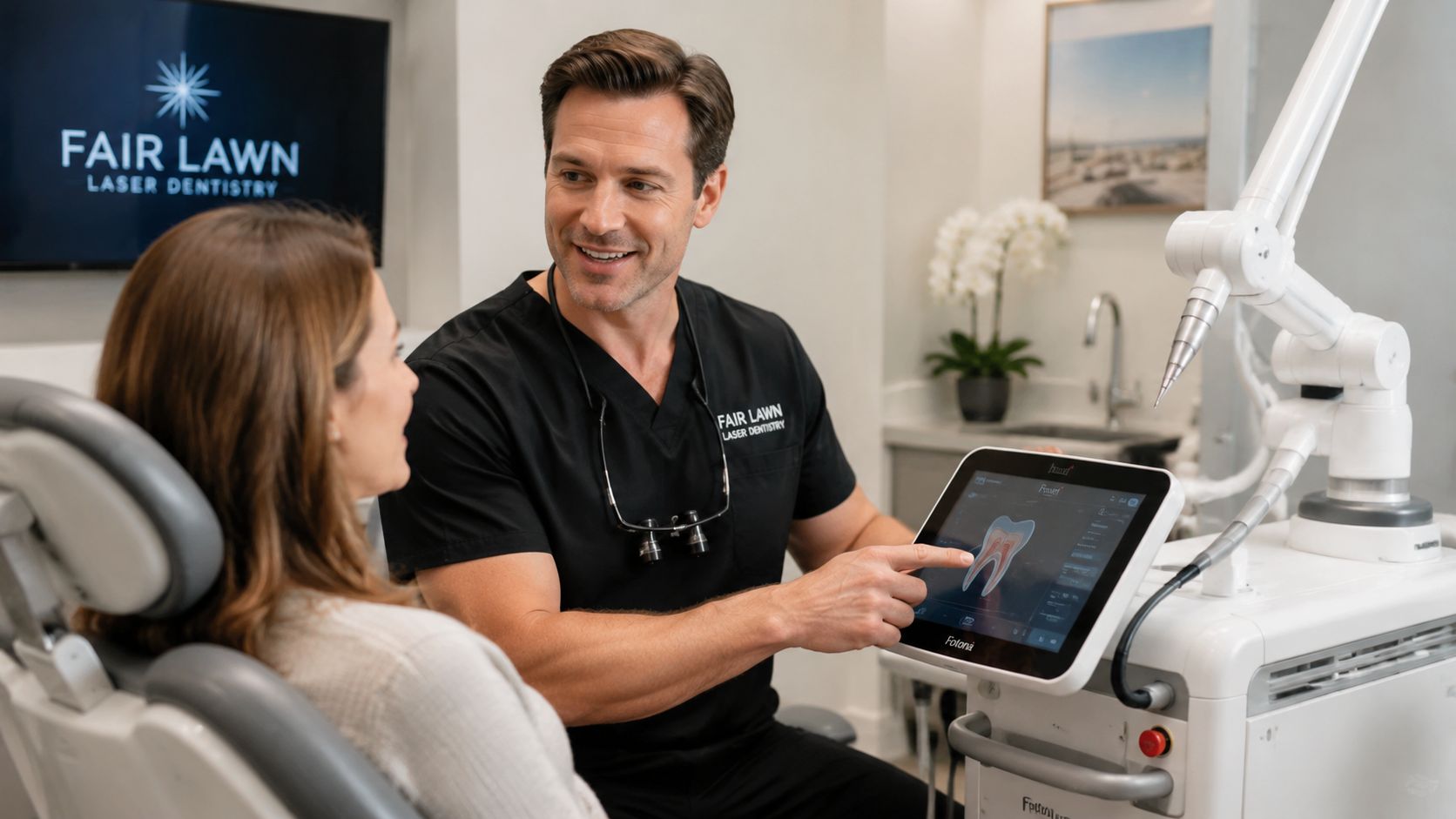
Your visit starts with a conversation. Dr. Bardash will look at the area involved, review your symptoms, and decide whether laser treatment is appropriate for your situation. Some concerns are a strong match for laser care. Others may be better treated with traditional methods or a combination of both.
If you're coming in as a new patient, this may also include a broader review of your oral health, current discomfort, cosmetic goals, or concerns about anxiety. That's helpful whether you need gum treatment, restorative dentistry, teeth whitening, or you're looking for a new dentist near me for ongoing care.
Most patients notice the difference in feel right away. There's often less of the vibration and harsh sound they expect from older techniques. You'll also wear protective glasses during treatment.
The goal is a calm, controlled appointment. Your dentist targets the area being treated while trying to preserve healthy surrounding tissue.
If you're nervous, say so early. That gives your dentist a chance to slow the pace, explain each step, and make the appointment feel more predictable.
This short video gives you a better sense of the technology and patient experience:
Recovery depends on the procedure, but many patients find aftercare straightforward. You may have some mild tenderness, and you'll get specific instructions based on the area treated.
For soft-tissue care, people often appreciate that healing can feel smoother than they expected. If your visit is part of a larger plan involving dental implants near me, cosmetic work, or periodontal therapy, your next steps will be explained clearly before you leave.
Yes, laser dentistry is an established dental technology when used appropriately by a trained dentist. Dental lasers became commercially available in 1989 and gained FDA approval in the 1990s, which helps reassure patients that this is a recognized clinical tool. Safety steps also include protective eyewear and careful treatment planning.
Many patients choose laser treatment because they're hoping for a more comfortable experience. Laser dentistry has been described as less painful than conventional methods in many situations, and clinical summaries note reduced bleeding, pain, and swelling with less treatment trauma. That said, comfort depends on the procedure and the area being treated, so your experience may vary.
Coverage depends on your plan and the procedure itself, not just the fact that a laser is involved. Some insurance plans focus on whether the treatment is medically necessary and how it is coded. The best next step is to let the office review your benefits with you. If you're paying out of pocket, it's also worth asking about financing options and phased treatment plans.
If you've been searching for a more comfortable dentist in Fair Lawn, NJ, or you want to ask whether laser care could help with gum treatment, restorative work, cosmetic dentistry, or an urgent dental concern, contact Dental Professionals of Fair Lawn to schedule a consultation. A visit can help you understand your options clearly and decide what makes the most sense for your smile, your comfort, and your long-term dental health.