Laser Frenectomy Near Me: A Fair Lawn, NJ Patient Guide
Searching for a laser frenectomy near me in Fair Lawn, NJ? Learn how this gentle procedure helps infants, kids, and adults. Contact our dentists today.
Searching for a laser frenectomy near me in Fair Lawn, NJ? Learn how this gentle procedure helps infants, kids, and adults. Contact our dentists today.
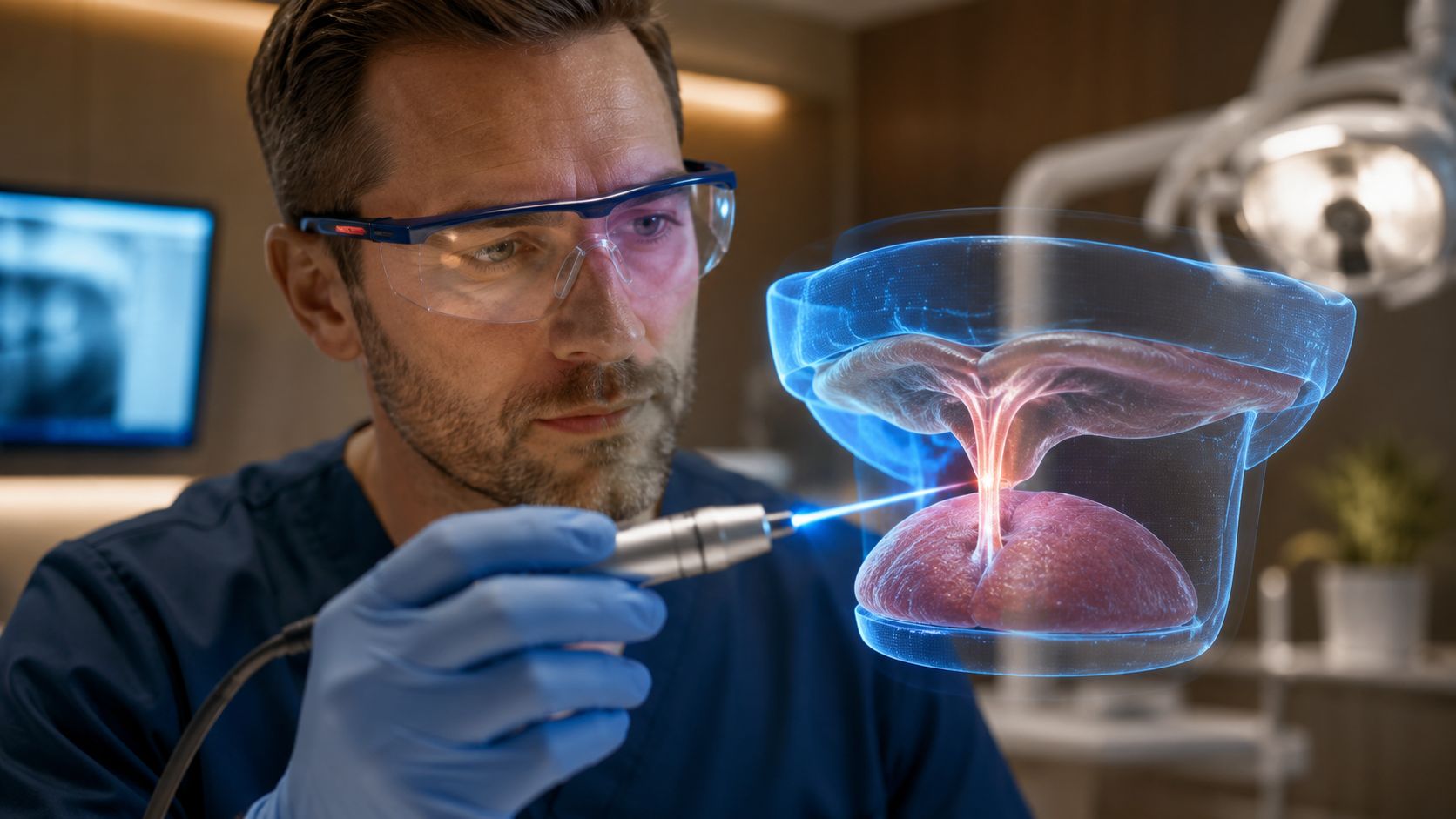
Your search probably started in a stressful moment. Maybe your baby isn't latching well, feedings feel exhausting, and you've heard the words “tongue tie” from a lactation consultant. Maybe your child struggles with certain sounds, or you're an adult who has always felt unusual tension under the tongue and never knew why. When people type Laser Frenectomy Near Me into Google, they usually want answers quickly, but they also want to make the right decision.
If you're in Fair Lawn, Ridgewood, or Glen Rock, it helps to have a clear, local guide that explains the problem in plain language. A frenectomy sounds intimidating at first, but modern laser dentistry has changed the experience for many families and adults. The goal isn't just to remove tissue. The goal is to improve function, reduce discomfort, and make daily life easier.
A lot of parents arrive at this search after weeks of second-guessing themselves. Their baby clicks while feeding. Nursing hurts. Bottles take too long. Family members say, “Maybe it's just a phase,” but something still feels off. Adults often come from the opposite direction. They may notice speech strain, pulling under the tongue, jaw tension, or difficulty keeping certain areas clean.

In both situations, the search is about more than convenience. You're looking for confidence. You want to know what a laser frenectomy is, whether it's safe, whether it hurts, and whether it's even necessary.
Tongue ties and lip ties can affect everyday functions that don't feel small when you're living with them. Feeding a newborn, helping a child speak clearly, or chewing and moving the tongue comfortably all matter. When those basic functions feel difficult, families naturally want a solution close to home.
That's why local searches like dentist near me, dentist in Fair Lawn, NJ, and even related searches such as emergency dentist, tooth extraction, or cosmetic dentist near me often come from the same place. People want a trusted office nearby that can explain options clearly and help them act.
You don't need a hard sell when you're worried about your child or your own health. You need a calm explanation and a careful exam.
Patients aren't looking for a technical lecture. They want practical answers:
Those are the questions that matter. The rest of this guide is built around them, so you can make an informed decision instead of guessing.
A frenum is a small band of tissue that helps connect and stabilize parts of the mouth. Everyone has frenums. The issue starts when one is too tight, too short, or positioned in a way that limits normal movement.
A tongue tie, also called ankyloglossia, happens when the tissue under the tongue restricts how the tongue moves. A lip tie involves the tissue connecting the upper lip to the gums. In some people, that restriction is minor. In others, it can interfere with feeding, speech, oral hygiene, or comfort.

Clinical literature reports that the prevalence of ankyloglossia in infants ranges from 4.4% to 4.8%, with a male-to-female ratio of 3:1 according to this clinical review on laser-assisted frenectomy. That doesn't mean every tie needs treatment, but it does explain why pediatric dental and feeding evaluations come up so often.
A tie can look similar on an exam but affect people differently depending on age and function.
Infants
Children
Adults
A visible frenum alone doesn't tell the whole story. Function matters more than appearance. A proper exam looks at movement, symptoms, and how the restriction affects daily life.
For a more focused explanation of upper lip restrictions, this overview of lip tie treatment options is helpful.
Practical rule: The right question isn't “Do I see a tie?” It's “Is this tissue limiting healthy function?”
Traditional frenectomy methods use scissors or a scalpel to release the restrictive tissue. A laser frenectomy uses focused light energy to do that same job with more precision. For many patients, that difference changes the whole experience.
The main reason people prefer the laser approach is simple. It's designed to be minimally invasive, cleaner during the procedure, and easier to recover from.
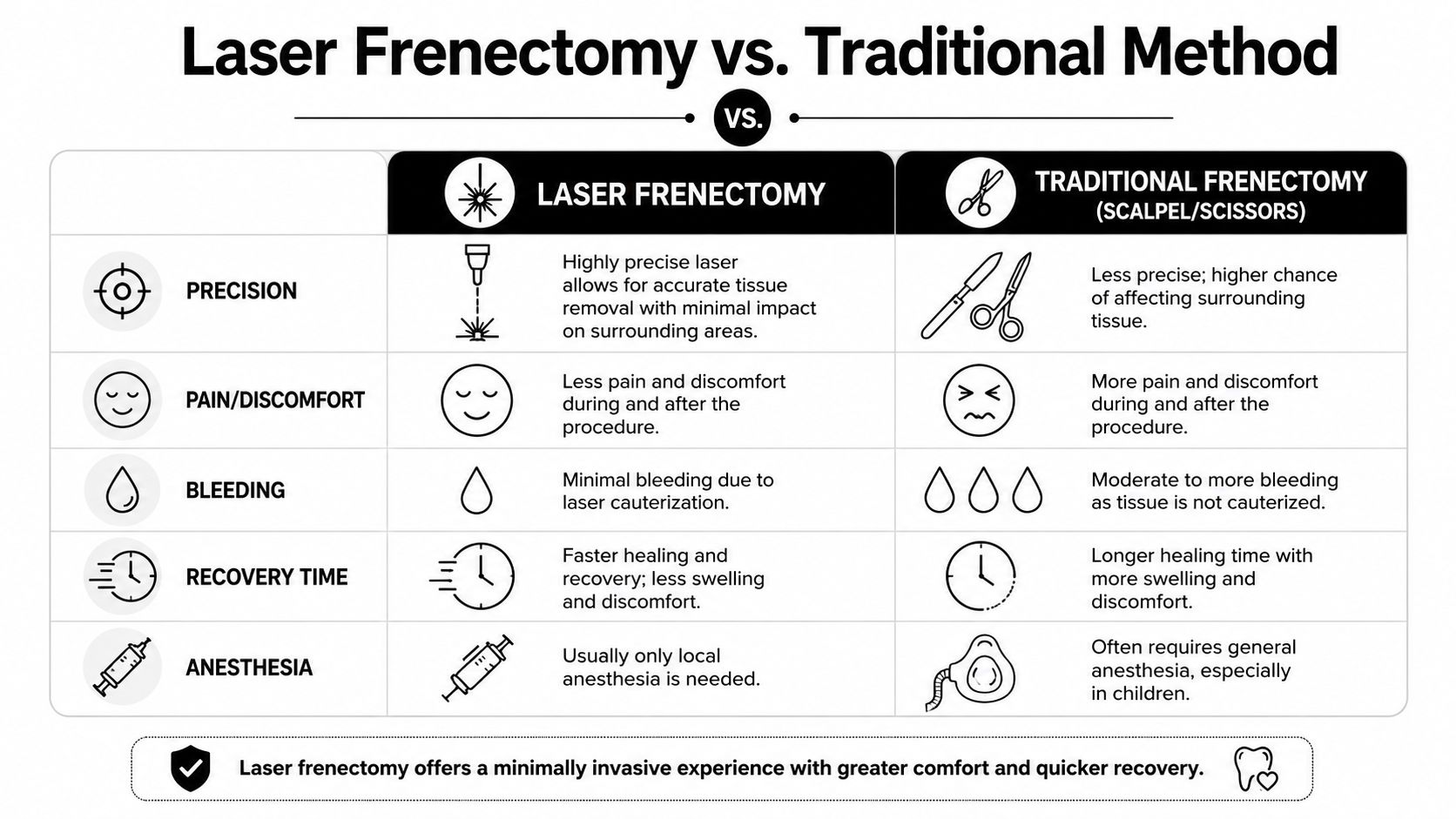
Here's the patient-friendly version of the difference:
| Approach | What patients often notice |
|---|---|
| Laser frenectomy | More precise tissue release, much less bleeding, and usually no stitches |
| Traditional scalpel or scissors | More bleeding during the procedure and a more invasive surgical feel |
A major review found that laser frenectomy with CO₂ or diode lasers shows 40 to 60 percent faster intraoperative tempo, significantly lower bleeding prevalence than traditional surgery, 75 percent less postoperative pain within 7 days, and most patients resume normal activities within 24 hours in this published review of oral soft-tissue laser surgery.
The laser doesn't just cut. It also helps control the surgical area as treatment happens. That means the provider can work with better visibility, and patients often experience less mess and less trauma to surrounding tissue.
Several practical benefits matter to families:
If you're curious how this technology works more broadly, this explanation of how laser dentistry works gives useful context.
For a parent, “gentle relief” means a procedure that doesn't feel as frightening as they imagined. For an adult, it means getting a release done without expecting a long interruption to work or daily routines.
A modern laser frenectomy isn't about making treatment sound trendy. It's about making a small oral surgery more controlled, more comfortable, and less disruptive.
That doesn't mean every case is identical. The exact healing pattern depends on age, anatomy, and aftercare. But for those considering the procedure, the desired outcome is usually: a treatment option that solves the problem without creating a bigger one.
The best candidates for laser frenectomy aren't defined by age alone. They're defined by restricted function. That's why the decision should always start with symptoms, movement, and a careful exam rather than assumptions.
In babies, the most common concern is feeding. If the tongue or lip can't move freely, the baby may struggle to latch well, transfer milk efficiently, or stay comfortable during feeding. That can create stress for both baby and parent very quickly.
Some mild cases may improve with conservative care and feeding support. Others need a release because the restriction keeps interfering with nutrition and comfort.
Children often present differently. Parents may notice speech concerns, trouble with oral hygiene, or a visible tight band that seems to pull on the gums or limit motion. Some children also become very anxious when any procedure sounds surgical.
That's one reason laser treatment is appealing. A pediatric-focused review notes that laser frenectomy is typically less distressing for children than traditional surgical techniques, and postoperative complications are reported to be largely absent in studies, as discussed in this review of laser vs surgical frenectomy for children.
Adults sometimes reach this diagnosis later in life after years of compensating. They may report tongue tension, trouble with certain movements, discomfort with oral appliances, or frustration during orthodontic planning. In some cases, releasing restrictive tissue can support better oral function and make other care easier.
Adults should also think about the bigger picture. If you're already exploring Invisalign, Six Month Smile, restorative dentistry, or treatment for TMJ or sleep-related concerns, tongue and lip mobility may be part of the conversation.
A provider may recommend treatment when the tie is clearly affecting function, such as:
Sometimes the tissue looks tight, but symptoms are mild. In those cases, observation, feeding support, or therapy may come first. That's why a real exam matters more than an online checklist.
Most patients feel better once they know what to expect during the appointment. The unknown is often the hardest part. A laser frenectomy visit is usually straightforward, organized, and much quicker than people expect.
The first step is evaluation. The dentist checks the frenum, tongue or lip mobility, symptoms, and how the restriction affects function. For infants, that often includes a discussion about feeding history. For children and adults, the focus may include speech, oral hygiene, tension, or other dental concerns.
This is also the point where patients can ask practical questions about comfort, sedation dentistry, healing, and whether treatment should happen now or later.
When laser frenectomy is recommended, the actual treatment is brief. A clinical overview for adults notes that a laser frenectomy typically takes less than 15 minutes from start to finish, with the actual laser portion often lasting just a few minutes, according to this overview of adult laser frenectomy treatment.
That short timeline matters because it changes expectations. People often imagine a lengthy oral surgery appointment. In reality, the procedure is usually much more efficient.
Here's the basic flow:
Most patients are surprised by how fast the appointment moves once treatment begins.
Recovery instructions are just as important as the release itself. Patients may be guided through simple stretches or movement exercises so the tissue heals with good mobility. For parents, this is often the part that feels most unfamiliar, but good coaching makes it manageable.
A thoughtful office visit also connects this treatment to overall care. Some families first arrive while looking for a dentist near me for a child's exam. Adults may already be visiting for cleaning and exams, dental x-rays, a new patient exam, cosmetic dentistry, or even an emergency dentist visit. A well-run practice helps those pieces fit together so treatment feels coordinated instead of rushed.
Choosing a provider for frenectomy care isn't only about finding a laser. It's about finding clinical judgment, experience, and a team that treats patients with patience. That matters even more when the patient is an infant, a nervous child, or an adult who's been putting treatment off.

Dr. Jody Bardash brings 30+ years of experience to patient care, and that kind of background shapes the entire visit. Experienced dentists tend to move past one-size-fits-all recommendations. They look at function, comfort, long-term oral health, and what's realistic for the patient sitting in front of them.
Modern care in Fair Lawn should feel current, not rushed. Laser dentistry, digital scanning, and advanced diagnostics all help improve precision and patient comfort. But technology works best in hands that know when to use it and when to recommend a more conservative path.
That balanced approach is especially important because frenectomy can intersect with many other services, including:
A short introduction can help you get a feel for the practice and its approach to care.
Patients in Fair Lawn, NJ often want a dentist who also serves nearby families in Ridgewood and Glen Rock without making care feel impersonal. That community connection matters. It affects follow-up, scheduling, comfort, and trust.
The right office doesn't make you feel pushed toward treatment. It makes you feel informed enough to decide.
For anxious patients, comfort options like sedation dentistry can make a big difference. For families juggling multiple needs, a full-service office can also handle related concerns without sending you across town for every next step.
No. Some mild cases may respond to conservative care. One analysis notes that while many local guides assume surgery is necessary, targeted oral myofunctional therapy may be an option in mild cases. The key point is that a professional evaluation helps distinguish between cases that need intervention and cases that may improve without surgery.
Most patients choose the laser approach because it's designed to be gentler than traditional techniques. Parents are often relieved to learn that the procedure is quick and that recovery is usually manageable. Adults often say their biggest worry was the anticipation, not the actual appointment.
Healing varies by patient, age, anatomy, and aftercare. Many people return to normal routines quickly, but the mouth still needs time to heal properly. The aftercare instructions matter. If stretches or mobility exercises are recommended, they're part of the treatment, not an optional extra.
Coverage depends on the plan and how the procedure is documented. Some patients have partial benefits, while others may need to use financing options. A good dental team will review the details before treatment so you know what to expect.
Sometimes, yes. Better tongue or lip mobility can support oral hygiene, comfort, orthodontic planning, and overall function. That's one reason patients searching for dentist in Fair Lawn, NJ, cosmetic dentist near me, dental implants near me, or even tooth extraction services often benefit from a thorough exam instead of looking at one issue in isolation.
That's normal. Frenectomy decisions can feel emotional, especially for parents. If you're unsure, the next best step isn't guessing. It's getting a careful evaluation from a dentist who can explain whether treatment, therapy, or watchful waiting makes the most sense.
If you're looking for a trusted local team to evaluate a tongue tie or lip tie, Dental Professionals of Fair Lawn offers compassionate, modern care for families and adults in Fair Lawn, Ridgewood, Glen Rock, and nearby New Jersey communities. Whether you're searching for a dentist near me, need guidance about laser dentistry, or want a second opinion before moving forward, schedule a consultation and get clear answers specific to your circumstances.