Infant Top Teeth: Teething Tips from Our Dentists
Concerned about infant top teeth? Our Fair Lawn pediatric dentists explain teething timelines, soothing tips, & care. Schedule a visit today.
Concerned about infant top teeth? Our Fair Lawn pediatric dentists explain teething timelines, soothing tips, & care. Schedule a visit today.
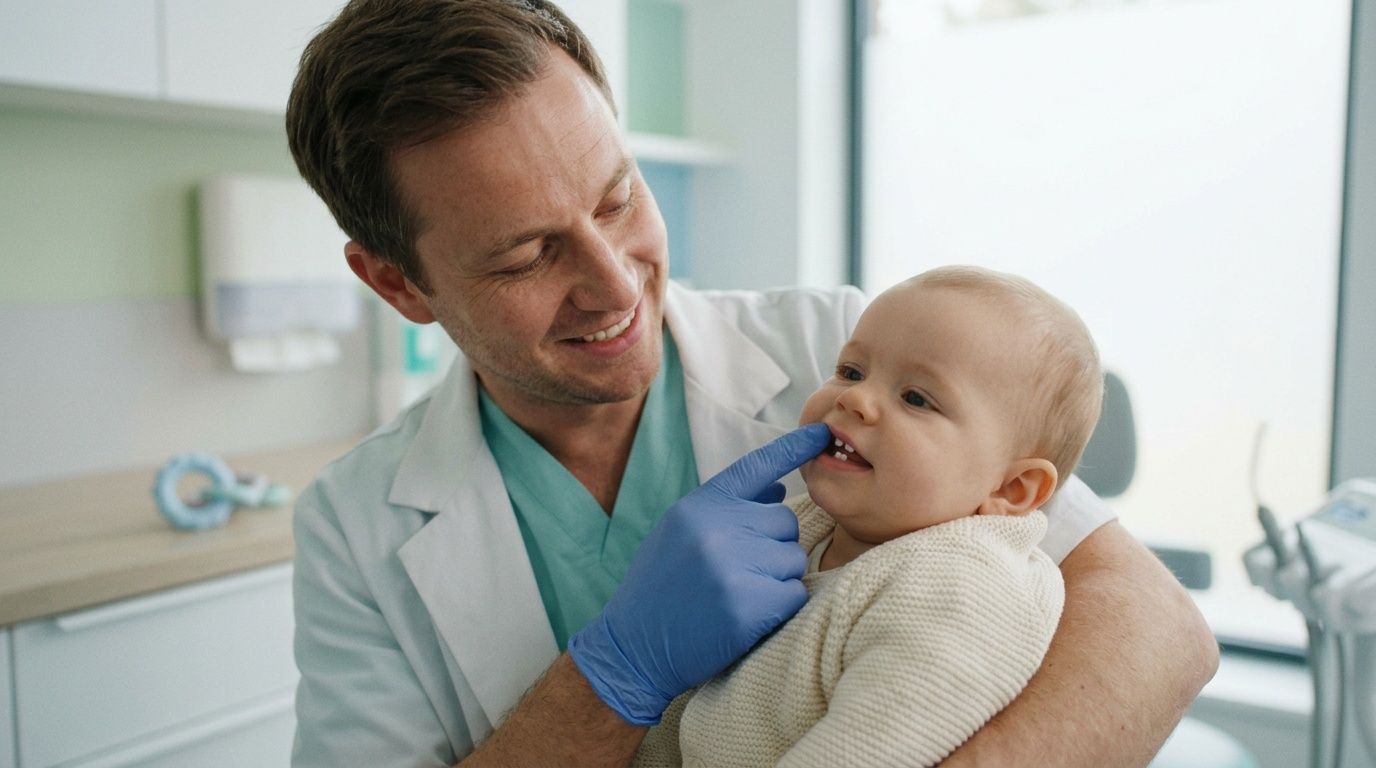
If you’re checking your baby’s gums every morning, wondering when those little top front teeth will finally show up, you’re not alone. Parents across Fair Lawn, Ridgewood, and Glen Rock ask the same questions all the time. Is this normal? Is my baby late? Why is teething so uncomfortable at night?
Infant top teeth can feel like a big milestone because they change your baby’s smile, chewing habits, drooling, and daily routine all at once. The good news is that there is a typical pattern, and most of the variation parents notice is still completely normal. What matters is knowing what to expect, what helps, and when it makes sense to have a dentist take a closer look.
Top teeth usually follow a fairly predictable order. The first upper teeth to appear are the upper central incisors, followed by the upper lateral incisors, then the first molars, canines, and second molars. A helpful overview of when do babies start teething can make the broader process feel less mysterious, but parents often want a clearer look at the top teeth specifically.
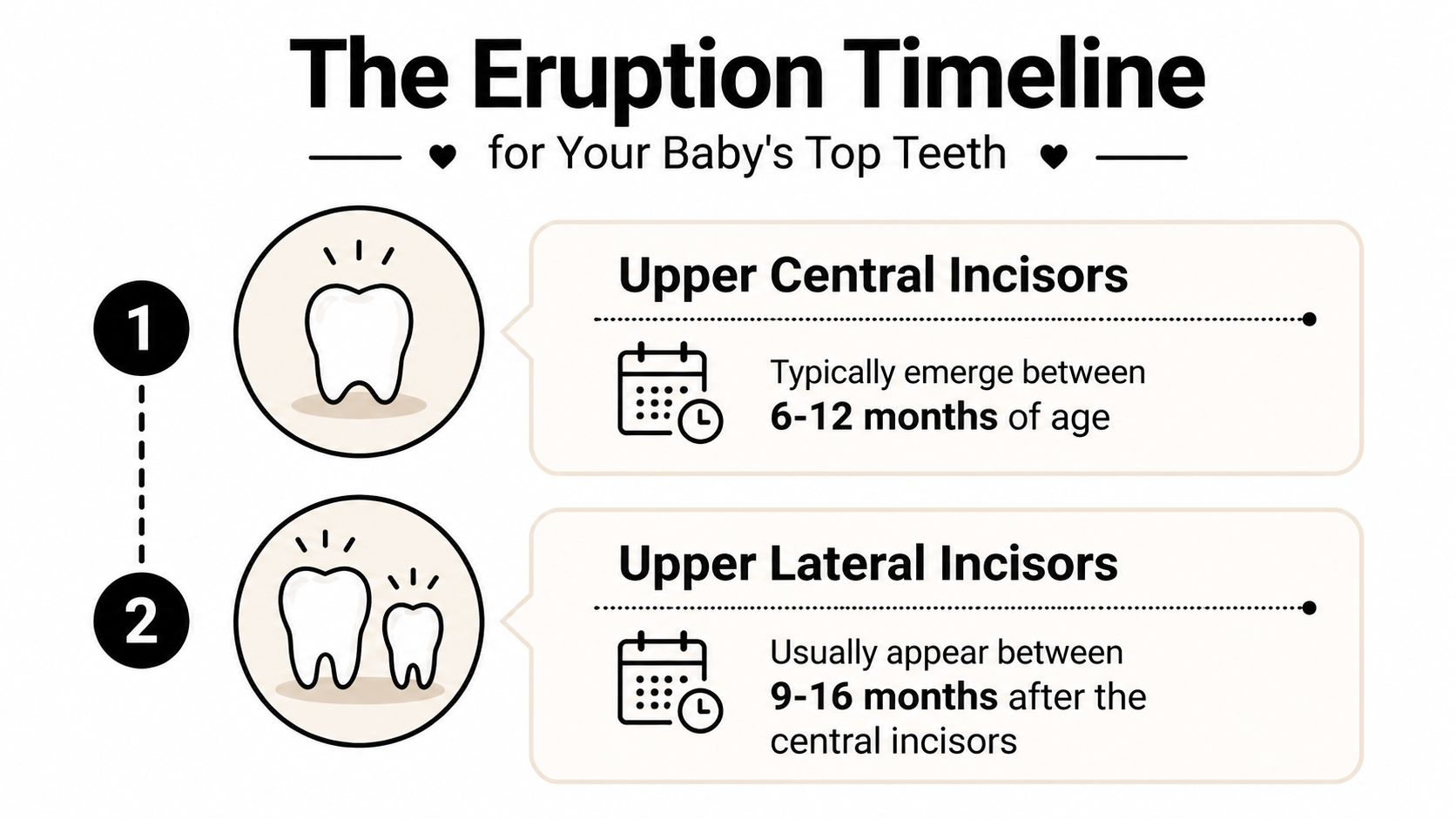
According to a baby teeth chart from Medical News Today, upper central incisors typically erupt between 8 and 12 months, and upper lateral incisors usually follow between 9 and 13 months. The same source notes that upper first molars often erupt between 13 and 19 months, upper canines between 16 and 22 months, and upper second molars between 25 and 33 months. By about age 3, most children have 20 primary teeth, with 10 on the upper jaw and 10 on the lower jaw, and a variation of 4 to 6 months can still be normal.
Here’s the timeline in a simple format.
| Infant Top Teeth Eruption Timeline | |
|---|---|
| Upper Tooth Type | Typical Age of Eruption |
| Upper central incisors | 8 to 12 months |
| Upper lateral incisors | 9 to 13 months |
| Upper first molars | 13 to 19 months |
| Upper canines | 16 to 22 months |
| Upper second molars | 25 to 33 months |
The pattern matters more than the exact day. Teeth often come in pairs, and one side may peek through just before the other. That’s usually not a problem.
Practical rule: Use the timeline as a guide, not a stopwatch. A baby can be healthy and still be a little early or a little late.
Parents also notice that the top front teeth can seem to arrive all at once after weeks of swollen gums and restless sleep. That’s common. The pressure builds below the gums before you see anything, so symptoms can start before the tooth becomes visible.
If you want a broader look at how baby teeth fit together over time, this guide on how many baby teeth can help connect the top teeth timeline to your child’s full smile development.
Teething can make even a calm baby fussy. The top front teeth, especially, tend to get parents’ attention because babies often rub their faces, drool more, and want to chew on everything they can grab.
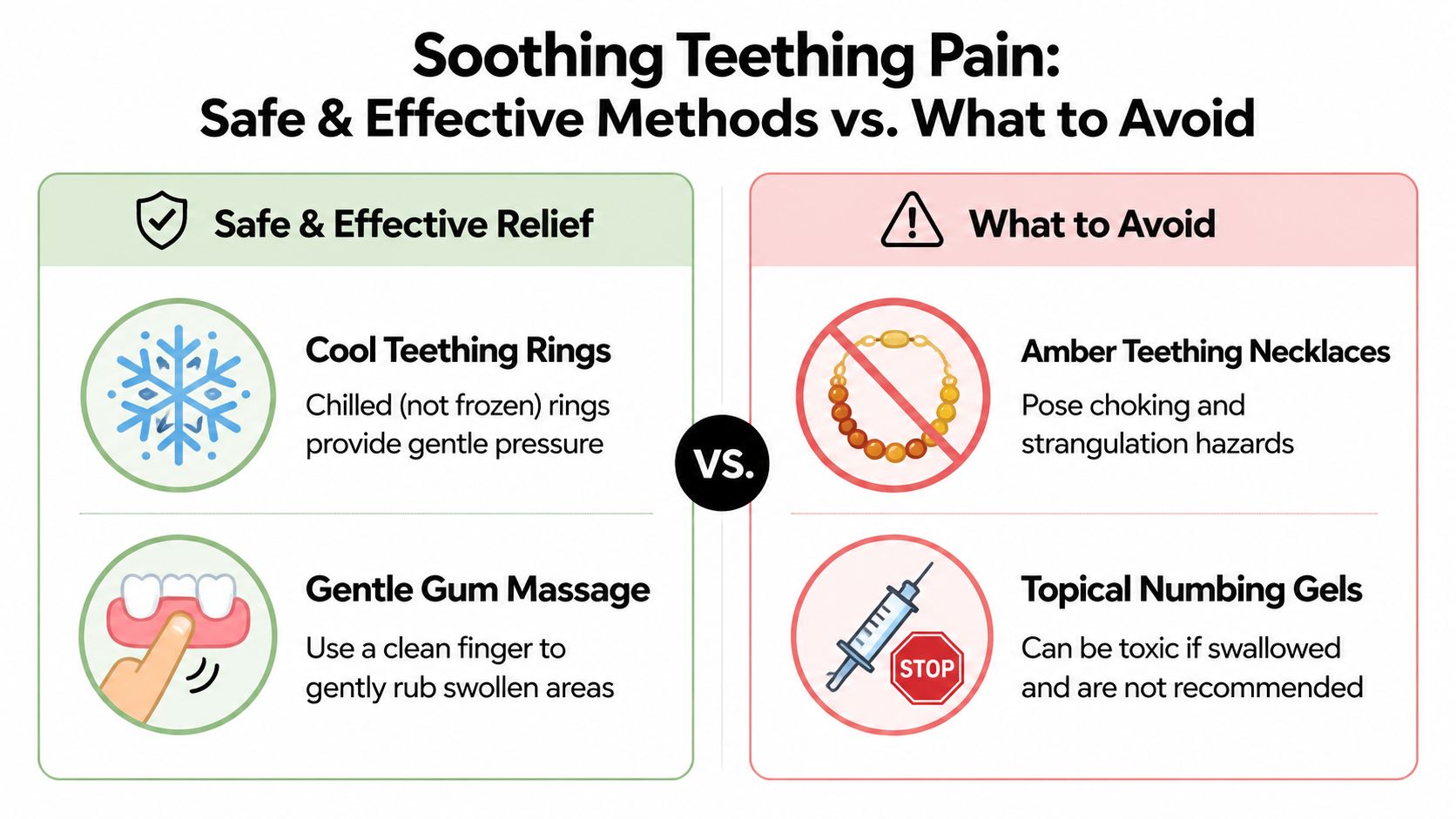
Most babies respond best to simple, low-risk comfort measures:
If you’re shopping for a soft teether, some parents like options such as the Sophie Sopure Teether because it’s easy for small hands to hold and chew.
Some remedies sound natural or convenient but create more problems than they solve.
A good teething remedy should be simple, clean, and easy to stop using if your baby doesn’t like it.
Parents sometimes blame every rough day on teething. That’s understandable, but it can delay help when a child is sick. Mild gum discomfort, drooling, and chewing are common with erupting infant top teeth. Ongoing distress, feeding trouble that doesn’t improve, or symptoms that seem out of proportion deserve a call to your pediatrician.
If your child seems unusually uncomfortable or you’re worried about swelling around an erupting tooth, it’s reasonable to have a dentist examine the area. The best approach is the one that comforts your child without adding safety concerns.
Parents want two things from early dental care. They want answers, and they want a gentle experience. That matters even more when a baby’s top teeth don’t seem to be following the expected pattern or when teething discomfort feels harder than expected.
A quick look inside the mouth tells us a lot. Digital tools can tell us more. According to the teething information from Cleveland Clinic, upper first primary molars typically erupt between 13 and 19 months. The same source notes that iTero photogrammetry and digital scanning can quantify eruption progress with 0.1mm accuracy and help detect possible impactions, which have an incidence of 1 to 2%.
That kind of detail matters when a parent says, “I think something is stuck,” or “The gums look swollen, but I don’t see the tooth moving.” Traditional visual checks are useful. Digital scanning adds another layer of precision without the mess and discomfort of old-style impressions.
Parents often assume early dental visits are just for emergencies. In reality, the best visits happen before a small concern becomes a bigger one. When a tooth is slow to emerge or soft tissue is irritated, modern laser dentistry can help in selected cases.
Some babies need reassurance and monitoring. Others benefit from a closer evaluation because what looks like simple teething may involve the position of the tooth under the gums.
Laser dentistry is valuable because it can support certain soft tissue procedures with a gentler feel than parents expect. For infants and toddlers, that matters. Comfort shapes how children respond to dental care later.
A watch-and-wait approach is appropriate for many normal teething patterns. It’s less helpful when there’s persistent swelling, a tooth that doesn’t seem to be progressing, or a parent’s concern that something just looks off. Early evaluation gives families clarity.
In a family dental office serving Fair Lawn, Ridgewood, and Glen Rock, the goal isn’t merely to treat dental problems. It’s to notice developing issues early, explain them clearly, and choose the least stressful path forward.
Once the first infant top teeth break through, cleaning needs to start right away. That surprises some parents because the teeth still look so new and tiny. But the upper front teeth are often the first place where early decay begins if sugar sits on them regularly.
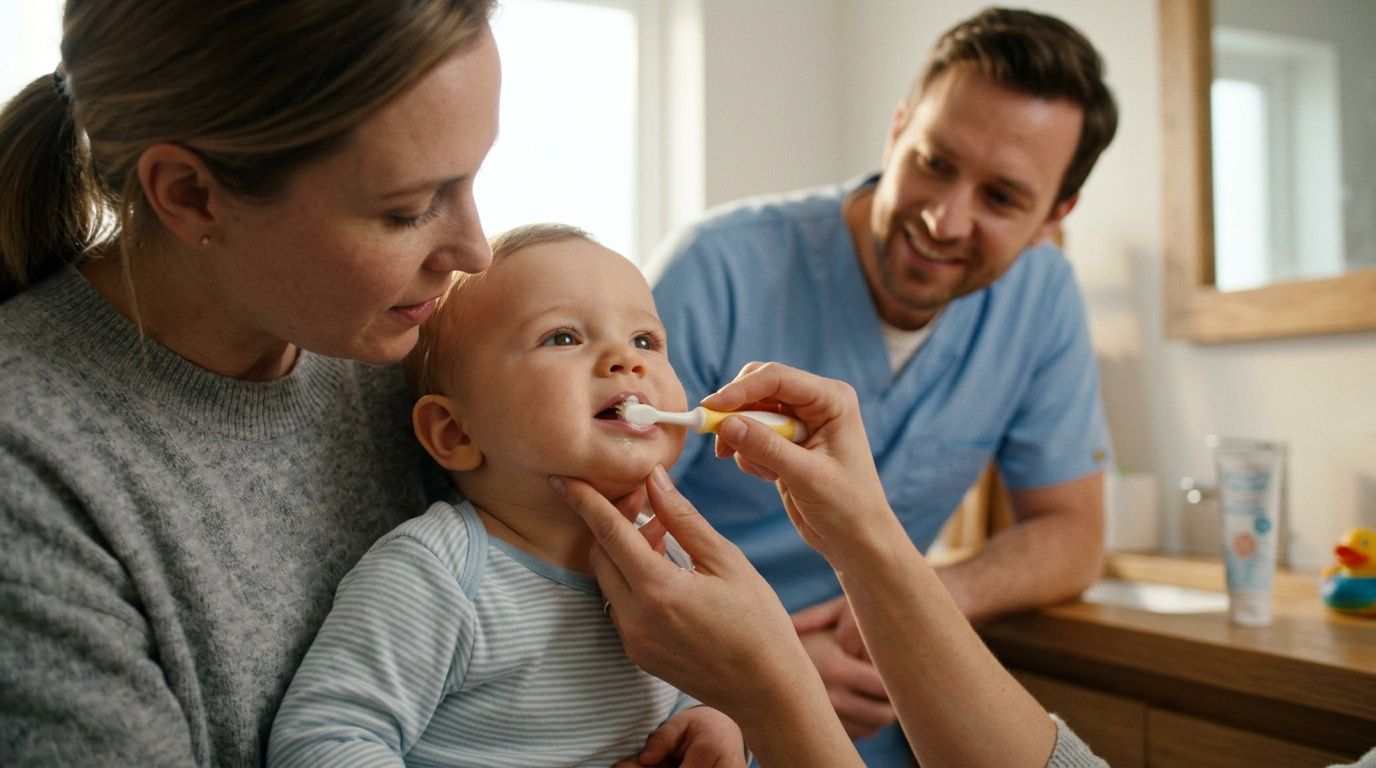
The CDC’s oral health equity information notes that Early Childhood Caries disproportionately affects upper front teeth due to prolonged exposure to sugars from liquids. It also reports that untreated cavities in upper primary teeth occur in 18% of children from low-income households aged 2 to 5, and that the thinner enamel on these teeth makes them 2 to 3 times more prone to decay than lower teeth according to the CDC’s oral health equity page.
That’s why bedtime habits matter so much. Milk, juice, and other sweet liquids can pool around the upper front teeth while a baby sleeps. Parents often think of cavities as a problem for older children. In reality, infant top teeth can be vulnerable early.
Use a routine that feels realistic enough to repeat every day:
For parents who are already dealing with white spots, rough enamel, or visible discoloration, this article about cavities in toddler teeth can help you spot early warning signs.
A short visual guide can also make home care easier to picture:
Perfection isn’t the goal. Consistency is. If your baby resists brushing, aim for calm repetition instead of a struggle that turns oral care into a daily battle.
A lot of prevention comes down to routine choices. Frequent sipping on sweet drinks is harder on teeth than many parents realize. Rinsing the mouth with water after feedings, brushing at night, and scheduling early dental exams do far more than occasional “catch-up” cleaning.
Parents rarely worry about teething in the abstract. They worry about a specific tooth that seems late, a gap that looks too wide, or a front tooth that appears crooked as soon as it emerges. Those concerns are worth talking through calmly.
Some variation is normal, and many late-erupting teeth still come in without any treatment. But there is a point where an exam becomes useful. According to the teething chart from Orajel Kids, delayed eruption of upper central incisors beyond 12 to 13 months can correlate with a higher risk of future spacing issues. The same source notes that if a tooth is absent, a pediatric dentist may recommend a dental x-ray to rule out problems such as congenital agenesis, which has an incidence of about 0.5% in primary teeth.
That doesn’t mean every child with a late top tooth has a serious issue. It means timing can help us decide when reassurance is enough and when imaging is the better choice.
If a parent says, “Nothing has changed for months,” that history matters as much as the calendar.
A gap between the top front baby teeth can look dramatic in a very small mouth. In many infants, it’s only a stage in development. As more teeth erupt, the smile often looks more balanced.
The same goes for teeth that look slightly rotated when they first appear. Newly erupted infant top teeth don’t always look perfectly aligned right away. The surrounding gums are still changing, neighboring teeth may not be in yet, and the bite is still developing.
A quick office exam usually answers the practical questions:
Parents should schedule an evaluation if a top tooth hasn’t appeared well beyond the expected window, if the gums look swollen without progress, or if a tooth erupts in a way that seems very unusual. A dental x-ray isn’t automatically needed for every delay. It becomes useful when the clinical picture suggests that the tooth bud may be missing, out of position, or not moving normally.
Some parents also ask about unusual findings in baby teeth that don’t change the eruption pattern but still raise questions. Research highlighted by Harvard has explored how baby teeth may record early life stress in their enamel, discussed in this Harvard Gazette article on baby teeth and mental health risk. That isn’t something parents can diagnose at home, but it shows why baby teeth deserve more respect than the old idea that they’re “just temporary.”
The first visit is usually much easier than parents expect. Most infants don’t need a long appointment. They need a calm setting, a gentle exam, and a parent who knows what’s happening.

A typical first infant dental visit starts with conversation. Parents describe teething, feeding, brushing, bottles, pacifiers, and any concern about the top teeth. If there’s a delayed tooth, gum swelling, or signs of early decay, that concern guides the exam.
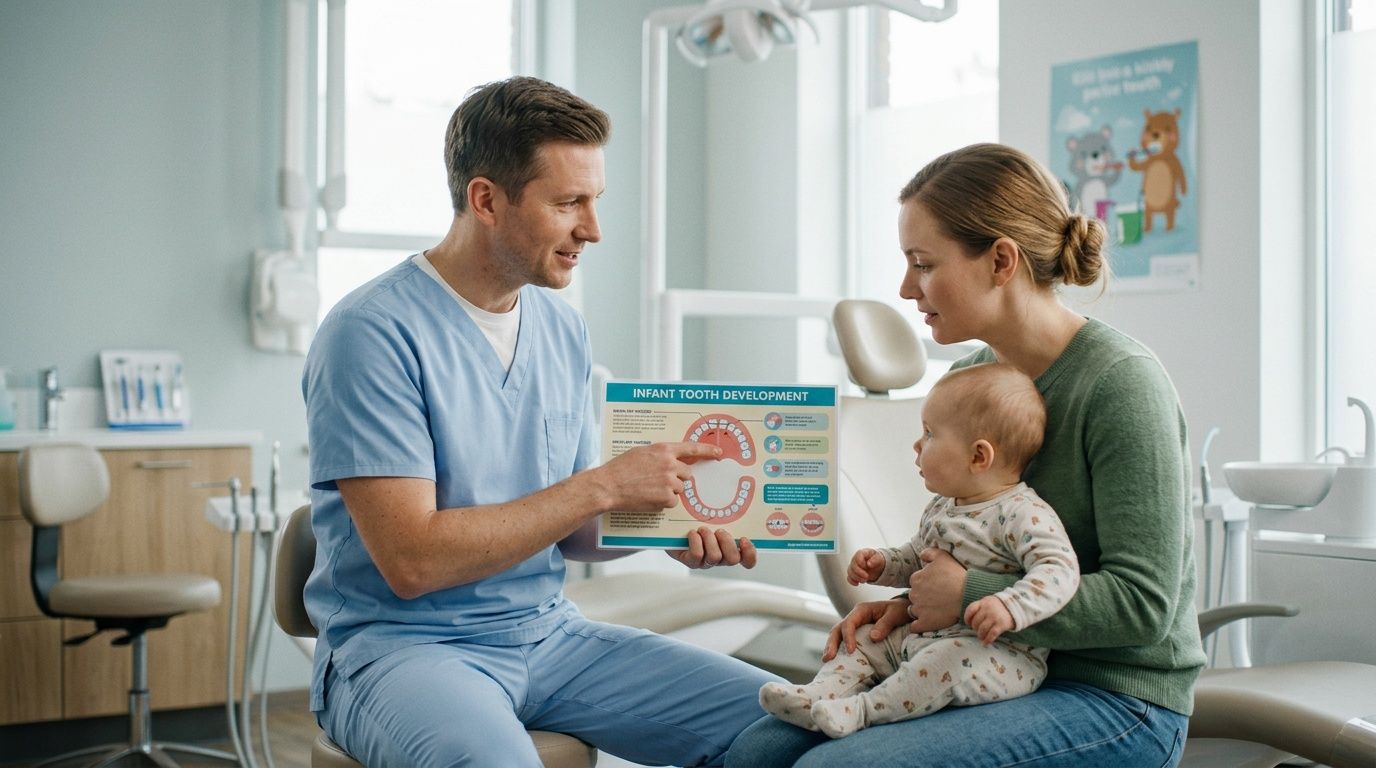
Then comes the visual check. For infants, many dentists use a lap-to-lap approach where the child stays close to the parent while the dentist examines the mouth. That position helps babies feel secure and lets parents see what the dentist sees.
The exam focuses on simple but important questions:
If everything looks healthy, the visit becomes a coaching appointment as much as a dental exam. Parents leave knowing how to clean the teeth, what to avoid at bedtime, and what signs deserve a call back to the office.
The best first visit doesn’t feel rushed. Parents should leave feeling less anxious, not more.
Some children cry during their first dental appointment. That’s normal. Crying doesn’t mean the visit went badly. It often just means the baby is in a new environment and wants to stay close to the parent.
For families in Fair Lawn who are searching for a dentist near me, a dentist in Fair Lawn, NJ, or even an emergency dentist because a teething concern feels urgent, it helps to know that early pediatric-style visits are built around reassurance. If a child later needs more involved care as a toddler, families may also ask about sedation dentistry, dental x-rays, restorative dentistry, or even future orthodontic monitoring such as Invisalign or Six Month Smile for older children and adults in the household.
Parents often ask the same handful of questions at the exact moment a new top tooth appears. Quick answers can make those first months much less stressful.
| Quick Answers to Common Questions | |
|---|---|
| Question | Answer |
| My baby’s top teeth look far apart. Is that bad? | Not usually. Spacing in baby teeth can be normal. What matters is the overall pattern of eruption and whether the teeth and jaws are developing normally over time. |
| One top tooth came in before the other. Should I worry? | Usually, no. Teeth often erupt as a pair, but one side can show up first. A dental exam helps if the difference seems prolonged or the gums look unusual. |
| The top front teeth look a little crooked. Will they straighten out? | Many newly erupted baby teeth look slightly uneven at first. As more teeth come in, the smile often looks more balanced. |
| When should I start brushing infant top teeth? | Start as soon as the first tooth erupts. A soft infant toothbrush and a tiny smear of fluoride toothpaste are the usual starting point. |
| Why do the top front teeth get cavities so easily? | They’re often exposed to pooled sugary liquids during sleep, and their enamel is more vulnerable than many parents expect. |
| Does my baby need dental x-rays for a late tooth? | Not always. Dentists usually decide based on the exam, the eruption pattern, and whether the tooth appears delayed enough to suggest an underlying issue. |
| Should I see a dentist or wait it out? | If you’re unsure whether what you’re seeing is normal, it’s worth scheduling a visit. Early reassurance is better than prolonged guesswork. |
If your child’s infant top teeth are arriving on the usual timeline, your main job is simple. Keep them clean, protect them from frequent sugar exposure, and make the first dental visit a routine part of care instead of waiting for a problem.
If something seems off, trust your instincts. Parents are often the first to notice that a tooth hasn’t moved, that gum swelling looks unusual, or that the top front teeth are collecting plaque faster than expected. Those observations help dentists make better decisions.
For families searching online for a dentist near me, cleaning and exams, new patient exams, emergency dental services, or long-term family care in Fair Lawn, early dental guidance can set the tone for years of healthier smiles.
If you’d like personalized guidance about infant top teeth, teething discomfort, early cavity prevention, or your child’s first exam, Dental Professionals of Fair Lawn welcomes families from Fair Lawn, Ridgewood, Glen Rock, and nearby New Jersey communities. Schedule a visit to get clear answers, gentle care, and a comfortable start for your child’s smile.