Fair Lawn Guide: Understand the Age for Pediatric Dentist
Fair Lawn parents, discover the ideal age for pediatric dentist visits. Get expert AAPD advice on first visits & ensuring your child's best smile in 2026.
Fair Lawn parents, discover the ideal age for pediatric dentist visits. Get expert AAPD advice on first visits & ensuring your child's best smile in 2026.
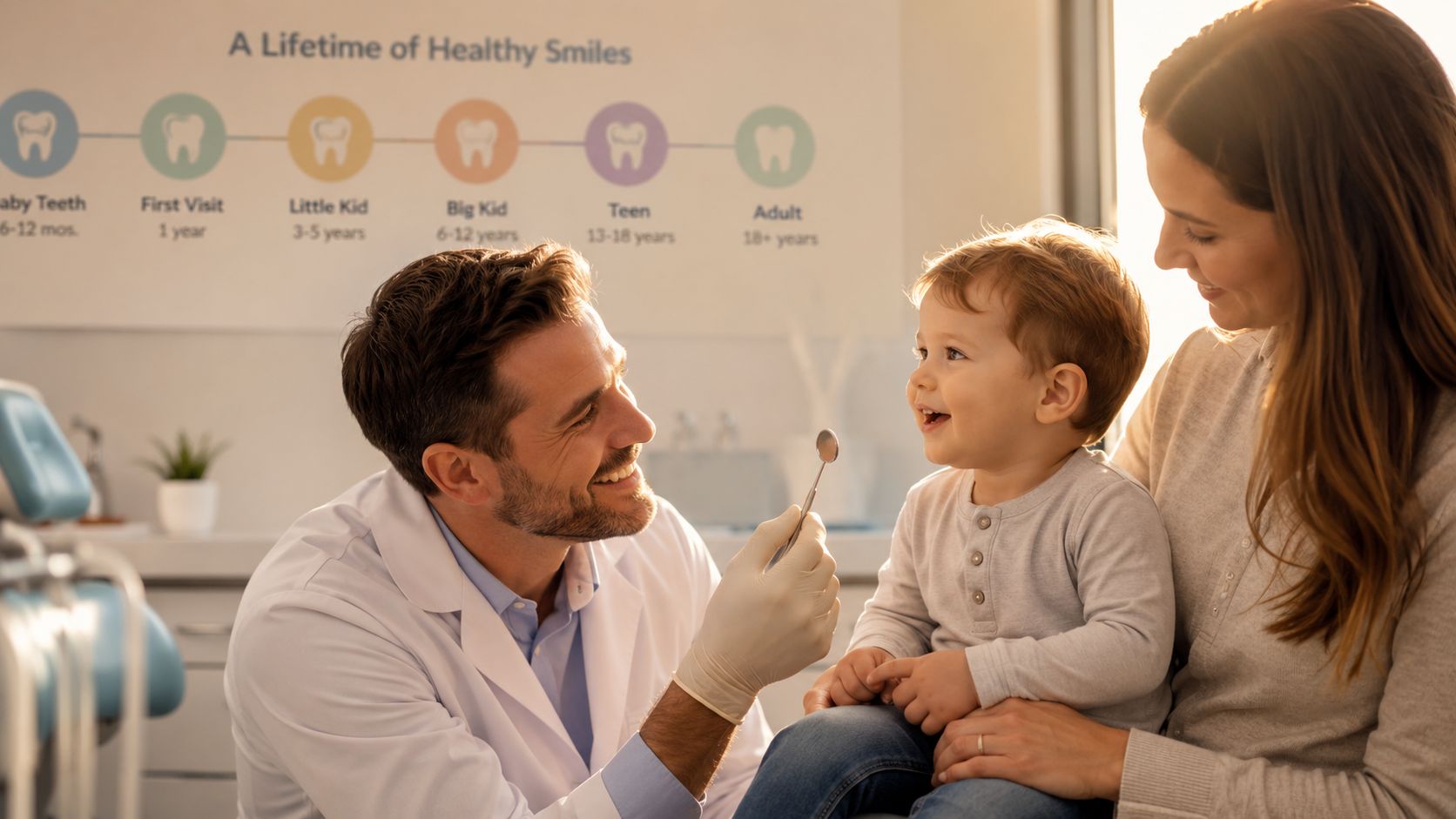
The American Academy of Pediatric Dentistry recommends your child's first dental visit by age one or within six months of the first tooth erupting. If you missed that window, don't panic. It's still the right time to schedule a visit, whether your child is a baby, a toddler, or already in preschool.
A lot of parents in Fair Lawn wait until something feels wrong. Maybe you noticed staining on a front tooth, your child fights toothbrushing, or you're searching “dentist near me” because you want a kind office before a small issue becomes a stressful one. That's completely understandable.
As a family dentist, I can tell you that most of the confusion around the age for pediatric dentist visits comes from two questions. First, when should a child start? Second, what happens if life got busy and that first visit didn't happen on time? Parents in Fair Lawn, Ridgewood, and Glen Rock ask both all the time.
The good news is that pediatric dental care doesn't have to feel mysterious. It follows a simple timeline, and with the right support, your child can build comfort with dental care early and carry that confidence into the teen years and beyond.
The ideal first visit happens earlier than many parents expect. The American Academy of Pediatric Dentistry, together with the American Academy of Pediatrics and the American Dental Association, recommends a first oral health exam by no later than 12 months of age, or within six months of the first tooth erupting according to this guidance on pediatric dental care age limits.
That recommendation isn't about doing a big procedure on a baby. It's about prevention. A simple early visit gives parents clear guidance on brushing, feeding habits, fluoride, and what normal tooth development looks like.

By the first birthday, many children already have teeth that need daily care. Cavities can start much earlier than parents expect, especially when baby teeth are exposed to frequent sugars, bedtime bottles, or inconsistent brushing. Early visits help families avoid the cycle of waiting, worrying, and then needing treatment under pressure.
Practical rule: If your child has a tooth, your child is old enough for a dental visit.
This timing also helps create a “dental home,” meaning your child has a familiar place for routine care, questions, and urgent concerns. That matters if you ever need help with tooth pain, a chipped tooth, or an emergency dentist visit later on.
Many parents missed the first-year recommendation, especially if no one explained it clearly. If that's your situation, the next step is simple. Book the visit now.
The reason to catch up promptly is important. The AAPD's State of Little Teeth report notes that nearly half of children aged 6 to 11 in the U.S. have tooth decay, and delayed first visits can worsen oral health outcomes and family finances, as explained in the State of Little Teeth report.
A catch-up visit usually focuses on a few basic goals:
Parents often find it helpful to look at broader child development milestones because oral habits connect closely with sleep, feeding, speech, and independence. If you're wondering what's typical for a preschooler's teeth, this guide on 3 year old teeth can also help you know what to watch for.
Most first visits are much easier than parents imagine. Instead of a long appointment in a scary chair, think of it as a calm introduction. Your child gets to see the room, meet friendly faces, and learn that the dentist is a safe place.

For infants and very young toddlers, a lap-to-lap exam is common. A parent holds the child, and the dentist gently leans the child back just enough to look at the teeth and gums. That setup feels secure, which helps many children stay relaxed.
During that exam, the dentist may:
The first appointment usually involves more parent education than treatment. That's a good thing. You leave knowing how much toothpaste to use, how to position your child for brushing, and what signs mean you should call sooner rather than later.
A good first exam feels more like coaching than correction.
If a child cries, wiggles, or refuses to open wide for long, that's normal. Dentists who care for young children expect it. The goal isn't a perfect performance. The goal is a positive start.
For older toddlers and preschoolers, the visit may include a gentle cleaning and simple dental x-rays if needed, depending on what the dentist sees clinically and how comfortable your child is. If a cavity is found, parents can talk through next steps before deciding on treatment. That kind of calm planning often makes the whole process feel much more manageable.
Children don't stay in one stage for long. Their dental needs change as they grow, which is why it helps to think about oral health as a journey instead of a one-time milestone.
The American Academy of Pediatric Dentistry defines pediatric dentistry as an age-defined specialty for infants, children, and adolescents, generally up to age 18 or high school graduation, as outlined in the AAPD overview of pediatric dentistry. That broad age range surprises many parents who assumed pediatric care stopped much earlier.
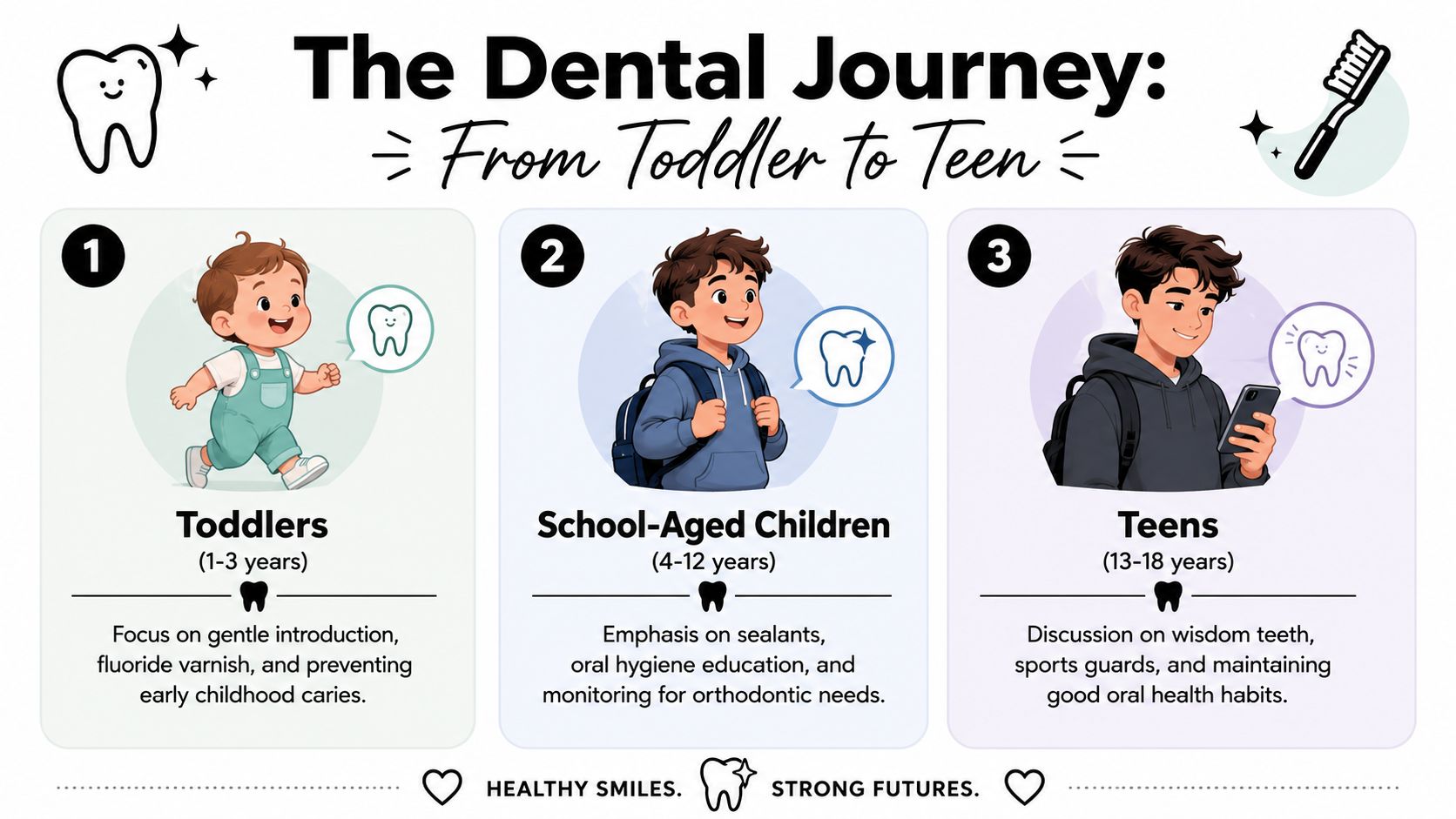
A child's dental timeline usually includes a few key checkpoints. One of the most important is an orthodontic screening. Pediatric orthodontic evaluations are often recommended at approximately age 7 to see whether interceptive treatment or space management might help, as explained in this article on what ages pediatric dentists see.
Here's a simple way to think about the journey:
| Stage | Main focus |
|---|---|
| Toddler years | Prevention, brushing support, cavity risk reduction |
| Early school years | Cleanings and exams, bite monitoring, sealants when appropriate |
| Around age 7 | Orthodontic evaluation and growth observation |
| Teen years | Hygiene independence, sports guards, cosmetic concerns, alignment, wisdom tooth monitoring |
Some families also appreciate a broader view of habits, nutrition, and routine building. This article on holistic children's dental care is a useful complement to standard dental advice.
Most articles stop at “pediatric dentistry ends at 18.” Real life is more nuanced. Teens don't all mature on the same schedule. Some are managing braces, oral hygiene struggles, dental anxiety, or special health care needs right as they approach adulthood.
That's why continuity matters. A familiar office can make the shift from pediatric-focused care to general dental care feel much less abrupt. Parents looking for age-appropriate guidance often find this overview of pediatric dental care helpful when they're thinking beyond the toddler years.
Families often want more than a dentist near me. They want an office that understands children, communicates clearly with parents, and can keep care consistent as needs change.
That matters in everyday situations. A child may need preventive sealants in grade school, tooth-colored fillings later, and orthodontic guidance as a teen. An older sibling may be ready for Invisalign or Six Month Smiles, while a parent is looking for a cosmetic dentist near me for teeth whitening or veneers. A family practice can make all of that simpler because everyone's care happens under one roof.

Young patients usually do best when care feels predictable. That means clear explanations, gentle pacing, and treatment plans that fit the child in front of you rather than forcing every child through the same routine.
A supportive dental office for families in Fair Lawn, Ridgewood, and Glen Rock should make room for:
Some older teens still need the familiarity of a pediatric-centered approach. That can be especially true for patients with ongoing hygiene challenges, developmental needs, or treatment plans already in progress.
According to this discussion of the oldest age to go to a pediatric dentist, the AAPD allows smooth transitions up to high school graduation or even the first years of college for patients with ongoing developmental or hygiene needs. That's one reason a full-service family dentist in Fair Lawn, NJ can be such a strong long-term fit.
The best dental home grows with your child instead of making every new stage feel like starting over.
This kind of continuity also helps when care expands beyond pediatric needs. If a young adult later needs restorative dentistry, emergency dentist support, dental implants near me searches for a family member, or cosmetic dentistry planning, a trusted relationship is already in place.
Parents have a huge influence on how a child feels before the appointment even starts. The words you use at home can either calm the experience or make it feel bigger than it needs to be.

A few small choices can make the visit smoother:
Parent note: Calm preparation works better than long explanations.
This short video gives parents another helpful way to talk about the experience with kids:
Try not to promise a reward only if your child behaves perfectly. That can add pressure. It's usually better to praise effort, even if the appointment included some tears or hesitation.
Also, don't wait until there's tooth pain to make the first visit. When a child's first experience is tied to discomfort, it's harder to build trust. A routine new patient exam gives everyone a much gentler starting point.
A family dentist can be a very good fit when the office is comfortable caring for children and can adjust the visit to the child's age, temperament, and needs. Many parents prefer a family practice because siblings and adults can also receive dental care, from routine cleanings to cosmetic dentistry, restorative dentistry, and emergency services.
Don't assume that means you did something wrong. It means you found the problem and can make a plan. Depending on the cavity, the dentist may recommend monitoring, preventive steps, or treatment such as a tooth-colored filling. If your child is anxious, ask about comfort options and sedation dentistry when appropriate.
Not at all. The best time is now. Delayed starts are common, and dentists see older toddlers and preschoolers every day for catch-up care. What matters most is getting a clear baseline and helping your child build healthier habits from this point forward.
Not always. Some children do well with them right away, and some don't need them at the first visit. The decision depends on your child's age, cavity risk, what the dentist can see clinically, and how cooperative your child feels that day.
Many parents first hear about orthodontic screening in elementary school. Around age seven is a common time to evaluate growth and spacing. That doesn't mean treatment starts immediately. It means the dentist or orthodontic provider can watch development and recommend the right timing.
Yes. Baby teeth help with chewing, speech, comfort, and guiding permanent teeth into place. When they become decayed or painful, children can have trouble eating, sleeping, and focusing at school. Healthy baby teeth make the transition to adult teeth much smoother.
Yes, and that continuity can be a real advantage. As children grow, their needs may shift from pediatric prevention to Invisalign, wisdom tooth evaluation, cosmetic concerns, emergency dentist care, or even adult restorative work. Staying with one trusted office can make those transitions feel much easier.
If you're looking for a caring Dentist in Fair Lawn, NJ for your child's first visit, catch-up care, teen dental needs, or family dental services under one roof, Dental Professionals of Fair Lawn is here to help. From gentle new patient exams and cleaning and exams to emergency dentist care, Invisalign, Six Month Smiles, cosmetic dentistry, restorative dentistry, and more, the team welcomes families from Fair Lawn, Ridgewood, Glen Rock, and nearby New Jersey communities. Schedule an appointment to give your child a calm, confident start and a dental home that can grow with them.