Why Do Teeth Shift After Braces? 2026 Care and Prevention
Learn why do teeth shift after braces and how to prevent it in 2026. Our Fair Lawn dentists provide expert retainer advice. Schedule your consultation now.
Learn why do teeth shift after braces and how to prevent it in 2026. Our Fair Lawn dentists provide expert retainer advice. Schedule your consultation now.
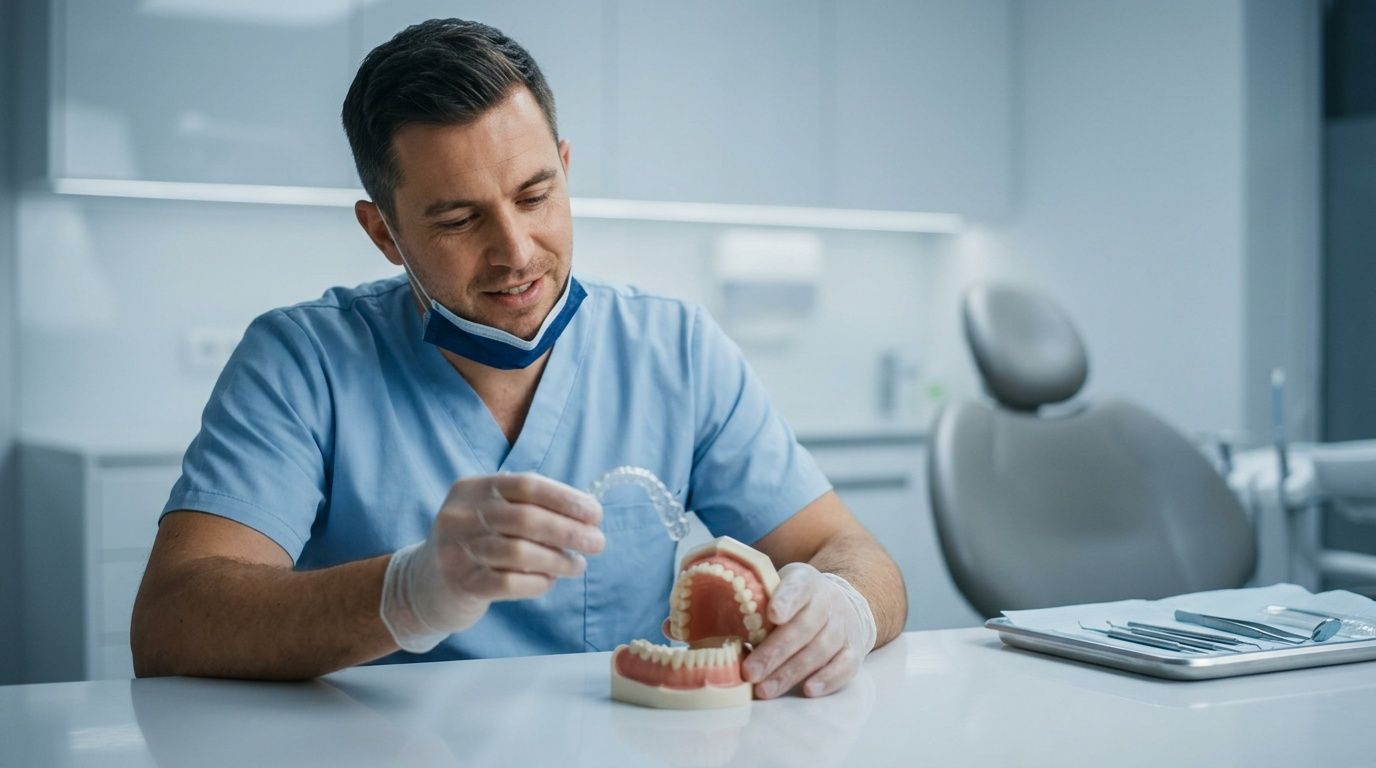
You look in the mirror one morning and notice it right away. The tooth that used to sit perfectly straight now overlaps just a little. Maybe your bite feels different when you chew, or a retainer that once slipped on easily now feels tight. For many adults and parents in Fair Lawn, Ridgewood, and Glen Rock, that moment brings the same anxious question: why do teeth shift after braces if treatment already worked?
It’s a fair question, and it often comes with guilt. People assume they must have done something wrong. In reality, that’s not always true. Teeth can move for more than one reason, and modern dental care looks beyond the old habit of blaming every change on “not wearing your retainer enough.”
Many patients start with a story like this: they had braces as a teen, loved the result, wore their retainer faithfully for a long time, and still noticed a small change years later. That experience is more common than widely known. In fact, recent orthodontic literature indicates that localized relapse can occur in up to 20 to 30% of cases over 5 to 10 years even with ideal retention, especially in patients who began with severe crowding, as noted in this orthodontic relapse review on PubMed Central.
That matters because it changes the conversation. If you’ve been searching for a dentist near me, a cosmetic dentist near me, or help with Invisalign and orthodontic touch-ups in Fair Lawn, you deserve an explanation that feels honest and not judgmental.
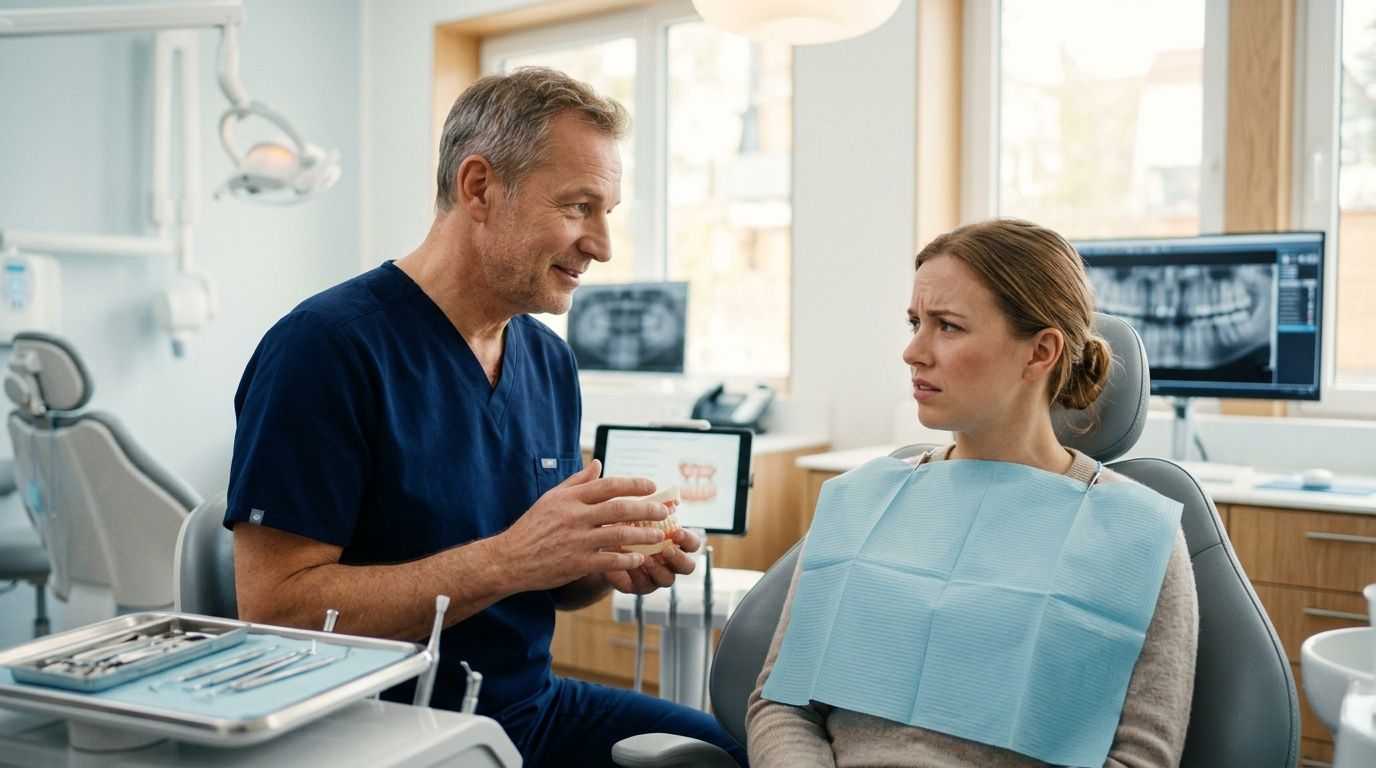
Part of the confusion comes from how braces are described. People hear that braces “straighten” teeth, which is true. But teeth aren’t fixed in concrete after treatment. They sit in living bone and soft tissue that keeps adapting over time.
That’s why a slight change after braces doesn’t automatically mean failure. It may mean your mouth is responding to aging, bite pressure, grinding, gum changes, or another force that never got addressed.
Practical rule: If your teeth have shifted, start with curiosity instead of blame. The cause is often more complex than most online articles suggest.
Those asking why do teeth shift after braces aren’t looking for a lecture. They want clear answers:
Patients also want an office experience that’s easier to manage from the first call onward. A strong digital front door for healthcare practices can make that process simpler by helping people connect, ask questions, and follow through with care when they’re already feeling unsure.
If you’ve noticed movement, don’t assume you waited too long or caused permanent damage. In many cases, small changes can still be addressed with the right evaluation and a plan that fits your bite, habits, and goals. Good dental care in Fair Lawn, NJ should do more than point to a retainer. It should help you understand the reason behind the movement and give you realistic options to protect your smile.
The simplest answer is this: teeth move because the tissues around them are alive. Braces guide teeth into better positions, but your body needs time to hold those teeth there. Even after active orthodontic treatment ends, the surrounding fibers, gums, and bone still need to adapt.
A helpful way to think about it is this. Teeth are like fence posts set into soil, not bolts locked into cement. They’re stable, but they can still respond to pressure over time.
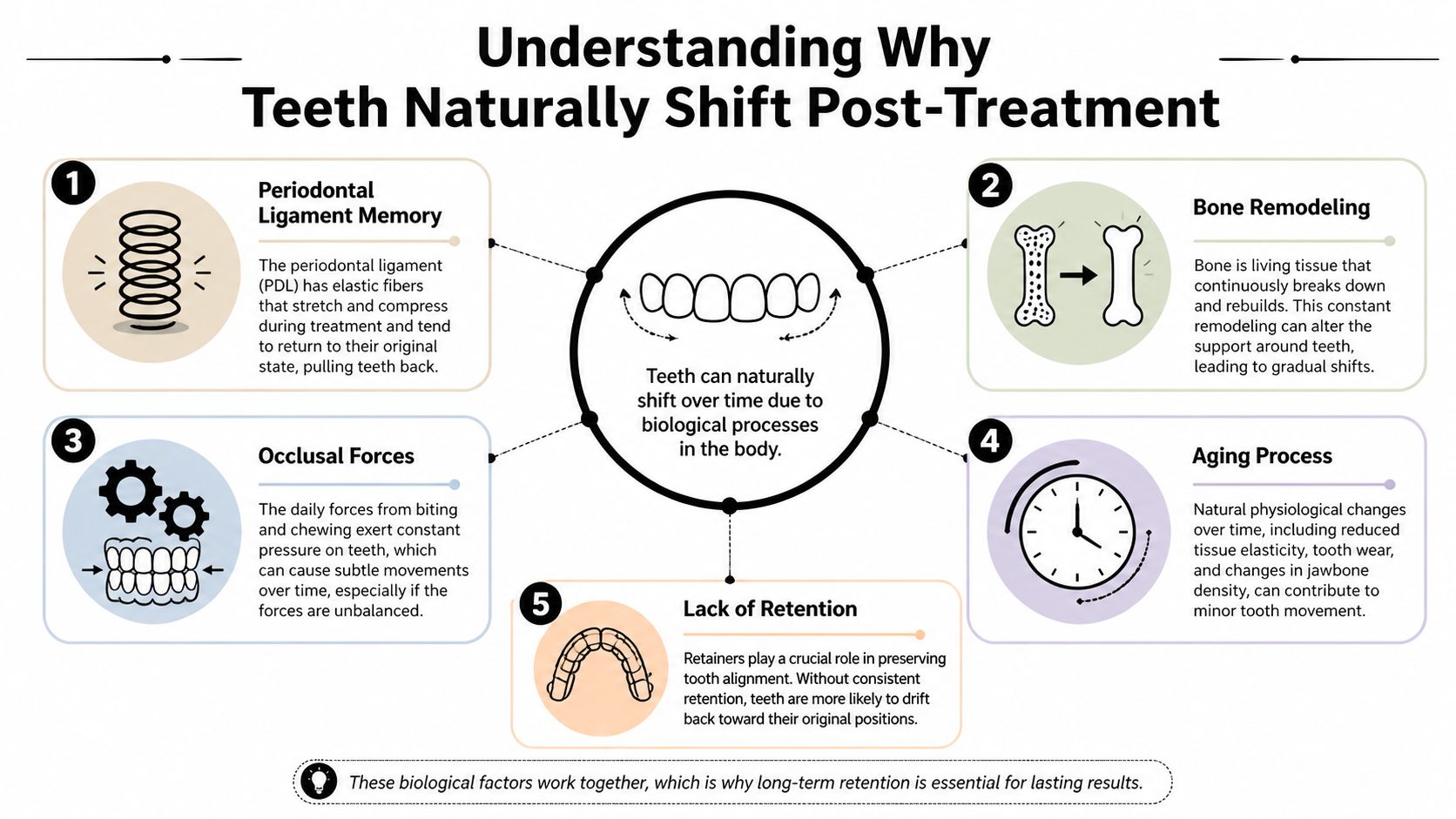
Each tooth is held in place by tiny structures called periodontal ligaments. During braces treatment, those ligaments stretch as the teeth move into alignment. After braces come off, those same ligaments tend to pull back, almost like small rubber bands trying to return to their previous shape.
That rebound is one reason the early retention phase matters so much. It’s not cosmetic. It’s biological.
The first 3 to 6 months after braces are removed is the most critical period for stability, because the periodontal ligaments are still trying to pull teeth back toward their original positions. During that vulnerable window, failure to wear retainers is the most common cause of post-braces relapse, according to this explanation of post-braces stabilization and retainer wear.
Many people get mixed messages about retainers. They think a retainer is a backup tool. It’s not. It’s part of the treatment.
Retainers don’t “redo” braces. They protect the result while your mouth catches up to the new tooth positions.
Right after braces, many patients are told to wear retainers full-time before changing to nighttime wear. That recommendation isn’t arbitrary. It reflects the fact that your gums and bone need a chance to stabilize around the corrected alignment.
If you stop too soon, teeth may start drifting before the surrounding support structures have settled. Some people notice this as minor crowding. Others feel it first when the retainer becomes harder to seat.
Even after that early healing phase, teeth don’t become frozen forever. They remain part of a changing system. Bone remodels. Bite forces shift. Daily pressure from chewing and swallowing continues.
That’s why the answer to why do teeth shift after braces includes both short-term rebound and long-term change. The first is about tissue memory right after treatment. The second is about how the mouth keeps adapting through adulthood.
If you’re finishing braces or Invisalign, the key takeaway is simple:
Understanding the biology takes a lot of fear out of the process. Teeth don’t shift because your treatment “stopped working.” They shift because living tissues respond to time, pressure, and habits. Good prevention works with that biology instead of ignoring it.
A common Fair Lawn scenario goes like this. You finished braces years ago, you wore your retainer faithfully, and one day you notice a lower front tooth starting to overlap. That can feel frustrating and unfair. In many cases, it is not the result of one bad habit. It is the result of several small forces acting on living teeth over time.
Teeth sit in bone, ligament, and gum tissue that keep adapting throughout life. A fence post set in soil is a useful comparison. If the ground changes, the post can shift even if no one touched it directly. Teeth respond the same way to pressure, inflammation, bite changes, and normal aging.
The image below helps illustrate that idea.
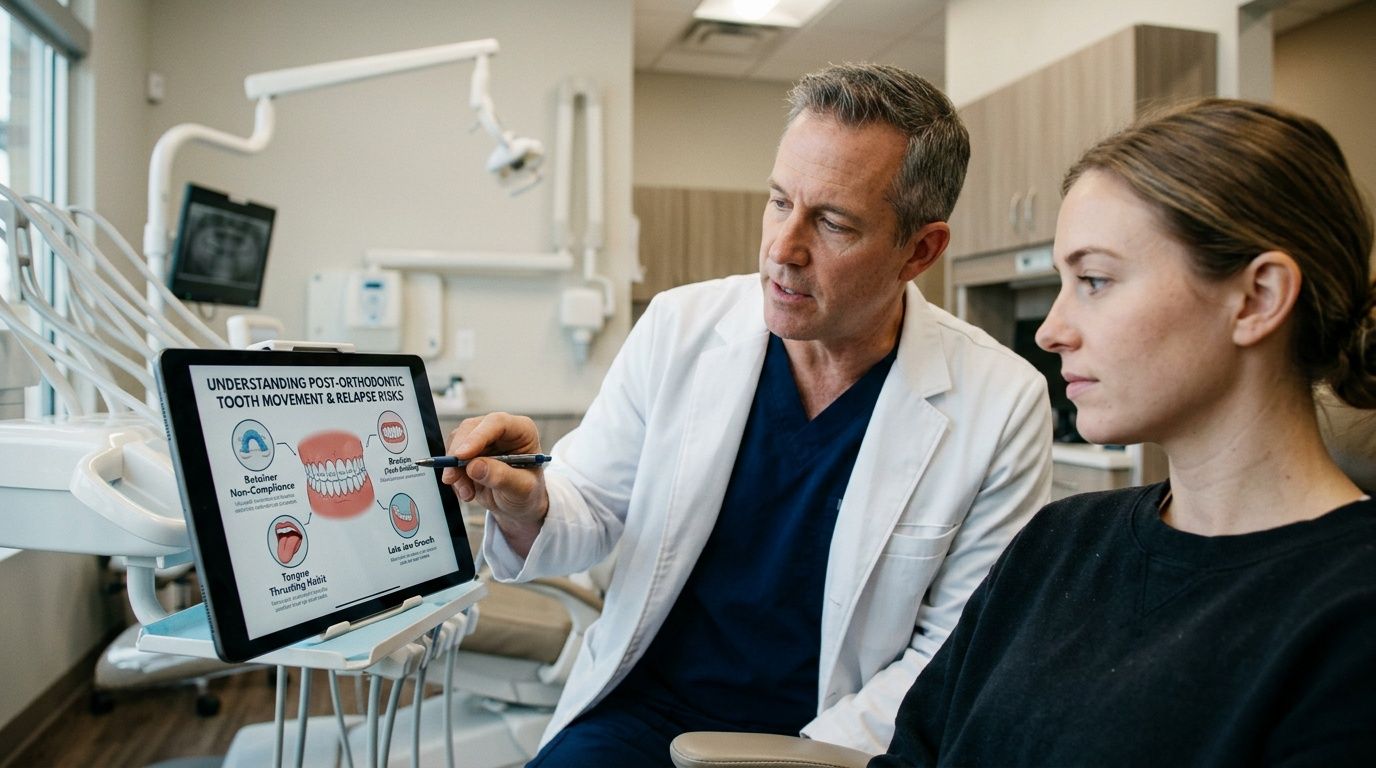
Teeth tend to move slightly forward over the years. Dentists call this mesial drift. It happens in people who had braces and in people who never did. Adults often see it most clearly in the lower front teeth, where even a small change can show up as crowding.
That matters because it changes the conversation. A shifted tooth does not automatically mean your treatment failed or that you were careless. Sometimes your mouth is changing with age, and your retention plan needs to change with it.
Wisdom teeth get blamed often because they are easy to point to. The timing can seem convincing. A patient notices crowding in the late teens or twenties, and wisdom teeth are erupting in the background.
The problem is that the pattern is not that simple. People without wisdom teeth still develop crowding. People who had wisdom teeth removed can still see movement later. Wisdom teeth may add pressure in certain situations, but long-term shifting usually has more than one cause.
Straight teeth stay more stable when the supporting gums and bone are healthy. If inflammation damages that support, teeth can loosen slightly and become easier to move. That can show up as spacing, flaring, or bite changes that seem to appear faster than expected.
If you have bleeding when brushing, tenderness, or changes near the gumline, review these signs of gum disease. For many adults, protecting orthodontic results also means protecting periodontal health.
Some of the strongest relapse forces happen outside your awareness. Orthodontists and general dentists see this every day. A patient may be wearing a retainer as instructed, yet repeated pressure from the jaw, tongue, or bite still nudges teeth over time.
Common examples include:
These habits act like a thumb pressing on a book page again and again. One push may do nothing. Thousands of small pushes can change the position.
This factor surprises many patients. Oral appliances used for obstructive sleep apnea and snoring can be very helpful for breathing and sleep quality. They can also change how the teeth meet if they are worn long term without dental monitoring.
A review of dental side effects from sleep apnea appliances reports that some adults develop measurable crowding or bite changes over time with mandibular advancement devices, as described in this review of dental effects from sleep apnea appliances. If you use an airway appliance, your retainer plan may need to do more than a standard nightguard-style approach.
Teeth behave like members of a team. If one position changes, nearby teeth often adjust. A missing tooth, a new crown that changes the bite slightly, uneven tooth wear, or a shifting filling can alter the way forces travel through the mouth.
Watch for signs like these:
The main point is reassuring. Post-braces shifting is often biological and mechanical, not solely behavioral. In our Fair Lawn office, we look at the full picture, including age, gum support, grinding, airway therapy, and bite balance, so treatment is based on the actual cause rather than blame.
A good retainer plan does more than hand you an appliance and wish you luck. It matches the type of retainer to your teeth, your bite, your habits, and your daily routine. Some patients need a removable option they can clean easily. Others benefit from a fixed retainer behind the front teeth. Some need a combination.
That’s why retention works best when it’s personalized instead of generic.
Most patients will hear about three common options:
| Retainer Type | Pros | Cons | Best For |
|---|---|---|---|
| Hawley retainer | Durable, adjustable, long track record | More visible, can affect speech at first | Patients who want a sturdy removable option |
| Clear Essix-style retainer | Nearly invisible, snug fit, easy to wear at night | Can crack, may wear down over time | Patients who want a discreet look |
| Fixed bonded retainer | Always on, no risk of forgetting nightly wear | Harder to clean around, may loosen or break | Lower front teeth or patients prone to relapse |
The right choice depends on the pattern of previous crowding, oral hygiene habits, and whether hidden forces like grinding or tongue pressure are part of the picture.
Many people assume they’ll only need a retainer for a short time. In reality, long-term maintenance is part of protecting orthodontic results. The exact schedule can vary, but patients often begin with more frequent wear and later shift to nighttime use.
What matters most is consistency. A retainer only works when it’s being worn and still fits the teeth correctly.
Clinical insight: The best retainer is the one that fits your biology and the one you’ll realistically keep using.
Some patients care most about appearance. They want something clear and low-profile. Others know they’re likely to forget a removable retainer and prefer a fixed wire for peace of mind.
A few practical examples help:
Retainers don’t last forever. They can warp, crack, loosen, or stop fitting well after unnoticed movement. Good maintenance is simple, but it matters.
Try to keep these habits in place:
Some patients need more than “wear this at night.” Adults with gum concerns, grinding habits, or sleep apnea appliances often do better with closer monitoring and more personalized guidance. If your teeth have shifted before, that history matters too.
The goal isn’t just to hold teeth in place for now. It’s to build a retention strategy that still makes sense years from today, when life, stress, sleep, and oral health may not look exactly the same as they do right now.
You finish brushing one night, glance in the mirror, and notice the tooth that used to sit perfectly straight now overlaps its neighbor. That moment can feel frustrating, especially if you wore your retainers and did what you were told. In many cases, retreatment is not about fixing a mistake. It is about responding to a mouth that has changed over time.
As noted earlier, teeth can keep shifting because the mouth is a living system. Bone remodels. Bite forces change. Grinding, gum changes, aging, and even appliances worn for sleep apnea can slowly alter tooth position. That is why a thoughtful touch-up plan should look at more than alignment alone.
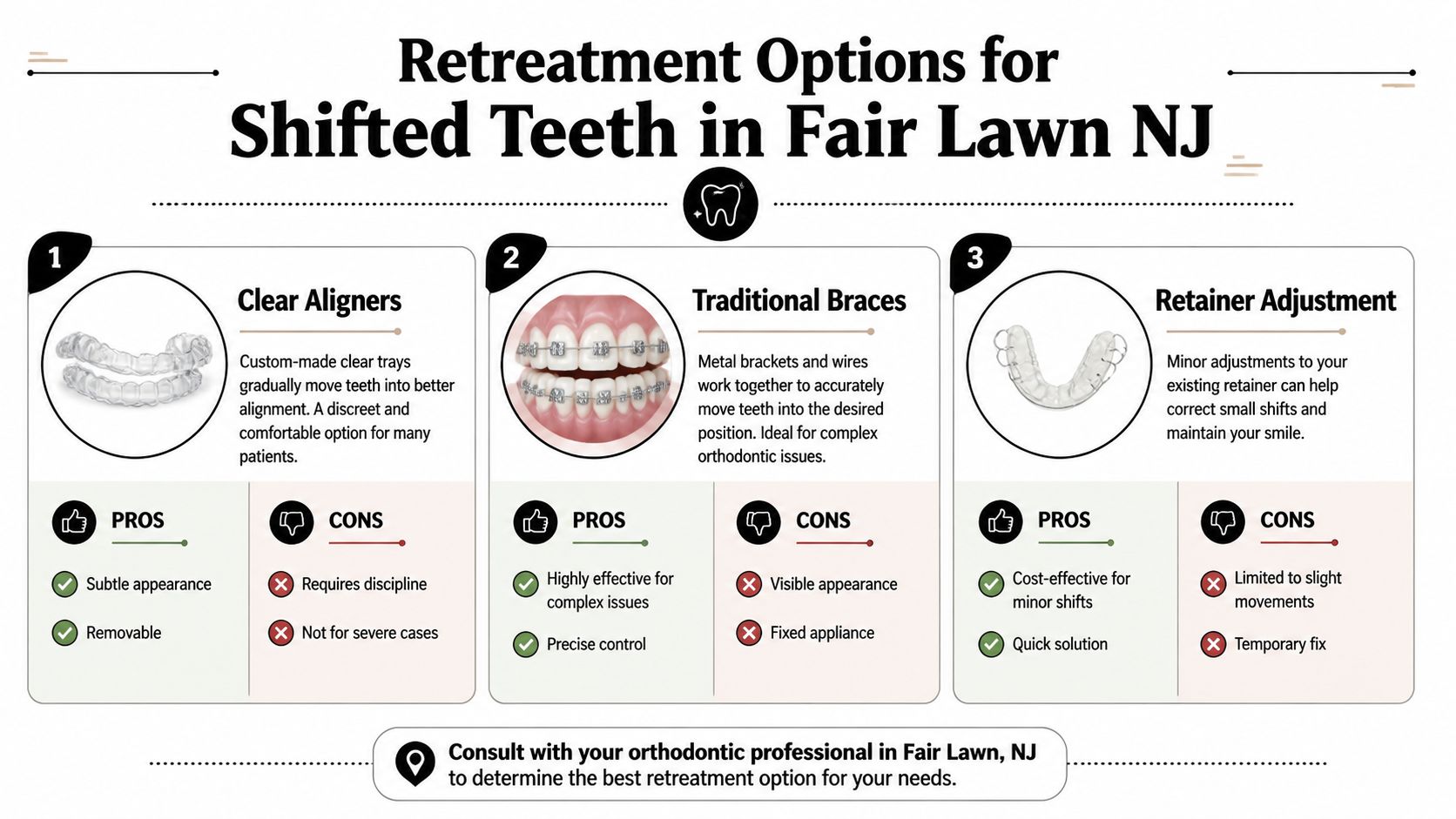
Very small changes sometimes need stabilization more than active tooth movement. If the shift is slight and your bite still feels comfortable, a new retainer or a carefully updated retention plan may be enough to hold things where they are and prevent more relapse.
This works best when the movement is minor, recent, and limited to one area. A retainer is a holding device, not a strong repositioning tool, so part of the exam is deciding whether we are preserving a good result or trying to move teeth that have already drifted too far.
For many adults, clear aligners are a practical way to correct crowding or spacing without brackets and wires. They move teeth in a series of small, controlled steps, much like nudging books back into line on a shelf instead of forcing the whole row at once.
If you want a discreet orthodontic touch-up, our page on Invisalign treatment in New Jersey explains how clear aligners can fit adult goals after teeth have shifted. This option is often a good fit when appearance matters, but we also need to pay attention to bite balance and long-term retention.
Some patients are mainly bothered by the front teeth they see in photos, video calls, and conversations. In the right case, a limited orthodontic approach such as Six Month Smiles may be appropriate. That can make sense when the main concern is the smile zone and the bite does not need a full rebuild.
The key is choosing treatment that matches the reason the teeth moved. If clenching, uneven bite pressure, or airway appliance use played a role, those factors need attention too. Otherwise, the teeth can drift again after the cosmetic improvement.
A little movement does not always call for orthodontics. If the bite is healthy and the issue is mostly visual, cosmetic dentistry may help refine the look of front teeth that appear slightly uneven, worn, or chipped. Bonding or veneers can improve shape and symmetry, but they do not reposition roots inside the bone.
That distinction matters. Orthodontic treatment changes tooth position. Cosmetic treatment changes appearance. Some patients need one. Others benefit from a combination.
The best retreatment plan depends on how much your teeth moved, what caused the change, and whether function changed along with appearance. In our Fair Lawn office, that decision is based on the full picture, not blame about retainer wear.
A few questions help clarify the right path:
Small shifts are often easier to correct than larger ones. Early evaluation gives you more options, and it helps us address the reason behind the movement so the result lasts.
Patients often feel more at ease once they know what the appointment will be like. If you’re coming in because your teeth shifted after braces, the visit usually feels more like a problem-solving conversation than a stressful dental ordeal.
You’ll start by talking through what you’ve noticed. Maybe your lower front teeth look crowded. Maybe your retainer no longer fits. Maybe your bite changed after a sleep appliance, a restoration, or years of clenching.

This part matters more than many patients expect. A good evaluation doesn’t just look at whether teeth moved. It asks why they moved. That may include your orthodontic history, retainer habits, gum health, jaw tension, sleep appliance use, and any changes in dental work.
If you’re anxious, this is also the time to say so. Patients often relax once they realize they won’t be rushed or judged.
A thorough exam may include photos, bite evaluation, and digital imaging. If digital scanning is used, it can create a detailed 3D model of your teeth without messy traditional impressions. That’s especially helpful when comparing current alignment to where your teeth should be or when planning a new retainer or aligner case.
For patients considering Invisalign, cosmetic dentistry, or restorative changes, this kind of imaging can make the discussion much more concrete. You can see what’s happening instead of trying to guess.
Treatment recommendations depend on what the exam shows. Some patients need only an updated retainer. Others may be better candidates for Invisalign, Six Month Smiles, periodontal care, or a bite-protection strategy if grinding is part of the problem.
Common parts of the visit may include:
Many patients come in expecting bad news and leave relieved. Often, the hardest part is just making the appointment.
That’s okay. A lot of adults return for care when a retainer breaks, a fixed wire loosens, or crowding becomes visible enough to bother them. The important thing is not to wait until the shift becomes harder to correct.
For anyone also searching for cleaning and exams, dental x-rays, new patient exams, or even an emergency dentist because of a broken bonded retainer or painful bite change, this type of visit can answer several concerns in one place.
You glance in the mirror one morning and notice the front teeth are not sitting the way they used to. The retainer may feel tighter, or it may not fit at all. That can be upsetting, especially if you followed instructions and did what you were supposed to do after braces.
Teeth can still shift for reasons that have little to do with effort or discipline. As noted earlier, everyday forces such as grinding, changes in gum and bone support, tongue pressure, aging, and even the way a sleep appliance rests against the teeth can gradually move them. Teeth are held in living tissue, not cement. That is why small changes can happen over time, even in careful patients.
Early movement is usually easier to correct. A little crowding, a new space, or a bite that suddenly feels uneven often gives us a chance to step in before the problem affects comfort, cleaning, or wear on the teeth.
A retainer that no longer fits is a useful warning sign. It works like a favorite key that suddenly sticks in the lock. Something has changed, and the sooner you check it, the easier it is to sort out what changed and why.
Patients searching for a dentist near me, cosmetic dentist near me, Invisalign, Six Month Smile, restorative dentistry, or an emergency dentist after a bonded retainer breaks often need more than a replacement appliance. They need a team that sees the whole picture.
That may include looking at:
This broader approach matters because straight teeth stay straighter when the forces pushing on them are addressed. If the issue is nighttime grinding, inflamed gums, or pressure from an appliance, replacing the retainer alone may not solve the problem for long.
A lot of adults live with small shifts for years because the change seems too minor to justify treatment. Others assume retreatment will mean starting over from scratch. In many cases, neither is true.
Small corrections can often be handled with far less treatment than people expect. The first step is a careful evaluation to find the cause, then choosing the option that matches your goals, whether that means a new retainer, a bite guard, limited Invisalign, cosmetic improvement, or support for gum and bite issues that are contributing to the movement.
If you have noticed crowding, spacing, a retainer that no longer fits, or a bite that feels off, Dental Professionals of Fair Lawn can help you understand what is driving the change and what to do next. The team serves patients in Fair Lawn, Ridgewood, Glen Rock, and nearby New Jersey communities with personalized care that may include orthodontic touch-ups, retainers, cosmetic dentistry, periodontal support, TMJ and sleep apnea considerations, and urgent help for broken fixed retainers or sudden bite changes. To take the next step, contact the office through the website to request an appointment and discuss a plan for restoring a stable, confident smile.