Why Do My Gums Bleed When I Brush? Find Causes & Cures
Why do my gums bleed when I brush? Fair Lawn dentists explain common causes like gingivitis and provide effective solutions to restore oral health.
Why do my gums bleed when I brush? Fair Lawn dentists explain common causes like gingivitis and provide effective solutions to restore oral health.
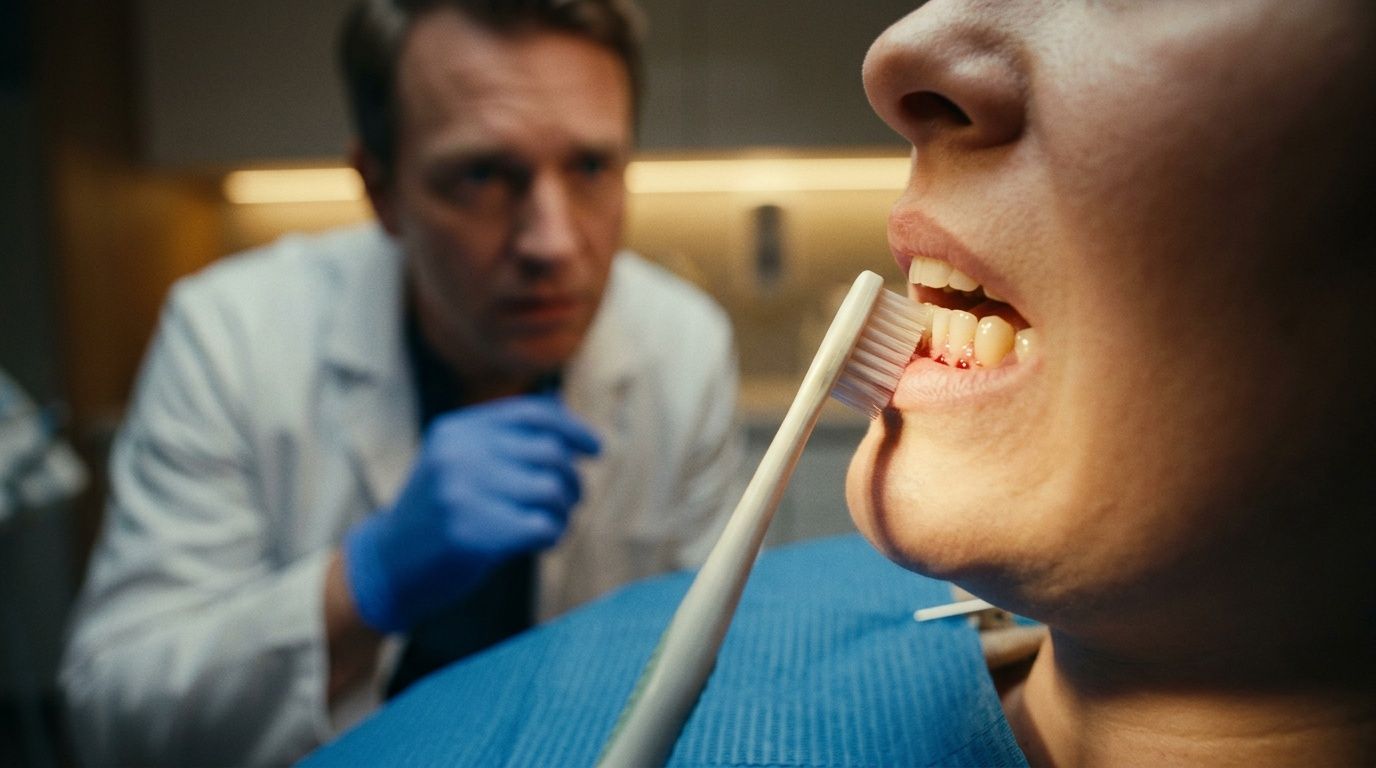
Seeing blood in the sink after you brush can be unsettling. A common initial reaction is this: Something must be wrong.
That concern is understandable, but it usually doesn't mean you're facing the worst-case scenario. In many cases, bleeding gums point to irritation or early gum inflammation that can be treated. The key is not to ignore it, and not to stop brushing out of fear.
If you've been searching why do my gums bleed when i brush, you probably want a clear answer, not vague advice. Patients in Fair Lawn, Ridgewood, and Glen Rock often want to know whether they need a routine cleaning, a deeper periodontal evaluation, help with Invisalign or a night guard, or urgent care from an emergency dentist. The answer depends on the cause, and the cause isn't always the same for everyone.
At Dental Professionals of Fair Lawn, Dr. Jody Bardash and the team see this concern in families, teens, adults, denture wearers, and patients planning cosmetic dentistry or dental implants. Bleeding gums can be a simple hygiene issue. They can also be a sign that your brushing technique, appliances, medications, or general health need attention.
A healthy smile starts with healthy gums. If your gums bleed when you brush, this guide will help you understand what may be happening, what tends to work, what usually doesn't, and when it's time to schedule a dental visit in Fair Lawn, NJ.
A common moment goes like this. You finish brushing, spit into the sink, and notice pink or red in the foam. Maybe it has happened once. Maybe it's been happening for a few weeks, and you're wondering whether to search for a dentist near me, an emergency dentist, or just buy a different toothbrush and hope it stops.
Most of the time, bleeding gums are a warning sign, not a reason to panic. Gums usually bleed because they're inflamed, irritated, or being traumatized by the way you're cleaning your teeth. That matters, but it also means there is usually a practical next step.
Many patients delay care because the symptom seems small. If the tooth doesn't hurt, they assume it can wait. That's one of the biggest trade-offs with gum problems. They often begin without prominent symptoms, but they rarely improve by neglect.
Healthy gums don't usually bleed from normal brushing.
For families in Fair Lawn, Ridgewood, and Glen Rock, local care makes a difference because treatment isn't just about removing buildup. It often involves looking at the whole picture. That can include home hygiene habits, orthodontic trays, dentures, cosmetic plans, implant maintenance, or medications that affect bleeding.
Dr. Jody Bardash has more than 30 years of experience caring for patients with routine and advanced periodontal concerns. That background matters when a symptom seems simple on the surface but needs a closer look. A teenager in Invisalign, an adult with a night guard, and a parent taking blood thinners may all report bleeding gums for different reasons.
If you feel worried, that's normal. If you've been putting it off, that's normal too. What matters now is getting the cause identified and treated before a reversible problem becomes a more stubborn one.
The most common answer to why do my gums bleed when i brush is gingivitis. This is the earliest stage of gum disease, and it starts when plaque sits along the gumline long enough to irritate the tissue.
About 46% of U.S. adults age 30 or older are affected by gingivitis, and plaque can harden into tartar within 24 to 72 hours if it isn't removed according to this gingivitis overview.
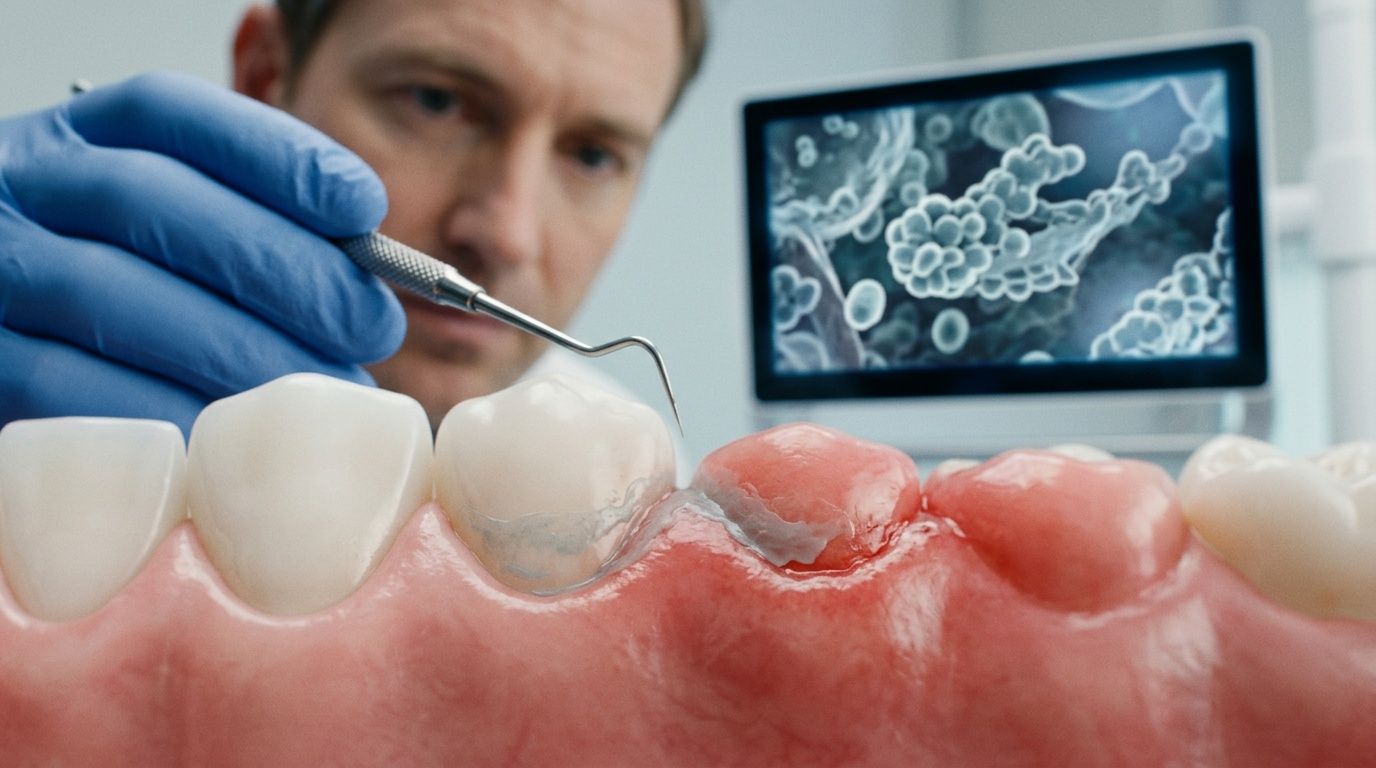
Plaque is a sticky film made from bacteria, food particles, and saliva. It forms constantly. If it stays at the gumline, the gums respond with inflammation.
A simple way to think about it is a garden edge. If weeds collect where the grass meets the walkway, that border gets irritated and overgrown first. Your gumline behaves in a similar way. The place where the tooth meets the gum is where buildup does the most damage first.
Inflamed gums often look:
That bleeding is not your gums being weak. It's your body signaling inflammation.
Brushing and flossing remove soft plaque. They do not remove tartar once it hardens. That's where people get stuck.
Someone may brush every day and still have persistent bleeding because they are brushing around deposits that have already hardened. At that point, the gums stay irritated until those deposits are professionally removed.
What doesn't work well:
What usually works:
Practical rule: If your gums bleed repeatedly, treat it as a sign to improve the environment around the gumline, not as a reason to avoid cleaning the area.
This is the reassuring part. Early gum inflammation can often be reversed when the underlying irritants are removed and your routine improves.
That matters for more than comfort. Healthy gums support every other part of dentistry. If you're interested in Invisalign, Six Month Smiles, teeth whitening, veneers, crowns, or dental implants near me, the gums need to be stable first. Cosmetic and restorative dentistry work best on a healthy periodontal foundation.
A routine exam in Fair Lawn can help determine whether you're dealing with simple gingivitis, more advanced periodontal issues, or a different cause altogether. The earlier the problem is addressed, the simpler treatment usually is.
A common pattern in the office is a patient who is doing the right things in theory, brushing twice a day and flossing regularly, but still seeing pink in the sink. In many of those cases, the problem is not neglect. It is technique, pressure, or an appliance that is rubbing the same spot over and over.
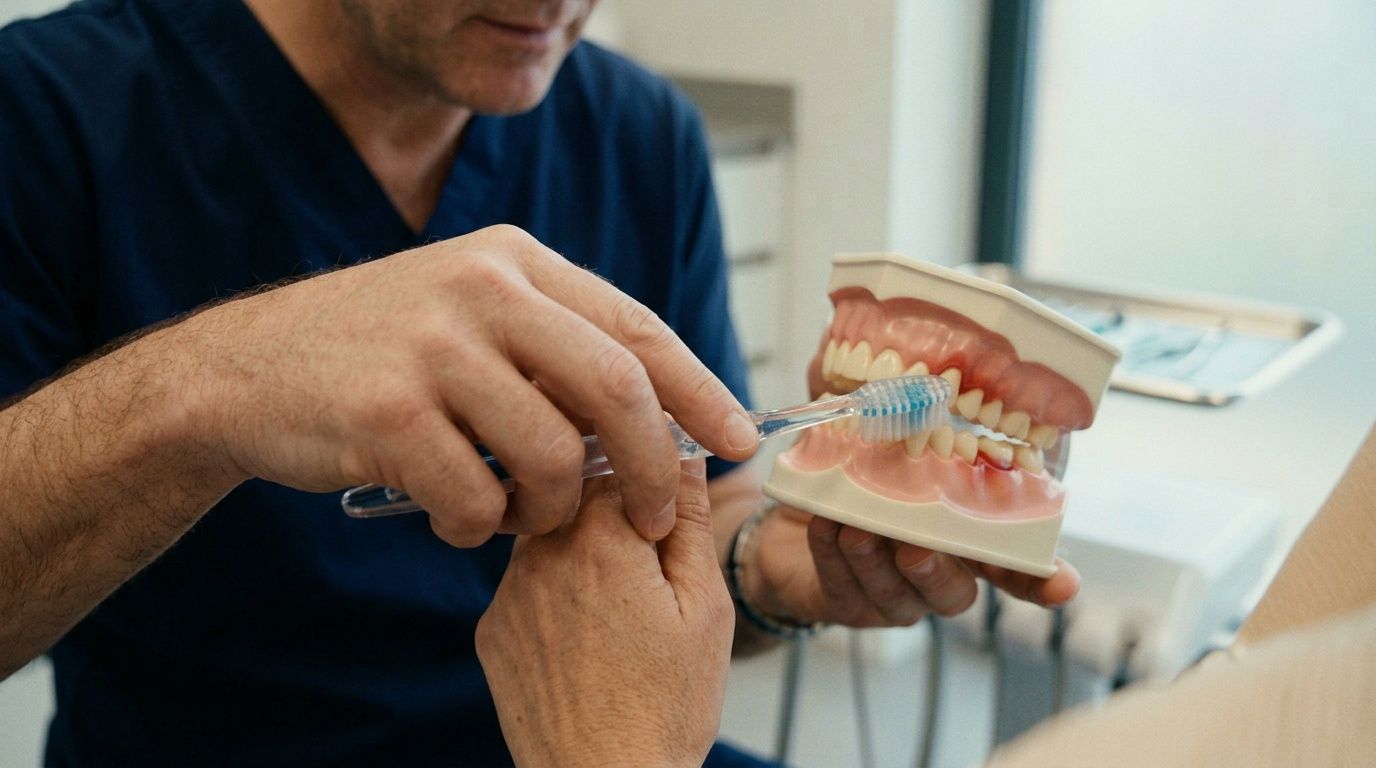
Gums are not meant to be scrubbed. A heavy hand, especially with medium or hard bristles, can irritate the gumline and make healthy tissue sore enough to bleed.
I often see this in adults who are trying to keep up with whitening, crowns, or orthodontic treatment and assume more pressure means a better result. It does not. A soft brush used gently at the gumline usually cleans better because the bristles can reach where they need to go instead of flattening out.
A better brushing approach usually includes:
If the bristles spread outward while you brush, the pressure is too high.
Bleeding after restarting flossing does happen. Inflamed tissue may react for several days when plaque is finally being disturbed again.
What matters is the pattern. Mild bleeding that improves with gentle daily flossing is different from tissue that feels cut, stings sharply, or bleeds in the same place every time. In that second group, the floss is often being snapped straight into the gum instead of guided along the tooth.
The motion should be controlled. Slide the floss between the teeth, curve it around one tooth, and move it gently under the gum edge before repeating on the neighboring tooth. For patients who want conservative home-care strategies in addition to standard hygiene advice, this guide on how to improve gum health naturally is a useful place to start.
This is especially relevant in Fair Lawn, where many adults are balancing work, family, and ongoing dental treatment such as Invisalign, retainers, implant restorations, or night guards for grinding. If bleeding shows up in one repeated area, I look closely at mechanics.
A tray edge may be pressing into the tissue. A retainer may have warped. A night guard may no longer sit evenly. A denture flange may be rubbing one fold of gum every day. The Cleveland Clinic's overview of bleeding gums notes that ill-fitting dental devices can irritate gums and lead to bleeding.
Watch for patterns like these:
| Sign | What it may suggest |
|---|---|
| Bleeding in one repeated area | Local rubbing from a tray, guard, or denture edge |
| Soreness after inserting an appliance | Pressure point or poor fit |
| Bleeding despite strong hygiene | Mechanical irritation rather than plaque alone |
| Gum tenderness near attachments or edges | Appliance design or wear issue |
This visual may help if you're unsure whether technique is part of the problem.
Change one factor at a time so you can tell what is helping.
This is also where local care matters. A quick adjustment to an appliance, a technique review, or a close look around an implant or orthodontic attachment can make the difference between irritation that settles down and tissue that keeps flaring up. If the bleeding becomes painful, persistent, or is tied to swelling, patients who need urgent help can review nearby emergency dental options while arranging a proper dental evaluation.
Some patients brush gently, floss consistently, and still notice bleeding. In that situation, the mouth may be reflecting something broader than local gum irritation.
Globally, 20% to 30% of adults over 50 on anticoagulants report heightened bleeding, vitamin C and K deficiencies affect 15% in major markets like the US and NJ, and uncontrolled diabetes can amplify bleeding independently of hygiene according to this review of medical factors behind bleeding gums.
Blood thinners don't create plaque, but they can make minor gum irritation bleed more easily and seem more dramatic. Patients often notice this after starting or changing medication.
That doesn't mean you should stop the medication on your own. It means your dentist needs to know what you're taking so the exam and treatment plan match your medical history.
A useful conversation at your appointment includes:
Hormonal changes can make gum tissue more reactive. Pregnancy is a common example, but menopause and other hormonal shifts can also change how the gums respond to plaque and brushing.
In those cases, a person may feel frustrated because their routine hasn't changed, yet the gums suddenly seem more sensitive. The tissue is responding differently, and the solution often combines more frequent professional monitoring with adjustments to home care.
If your gums started bleeding during pregnancy or after a medication change, that timing matters. Mention it early in the visit.
Vitamin deficiencies and uncontrolled diabetes can complicate gum healing. That means someone can have a fairly good brushing routine and still see persistent bleeding because the tissue is not repairing itself normally or is reacting more intensely to irritation.
This is one reason a dental exam shouldn't be reduced to “just a cleaning.” When bleeding gums don't fit the usual pattern, your dentist may advise speaking with your physician as well. Good care sometimes means coordinating both sides of the problem.
If the bleeding is heavy, sudden, painful, or tied to swelling, trauma, or another urgent symptom, patients who need after-hours guidance sometimes look into local emergency dental options while arranging prompt follow-up.
Call sooner rather than later if the bleeding is paired with any of the following:
Those patterns don't confirm one diagnosis by themselves. They do mean the cause needs a closer look.
When gums bleed, the first job is not guessing. It's identifying the exact cause. That may sound obvious, but many people lose time here. They try stronger mouthwash, a whitening toothpaste, or a new brush head without knowing whether the problem is plaque, tartar, trauma, appliance pressure, or a periodontal infection.
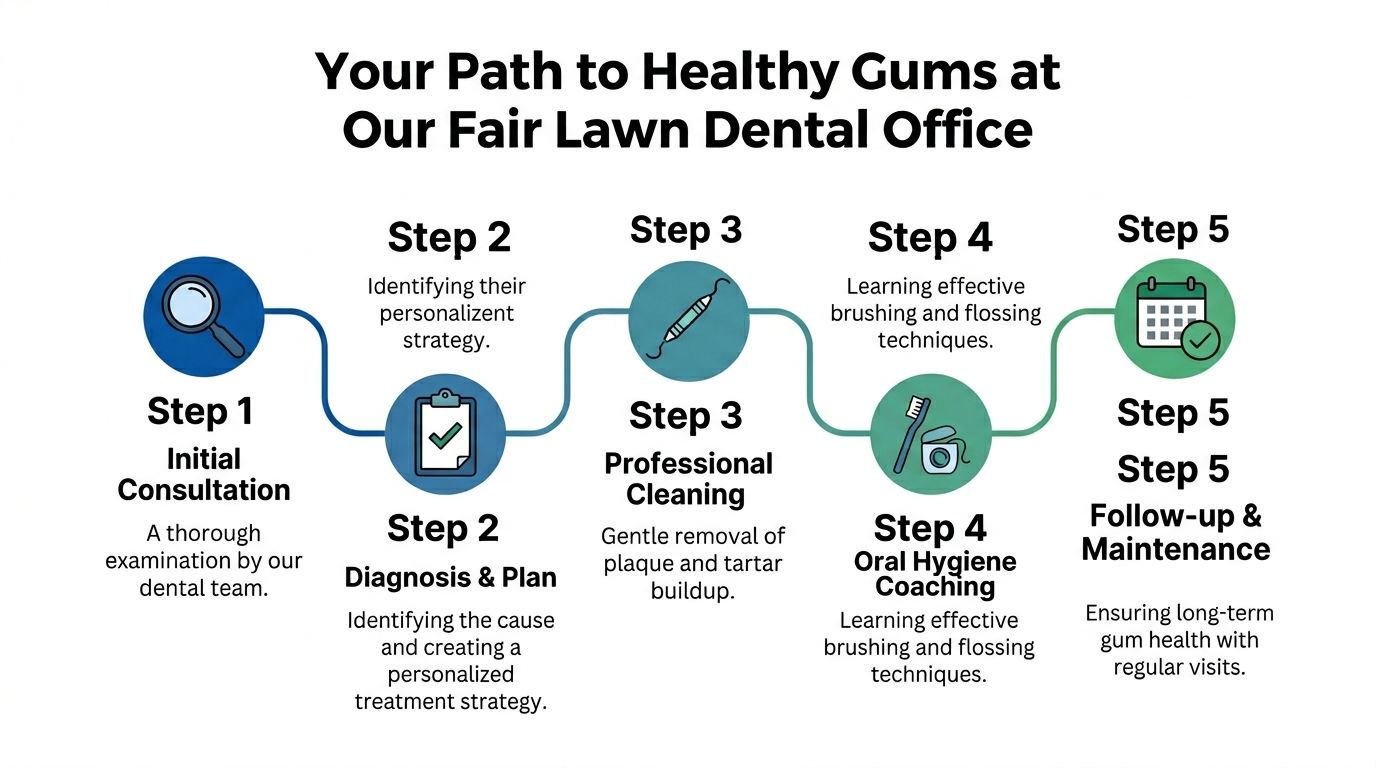
A useful periodontal visit usually starts with a close clinical exam. That can include checking the gumline, noting where bleeding occurs, measuring pocket depths around the teeth, reviewing home-care habits, and using dental X-rays if deeper concerns are suspected.
One clinical marker matters here. Gingivitis involves a biofilm of over 700 bacterial species, a bleeding on probing index above 20% indicates active inflammation, professional scaling can reduce bleeding on probing by 40% to 60% in 4 weeks, and laser-assisted debridement can reduce bacterial load by 99.9% post-treatment as described in this periodontal treatment summary.
That kind of evaluation helps separate a simple cleaning case from one that needs deeper treatment.
The best treatment depends on what the exam shows.
| Situation | Common response |
|---|---|
| Mild buildup with early inflammation | Routine cleaning and home-care correction |
| Tartar below the gumline | Deep cleaning, also called scaling and root planing |
| Localized irritation around an appliance | Adjustment, smoothing, or replacement review |
| Persistent bacterial inflammation | Periodontal therapy and maintenance |
| Sensitive or anxious patient | Comfort-focused options, including sedation support when appropriate |
A standard cleaning helps when deposits are above the gumline and inflammation is still mild. A deep cleaning is more appropriate when bacteria and hardened buildup extend below the surface where a regular cleaning can't fully address them.
Patients who want a clearer explanation of that treatment can review the benefits of deep cleaning the teeth.
Laser dentistry can be useful in some periodontal cases because it allows targeted bacterial reduction with a gentle approach. It is not a magic substitute for diagnosis or home care. It is a tool, and it works best when used for the right case.
That trade-off matters. Some patients want the newest technology. Others just need a careful scaling and better brushing instruction. Good care means matching the treatment to the problem, not forcing every problem into the same treatment.
Dental Professionals of Fair Lawn provides preventive care, scaling and root planing, laser dentistry, implant care, orthodontic monitoring, and detailed new patient exams in Fair Lawn, NJ. For patients considering cosmetic dentist near me, Invisalign, or dental implants near me, stabilizing gum health first protects the long-term result.
The best cosmetic or restorative plan starts with tissue that is calm, clean, and stable.
Patients often try to self-manage too long with methods that don't address the cause.
Bleeding gums usually improve when diagnosis is specific and treatment is timely. That's the shortest path to comfort and the safest path for your long-term oral health.
A lot of people who need periodontal care are anxious before they even call. They worry they'll be judged for waiting, or that the appointment will be painful, or that they'll be pushed into treatment they don't understand.
That isn't a helpful way to deliver care. A good visit should feel calm, clear, and respectful.

Dr. Jody Bardash and the team begin by listening. Patients often know more than they realize about the pattern. They may notice bleeding only around one crown, only after putting in a retainer, only during pregnancy, or only when brushing the back teeth.
Those details help narrow the cause. They also help shape treatment in a way that feels manageable instead of overwhelming.
Some patients are comfortable with a straightforward cleaning and exam. Others have dental anxiety, sensitive teeth, a strong gag reflex, or a history of difficult visits.
For those patients, comfort options matter. Sedation dentistry can help anxious patients complete needed care more comfortably. A slower pace, clear explanation, and a step-by-step approach also go a long way.
You should leave the visit knowing what is causing the bleeding, what needs to be treated now, and what you can do at home to help.
This matters whether you're coming in for a basic exam or because you're thinking ahead to restorative dentistry, smile design, Invisalign, dentures, or implants. Gum health supports all of it.
Patients from Fair Lawn, Ridgewood, and Glen Rock often want one office that can handle routine care, evaluate gum problems, and coordinate next steps if additional treatment is needed. That continuity makes decision-making easier, especially for families balancing children's care, adult cosmetic goals, and urgent dental needs under one roof.
A first visit should feel less like entering a system and more like meeting a team that knows how to help.
A parent in Fair Lawn notices a little pink in the sink while helping a child brush before school. An adult in Ridgewood sees the same thing around an Invisalign attachment. A grandparent in Glen Rock finds one sore spot under a denture that keeps coming back. Those situations are common, but each points to a slightly different cause.
Occasional bleeding can happen in children and teens, especially if brushing misses the gumline, flossing is new, or braces and expanders are trapping plaque. Repeated bleeding deserves a closer look.
In practice, I want to know where the bleeding is happening. Around molars, around brackets, or in one isolated area. That helps determine whether the issue is home care, appliance irritation, early gum inflammation, or something as simple as a brush that is too stiff.
Bleeding with Invisalign does not automatically mean the trays are the problem. It often means plaque is collecting around the edges of the aligners or around attachments where cleaning takes more time.
If the same spot bleeds every day, bring the trays to the appointment. Adults in Fair Lawn who are balancing orthodontic treatment with work and family often appreciate a practical answer here. Sometimes the fix is better cleaning around one area. Sometimes the tray edge needs attention. Sometimes the gums need treatment before tooth movement stays comfortable.
Yes. A denture can be very clean and still irritate the tissue if the fit has changed. That is especially common after natural changes in the jaw ridge, weight change, or years of wear.
One recurring sore spot usually means the denture is putting too much pressure on a small area. Families in this area often assume cleaning is the whole answer, but fit matters just as much. A simple adjustment may solve it. In other cases, a reline or replacement is the better long-term choice.
Bleeding gums should be evaluated before implants, veneers, whitening, or other cosmetic treatment. Healthy gum tissue gives more predictable results and lowers the chance of setbacks during healing.
This matters for adults planning bigger dentistry. If gum inflammation is present around a crown, near an implant site, or around crowded teeth, treatment sequencing matters. Getting the gums healthy first usually saves time, money, and frustration later.
Bleeding during brushing usually calls for timely care, not panic. Heavy bleeding, facial swelling, pus, trauma, fever, or significant pain should be treated more urgently.
If you are not sure how serious it is, call. A short conversation can help determine whether you need a same-day visit, a prompt exam within a few days, or simple home care until your appointment.
That is more common than many patients expect. The right next step is still the same. Get the cause checked before the problem gets harder to treat.
At Dental Professionals of Fair Lawn, that evaluation may lead to a routine cleaning, periodontal care, an adjustment to an appliance, or a plan for restorative treatment if the gums are reacting around older dental work. For families in Fair Lawn, Ridgewood, and Glen Rock, local access matters. It is easier to follow through when the office can help with preventive care, adult restorative needs, orthodontic concerns, and urgent symptoms in one place.
If your gums bleed when you brush, schedule an appointment with Dental Professionals of Fair Lawn. Dr. Jody Bardash and the team provide compassionate dental care, cleanings and exams, periodontal treatment, Invisalign monitoring, restorative dentistry, dental implants, and emergency dental services for patients in Fair Lawn, NJ, Ridgewood, and Glen Rock. A careful evaluation can identify the cause, relieve the irritation, and help you get back to a healthier, more comfortable smile.