What Is Temporary Crown: A Guide for 2026
Curious about what is temporary crown? Discover its purpose, care, & what to expect. Get expert insights from a Fair Lawn dentist in 2026.
Curious about what is temporary crown? Discover its purpose, care, & what to expect. Get expert insights from a Fair Lawn dentist in 2026.
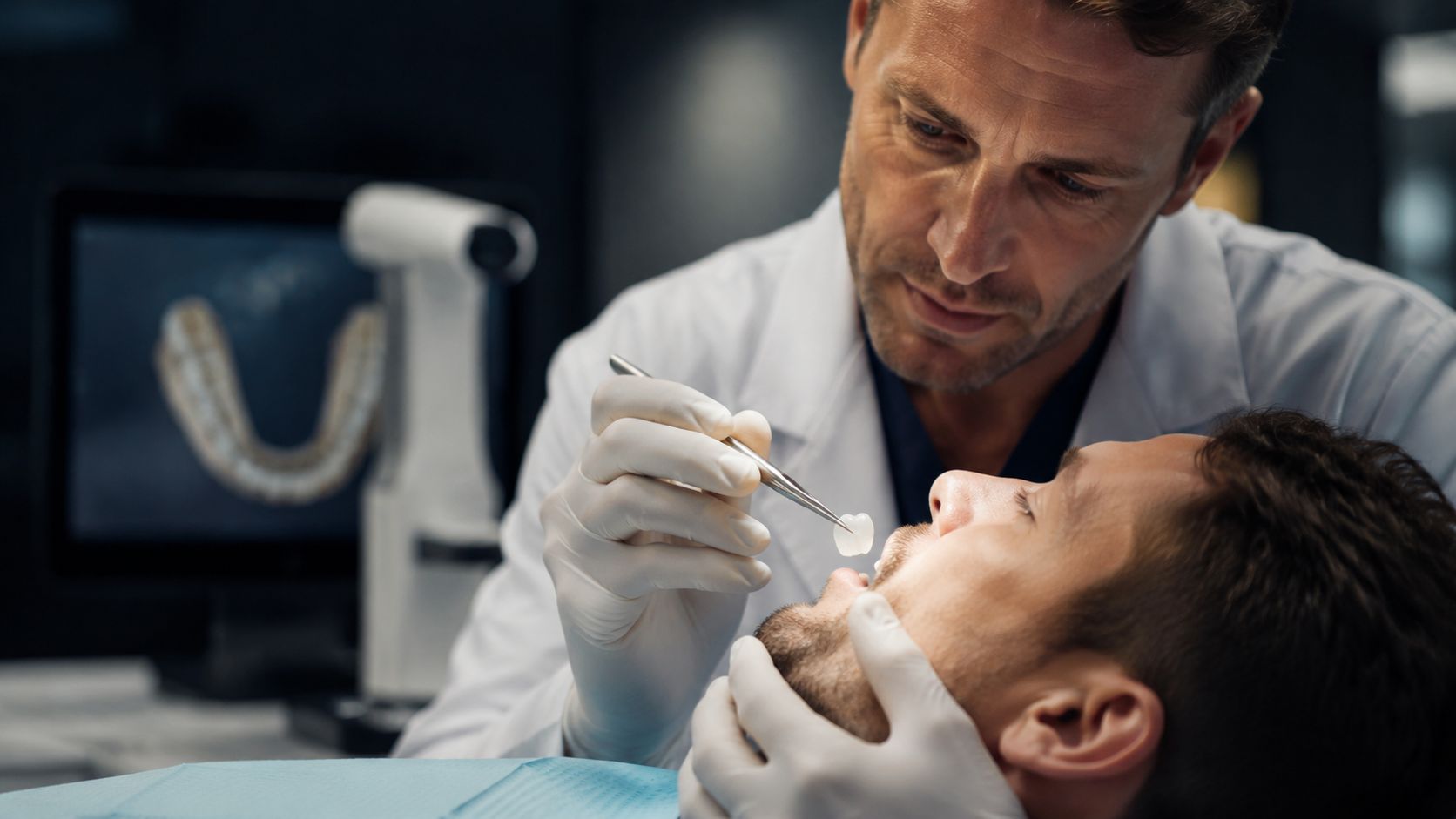
If you've recently been told you need a crown, you were probably focused on the part that mattered most in the moment. Is the tooth cracked? Can it be saved? Will it hurt? Then your dentist mentioned a temporary crown, and now you're wondering what that is, why you need it, and what living with one feels like.
That's a very normal place to be. Patients in Fair Lawn often come in for a new patient exam, a tooth that suddenly became sensitive, or a filling that no longer has enough tooth structure left to support it. By the end of the visit, they've heard terms like crown, impression, bite, temporary, and permanent restoration, all in the span of one appointment. It's a lot.
A common scenario goes like this. A patient from Fair Lawn comes in because a back tooth hurts when chewing. We take a close look, sometimes with dental x-rays, and find that the tooth is too damaged for a simple filling but still healthy enough to restore. That's when a crown becomes the right next step.
The first question is often practical, not technical. “If I'm getting a real crown later, why do I need something temporary first?” That question makes sense, especially if this is your first experience with restorative dentistry.
At our office, we treat that question as part of your care, not as a side note. Patients from Fair Lawn, Ridgewood, and Glen Rock deserve to understand what's happening in their mouth and why each step matters for comfort, fit, and long-term success. If you've also been curious about material choices in dentistry, our overview of biocompatible dental materials gives helpful background on how different restorations are selected.
A crown appointment isn't just about fixing one tooth. It's about protecting your bite, keeping you comfortable, and making sure the final result fits the way it should.
When patients search for a dentist near me or a dentist in Fair Lawn NJ, they're usually looking for more than a procedure. They want calm guidance, clear answers, and a team that doesn't rush them through the process. That matters whether you need one crown, cosmetic dentistry, treatment after a tooth extraction, or support for a larger plan involving dental implants near me.
A temporary crown is part of that journey. It's not an afterthought. It's one of the reasons your final crown can look better, feel better, and seat properly when it's time for the permanent restoration.
A temporary crown is a short-term covering placed over a prepared tooth while your permanent crown is being made. It functions as a custom-fit protective shell. It covers the tooth during the in-between stage, when the tooth has already been shaped but the final crown isn't ready yet.
According to Medical News Today's overview of temporary crowns, a temporary crown is generally used for about 2–3 weeks and helps protect the prepared tooth or implant site, reduce sensitivity, preserve spacing, and maintain chewing function and appearance until the final crown is ready.
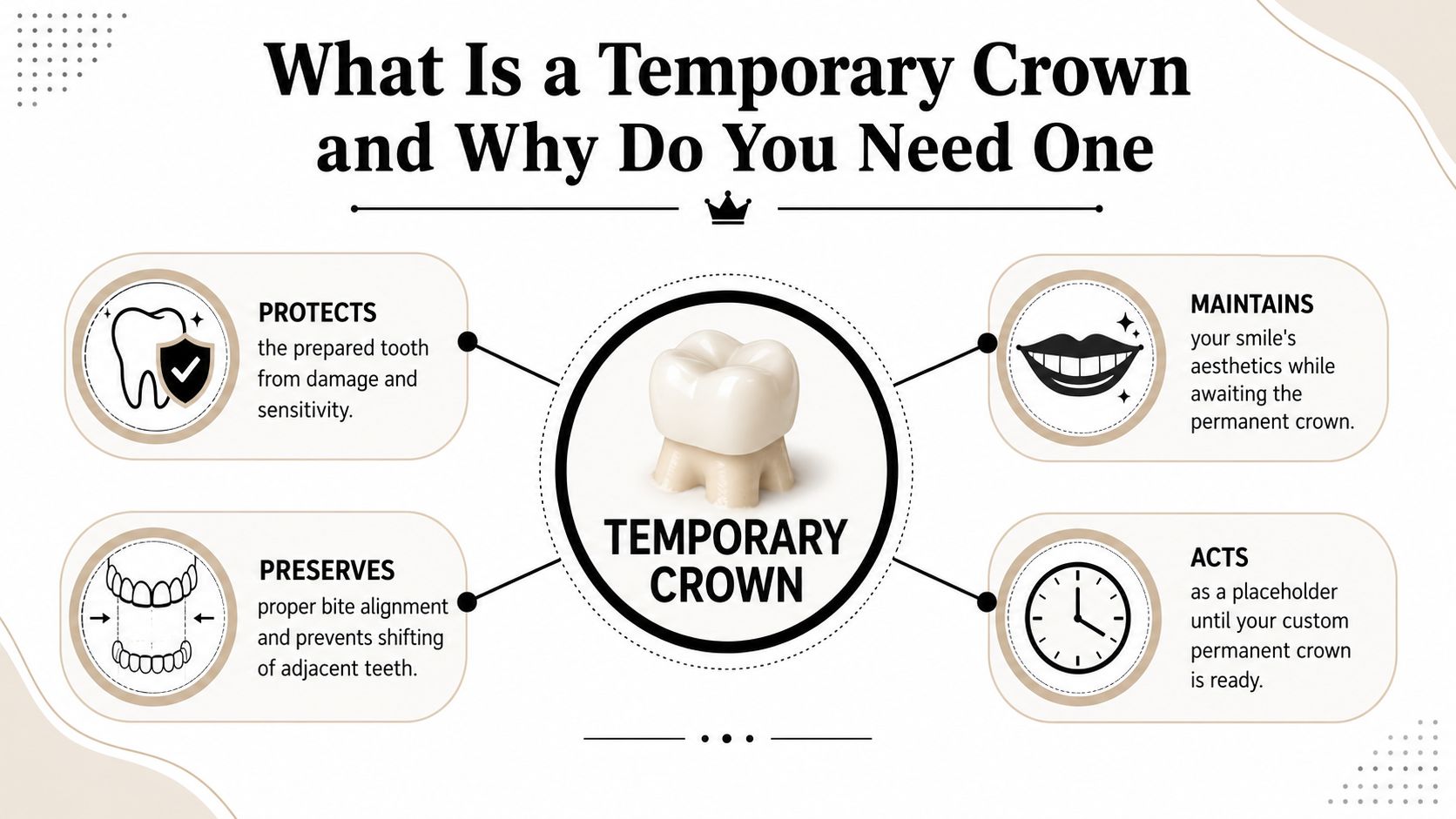
Once a tooth is prepared for a crown, it isn't in its final form yet. The tooth can feel more sensitive to temperature and pressure, and it needs coverage while the permanent restoration is being fabricated.
That's why the temporary matters. It acts like a light shield for the tooth, helping reduce irritation during normal daily activities like eating, drinking, and talking.
This part surprises many patients. Teeth can move. Even a small open space can create problems for the fit of the final restoration if nearby teeth begin to shift.
That's one reason a temporary crown is more than a cosmetic placeholder. It helps maintain the tooth's position and the contact points around it so the permanent crown has the best chance of fitting the way it was designed to.
Practical rule: The temporary crown protects the work your dentist has already done and preserves the space needed for the permanent crown that's still being made.
Individuals still need to smile, speak, go to work, and eat regular meals while their permanent crown is being made. A temporary crown helps you do that with more comfort and confidence.
Its role often includes:
If you've been searching what is temporary crown because the phrase sounded minor, the key takeaway is simple. It's temporary in duration, but not in importance.
For most patients, the process feels much easier once they know what the appointments involve. The crown process usually happens in two stages. The first visit prepares the tooth and places the temporary crown. The second visit removes the temporary and seats the permanent crown.
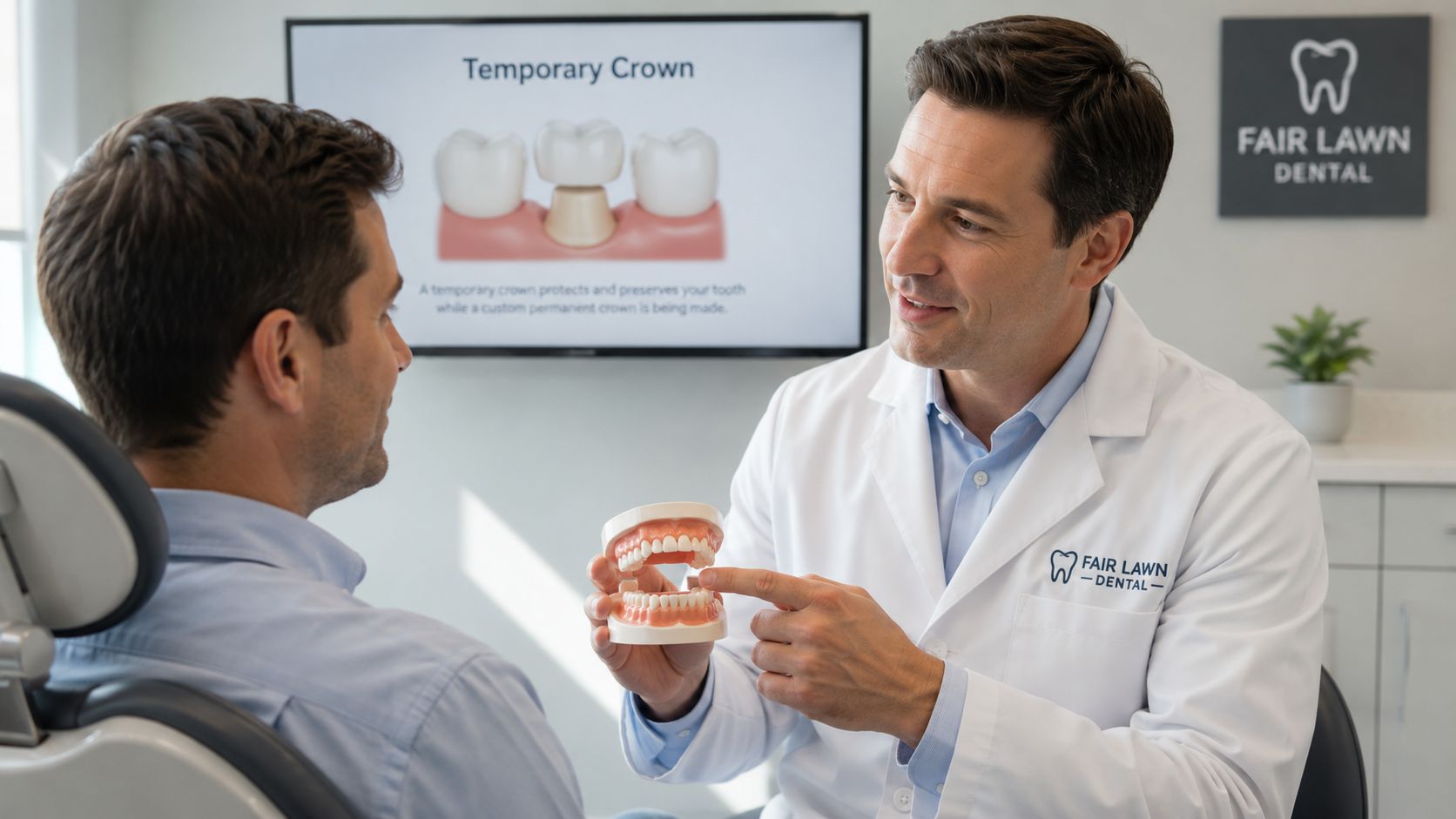
At the preparation appointment, we numb the area so you're comfortable. The tooth is gently shaped to make room for the final crown. After that, detailed records of the tooth and bite are taken so the permanent restoration can be made accurately.
In our Fair Lawn office, digital tools can help make that part more comfortable than older methods. Instead of bulky impressions, many patients prefer digital scanning because it feels cleaner and faster. That's useful for single crowns, cosmetic dentist near me cases, and restorative plans that connect with implant or smile design treatment.
Then the temporary crown is placed. It's adjusted so your bite feels reasonable and your tooth stays protected while you wait for the final crown.
Temporary crowns are still provisional, but modern fabrication methods have improved them. A 2024 study on digitally fabricated temporary crowns reported a 98% survival rate, with 96 restorations still in place and 2 catastrophic failures over the observation period.
That doesn't mean you should forget it's temporary. It does mean that careful design and modern workflows can make the waiting period more secure and predictable.
Many patients expect the temporary to feel flimsy. In reality, when it's made and adjusted properly, it usually does its job very well until the permanent crown is ready.
When your final crown comes back, the temporary is removed, the tooth is cleaned, and the permanent restoration is tried in. Your dentist checks the fit, contact, color, and bite. If everything looks and feels right, the crown is bonded or cemented into place.
That final visit is often shorter and simpler than patients expect. The goal is a restoration that feels natural and supports long-term chewing, appearance, and tooth protection.
After your visit, you may head back onto Broadway, pick up dinner in Fair Lawn, and wonder how careful you really need to be with the temporary crown. The short answer is simple. Be gentle with it, keep it clean, and call us if anything feels off. At Dental Professionals of Fair Lawn, we review these instructions before you leave because a few small habits make the waiting period much easier.
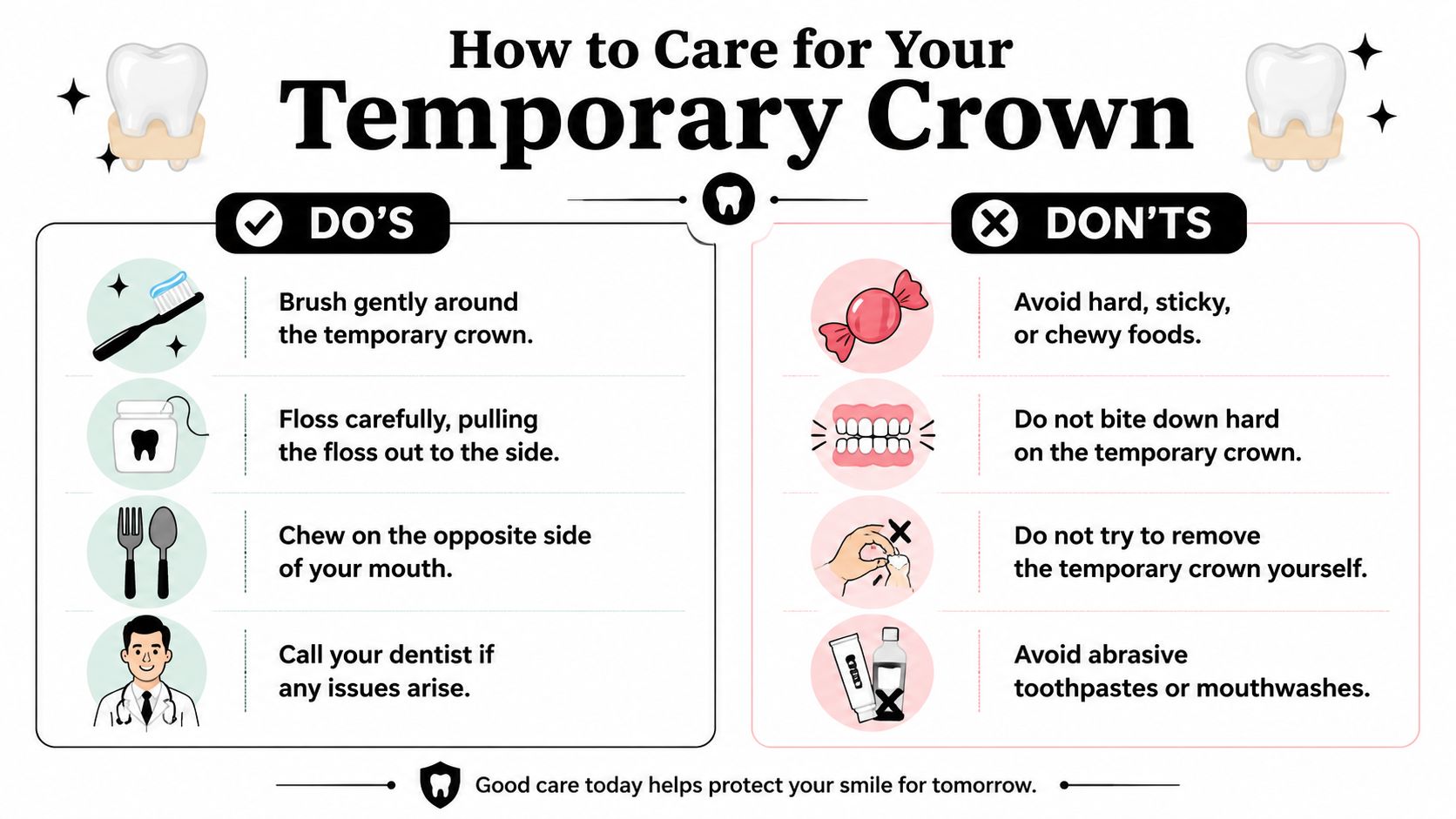
A helpful visual guide can make those instructions easier to remember:
Temporary crowns are made to protect the prepared tooth while your final restoration is being made. They do that job well, but they are not meant to handle the same force or long-term wear as your custom porcelain crowns in Fair Lawn. That is why we give patients practical, day-by-day advice instead of a generic warning to “be careful.”
A temporary crown materials guide from Stomadent Lab explains that provisional materials are more likely to chip or loosen under stress. In everyday terms, the crown usually does fine with normal speaking and light chewing, but sticky candy, hard crusts, and aggressive flossing can create problems faster than patients expect.
Here is what we want you to focus on at home:
Food choices matter, but you do not need a liquid diet or anything extreme. Choose softer, easier-to-chew foods when possible and slow down a bit at meals. If something feels like it could tug, crack, or wedge under the temporary, skip it until the final crown is placed.
A temporary crown can also feel a little different from your natural tooth. That alone is not alarming. What we want you to watch for is a crown that feels loose, a rough edge that irritates your tongue, or pressure when you bite down. If that happens, call our office. We would rather check a small problem early than have you try to “wait it out” and end up uncomfortable.
Patients often assume the temporary crown is just a rough version of the permanent one. That's not quite right. The two crowns are built for different jobs, and understanding that difference helps set realistic expectations.
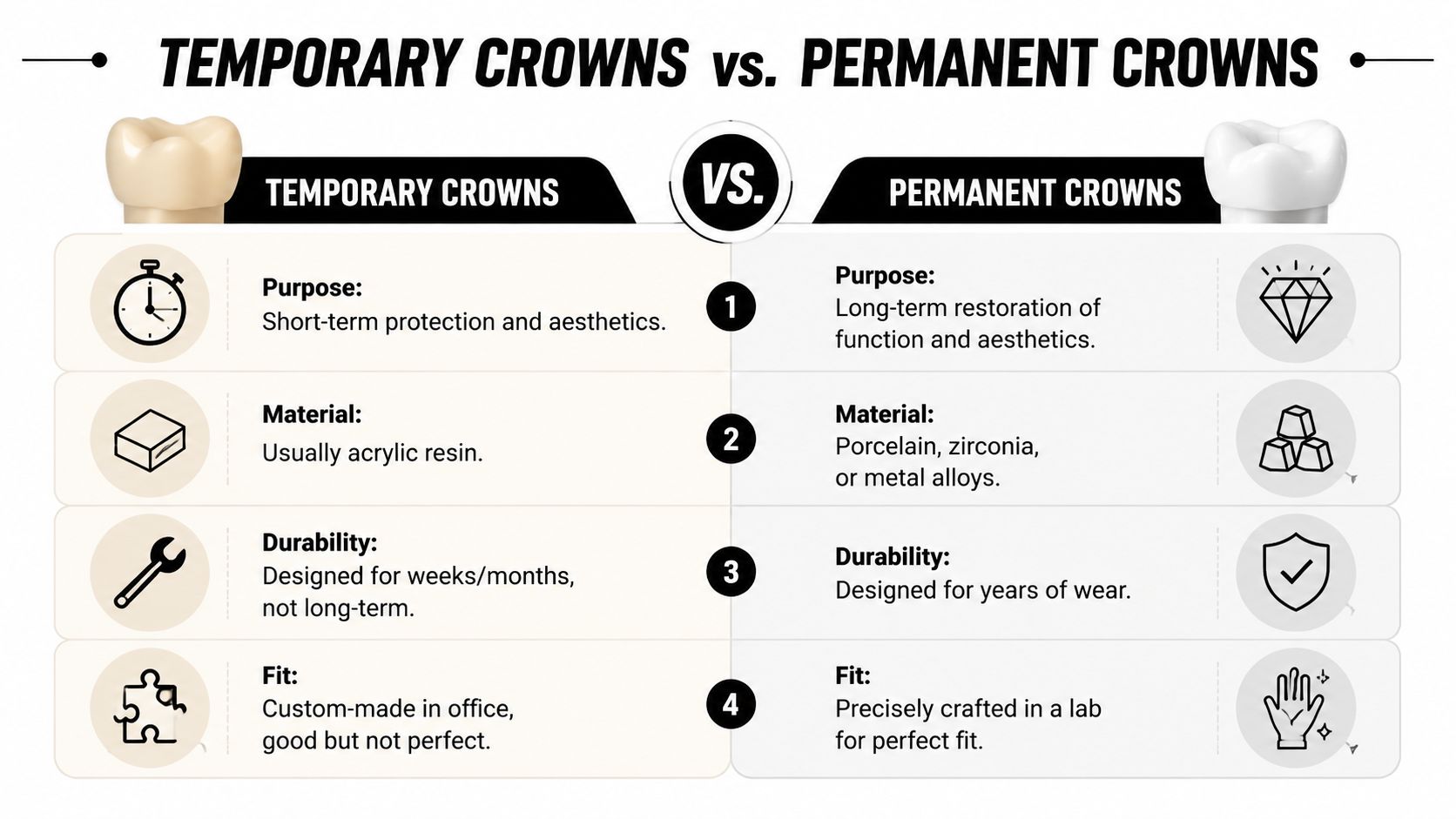
| Feature | Temporary crown | Permanent crown |
|---|---|---|
| Purpose | Short-term protection while you wait | Long-term restoration |
| Material | Usually lighter provisional materials | Stronger final materials such as porcelain or zirconia |
| Removal | Designed to come off more easily | Designed to stay in place |
| Fit and finish | Good functional fit | More precise final fit and esthetics |
A temporary crown is made to protect the tooth, preserve the bite, and carry you through the waiting period. It may feel slightly different from your natural tooth. It may also look simpler than your final restoration, especially in a cosmetic area.
That doesn't mean something is wrong. It means the temporary is doing its provisional job while the final crown is being crafted with greater precision.
For patients comparing options for their long-term restoration, our porcelain crown service in Fair Lawn is one example of a permanent solution designed for strength, appearance, and a more exact fit.
Most temporary crowns are worn for 2–3 weeks, but WebMD's patient guide on temporary dental crowns notes that some may remain in place for up to 2 months if treatment is delayed, though that is not ideal.
That matters because some patients assume a temporary can stay on indefinitely if life gets busy. It can't. A temporary crown is a bridge in the process, not the finished treatment.
The permanent crown is the restoration built for long-term tooth health. The temporary buys time and protects the tooth, but it isn't the end point.
This difference is especially important in larger restorative dentistry plans, cosmetic cases, and treatment that supports implants or replaces heavily damaged teeth after a tooth extraction or root canal.
Most temporary crown issues are manageable if you respond quickly. The two things that matter most are staying calm and contacting your dental office promptly. In most cases, it's not a medical emergency, but it does need attention.
A loose temporary crown may still be sitting over the tooth, but it can shift when you chew. That can irritate the gum, affect your bite, or come off fully later.
Avoid chewing on that side and call your dentist. Don't wait for it to become painful.
A patient guide from Sea Blue Dental on what to do if a temporary crown falls out explains that this is usually not a medical emergency, but it should be addressed right away because the exposed tooth can become sensitive, painful, or vulnerable to damage.
If it happens:
Mild sensitivity can happen because the tooth is in a temporary stage. Sensitivity that suddenly gets worse, pain when biting, or a crown that feels high should be checked.
You don't need to guess whether it's serious. That's part of what your dental team is there for. Patients looking for an emergency dentist in Fair Lawn often feel relieved to learn that many temporary crown problems are urgent enough to call about, but not something that should cause panic.
If something changes suddenly, don't try to troubleshoot it alone. A quick call often prevents a small temporary crown issue from turning into a more uncomfortable visit later.
Whether you live in Fair Lawn, Ridgewood, or Glen Rock, the safest plan is simple. If the temporary crown feels wrong, moves, or comes off, let your dentist know as soon as possible.
If you need answers about a crown, sensitivity, a loose temporary, or you're looking for a dentist in Fair Lawn NJ who can walk you through treatment clearly and comfortably, Dental Professionals of Fair Lawn is here to help. We provide restorative dental care, new patient exams, emergency visits, cosmetic dentistry, and long-term treatment planning with a focus on comfort and clear communication. Contact our office to schedule your visit and get the next step for your smile.