Biocompatible Materials: Safe Crowns & Implants
Learn about biocompatible materials from Dental Professionals of Fair Lawn. Discover safe, holistic options for crowns and implants.
Learn about biocompatible materials from Dental Professionals of Fair Lawn. Discover safe, holistic options for crowns and implants.
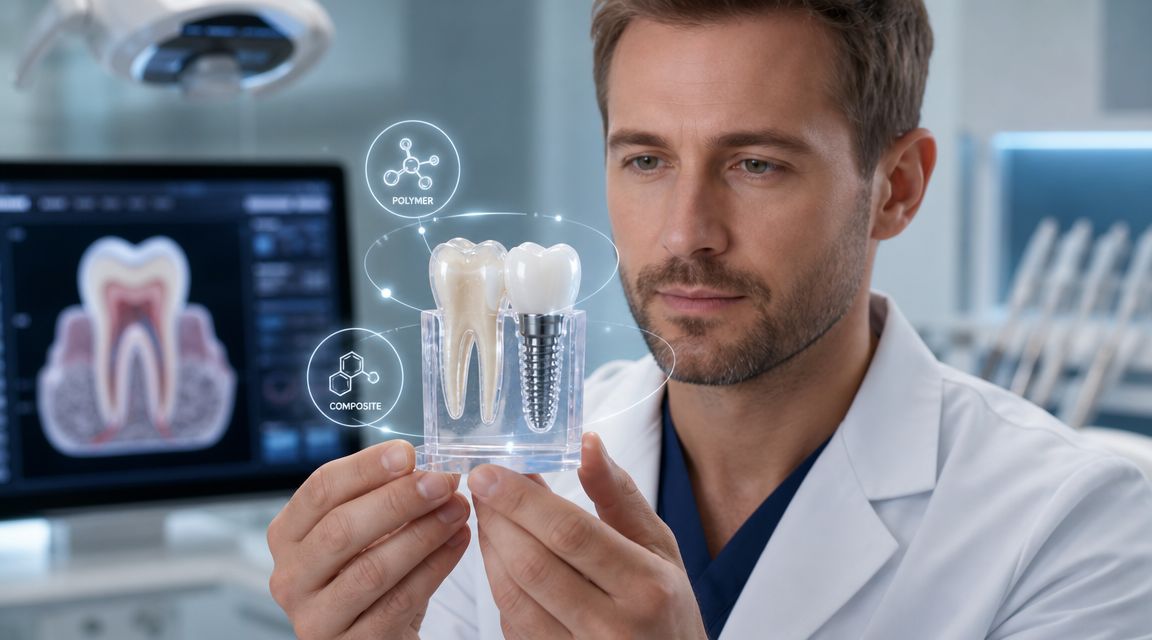
When looking for a dentist near me in Fair Lawn, NJ, you're likely thinking beyond tooth pain or a chipped tooth. You may also be wondering what materials go into your filling, crown, aligner, or dental implant. Many patients ask some version of the same question: “How do I know the material you place in my mouth is safe for me?”
That's a thoughtful question. It's also one we want patients to feel comfortable asking.
Some people arrive for a visit after reading about mercury-free dentistry, biocompatible dentistry, metal-free crowns, or concerns about long-term exposure to dental materials. Others want reassurance before starting treatment such as Invisalign, a crown, tooth-colored fillings, or dental implants near me. If that sounds like you, you're not overthinking it. You're being careful about your health.
A new patient from Fair Lawn recently came in feeling uneasy about replacing an old restoration. She didn't want a rushed answer. She wanted to know what the new material would be, why it was being recommended, and whether it made sense for her body and lifestyle. She also asked a question many people wonder about: “Is there a safer option?”
That conversation is common for families in Fair Lawn, Ridgewood, and Glen Rock. Whether you're looking for a cosmetic dentist near me, exploring treatment after a broken tooth, or planning ahead for restorative dentistry, the material matters because it becomes part of your daily life. You chew on it, clean around it, and rely on it to feel comfortable and look natural.
At Dental Professionals of Fair Lawn, those questions are welcome. Patients deserve clear explanations in plain language, especially when treatment involves crowns, implant components, bonding materials, removable appliances, or other restorations that stay in the mouth long term.
A lot of dental terms sound alike, but they don't mean the same thing. “Biocompatible,” “metal-free,” and “mercury-free” are related ideas, but they aren't interchangeable. A material can be metal-free and still need to be evaluated for the job it's doing. A material can also be appropriate for one use in the mouth and not another.
Practical rule: A good dental recommendation should explain both what the material is and why it fits your specific treatment.
That's why patient education matters so much. Some practices also use digital communication tools to help patients understand treatment options before and after visits. If you're curious how modern technology supports that kind of patient communication, this overview of Recepta.ai for dentists gives a useful look at how practices organize patient conversations more clearly.
When you visit a dentist in Fair Lawn, NJ, you shouldn't feel pressured to accept a material you don't understand. You should be able to ask:
That kind of conversation is part of safe dental care. It's also how people make confident decisions instead of fearful ones.
Biocompatible materials are dental materials chosen to work in harmony with the body for a specific purpose. The simplest way to think about them is this: a key has to fit the right lock. If the fit is wrong, the lock resists. If the fit is right, the mechanism works smoothly. Dental materials work the same way. The question isn't just “Is this material strong?” It's “Is this the right material for this exact job in this exact part of the mouth?”

Many patients hear “biocompatible” and assume it means a material is universally safe in every form forever. That's not quite how dentistry works. A material has to function appropriately where it's placed, whether that's on the surface of a tooth, near gum tissue, or as part of a restoration under daily chewing pressure.
The modern definition of biocompatibility was formalized in the late twentieth century. A consensus published after the Chester conference defined it as “the ability of a material to perform with an appropriate host response in a specific application” according to this biocompatibility history review. That last part, specific application, is the heart of the idea.
If you're considering cosmetic dentistry, a filling, a crown, or an implant restoration in Fair Lawn, the right material should support several goals at once:
Some patients are surprised to learn that modern safety evaluation doesn't take for granted that a material is acceptable because it seems inert. Testing often looks at what can come out of a material and how those substances affect cells and living tissues. That shift helped standardize how medical and dental materials are judged.
A material isn't “good” in the abstract. It's good when it performs well in the mouth you're treating, for the task it's supposed to do.
The notion of 'all natural' is often applied to dental materials, but dentistry doesn't work with such a simple label. Crowns, fillings, retainers, and implant parts are engineered products. The better question is whether they are selected thoughtfully, used appropriately, and matched to your health history and treatment goals.
That's why material selection influences so many services in a modern office, from cleaning and exams that identify wear early, to restorative dentistry, to smile design, to implant planning. A careful dentist doesn't guess. They match the material to the clinical need.
Modern dentistry relies on a few main material families. Each has different strengths, and each is useful in different situations. The foundation of these options was built in the mid-1900s with the adoption of titanium, silicone, and advanced polymers, which helped shape modern medical and dental care because they combine strength, wear resistance, and a low risk of adverse tissue reactions, as described in this biomaterials technology overview.
For patients, the practical takeaway is simple. Your dentist isn't choosing from one generic “safe material.” They're choosing from several categories, each designed for a different kind of job.
Titanium is the metal most patients recognize because of dental implants near me searches and implant consultations. It's widely used for implant components because it offers strength and long-term function.
Other dental metals may appear in certain restorations or structural components, but the decision depends on where the material will sit and what forces it has to handle. In patient conversations, the key issue is usually whether a metal is necessary at all, or whether a metal-free alternative would work just as well.
Ceramics include materials such as zirconia and porcelain. Patients usually like them because they can look very natural, especially in visible parts of the smile. They are often used for crowns, veneers, and other restorations where appearance matters along with strength.
If you're comparing options for a damaged tooth, our page on porcelain crowns in Fair Lawn can help you see where ceramic restorations fit into treatment.
Ceramic options are often appealing to patients who want a metal-free restoration without giving up durability.
Polymers are a broad group. In everyday dentistry, they may be used in dentures, mouthguards, retainers, aligners, splints, temporary restorations, and soft interface materials. Some patients hear “plastic” and assume that means low quality, but medical and dental polymers are engineered very differently from ordinary household plastics.
Their benefit is versatility. They can be lightweight, comfortable, and useful in cases where flexibility or cushioning matters.
Composite materials are commonly used for tooth-colored fillings and bonded cosmetic repairs. They help restore a tooth while blending with the natural shade of the enamel. For many patients, this is the material category they experience first because it's so common in routine restorative care.
Composites are popular because they allow conservative treatment. A dentist can repair or rebuild part of a tooth while preserving more of the natural structure.
| Material Type | Common Uses | Key Patient Benefit |
|---|---|---|
| Metals | Implant components, structural restorations, support elements | Strength and durability |
| Ceramics | Crowns, veneers, visible restorations | Natural appearance and metal-free options |
| Polymers | Dentures, guards, aligners, splints, temporary appliances | Flexibility and comfort |
| Composites | Tooth-colored fillings, bonded repairs, cosmetic reshaping | Conservative treatment and shade matching |
No single category wins every time. A back tooth that absorbs heavy chewing forces may call for a different material than a front tooth where cosmetics lead the decision. A night grinder may need a different plan than someone seeking a small cosmetic touch-up. An implant restoration has different demands than a removable appliance.
That's why material choice is part of diagnosis, not an afterthought. In a well-run consultation, you should hear what the material is, why it fits the tooth, and what tradeoffs come with each option.
Safety in dentistry doesn't come from a label alone. It comes from matching a material to the exact kind of contact it will have in the body. A material that works well for one use may not be appropriate for another. That principle guides how dental materials are evaluated.

Regulatory thinking now focuses on the whole device and the actual way it contacts the body. As explained in this FDA-aligned review of biological evaluation frameworks, a material isn't necessarily biocompatible on its own. Safety depends on the nature, duration, and type of tissue contact, along with factors such as composition, processing, sterilization, and residual substances from manufacturing.
For patients, that means a crown material and an implant material are not judged the same way just because both go in the mouth. The intended use matters.
When a dentist recommends a material, they should be thinking about questions like these:
This is especially important in implant planning. If a patient is preparing for grafting or implant treatment, the discussion often includes not only the implant itself but also the surrounding support structures. Our resource on bone grafting for dental implants helps explain one part of that broader treatment picture.
The safest approach isn't choosing the material with the simplest label. It's choosing the material that matches the biology of the treatment.
Patients sometimes ask for “the most biocompatible material” as if there were one universal answer. In reality, the right answer changes with the procedure. A short-term appliance, a cosmetic veneer, a bonded filling, and a long-term implant restoration all create different biological demands.
That's why careful dental care includes reviewing your health history, your goals, your bite forces, and the location of treatment before a recommendation is made. Safety is a process, not a slogan.
The best material for your treatment depends on your mouth, your goals, and the role that restoration needs to play day after day. Patients should feel comfortable voicing their preferences regarding these considerations. If you want metal-free options, if you've had past sensitivities, or if you're seeking to understand how materials align with your broader health approach in a real clinical setting, those details belong in the decision.

In dentistry, mercury-free generally refers to avoiding amalgam restorations that contain mercury. An approach often taken involves the dentist considering whole-body concerns, material choices, and patient preferences more carefully, not that every treatment uses a completely natural substance.
That distinction matters. A ceramic crown, a composite filling, and a polymer aligner are all manufactured materials. The value of a holistic discussion is not in pretending otherwise. It's in asking whether the chosen material makes sense for your health history, comfort level, and long-term plan.
Material selection often comes down to a few real-world factors:
A nuanced point many people miss is that biocompatibility isn't only about the day a restoration is placed. It also involves how the surface behaves over time. A review of biomaterials explains that long-term performance depends heavily on surface properties after exposure to saliva, bacteria, and chewing forces, not only on bulk composition, as discussed in this review on surface behavior and biocompatibility.
“Safe” is the start of the conversation. “How will this behave in my mouth over time?” is the better long-term question.
If you're deciding between a crown, bonding, veneers, an orthodontic appliance, or implant treatment, ask for the reasoning behind the recommendation. You don't need to know the chemistry. You do need to understand the tradeoffs.
A collaborative consultation should leave you clear on:
That approach helps patients make informed choices, not fearful guesses.
A first consultation often feels easier once you know how it unfolds. Most patients want two things right away. They want to feel heard, and they want straight answers about treatment, comfort, and materials.

At a new patient exam, the team reviews your concerns, health history, and goals. That may include pain, a broken tooth, cosmetic changes, replacement of older dental work, or questions about options such as tooth extraction, crowns, implants, or Six Month Smile and Invisalign treatment.
You should expect time to talk, not just time in the chair. If you're nervous, if you've had a poor experience elsewhere, or if you're specifically interested in holistic or mercury-free care, that information helps shape the discussion.
Modern diagnostics can make consultations more comfortable and more precise. Digital imaging and scanning tools help the dentist evaluate teeth, bite relationships, and restorative needs without relying on older, messier methods in every situation. That matters when you're comparing treatment options and trying to understand what will happen next.
Patients considering implant care, smile design, or orthodontics often appreciate seeing a clearer visual explanation rather than hearing a rushed technical summary.
A short introduction to the office experience can help put faces and philosophy to the process:
A good consultation should leave you with a practical understanding of the plan. That includes the condition being treated, the recommended material category, the reason that option fits, and what care will be needed afterward.
Whether you're looking for an emergency dentist, planning cosmetic dentistry, or comparing long-term restorative options in Fair Lawn, the consultation should make the next step feel clearer, not more confusing.
Patients often think they need to arrive with the right technical vocabulary. You don't. What matters is asking honest questions that help you understand your choices.
A holistic choice isn't defined only by whether it's metal-free. Ask how the material fits your health history, where it will be placed, how long it will remain in the mouth, and whether there are alternatives that better match your preferences. If you have concerns about prior sensitivities, bring them up early.
This is a useful question because it opens a balanced discussion. Some materials may offer a more natural look. Others may offer different functional advantages depending on the tooth and your bite. The right answer depends on whether your priority is appearance, strength, metal-free treatment, or a mix of all three.
This question shifts the conversation from product choice to real life. Ask what habits could affect the restoration, whether you need a night guard, how often the area should be checked, and what signs would mean it needs attention.
The best dental question is often the simplest one: “Why are you recommending this for me instead of the other option?”
Say that directly. Dental anxiety doesn't only relate to needles or drilling. Sometimes it comes from uncertainty. If you're worried about what will be placed in your mouth, a careful dentist should welcome that discussion and explain the plan in everyday language.
If you're looking for a dentist in Fair Lawn, NJ who takes time to explain treatment clearly, discuss biocompatible materials, and help you make confident choices about your care, contact Dental Professionals of Fair Lawn. Whether you need a new patient exam, a second opinion, cosmetic treatment, restorative care, or guidance on dental implants near me, the office can help you understand your options and schedule a consultation.