What Is Bone Grafting for Dental Implants?
Discover what is bone grafting for dental implants. Understand the process, healing, and why it's crucial. Schedule your consultation today!
Discover what is bone grafting for dental implants. Understand the process, healing, and why it's crucial. Schedule your consultation today!
You may be reading this because you were ready for a dental implant, then heard a phrase that stopped you cold: “You need a bone graft first.” That can sound bigger, more painful, and more complicated than you expected. Most patients don’t come in worried about bone. They come in worried about a missing tooth, chewing on one side, how their smile looks, or whether treatment will take too long.
The good news is that bone grafting is a familiar part of implant care. For many people, it’s the step that makes a strong, lasting result possible. If you’re looking for a dentist in Fair Lawn, NJ and trying to understand what this means for your care, it helps to slow the process down and make each part easy to follow.
A common patient story goes like this. Someone loses a tooth, often after a crack, infection, or tooth extraction. They wait a while, then decide they’re ready to replace it with an implant. At the consultation, the exam and images show the same thing many people hear for the first time: there isn’t enough bone in the area to support the implant securely.
That moment can feel discouraging. It shouldn’t.
Needing a graft is common in implant treatment, especially when a tooth has been missing for a while or when bone loss has happened gradually. In a local practice setting like Fair Lawn, Ridgewood, and Glen Rock, this is one of the most frequent questions patients ask when exploring restorative dentistry options.
Bone grafting is not a detour from implant treatment. For many patients, it’s the step that makes implant treatment possible.
If you’ve been searching for dental implants near me, it’s worth knowing that careful planning matters as much as the implant itself. Patients often benefit from learning how practices attract local patients to your dental clinic because the strongest educational websites usually answer the practical questions people ask before they book.
If you want a broader overview of missing-tooth replacement before diving deeper into grafting, this guide to dental implants in Fair Lawn is a helpful place to start.
Bone grafting sounds technical, but the basic idea is straightforward. If the jaw doesn’t have enough healthy structure to hold an implant well, your dentist can rebuild that foundation first. Once patients understand that, the whole process feels much less intimidating.
You come in for an implant consultation at Dental Professionals of Fair Lawn expecting to talk about replacing a missing tooth. Then the scan shows something you could not see in the mirror. The space for the implant is there, but the bone underneath may be too thin or too shallow to hold it securely.
That finding can feel disappointing at first. For many patients, it is one more planning step, not a setback.
A dental implant sits inside the jawbone, so the bone has to do real work every time you chew, bite, and speak. If that area has lost width, height, or density, your dentist may recommend rebuilding the site before placing the implant. The goal is long-term stability, not rushing into treatment before the foundation is ready.
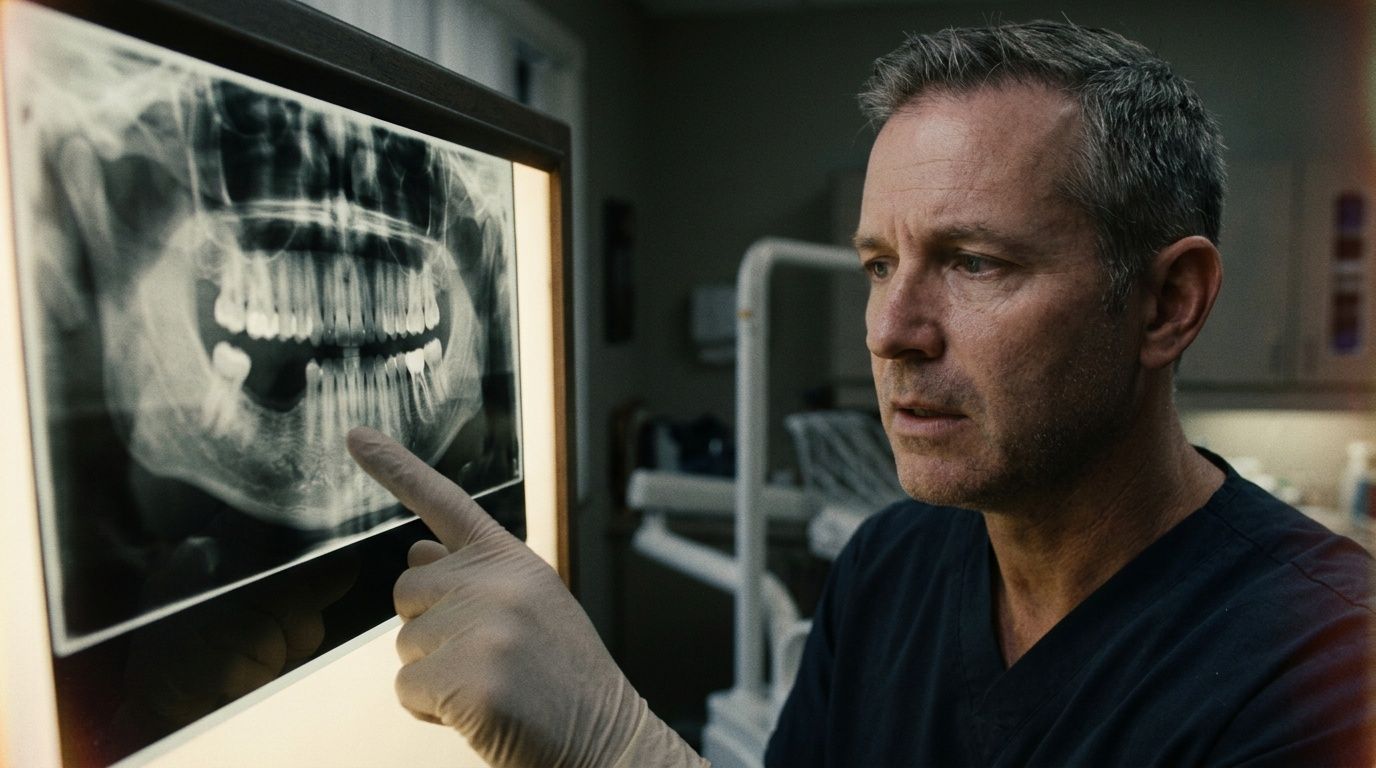
The jaw responds to use. Once a tooth root is missing, the bone in that area gets less stimulation during chewing, and the body may slowly resorb some of it. Patients usually do not feel this happening, which is why the news can come as a surprise during an exam.
None of this means you caused a problem.
Bone can also shrink after gum disease, infection, injury, or a difficult extraction. Some people also have less available bone in certain parts of the mouth because of their natural anatomy. In the upper back jaw, for example, the sinus can limit how much bone is available for an implant.
Your dentist is not making an educated guess. The recommendation comes from imaging, measurements, and the exact position of the future implant.
A graft may be suggested if:
Patients often ask why an implant cannot just be placed into the little bone that remains. A simple way to understand it is this: an implant needs bone around it, not just bone beneath it. If the support is not adequate on all sides, the implant is harder to place in the right position and harder to keep stable over time.
That is why a bone graft may be part of the plan in Fair Lawn. It gives your dentist a safer, stronger site to work with and gives you a better chance of a comfortable, lasting result. It can also affect timing and cost, so many patients appreciate having that conversation early during the consultation rather than learning about it later.
A dental bone graft is a procedure that adds bone, or a bone-like material, to an area of the jaw where more support is needed. The purpose is to help your body rebuild bone in that location so an implant can be placed more securely.
That’s the plain-language answer to what is bone grafting for dental implants.
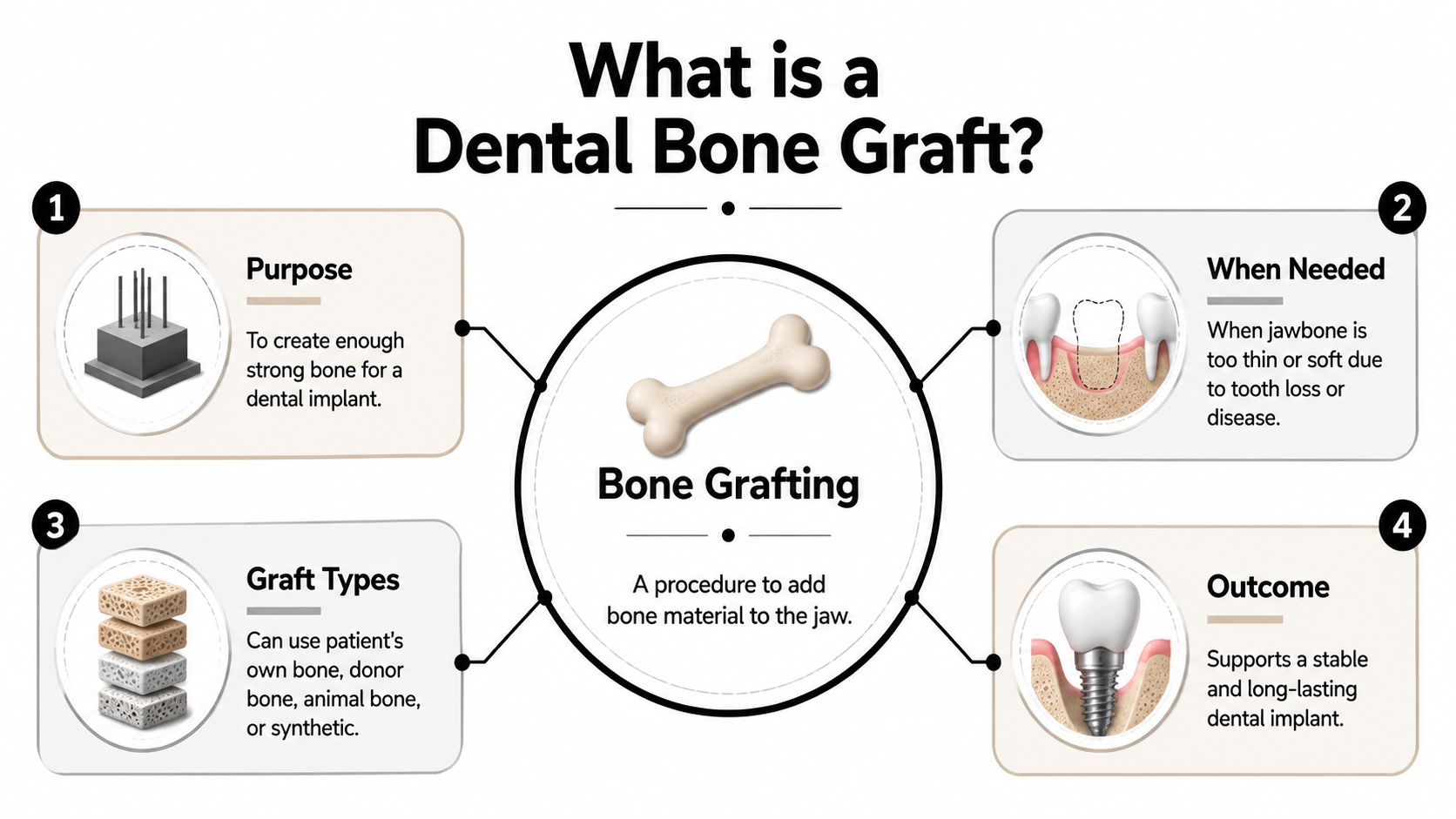
Patients sometimes picture a graft as a permanent filler that just sits there. That’s not an accurate understanding of its function. In many implant cases, the graft material mainly serves as a scaffold. Your body then grows new bone into and around that area over time.
The goal is not to “patch” the jaw in a temporary way. The goal is to create a healthier site for long-term implant support.
This is why your dentist may talk about healing time before implant placement. That healing period gives the body time to integrate the grafted area and turn it into stronger supporting bone.
Here’s a simple visual explanation of how that rebuilding process works:
The exact graft material depends on your needs, the size of the defect, and the treatment plan. Clinicians choose from several categories, including your own bone, donor-derived materials, animal-derived materials, or synthetic options.
What matters most to patients is this: the material is selected to encourage bone regeneration and create a stable base for implant treatment.
Most bone grafts used in implant care are carefully planned, highly controlled procedures. They’re not improvised, and they’re not unusual.
Patients often separate function and appearance in their minds, but implant treatment joins both. A stable implant supports chewing, comfort, and speech. It also supports the shape of the gumline and the way the final tooth looks in your smile.
That’s why bone grafting can matter in both restorative dentistry and cosmetic dentistry. It helps create the support needed not only for an implant to stay in place, but also for the final result to look natural in proportion to the surrounding teeth.
For many people, the procedure sounds more alarming than it really is. Once they understand that it’s a way to rebuild lost support, the decision often feels much more reasonable.
“Bone grafting” is a broad term. It doesn’t describe just one material or one technique. Your treatment depends on where the missing bone is, how much is needed, and what your implant site looks like on imaging.
Material choice matters because some grafts are better for larger defects, while others work well as dependable scaffolds in common implant situations. Autografts, which use the patient’s own bone, achieve the fastest vascularization and are considered the gold standard for large defects. Other materials such as allografts and synthetics offer excellent, predictable results for more common dental implant applications by acting as a reliable scaffold for new bone, as explained in this review of bone graft materials and biology.
Here’s a simple comparison.
| Graft Type | Source | Primary Advantage |
|---|---|---|
| Autograft | Your own bone | Fast vascularization and strong biologic potential |
| Allograft | Donor bone material | Commonly used option that serves as a scaffold for new bone |
| Xenograft | Animal-derived bone material | Helpful scaffold in selected dental applications |
| Synthetic or alloplast | Man-made material | Predictable structure for many routine grafting needs |
Some patients assume “your own bone” is always the only good choice. That isn’t how treatment planning works. In many dental cases, other graft materials can be very appropriate and are selected because they fit the defect, the procedure, and the healing goals.
A graft can be placed in different ways depending on the location.
This is done right after a tooth extraction. If the dentist knows an implant may go in later, placing graft material at the extraction site can help preserve the shape of the ridge.
Patients usually appreciate this approach because it’s proactive. Instead of waiting for the site to shrink and then rebuilding more later, the dentist protects the area early.
If the jaw ridge has become too narrow or too short, ridge augmentation adds volume where the implant needs support. This is often recommended when a tooth has been missing for a while and the jaw has thinned.
This kind of grafting helps restore the width or height needed for proper implant positioning.
In the upper back jaw, the sinus can limit the amount of available bone for implants. A sinus lift creates more usable space for graft material beneath the sinus membrane so the implant site has better support.
If your implant is planned in that area, your dentist may discuss a sinus lift procedure in Fair Lawn as part of the treatment plan.
The name of the procedure usually reflects the location being rebuilt, not a completely different goal. The goal is still the same: creating enough healthy bone for a secure implant.
The decision comes down to a few practical questions:
This is why one patient may need a small socket graft while another needs a sinus lift or ridge augmentation. The term “bone graft” sounds singular, but the care is highly individualized.
A sense of calm often follows understanding the sequence. Bone grafting is easier to handle when you understand what happens first, what happens next, and what recovery is meant to accomplish.
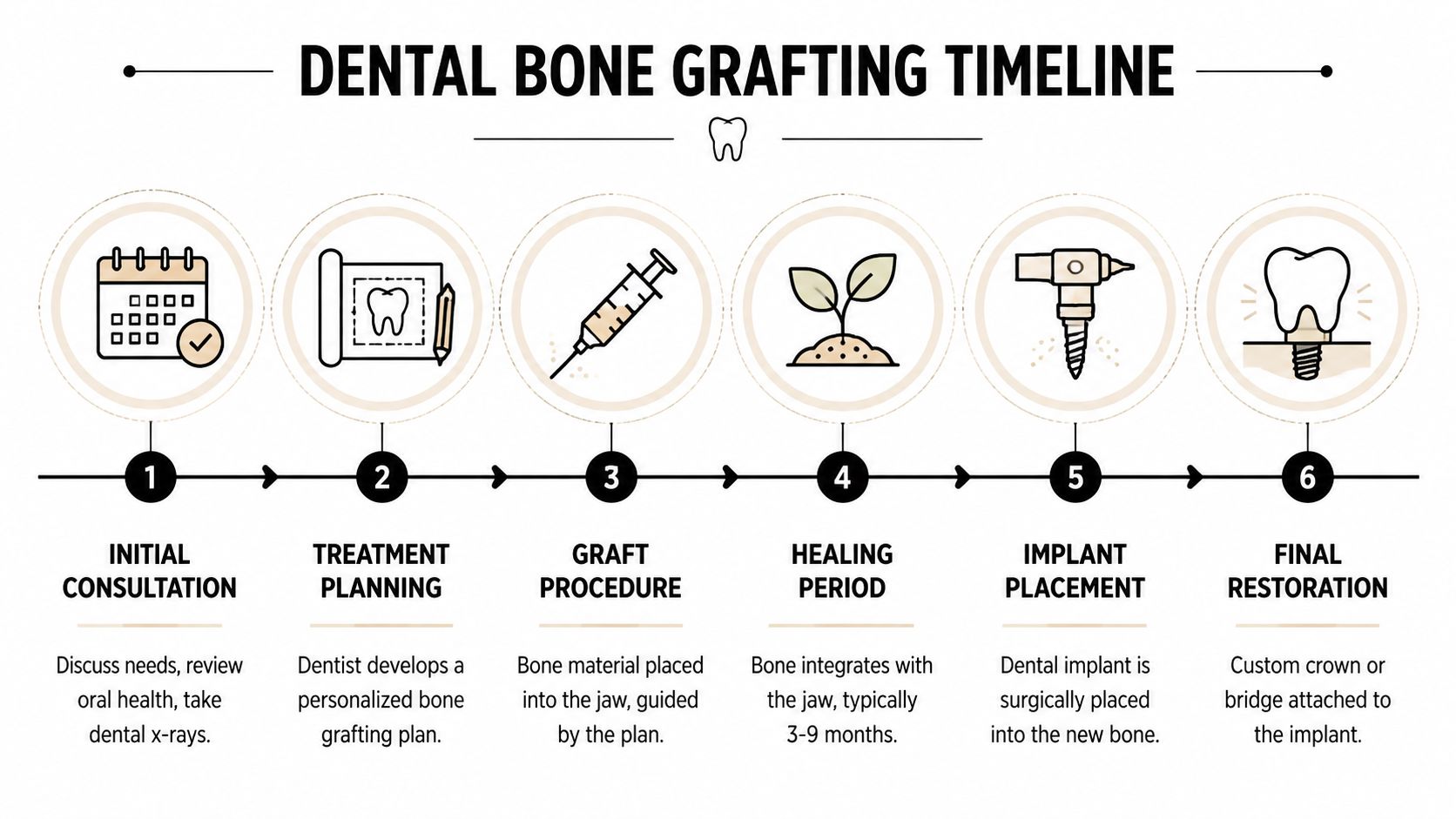
The process starts with a consultation, exam, and imaging. Your dentist reviews the missing-tooth area, your gums, your bite, and the available bone. This is often when patients first learn why an implant can’t always be placed immediately.
After that, the treatment plan is built around your anatomy and goals. Some people need grafting after an extraction. Others need it because a tooth has been missing for years. If you’re nervous, this is also the time to discuss comfort options, including whether sedation dentistry may be helpful.
The procedure itself is usually more manageable than patients expect. The area is numbed thoroughly, and your dentist places the graft material where support is needed. In some cases, a protective membrane is also used to help keep the material in place while the site heals.
Following an extraction, immediate grafting can be especially important. The alveolar ridge can lose up to 50% of its volume within the first year after extraction, and a barrier membrane is often used to contain the graft and guide regeneration during the critical 4 to 6 month osseointegration window, according to this clinical overview of bone grafting procedures and materials.
Early planning often makes future implant treatment simpler. Protecting the ridge at the time of extraction can preserve options later.
The healing period is the part patients usually find hardest because it feels inactive, even though important work is happening. During this stage, the grafted area is integrating with your body and developing into stronger supporting bone.
The exact timing depends on the procedure, the material used, and the site being treated. Some cases are ready sooner, while others need more healing before implant placement. Your dentist monitors this with follow-up visits and imaging rather than guessing based on the calendar alone.
The first few days are typically the most tender. Patients can expect soreness, swelling, and the need to eat softer foods for a period of time. Instructions usually include keeping the area clean, avoiding pressure on the site, and attending follow-up visits.
Helpful habits during recovery often include:
Once the site has healed enough, the implant can be placed into the rebuilt bone. After the implant integrates, the final crown, bridge, or other restoration is attached.
That’s why bone grafting can feel like a longer route, but it’s really a staged route. Each step prepares the next one so the final result has a stronger foundation.
A bone graft is often the part of implant treatment that makes patients pause. That reaction makes sense. You are being asked to add time, healing, and cost before you even get to the implant itself.
The clearest way to look at it is this: the graft is meant to improve the foundation. An implant needs enough healthy bone around it to stay stable under everyday pressure from chewing and biting. If the site is too thin or too soft, placing an implant there can be a little like setting a fence post into loose soil. It may go in, but it does not have the support you want over time.
The biggest benefit is better support for the implant. More usable bone can give your dentist a better chance of placing the implant in a position that works well for function and appearance.
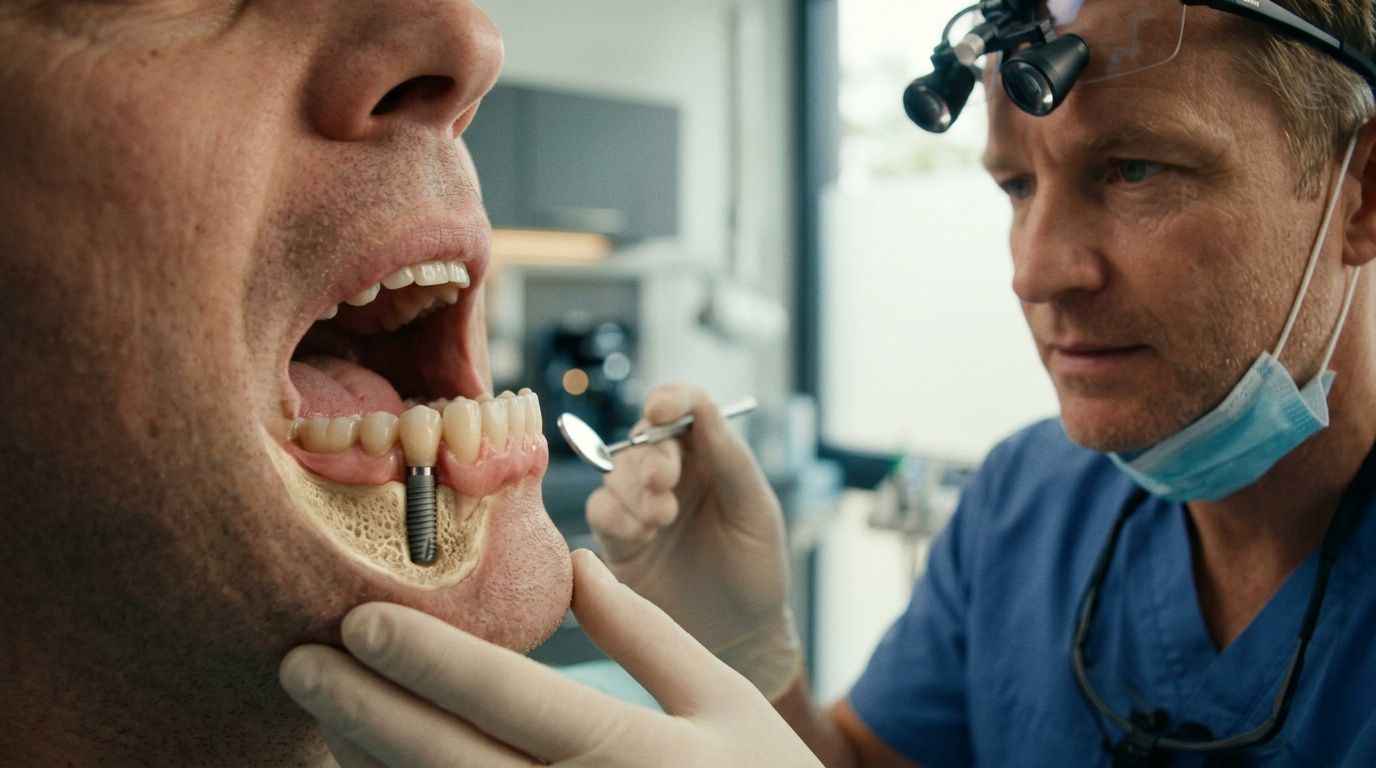
Patients often notice other advantages too:
That is the long-term value many patients in Fair Lawn are weighing. The graft adds a step, but it may improve what that final step can achieve.
Bone grafting is still a surgical procedure, so it comes with real downsides. Common short-term issues include swelling, soreness, bruising, and a temporary change in eating habits. Less common problems can include infection, delayed healing, or a graft that does not integrate as expected.
Healing can also be less predictable in certain cases. Smoking, uncontrolled diabetes, some medications, and poor home care can all make recovery harder. Your dentist should review those factors with you before treatment so the decision is based on your health, not a generic template.
Time matters too. Some patients hope for the fastest route to a new tooth, but the fastest route is not always the one with the best support underneath it.
Cost is one of the first questions many patients ask at Dental Professionals of Fair Lawn, and it should be. Bone grafting fees vary because no two sites are exactly alike. A small socket graft after an extraction is different from rebuilding a larger area that has lost bone over many years.
Your estimate usually depends on:
Patients also want to know whether the added expense is worth it. Research on patient decision-making has noted that many people want clearer explanations about long-term costs, timing, and alternatives, as discussed in this analysis of bone grafting knowledge gaps and decision-making concerns.
A good consultation should turn that big cost question into smaller, answerable ones. What problem is the graft fixing? What happens if you skip it? Are there other options, such as a bridge, denture, or a different implant plan? What will your out-of-pocket estimate look like?
Those answers should be specific to your mouth, your health, and your goals. Clear guidance matters more than a one-size-fits-all price range.
Choosing where to have implant treatment matters almost as much as choosing the treatment itself. Patients need more than a diagnosis. They need a team that explains the plan clearly, answers questions without rushing, and uses careful imaging to guide decisions.
At Dental Professionals of Fair Lawn, patients can receive detailed planning that may include modern tools such as facial scanning and 3D imaging to evaluate bone support and map treatment more precisely. Dr. Jody Bardash brings 30+ years of experience, and that kind of experience often shows up in the details patients care about most: clear communication, practical judgment, and a steady hand when treatment feels unfamiliar.
Many adults looking for a dentist near me aren’t just comparing services. They’re comparing how a practice makes them feel. Bone grafting can sound intimidating, so the consultation experience matters.
Patients in Fair Lawn, Ridgewood, and Glen Rock often appreciate:
This kind of treatment isn’t just a one-day event. It includes diagnosis, procedure planning, healing checks, implant placement, and final restoration. Local follow-up matters because patients want to know where to call if they have soreness, a question about healing, or concern about the next step.
Patients tend to feel more confident when they know who is tracking the whole process, not just performing one procedure.
That’s especially important for families and adults looking for long-term dental care in Fair Lawn, NJ. A practice that can handle preventive care, restorative dentistry, cosmetic dentistry, and implant-related procedures under one roof often makes the experience simpler and less stressful.
Most patients say the idea is worse than the actual procedure. During treatment, the area is numbed well. Afterward, it’s normal to have soreness, swelling, and tenderness for a period of time, but your dentist will give you instructions to keep recovery manageable.
No. Some patients have enough healthy bone already. Others need a graft because of bone loss, anatomy, or the location of the missing tooth. The only reliable way to know is through an exam and imaging.
Sometimes yes, sometimes no. It depends on how much bone is available, how stable the implant can be at the time of placement, and what kind of grafting is needed. Your dentist decides this based on the site, not on a one-size-fits-all schedule.
If the bone foundation isn’t strong enough for a secure implant, grafting may be what makes implant treatment possible and more predictable. For many patients, that makes it worth serious consideration.
Coverage varies by plan and by how the procedure is classified. Some parts of treatment may have benefits while others may not. The best next step is to have your benefits reviewed with a personalized treatment estimate.
Sooner than one might expect. If you need a tooth extraction or have already lost a tooth, asking early can protect future implant options and make planning easier.
If you’re considering dental implants and want a clear, honest explanation of whether bone grafting is necessary, schedule a consultation with Dental Professionals of Fair Lawn. The team can evaluate your bone support, explain your options in plain language, and help you move forward with a treatment plan that fits your health, comfort, and long-term goals in Fair Lawn, NJ.