What Is Professional Cleaning: Fair Lawn Dentist
Wondering what is professional cleaning at the dentist? Your local Fair Lawn, NJ team explains routine vs. deep cleanings, benefits, and what to expect.
Wondering what is professional cleaning at the dentist? Your local Fair Lawn, NJ team explains routine vs. deep cleanings, benefits, and what to expect.
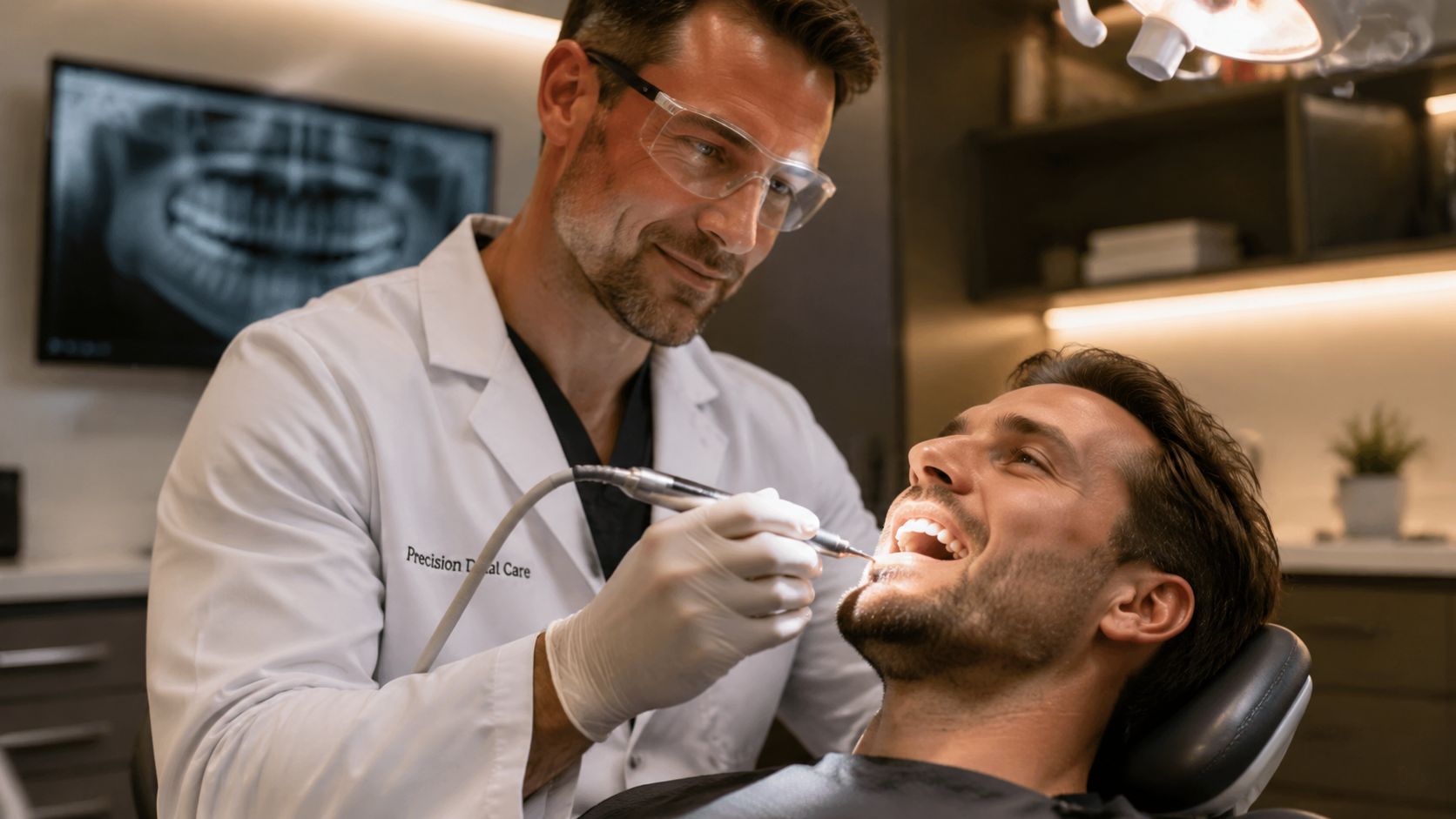
If you're reading this, there's a good chance something small has been bothering you. Maybe your teeth don't feel as smooth as they used to. Maybe coffee or tea has left a little staining near the front. Maybe your gums bleed when you floss, or maybe life got busy and now it's been longer than you meant since your last visit.
That's usually how dental problems start. Not with a dramatic emergency, but with a feeling that something is slightly off.
When patients in Fair Lawn, Ridgewood, and Glen Rock look for a dentist near me or a dentist in Fair Lawn NJ, many aren't searching because of severe pain. They're looking for reassurance, a clear answer, and a place where they won't be judged for being overdue. A professional dental cleaning is often the first step. It removes buildup you can't handle fully at home, gives your mouth a fresh start, and lets your dentist check for problems while they're still small.
A patient might notice a dull sensitivity when drinking something cold. Another might see yellowish buildup behind the lower front teeth. A parent may be trying to schedule a child's first cleaning before a school break. These are ordinary reasons people finally decide it's time to call a local office.
That's where a calm, familiar dental home matters. In Fair Lawn, many people want more than a quick cleaning. They want someone who listens, explains what's going on, and makes the visit feel manageable from the moment they walk in.
When patients ask what is professional cleaning, they usually mean one simple thing. “What are you doing that I can't do well enough at home?”
The answer is straightforward. At home, brushing and flossing are essential, but they can't always remove hardened tartar or polish away all the film and surface stain that build up over time. In a dental office, a hygienist or dentist uses specialized instruments to remove that buildup carefully and check the health of your teeth and gums at the same time.
A cleaning isn't just about making teeth look nicer. It's often the easiest way to catch trouble before it turns into pain.
Some readers also want confidence before choosing a practice. If you like hearing from real patients, you can Explore 4squares Dentistry customer reviews to see the kinds of experiences people value most in a dental office, such as communication, comfort, and feeling cared for.
A cleaning and exam is one of the most practical first appointments for a new patient. It gives the team a baseline. It gives you answers. It also helps identify whether you only need routine preventive care or whether your gums need more focused treatment.
For many families, it's the visit that opens the door to everything else, from cleaning and exams to dental x-rays, new patient exams, teeth whitening, cosmetic dentistry, restorative dentistry, or even care from an emergency dentist if a problem is discovered early enough to avoid worsening.
People often use the phrase “professional cleaning” to mean any dental cleaning. In practice, there are two common categories patients hear about most. A routine cleaning, also called prophylaxis, and a deep cleaning, also called scaling and root planing.
A helpful way to think about it is this. A routine cleaning is like regular upkeep for a healthy smile. A deep cleaning is treatment used when gum disease has already started to affect the tissues around the teeth.
If your teeth and gums are generally healthy, a routine cleaning is usually what you need. The hygienist removes plaque and tartar above the gumline and in the easy-to-reach areas around the teeth, then smooths and polishes the surfaces. This helps your mouth stay cleaner and makes it harder for new buildup to stick.
Patients often choose this kind of visit when they're due for preventive care, have mild staining, or want their teeth to feel fresh and clean again.
A deep cleaning is different. It is not an intensified version of a regular cleaning. It's a gum treatment used when plaque, tartar, and bacteria have collected below the gumline and begun to irritate or damage the supporting tissues.
That's often why a patient may hear about bleeding gums, inflamed tissue, deeper gum pockets, or bone loss risk. In that setting, your dentist may recommend scaling and root planing to clean below the gumline and smooth root surfaces so the gums can heal more effectively.
Practical rule: If your gums are healthy, a routine cleaning maintains health. If gum disease is present, a deep cleaning treats the problem.
| Feature | Routine Cleaning (Prophylaxis) | Deep Cleaning (Scaling & Root Planing) |
|---|---|---|
| Purpose | Preventive care to remove everyday plaque, tartar, and surface stain | Active treatment to control gum disease below the gumline |
| Who it's for | Patients with generally healthy gums or mild buildup | Patients with signs of gingivitis or periodontitis |
| What's involved | Cleaning around visible tooth surfaces, polishing, flossing, and usually an exam | Cleaning under the gums, removing deposits on root surfaces, and careful gum-focused treatment |
| How it feels | Usually simple and comfortable, with mild sensitivity for some patients | Often more involved because the area treated is deeper and more inflamed |
| Anesthesia needed | Often not necessary | Often recommended to keep you comfortable |
| Goal after treatment | Maintain oral health and prevent future problems | Reduce inflammation and help gums reattach and heal |
| What patients ask most | “Will my teeth feel cleaner and look brighter?” | “Can this help stop my gum disease from getting worse?” |
In general cleaning industries, professional cleaning is defined by more than appearance alone. The ISSA Clean Standard emphasizes measurable verification, facility audits, high-touch identification, testing protocols, corrective action, and recordkeeping through a structured process described by ISSA clean standards. Dentistry works in a similar spirit. A mouth can look fairly clean to a patient and still have tartar, gum inflammation, or hidden trouble that needs trained eyes and the right instruments.
That's why a dental cleaning should never be viewed as “just polishing.” The primary value is knowing which kind of cleaning is appropriate and why.
A professional cleaning does two jobs at once. It protects health, and it improves how your smile looks and feels in daily life.
Most patients notice the cosmetic side first. Teeth feel smoother. The mouth feels fresher. Mild surface stains from coffee, tea, or everyday foods often look lighter after polishing. If you've been thinking about a brighter smile, that clean base also helps you decide whether you want additional cosmetic care later, such as whitening.
Here's what many people appreciate soon after a cleaning:
The deeper value is prevention. Regular cleanings help remove the bacterial buildup that can contribute to cavities and gum irritation. During the same appointment, your dentist also checks for early signs of decay, gum disease, worn fillings, bite issues, and other concerns that may be easier to treat when caught early.
If gum inflammation has already started, that's worth addressing before it becomes more serious. Patients who want a fuller explanation of that gum-focused treatment can read these benefits of deep cleaning the teeth.
Small findings are easier to manage than advanced problems. That's one reason routine exams and cleanings are so valuable.
There's also a broader lesson from outside dentistry. Professional cleaning programs in other settings become more structured as contamination risk increases. Technical cleaning guidance describes how higher-risk environments use prescriptive methods, trained staff, specialized tools like HEPA-filter vacuums and steam cleaners, and clear verification criteria, as explained in this overview of technical cleaning methods and equipment. In a dental office, the same principle applies. Better tools, better training, and better judgment lead to cleaner, safer outcomes than home care alone can provide.
Uncertainty makes people more nervous than the cleaning itself. Once you know the sequence, the visit usually feels much easier.
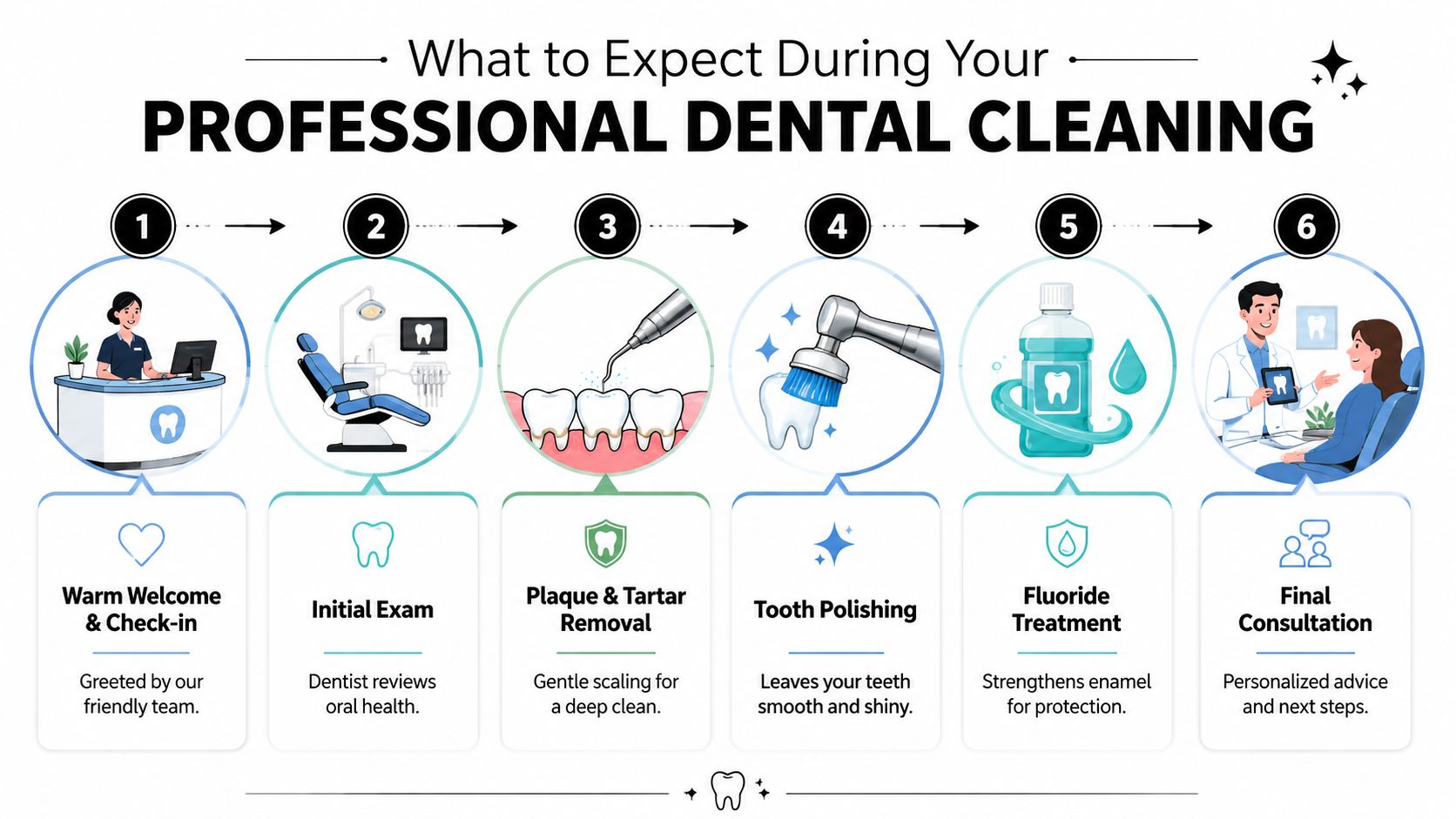
Your appointment usually begins with a quick review of your medical history, any symptoms you've noticed, and any concerns you want to mention. That could include tooth sensitivity, bleeding gums, bad breath, jaw discomfort, or an area that feels hard to clean.
If you're a new patient, this is also when dental x-rays or a new patient exam may be discussed if needed. These help your dentist look for issues that can't be seen by eye alone, such as decay between teeth or problems under the gumline.
Most routine cleanings follow a familiar pattern:
This short video can help make the process feel more familiar before you come in.
Patients sometimes get uneasy when they hear scraping sounds. That sound is usually just the instrument lifting tartar away from the tooth. It doesn't mean damage is happening.
A few tools you may notice include:
If something feels sensitive, say so. Dental cleanings are not a test of toughness. The team can adjust technique, take breaks, and explain each step as they go.
After your cleaning, your teeth may feel unusually smooth for the rest of the day. If you had more inflammation or heavier buildup, your gums may feel mildly tender, but that usually settles quickly.
You'll also leave with a clearer picture of your oral health. Sometimes the result is simple reassurance. Other times, the cleaning reveals a need for follow-up care such as a filling, gum treatment, tooth extraction, Invisalign, Six Month Smile, or a cosmetic consultation.
Not every patient comes in with the same needs. One person is nervous before sitting in the chair. Another is trying to protect a dental implant. A parent may be hoping their child's first cleaning goes smoothly enough that the next visit feels easy.
That's why a good dental office doesn't treat “professional cleaning” as one-size-fits-all care.
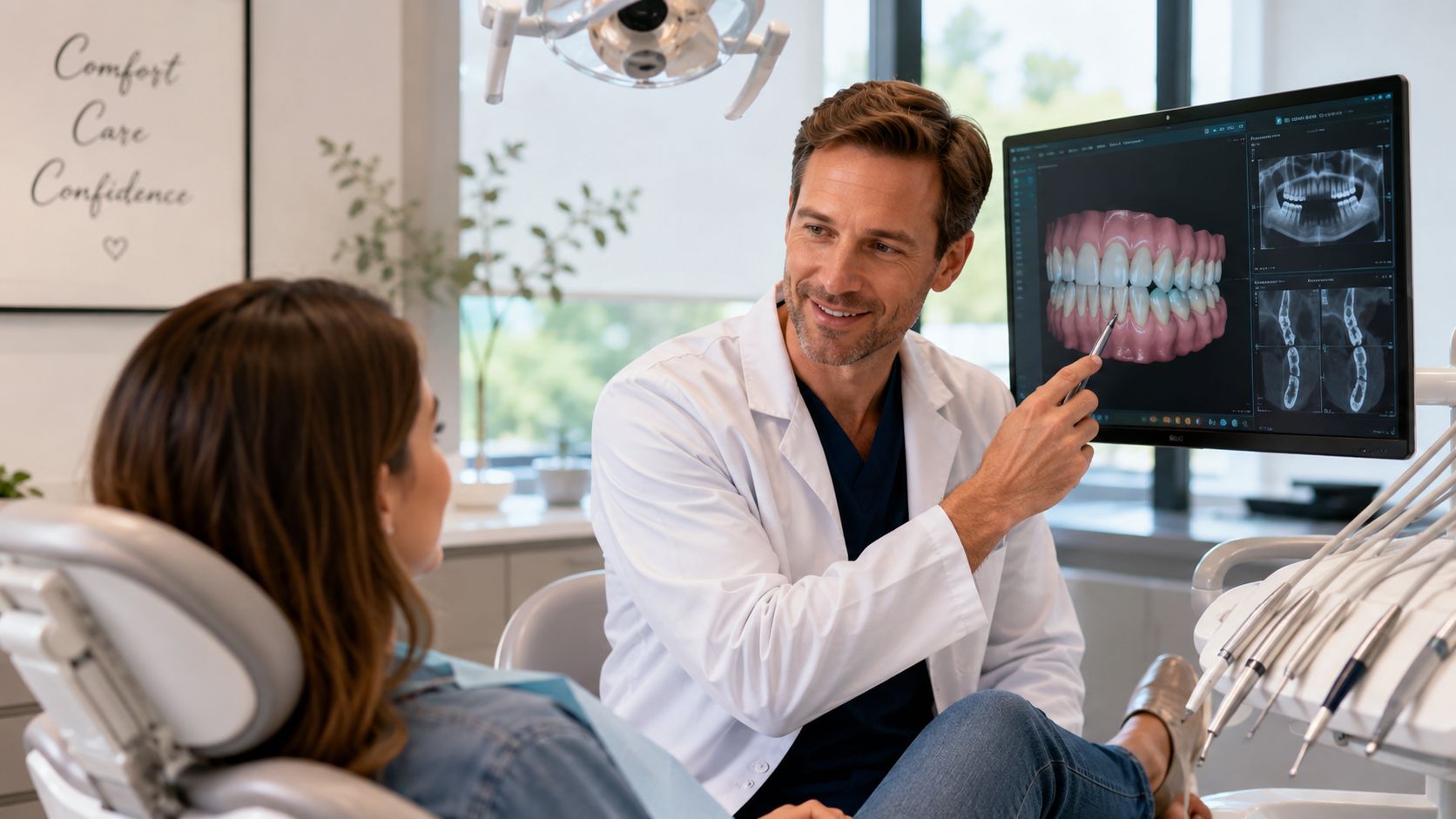
Dental anxiety is common, even among adults who know they need care. Some worry about discomfort. Others feel embarrassed that it's been a while. Some had a rough experience years ago and still carry that tension into every appointment.
Sedation dentistry can help patients receive needed care with much less fear. That matters for cleanings, deep cleanings, and larger procedures alike. If you've been delaying treatment because you're afraid, a conversation about comfort options can change the entire experience.
Implants need thoughtful maintenance. The goal isn't only to keep the crown looking clean. It's to protect the gum tissue and surrounding structures that support the implant over time.
People searching for dental implants near me often focus on placement, but long-term success also depends on cleanings and exams that account for implants, bridges, crowns, and other restorations. Special instruments and techniques may be used to clean around these areas without scratching or irritating them.
This is one place where the local office matters. Dental Professionals of Fair Lawn provides preventive, implant, periodontal, cosmetic, and restorative services in one setting, which can make ongoing maintenance more coordinated for patients with more involved needs.
Children do best when a cleaning feels predictable and positive. Gentle explanations, simple language, and a calm pace help them build trust early. That first experience can shape how they feel about dental care for years.
Families in Fair Lawn, Ridgewood, and Glen Rock often want one office that can support many stages of care, including:
Cost is one of the biggest reasons people postpone dental care. That's understandable. Patients want to know what's covered, what isn't, and whether they can move forward without financial stress.
The good news is that preventive care often saves trouble later. A cleaning and exam can identify issues while they're still manageable, before they become more involved and more expensive to treat. That's true whether the concern is a small cavity, early gum inflammation, or wear around older dental work.
Many patients start with two questions. “Do you take my insurance?” and “If I need more than a cleaning, can I spread out the cost?”
Those are the right questions to ask. Dental offices that focus on patient access usually help patients understand benefits, estimate out-of-pocket responsibility, and discuss financing when treatment is recommended. If you want to review payment support in advance, you can look at the practice's dental financing options.
A useful way to think about it is this:
Many people put off care because nothing feels urgent today. Then one day a tooth breaks, a filling falls out, the gums start bleeding more often, or sensitivity becomes pain. That's when a simple cleaning visit turns into a more complicated appointment.
Outside dentistry, professional cleaning has grown into a major global service category because people and businesses increasingly see it as recurring, foundational care rather than an occasional extra. Industry projections cited by Jobber's cleaning industry overview place the global cleaning services market at about $482 billion in 2026, rising to $859 billion by 2030 at an estimated 7.5% annual growth rate, while another study cited there places it at $442.09 billion in 2025 and $770.76 billion by 2033 with a 7.3% CAGR, and notes that North America accounted for over 31.85% of the market in 2025. The same logic fits oral health. Regular professional care works best when it's treated as routine maintenance, not a last resort.
The easiest appointment is usually the one you schedule before your mouth starts asking for help more urgently.
If you live in Fair Lawn, Ridgewood, or Glen Rock and you've been looking for a cosmetic dentist near me, a dentist near me, or a place to get caught up on cleaning and exams, this is a sensible place to begin.
If you're ready to take care of your smile, schedule a visit with Dental Professionals of Fair Lawn. Whether you need a routine cleaning, a new patient exam, help with gum concerns, or a plan for more advanced treatment, the next step is simple. Reach out, ask your questions, and book an appointment that fits your schedule.