What Causes Tooth Discoloration: Expert Insights
Discover what causes tooth discoloration & how to prevent it. Get professional advice from a top dentist in 2026 for a brighter smile.
Discover what causes tooth discoloration & how to prevent it. Get professional advice from a top dentist in 2026 for a brighter smile.
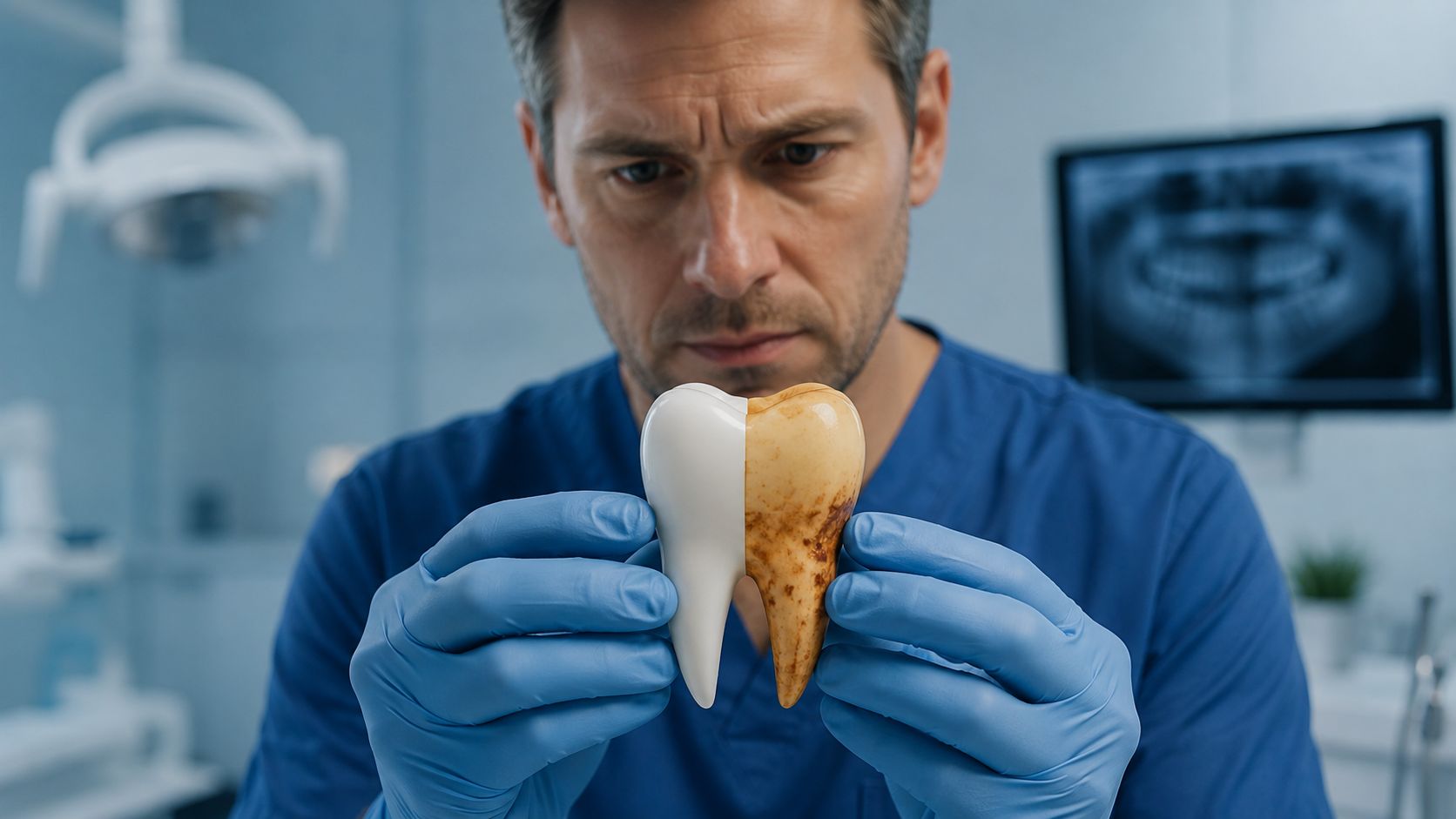
You catch your reflection in the car mirror, or you see yourself smiling in a family photo, and one tooth looks darker than the rest. Maybe your teeth seem more yellow than they used to. Maybe whitening strips didn't do much. That moment can feel frustrating, especially when you take good care of your smile and still aren't sure what changed.
Many patients in Fair Lawn, Ridgewood, and Glen Rock come in with the same question. They want to know what causes tooth discoloration, whether it's something simple like coffee stains, or whether it could mean something more serious. The answer depends on where the color change is coming from. Some stains sit on the outside of the tooth. Others start deeper inside.
A careful exam can make that difference clear. At our Fair Lawn office, we help patients sort out whether they need a cleaning and exams visit, teeth whitening, cosmetic dentistry, restorative dentistry, or treatment for an underlying dental problem. If you've been searching for a dentist near me, a cosmetic dentist near me, or a dentist in Fair Lawn, NJ because your smile doesn't look the way it used to, it helps to know what your teeth may be telling you.
A common story goes like this. Someone gets ready for work, checks their smile in the bathroom mirror, and notices that one tooth looks dull. Or they scroll through photos from a birthday party in Ridgewood and realize their teeth don't look as bright as they remember. They're not always in pain. They're just worried, and they want an honest answer.
That concern is valid. Tooth discoloration can be a simple cosmetic issue, but it can also point to decay, an old filling, enamel wear, or damage inside the tooth. People often assume every stain comes from coffee or tea. Sometimes that's true. Sometimes it isn't.
Many people put this off because the change seems gradual. They think, “I'll try a whitening toothpaste first,” or “Maybe I just need a better cleaning.” Those steps can help in the right situation, but they can also delay treatment when the color change is a warning sign.
That's one reason patients from Fair Lawn, Glen Rock, and nearby neighborhoods often start with a new patient exam instead of guessing at home. A close look, dental x-rays when needed, and a conversation about when the color changed can tell us a lot.
Good news: Not every discolored tooth needs a major cosmetic procedure. The right treatment depends on the cause, and many options are straightforward once we identify what's happening.
A yellow smile, a gray tooth, brown edges, or a single dark tooth can each mean something different. One patient may need professional whitening. Another may need a crown. Another may need emergency dentist care because discoloration came with pain or swelling.
That's why a compassionate, step-by-step evaluation matters. In Fair Lawn, cosmetic concerns and oral health concerns often overlap. When they do, the goal isn't just to brighten your smile. It's to protect the tooth and choose a treatment that is well-suited.
To understand tooth discoloration, it helps to sort stains into two categories. Extrinsic stains sit on the outer surface of the tooth. Intrinsic stains come from changes inside the tooth itself.
That sounds simple, but many patients in Fair Lawn are surprised by how different these two problems can look and how differently they are treated.
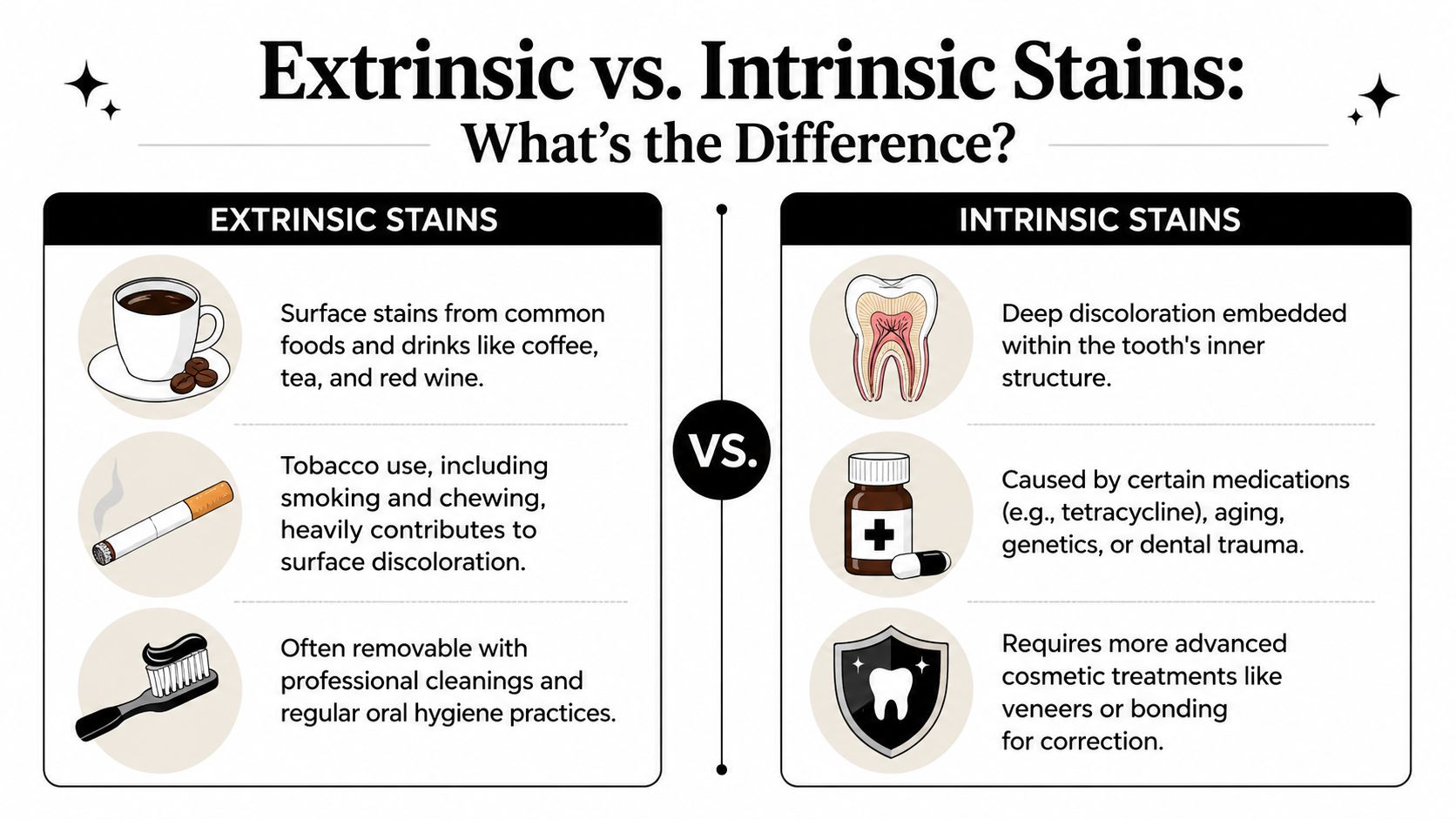
Extrinsic discoloration affects enamel, which is the protective outer layer of the tooth. Dark foods, drinks, and tobacco can leave pigments behind on that surface over time. Plaque makes the problem worse because it gives those pigments more to cling to.
Coffee is a common example, especially if you sip it over a long morning commute. Tea, red wine, sports drinks, and smoking can do the same. Even patients who brush regularly can still notice staining if enamel has become rougher or if buildup is collecting along the gumline. If you want to understand how hardened buildup changes the look of teeth, our guide to what causes tartar on teeth explains it in plain language.
These surface stains often respond well to professional cleanings, polishing, and whitening. At Dental Professionals of Fair Lawn, that usually starts with identifying whether the color is on the surface or whether something deeper is going on.
Intrinsic discoloration starts below the enamel. The tooth can look yellow, brown, gray, or darker than the surrounding teeth because the change is happening within the tooth structure, not just on top of it.
Aging is one common reason. As enamel gets thinner over time, more of the naturally darker dentin underneath shows through, as explained by Cleveland Clinic's discussion of tooth discoloration. Some patients also have natural differences in enamel thickness or translucency, so one person's teeth may appear brighter than another's even with similar habits.
Intrinsic stains usually need more than a whitening product from the store. Depending on the cause, the better fit may be professional whitening, bonding, veneers, a crown, or treatment for a tooth that has internal damage.
| Type of discoloration | Where it starts | Common examples | What often helps |
|---|---|---|---|
| Extrinsic | Outer enamel surface | Coffee, tea, red wine, tobacco, plaque-related staining | Cleanings, polishing, whitening, home care changes |
| Intrinsic | Inside the tooth | Aging, genetics, some medications, internal tooth damage | Bonding, veneers, crowns, internal treatment |
The reason dentists separate stains this way is practical. Surface stains often lift with cleaning or whitening. Internal stains may barely change with those methods, which is why patients sometimes feel frustrated after trying over the counter products for weeks.
A careful exam helps match the color change to the right solution. In our Fair Lawn practice, that means looking at the shade, location, pattern, and timing of the discoloration so we can recommend care that actually fits the cause.
Not all discoloration is cosmetic. Sometimes it's one of the first visible signs that a tooth needs care.

One of the most important examples is tooth decay. While people often blame dark drinks first, a study found that caries, or tooth decay, was the leading cause of self-reported tooth discoloration, accounting for 71.1% of cases in this published study. That's a strong reminder that a color change may be a dental health issue, not just a cosmetic one.
A cavity doesn't always start with pain. Sometimes it first appears as a white spot, a brown area, or a general dullness that makes the tooth look different from the ones around it. If decay progresses, the tooth can darken further.
That's one reason a professional exam matters before any whitening treatment. Whitening products don't treat cavities. If there's plaque or hardened buildup along the gumline, that can also affect color and how clean your teeth look. If you've ever wondered how buildup changes the appearance of teeth, this article on what causes tartar gives helpful background.
When just one tooth turns gray or black, dentists think differently than we do with generalized yellowing. A single dark tooth can point to trauma, deep decay, or damage to the nerve inside the tooth. That kind of discoloration often needs restorative treatment, not a cosmetic strip from the drugstore.
Here's a helpful visual explanation of how internal dental problems can affect tooth color:
A few health-related factors that may contribute include:
If a tooth changes color suddenly, especially one tooth, don't assume it's a stain. It may be your body's way of telling you that the tooth needs treatment.
Cleaning and exams, dental x-rays, restorative dentistry, and sometimes emergency dentist care all play a role. The discoloration may be cosmetic in appearance, but the cause can be clinical.
Once the cause is clear, treatment becomes much more predictable. The right solution depends on whether the discoloration is superficial, deep, isolated to one tooth, or tied to structural damage.
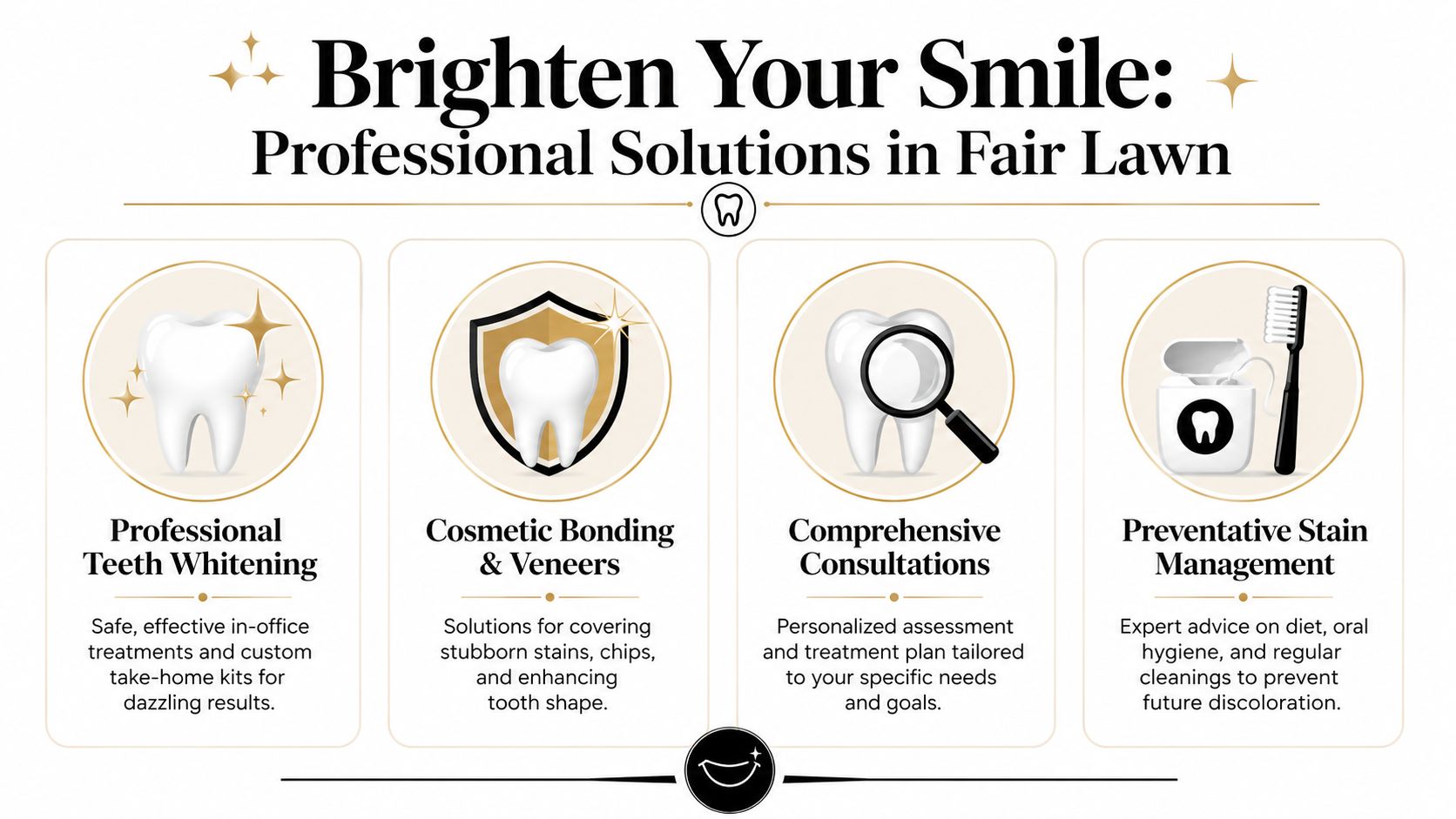
If your teeth are generally healthy and the stain is mostly on the enamel, professional teeth whitening is often a practical place to start. In-office whitening and custom take-home systems can address many extrinsic stains more effectively than over-the-counter products because treatment can be matched to your enamel, sensitivity level, and smile goals.
For patients comparing options, professional teeth whitening at Dental Professionals of Fair Lawn is one example of a service used for surface-based discoloration after an exam confirms whitening is appropriate.
Some stains sit too deep in the tooth, or the tooth is discolored because it has been damaged. In those situations, the goal shifts from bleaching the stain to covering or rebuilding the tooth in a natural-looking way.
A dentist may recommend:
In many cases of severe, single-tooth discoloration, pulpal necrosis, which is the death of the tooth's nerve, is the primary cause, often after trauma or deep decay. That kind of intrinsic stain can turn a tooth gray or black and may require internal bleaching or a crown rather than surface whitening, as noted in this explanation of pulpal necrosis and discoloration.
That's a key reason not to self-treat every stain the same way. A gray front tooth and generalized yellowing are very different problems.
Clinical takeaway: The best cosmetic result usually comes from treating the reason for the discoloration first, then selecting the least invasive option that can create a healthy, even smile.
Discoloration sometimes leads to broader treatment planning. If a tooth can't be saved, a tooth extraction may be necessary. If a missing tooth affects appearance or function, dental implants near me becomes a relevant search for many patients. If spacing, crowding, or tooth position makes staining more noticeable, options such as Invisalign or Six Month Smile may also come into the conversation.
A brighter smile also tends to influence the way the whole face is perceived. Some readers enjoy Skin Perfection's anti-aging insights, which discuss how whiter teeth can complement an overall refreshed appearance.
Choosing a new dentist can feel harder than choosing a treatment. People want to know whether they'll be heard, whether the exam will be thorough, and whether the office will make them feel rushed or comfortable.
At your visit, the conversation usually starts with your concern in plain language. Is the whole smile darker? Is one tooth different? Did the color change happen gradually or all at once? Are you also dealing with sensitivity, pain, a chip, or an old filling?
That history matters because it helps connect the appearance of the tooth to possible causes. From there, the team can look closely, take dental x-rays if needed, and explain whether your next step should be preventive care, cosmetic dentistry, restorative dentistry, or urgent treatment.
Many patients put off care because they're nervous about dental visits, especially if they think they may need more than whitening. That hesitation is understandable. Sedation dentistry can help anxious patients receive care more comfortably, and modern tools can make appointments more efficient and easier to tolerate.
The practice is led by Dr. Jody Bardash, and patients benefit from a wide range of services under one roof. That matters when a discoloration issue turns out to involve anything from simple polishing to crowns, root canal therapy, oral surgery, Invisalign, or implant planning. Itero digital scanning also supports impression-free workflows for many treatments.
For patients in Fair Lawn, Ridgewood, and Glen Rock, convenience is part of quality care. It helps to have one office that can handle routine cleaning and exams, cosmetic concerns, restorative treatment, and emergency dentist needs without sending you from place to place.
A good visit should leave you with answers. You should know what caused the discoloration, what can be improved, what needs treatment first, and what your options are if you want your smile to look brighter and more even.
Sometimes, but only for mild surface stains. Whitening toothpaste may help polish away some extrinsic staining. It won't treat decay, internal discoloration, or damage inside the tooth.
Whitening products affect natural tooth structure, not restorative materials. If you have older crowns, veneers, or bonding, the natural teeth may lighten while the restorations stay the same color. That's why cosmetic planning matters before treatment.
They can be reasonable for some people, but they're not right for every smile. If you have cavities, exposed roots, gum irritation, or a dark tooth caused by internal damage, over-the-counter products may increase sensitivity or fail to help.
Yes. Tetracycline and doxycycline, if taken by children under age 8 while adult teeth are forming, can bind to calcium in the enamel and create permanent intrinsic gray or brown banding that surface cleaning and standard whitening cannot remove, according to WebMD's explanation of antibiotic-related tooth discoloration. If a parent notices unusual banding or color changes, it's worth having a dentist evaluate the teeth early.
A few habits help:
If one tooth suddenly turns dark, or discoloration comes with pain, swelling, or sensitivity, don't wait. That can be a sign that the tooth needs prompt attention.
If your smile looks darker, duller, or uneven, an exam can tell you whether the cause is a surface stain, wear, decay, or internal tooth damage. To talk through your options for cosmetic dentistry, teeth whitening, restorative care, dental implants, Invisalign, or emergency treatment, contact Dental Professionals of Fair Lawn to schedule a visit.