What Causes Tartar? Get Answers From Our Dentists
What causes tartar - Discover what causes tartar and how to remove it. Fair Lawn dentists explain calculus buildup and how professional cleanings can help. Sche
What causes tartar - Discover what causes tartar and how to remove it. Fair Lawn dentists explain calculus buildup and how professional cleanings can help. Sche
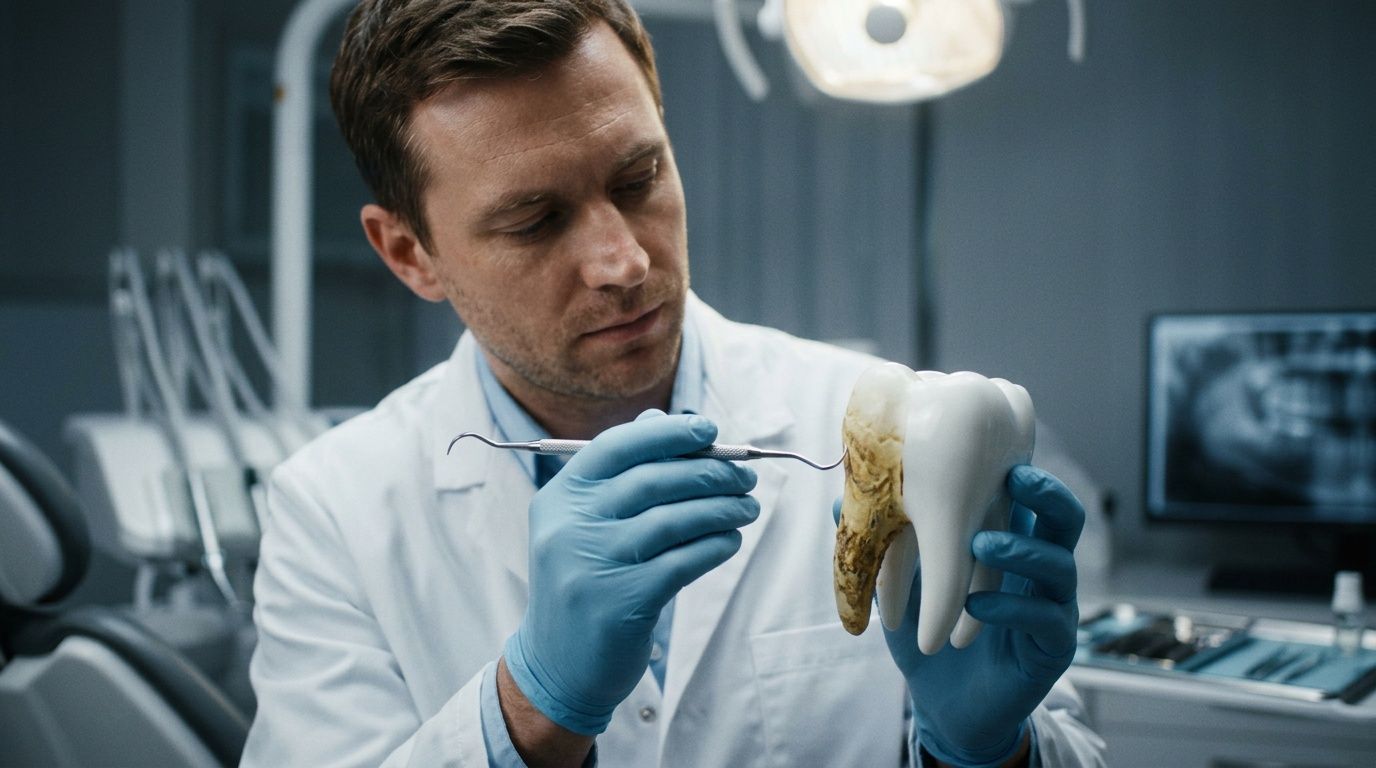
You run your tongue along the inside of your lower front teeth and feel something rough that wasn’t there before. It doesn’t brush off. It may look a little yellow near the gumline, and now you’re wondering if you missed something in your routine or if it means a bigger problem is starting.
That rough deposit is often tartar, also called dental calculus. It’s common, and it doesn’t mean you’ve failed at taking care of your teeth. It does mean plaque has had enough time to harden, and once that happens, home brushing alone won’t remove it.
For many families in Fair Lawn, Ridgewood, and Glen Rock, this is the moment they start searching for a dentist near me, a dentist in Fair Lawn, NJ, or a place for new patient exams and routine cleanings. That’s a smart next step. The earlier you understand what causes tartar, the easier it is to prevent gum problems, protect cosmetic dental work, and keep your smile comfortable and clean.
A patient might come in saying, “I brush every day, so why do I still have this hard buildup?” That’s a fair question. Tartar can feel confusing because it often forms in spots that are easy to miss, such as behind the lower front teeth, around crowding, or near the gums.
What usually happened first was a layer of plaque. Plaque is soft and sticky. If it stays on the teeth long enough, minerals in saliva harden it. At that point, it becomes tartar, and it starts holding onto even more bacteria.
Tartar doesn’t always hurt right away. Many people first notice it when they:
That delay is why regular dental care matters so much. You may feel fine while tartar is irritating the gums.
Local note: Patients looking up oral health concerns online often find a mix of useful education and confusing claims. Clear, patient-friendly communication matters, which is one reason many healthcare teams pay attention to proven dental marketing strategies that make information easier for real patients to find and understand.
Tartar isn’t only a “cleaning issue.” It can affect a child learning good brushing habits, an adult wearing Invisalign, a parent trying to protect veneers, or someone hoping to avoid a future tooth extraction or gum treatment.
If you’re in Fair Lawn, Ridgewood, or Glen Rock and you’re worried about buildup that won’t come off, the good news is simple. Tartar is treatable. The best first move is understanding how it starts, what makes it worse, and when professional care becomes necessary.
A Fair Lawn parent might look in the mirror after helping a child brush, notice a rough yellow line near the gums, and wonder, “Did that show up overnight?” That reaction is common. The confusing part is that plaque and tartar can look related, but they are not the same thing, and that difference affects what you can handle at home and what needs a dental visit.
Plaque is the soft, sticky film that builds on teeth during the day. Tartar is plaque that has hardened after mixing with minerals in saliva. Plaque wipes away with good brushing and flossing. Tartar bonds to the tooth much more firmly.
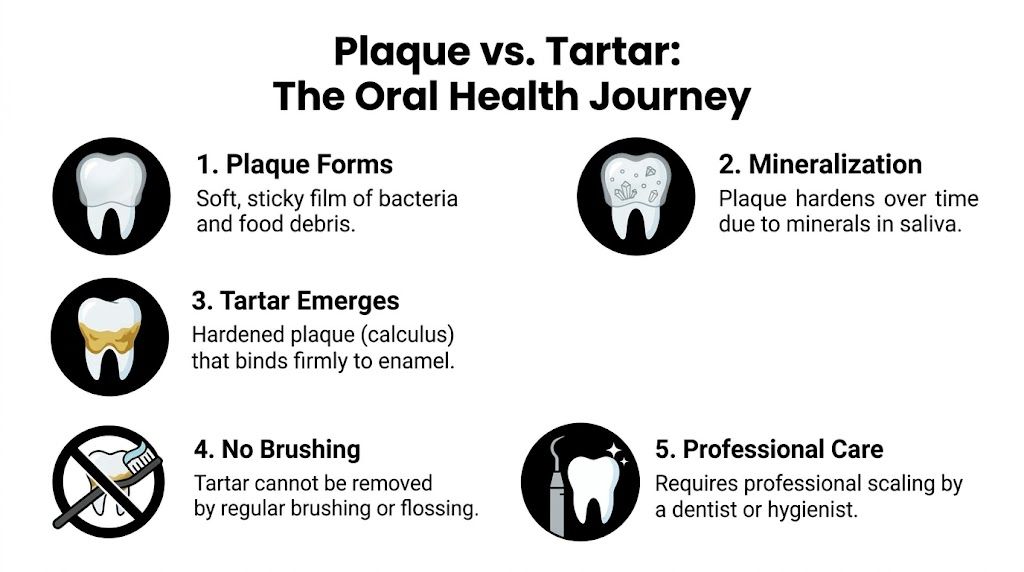
A simple way to picture it is this. Plaque behaves like a fresh, sticky coating on a kitchen counter. If you clean it promptly, it comes off without much effort. Leave it there long enough, and it dries into something much more stubborn. On teeth, that hardened buildup is tartar.
Plaque starts with a thin film from saliva on the tooth surface. Bacteria attach to that film and form a biofilm, which is a tightly organized layer that helps them stick and grow. A review on plaque mineralization explains that this process can begin quickly, and plaque that is not removed can harden into tartar over time (PMC review on plaque mineralization and tartar formation).
Tartar is mineralized plaque. In plain language, it is plaque that has absorbed calcium and phosphate from saliva and turned into a hard deposit. That is why it feels crusty, rough, or stubborn when patients run their tongue along the back of the lower front teeth or around the gumline.
That texture matters for more than comfort. A rough surface gives new plaque more places to cling, which is one reason buildup often seems to return faster once tartar is present.
Here’s a simple comparison:
| Feature | Plaque | Tartar |
|---|---|---|
| Texture | Soft, sticky film | Hard deposit |
| Can you remove it at home | Usually yes | No |
| Where it forms | Across tooth surfaces | Often near the gumline and in harder-to-clean areas |
| Why it matters | Early stage of buildup | Creates a rough surface that holds more plaque |
Patients sometimes think they are doing something wrong because the area still feels rough after careful brushing. Usually, the problem is not effort. It is the material itself. A toothbrush can disrupt soft plaque, but it cannot safely scrape off hardened tartar.
This comes up often in our Fair Lawn office with patients wearing Invisalign, caring for implants, or protecting cosmetic dental work. If you have aligner attachments, tight spacing, crowns, veneers, or bridgework, it is easier for plaque to linger in corners that are hard to reach. Once that plaque hardens, home care still matters, but professional instruments are needed to remove the tartar without damaging teeth or gums.
That distinction can ease a lot of worry, especially for patients with dental anxiety. Tartar does not mean you failed. It means a normal, everyday film stayed in place long enough to harden.
Tartar usually forms the way a traffic jam forms in Fair Lawn. One small delay by itself may not cause much trouble, but a few obstacles at the same time can back everything up. In the mouth, those obstacles are often plaque left near the gums, dry mouth, crowded teeth, and daily habits that make certain spots harder to clean.
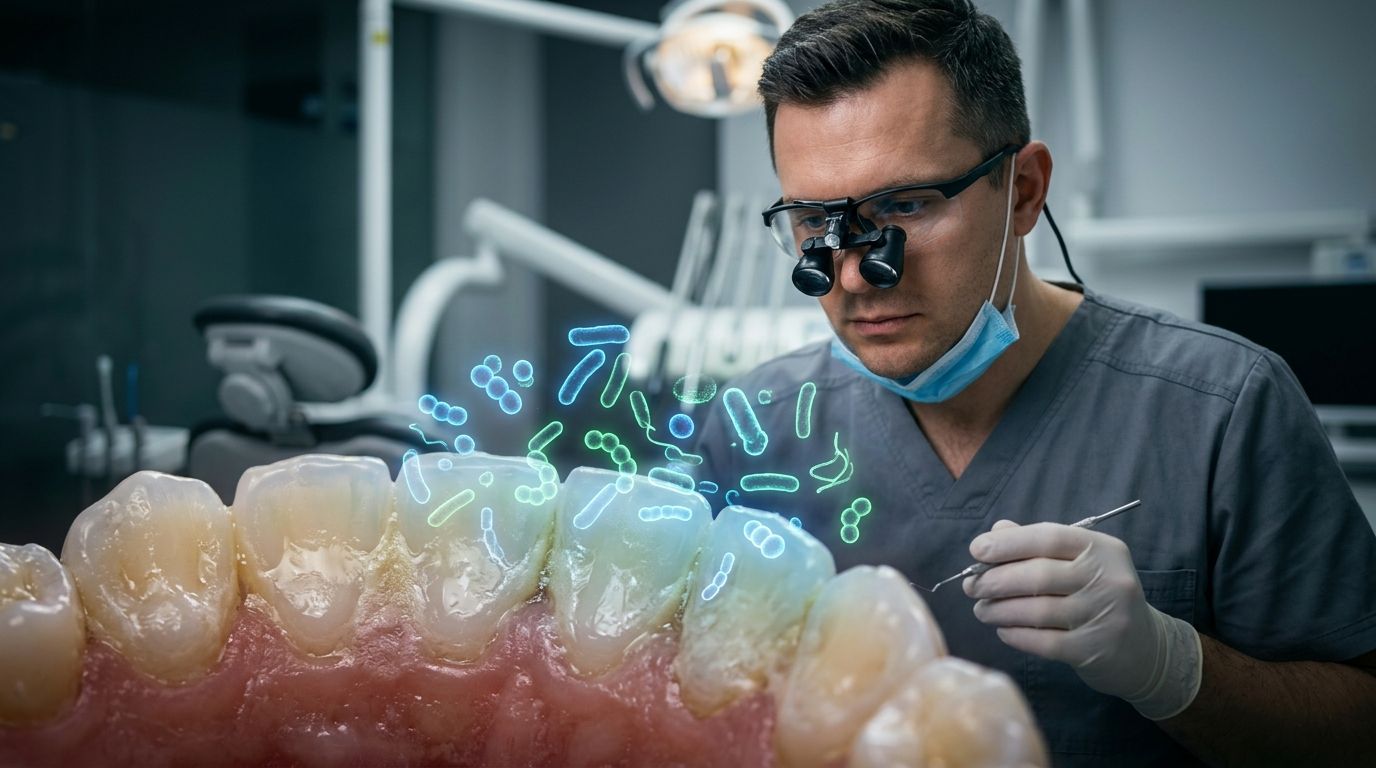
The first step is time.
If plaque sits on the teeth instead of being brushed and flossed away, minerals in saliva can gradually harden it into tartar. That is why buildup often starts in places people miss without realizing it, such as behind the lower front teeth, along the gumline, between crowded teeth, or around dental work.
In our Fair Lawn office, we see this with every age group. A child may miss the back molars. A busy parent may rush through nighttime brushing. An adult with Invisalign attachments, a bridge, or an implant may be cleaning consistently but still leaving plaque in small corners that are tougher to reach.
Some mouths give plaque more hiding places.
Teeth that overlap, rotate, or sit very close together create narrow channels where a toothbrush cannot do much. Retainers, aligners, crowns, veneers, and implant restorations can add tiny ledges and margins where plaque collects. This does not mean those treatments are a problem. It means the cleaning method has to match the mouth.
That matters for neighbors in Ridgewood, Glen Rock, and Fair Lawn who are investing in cosmetic dentistry or orthodontic treatment. Straight, attractive teeth and healthy gums go together. If tartar builds up around attachments, veneers, or implant crowns, the final result is harder to maintain.
Saliva works like a gentle rinse cycle. It helps wash away food particles, buffers acids, and keeps tissues comfortable.
At the same time, saliva contains minerals. If plaque stays in place, those minerals can harden it. Some people seem to build tartar faster even with decent brushing, especially near the lower front teeth or the cheek side of upper molars where saliva glands empty into the mouth. A clinical overview of calculus formation explains that saliva minerals play a direct role in plaque hardening (clinical overview of calculus causes and prevention).
Patients are often relieved to hear this. Fast tartar buildup is not always a sign of poor effort. Sometimes your biology gives plaque a head start.
A dry mouth changes the whole environment.
Without enough saliva, the mouth does not rinse itself as well, and plaque stays on the teeth longer. This is common in adults taking allergy medicine, blood pressure medicine, or certain medications for anxiety, depression, or sleep. It also comes up in people who breathe through the mouth at night.
For patients with dental anxiety, this point can be reassuring. If your mouth feels dry all the time, the answer is not "brush harder."" The better plan is to identify the cause, adjust home care, and choose products that protect the teeth and gums more effectively.
Plaque bacteria feed most easily on sugars and starches, especially when those foods are eaten often and linger on the teeth. Sticky snacks, chips, crackers, sweet drinks, and frequent sipping give bacteria repeated fuel through the day.
The pattern matters as much as the food itself. A cookie eaten with lunch is different from constant grazing on crackers during errands or sports practice. For many families we see in Fair Lawn, small routine changes help a lot. Drinking water after snacks, limiting frequent sipping of sweet drinks, and brushing before putting aligners back in can lower how much plaque stays trapped against the teeth.
If your gums already bleed or feel sore around these areas, our guide to signs of gum disease to watch for can help you spot early warning signs.
Smoking and other tobacco use often go along with heavier tartar buildup because they affect saliva, stain deposits, and make gum problems easier to miss in the early stages.
Daily habits matter too. Skipping floss, brushing for too little time, falling asleep without cleaning the teeth, or wearing Invisalign trays after meals without brushing all give plaque more time to stay in place. The same is true for removable partials and night guards that are not cleaned well.
So the cause of tartar is usually not one dramatic mistake. It is a combination of mouth shape, saliva, daily routine, and the places plaque gets to sit undisturbed long enough to harden.
A lot of Fair Lawn patients first notice tartar while getting ready for work or helping kids brush before school. They see a yellow or brown patch near the gums and wonder if it is only a stain. What worries us is not just how it looks. Tartar gives bacteria a hard, rough place to cling to, especially right along the gumline where inflammation tends to start.
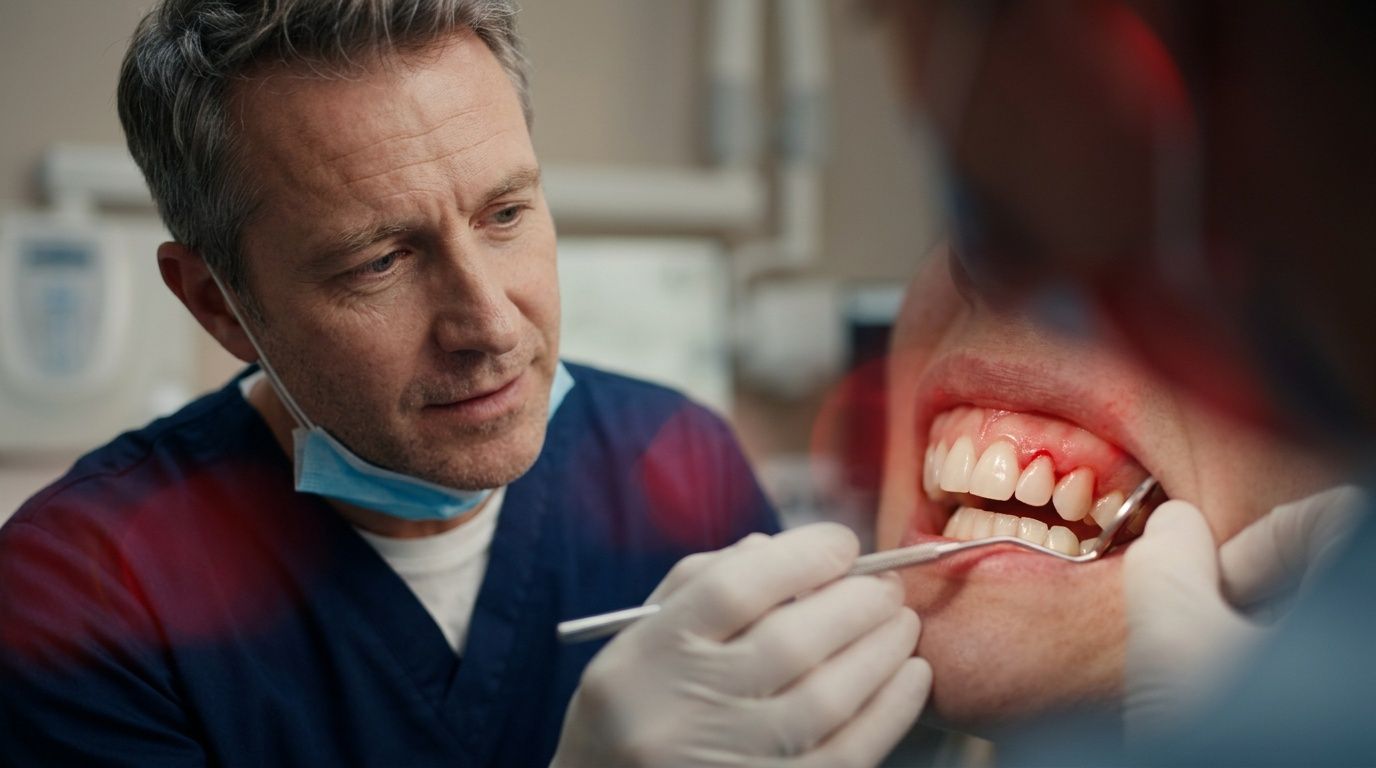
Plaque is soft and easier to remove. Tartar is the hardened version. Once it forms, it works like sandpaper for the gums. More plaque sticks to it, the gum tissue stays irritated, and brushing may start to cause bleeding.
That early stage is gingivitis. You may notice redness, puffiness, tenderness, or a little blood in the sink. Many people ignore those signs because the teeth may not hurt yet. Gum disease often starts without noticeable symptoms.
If you have noticed bleeding or tenderness, our guide to signs of gum disease you should not ignore can help you tell the difference between mild irritation and a problem that needs attention.
If tartar stays in place, the irritation can spread deeper below the gums. That is when gingivitis can turn into periodontitis, a more serious infection that affects the tissues and bone holding the teeth in place.
This matters for more than gum health alone. In our Fair Lawn office, we often explain this to patients who are thinking about Invisalign, cosmetic dentistry, or replacing missing teeth with implants. Healthy gums are the foundation for all of those goals. If the foundation is inflamed or losing support, it becomes harder to keep teeth stable, plan cosmetic work well, or protect an implant long term.
Here’s a quick look at how the risk changes:
| Stage | What you may notice | Why it matters |
|---|---|---|
| Early gum irritation | Redness, bleeding, puffiness | Often improves when tartar is removed and home care gets back on track |
| Ongoing inflammation | More buildup, bad breath, tenderness | Bacteria stay close to the gums and irritation lasts longer |
| Advanced gum disease | Gum recession, loose teeth, discomfort | Bone and tooth support can be affected |
A short visual explanation may help if you want to see how gum disease develops over time.
Patients from Ridgewood, Glen Rock, and Fair Lawn often ask whether tartar is mainly a cosmetic problem. It can stain the teeth, but the bigger issue is how it changes the environment in the mouth.
Tartar can contribute to:
For families, there is another practical concern. If a parent has tartar buildup around crowded teeth, a teen has braces or Invisalign attachments, and a grandparent has a bridge or implant, the warning signs may look a little different in each person. The common thread is the same. Tartar keeps bacteria in place and makes healthy gums harder to maintain.
Tartar changes the conditions around the tooth and gives irritation a place to continue.
A common Fair Lawn scenario goes like this. A parent is helping a child get ready for bed, notices a rough yellow spot near the lower front teeth, and wonders, “Did that form all of a sudden?” It usually did not. Tartar starts as soft plaque that sits on the teeth long enough to harden, so home care is really about interrupting that process early and consistently.
You cannot brush hardened tartar off once it forms. You can do a lot to keep new buildup from forming in the first place, especially if you already know your mouth tends to collect it around crowded teeth, Invisalign attachments, bridges, or implant crowns.
Plaque likes to collect where the tooth meets the gum, much like dust settling along the edge of a baseboard. If your brush only skims the middle of the tooth, the area that needs the most attention gets missed.
A simple routine works well:
If you tend to build tartar quickly, a tartar-control toothpaste may help reduce new buildup over time. The best toothpaste is still the one you will use carefully every day.
Tartar often starts in narrow areas that a toothbrush cannot fully reach. That includes the space between teeth, around permanent retainers, and along the edges of dental work.
String floss works well for many patients. Floss picks, interdental brushes, or a water flosser can be easier for children, teens with orthodontic attachments, or adults who find regular floss awkward to manage. For anxious patients, the goal is not perfection. The goal is a routine you can repeat without dreading it.
Plaque bacteria do better when the mouth gets frequent little fuelings all day. The issue is often the pattern more than a single treat.
Try a few practical changes:
That approach helps families because it is realistic. You do not need a perfect kitchen. You need fewer long stretches where food residue stays on the teeth.
Saliva acts like a gentle rinse cycle for the mouth. When it drops, plaque tends to stay put longer.
If your mouth feels dry often:
This matters for adults with busy schedules, for seniors taking several medications, and for patients wearing Invisalign who may notice their mouth feels dry during the day.
Home care is not only about avoiding tartar. It also protects the dental goals you care about. If you are considering Invisalign, cosmetic bonding, veneers, or whitening, cleaner teeth and calmer gums help those results look better. If you have an implant or crown, plaque control helps keep the surrounding gum tissue healthier.
For patients who know buildup returns quickly, regular professional dental cleanings in Fair Lawn are a smart partner to home care.
A good home routine should feel repeatable, not complicated.
For our neighbors in Fair Lawn, Ridgewood, and Glen Rock, the best tartar-prevention plan is usually the one that fits real life. A child who needs a simple bedtime routine, a teen in aligners, a parent with dental anxiety, and a grandparent with implants may all need slightly different tools. The principle stays the same. Remove soft plaque before it has time to harden.
Once tartar has formed, professional removal is the safe answer. Many anxious patients feel relieved, because the process is usually much more routine than they expected.
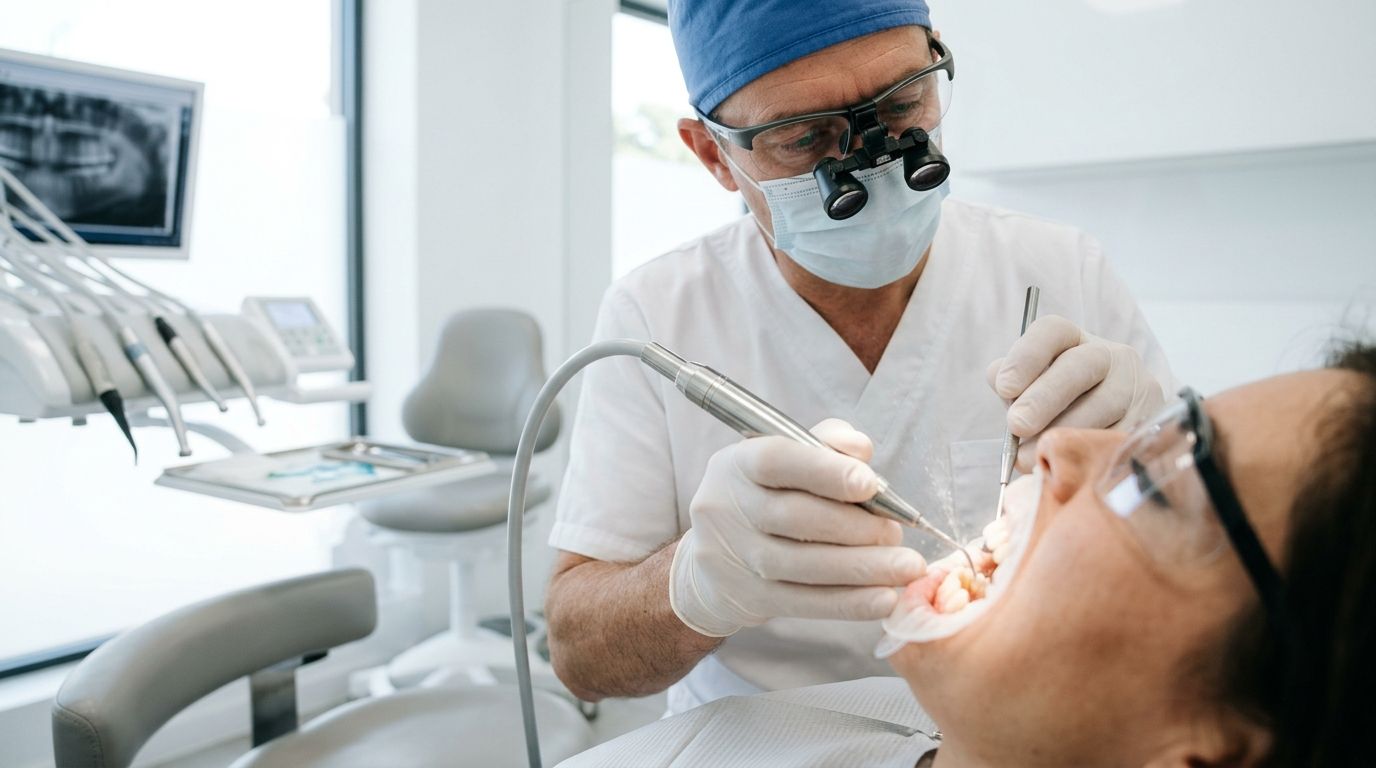
Most patients notice a few things right away. The hygienist examines where buildup is sitting, especially near the gumline and behind crowded teeth. Then specialized tools remove the hardened deposits.
Those tools may include hand scalers or ultrasonic instruments. Hand instruments help with small, precise areas. Ultrasonic devices use vibration and water to loosen buildup efficiently.
The point isn’t to scrape aggressively. The point is to lift tartar off the teeth in a controlled way.
Cleanings support almost every part of dentistry. They help keep gums healthier before cosmetic work, around implants, and during orthodontic treatment.
That matters if you’re interested in:
Patients with dental anxiety often do best when they know exactly what’s coming. If that sounds like you, it helps to say so before your appointment. Comfort options, including sedation support for appropriate cases, can make the visit easier.
A routine cleaning works well when tartar is above the gumline or still in the early stages. If bacteria and buildup extend farther below the gums, deeper periodontal treatment may be recommended.
If it’s been a while since your last visit, don’t let that keep you away. Dental teams see this every day. The visit is about getting you comfortable and helping you move forward.
For a closer look at what routine preventive care includes, you can review the office’s dental cleanings information.
If you’re searching for a dentist in Fair Lawn, NJ because of tartar, bleeding gums, bad breath, or overdue care, your first visit should feel clear and manageable.
A new patient exam typically starts with a conversation. You’ll talk about what you’ve noticed, whether your teeth feel rough, whether your gums bleed, and whether you’ve had concerns around Invisalign, dental implants, cosmetic dentistry, TMJ appliances, or previous dental work.
A thorough first visit may include:
Many patients feel less anxious once they understand that a first visit is not about judgment. It’s about creating a realistic plan.
Two people can have tartar for completely different reasons. One may have crowding. Another may have dry mouth from medication. Another may be doing their best but missing plaque around aligners or a bridge.
That’s why a personalized exam matters so much more than generic advice online. Good dental care looks at the whole picture, including home habits, symptoms, risk areas, and the treatments you want to protect long term.
If you live in Fair Lawn, Ridgewood, or Glen Rock and you’re ready for answers, a new patient visit is the easiest place to start.
If you’re concerned about tartar, bleeding gums, bad breath, or buildup that won’t brush away, schedule a visit with Dental Professionals of Fair Lawn. The team provides patient-focused care for families and adults in Fair Lawn, Ridgewood, and Glen Rock, with preventive, cosmetic, restorative, implant, orthodontic, and anxiety-friendly treatment options to help you protect a healthier smile.