Understanding What Causes Gum Recession
Concerned about gum recession? Discover what causes gum recession and how our Fair Lawn dentists can help. Serving Ridgewood & Glen Rock. Book a consult.
Concerned about gum recession? Discover what causes gum recession and how our Fair Lawn dentists can help. Serving Ridgewood & Glen Rock. Book a consult.
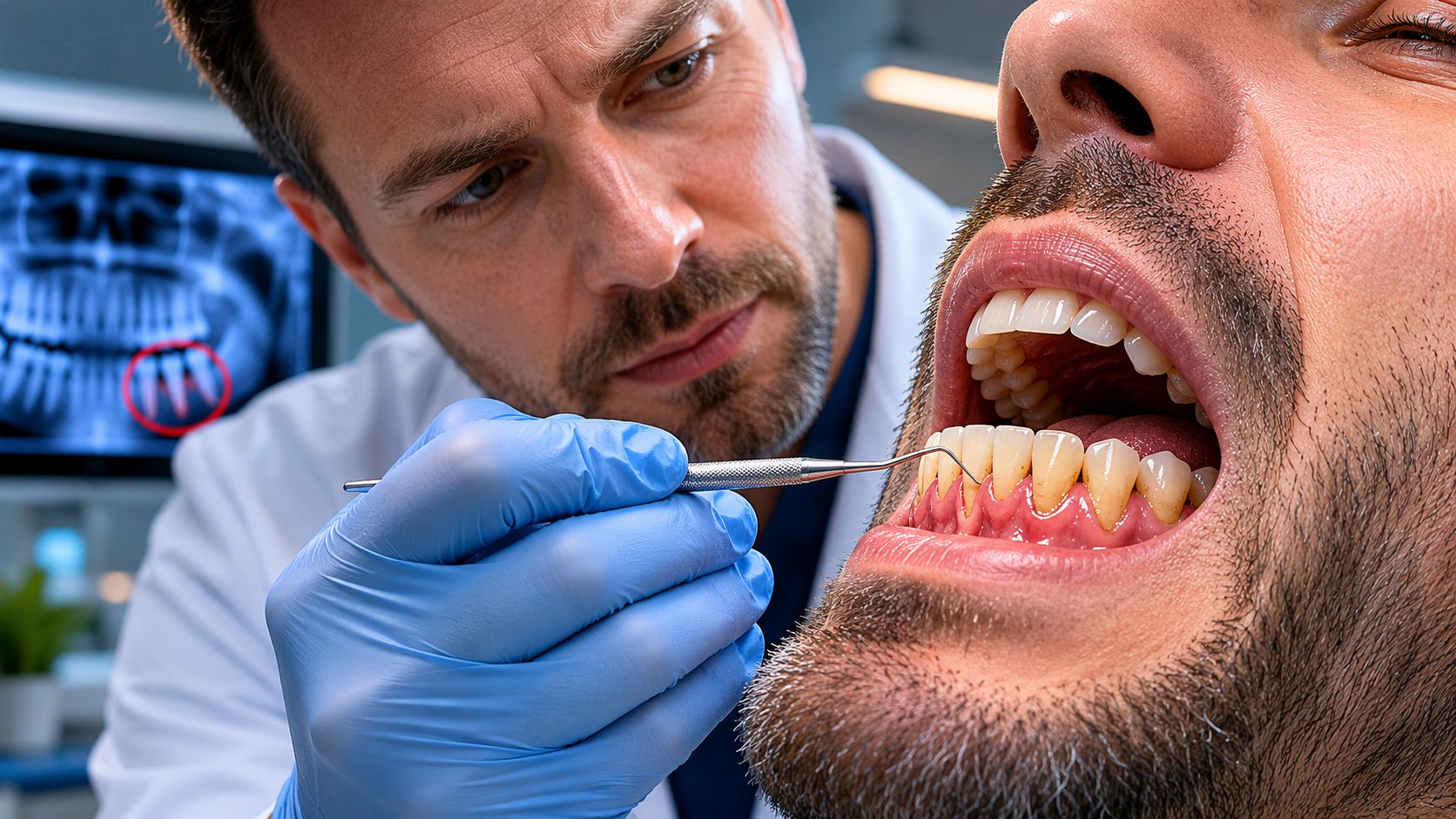
If you've recently noticed that one tooth looks longer than the others, or that cold water suddenly makes you wince near the gumline, you're probably wondering whether something is wrong. Many people in Fair Lawn don't notice gum recession all at once. They catch it while brushing, seeing a photo, or feeling a rough spot near the base of a tooth.
That kind of change is worth checking, but it isn't a reason to panic. Gum recession can happen for different reasons, and the right next step depends on what is causing it. Some patients need better control of gum inflammation. Others need help correcting brushing technique, grinding, or bite-related stress. The good news is that there are practical solutions.
A common story in our Fair Lawn office starts with a patient saying, “My teeth seem longer than they used to,” or “I thought I was brushing well, so why are my gums pulling back?” That reaction makes sense. Gum changes can feel unsettling, especially when you're also dealing with sensitivity or concern about how your smile looks.
Patients from Fair Lawn, Ridgewood, and Glen Rock often come in assuming they must have caused the problem. Sometimes that's partly true. Often, it isn't that simple. Recession can reflect gum disease, long-term brushing trauma, thin gum tissue, grinding, or tooth position. What matters most is getting a clear diagnosis before the problem progresses.
When someone searches for a dentist near me or a dentist in Fair Lawn, NJ because of gum sensitivity, they usually want answers quickly. A local exam makes that easier. We can look at where the recession is happening, whether the tissue is inflamed, whether root surfaces are exposed, and whether there are signs of clenching or wear.
Small gum changes rarely explain themselves. The pattern matters as much as the amount.
Access also matters. If you're calling around because you're worried about pain, sensitivity, or a sudden change in your smile, reliable communication helps. For practices trying to stay responsive to patients who need timely care, resources on an answering service for dentists can be useful because missed calls often mean missed treatment opportunities.
Three questions are commonly asked right away:
If you're seeing changes around your gumline, the most helpful next step isn't guessing. It's getting a focused exam from a local dental team that can tell you what's driving it and what will help.
Gum recession means the gum tissue has moved away from its normal position on the tooth, exposing more of the tooth surface and sometimes the root. That exposed root area is one reason teeth can suddenly feel more sensitive. It isn't covered the same way the crown of the tooth is.
Some people notice recession because their smile looks different. Others notice it because brushing, hot coffee, or cold air starts to bother one spot. It can develop slowly, which is why many patients aren't sure when it began.

You may be dealing with gum recession if you've noticed:
A healthy gumline seals and protects the tooth near the root. When that tissue pulls back, the exposed area becomes more vulnerable to irritation. That's why a patient may say, “This tooth never used to bother me, and now it reacts to everything.”
Recession also changes the way plaque collects. The root surface is harder to keep clean and often more sensitive, so patients sometimes brush around it less effectively. That can create a frustrating cycle where the area becomes both harder to clean and easier to irritate.
Patient-friendly rule: If one area feels more sensitive and also looks different, it deserves a professional look.
One of the most important things to understand is that what causes gum recession isn't always a single habit. Cleveland Clinic notes that gum recession is often multifactorial, and that poor oral hygiene is only one contributing factor. Many people have thin gum tissue by genetics, and factors like smoking, tooth position, or even piercings can contribute, which is why self-blame usually isn't helpful. Their overview on gum recession causes and contributing factors reflects that broader picture.
That matters because treatment depends on the cause. Telling every patient to “brush softer” misses a lot of the story.
When patients ask what causes gum recession, I usually separate it into two broad categories. One is inflammatory recession, where plaque and gum disease gradually damage the tissues that support the teeth. The other is mechanical recession, where repeated force or trauma pushes the gumline back over time.
That distinction matters because the solution changes with the cause. A patient with active gum inflammation needs a different plan than a patient whose gums are receding mainly from overbrushing or clenching.
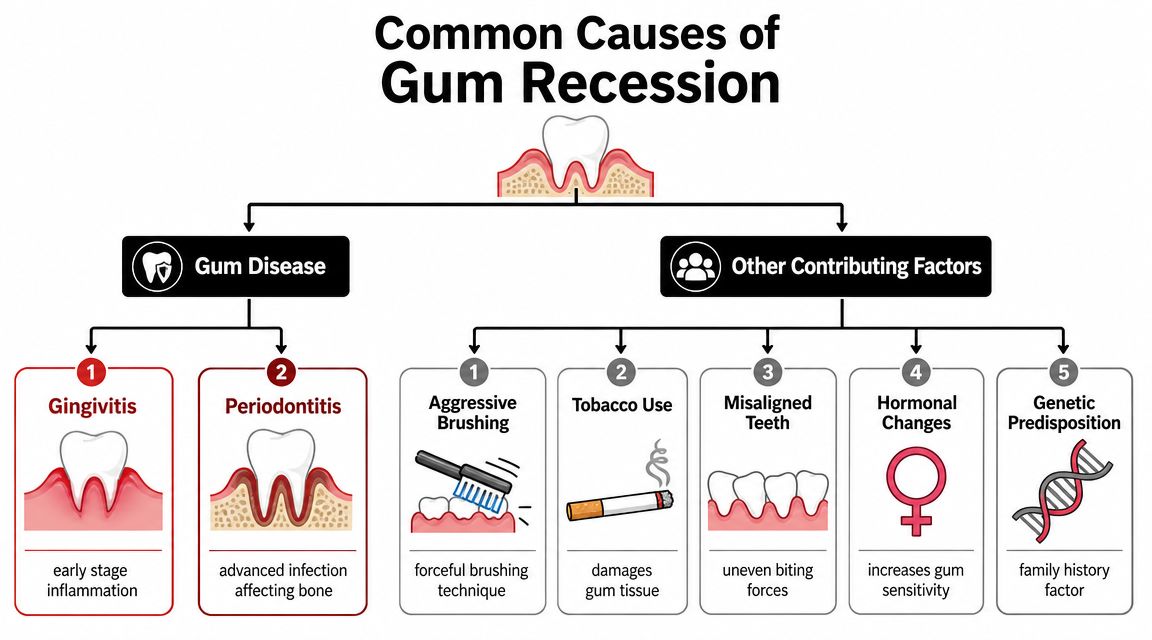
Plaque is a major driver. In an epidemiological study of 710 subjects and 1,152 teeth, gingival recession was present in 291 people, or 40.98% of the sample, and when researchers evaluated causes, dental plaque accumulation led at 44.1%, followed by faulty toothbrushing at 42.7%. The study details are available in this PMC review of recession prevalence and causes.
When plaque stays along the gumline, the body responds with inflammation. Over time, that process can damage supporting tissue and allow the gum margin to move down the root. This is why routine dental care, including cleanings and exams, isn't just cosmetic. It helps control the conditions that let recession progress.
Some patients have very little inflammation but still show recession. In those cases, daily habits and tooth anatomy often tell the story.
A few common contributors include:
If recession keeps getting worse even though a patient brushes regularly, the problem may be biomechanics, not effort.
Localized recession around canines or premolars often points toward brushing force, thin tissue, or bite stress. More generalized recession with bleeding or deeper gum concerns often suggests periodontal disease is involved. Sometimes both are present at the same time.
That's one reason a quick mirror check doesn't answer enough. A full exam can show whether the problem is mostly hygiene-related, mostly force-related, or a combination. If tooth position is part of the issue, orthodontic treatment such as Invisalign or Six Month Smiles may be part of a broader plan to reduce long-term stress on the gums. If grinding is involved, protecting the bite matters just as much as improving home care.
Treatment starts with the cause. If recession is active because of gum inflammation, the first job is to stop the disease process. If the tissue is being injured by brushing, grinding, or tooth position, treating only the symptoms won't hold up well over time.

Gum disease is common enough that it has to be taken seriously. The CDC reports that more than 42% of U.S. adults over 30 have some form of gum disease, and that figure rises to nearly 60% in adults over 65 on its periodontal disease overview page. For patients with inflamed or infected gum tissue, professional periodontal treatment isn't optional if the goal is to stabilize the gumline.
In those cases, treatment may include:
Patients looking for focused gum treatment can learn more about periodontal care in Fair Lawn.
Sometimes the gums are healthy enough to maintain, but the recession has already exposed too much root. In those cases, covering the root may improve comfort, protect the tooth, and improve appearance.
Options may include:
| Situation | Possible approach |
|---|---|
| Root sensitivity with stable gums | Desensitizing care, monitoring, and home-care changes |
| Recession with tissue deficiency | Gum grafting or other periodontal soft tissue procedures |
| Recession worsened by bite stress | Nightguard therapy or bite adjustment planning |
| Tooth loss from advanced damage | Restorative replacement such as bridges or dental implants |
A video can help patients understand why root coverage and gum treatment are sometimes recommended.
What works is matching treatment to the reason the recession happened. Deep cleaning helps when plaque and inflammation are driving tissue loss. A nightguard helps when clenching is part of the damage. Orthodontic planning helps when tooth position is creating repeated strain.
What doesn't work is assuming one toothpaste, one mouthwash, or one brushing tip will reverse every case. Once gum tissue has receded, the practical goal is to stop progression, reduce sensitivity, improve cleansability, and restore the area when appropriate. For anxious patients, sedation dentistry can also make longer periodontal or restorative visits easier to complete comfortably.
Prevention is usually less about doing more and more about doing the right things consistently. The biggest mistake many patients make is scrubbing harder when their gums already look irritated. That often adds trauma to tissue that's already under stress.
Research on the disease process behind recession shows that plaque-triggered inflammation can destroy the periodontal ligament and supporting bone, allowing the gum margin to move down the root. That explanation is outlined in this PMC review of inflammatory periodontal destruction and recession. In practical terms, prevention starts with controlling plaque without damaging the gums.

Patients who have already been told they need more intensive plaque removal often benefit from understanding the benefits of deep cleaning the teeth, especially when inflammation has started to affect the tissues around the teeth.
Better brushing doesn't mean harder brushing. It means more precise brushing.
At-home care matters. Professional oversight matters too. If your gums are thin, your bite is uneven, or you clench at night, a clean toothbrush alone won't solve everything. Prevention works best when daily habits and office-based care support each other.
That's especially true for patients who also need help with a nightguard, TMJ or TMD concerns, or ongoing maintenance after periodontal treatment.
For many patients, the hardest part is booking the appointment. They know something feels off, but they're not sure whether it's serious enough to come in. Once they arrive, the visit is usually much more straightforward than they expected.

A recession visit typically begins with a conversation about what you've noticed. Maybe one tooth feels sensitive. Maybe your gums look uneven. Maybe you've been told before that you brush too hard, but you're not convinced that's the whole reason.
From there, the clinical side usually includes:
That wider approach matters. A thorough clinical exam for recession should evaluate more than plaque alone. If recession continues despite good hygiene, clinicians should also investigate brushing biomechanics, occlusal wear from grinding, and tooth alignment, as noted in this discussion of gum recession causes and treatment considerations.
Patients usually leave wanting simple answers to practical questions. Is this active. Can it be stopped. Do I need periodontal treatment, cosmetic treatment, orthodontic correction, or just monitoring. A good consultation turns those concerns into a plan.
Offices also run better for patients when communication systems are organized. Practice teams that want fewer missed appointments and more consistent follow-up sometimes review operational resources like these strategies for boosting dental practice revenue, which center on reminder and scheduling workflows that help patients stay on track with care.
A first visit for a dentist near me, an emergency dentist, or a long-term cosmetic dentist near me in Fair Lawn should give you clarity. You should understand the cause, the options, and what comes next.
If you've noticed gum sensitivity, exposed roots, or a changing gumline, schedule an appointment with Dental Professionals of Fair Lawn. Patients in Fair Lawn, Ridgewood, and Glen Rock can get a personalized exam, clear answers about what's causing the recession, and a treatment plan that may include preventive care, periodontal therapy, cosmetic treatment, restorative dentistry, Invisalign, tooth replacement, or other services based on what your smile needs.