What Causes Bad Breath Even After Brushing?
Struggling with what causes bad breath even after brushing? Fair Lawn dentists help. Discover hidden causes & lasting relief. Schedule your visit.
Struggling with what causes bad breath even after brushing? Fair Lawn dentists help. Discover hidden causes & lasting relief. Schedule your visit.
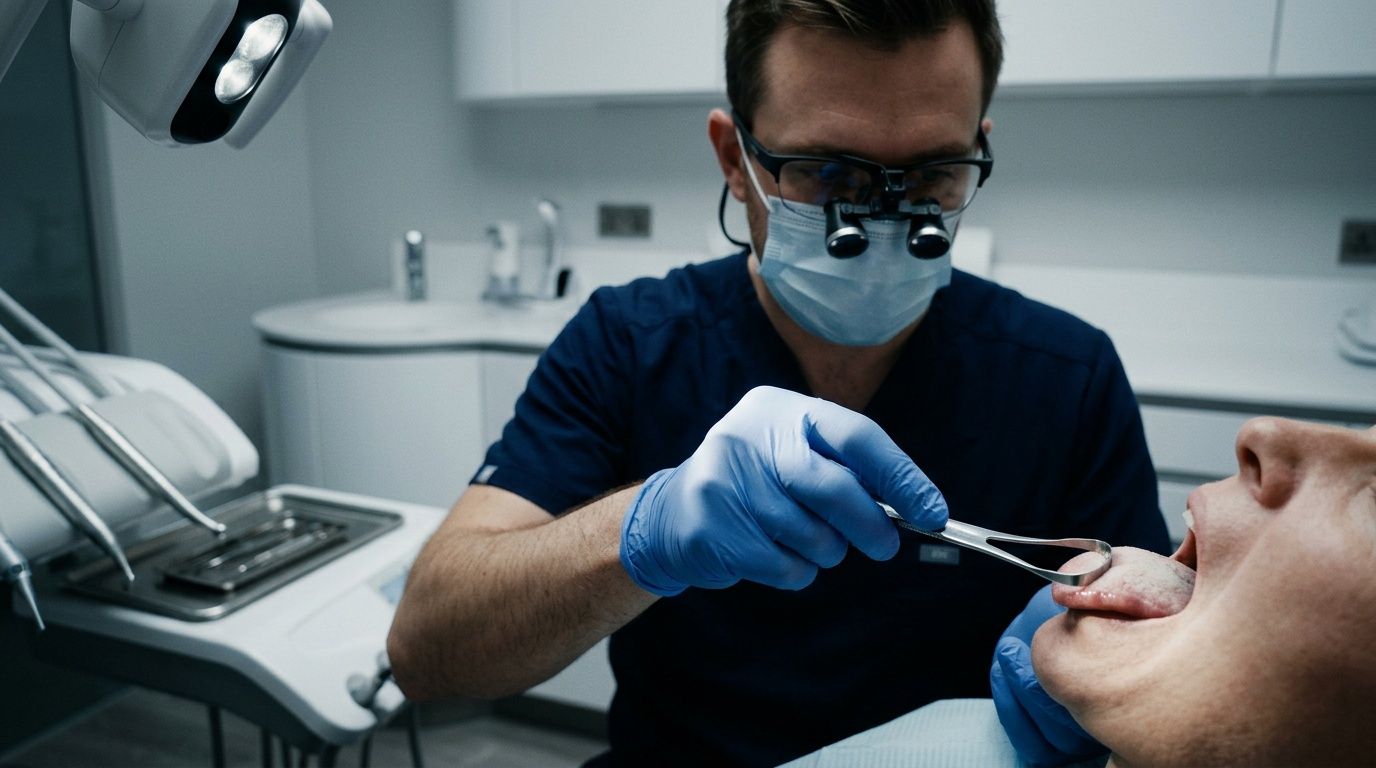
You brush carefully. You rinse. You even check your breath a few minutes later, and the stale taste or odor is already back. That pattern is frustrating, and for many people in Fair Lawn, Ridgewood, and Glen Rock, it becomes a quiet source of stress in conversations, work, school events, and close family moments.
Persistent bad breath usually isn't a sign that you're doing something wrong. More often, it means the source isn't being reached by a toothbrush alone. The answer may be on the tongue, under the gums, around older dental work, or tied to dry mouth, mouth breathing, reflux, or sinus issues.
A lot of patients describe the same routine. They brush before leaving the house, use mouthwash in the car, and still feel the need to cover their mouth when speaking. Some stop using mints because they know the relief doesn't last. Others worry that people around them notice when the underlying issue is that they haven't been given a clear explanation.
That concern is understandable. Bad breath feels personal, but in dentistry, it's usually a clinical problem with a clinical cause. Once the cause is identified, treatment becomes much more straightforward.
In Fair Lawn, many families want more than a quick recommendation to "brush better." They want someone to look carefully, explain what is and isn't working, and map out a practical solution. That may mean evaluating the tongue, the gums, older crowns or bridges, signs of dry mouth, or airway-related issues such as mouth breathing during sleep.
Persistent bad breath is often a clue, not a character flaw.
Patients also want a dental office that communicates clearly. The same kind of trust-building that helps people choose a practice often comes from strong patient education and visibility in the community. For readers interested in how modern offices improve communication and access, this overview of strategies for dental practice growth gives useful context on how practices connect with patients before they ever walk through the door.
People often assume bad breath must come from food, coffee, or a missed flossing session. Sometimes it does. But when the odor returns soon after brushing, the issue is usually deeper than a surface cleaning at the sink.
That is why a real evaluation matters. The goal isn't to mask odor for a few hours. The goal is to find the source and stop feeding it.
For many people asking what causes bad breath even after brushing, the answer starts with bacteria living in places a toothbrush doesn't clean well. One of the biggest is the tongue, especially the back portion where its rough surface holds debris and odor-causing bacteria. According to this overview of halitosis causes, approximately 25-50% of Americans experience chronic bad breath, primarily due to bacteria on the tongue releasing volatile sulfur compounds, or VSCs.
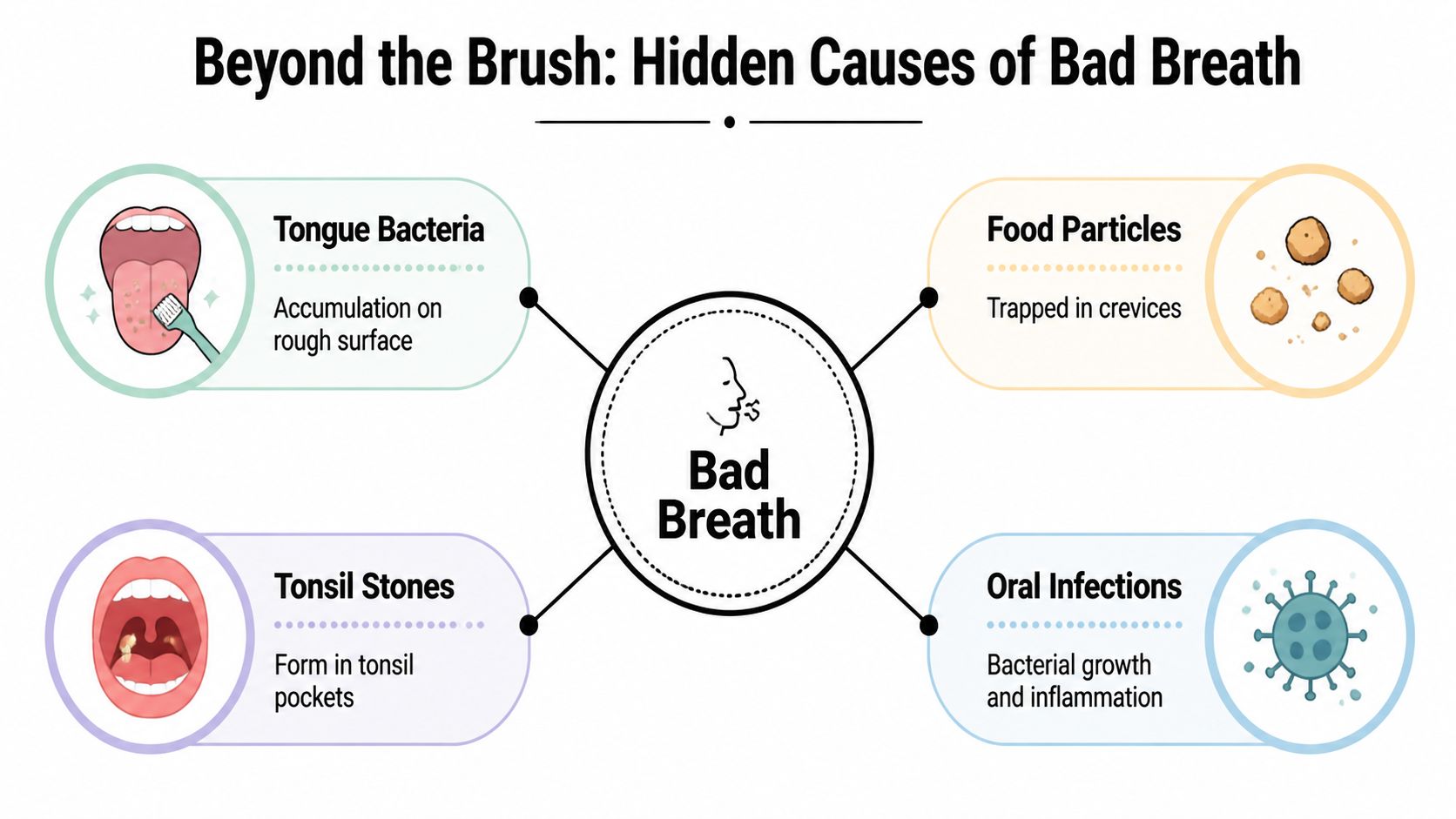
The tongue isn't smooth like a countertop. It's textured, and that texture traps food particles, dead cells, and bacteria. If you only brush your teeth, you can leave a major odor source untouched.
The back of the tongue is often the biggest problem area because it is harder to reach comfortably. That's where bacteria can sit undisturbed and produce sulfur gases that create a strong, unpleasant smell.
A simple tongue-cleaning routine often helps, but technique matters:
Another reason brushing may not solve the problem is bacterial biofilm. Biofilm is the sticky layer that clings to teeth, the gumline, and other oral surfaces. It isn't just food sitting in the mouth. It's an organized bacterial coating that can keep producing odor even when the mouth looks fairly clean.
Regular brushing removes some of it. It does not always remove the portions tucked around crowded teeth, along the gum margin, or between teeth that aren't being flossed effectively.
Practical rule: If your breath improves briefly after brushing but returns quickly, the source often isn't being removed. It's being disturbed, then left behind.
A stronger toothpaste flavor doesn't fix bacterial buildup. Breath mints don't either. Alcohol-based rinses may temporarily cover odor, but if they dry your mouth, they can make the environment more favorable for bacteria later.
The most effective home approach is usually a combination of toothbrushing, flossing, and tongue cleaning. If that still doesn't solve it, the problem has likely moved beyond what a home routine can fully address.
When odor keeps returning despite decent home care, dentists start looking below the surface. The gumline is a common turning point. Early gum inflammation, called gingivitis, can create an unpleasant smell because bacteria collect where the toothbrush bristles don't fully clean. If the condition progresses to periodontitis, the issue becomes more stubborn.
In periodontitis, the gums pull away from the teeth and form pockets. Those pockets trap bacteria in a protected space. A toothbrush can't reach into them effectively, and ordinary rinsing won't flush them out for long.

The smell associated with periodontal disease isn't just leftover food. It comes from bacteria that continue producing sulfur compounds under the gums. As noted in this discussion of periodontal pockets and halitosis, bad breath after brushing is often driven by VSCs produced by anaerobic bacteria in periodontal pockets, and tongue scraping can reduce VSCs by up to 75%, even though it doesn't address bacteria below the gumline.
That distinction matters. Tongue scraping can help a lot, but it won't solve a gum infection by itself.
Common signs that point toward a deeper periodontal issue include:
Patients who want a fuller explanation of warning signs can review signs of gum disease.
Not every case comes from gum disease. A crown that no longer seals tightly, a filling with a rough margin, a bridge that traps food underneath, or a denture that isn't being cleaned well can all create a hidden bacterial reservoir.
Here's a simple comparison:
| Problem area | Why brushing may miss it | What usually helps |
|---|---|---|
| Periodontal pockets | Bristles don't reach under the gums | Professional periodontal cleaning |
| Open margin around a crown | Bacteria hide in the gap | Repair or replacement |
| Failing root canal or hidden decay | Infection sits inside or under the tooth | Exam, imaging, and restorative treatment |
| Poorly fitting appliance | Food and plaque collect underneath | Adjustment, remake, or cleaning guidance |
If breath odor is tied to an infected site, masking it won't work for long. The site itself has to be treated.
When persistent odor is linked to a tooth that can't be predictably saved, restorative planning may include extraction and replacement options such as a bridge or implant. The right treatment depends on what the exam shows, not on the smell alone.
Not every bad-breath problem starts with decay or gum disease. Sometimes the issue is that the mouth has lost one of its best natural defenses: saliva.

Saliva rinses away food particles, buffers acids, and helps keep bacterial growth under control. When saliva flow drops, the mouth gets sticky, bacteria build up more easily, and breath often worsens. According to Healthline's review of causes of bad breath after brushing, dry mouth is a major cause of bad breath, and over 500 common medications can induce dry mouth, including antihistamines and antidepressants.
Medication-related dryness is especially common in adults managing everyday health conditions. You may brush well and still struggle because the mouth isn't cleansing itself normally.
Other patterns matter too:
A lot of people notice their breath is worst first thing in the morning. That doesn't always mean poor hygiene. It often reflects hours of reduced saliva, especially if you sleep with your mouth open.
Dry mouth changes the whole environment of the mouth. In that setting, even a solid brushing routine may not keep up.
Certain foods create temporary odor, but some eating patterns can make breath persistently unpleasant. High-protein or very low-carbohydrate diets may change breath character. Frequent coffee, smoking, and skipping meals can also contribute because they change saliva flow and oral chemistry.
When tonsil debris, sinus congestion, or postnasal drip are involved, the smell may seem like it's coming from the mouth even though the trigger isn't on the teeth. That's one reason a dental visit sometimes includes questions that don't seem strictly dental.
This short video gives a helpful overview of common causes and why surface cleaning isn't always enough.
Home care for dry-mouth-related odor works best when it supports saliva instead of just covering smell.
If these changes help only a little, a dental exam can sort out whether dryness is the main cause or just one part of the problem.
When a patient comes in for persistent bad breath, the most helpful visit starts with conversation, not assumptions. The pattern matters. Is the odor worst in the morning, after meals, or all day? Does the patient also have bleeding gums, a dry mouth, congestion, reflux, or an old crown that catches food?
Those details guide the exam. Persistent halitosis can come from the mouth, but it can also overlap with sinus problems, reflux, mouth breathing, and medication side effects.
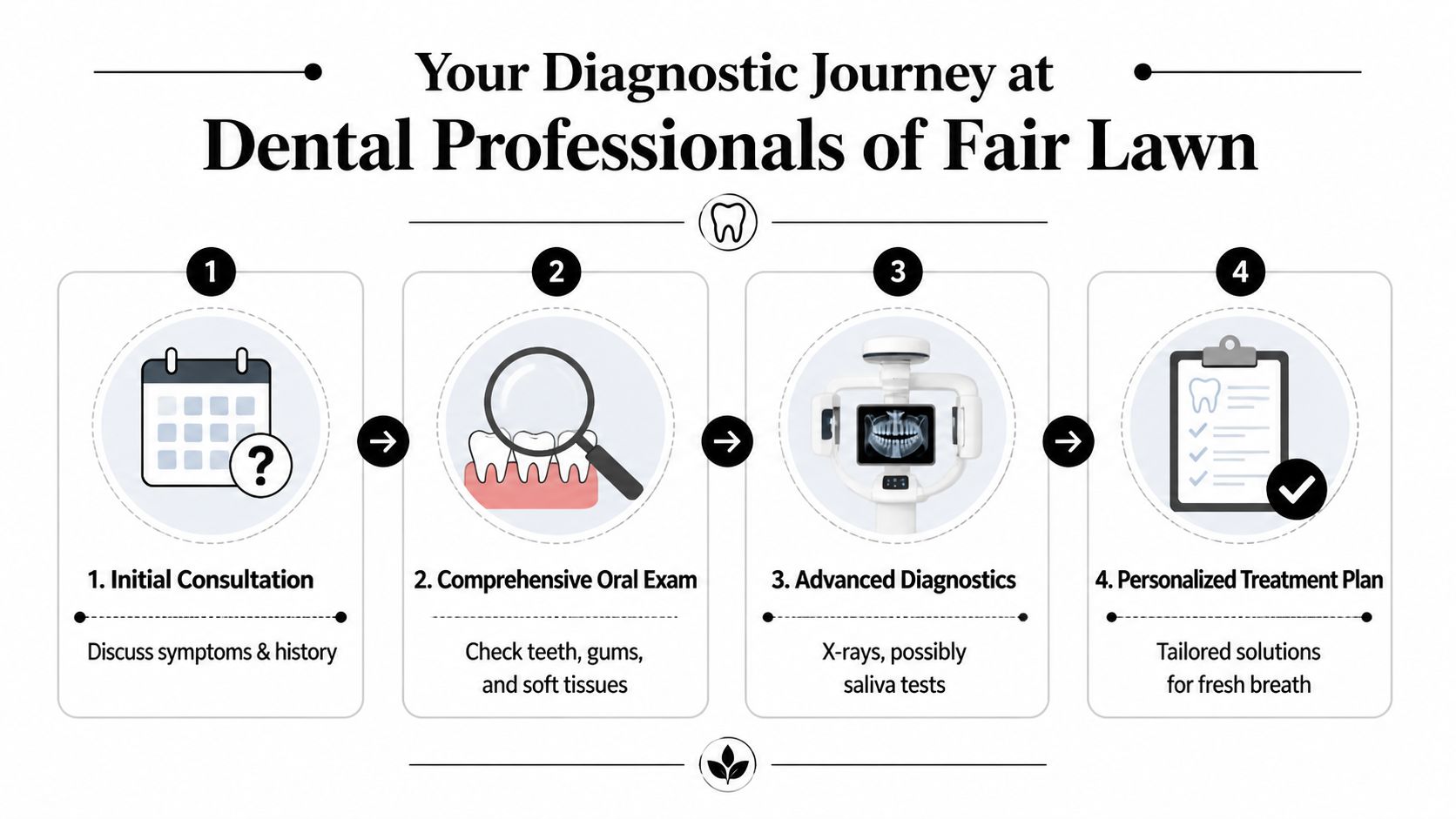
A thorough diagnostic visit usually includes a visual exam of the teeth, gums, tongue, and soft tissues. Dentists also look for plaque retention areas, signs of infection, failing restorations, food traps, and tissue irritation from appliances.
If the gums appear inflamed, periodontal charting may be recommended to measure pocket depths. If older restorations or hidden decay are suspected, digital imaging helps identify sites that cannot be seen directly.
Advanced screening can also be useful for dry mouth. As noted in this review of xerostomia and intraoral scanning, up to 30-40% of adults over 65 experience medication-induced dry mouth, and tools like Itero intraoral scanners can help detect early signs of reduced saliva flow.
Sometimes the exam doesn't point to a single obvious dental source. That doesn't mean the concern isn't real. It means the evaluation has to be broader.
A dentist may ask about:
The right diagnosis often comes from connecting several small clues instead of finding one dramatic problem.
For some patients, the source is mostly dental. For others, it is mixed. That is why a careful diagnostic process tends to work better than trying random products from the pharmacy aisle.
People are often embarrassed to bring this up. They shouldn't be. Dentists hear this concern regularly, and it is treated the same way as any other symptom.
A good visit should feel specific and nonjudgmental. You should leave knowing what the likely source is, what still needs to be ruled out, and what the next step will be.
Once the source is clear, treatment becomes practical. The plan depends on whether the main driver is tongue buildup, gum infection, dry mouth, failing dental work, or a combination.

For many patients, the biggest improvement comes after removing what home tools can't. That may mean a regular preventive cleaning, or it may mean deeper periodontal treatment if bacteria are established under the gums.
Patients who are due for maintenance often notice that odor improves when hardened buildup is removed and the gumline is cleaned thoroughly. For routine preventive care, details about professional dental cleanings can help clarify what that visit includes.
A few examples show how different the solutions can be:
One option used in some cases is the Dental Professionals of Fair Lawn snore guard, a custom oral appliance designed to help open air passages during sleep. For patients whose morning breath is tied to nighttime mouth breathing or sleep-related airflow issues, an appliance like that can be part of a broader treatment plan.
Clinical takeaway: Fresh breath that lasts usually comes from removing the source, not from adding stronger flavor on top of it.
The most effective home support is usually simple and consistent:
Patients often come in feeling discouraged because they've tried everything. In reality, most have tried many products. That's not the same as treating the cause.
If you're still asking what causes bad breath even after brushing, the most useful next step is a focused dental evaluation. Persistent odor usually has an explanation, and in many cases, that explanation is treatable once the source is identified clearly.
For patients in Fair Lawn, Ridgewood, and Glen Rock, this concern often overlaps with other needs such as cleanings and exams, restorative dentistry, Invisalign, emergency dentist visits, tooth extraction decisions, cosmetic dentist near me searches, or planning for dental implants near me after a failing tooth. Bad breath doesn't have to be separated from the rest of your care. It can be addressed as part of a complete view of your oral health.
You should consider scheduling a visit if any of these sound familiar:
A careful exam can determine whether the issue is mostly hygiene-related, periodontal, restorative, airway-related, or connected to something that needs medical follow-up.
This is a common problem. It is manageable. And it is worth addressing sooner rather than later, because the same issues that affect breath often affect gum health, comfort, and long-term tooth stability.
If you live in Fair Lawn, NJ and want a dentist in Fair Lawn, NJ who takes the concern seriously and explains the findings clearly, scheduling a consultation is the right next move. You deserve an answer that lasts longer than a mint.
If you're ready to stop guessing and get a clear plan, schedule a visit with Dental Professionals of Fair Lawn. The team can evaluate the source of persistent bad breath, explain your options in plain language, and help you move toward a healthier, more confident smile.