Tooth Extraction and Replacement in Fair Lawn, NJ
Considering tooth extraction and replacement in Fair Lawn, NJ? Learn about the process, sedation, costs, and options like dental implants from our expert team.
Considering tooth extraction and replacement in Fair Lawn, NJ? Learn about the process, sedation, costs, and options like dental implants from our expert team.
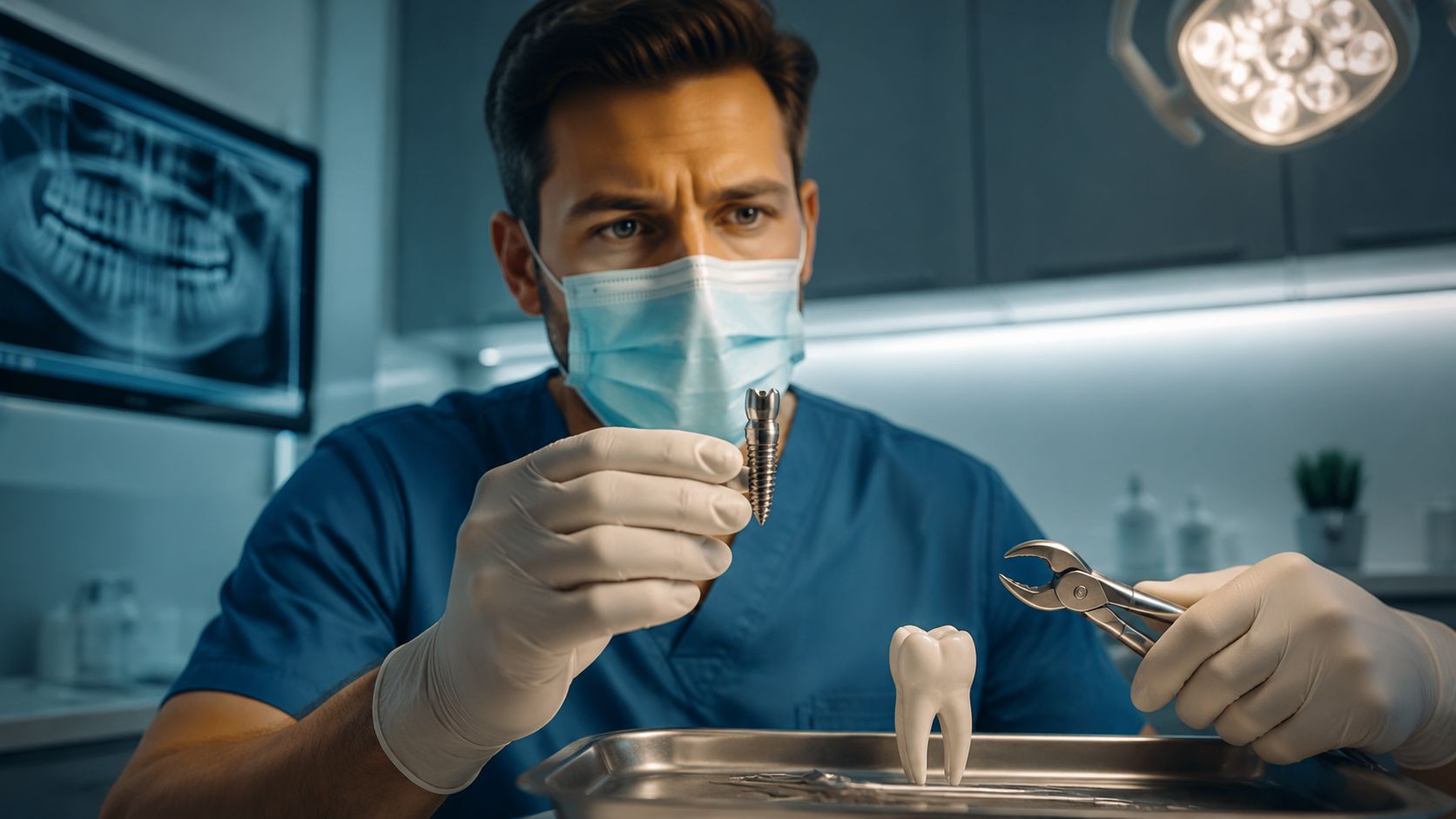
A tooth that's throbbing, cracked, loose, or suddenly infected can make everything feel urgent. You might be searching for a dentist near me, an emergency dentist, or answers about whether the tooth can still be saved. You may also be worrying about the next question right away. If the tooth has to come out, what replaces it, how long will it take, and will the process hurt?
Patients in Fair Lawn often arrive with both a physical problem and an emotional one. They want the pain to stop, but they also want to know they won't be left with a gap, a confusing treatment plan, or a stressful experience. That's especially true when the damaged tooth is visible when you smile, or when chewing has already become difficult.
Tooth extraction and replacement should be handled as one connected journey. The tooth removal matters. The healing matters. The long-term replacement choice matters just as much. When those steps are planned together, care feels more predictable, and the result is usually healthier, more comfortable, and easier to live with.
A common call to a dental office sounds like this: a patient woke up with swelling, or broke a tooth while eating, or has been putting off treatment until the discomfort crossed a line they could no longer ignore. By the time they reach out, they're not just asking for an appointment. They're asking whether someone can help them quickly, explain things clearly, and keep them comfortable.
That's where local care matters. If you're looking for a dentist in Fair Lawn, NJ because a tooth suddenly became painful, loose, or damaged, you want a team that understands both the urgency and the anxiety behind that call. Many people from Fair Lawn, Ridgewood, and Glen Rock are not only worried about losing a tooth. They're worried about being judged for waiting, being rushed into a decision, or hearing a plan they don't understand.
A severely damaged tooth rarely affects just one part of your day. It can interrupt sleep, make eating one-sided, and keep your attention fixed on the next sharp twinge. If the tooth is in the front, people often become self-conscious before they even sit in the chair. If it's a back tooth, they may minimize the problem until infection or swelling makes that impossible.
The first priority is relief. The second is a plan that protects your long-term oral health.
In practice, that means looking at the whole situation instead of focusing only on removal. Sometimes the tooth can still be treated with restorative dentistry. Sometimes tooth extraction is the healthiest choice. Either way, the conversation should be calm, specific, and honest.
Dental emergencies don't always happen when it's convenient to call. That's one reason many practices review systems for SkipCalls for dental emergencies, especially when teams are balancing treatment, incoming calls, and urgent patient needs during the day. From a patient's side, the main point is simple. If you're in pain, you need a clear path to getting seen.
Patients searching for an emergency dentist near me usually want three things:
In Fair Lawn, that combination of urgency, comfort, and long-term planning is what turns a stressful visit into a manageable one. It helps patients move from “I need this tooth out” to “I know what happens next.”
Tooth extraction is usually not the first recommendation. Dentists prefer to save natural teeth whenever that can be done predictably and comfortably. But some teeth reach a point where keeping them creates more risk, more pain, or a poorer long-term result than removing them.
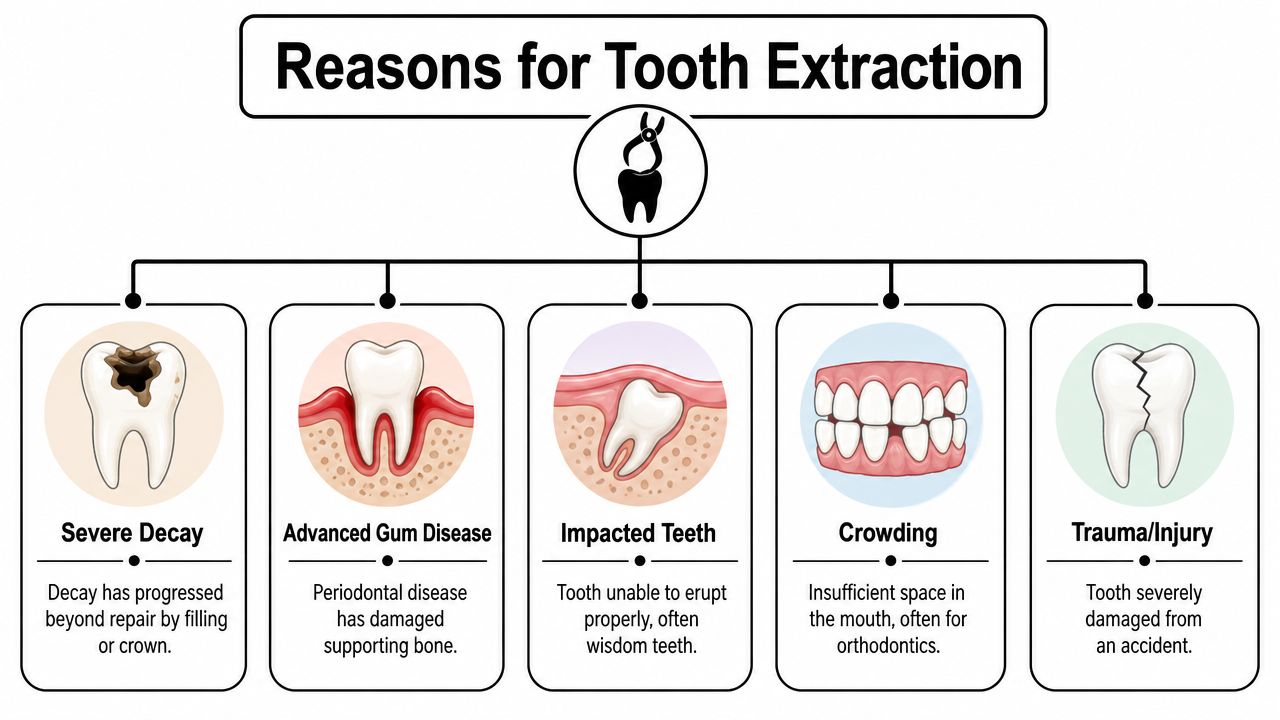
Severe decay is one of the clearest examples. If a cavity or infection has destroyed too much of the tooth structure, a filling or crown may no longer have enough healthy tooth to hold onto. In some cases, a root canal can still save the tooth. In others, the damage extends too far below the gumline or too deep into the root.
Advanced gum disease can also make extraction necessary. Teeth depend on surrounding bone and gum tissue for support. When periodontal disease breaks down that support, a tooth may loosen, shift, or become uncomfortable to bite on. Even if the tooth itself isn't badly decayed, the foundation may no longer be strong enough to keep it.
Trauma changes the picture quickly. A tooth can crack from an accident, sports injury, or biting force. Some fractures are repairable with restorative dentistry. Others split the tooth in a way that can't be rebuilt safely.
Impacted teeth are another category. Wisdom teeth are a common example, but any tooth that can't erupt properly may press against nearby teeth, stay trapped under the gum, or contribute to infection and discomfort.
Crowding can also lead to planned extraction in orthodontic treatment. If there isn't enough room for the teeth to move into healthier positions, removing one or more teeth may create the space needed for Invisalign or Six Month Smiles to work effectively.
Practical rule: An extraction recommendation should make sense when you hear it in plain language. You should understand what is damaged, why it can't be predictably fixed, and what replaces it.
Removing a tooth doesn't just take away a problem tooth. It can stop active infection, remove a source of pain, and create a healthier starting point for restorative treatment.
A dentist may recommend extraction when a tooth is causing or contributing to:
The key is that extraction should serve a purpose. It should improve your health, reduce risk, and support the next phase of care, whether that means a bridge, denture, or dental implants near me search that leads to a more permanent replacement plan.
Most patients feel better once they know what the appointment will be like. Fear often grows in the blank spaces. A clear process replaces that uncertainty with something more manageable.
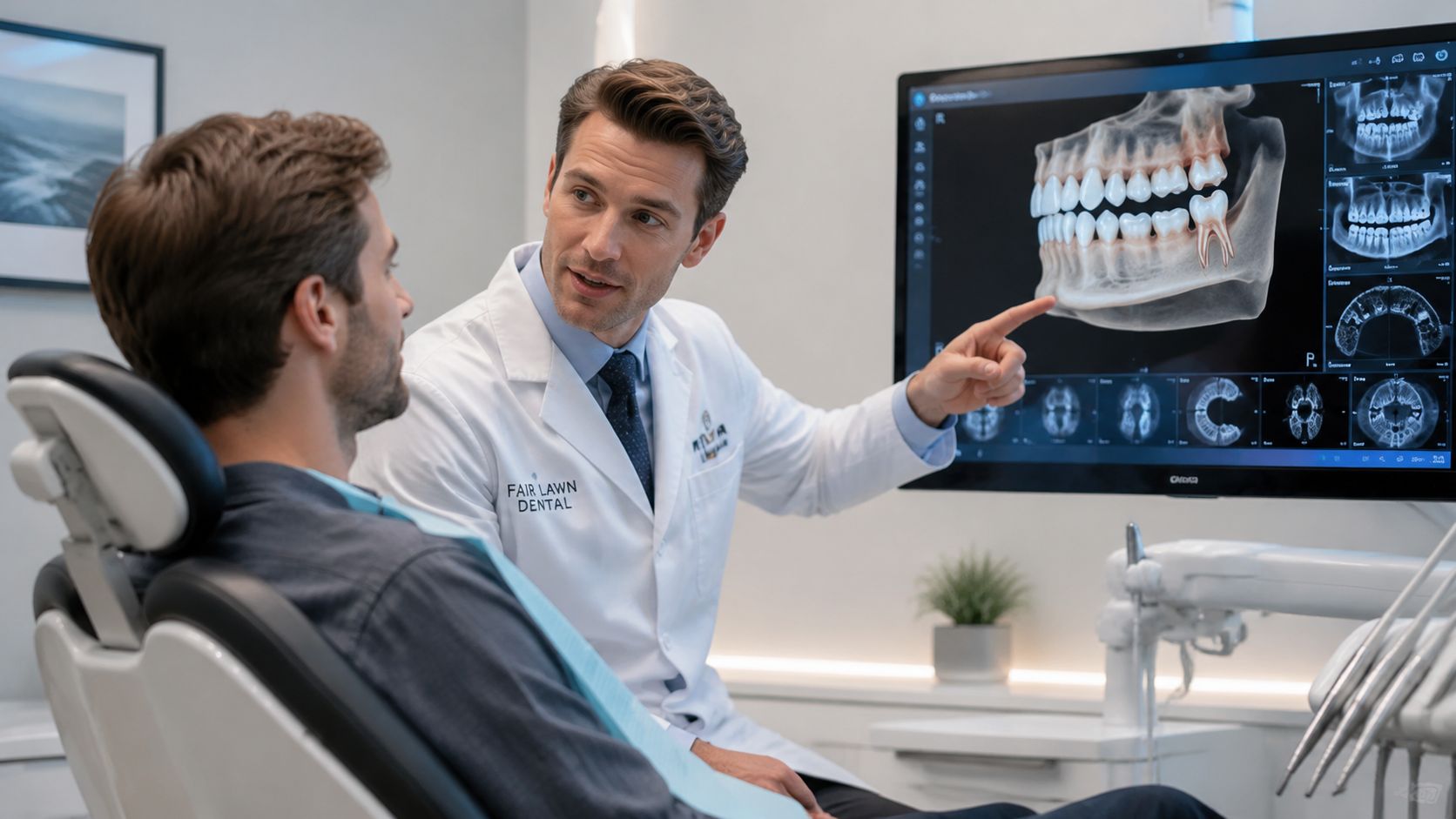
The visit starts with an exam and dental x-rays. In some cases, digital scans or more advanced imaging help show the shape of the roots, the condition of the surrounding bone, and the safest way to remove the tooth. This is also when symptoms are reviewed. Pain when biting, swelling, mobility, drainage, and the history of the tooth all matter.
If the tooth is infected or broken, the team looks at more than the tooth itself. They look at your bite, the neighboring teeth, your gum condition, and whether a same-day or delayed replacement plan makes more sense. That's especially important if you're also considering implants, a bridge, or a cosmetic restoration later.
For anxious patients, the discussion about comfort should happen early, not as an afterthought. Local anesthetic numbs the area so the procedure itself is controlled and comfortable. For some patients, that's enough. Others do much better with sedation dentistry, especially if they've had a difficult dental experience in the past, need a surgical extraction, or feel panicked in the chair.
Sedation can make treatment feel far more manageable. It helps patients relax, reduces anticipatory stress, and often changes how they remember the visit. That matters. People who avoid dentistry because of fear often need a care setting that actively addresses the fear instead of expecting them to push through it.
If you've been delaying treatment because you're afraid of the extraction, say that out loud. It changes how the appointment should be planned.
A simple extraction involves gently loosening the tooth and removing it with as little trauma to the surrounding tissue as possible. A surgical extraction is different. If the tooth is broken at the gumline, impacted, or difficult to access, the dentist may need to open the area more directly and remove the tooth in sections.
The goal in both cases is the same. Protect the surrounding bone and tissue whenever possible, keep the procedure controlled, and leave the site in the best condition for healing.
A closer look at patient planning often helps:
After the tooth is removed, the site is cleaned and checked. If a bone graft is appropriate for future implant placement, that may be discussed or performed as part of the surgical plan. If the area needs time to settle first, the replacement conversation can continue after early healing.
At this point, the practical instructions matter as much as the procedure. Patients need to know how to protect the blood clot, what discomfort is normal, what foods to choose first, and when to call if something doesn't feel right. That attention to detail is often what makes the experience feel calm instead of chaotic.
Once a tooth is removed, the gap becomes its own dental problem. Some patients notice it immediately because of appearance. Others notice the functional change first when chewing feels awkward or food traps in the area. Replacing the tooth helps restore balance, and the right option depends on the location of the missing tooth, the condition of the surrounding teeth and bone, your bite, your preferences, and your budget.
A dental implant replaces the root of a missing tooth and supports the visible replacement above it. For a single missing tooth, that usually means one implant topped with a crown. If several teeth are missing, implants can also support a bridge instead of placing one implant for every tooth.
This option is often the closest match to the feel of a natural tooth because it stands independently in the jaw rather than leaning on neighboring teeth. That independence is one of its strongest advantages. The teeth next to the gap don't need to be cut down the way they often do for a traditional bridge.
Implants are often a strong fit for patients who want:
Not every patient can move straight to implant placement. Some need a bone graft to rebuild support in the area. Upper back teeth sometimes require a sinus lift if there isn't enough height for stable implant placement. These are not signs that implants won't work. They're preparatory steps that help create a better foundation.
A traditional dental bridge fills the gap by anchoring a replacement tooth to crowns placed on the teeth next to it. Bridges are familiar, fixed, and often efficient for certain situations. They can work well when the neighboring teeth already need crowns, or when implant placement isn't the right fit for medical, anatomical, or personal reasons.
The trade-off is that a bridge depends on adjacent teeth for support. If those teeth are perfectly healthy, some patients prefer not to reshape them.
Removable partial dentures replace one or several missing teeth with a prosthetic that can be taken out for cleaning. Full dentures replace an entire arch when all teeth are missing. These options can restore appearance and basic function, and they remain important parts of restorative dentistry, especially when a patient wants a non-surgical approach or needs to replace multiple teeth at once.
A few practical realities matter here:
When many teeth are failing or already missing, a full-arch solution may be more sensible than replacing one tooth at a time. All-on-4 treatment uses strategically placed implants to support a complete arch of teeth. It's often considered by patients who are tired of loose dentures, dealing with multiple extractions, or looking for a more stable full-smile restoration.
A coordinated office makes a significant difference. A practice such as Dental Professionals of Fair Lawn may provide extractions, implant planning, bone grafting, sinus lift procedures, crowns, bridges, dentures, and cosmetic finishing within one broader treatment workflow. For patients, that can make decision-making simpler because the surgical and restorative pieces are being considered together.
A replacement choice should fit your mouth as it is now and also where your oral health is heading next.
Patients deciding between implants and dentures often want a side-by-side explanation that goes deeper than “fixed versus removable.” This overview of dental implants vs dentures pros and cons is useful because the better option depends on stability, maintenance preferences, anatomy, and long-term goals.
| Option | Looks & Feels | Durability | Impact on Other Teeth | Maintenance |
|---|---|---|---|---|
| Single implant with crown | Often the most natural-feeling fixed option for one missing tooth | Designed for long-term function with proper care | Usually does not require support from neighboring teeth | Brushing, flossing, and regular dental care |
| Implant-supported bridge | Stable and more natural than removable options for multiple missing teeth | Strong long-term option when implants are well planned | Reduces dependence on adjacent natural teeth | Home care around implants and routine checkups |
| Traditional bridge | Fixed and natural-looking when well matched | Reliable for many patients | Usually requires reshaping neighboring teeth | Cleaning around and under the bridge is important |
| Partial denture | Replaces several teeth but may feel bulkier at first | Can serve well, though fit may change over time | Usually rests around existing teeth rather than reshaping all of them | Must be removed and cleaned regularly |
| Full denture | Restores a full smile but may feel less natural than fixed options | Useful replacement for full-arch tooth loss | Not dependent on remaining natural teeth in a fully edentulous arch | Daily removal, cleaning, and periodic fit adjustments |
| All-on-4 full-arch restoration | Fixed full-arch replacement with greater stability than removable dentures | Built for long-term full-arch restoration when maintained well | Avoids relying on multiple compromised natural teeth | Daily hygiene and professional maintenance visits |
For a single missing tooth with healthy surrounding bone and healthy neighboring teeth, implants are often the most conservative and stable long-term option. For a patient who needs a quicker fixed option and already has heavily restored adjacent teeth, a bridge may make practical sense. For multiple missing teeth, partial dentures can restore function without surgery, while implant-supported options can provide more stability if the anatomy and budget allow.
What usually does not work well is ignoring the missing tooth for too long. Gaps invite movement, bite changes, food trapping, and more complicated decisions later. Even if replacement isn't immediate, planning for it early protects your options.
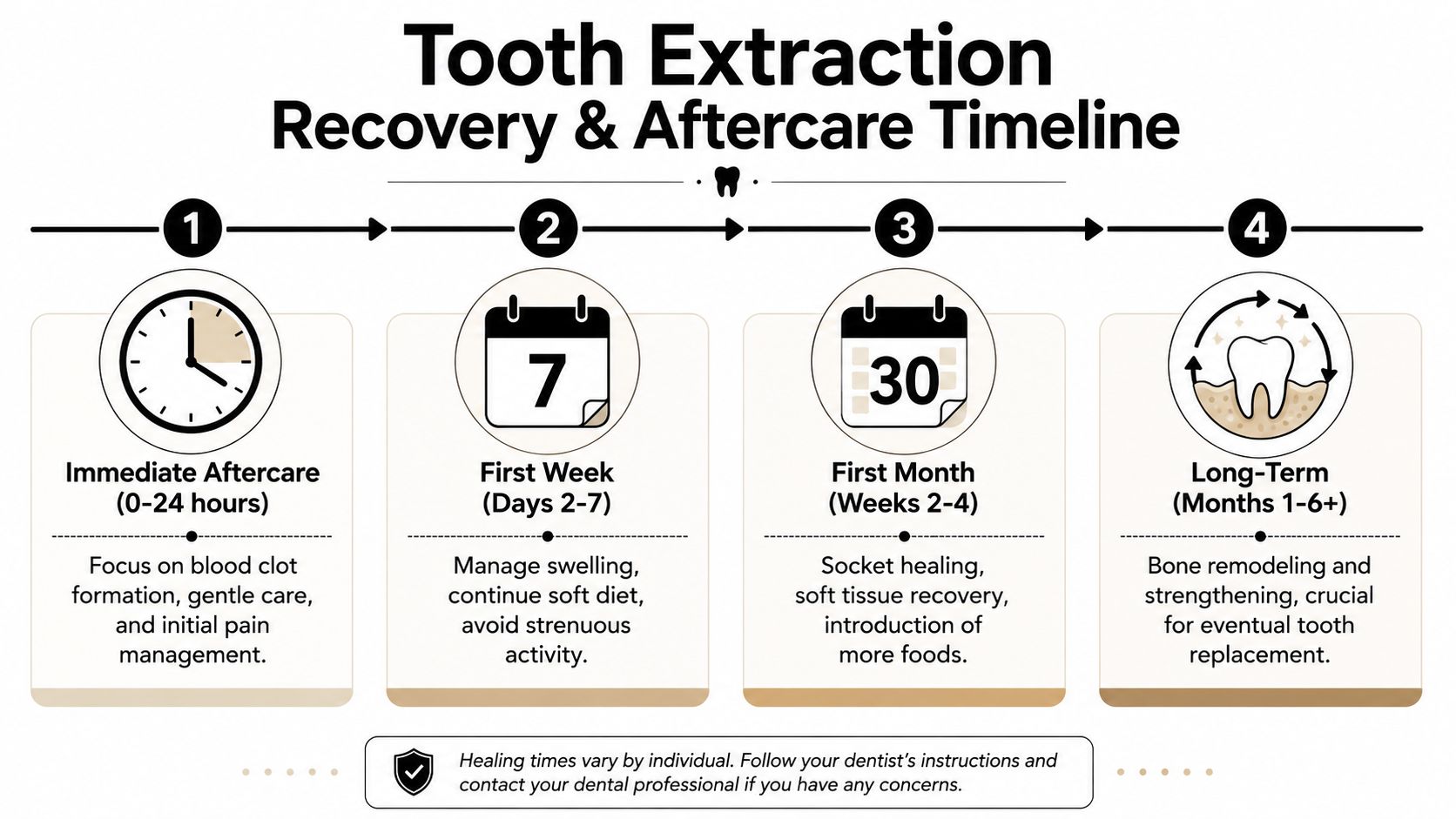
Healing after an extraction is usually straightforward when patients know what to do and what to avoid. Most problems happen when the site is disturbed too early, the blood clot is lost, or warning signs are ignored.
The first phase is all about protecting the area. Bite on the gauze as directed, rest, and avoid actions that can disrupt early healing. Vigorous rinsing, using a straw, smoking, or poking the site can interfere with clot formation and increase discomfort.
Food should stay soft and easy to manage at first. Many patients do well with lukewarm soups, yogurt, eggs, mashed foods, smoothies eaten without a straw, and other gentle options. Oral hygiene still matters, but brushing near the area should be careful and controlled.
A simple aftercare checklist helps:
Normal recovery tends to improve gradually. Sudden worsening is what usually needs a closer look.
If you want a general consumer guide on spotting early wound infection, that can help you recognize when a healing site no longer seems to be following a normal pattern. It doesn't replace direct dental advice, but it can help patients decide when to call promptly.
The extraction socket closes and settles in stages. If you're planning an implant, the bone and gum need to heal in a way that supports stable placement. Some patients are candidates for immediate treatment. Others do better with a delayed approach, especially if there was infection, bone loss, or the need for grafting.
Bridges and dentures follow a different path. Once the tissues calm down, impressions or digital scans can be used to design the restoration. With removable appliances, a period of adjustment is normal. Fit refinements are often part of the process, not a sign that something has gone wrong.
Patients concerned about preserving the ridge after removal often benefit from reading about how to prevent bone loss after tooth extraction, especially if implants are part of the long-term plan.
Healing is not one single finish line. It's a series of milestones:
The most helpful expectation is this: feeling better comes before complete healing. Just because the area feels normal doesn't always mean it's ready for the final restorative step. That's why follow-up visits and imaging matter.
Patients often ask about cost in a slightly indirect way. They may ask which option is “worth it,” or whether they can “wait a little,” when what they really want to know is how to make a good decision without getting trapped in a bad one.

The cost of tooth extraction and replacement varies with the complexity of the removal, whether sedation is used, and which replacement option you choose afterward. A simple extraction is different from a surgical extraction. A removable partial is different from a single implant. A full-arch case with grafting and guided planning is different again.
That's why one flat quote rarely tells the whole story. Good treatment planning separates the phases and explains what each part is doing. Patients should understand what they're paying for now, what may come later, and which steps are optional versus necessary.
The least expensive first step is not always the least expensive path overall. Delaying replacement can complicate the bite, create cosmetic concerns, or reduce future flexibility. On the other hand, not every patient needs the most extensive option available. The right decision balances oral health, comfort, maintenance, appearance, and financial reality.
A thoughtful consultation should include:
For extraction and implant-related treatment, provider judgment matters. Technique matters too, but judgment comes first. The clinician has to decide what can be saved, what should be removed, when grafting is advisable, and which replacement option fits your anatomy and goals.
Dr. Jody Bardash brings extensive experience to those decisions, including advanced work in implant and cosmetic dentistry. For patients in Fair Lawn, Ridgewood, and Glen Rock, that experience often shows up in practical ways. The exam is more focused. The options are explained more clearly. The sequencing tends to make more sense.
Choose the provider who can explain both the procedure and the backup plan. Dentistry is more predictable when the team has already thought two steps ahead.
Patients looking for a dentist near me or a cosmetic dentist near me often have a few final questions before they book. The answers should be direct.
Do I need a referral for a tooth extraction in Fair Lawn?
Usually, no. Many patients call directly for an exam, especially when they have pain, swelling, or a broken tooth. If another provider has already taken x-rays or recommended removal, that information can still be helpful.
How quickly can I be seen for an emergency?
That depends on the day's schedule and the severity of the problem, but urgent dental pain, swelling, and trauma should be communicated clearly when you call. If you're searching for an emergency dentist, say exactly what is happening so the team can triage appropriately.
Does insurance cover dental implants?
Coverage varies by plan. Some plans help with portions of treatment, while others may offer more support for alternative restorations such as bridges or dentures. The only reliable way to know is to review your specific benefits and treatment plan together.
What if I'm not ready for an implant right away?
That doesn't automatically close the door on implants later, but planning matters. In some cases, socket preservation or grafting can help maintain options. In others, a temporary restoration may be the right bridge between extraction and a final solution.
Will my replacement tooth look natural?
It should be planned with appearance in mind, especially in the smile zone. Shade, contour, gum shape, and the condition of neighboring teeth all influence the result. In this context, restorative and cosmetic dentistry often overlap.
Can extraction help with crowding before Invisalign or Six Month Smiles?
Sometimes, yes. If severe crowding is blocking healthy alignment, strategic extraction may be part of orthodontic planning. That decision should be made carefully, with the full bite and smile design in mind.
If your tooth is painful, broken, infected, or already loose, don't wait for the situation to “settle down” on its own. The next step is a focused exam with imaging and a real discussion of your options. That may include immediate relief, a plan for healing, and a recommendation for replacement that fits your goals.
Patients usually feel calmer once they know three things: whether the tooth can be saved, how comfort will be managed if it can't, and what replaces it afterward. Once those answers are clear, the process becomes much easier to move forward with.
If you're ready to talk through your options for tooth extraction, dental implants, bridges, dentures, or a full restorative plan, contact Dental Professionals of Fair Lawn to schedule a consultation. A clear exam, a comfort-focused approach, and a practical plan can help you get out of pain and back to a healthy, confident smile.