Tooth Colored Restoration in Fair Lawn, NJ
Get a seamless smile with a tooth colored restoration in Fair Lawn, NJ. Learn about fillings, crowns, and veneers at Dental Professionals of Fair Lawn.
Get a seamless smile with a tooth colored restoration in Fair Lawn, NJ. Learn about fillings, crowns, and veneers at Dental Professionals of Fair Lawn.
You might be reading this because you noticed something small that suddenly feels hard to ignore. A silver filling flashes when you laugh. A front tooth chipped on a fork. A back tooth feels rough when you chew, and now you're wondering whether fixing it means choosing between a natural look and something that will last.
That concern is reasonable. Most patients don't want a dental lecture. They want a clear answer to a practical question. What will look right in my smile, and what will hold up in my real life? Whether seeking a dentist in Fair Lawn, NJ, or typing things like cosmetic dentist near me, emergency dentist, or dentist near me after noticing damage, a tooth colored restoration is often part of the conversation.
A patient might come in after years of not thinking much about an old filling. Then one day they see it in a photo. Someone else notices a tiny chip on a front tooth before a family event in Ridgewood or Glen Rock and suddenly feels self-conscious every time they smile. Those moments seem minor, but they affect how people eat, speak, and carry themselves.
Modern dentistry gives us far better options than many people realize. A tooth colored restoration can repair decay, chips, worn edges, and damaged tooth structure while blending much more naturally with the rest of your smile. That matters if you want your dental work to disappear instead of announcing itself every time you talk.

People used to think of tooth-colored materials as mostly cosmetic. That changed over time as they became part of everyday restorative dentistry. In one national registry study from Taiwan, the annual ratio of composite resin fillings rose from 8.2% in 1997 to 23.7% in 2013, and dental visits for these fillings increased from 16.2% to 31.6% over the same period, showing a clear long-term move toward aesthetic materials in routine care, as reported in this longitudinal study on composite resin filling trends.
That shift matters because it reflects something patients still care about today. They want restorations that protect the tooth and look like they belong there.
A restoration shouldn't just fill a hole. It should fit your bite, your smile, and your daily habits.
In Fair Lawn, many patients are balancing appearance with function. Parents want durable treatment for busy family schedules. Adults want front teeth to look natural in work meetings and photos. Others need a practical repair after a cracked tooth, lost filling, or sudden discomfort and are searching for an emergency dentist who can make the options understandable.
If you're new to the area or looking for a dentist in Fair Lawn, NJ who offers restorative dentistry, cosmetic dentistry, cleaning and exams, dental x-rays, and new patient exams under one roof, it helps to know that tooth-colored care isn't one single treatment. It's a category of solutions. The right one depends on where the tooth is, how much structure is missing, and how hard that tooth works every day.
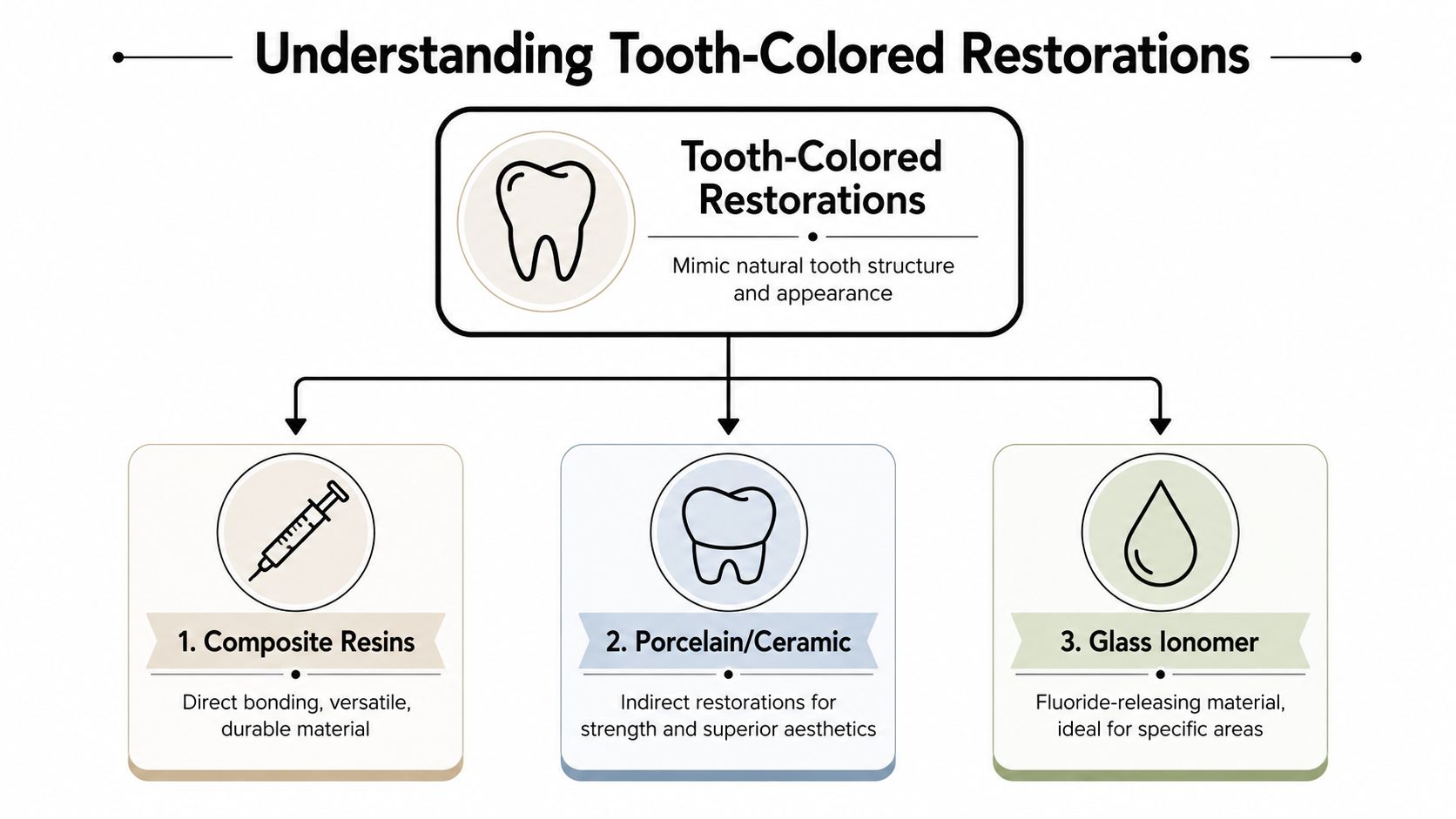
A tooth-colored restoration is a repair designed to mimic the look and function of natural tooth structure. Instead of placing a dark material that stands out, the dentist uses a material chosen and shaped to blend with your own tooth.
That sounds simple, but patients often get confused here. Many people think every tooth-colored repair is just a “white filling.” Sometimes it is. Sometimes it isn't. The term can include direct fillings, bonding, ceramic inlays, onlays, crowns, veneers, and certain glass ionomer materials depending on the situation.
Think of a cracked porcelain vase. You wouldn't patch it with something dark and bulky if you wanted it to look whole again. You'd want a repair that bonds well, matches the surface, and restores the shape. Teeth work the same way, except they also need to handle pressure from biting and chewing.
For direct tooth-colored restorations, resin-based composites are the standard esthetic material because they combine an organic polymer matrix with inorganic filler particles and a coupling agent, giving the restoration an adhesive bond and natural tooth color. The ADA also notes an important limitation. Large restorations are more prone to staining or discoloration, and composites aren't the preferred choice for high-load or very large posterior cases, as explained in the ADA overview of materials for direct restorations.
Here are the questions I hear most often:
The philosophy of modern restorative dentistry becomes clearer: we don't just fill space. We rebuild a damaged part of the tooth in a way that respects how that tooth looks and works.
Practical rule: The smaller and simpler the problem, the more likely a conservative bonded restoration may work well. The larger and heavier the stress on the tooth, the more carefully material choice matters.
Patients looking for restorative dentistry, cosmetic dentist near me, or even teeth whitening sometimes discover that what they need first is a repair that restores shape, strength, and confidence.
Not every damaged tooth needs the same fix. A tiny cavity, a broken corner, and a heavily worn molar may all be tooth-colored restorations, but they are not the same treatment. The best choice depends on how much tooth is left, where the tooth sits, and what you expect from it every day.
For small to medium areas of decay, a composite filling is often the most conservative option. The material is placed directly into the tooth, shaped, and cured during the visit. It works well when the goal is to remove decay and restore a natural appearance without covering the whole tooth.
Dental bonding uses similar tooth-colored material, but the purpose is often more cosmetic. If you have a chipped front tooth, a small gap, or an edge that looks uneven, bonding can reshape the tooth in a subtle way.
A simple way to conceptualize this:
| Situation | Common tooth-colored option |
|---|---|
| Small cavity | Composite filling |
| Minor chip on a front tooth | Bonding |
| Worn edge that needs reshaping | Bonding or composite repair |
If you're comparing options for a filling, this page on teeth-colored fillings gives a practical overview of one common direct restoration choice.
When a back tooth has more damage than a routine filling should handle, but it may not need a full crown, an inlay or onlay can be a middle-ground solution. These are often made from ceramic and are designed to fit a prepared part of the tooth more precisely than a basic filling.
Patients often understand this once they hear the difference in plain terms. A filling repairs part of the tooth directly. An inlay or onlay is a more structured restoration used when the damage is broader, especially on chewing surfaces.
This can be useful when someone says, “I don't want a crown if I don't need one, but I also don't want something too small for the job.”
A tooth that is broken down, cracked, or weakened may need an all-ceramic crown. This covers the visible part of the tooth and protects it more completely.
Crowns are often the right conversation when:
Veneers are thinner ceramic coverings typically used on front teeth when the main concern is appearance. They can improve shape, color, surface irregularities, and minor spacing issues. They are not the answer for every problem, but for the right smile goals, they can create a more uniform result than spot repairs alone.
This is one of the most misunderstood parts of cosmetic and restorative care. Matching the shade is only one piece of the result. Successful esthetics depend on more than color selection. The restoration has to reproduce natural tooth structure and contour, not just the visible shade. If a restoration isn't properly shaped, it can look more like a crown than a natural tooth, which is why polishing and finishing matter so much, as discussed in this clinical article on esthetic contour and tooth form.
A natural-looking restoration is part material choice and part craftsmanship. Color alone doesn't make it disappear.
That's why a practical consultation matters more than guessing from photos online. Some patients need the smallest repair possible. Others need something stronger. The right answer is not the most cosmetic option or the biggest option. It's the one that fits your specific tooth and lifestyle.
Patients often feel more comfortable once they know what happens during the appointment. Tooth-colored treatment is usually more straightforward than patients expect, especially when the plan is explained in simple steps.
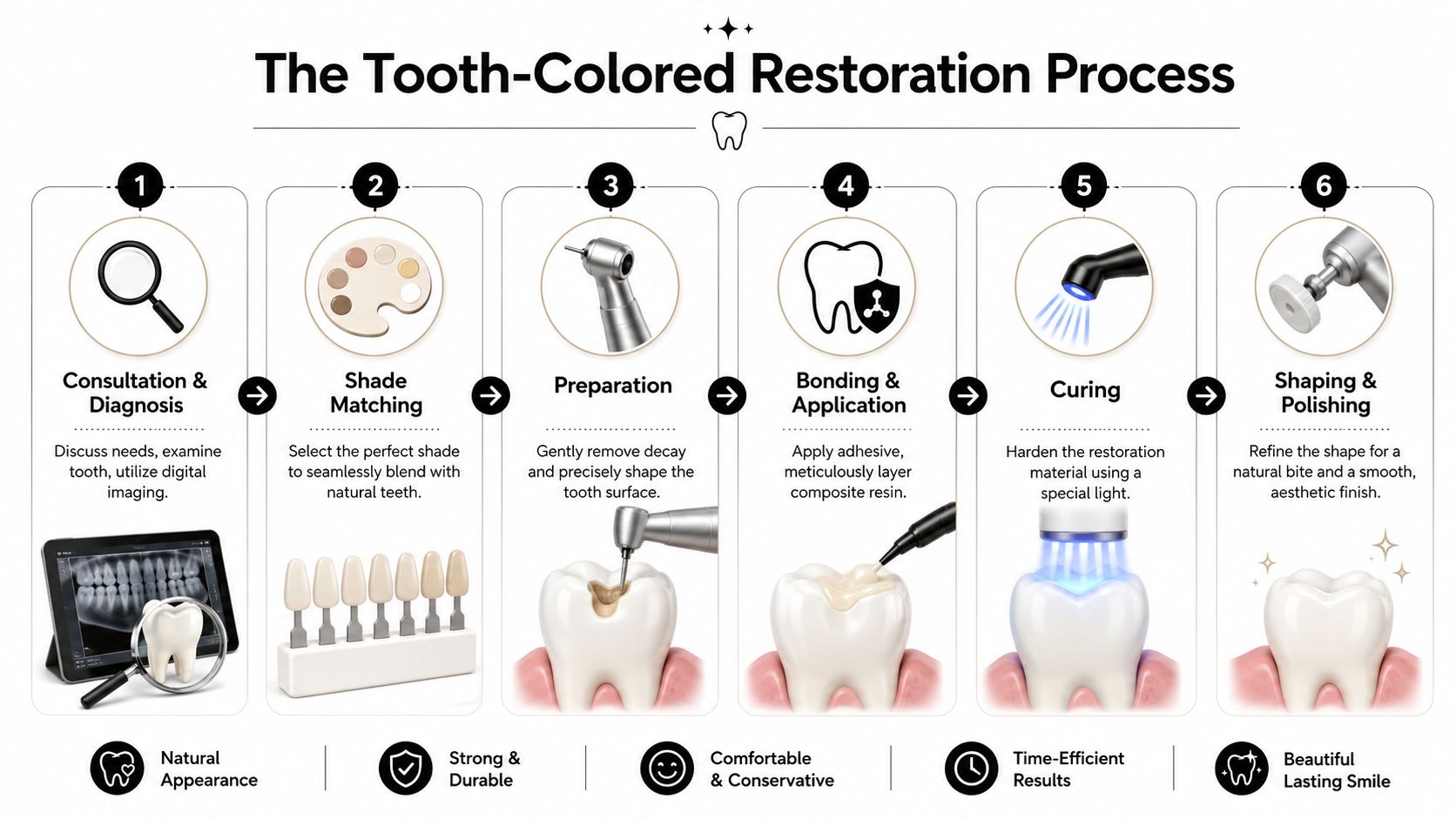
The visit starts with an exam, discussion of symptoms, and imaging if needed. If you're a new patient looking for a dentist near me in Fair Lawn, this is also when we review whether the issue is decay, wear, a fracture, an old filling breaking down, or a cosmetic concern.
Then we look at shade, shape, and function. If the tooth is visible when you smile, esthetics matter a lot. If it's a molar, bite forces become a bigger part of the decision.
The damaged or decayed part of the tooth is gently cleaned away. Then the surface is prepared to help the material bond. A key technical advantage of modern restorations is the etch-and-bond workflow. The tooth surface is microscopically roughened with an etchant to increase micromechanical retention, then the resin is placed in layers and light-cured, which improves marginal adaptation and allows the clinician to control final contour precisely, as described in this explanation of tooth-colored restoration treatment steps.
That layered approach is one reason these restorations can look so natural. It lets the dentist build the shape gradually instead of placing one single lump of material.
To see a patient-friendly overview of a closely related cosmetic repair, this article on how teeth bonding works helps explain the basics.
A short visual can make the process easier to picture:
Once the material is cured, the restoration is adjusted, refined, and polished. During this process, comfort and appearance converge. The bite has to feel right. The edges have to feel smooth. The contour has to blend with the rest of the tooth.
Patients are often surprised that the end of the appointment can feel almost artistic. That's because it is. Even a small restoration should fit your bite without feeling bulky or “high,” and it shouldn't catch your eye every time you look in the mirror.
A lot of patients ask a very reasonable question after we review an older silver filling. Is the main difference just color, or is there more to it? There is more to it, and the better choice depends on what matters most for that tooth: appearance, strength under pressure, or a balance of both.
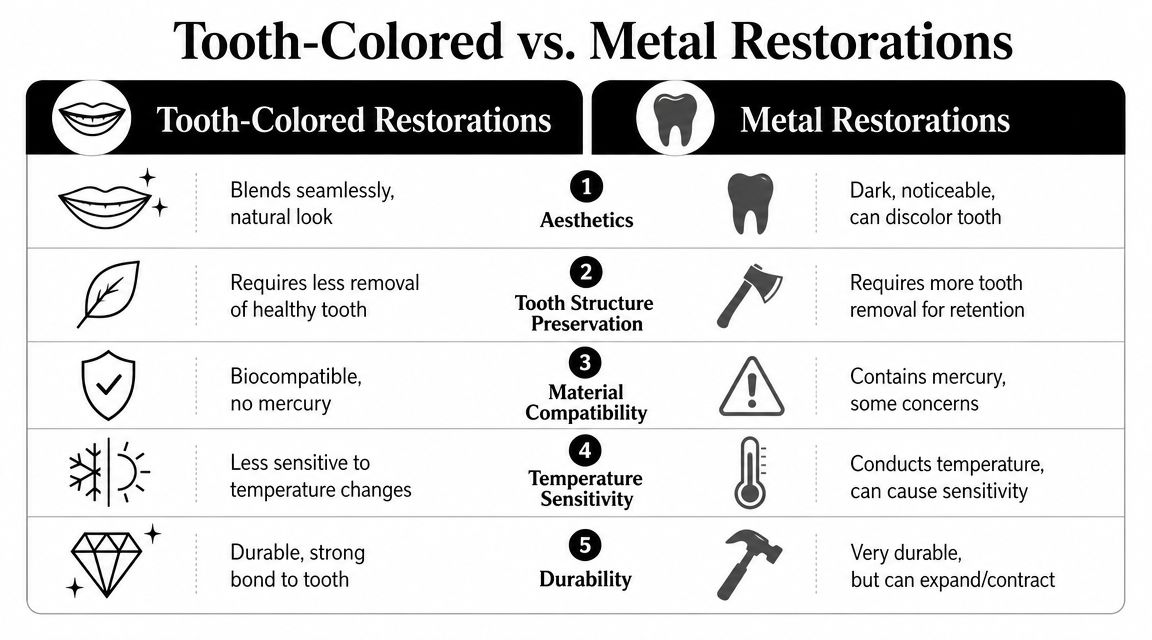
The visual difference is easy to understand. A tooth-colored restoration is matched to your natural tooth, so it tends to blend in when you smile, laugh, or speak. Metal restorations are more noticeable, especially as the mouth opens wider or light hits the tooth from the side.
That alone can shape a person's comfort level. A front tooth repair usually has a higher cosmetic priority. A back tooth may be less visible, but many patients still prefer a restoration that does not stand out every time they look in the mirror.
Function matters just as much as appearance. Tooth-colored materials bond to the tooth, which can allow a more conservative repair in many situations. Older metal fillings often depended more on shape and retention features to stay in place.
A simple way to look at it is this. Front teeth usually ask for a material that disappears into the smile. Back teeth ask a tougher question: can this restoration handle repeated chewing forces well in this specific spot? The right answer is not always the same for every tooth.
| Concern | Tooth-colored restoration | Metal restoration |
|---|---|---|
| Smile appearance | Blends with the tooth | More visible and darker |
| Tooth preservation | Often supports a more conservative bonded approach | May require a different retention design |
| Feel in photos and conversation | More discreet | Easier to notice |
| Best use | Depends on location, size, and bite forces | Depends on clinical situation |
That last row is the one I want patients to focus on. Choosing a restoration is a little like choosing shoes. What works beautifully for a wedding does not always make sense for a construction site. In dentistry, a small chip on a front tooth and a large repair on a molar can call for different solutions, even if both are technically tooth-colored options.
Patients often choose tooth-colored restorations for a mix of personal and practical reasons:
At Dental Professionals of Fair Lawn, that balance is a big part of the conversation. Some older metal fillings are still doing their job and do not need to be replaced just because they are old. Others may have wear, leakage, cracks around the edges, or cosmetic concerns that make replacement worth discussing.
The goal is not to replace metal automatically. The goal is to choose the right restoration for your specific smile and lifestyle. A consultation helps us look at the tooth itself, how hard it works when you chew, and how important a natural appearance is to you before we recommend anything.
The honest question is usually not “Will it look good?” It's “How long will it last?” That answer depends on the size of the restoration, where it sits, how you bite, and how well you care for it.
Front teeth and back teeth don't live under the same conditions. A small bonded repair on a front edge may mainly face light function and visibility concerns. A molar handles repeated chewing force every day, especially if you clench or grind.
That difference is why material choice matters so much. An evidence review found that direct composite restorations in first molars had an annual failure rate of 5.4%, while some indirect composite restorations in high-wear situations showed higher failure rates. The same review also reported an overall 28% failure rate over three years for indirect cusp-coverage composite restorations in one randomized trial, with fracture and complete loss as common failure modes, as summarized in this evidence-based review of longevity in tooth-coloured restorations.
That doesn't mean tooth-colored care is a poor choice. It means the right restoration has to match the job.
A few habits make a real difference:
A tooth-colored restoration can look beautiful on day one, but long-term success depends on choosing the right material for the right tooth and maintaining it well afterward.
For patients in Fair Lawn who want realistic guidance, that's the most important point. The goal isn't to promise that every restoration behaves the same. The goal is to choose wisely and care for it so your smile stays comfortable, functional, and natural-looking.
Choosing a tooth colored restoration isn't about picking the prettiest material on a menu. It's about matching the repair to the tooth, your bite, your goals, and your daily habits. A front tooth chip, a worn molar, and a failing old filling deserve different answers.
If you're looking for a dentist in Fair Lawn, NJ who can help you sort through restorative dentistry and cosmetic dentistry options without making the process confusing, a consultation is the best next step. Dr. Jody Bardash and the team provide care for patients in Fair Lawn, Ridgewood, Glen Rock, and nearby communities who may also be exploring services like Invisalign, Six Month Smiles, dental implants, tooth extraction, emergency dentist visits, and complete smile updates.
For readers who are also curious how dental practices communicate treatment options clearly online, this roundup of proven dental marketing strategies offers useful perspective on how patient education and trust-building work before someone ever books an appointment.
Dental Professionals of Fair Lawn offers one practical path for patients comparing fillings, bonding, veneers, crowns, and other restorative solutions in a single office setting. The most useful recommendation still comes after an exam, because that's when the decision can be based on your actual tooth rather than a general description on the internet.
If something in your smile has been bothering you, don't wait for it to become a bigger problem. Whether your priority is appearance, comfort, function, or all three, getting a professional opinion can save time and reduce uncertainty.
If you're ready to talk through your options for a tooth-colored restoration, cosmetic repair, or restorative dental care, contact Dental Professionals of Fair Lawn to schedule your consultation. A personalized exam can help you decide what makes the most sense for your smile, your bite, and your long-term oral health.