How Does Teeth Bonding Work? A Fair Lawn, NJ Guide
Curious how does teeth bonding work? Our Fair Lawn cosmetic dentists explain the simple, one-visit process to fix chips, gaps, & stains. Get a perfect smile.
Curious how does teeth bonding work? Our Fair Lawn cosmetic dentists explain the simple, one-visit process to fix chips, gaps, & stains. Get a perfect smile.
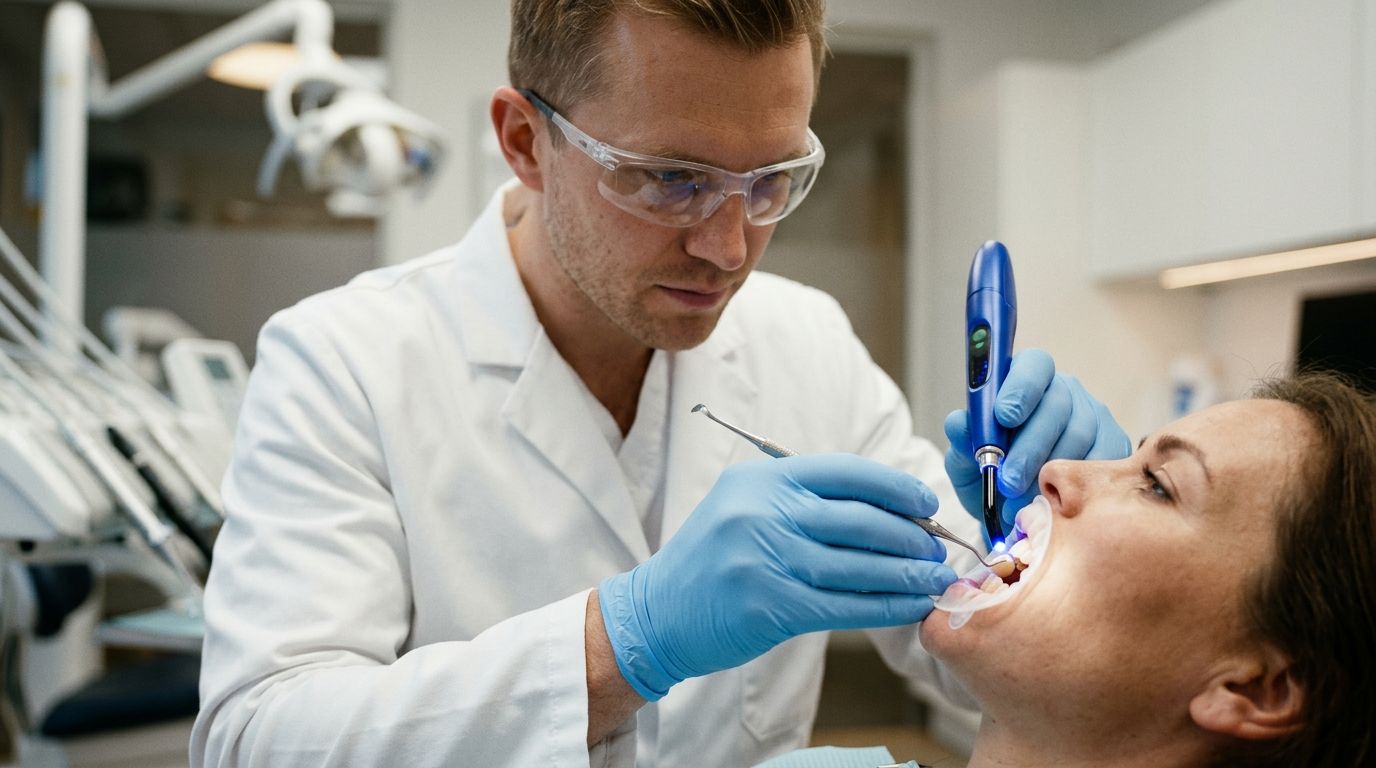
A lot of people ask about bonding after staring at one small flaw for months or even years. It might be a tiny chip from biting into something hard, a narrow space between front teeth, or one tooth that looks darker or slightly misshapen in photos. The problem may be minor, but it can pull your attention every time you smile.
If that sounds familiar, you’re not alone. Many families and adults looking for a cosmetic dentist near me or a dentist in Fair Lawn, NJ want a solution that looks natural, feels comfortable, and doesn’t require major dental work. Bonding often fits that need because it can improve a smile quickly while keeping your natural tooth largely intact.
You notice it in the bathroom mirror first. A front tooth catches the light differently because of a small chip. Or maybe there’s a slight gap that never used to bother you, but now it’s the first thing you see in every selfie. These are the kinds of concerns patients from Fair Lawn, Ridgewood, and Glen Rock often bring up when they visit a cosmetic dentist.
In many cases, the answer isn’t a long, complicated treatment plan. It’s dental bonding, a simple cosmetic dentistry option that can repair small flaws and help your smile look balanced again. If you’ve been wondering how does teeth bonding work, the short version is that your dentist places a tooth-colored material directly on the tooth, shapes it carefully, and polishes it so it blends in naturally.
What makes bonding appealing is how personal the process feels. This isn’t just filling space on a tooth. It’s part science and part artistry. Your dentist looks at your smile line, tooth shape, color, and facial features, then sculpts the material so the result looks like your tooth always belonged that way.
Small smile changes can have an outsized effect on confidence, especially when the flaw is on a front tooth.
For patients searching for a dentist near me because they want fast cosmetic improvement without a dramatic procedure, bonding is often one of the first options worth discussing. It can also be part of a larger smile plan that includes teeth whitening, cleaning and exams, or other cosmetic dentistry services. The key is knowing what bonding can do, how it works, and whether it fits your goals.
Dental bonding is a cosmetic treatment that uses tooth-colored composite resin to repair or reshape a tooth. Much like a sculptor restoring a small corner of a statue, the material starts soft enough to shape, then hardens into place so it becomes part of the tooth’s new contour.
The resin doesn’t just sit on the outside like paint. Your dentist first prepares the tooth surface so the material can grip it securely. According to WebMD’s overview of dental bonding, the enamel is etched with a gel that creates a microporous surface and can increase surface area by up to 10-fold, helping the resin form a strong interlock. That bond strength averages 20 to 25 MPa on enamel, and the resin is cured in layers with a special light in 20 to 40 seconds per layer.
In plain language, that means the tooth is given a textured surface that helps the bonding material hold on. Then the resin is placed in layers and hardened with a curing light until it becomes durable enough for normal use.
Bonding is usually a good fit for smaller cosmetic changes, especially on visible teeth. Common reasons patients ask about it include:
Bonding often works well for people who want a conservative cosmetic fix and don’t need a full restoration. It’s especially appealing if you want improvement without removing much natural tooth structure.
You may be a strong candidate if:
Practical rule: Bonding is best when the problem is small, but the confidence boost could be big.
If a tooth is badly weakened, heavily damaged, or under strong biting pressure, another option may make more sense. That’s why a consultation matters. A trusted dentist in Fair Lawn, NJ will look at both the appearance of the tooth and how it functions before recommending bonding.
You arrive at our Fair Lawn office with one tooth that keeps catching your eye in photos. Maybe it has a small chip, a narrow gap next to it, or an edge that looks uneven. By the end of the visit, that same tooth can look balanced and natural again, often without shots, heavy drilling, or a drawn-out recovery.
What surprises many new patients is how hands-on and collaborative bonding feels. This is not a case of sitting still while a lab makes all the decisions somewhere else. You and your dentist choose the look together, then refine it step by step on the tooth itself.
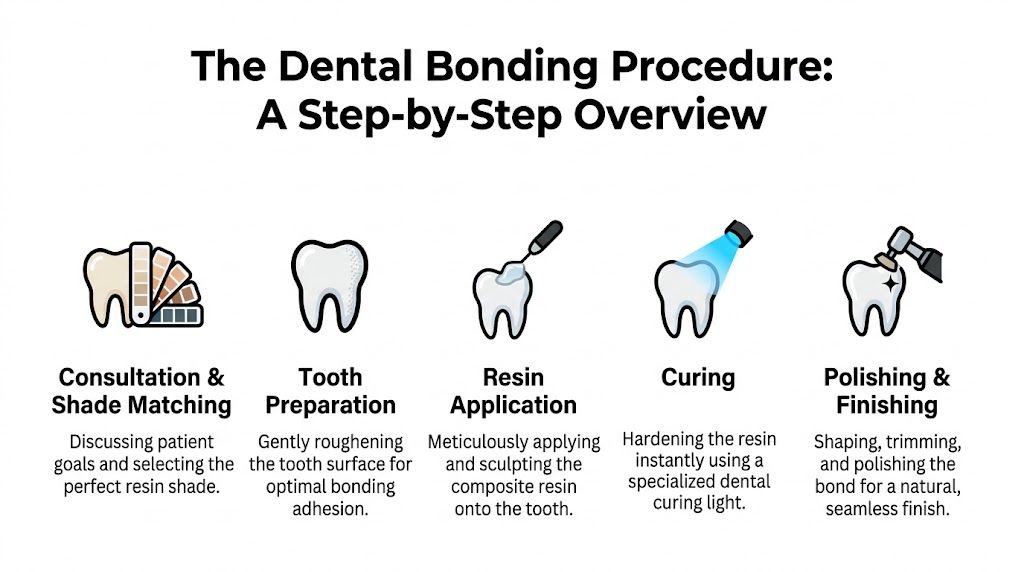
The appointment begins with a close conversation and a close look. You show us what bothers you. We examine the tooth from different angles, look at how it fits your smile, and talk about what kind of change will look believable, not overdone.
Shade matching happens early because color is only part of what makes bonding disappear into a smile. Natural teeth have depth, brightness, and tiny variations. Composite resin works like sculptable enamel. We select a shade that blends with the surrounding teeth so the final result looks like your tooth, just improved.
If you are worried about ending up with a tooth that looks too white or too flat, this is the stage where that concern gets addressed.
Next, the tooth is prepared so the bonding material can grip properly. In plain terms, the surface is lightly conditioned. The enamel is gently textured and a bonding liquid is placed to help the resin attach.
Patients often expect this part to feel much more involved than it is. For small cosmetic bonding cases, very little natural tooth structure needs to be changed. That conservative approach is one reason bonding appeals to patients who want a visible improvement without a bigger procedure.
Then the artistic part begins. The tooth-colored resin is applied directly to the area being improved, and your dentist shapes it by hand to rebuild what is missing or refine what feels out of balance.
A good way to picture this is clay work on a very small scale, except every adjustment has to match the neighboring teeth in length, contour, and light reflection. Closing a gap is not just about adding material. Repairing a chip is not just about filling a space. The shape has to suit your face, your bite, and the way the other front teeth move together when you smile.
That is why tiny changes can make such a big visual difference.
Here’s a visual overview of that sequence in motion:
Once the shape looks right, a curing light is used to harden the resin. The light sets the material quickly, which allows the visit to keep moving without waiting on a temporary or a lab-made piece.
For many patients, this is the moment when bonding starts to feel real. The improvement is no longer a plan. It is already taking form in the chair.
After the resin is hardened, the last phase is refinement. We smooth the surface, adjust the edges, and check your bite carefully so the bonded tooth feels comfortable when you close, speak, and chew. This finishing stage matters because a bond can look beautiful in the mirror but still feel wrong if the edge is too thick or the bite lands too hard on it.
At Dental Professionals of Fair Lawn, the collaboration comes full circle. We want the tooth to look right, but also to feel right. You may be asked to bite down, slide your teeth gently, and look at the shape from different angles before the final polish.
The finishing details usually include:
Patients often leave this visit relieved by how simple it felt. The change is visible right away, and the process is usually much easier than they expected.
You see the change the same day. That immediate reveal is part of why bonding feels so satisfying for many patients in our Fair Lawn office. A small chip can disappear. A tooth that looked slightly too short or uneven can look balanced again. A space that kept drawing your eye can soften or close enough that your whole smile feels more harmonious.
The best bonding does not announce itself. It blends into your smile the way a careful paint touch-up blends into a wall. You should notice the overall improvement, not a single tooth that looks different from the rest.
That natural look comes from a mix of planning and artistry. We do not just place material and stop there. We shape the resin to fit your features, choose a shade that works with the surrounding enamel, and polish the surface so it reflects light in a natural way.

For patients searching for a cosmetic dentist near me, that is often the pleasant surprise. Bonding can improve a smile quickly, but the goal is never a rushed or artificial look. The goal is a result that feels like your tooth always belonged that way.
Bonding holds up well, but it does not last forever. As noted earlier, many bonded teeth stay in good shape for years with thoughtful care. How long your result lasts depends less on luck and more on where the bonding is placed and how that tooth is used every day.
A bonded edge on a front tooth may last nicely if you are gentle with it. The same kind of bonding can wear down sooner if you bite your nails, chew ice, tear open packages with your teeth, or clench and grind at night. Resin is strong, but it is not as wear resistant as porcelain or natural enamel in every situation.
A simple way to think about longevity is this: bonding does best when you treat it like a repaired corner on a favorite piece of furniture. It looks beautiful and functions well, but it will last longer if you do not keep knocking it into hard surfaces.
Regular cleanings, a well-adjusted bite, and a night guard for grinding can all help protect the result.
Cost is another reason bonding comes up so often during cosmetic consultations. In many New Jersey practices, bonding is one of the more budget-friendly ways to improve shape, repair a chip, or make a small spacing issue less noticeable. Veneers and crowns usually involve a larger investment because they require more planning, more material, and often more than one step.
The final fee depends on the number of teeth involved, the size of the repair, and the level of detail needed to make the result blend naturally. A tiny chip repair is a different project from reshaping several front teeth so the smile looks even from side to side.
At Dental Professionals of Fair Lawn, we walk patients through those choices clearly before treatment starts. That conversation matters because bonding is often both a dental procedure and a design decision. You are not just paying for material. You are paying for judgment, shaping, color matching, and the kind of finishing work that makes the tooth look right when you talk, smile, and sit in natural light.
If the bonding also repairs damage rather than improving appearance alone, insurance may help in some cases. Coverage varies by plan, so it is always worth asking your dental office to review the details with you before the appointment.
Bonding is a smart option for many smiles, but it’s not the right answer for every tooth or every goal. The best way to evaluate it is to look at the trade-offs objectively.
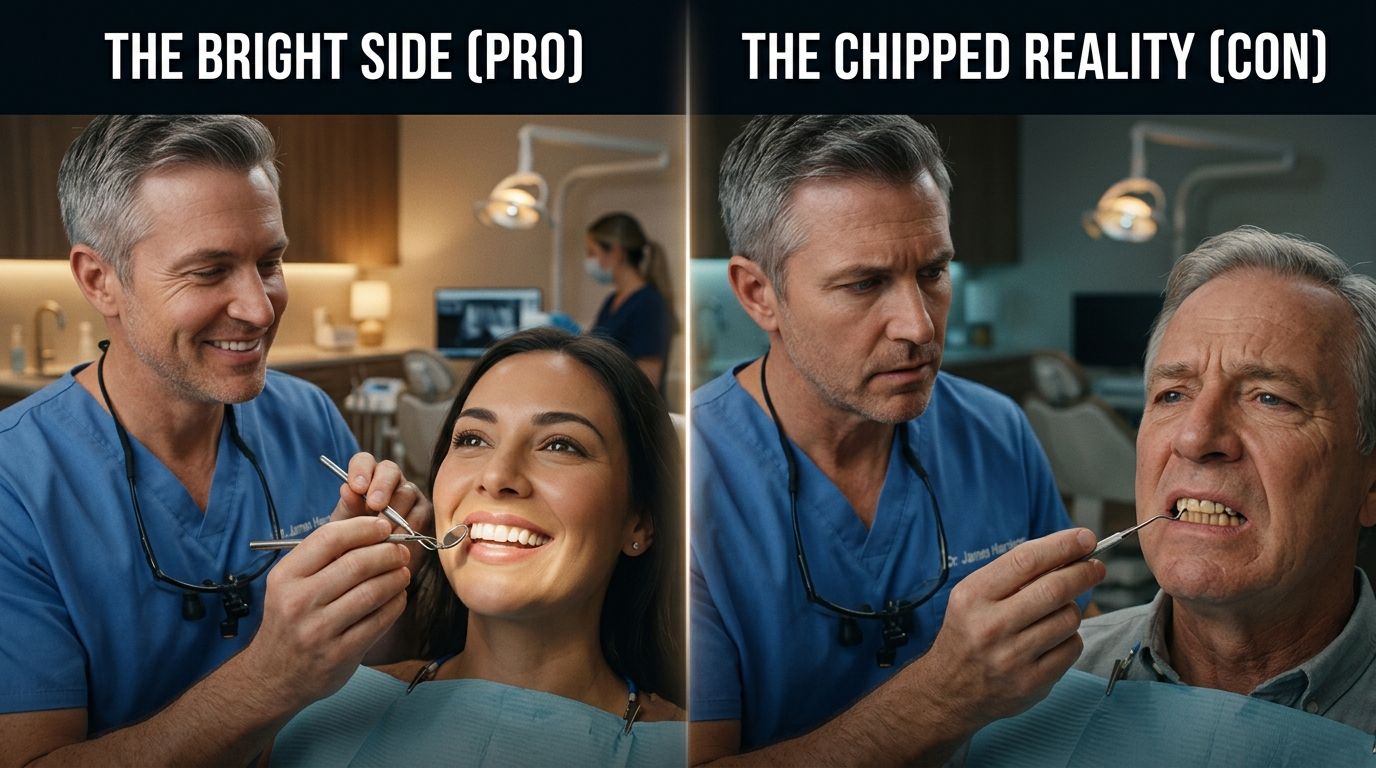
For the right case, bonding offers several clear advantages.
The main limitations aren’t failures. They’re planning considerations.
Bonded resin can stain over time, especially if you drink coffee, tea, or red wine regularly or use tobacco. It also isn’t as strong or as wear-resistant as porcelain, so some patients will need touch-ups or replacement sooner than they would with other cosmetic materials.
If your goal is to fix one small flaw directly and conservatively, bonding can be excellent. If your goal is a more dramatic, broader redesign of the smile, another treatment may fit better.
| Consideration | Bonding is often a good fit when | Another option may fit better when |
|---|---|---|
| Scope of change | You want to fix one or two small flaws | You want to change many front teeth at once |
| Tooth structure | The tooth is healthy and mostly intact | The tooth is weakened or heavily damaged |
| Timeline | You want a quick result | You’re planning a larger smile makeover |
| Maintenance mindset | You’re comfortable with occasional upkeep | You want a material known for stronger stain resistance |
Patients searching for a dentist near me often appreciate this middle ground. Bonding isn’t oversold as perfect. It’s recommended when it matches the tooth, the bite, and the cosmetic goal.
Bonding is only one way to improve a tooth. Depending on what you want to fix, your dentist may also talk with you about porcelain veneers or dental crowns. These treatments can solve similar problems, but they do so in different ways.

Bonding is applied directly to the tooth and shaped in the office. Veneers are thin custom shells that cover the front surface of the tooth. In general, veneers are chosen when someone wants a more extensive cosmetic change in color, shape, or uniformity across several front teeth.
Bonding usually involves less alteration to the tooth. Veneers, on the other hand, may be the better fit when a patient wants a broader smile transformation with porcelain. If you’re considering that route, this page on porcelain veneers in New Jersey gives a closer look at how veneers are used.
A crown covers the entire visible portion of the tooth. That makes it less of a cosmetic touch-up and more of a full restoration. If a tooth is badly broken, structurally weak, or heavily filled, a crown may provide support that bonding is unable to.
Bonding works best when the tooth is in good condition and just needs refinement. Crowns are often reserved for situations where strength and protection are as important as appearance.
Here’s a practical way to compare the three options.
| Feature | Dental Bonding | Porcelain Veneers | Dental Crowns |
|---|---|---|---|
| Best use | Minor chips, gaps, shape changes, select stains | More comprehensive cosmetic changes on front teeth | Teeth needing major protection or restoration |
| Tooth preparation | Minimal | More than bonding | More extensive than bonding or veneers |
| Material style | Composite resin placed directly on tooth | Custom porcelain shell | Full tooth-shaped covering |
| Number of visits | Often one visit | Usually more than one visit | Usually more than one visit |
| Cost | Lower upfront range | Higher than bonding | Varies by restorative need |
| Strength focus | Cosmetic correction with conservative treatment | Cosmetic durability and appearance | Strength, protection, and restoration |
The right choice depends less on which treatment is “better” and more on what your tooth actually needs.
For some patients, bonding is the clear answer. For others, veneers or crowns create a result that’s more predictable for their long-term goals.
Choosing a treatment is only part of the decision. You’re also choosing who will shape your smile, how carefully they listen, and whether you feel comfortable in the chair. That matters with cosmetic work, because the details matter.
Dr. Jody Bardash brings decades of clinical experience to cosmetic and restorative care, and patients who want to learn more about the team can visit the practice background and doctor information page. For bonding, the appointment tends to feel collaborative. You point out what you dislike, the dentist evaluates what’s realistic, and the final shape is guided by both function and aesthetics.
At a family and cosmetic practice in Fair Lawn, patients often want three things at once. They want the tooth to look natural, they want the process to feel manageable, and they want honest advice if bonding isn’t the ideal solution.
That patient-first approach is especially important for people who feel anxious about dental visits. Sedation options can help some patients relax during care, and a calm pace in the room often makes a big difference too.
When people search for a dentist in Fair Lawn, NJ, they often read reviews before they ever call. If you’re curious how dental practices build trust online and why patient feedback shapes local decisions, this overview of dental reputation management gives useful context.
Dental Professionals of Fair Lawn serves patients from Fair Lawn, Ridgewood, Glen Rock, and nearby New Jersey communities with preventive care, cosmetic dentistry, restorative dentistry, Invisalign, Six Month Smiles, emergency dentist visits, and services that range from tooth extraction to dental implants near me searches. Bonding is one option within that broader care model, which helps when a patient needs more than a cosmetic touch-up.
A consultation is where the decision gets clear. Sometimes bonding is exactly right. Sometimes another treatment protects the tooth better. Good cosmetic dentistry starts with that honesty.
No. Bonding material doesn’t respond to whitening the way natural enamel does. If you’re thinking about whitening your smile, it often makes sense to discuss that before bonding so the resin can be matched to the shade you want.
In many cosmetic cases, bonding is considered a conservative and often reversible option because the tooth usually needs very little preparation. Whether it’s fully reversible depends on how much adjustment the tooth needed at the start.
Treat bonded teeth like natural teeth, but be a little more careful with habits that can damage edges or surfaces.
It can be. Bonding is often a practical option for younger patients with small chips or minor cosmetic concerns because it’s conservative and can usually be completed without major treatment. A dentist still needs to evaluate the tooth, bite, and stage of development before recommending it.
Most patients find bonding very comfortable. For simple cosmetic cases, treatment usually involves minimal preparation. If there’s decay or another underlying problem, your dentist will let you know whether additional steps are needed.
If you’ve been living with a chip, small gap, or uneven tooth and you’re ready for a clear answer, schedule a consultation with Dental Professionals of Fair Lawn. A personalized visit can help you find out whether bonding is the right fit for your smile and what your next step should be.