Fair Lawn Smile Makeover Options: Transform Your Look
Ready for a new look? Explore smile makeover options in Fair Lawn, NJ. From veneers to Invisalign, find your ideal cosmetic dental solution today!
Ready for a new look? Explore smile makeover options in Fair Lawn, NJ. From veneers to Invisalign, find your ideal cosmetic dental solution today!
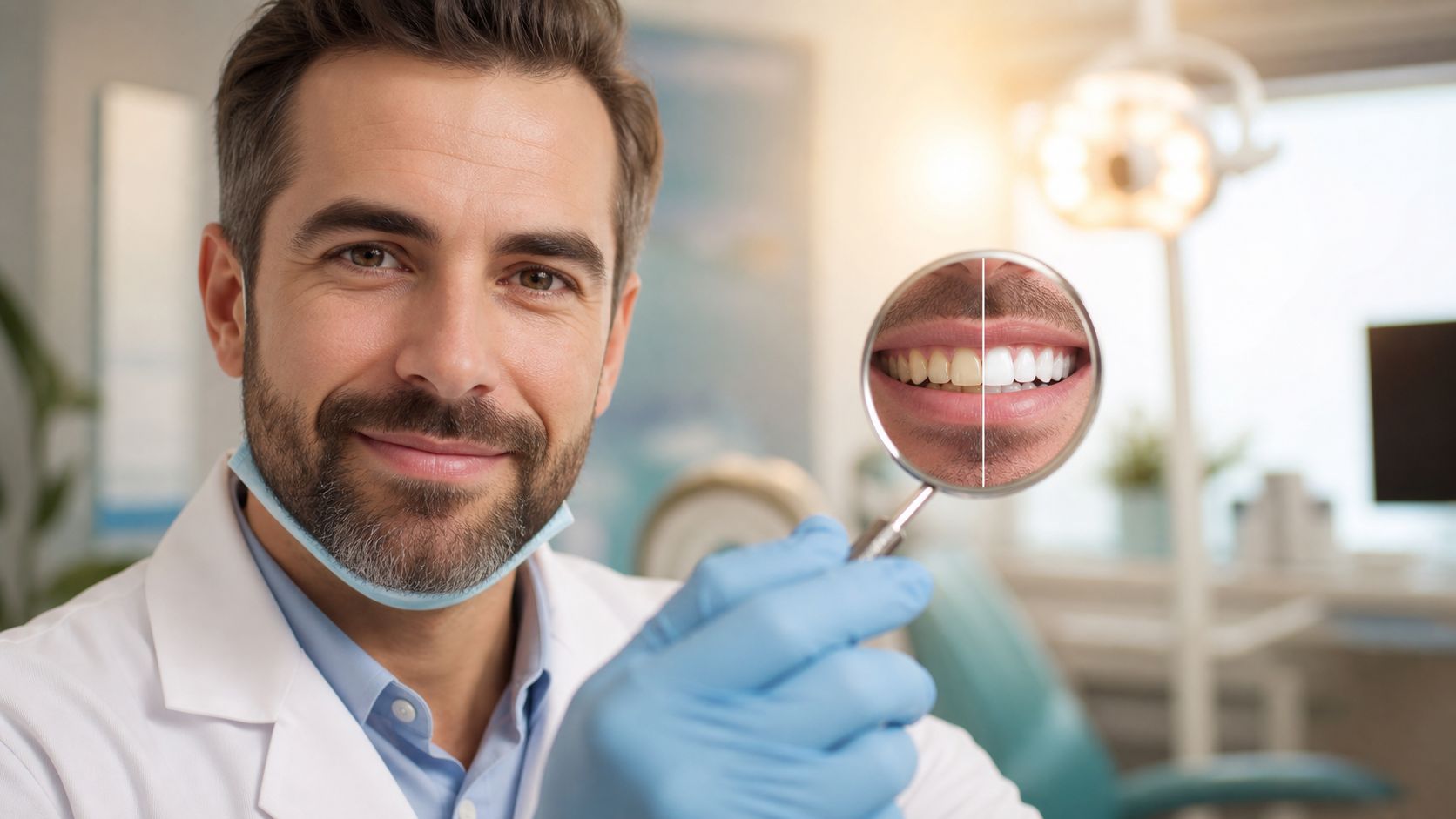
A lot of people start thinking about a smile makeover the same way. You catch your reflection in a phone camera, pull back a little during a conversation, or smile with your lips closed in family photos. Maybe your teeth look darker than they used to. Maybe there's a chip on a front tooth, a gap that bothers you, or an old dental crown that no longer blends in.
If that sounds familiar, you're not alone. Patients looking for a cosmetic dentist near me or a dentist in Fair Lawn, NJ usually aren't chasing perfection. They want to feel comfortable laughing, talking, and showing their teeth again. They also want honest guidance about what will work, what should come first, and what's worth their investment.
A smile makeover often begins with a small daily frustration. A parent from Fair Lawn avoids being in school event photos. A professional from Ridgewood covers their mouth during meetings. Someone from Glen Rock has already tried whitening strips, but still feels their smile looks uneven because one tooth is chipped and another has an old filling that stands out.
Those concerns are personal, but they're also increasingly common. The global cosmetic dentistry market reached a valuation of $31.31 billion in 2026, and the specific Smile Makeover market is projected to grow to $2.98 billion by 2032, according to cosmetic dentistry market projections summarized here. That growth reflects a broader shift in how people think about dental care. A smile isn't only about appearance. For many patients, it's tied to confidence, comfort, and how healthy they feel overall.
Individuals typically don't walk into a dental office asking for one specific procedure. They say things like:
That's why smile makeover options should never feel like a menu with random upgrades. The right plan depends on what's bothering you, what your mouth can support, and what sequence will give you the most natural result.
A good smile makeover doesn't start with selling veneers. It starts with understanding your health, your goals, and what you want your smile to look like in everyday life.
For those seeking a dentist near me, they're often looking for more than convenience. They want a practice close to home that can handle routine care, cosmetic dentistry, restorative dentistry, and if needed, emergency dentist visits, tooth extraction, dental implants, or Invisalign without sending them in multiple directions.
For patients in Fair Lawn, Ridgewood, and Glen Rock, the process should feel straightforward. You come in with questions. You get a clear exam, dental x-rays if needed, and a practical conversation about your options. Some smiles improve with whitening and bonding. Others need crowns, implants, or orthodontics first. The goal is to make the path understandable, not overwhelming.
The part many people skip online is the part that matters most in real life. Before anyone talks about veneers, whitening, Six Month Smile, or Invisalign, your teeth and gums have to be healthy enough to support cosmetic work.
Clinical guidance is clear on this point. Cosmetic procedures are medically unsafe and ineffective when active gum disease or untreated decay is present, as explained in this discussion of smile makeover safety and treatment sequencing. If the foundation is unstable, the cosmetic result won't last.
Think about painting over a cracked wall. It may look better for a little while, but the damage underneath is still there. Teeth work the same way.
If you have gum inflammation, deep decay, a cracked tooth, or infection around the root, cosmetic treatment can create bigger problems. Whitening may increase sensitivity in a mouth that already needs care. Veneers bonded to teeth with unresolved issues may fail sooner. Orthodontic treatment can become more complicated if the supporting gums and bone aren't healthy.
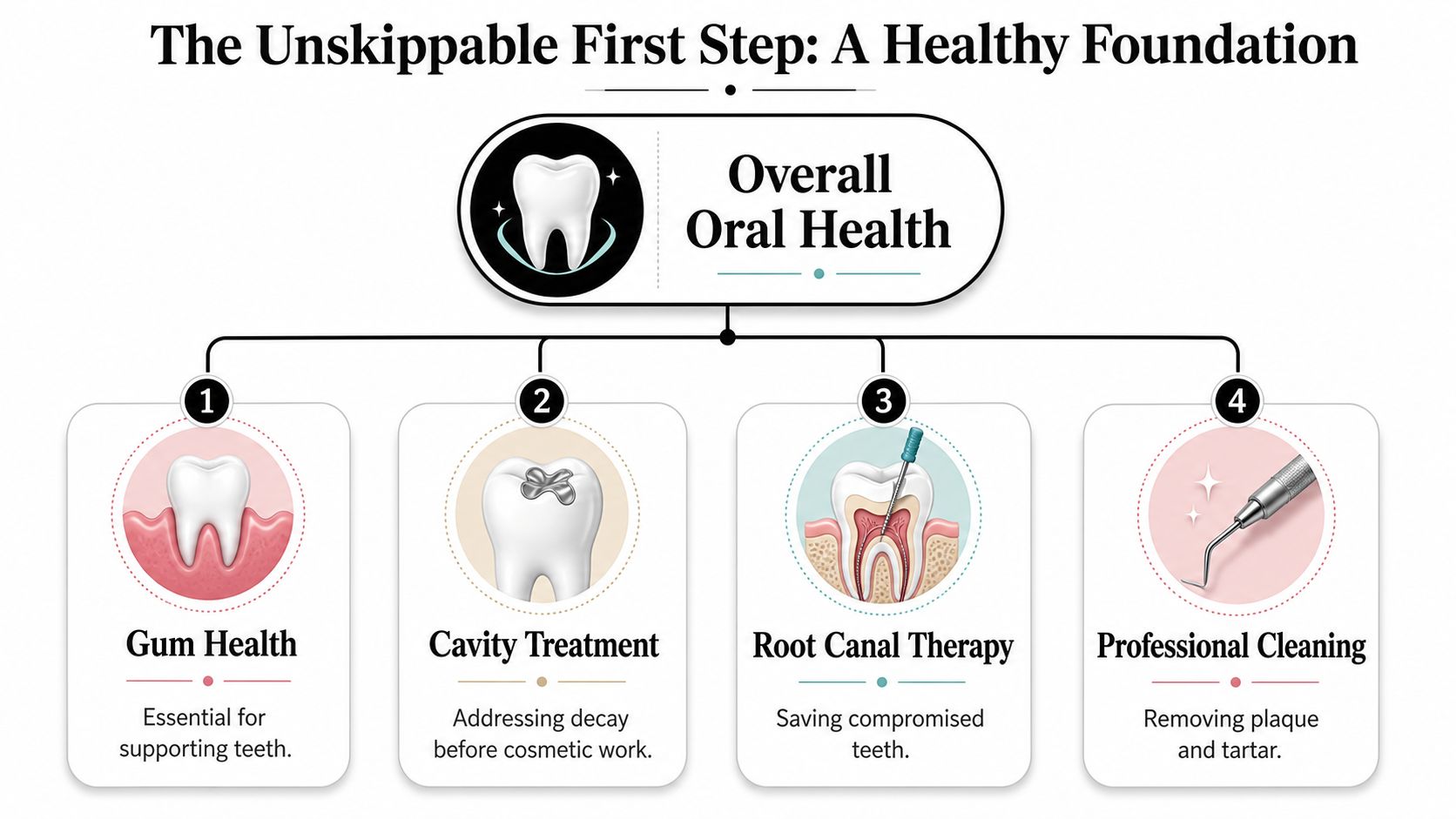
For many patients, the starting point is simpler than they expect. It usually involves a close look at the basics:
Patients sometimes worry that treating health problems first will delay the smile they want. In reality, it protects it. Once the foundation is healthy, cosmetic decisions become more precise. Tooth color is easier to judge. Gum shape becomes more stable. Restorations fit better. Long-term maintenance gets easier.
Practical rule: If your mouth is hurting, bleeding, swollen, or breaking down, that is the first smile makeover problem to solve.
This is also why a responsible dentist in Fair Lawn won't rush you into cosmetic treatment just because you're motivated to improve your smile. A healthy mouth isn't an optional extra. It's the base that supports every later decision, from teeth whitening to dental implants near me searches that lead patients toward full restoration.
For many patients, the first visible improvement comes from the least invasive options. If your teeth are healthy and your main concerns are stains, a small chip, or a slight gap, whitening and bonding can make a noticeable difference without changing your whole smile.
Professional whitening often serves as the first procedural step in a smile makeover because it helps establish the shade you want before other materials are matched to it. In-office whitening can lighten teeth by 3 to 8 shades in about an hour, according to this overview of professional whitening and treatment sequencing. That same source notes an important detail patients often don't hear clearly enough. Veneers and crowns can't be lightened later, so whitening first helps prevent a mismatched result.
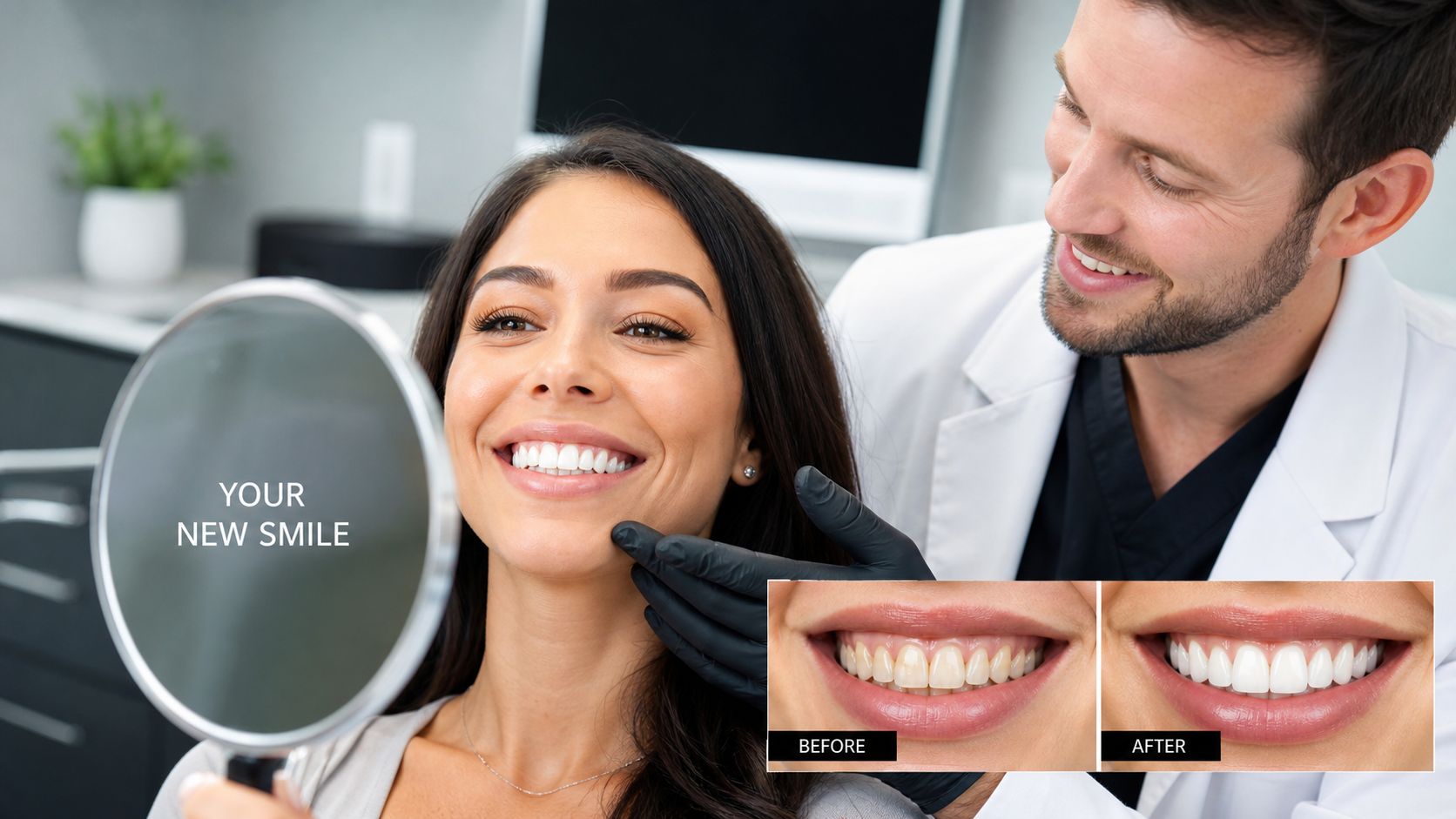
That matters if you have one darker tooth, visible fillings, or older crowns. Whitening improves natural enamel, but it doesn't change every material already in your mouth. That's why an exam matters before any whitening plan starts.
Cosmetic bonding is often the quiet hero of smile makeover options. It uses tooth-colored material to repair a chipped edge, soften a small gap, reshape a slightly uneven tooth, or cover localized discoloration.
Patients usually like bonding because it feels conservative. In many cases, very little natural tooth structure has to be altered. It can also be a smart choice when one front tooth needs improvement but the rest of the smile already looks good.
A few common reasons people choose bonding:
If you want a deeper look at how this material is applied and shaped, this explanation of how teeth bonding works gives a helpful patient-friendly overview.
Sometimes smile concerns aren't only about teeth. People may also be thinking about lip support, facial balance, or how their smile frames the lower face. In those situations, it helps to understand the difference between dental changes and non-dental aesthetic procedures. A useful outside reference is Chernoff Cosmetic Surgery's lip filler guide, which explains what that type of treatment is designed to address.
Whitening brightens. Bonding refines. Neither one is the right choice if the real issue is tooth position, missing teeth, or a damaged bite.
That distinction saves patients time and prevents disappointment. The best result comes from choosing the treatment that matches the actual problem.
When whitening and bonding aren't enough, patients often start comparing veneers and crowns. They sound similar because both can dramatically improve how a tooth looks. They are not interchangeable.
Porcelain veneers are designed mainly for the visible front surface of a tooth. They are thin shells bonded to teeth to improve color, shape, proportion, and mild alignment concerns. Porcelain veneers are typically 0.3 to 0.7 mm thick, and a single veneer can cost between $900 and $2,500. They have a typical 5-year survival rate of 94.4%, generally last around 10 years, and many remain viable for up to 20 years, according to this veneer overview with durability and cost details.

Veneers are often a fit when teeth are healthy but cosmetically disappointing. Think front teeth that are worn, uneven, chipped, stained, or slightly misshapen.
A dental crown covers much more of the tooth. It isn't just cosmetic. It's often restorative. If a tooth is cracked, heavily filled, weakened after root canal therapy, or structurally compromised, a crown may be the safer choice because it adds protection while improving appearance.
Here's the simplest side-by-side view:
| Treatment | Best for | What it covers | Main goal |
|---|---|---|---|
| Veneer | Front teeth with cosmetic concerns | Front surface | Shape and appearance |
| Crown | Teeth that need strength and coverage | The full visible tooth | Protection and restoration |
Many people assume veneers are a permanent one-time fix. They aren't. They can last a long time, but they still require maintenance, careful planning, and future replacement. Crowns also need maintenance, especially if grinding, decay around margins, or bite issues are present.
This short video gives a useful visual reference for how cosmetic restorations are discussed in practice.
Another common misconception is that the most cosmetic option is always the best one. It isn't. If a tooth has lost significant structure, the stronger restoration often matters more than the more conservative-looking one.
If a tooth is healthy but unattractive, veneers may make sense. If a tooth is weak, breaking down, or heavily restored, a crown is often the more responsible treatment.
For patients searching cosmetic dentist near me, this is one of the most important questions to ask during a consultation. Are we mostly changing appearance, or are we rebuilding a tooth that needs protection? The answer changes the right treatment.
Not every smile makeover needs porcelain. Sometimes the most natural solution is to move teeth into better positions instead of covering them. Adults are often surprised by how many modern orthodontic choices they have, especially if they assumed braces were their only option.
Invisalign is usually the first thing adults ask about when they search for Invisalign or a dentist near me for straighter teeth. The appeal is obvious. The aligners are clear, removable, and easier to manage during meals, meetings, and social events.
This option often works well for people who are disciplined about wearing aligners and want a less visible treatment. It can be a strong fit for crowding, spacing, and many mild to moderate bite concerns.
Some adults don't care about changing every bite detail. They care most about the teeth that show when they smile. Six Month Smile is geared toward that kind of goal.
It focuses on the cosmetic alignment of the teeth most visible in the smile zone. For the right patient, that can make treatment feel more efficient and more practical. It isn't for every orthodontic problem, but it can be useful when the main concern is visible crowding or spacing in the front.
The Damon System is still braces, but it offers a different experience than many people remember from childhood. Patients often choose it when they want a fixed option that doesn't depend on remembering to wear aligners and when their alignment issues are better handled with brackets and wires.
A quick comparison helps:
The most conservative smile makeover is often the one that straightens teeth first, because it may reduce the need for later reshaping, bonding, or veneers.
If you're comparing smile makeover options in Fair Lawn, lifestyle matters. Do you want something removable? Are you trying to improve appearance for photos and daily confidence? Do you need more extensive movement? Those answers point you toward the right orthodontic path.
Missing teeth change more than your smile. They can affect chewing, speech, bite balance, and the way the jaw supports your facial shape. If you've been searching for dental implants near me, you're probably not only thinking about appearance. You want stability.
A dental implant replaces the root of a missing tooth and supports a restoration above it. Depending on the situation, that may be a single crown, a bridge supported by implants, or a full-arch solution.
The sequence is usually easier to understand when it's broken down into stages:
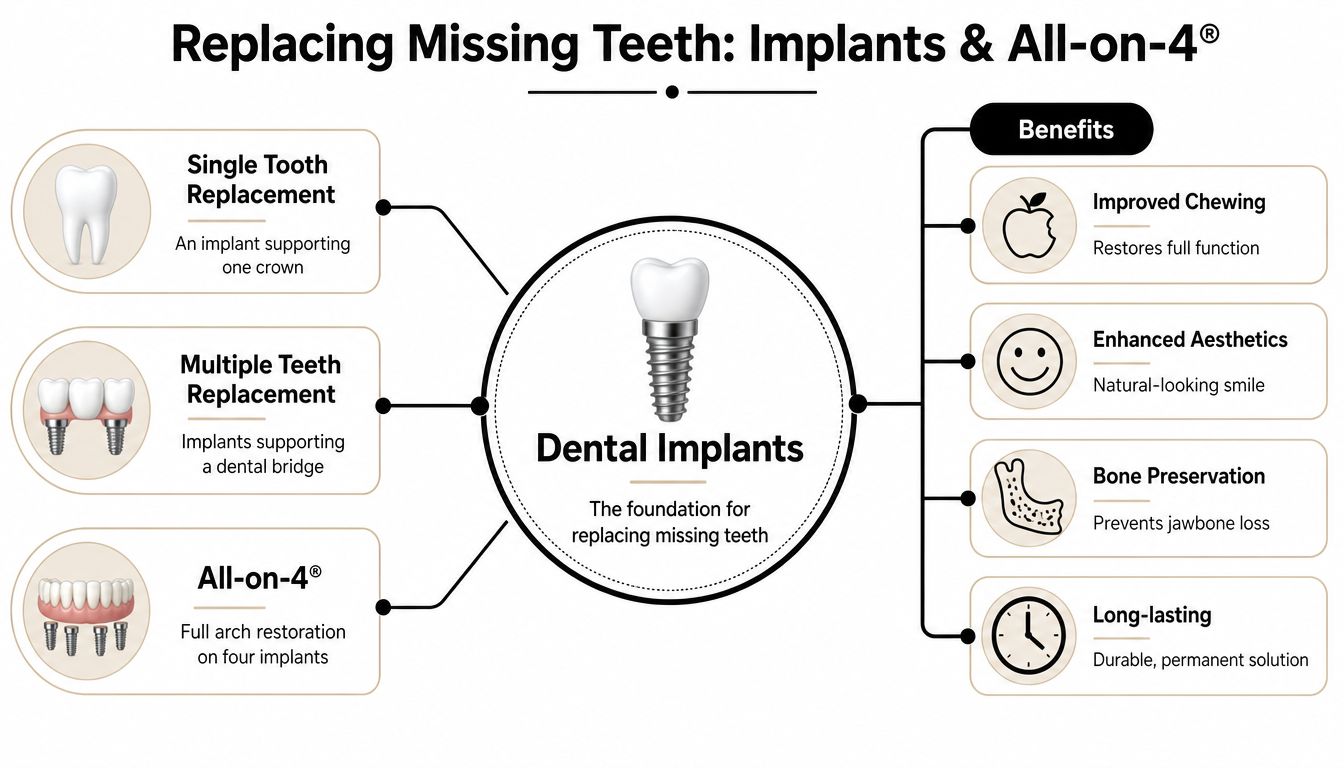
For patients missing many teeth, or facing the loss of many teeth, All-on-4 can offer a more complete rebuild. Instead of replacing each tooth individually, a full arch of teeth is supported on four implants.
This option is often part of a larger restorative plan for people who are tired of removable dentures, dealing with failing teeth, or looking for a more stable daily solution. If you want to understand the treatment concept in more detail, this page on All-on-4 implant-supported dentures explains how full-arch support works.
Implant treatment is rarely the fastest smile makeover option, but it can be one of the most life-changing. The final result depends on careful sequencing. Gums must be healthy. Infection has to be addressed. Some patients need preparatory treatment before implants are placed.
Patients also do better when they know what implants can and can't do. They can restore strong function and a natural-looking smile, but they still need maintenance, cleanings, and regular follow-up care. They are part of long-term dental health, not a shortcut around it.
For anyone comparing implants with bridges or dentures, the key question is what level of stability, chewing confidence, and long-term support you want from the result.
The most satisfying smile makeovers are rarely built from a single treatment. They come from a plan that respects timing, health, appearance, and how you live. One patient may need a cleaning, whitening, and bonding. Another may need tooth extraction, implant planning, and crowns. Someone else may start with Invisalign and delay cosmetic refinements until the teeth are in better positions.
A thoughtful consultation should answer three questions clearly. What is healthy right now. What needs treatment first. What options fit your goals after that.
At this stage, photos, digital scans, dental x-rays, and a detailed exam all matter. If you're nervous, sedation dentistry can make treatment feel manageable. If material choice matters to you, options prioritizing patient well-being and freedom from mercury deserve a direct conversation rather than an afterthought.
Digital smile design can be extremely helpful. It gives patients a way to preview shape, proportions, and treatment direction before anything irreversible happens. That can make decision-making feel less abstract.
At the same time, digital previews have limits. Veneers may need replacement every 10 to 15 years, and digital smile designs can omit functional realities like bite alignment, as noted in this discussion of long-term maintenance and digital design limitations. A trustworthy consultation includes those realities up front.
The right smile makeover conversation includes more than before-and-after excitement. It should also include maintenance.
That means talking about things like:
Dental Professionals of Fair Lawn offers smile design, whitening, bonding, veneers, crowns, implants, Invisalign, Six Month Smiles, Damon System care, periodontal treatment, and sedation dentistry in one setting, which can make phased treatment easier to coordinate for patients in Fair Lawn, Ridgewood, and Glen Rock.
A smile makeover should feel exciting, but it should also feel grounded. You deserve a plan that looks good in photos and still makes sense years later.
If you've been searching for a dentist in Fair Lawn, NJ, an emergency dentist, a provider for cleaning and exams, or someone to guide you through larger cosmetic and restorative decisions, the next step is a consultation that starts with clarity.
If you're ready to explore your smile makeover options, schedule a consultation with Dental Professionals of Fair Lawn. Patients from Fair Lawn, Ridgewood, and Glen Rock can get a clear exam, a realistic treatment sequence, and guidance on everything from teeth whitening and Invisalign to crowns, dental implants, and full smile restoration.