Your Guide to the Sinus Lift Procedure in Fair Lawn, NJ
Considering a sinus lift procedure for dental implants? Our Fair Lawn dentists explain the surgery, recovery, and costs to restore your smile. Contact us today.
Considering a sinus lift procedure for dental implants? Our Fair Lawn dentists explain the surgery, recovery, and costs to restore your smile. Contact us today.
Hearing that you're “not a candidate” for dental implants because there isn't enough bone in the upper jaw can feel like the door just closed on the smile you wanted. Many patients come in after being told exactly that, and what they really want is a clear answer to one question. Is there still a path forward?
Often, there is. A sinus lift procedure is one of the ways we rebuild the support needed for upper dental implants, especially in the back part of the mouth where bone loss is common. If you're in Fair Lawn, Ridgewood, or Glen Rock and trying to sort through implant options, this guide will help you understand what the procedure is, why it's done, what can complicate it, and how those issues are handled safely.
A common story goes like this. You lose an upper molar, wait a while, then decide you want a permanent replacement. You're ready for dental implants, only to learn that the bone under the sinus isn't thick enough to support one. That's frustrating, especially when you were hoping for a direct answer instead of another step.
For many patients in Fair Lawn, that conversation is the first time they hear the words sinus lift. It can sound more intimidating than it really is. In plain terms, it's a procedure that creates more bone in the upper back jaw so an implant has a stable place to sit.

People usually aren't confused about the idea of replacing a missing tooth. They're confused about why bone matters so much.
An implant isn't like a removable denture that rests on top of the gums. It needs to be anchored inside the jaw. If the upper jaw has become too thin under the sinus, placing an implant without rebuilding that area can compromise long-term stability.
Practical rule: If the implant site doesn't have enough healthy bone, the treatment plan has to start by creating that support.
Patients looking for a dentist near me, dental implants near me, or a dentist in Fair Lawn, NJ often want more than treatment. They want someone to explain what's happening without making them feel rushed. That's especially true when the plan involves surgery.
If you're comparing options for replacing missing teeth, it helps to review how dental implants in New Jersey are planned and why some upper-jaw cases need grafting first. In many situations, a sinus lift isn't bad news. It's the step that makes implant treatment possible.
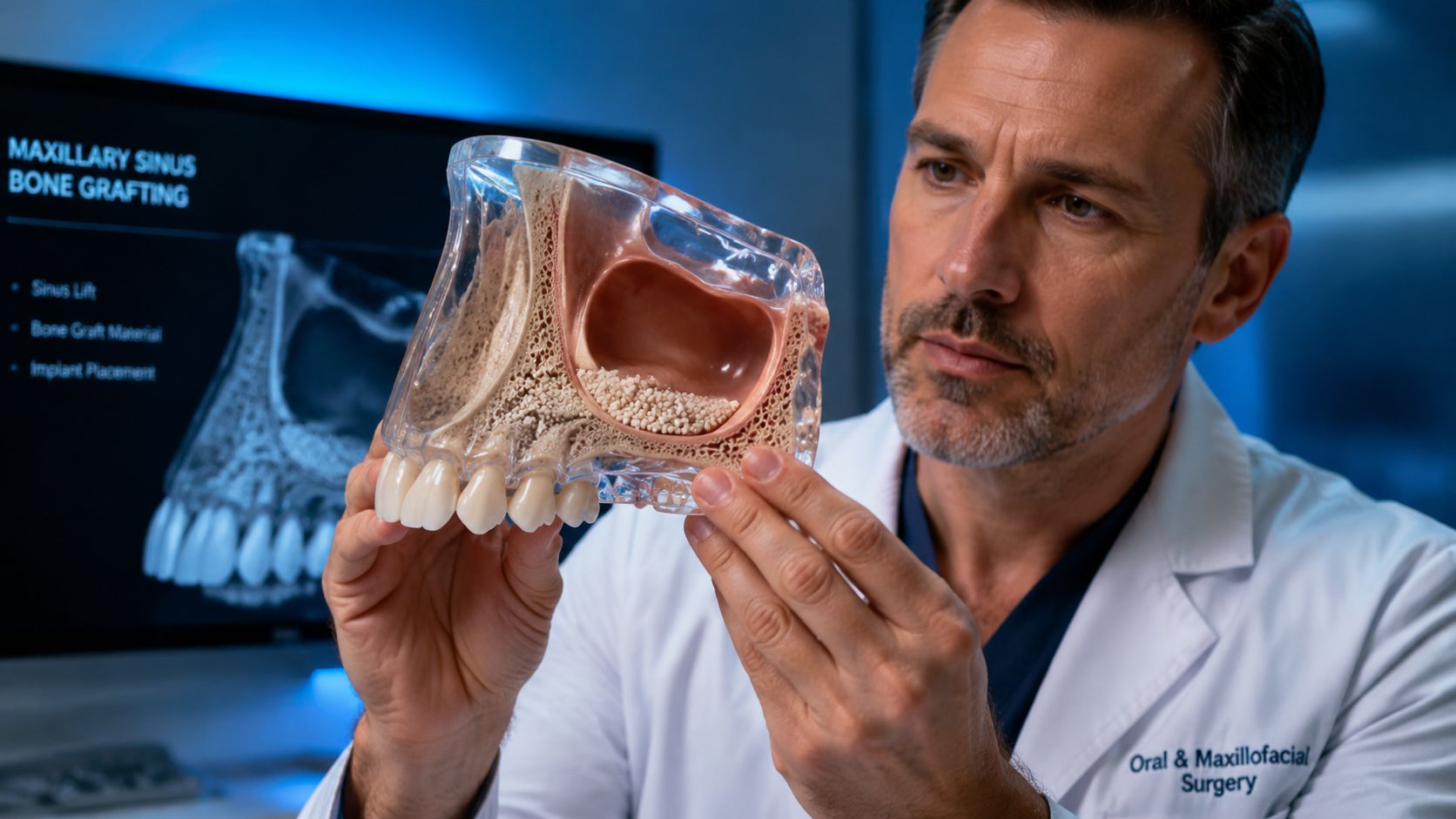
A sinus lift, also called sinus augmentation, is a procedure that adds bone to the upper jaw in the area of the premolars and molars. The goal is simple. It creates enough bone height to hold a dental implant securely when the natural bone is too thin.

This part of the mouth can be challenging because the maxillary sinus sits just above the upper back teeth. After a tooth is lost, the bone below that sinus often shrinks over time. As the available bone gets thinner, there may not be enough depth to place an implant safely and keep it stable for the long term.
That is the reason a sinus lift is recommended in certain cases. It is not an extra step added automatically. It is used when the implant site needs more support than your body currently provides on its own.
Bone responds to pressure and function. When a tooth is no longer there, the jawbone in that area stops getting the same stimulation from chewing. Over time, the body may resorb some of that unused bone.
In the upper jaw, there is a second factor. The sinus can expand downward slightly into the space where bone used to be. The result is less vertical room than many patients expect.
The American Academy of Periodontology explains that sinus augmentation is used to increase the amount of bone in the back part of the upper jaw when there is not enough bone height for implant placement, as described in its patient guide to sinus augmentation.
During a sinus lift, the thin membrane lining the sinus is gently moved upward. Bone graft material is then placed underneath that membrane, in the area where more bone is needed. As healing occurs, that graft serves as a framework your body can use to build stronger bone.
Patients often worry that this means the sinus is being damaged or removed. It is not. The sinus remains in place. The procedure creates a better foundation just below it.
A simple way to understand the sequence is this:
A short visual can make that easier to follow:
For many patients, the hardest part is hearing that implant treatment needs one more procedure first. That can sound like bad news. In practice, it often means your dentist is planning carefully instead of forcing an implant into a site that is not ready.
It is also reasonable to ask the harder questions. What if the sinus membrane is thin? What if there has been a history of sinus infections, congestion, or a sinus problem already visible on imaging? What if the membrane tears during surgery? Those are real concerns, not rare or silly questions. An experienced surgeon plans for them, evaluates the sinus before treatment, and adjusts the procedure if needed. In some cases, treatment is delayed, modified, or coordinated with an ENT physician before grafting is done.
That honest planning is part of safe care. A sinus lift is necessary only when it improves the odds of a stable, lasting implant result. If enough healthy bone is already present, a good clinician will say so. If more support is needed, the sinus lift is the step that makes the implant possible and more predictable.
Before anyone decides you need a sinus lift procedure, the most important step is diagnosis. A standard conversation alone isn't enough, and a basic two-dimensional image often doesn't tell the whole story. The decision depends on your anatomy, the condition of the sinus, and how much bone is already present.

At a consultation, the exam is focused on a few practical questions:
A 3D scan helps answer those questions much more clearly than guesswork ever could.
Cone Beam Computed Tomography, often called CBCT, gives a three-dimensional view of the teeth, jaw, sinus spaces, and nearby structures. That changes the planning process in a meaningful way. Instead of estimating, the dentist can evaluate the available bone from multiple angles and look for concerns that might affect surgery.
This is also where patients with prior sinus pressure, congestion, sinus infections, or other sinus history deserve extra attention. A 2023 review noted that Schneiderian membrane perforation is the most common complication in sinus lift procedures, estimated at 20% to 25% of cases and reported as high as 42% in some studies. The same review found that acute or chronic rhinosinusitis is more likely when patients already have sinus disease, anatomic obstruction, or a perforation, and it suggests pre-operative ENT collaboration for higher-risk patients, according to this review on sinus augmentation complications and ENT management.
A good implant plan doesn't just ask, “Can we place bone here?” It also asks, “How healthy is the sinus we're working around?”
Sometimes enough native bone remains to place an implant at the same time as the lift. In other cases, the safer plan is to allow the graft to heal first. That decision isn't arbitrary. It comes from the scan, the bone quality, and the amount of support needed.
For patients searching for a dentist in Fair Lawn, NJ or exploring restorative dentistry, this stage is where confidence starts. When the diagnosis is precise, the treatment plan feels less mysterious and much more manageable.
Not every sinus lift procedure is done the same way. The technique depends on how much bone is missing and how much additional height is needed. Most patients don't need to memorize the surgical terms, but it helps to know why one approach may be recommended over another.

The two methods patients hear about most often are the lateral window technique and the transalveolar osteotome technique.
The first is used when a larger amount of bone needs to be added. The second is often chosen when a smaller lift may be enough.
| Feature | Lateral Window Technique | Transalveolar (Osteotome) Technique |
|---|---|---|
| Access point | Through the side of the upper jaw | Through the implant site |
| Typical use | More significant bone loss | Smaller amount of added height needed |
| Surgical reach | Allows broader access to the sinus area | More limited, focused access |
| Invasiveness | More extensive approach | Less invasive approach |
| Implant timing | Depends on available starting bone and stability | May be combined with implant placement in suitable cases |
With the lateral window approach, a small opening is made in the side of the upper jaw to reach the sinus membrane. The membrane is lifted carefully, and graft material is placed into the space below it.
This method gives the dentist more visibility and more room to work. It's often the better fit when the starting bone level is quite limited or when the anatomy is more complex.
The transalveolar, or osteotome, approach works through the same area where the implant is expected to go. Rather than entering from the side, the lift is done internally through the top of the ridge.
Patients often hear this described as a more conservative method. That's true, but only for the right case. It isn't “better” in every situation. It's suited to a smaller amount of needed lift.
The right technique is the one that matches the anatomy. A smaller procedure isn't safer if it can't create the support the implant needs.
Successful execution requires experience and careful planning. The goal isn't just to complete the graft. The goal is to create long-term implant stability while respecting the sinus anatomy.
If you're also trying to understand how grafting supports implant treatment overall, this guide on bone grafting for dental implants adds helpful context. Sinus grafting is a specific type of bone-building procedure, but the larger principle is the same. Implants need strong support from the start.
The day of surgery is usually less dramatic than patients fear, as many anticipate a chaotic or overwhelming experience. In reality, the visit is structured, controlled, and centered on keeping you comfortable from beginning to end.

When you arrive, the team reviews the treatment plan, confirms your comfort needs, and makes sure you know what will happen next. If you're anxious, speak up. This is a procedure where comfort planning matters.
Many sinus lift cases can be completed with local anesthetic, and some patients also choose sedation so they can feel more relaxed during care. For people who delay treatment because of fear, this can make a major difference in getting needed restorative dentistry done.
Once the area is numb, the surgical site is accessed using the planned technique. The sinus membrane is lifted carefully, and the graft material is placed in the new space created below it.
That graft material can come from different sources. What matters most to patients is its purpose. It serves as a scaffold that helps your body build the bone needed for future implant support.
Here's the sequence most patients experience:
Many people are surprised that the appointment feels more routine than they expected. They often remember the preparation, the numbing, and the sense of relief afterward more than the procedure itself.
For patients who are also exploring services like tooth extraction, restorative dentistry, emergency dentist care, or cosmetic dentistry in Fair Lawn, the same principle applies here as in other advanced treatments. A clear plan lowers anxiety. So does knowing that every step has a purpose.
Most fear comes from not knowing what the procedure will feel like. Once patients understand the sequence, it becomes much easier to face.
Recovery after a sinus lift procedure usually feels manageable when patients know what to expect. You may have swelling, minor bleeding, tenderness, or a sense of pressure in the cheek area. That can sound alarming before surgery, but after surgery it usually feels more like something to protect than something to panic about.
The first part of healing is mostly about following instructions carefully. You'll want to rest, keep the area clean as directed, eat softer foods for a period of time, and avoid anything that creates pressure in the sinus area. Patients often need reminders about nose blowing, forceful sneezing, and similar habits because those actions can disturb the graft site.
The complication that comes up most often in discussion is sinus membrane perforation, which means a small tear in the lining being lifted during surgery. Hearing that possibility can make a nervous patient think the whole procedure will fail if it happens.
That isn't what the long-term data shows. A 15-year retrospective study found that even in cases where the sinus membrane was perforated, the success rate for bone grafts was 97.96% and for implants was 96.2%, according to this published retrospective analysis of maxillary sinus lift outcomes.
A complication is still a complication. It matters. But it does not automatically mean the graft or implant will be unsuccessful.
The same study also reported high overall results, and it concluded that membrane perforation did not negatively interfere with success rates for grafts or implants. For patients, that changes the conversation. Instead of thinking, “If something goes wrong, the whole plan is ruined,” a more accurate way to think about it is, “If something happens, it needs skilled management.”
Patients with chronic congestion, prior sinus trouble, or known sinus disease should mention that early. That doesn't automatically rule out treatment, but it may change how planning is done.
Sometimes the safest path includes additional coordination before surgery. That kind of caution is not a red flag. It's good care.
Recovery is usually a period of patience, not uncertainty. Most of the work is already done by the time you leave the office. Your job is to protect the area while your body turns that graft into a stronger foundation for the implant to come.
A lot of patients reach this point with one main question in mind. “What happens if my case is not straightforward?” That is a fair concern, especially with a procedure that involves the sinus area. The good news is that sinus lift planning is built around those “what ifs,” from thin sinus membranes to a history of sinus pressure or congestion.
During the procedure, the area is thoroughly numbed, and many patients also choose sedation to feel more relaxed. In practical terms, that means you should feel pressure and movement, not sharp pain.
After surgery, soreness, swelling, and a sense of fullness in the upper jaw are common for a few days. Patients often describe it as similar to dental surgery recovery, with extra care needed around the sinus area.
Healing time depends on how much bone needs to be added, how stable the area is at surgery, and how your body responds to grafting. Some patients can receive an implant at the same appointment, while others heal first and return for implant placement later.
As noted earlier, healing is often measured in months rather than weeks. That waiting period can feel long, but it gives the graft time to mature into a stronger base for the implant.
No. A sinus lift is only recommended when the back upper jaw does not have enough bone height for a secure implant.
This is one reason 3D imaging matters so much. It shows the available bone, the shape of the sinus, and whether an alternative approach might work. In some cases, a shorter implant or a different treatment plan is possible. In others, lifting the sinus creates the safest and most predictable support.
Tell your dentist early, even if the issue seems minor. Chronic congestion, seasonal sinus flare-ups, past infections, or previous sinus surgery can all affect planning.
That does not automatically rule out treatment. It usually means your case deserves closer review, and sometimes coordination with an ENT physician. Careful planning lowers surprises and helps your surgeon choose the right technique for your anatomy.
This is one of the complications patients ask about most, and it should be discussed openly. The sinus membrane is very thin, a bit like delicate tissue paper, so small perforations can happen even in experienced hands.
What matters is how the situation is managed. In many cases, the tear can be repaired during surgery and the treatment can still proceed safely, depending on its size and location. If the membrane needs more time to heal, your dentist may stop, let the area recover, and complete the graft later. That is not a failure. It is careful judgment.
Coverage depends on your dental plan and the reason the procedure is being done. Some plans contribute to part of the treatment, while others consider it outside routine implant benefits.
A written estimate before surgery helps you understand the expected cost, what insurance may pay, and what your portion would be.
Sometimes, yes. The answer depends on how much bone remains and where the implant needs to go.
A practice that can coordinate implant planning, imaging, routine dental care, and follow-up treatment in one place can make the whole process feel much easier. For patients in Fair Lawn, that kind of coordination often means fewer surprises and clearer decisions.
If you're weighing implant options and want a clear answer about whether a sinus lift procedure is necessary, Dental Professionals of Fair Lawn offers consultations for patients in Fair Lawn, Ridgewood, Glen Rock, and nearby New Jersey communities. A careful exam, 3D imaging, and a plain-language conversation can help you understand your options and decide on the right next step with confidence.