Fair Lawn: Personalized Preventive Dental Care
In Fair Lawn, NJ, our preventive dental care includes personalized exams, cleanings & home plans to keep your smile healthy. Schedule today!
In Fair Lawn, NJ, our preventive dental care includes personalized exams, cleanings & home plans to keep your smile healthy. Schedule today!
You may be in that familiar spot right now. Nothing hurts enough to feel urgent, but it's been a while since your last visit, and part of you is waiting for a chipped tooth, a sharp ache, or a broken filling to force the call.
That's how many people approach dentistry. It feels practical in the moment, but it usually means care starts after a problem has already become bigger, more uncomfortable, and more expensive to fix.
Preventive dental care changes that pattern. Instead of treating your mouth only when something goes wrong, it creates a plan to keep small issues small and help you avoid emergencies in the first place. For families in Fair Lawn, Ridgewood, and Glen Rock, that often means less stress, more predictability, and a healthier smile over time.
A new patient often comes in with a story that sounds simple. They felt fine, got busy, postponed a cleaning, and then one day noticed bleeding gums, sensitivity to cold, or a toothache that wouldn't settle down. What looked like a minor delay turned into a visit for discomfort instead of peace of mind.
That pattern isn't unusual. In U.S. national data, the share of children ages 1 to 17 who had a dental exam or cleaning in the past 12 months dropped from 83.8% in 2019 to 80.9% in 2020, showing how easily proactive care gets delayed even when it matters most, according to this CDC dental care data brief.

People in Fair Lawn usually aren't ignoring their health. They're managing work, school schedules, sports, childcare, commutes, and a long list of daily responsibilities. Dental care gets pushed down the list because pain hasn't forced the issue yet.
The problem is that cavities, gum inflammation, bite wear, and cracked restorations often start unnoticeably. By the time you feel them, treatment may involve more than a routine visit.
A preventive relationship with your dentist changes the experience. Instead of asking, “How do we fix this fast?” the better question becomes, “How do we lower your risk so this doesn't keep happening?”
Preventive care works best when it feels personal, not automatic. One patient may need help controlling tartar buildup, another may need fluoride support, and another may need a plan that makes anxious visits comfortable enough to keep.
A trusted dentist in Fair Lawn NJ should do more than recommend a cleaning and send you on your way. Real prevention includes risk assessment, home-care coaching, age-specific guidance, and attention to barriers like anxiety, scheduling, or previous bad experiences.
For patients who want to understand how local practices present care clearly online before they book, this comprehensive dental SEO approach gives a useful look at how patient questions and service information can be organized in a way that's easier to evaluate.
When looking for a “dentist near me,” an “emergency dentist,” or a “dentist in Fair Lawn NJ,” the most helpful office is usually the one that makes prevention feel manageable. That means clear communication, realistic recommendations, and a plan that supports your long-term comfort, not just your next procedure.
Preventive dentistry is similar to regular maintenance on your car. You don't change the oil because the engine has already failed. You do it to reduce wear, catch trouble early, and keep the whole system running the way it should.
Your mouth works the same way. Preventive dental care is the ongoing process of reducing the chance that decay, gum disease, enamel wear, or hidden damage turns into pain or major treatment.

Most patients hear “prevention” and think “cleaning.” A cleaning matters, but it's only one part of the picture.
A complete preventive plan usually includes:
The goal isn't perfection. The goal is lowering the odds that small problems get a head start.
Healthy teeth are important, but preventive care also protects the gums, jaw support, bite, and existing dental work. A small crack in a filling, a dry mouth problem, or early gum irritation may not seem dramatic on day one. Left alone, each can affect comfort, chewing, breath, and confidence.
That's why preventive care isn't just cosmetic and it isn't only for children. Adults with crowns, implants, Invisalign, Six Month Smiles, or a history of grinding need prevention just as much as someone who has never had major treatment.
Practical rule: If you only think about dental care when something hurts, you're usually seeing the end of a problem, not the beginning.
Good prevention is also honest about trade-offs. Brushing harder doesn't mean brushing better. Whitening products can improve appearance, but they don't replace an exam. A healthy-looking smile can still hide decay between teeth or inflammation around the gums.
Patients searching for a cosmetic dentist near me or dental implants near me often think of prevention as separate from cosmetic or restorative goals. It isn't. Prevention is what protects the investment in your natural teeth and in any treatment you already have.
It's generally understood that prevention is “good.” What matters more is why it pays off in everyday life. Preventive care lowers the chances that a normal week turns into an urgent call about swelling, a broken tooth, or pain that keeps you up at night.
That matters financially, but it also matters emotionally. Dental emergencies rarely happen at a convenient time.

A large Medicaid-based study of 28,152 adults found that prior-year preventive dental visits were associated with fewer later nonpreventive visits and lower dental expenditures. The same analysis covered 108,349 observation-years, giving it real weight as evidence that prevention changes what happens later, not just what gets recorded, as reported in this peer-reviewed preventive visit study.
In plain terms, patients who stay connected to preventive care are less likely to need dentistry only when things go wrong.
That doesn't mean prevention eliminates every future procedure. Some teeth crack. Some fillings wear out. Some people still need tooth extraction, root canal therapy, crowns, or dental implants. But preventive care helps your dentist find change earlier, when treatment is usually simpler.
Here's a quick explanation many patients find helpful:
Patients often think they're saving time by postponing a visit. Sometimes they are, for a month or two. Over a longer stretch, postponing usually creates a more complicated path.
Compare the difference:
| Situation | Likely experience |
|---|---|
| Preventive visit | Review, cleaning, imaging if needed, early detection, small adjustments |
| Reactive visit | Pain evaluation, urgent repair, possible infection management, more complex treatment planning |
If tartar is part of your problem, this guide on what causes tartar can help you understand why buildup keeps returning even when you brush every day.
For practices trying to improve follow-through on routine care, communication matters too. This article on how healthcare teams can discover patient engagement strategies is useful because prevention only works when patients feel informed enough to come in before a problem turns urgent.
A bright smile starts with healthy teeth and gums. Teeth whitening, bonding, veneers, and cosmetic dentistry all look better and last more predictably when inflammation, decay risk, and bite problems are under control first.
That's why preventive care is more than maintenance. It supports comfort, function, and appearance at the same time.
The most effective preventive plan spends far more time in your bathroom and kitchen than in the dental chair. What you do every day shapes the environment in your mouth. Bacteria, food particles, dry mouth, and acid exposure are daily issues, so daily habits matter.
Home care doesn't need to be complicated. It needs to be consistent and done well.
Start with brushing twice a day using a soft-bristled toothbrush and fluoride toothpaste. Focus on the gumline, not just the front surfaces you can see in the mirror. Small circular motions clean better than aggressive scrubbing.
Clean between your teeth once a day. Floss works well, but floss picks, interdental brushes, or water flossing tools may be easier for some patients to use consistently. The best tool is the one you'll keep using.
Use a therapeutic mouthwash only if it fits your needs. Some patients benefit from an antibacterial rinse. Others do better with a fluoride rinse or a dry-mouth strategy. Mouthwash can help, but it shouldn't replace brushing or flossing.
The most common mistakes are practical, not dramatic.
If you sip sweet or acidic drinks over hours instead of having them with a meal, your teeth stay under attack much longer.
A few everyday choices can make a noticeable difference in how your mouth feels between visits.
If you have braces, aligners, bridges, implants, or gum recession, your home care plan may need to be adjusted. Prevention works best when your routine matches the shape of your mouth, your dental history, and your habits, not someone else's.
A professional preventive visit should feel straightforward, not mysterious. Most appointments follow a clear sequence: review your health and concerns, examine the teeth and gums, take digital X-rays when needed, remove plaque and tartar, polish where appropriate, and talk through the next steps.
That process sounds simple because it should. The value comes from what it helps your dental team detect early.

Your exam looks for more than cavities. The dentist checks the gums, bite, existing fillings and crowns, signs of wear, suspicious cracks, and areas that trap plaque. If you're a new patient, this visit also helps build a baseline so changes are easier to spot later.
Digital dental X-rays matter because some problems hide between teeth, below old restorations, or under the gumline. You can't feel many of these changes early, and they often aren't visible in a mirror.
The cleaning removes plaque and tartar that home tools can't fully handle once buildup hardens. If you want a closer look at what's included in a preventive hygiene appointment, professional dental cleanings are one standard part of routine care.
Nuance matters, as routine cleaning alone has not been proven to prevent cavities in children, while there is strong evidence supporting dental sealants and topical fluoride, according to Georgia Tech's oral health evidence review.
That distinction helps patients make better choices. Cleaning is still valuable for removing buildup and supporting gum health, but if a child is at higher risk for decay, prevention should include more than polishing the teeth.
A practical view of preventive tools looks like this:
| Preventive tool | Main role |
|---|---|
| Professional cleaning | Removes plaque, tartar, and surface buildup |
| Topical fluoride | Supports enamel and helps resist decay |
| Sealants | Protect deep grooves on molars where decay often starts |
Sealants can prevent about 80% of cavities in molars, which makes them one of the most useful pediatric preventive tools in the office, as noted in the evidence review above. For many families, that means the most important preventive question isn't “Did my child get a cleaning?” It's “Did we use the right protection for the teeth most likely to decay?”
That's the difference between routine care and evidence-based care.
Preventive care isn't one-size-fits-all because risk isn't one-size-fits-all. A child with newly erupted molars, a teen in Invisalign, an adult with dry mouth, and a patient with dental anxiety don't need the same plan, even if they all sit in the same chair.
That's why a personalized approach matters more than a standard checklist.
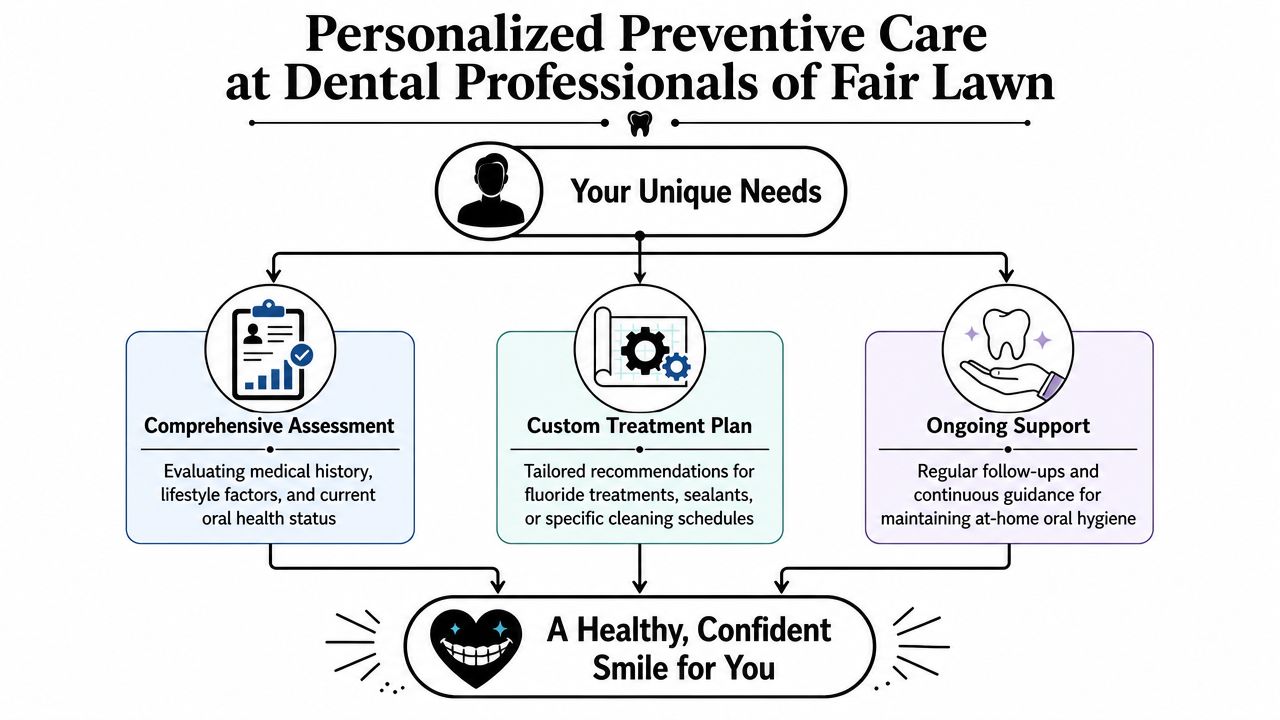
Children benefit from early habit coaching, cavity-risk review, and extra attention to developing molars. Teens may need support around aligner hygiene, sports guards, or an orthodontic plan that fits school and activities. Adults often need help with gum maintenance, restorative planning, cosmetic goals, and managing clenching or wear.
A preventive plan may also connect to other services over time:
Some patients know exactly what they need and still avoid care because they're anxious. That deserves practical support, not judgment.
Sedation dentistry can help patients complete cleanings, exams, and needed treatment more comfortably. For someone who has delayed care for years, a calm appointment may be the step that reopens the door to prevention.
A good preventive plan doesn't fail because a patient is nervous. It adjusts so the patient can actually follow through.
Some patients want mercury-free options, a more conservative philosophy, or a discussion of how treatment materials fit their preferences. Others want laser dentistry when appropriate, or a plan that respects TMJ discomfort and a sensitive bite.
At Dental Professionals of Fair Lawn, preventive planning can be adapted around those real-world factors, including age, anxiety level, restorative history, and preference for whole-person or mercury-free care. That kind of customization is often what turns occasional visits into a long-term health partnership.
If you've been waiting for the “right time” to get back on track, this is usually it. Preventive dental care works best before pain forces the timeline. A new patient exam gives you a clear starting point and a practical plan based on what your mouth needs now.
For many patients in Fair Lawn, Ridgewood, and Glen Rock, the hardest part is making the appointment after a long gap. Once that first visit is on the calendar, things become easier. You get answers, not guesses.
A first visit should feel organized and comfortable. Your exam may include a review of your health history, digital X-rays if needed, an evaluation of the teeth and gums, and a conversation about habits, concerns, and goals.
If you're looking for a dentist near me because you've also been thinking about cosmetic dentistry, restorative dentistry, emergency care, tooth extraction, or dental implants near me, preventive care is still the right entry point. It helps your dentist understand what's urgent, what can wait, and how to protect your long-term results.
How often should I come in?
That depends on your risk level, gum health, buildup pattern, and dental history. Some patients do well on a standard recall schedule, while others need closer monitoring.
Will insurance help with preventive visits?
Coverage varies by plan, but many patients use insurance benefits for preventive services. Financing options can also help when additional treatment is needed.
Can my whole family come here?
Yes. Family-focused care is helpful because children, teens, adults, and older family members each need a different kind of prevention.
What if I'm embarrassed it's been a long time?
That's more common than you think. The important step is restarting, not explaining the delay.
A strong preventive relationship gives you more than cleaner teeth. It gives you a plan, a place to ask questions, and a way to handle problems earlier and more comfortably.
If you're ready to book a preventive visit, request a consultation with Dental Professionals of Fair Lawn. Patients in Fair Lawn, Ridgewood, and Glen Rock can use the practice website to get started with a new patient exam and take the first step toward steadier, more comfortable long-term dental health.