Knocked Out Tooth First Aid: Emergency Dental Care 2026
Need knocked out tooth first aid? Get immediate steps & emergency care at Dental Professionals of Fair Lawn, NJ. Call us now for help in 2026!
Need knocked out tooth first aid? Get immediate steps & emergency care at Dental Professionals of Fair Lawn, NJ. Call us now for help in 2026!
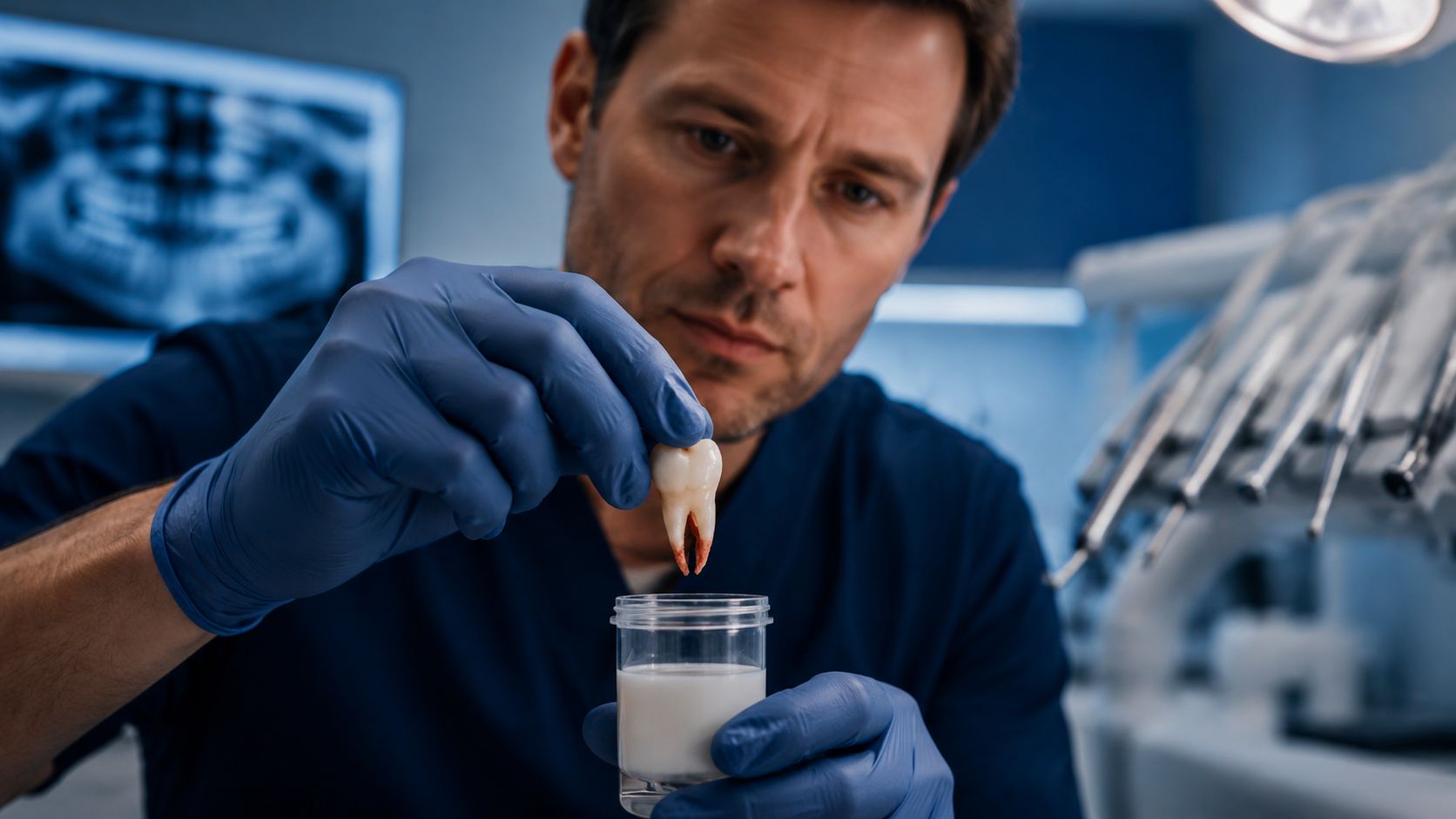
A knocked out tooth usually happens in the middle of an ordinary day. A fall in the yard. A collision during a kids' game. A slip at home, followed by blood, tears, and the sudden panic of seeing a tooth in someone's hand instead of in their mouth.
If that's where you are right now, slow down and focus on the next few minutes. This is serious, but it's manageable when you take the right steps quickly. The goal of knocked out tooth first aid is simple: protect the tooth, protect the root surface, and get to an emergency dentist fast.
For families in Fair Lawn, Ridgewood, and Glen Rock, having one local office to call matters. Clear advice in the first moments can make the situation less chaotic and help you move from panic to action.
A knocked out tooth is one of the few dental injuries where what you do immediately at home can affect whether the tooth can be saved. That's why the first response matters so much.
Start with the basics. Find the tooth. Pick it up carefully. Stay as calm as you can, especially if your child is upset. If the injured person is bleeding, use clean gauze or a clean cloth to apply gentle pressure while you deal with the tooth.
In a real emergency, the right sequence helps:
First response matters more than perfect technique: fast, careful action is more helpful than spending extra time trying to make the tooth look cleaner.
Parents often worry they'll do something wrong. The bigger problem is usually delay. Waiting, wrapping the tooth in tissue, or setting it on a counter while deciding what to do can hurt the chances of saving it.
An emergency dentist can assess the tooth, the socket, the lips and gums, and any hidden injury to nearby teeth. In a busy, emotional moment, having a nearby office in Fair Lawn is practical. It shortens the gap between first aid and treatment, which is what you want.
If you're searching for an emergency dentist, a dentist near me, or a dentist in Fair Lawn, NJ because this just happened, the right next step is immediate contact and immediate transport.
A fully knocked out tooth is called a dental avulsion. What makes it urgent isn't just the gap in the smile. It's the living tissue on the root surface that needs to stay viable long enough for the tooth to reattach properly.
The American Association of Endodontists says more than five million teeth are knocked out every year and notes that a permanent tooth has the best chance of being saved if it is reimplanted within 15 minutes and seen by a dentist within 30 minutes because survival depends heavily on rapid action and proper handling by the crown only, as outlined in the AAE guidance on knocked out teeth.
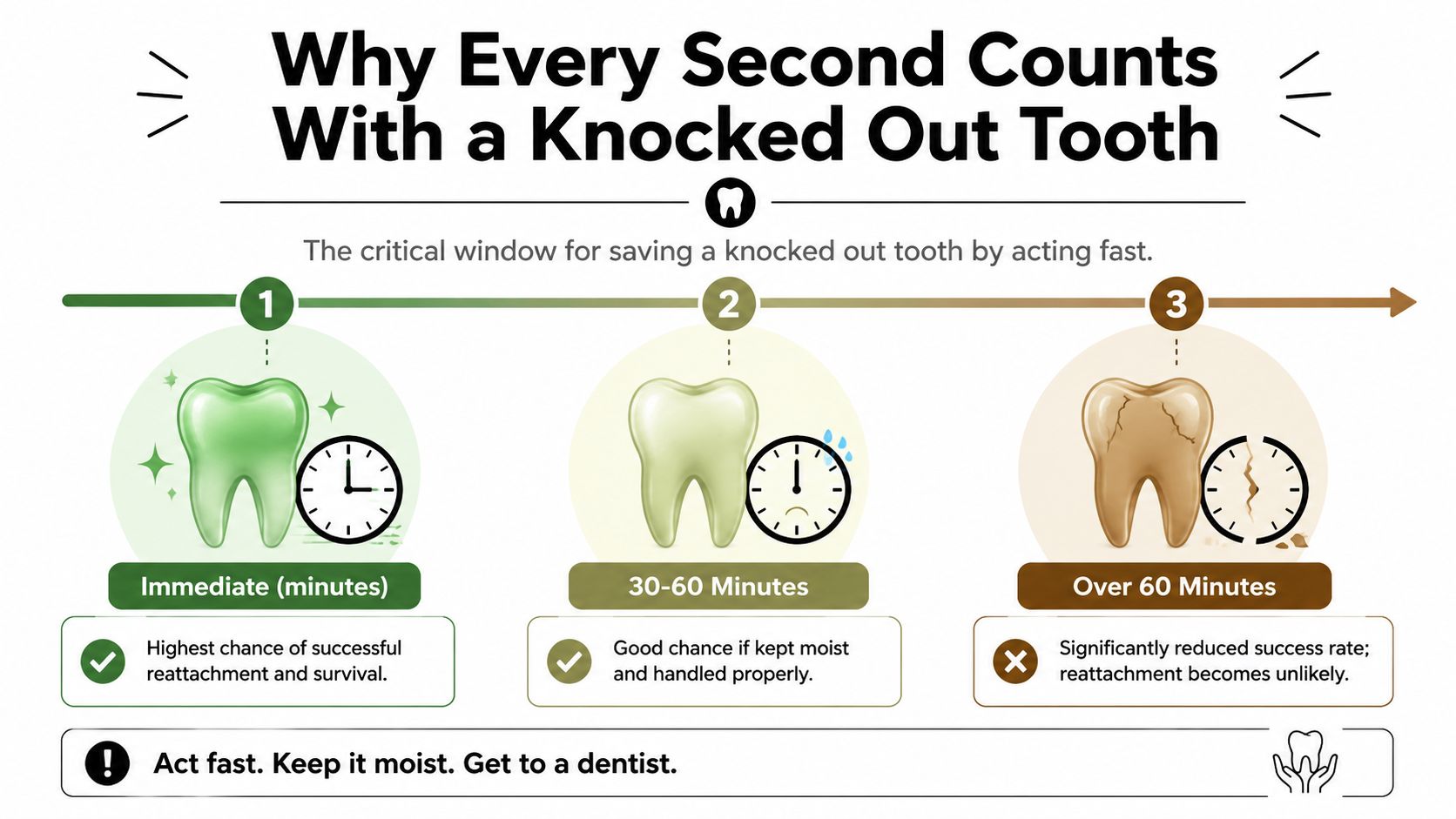
The root of the tooth is covered with delicate cells. Those cells help the tooth reconnect after it's placed back in the socket. Dry time works against you. Rough handling works against you. Delaying care to “clean it better” works against you.
That's why modern first aid is built around speed and moisture preservation, not waiting to see what happens.
The first aid goal isn't to make the tooth perfect. It's to keep it alive enough for treatment.
Here's the practical trade-off:
| Situation | Better choice | Poorer choice |
|---|---|---|
| Tooth is dirty | Brief gentle rinse | Scrubbing the root |
| Reinsertion feels possible | Try promptly and carefully | Waiting until later |
| Reinsertion isn't possible | Keep it moist | Letting it dry out |
| Unsure what to do | Call while leaving for care | Searching too long online |
A peer-reviewed review in PubMed Central reports traumatic dental injuries have an incidence of 1 to 3% and a prevalence of 20 to 30%, showing this is a common enough problem that first-aid guidance now centers on immediate reimplantation when feasible and storing the tooth in milk or saliva if it cannot be replaced right away, as described in this review of traumatic dental injury first-aid principles.
If an adult tooth has been knocked out, there is a clear order of operations. Don't overthink it. Move through the steps.
Early replacement gives the tooth its strongest chance. One review reports that immediate replantation at the accident site is best practice, that long-term prognosis is most favorable within 15 minutes, and that survival is about 85% when replacement occurs within 30 minutes, according to this review on avulsed tooth management and prognosis.
A quick visual can help in the moment.
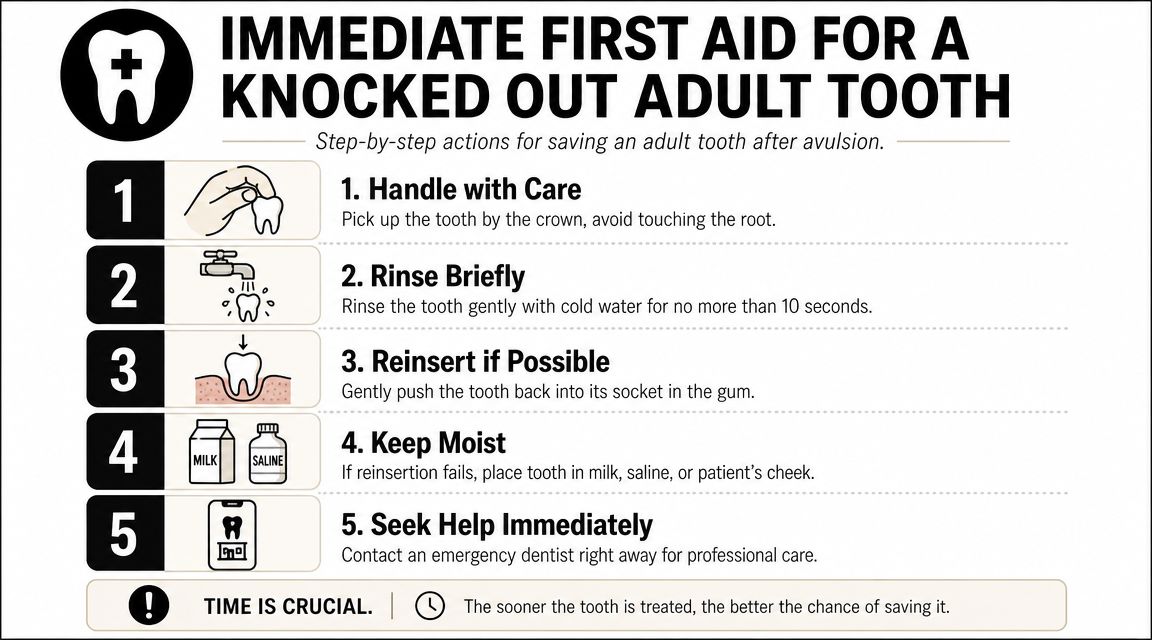
Hold the tooth by the crown. That's the part you normally see in the mouth. Don't grab the root.
If there's dirt on it, rinse it briefly and gently. Don't scrub it. Don't wipe it with a paper towel. Don't use soap or chemicals.
If the tooth appears whole and the injured person is calm enough, gently place it back into the socket in the correct direction. Then have them bite down softly on clean gauze or a cloth to help keep it in place while you head in for care.
This is the most useful step when it can be done safely. But it isn't always realistic.
Sometimes the socket is bleeding heavily. Sometimes the patient is a frightened child. Sometimes the tooth is chipped, orientation is unclear, or you can't get it seated. In those situations, don't force it.
Keep the tooth moist instead.
Practical rule: if reinserting the tooth is turning into a struggle, stop fighting with it and shift to moisture preservation and transport.
A short video walkthrough may help if you need a fast visual explanation.
In the office, the same problems show up again and again:
If you're looking for knocked out tooth first aid in a real-world sense, this is the answer. Be gentle, be quick, keep it moist if you can't replace it, and get moving toward emergency dental care in Fair Lawn.
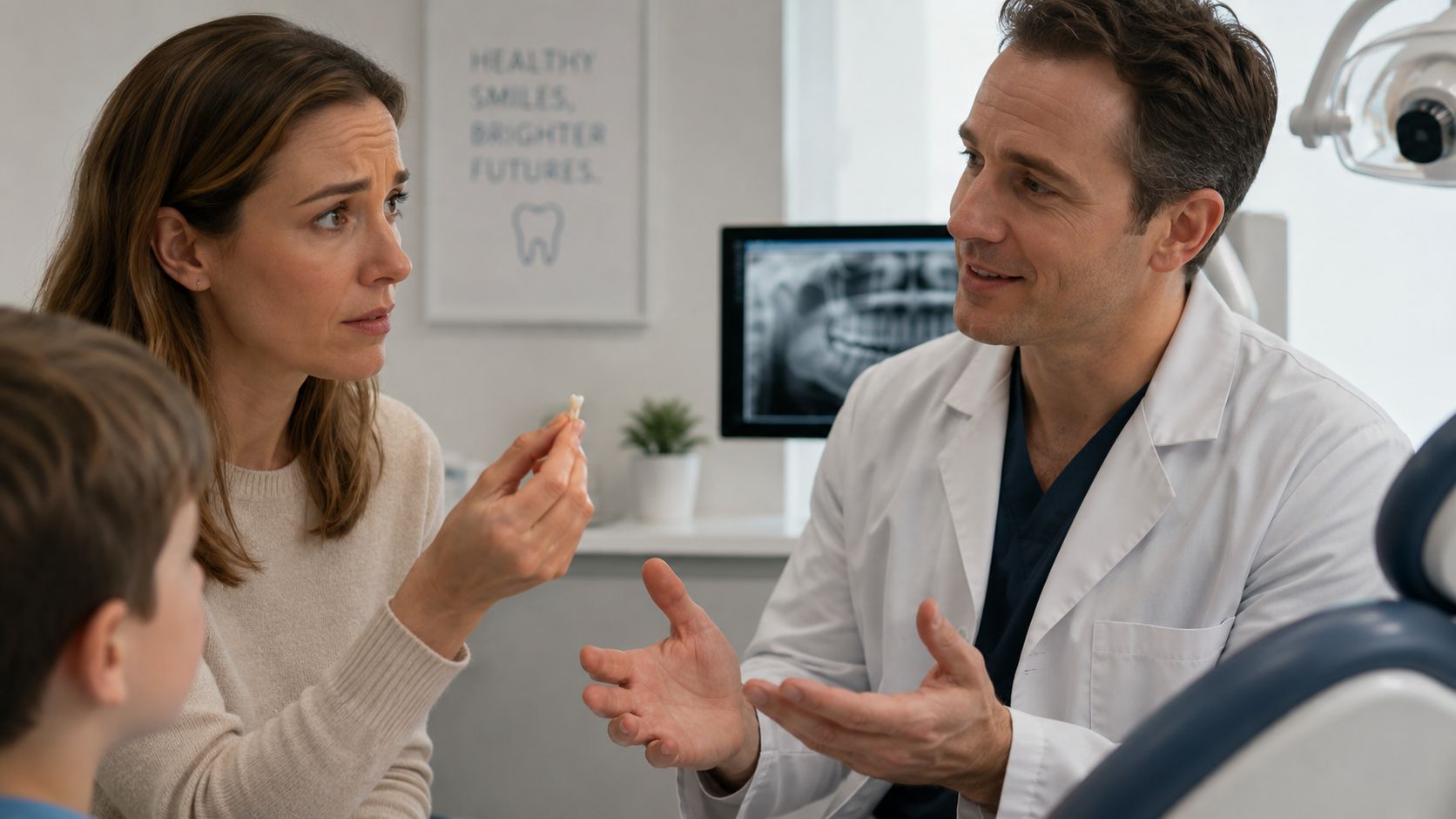
The approach is different when the tooth is a baby tooth. Parents often assume the same first aid applies, but it doesn't.
A baby tooth should not be put back into the socket. Trying to reinsert it can injure the developing permanent tooth underneath.
| Type of tooth | What to do |
|---|---|
| Permanent tooth | Time-sensitive first aid, possible reinsertion |
| Baby tooth | Do not reinsert, control bleeding, arrange prompt evaluation |
That distinction protects the child's long-term dental development.
Keep your child comfortable. Use gentle pressure with clean gauze if the socket is bleeding. Find the tooth so you know it isn't lost in the mouth or airway. Then call for guidance and arrange an exam.
For families who want more pediatric emergency guidance, our pediatric emergency dental care information covers what to watch for after a child's dental injury.
A knocked out baby tooth can still involve damage to the gums, nearby teeth, or the area where the adult tooth is developing. Even when reinsertion is off the table, the injury still deserves prompt attention.
By the time you arrive, the immediate first-aid window has passed and the focus shifts to diagnosis, stabilization, and pain control. Patients usually feel better once they know exactly what's happening next.
At the visit, the dentist will examine the tooth, the socket, and the surrounding tissues. Digital dental x-rays may be taken to look for root fragments, bone injury, or trauma to neighboring teeth. If the tooth can be repositioned or stabilized, that usually happens as soon as possible.
Emergency care often includes a few parts:
Not every trauma ends with a successful reattachment. That doesn't mean you're out of options. A full-service practice can also discuss restorative dentistry, tooth replacement, and longer-term smile repair.
Patients who need urgent guidance about pain, displacement, or a knocked out tooth can review the office's emergency dental care page before or while arranging treatment. In practical terms, that gives families one contact point for traumatic dental injuries, emergency exams, and next-step care.
Once you're in the chair, the job changes from saving minutes to making careful decisions about the tooth, the bone, and the rest of the bite.
Many emergency patients are frightened, embarrassed, or in pain. Children may be crying. Adults may be shaky from the fall or impact. A calm exam, clear explanations, and comfort options make the visit easier to handle.
That's especially important if the injury leads to additional treatment such as restorative work, tooth extraction, or replacement planning like dental implants near me searches often reflect. When needed, sedation dentistry can help anxious patients complete care more comfortably.
This injury is rarely experienced under ideal conditions. The tooth may be dirty. The patient may be crying. You may be in a parking lot, a kitchen, or on the sidelines of a game. Real knocked out tooth first aid is about decisions in messy conditions, not perfect textbook conditions.
HealthyChildren.org notes that while immediate action is best, saving a tooth can still be possible after an hour or more, and the priority remains keeping the tooth moist and getting urgent care quickly, even when you can't reinsert it because of bleeding, fracture, or the situation itself, as explained in this guidance for knocked out permanent teeth from HealthyChildren.org.
What if I can't get the tooth back in?
Stop trying if it's becoming difficult or confusing. Keep the tooth moist and come in. Failed home reinsertion is not the goal. Safe handling is.
What if the socket is bleeding a lot?
Use clean gauze and gentle pressure. Don't let the bleeding keep you from leaving for treatment.
What if the tooth is chipped, not fully knocked out?
That still needs urgent evaluation. A cracked or displaced tooth can involve the nerve, the root, or the supporting bone.
Is it still worth coming in if time has passed?
Yes. Don't assume it's too late. Bring the tooth and let the dentist examine the situation.
If you're in Fair Lawn, Ridgewood, or Glen Rock and need an emergency dentist, don't spend the next half hour comparing every local option while the tooth dries out. Call, explain what happened, and start heading in.
One calm conversation can help you answer the immediate questions that matter most:
If you're unsure, treat the situation as urgent and let the exam sort out the details.
If you need immediate help after a knocked out tooth, contact Dental Professionals of Fair Lawn right away for emergency guidance and prompt care. Fast action gives you the best chance to protect the tooth, control pain, and move forward with a clear treatment plan.