Icon White Spot Treatment in Fair Lawn, NJ
Looking for Icon white spot treatment in Fair Lawn? Learn how this drill-free procedure erases white spots and restores your smile's beauty. Contact us today!
Looking for Icon white spot treatment in Fair Lawn? Learn how this drill-free procedure erases white spots and restores your smile's beauty. Contact us today!
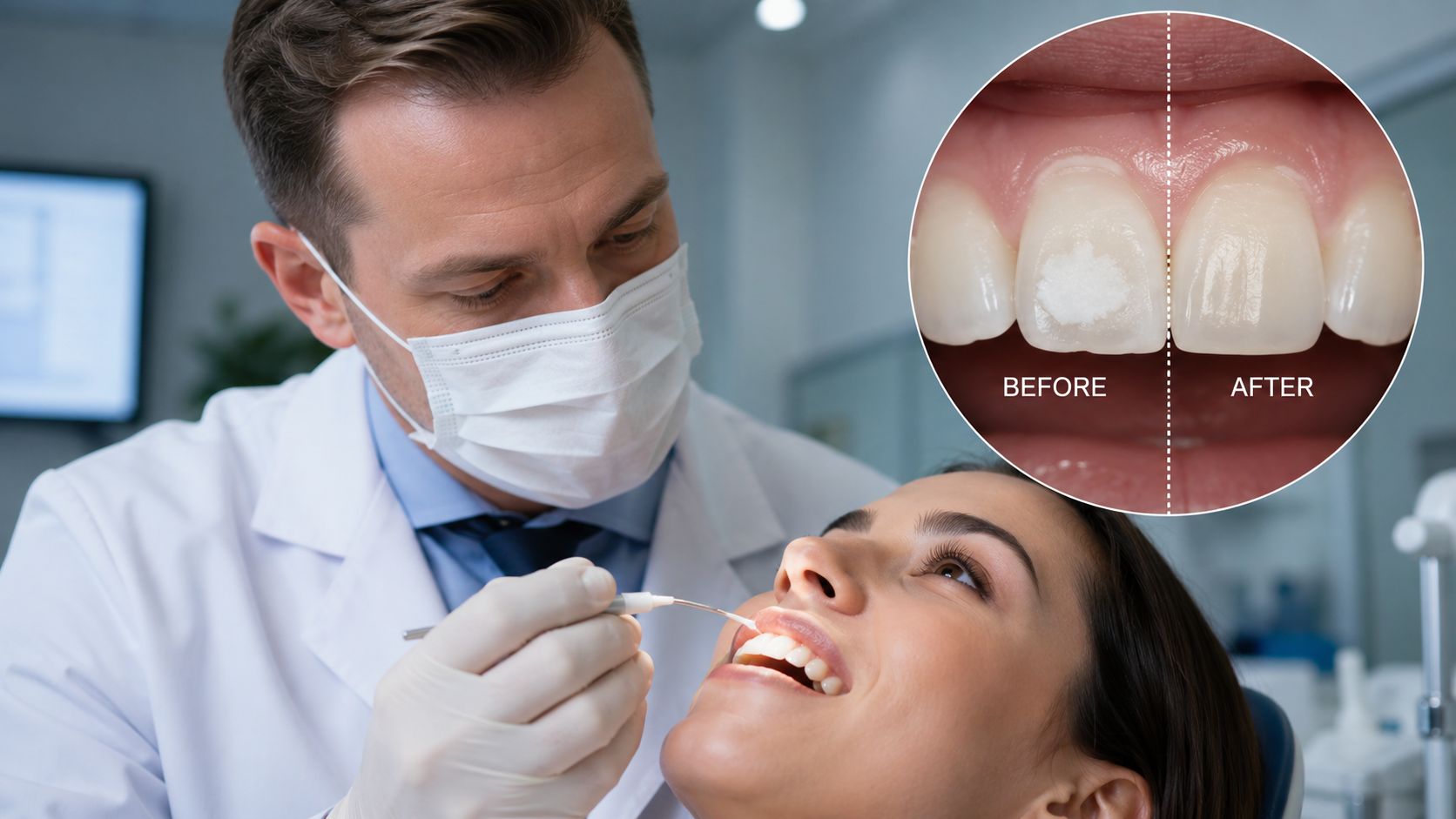
You catch it in the mirror first. Your teeth look clean, but one or two chalky white spots still stand out when you smile. A lot of people notice them after braces come off. Others have had them for years and assumed brushing harder or whitening more would eventually make them disappear.
They usually don't.
That can feel frustrating, especially when the rest of your smile looks healthy. In Fair Lawn, many patients looking for a cosmetic dentist near me or a dentist in Fair Lawn, NJ aren't dealing with pain at all. They're dealing with something more personal. They want to feel comfortable smiling again.
A patient might finish orthodontic treatment, feel excited to see straight teeth, and then notice small white patches on the front teeth that weren't obvious before. Another patient may have had faint spots since childhood and only recently decided they're tired of seeing them in every photo. These are common concerns, and they deserve a careful, modern approach.
At Dental Professionals of Fair Lawn, patients from Fair Lawn, Ridgewood, and Glen Rock often ask whether white spots mean decay, whether they need drilling, or whether teeth whitening will fix the problem. The answer depends on the cause, but many people are relieved to learn there's a conservative option called Icon white spot treatment.
Choosing a cosmetic dentist isn't only about technology. It's also about feeling heard. When patients visit a local office, they want a team that explains what's happening, shows them their options clearly, and recommends treatment that fits the tooth instead of jumping straight to a more aggressive fix.
That local trust matters online too. If you've ever wondered how practices become easier for neighbors to find, resources that explain how businesses optimize Google Business Profiles can help you understand why accurate local information matters when searching for care nearby.
White spots can look small to other people, but they often feel much bigger to the person who sees them every day.
Dr. Jody Bardash and the team take that concern seriously. If you're searching for a cosmetic dentist near me in Fair Lawn, NJ, and you want a solution that respects healthy enamel, Icon may be the treatment that finally makes sense.
White spots aren't the same as the yellow or brown stains many people think of when they hear the word discoloration. In most cases, these areas are part of the enamel itself. The enamel has changed, so the tooth reflects light differently.
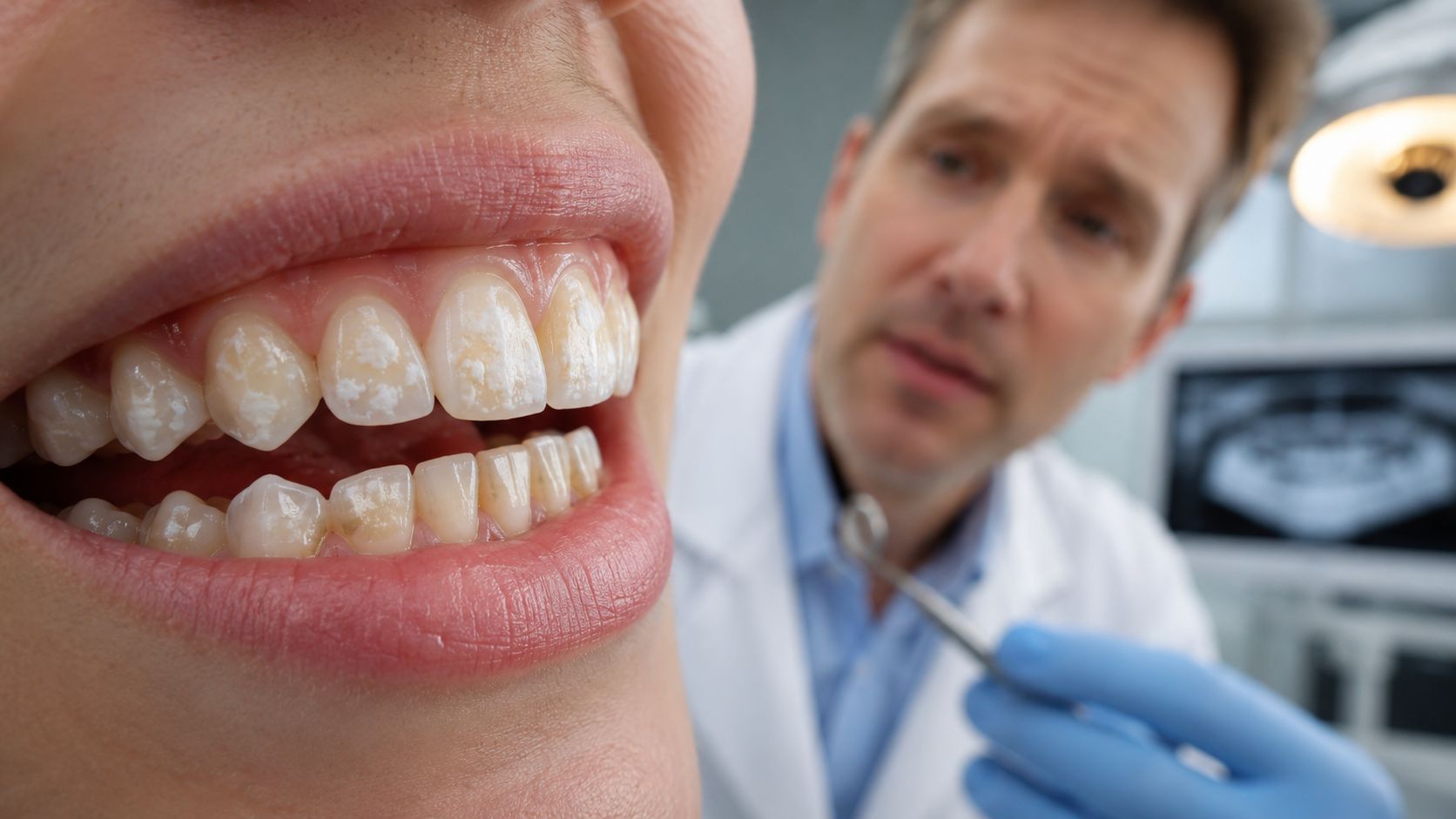
One common cause is demineralization. This happens when enamel loses minerals and becomes more porous. In the early stage, the tooth surface may still be intact, but it starts to look chalky or cloudy. That's why a white spot can be an early warning sign, not just a cosmetic issue.
Some white spots develop while teeth are forming. Mild fluorosis is one example. These spots often look more uniform and may affect several teeth in a similar way. Patients sometimes say, “I've had these forever,” which can be a clue that the spots formed earlier in life rather than after a recent change in oral health.
This is the pattern many families in Fair Lawn recognize right away. Brackets create extra places for plaque to collect, and those areas are harder to clean well every day. After orthodontic treatment, the teeth are straight, but white spot lesions may appear around where the brackets were attached.
A simple way to think about it is this:
Practical rule: If a spot won't brush off and looks built into the tooth, it's worth having a dentist evaluate it rather than treating it like a surface stain.
The cause matters because treatment should match the problem. A surface stain calls for one kind of care. A porous white spot inside enamel calls for another.
Icon works because it treats the structure of the white spot, not just the color you see on the surface. The simplest way to understand it is to think of the affected enamel like a sidewalk with tiny gaps. Those gaps change how light hits the surface. Fill the gaps, and the surface looks more even again.
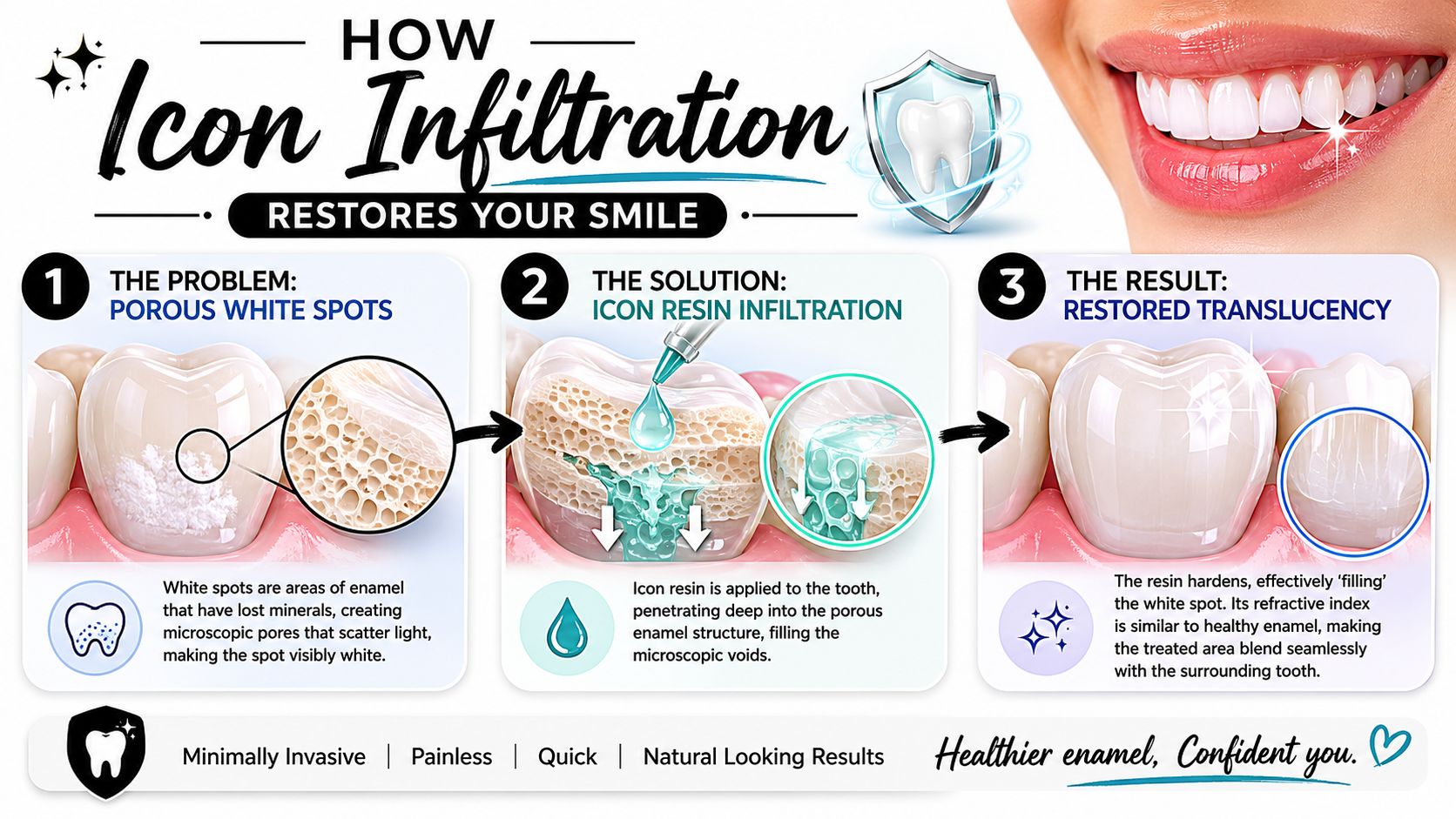
With Icon white spot treatment, a very fluid resin is placed onto the prepared area so it can seep into the microscopic pores within the enamel. Once that resin hardens, it changes the way light moves through the tooth. The treated area can blend much better with the surrounding enamel.
That's why patients often describe the result as the spot “disappearing” or “fading into the tooth.” The tooth hasn't been capped or covered with a bulky material. Instead, the porous enamel has been infiltrated.
For the right case, Icon is appealing because it's microinvasive. There's no traditional drilling away of healthy tooth structure to get a cosmetic result. In many situations, anesthesia isn't needed because the procedure stays within the outer enamel.
Patients also like that it can support both appearance and tooth preservation. When the lesion is in its early stage, sealing those porous areas may help stop further progression.
Here's what often makes people less anxious about Icon:
The goal isn't to make your teeth look fake or overly treated. The goal is to help the white area stop drawing attention so your natural smile shows through.
In the right hands, Icon sits in a very useful middle ground. It's more targeted than whitening and more conservative than restorative options used for deeper damage.
Most patients feel much more comfortable once they know what the appointment is like. The process is straightforward, and the steps are designed to help the resin move into the porous enamel as effectively as possible.
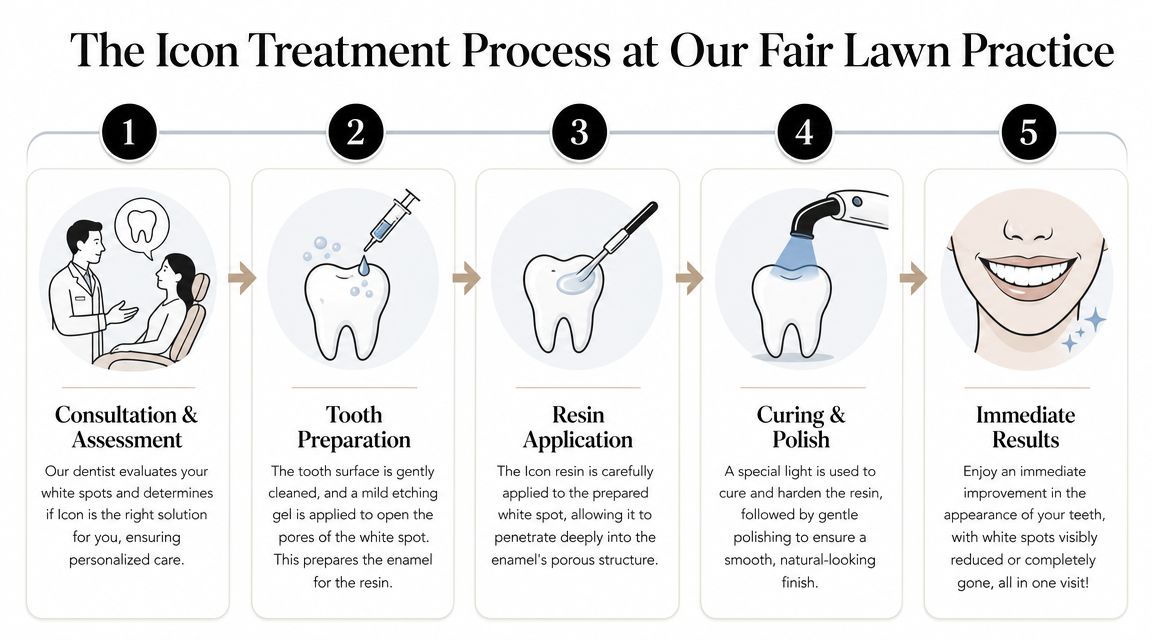
Your visit starts with a close look at the white spots, their location, and whether Icon is the right fit. Not every white area should be treated the same way. Some spots are shallow and ideal for infiltration. Others may be too deep or may reflect a different issue entirely.
If the teeth are a good match for treatment, the surface is gently cleaned so nothing blocks the material from contacting the enamel properly.
A special gel is placed on the white spot for a short period. This step helps open the outer layer so the resin can reach the porous area underneath. Patients usually don't describe this as painful. It's part of preparing the tooth.
After the gel is rinsed away, the tooth is dried with a special solution. This is often the moment patients find most interesting, because the spot may look dramatically less noticeable for a brief time. That gives a useful preview of how the final result may look once the resin is in place.
The Icon infiltrant is placed carefully over the prepared enamel and allowed to penetrate. Once it has soaked in, a curing light hardens the material. This locks the resin into the tooth structure.
The final step is polishing. That smooth finish helps the treated area blend with the rest of the enamel and leaves the tooth looking more natural.
Patients often appreciate this sequence because it feels manageable:
Patients often leave the office with a visible improvement the same day. The biggest emotional shift is often simple relief. They stop scanning their smile for the same distracting marks every time they pass a mirror.
For people who also visit a dentist near me for routine cleaning and exams, dental x-rays, or new patient exams, Icon can fit nicely into a broader cosmetic and preventive plan without turning into a major restorative procedure.
When a tooth is otherwise healthy, preserving that healthy structure matters. That's the central reason many patients prefer Icon over options that require more removal of enamel.
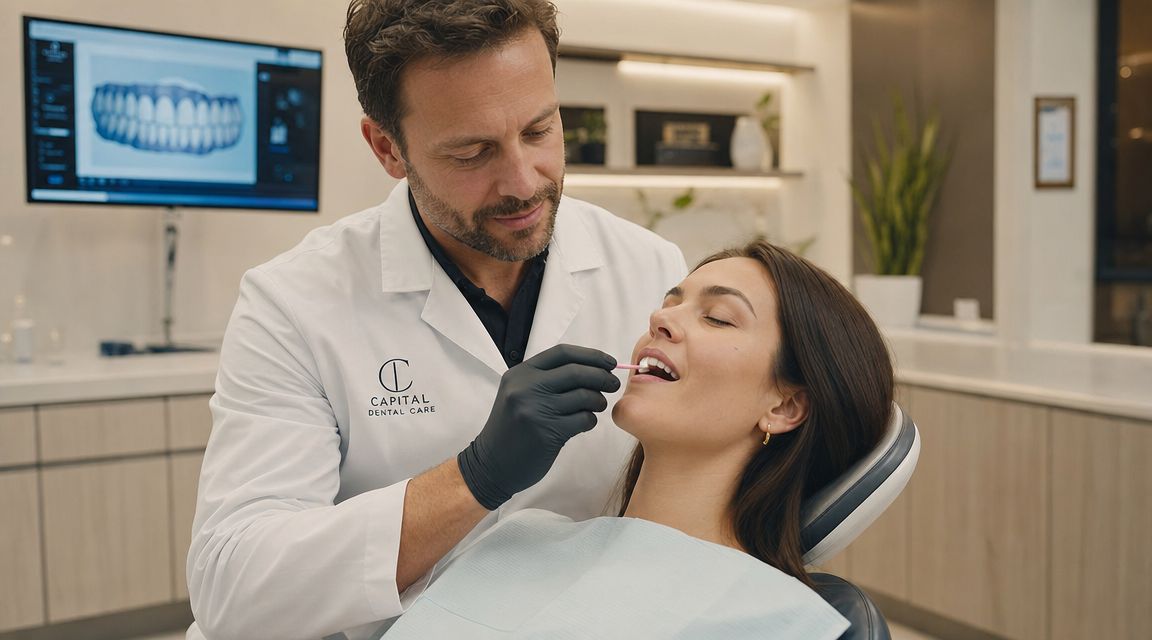
Icon is designed for a specific problem. It addresses white spot lesions without turning the tooth into a larger cosmetic project than it needs to be. That makes it attractive for patients who want improvement but don't want to jump straight to bonding, veneers, or more extensive restorative dentistry.
It's also a comfortable choice for many people who feel nervous about dental work. No drilling and no injections can make a big difference in how approachable treatment feels.
Another major advantage is efficiency. For suitable cases, treatment is completed in a single appointment. Patients don't have to spend weeks in a multi-step cosmetic process just to improve a few white spots on front teeth.
This can be especially helpful for teens after braces, adults preparing for photos or events, or anyone who has put off treatment because they assumed the fix would be complicated.
Long-term stability matters. A cosmetic treatment should still look good after the excitement of day one wears off. In a 4-year clinical report, Icon infiltration was evaluated at 6 months, 1 year, and 4 years, and the white spot lesions were not visible after application, with the cosmetic effect remaining stable over time. The authors also reported no important adverse events or side effects during the 4-year period in the 4-year clinical report on resin infiltration.
Benefits patients often value most include:
For many smiles, that combination is hard to beat.
White spots can be treated in several ways, but each option solves a different kind of problem. If you choose the wrong treatment, the result may be disappointing even when the dental work itself is done well.
| Treatment | Invasiveness | Visits Required | Best For |
|---|---|---|---|
| Icon infiltration | Microinvasive | Usually one visit | White spot lesions in otherwise healthy enamel |
| Teeth whitening | Low | Varies | General tooth shade concerns, not structural white spots |
| Microabrasion | More invasive than Icon | Varies | Very superficial enamel irregularities |
| Bonding | Moderately invasive | Usually one visit | Spots that need added material or shape correction |
| Veneers | More invasive | Multiple visits | Broader cosmetic changes or more severe defects |
A lot of patients assume whitening is the obvious first step. Sometimes it is, especially if the main concern is overall tooth shade. But whitening doesn't change the porous structure inside a white spot. In some smiles, it can make the surrounding tooth brighter and leave the white area standing out more.
If you're exploring brighter teeth as part of your cosmetic goals, it helps to separate two questions. Do you want lighter teeth overall, or do you want those chalky spots to blend in better? Those are not always solved by the same treatment.
Icon occupies a useful middle position. It's more targeted than bleaching and much less invasive than veneers. That's why it's often considered when the tooth is healthy overall but has a localized enamel issue that keeps drawing the eye.
A systematic review reported that teeth treated with Icon had a mean reduction in white spot lesion area of 61.8% immediately after treatment, while untreated control teeth showed minimal change, as described in this systematic review of Icon for white spot lesions. That's one reason clinicians view it as a fast, microinvasive aesthetic option for appropriate cases.
If a spot is deeper, darker, or part of a larger cosmetic concern, another treatment may make more sense. Bonding can cover defects while reshaping the tooth at the same time. Veneers can transform color, shape, and symmetry across several teeth. If you're curious about that approach, this overview of how teeth bonding works explains one common alternative.
For patients comparing options locally, a Fair Lawn office may offer Icon alongside other cosmetic services, restorative dentistry, Invisalign, and even treatments like tooth extraction, emergency dentist care, or dental implants near me searches for unrelated needs. The right choice depends on what the tooth needs, not what sounds most cosmetic.
Icon tends to work best when the white spots are on smooth enamel surfaces and the tooth structure is otherwise in good shape. That's why it's often a strong option for marks that show up after braces, mild to moderate fluorosis, or early enamel demineralization.
You may be a good fit if:
Icon isn't right for every case. If a white area is associated with a developed cavity, if the defect is very deep, or if there are brown changes that suggest a different type of enamel problem, your dentist may recommend a filling, bonding, or veneer instead.
That doesn't mean the outlook is bad. It just means the treatment should match the actual condition of the enamel.
Patients who are also weighing color improvement may want to compare resin infiltration with professional teeth whitening, because the two treatments solve different cosmetic concerns.
The best cosmetic treatment is the one that does enough, but not more than necessary.
An in-person evaluation is the only reliable way to know whether Icon is the right choice for your smile in Fair Lawn, NJ.
Most patients find it very comfortable. There's no traditional drilling for typical white spot treatment, and injections usually aren't part of the appointment. You may notice the steps of cleaning, etching, drying, and polishing, but the procedure is generally easy to tolerate.
Icon is chosen partly because it isn't meant to be a quick cosmetic cover-up. Clinical follow-up has shown stable cosmetic results over time in the study referenced earlier. Your own result also depends on good home care and regular dental visits.
In many cases, yes. It can be an appealing option for teens who develop white spots after braces because it's conservative and comfortable. A dentist still needs to confirm that the enamel pattern is appropriate for treatment.
Coverage varies. Some plans may treat it as cosmetic, while others may review it differently depending on the clinical situation. The most practical next step is to ask the office team to review your benefits and explain any out-of-pocket costs before treatment begins.
If you've been hiding white spots in photos or wondering whether they can be treated without drilling, schedule a consultation with Dental Professionals of Fair Lawn. Our team can examine the cause of the discoloration, tell you whether Icon is a good fit, and help you choose a treatment plan that supports a healthy, confident smile in Fair Lawn, Ridgewood, Glen Rock, and nearby New Jersey communities.