Icon Resin Infiltration Price: Fair Lawn Costs & Info
Learn the Icon resin infiltration price at Dental Professionals of Fair Lawn, NJ. Discover the procedure, its benefits, and if it's your ideal solution in 2026.
Learn the Icon resin infiltration price at Dental Professionals of Fair Lawn, NJ. Discover the procedure, its benefits, and if it's your ideal solution in 2026.
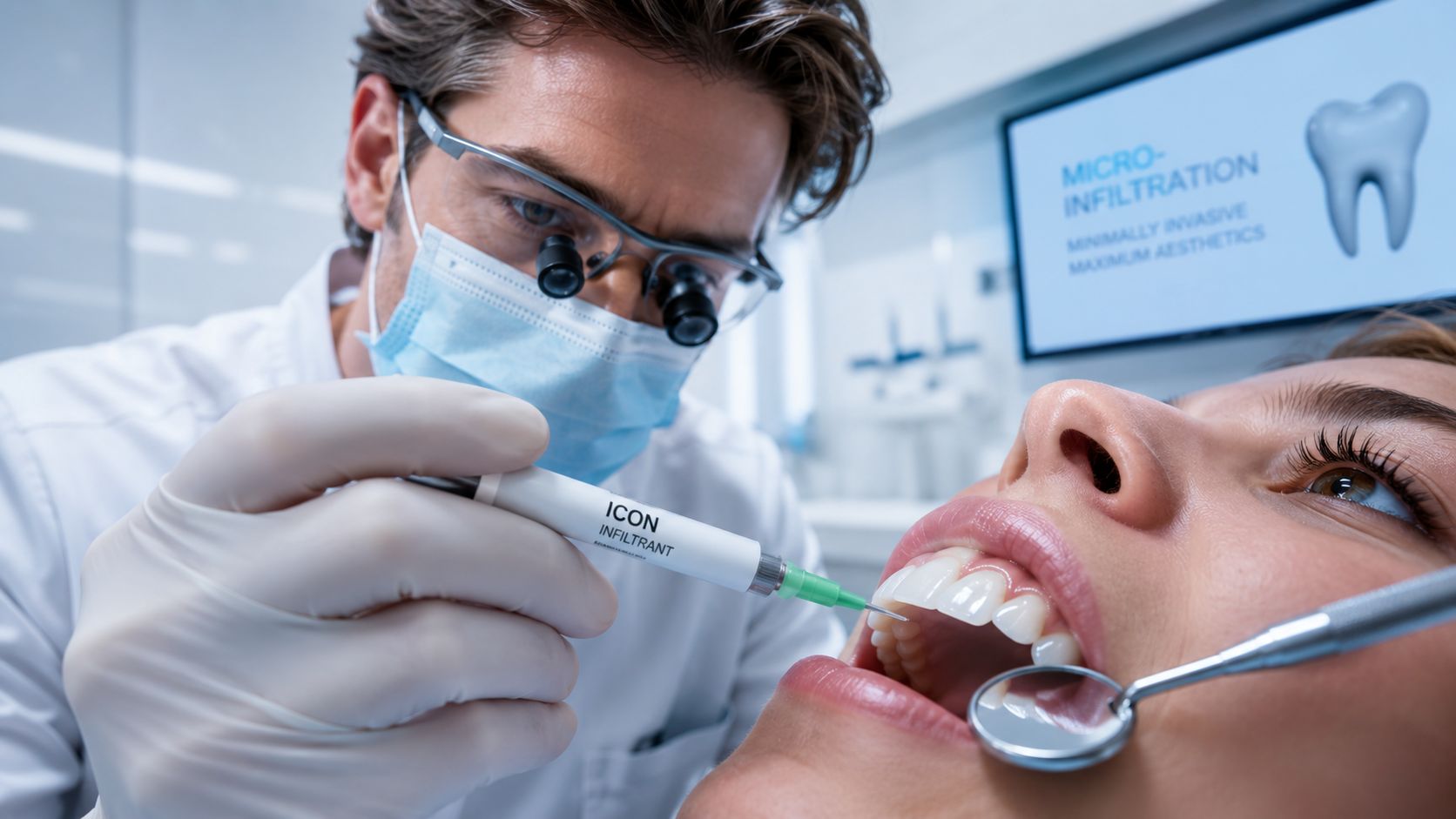
In the U.S., Icon resin infiltration usually costs about $200 to $400 per tooth, and a typical full case often falls around $300 to $1,000 total depending on how many teeth need treatment and how complex the white spots are. If you're looking at treatment in Fair Lawn, the final fee usually depends less on the resin itself and more on diagnosis, chair time, and how many front teeth need attention.
If you're reading this, there's a good chance you've noticed chalky white spots on your teeth every time you smile in the mirror or see a photo of yourself. Many people in Fair Lawn, Ridgewood, and Glen Rock feel frustrated by them because the spots can make otherwise healthy teeth look uneven, even after whitening. The good news is that there is a modern option that doesn't involve drilling away healthy enamel.
A common story goes like this. Someone finishes orthodontic treatment, feels excited to finally have straight teeth, then notices a few pale white patches on the front teeth that weren't obvious before. Another patient may have had these spots for years and assumed whitening would fix them, only to find that the spots still stand out.
That frustration is understandable. White spot lesions often sit within the enamel, so they don't behave like ordinary surface stains. They can make people self-conscious during conversations, family photos, or work meetings, especially when the spots are on front teeth.

Most patients don't start with the science. They start with a practical question. What will this cost me?
That's a fair question, because Icon resin infiltration price isn't set by one national fee. It's commonly charged per tooth, and one published U.S. clinic lists $300 per tooth, while broader listings start around US$101 to $104 per treatment, showing how much pricing can vary by market and case complexity, as noted by Charleston Dental Studio's Icon resin infiltration pricing overview.
Practical rule: If only one or two visible teeth need treatment, the total cost may stay closer to a small case fee. If several front teeth have noticeable lesions, the total usually rises because treatment time rises too.
Icon appeals to patients because it's a microinvasive treatment. That means the dentist works to improve the lesion while preserving natural tooth structure instead of drilling the tooth for a filling or covering it with a more aggressive cosmetic option.
For people searching for a cosmetic dentist near me or a dentist in Fair Lawn, NJ, that balance matters. You want something conservative, but you also want results that look natural. For the right white spot lesions, Icon often fills that role well.
White spot lesions are areas where the enamel has lost minerals. In plain language, that means the tooth surface looks cloudy because light reflects differently there than it does on the surrounding enamel. These spots often show up after braces, but they can also happen from enamel development issues or early demineralization.
They aren't always just a cosmetic nuisance. In some cases, they can represent an early stage of enamel damage. That's why it's important to have a dentist examine the area rather than assuming every white spot needs whitening or every spot is purely cosmetic.
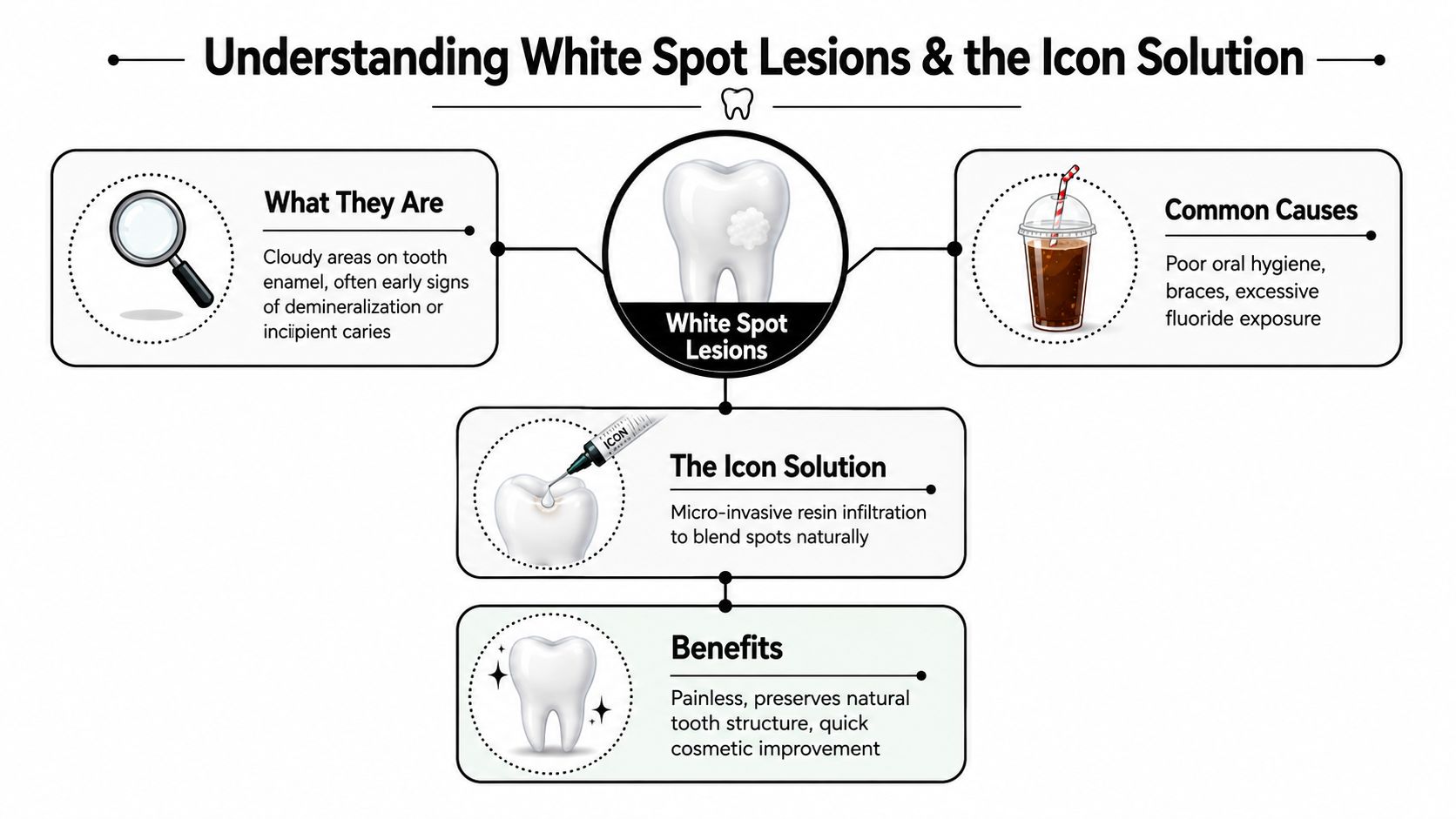
A simple way to picture Icon is to think about a small chip in a windshield. If you catch it early, a repair material can fill the porous area and make it less visible while helping stabilize it. Icon works on a similar idea inside the outer tooth layer.
The tooth is prepared so the resin can enter the porous enamel. Once it infiltrates that area, the enamel reflects light more evenly, so the spot often blends better with the rest of the tooth.
Patients usually like Icon because it is gentle. It doesn't involve the same kind of drilling many people associate with traditional restorative work. For the right case, it can be completed in one visit with a focus on preserving healthy enamel.
A published study on post-orthodontic white spots followed cases at 6 months, 1 year, and 4 years and concluded that infiltrating resins are an efficient microinvasive treatment that can be completed in a single, non-traumatic session with stable results, according to the ADA-linked clinical summary on resin infiltration outcomes.
White spots can look stubborn because the issue is often inside the enamel, not sitting on top of it.
Icon is usually considered when the concern is localized white spot lesions. It isn't the same thing as routine teeth whitening, and it doesn't replace every cosmetic treatment. A dentist still has to evaluate whether the lesion depth, location, and appearance make it a good candidate.
If you're also trying to protect enamel at home, it's helpful to learn habits that may rebuild enamel and reduce sensitivity. Home care doesn't replace in-office treatment for established white spots, but it can support stronger enamel going forward.
When patients ask about Icon resin infiltration price, they're often hoping for one simple number. In reality, the fee works more like a customized treatment estimate than a shelf price. The main reason is that some people need treatment on a single tooth, while others want several visible teeth improved in the same visit.
Published listings place Icon at $200 to $400 per tooth in the U.S. and around $300 to $1,000 total for a typical case, depending on how many teeth are treated and how complex the lesions are, according to WhatClinic's market overview of Icon resin infiltration pricing.

A few factors usually determine what you pay.
Patients sometimes assume a cosmetic procedure costs more because a large amount of premium material is being used. With Icon, that's usually not the case. The manufacturer guidance notes that 0.45 mL equals about 5.5 plunger rotations, and 1.5 to 2 rotations are usually enough for a case, with a recommendation to work with a slight excess, as described in Curion's Icon resin infiltration product guidance.
That detail matters because it shows why the fee is tied more to the clinical process than to resin volume. You're paying for careful case selection, isolation, application technique, and the judgment required to know when Icon is appropriate.
If two treatments use a similar amount of material but one requires much more precision and smile-zone artistry, the professional time usually drives the price.
For the right patient, value isn't just about the lowest fee. It's about whether the treatment addresses the actual problem while preserving healthy enamel. That's one reason Icon often sits in a middle ground. It costs more than over-the-counter cosmetic products but can be more conservative than treatments that cover or alter the tooth more aggressively.
This also helps explain why someone looking for a dentist near me or cosmetic dentistry in Fair Lawn may want an in-person evaluation before comparing options. A treatment that seems cheaper at first can become less appealing if it doesn't improve white spot lesions or if it removes healthy structure unnecessarily.
Insurance is where many patients get mixed messages. They hear that Icon "may be covered," but no one explains what that really means. The missing piece is often the way the procedure is classified.
Coverage often depends on whether the procedure is coded as cosmetic or restorative for decay prevention. That distinction can dramatically affect out-of-pocket cost. Recent ADA claims data for 2025 to 2026 shows that only 32% of Icon procedures coded as cosmetic receive reimbursement, while 78% of those coded as decay prevention are covered, according to The Smile Line Studio's summary of Icon insurance coding and reimbursement.
That difference is the part most patients never get told clearly enough. If the main purpose is improving appearance, coverage may be limited. If the clinical documentation supports restorative or preventive treatment of early decay, the insurance response may look very different.
Icon also has a formal ADA procedure code. The infiltration technique received ADA code D2990 in 2013, which made it easier for dentists and insurers to classify the service in the United States. In practical terms, that means the paperwork side of the procedure is more established, even though actual reimbursement still depends on the insurer's interpretation and your plan benefits.
A good question to ask your dental office is not only "Do you take my insurance?" but also "How will this procedure likely be coded based on my diagnosis?" That question often gives you a much clearer picture of your likely out-of-pocket responsibility.
Some patients pay directly because the treatment is excluded, considered cosmetic, or applied toward a limited benefit category. If that's your situation, it helps to review office payment options in advance. Dental Professionals of Fair Lawn provides financing information for dental and cosmetic care, which can help patients spread out treatment costs rather than delaying care.
If you're paying without insurance, practical budgeting advice can also help. This guide on essential tips for uninsured medical bills offers general strategies for asking clear cost questions and understanding payment terms before treatment begins.
Ask for two things before you schedule. An estimated treatment fee and an explanation of how the office expects the claim to be coded.
Icon isn't a replacement for every cosmetic treatment. It's best understood as the most conservative option for a very specific problem, visible white spot lesions in enamel. If your concern is a chipped edge, a dark overall tooth shade, or a major shape change, another treatment may fit better.
Whitening is for broad color improvement. Bonding is useful when a dentist needs to reshape or cover a localized defect. Veneers are a more extensive cosmetic redesign. Icon stands apart because it aims to blend white spots by infiltrating the enamel rather than just covering the area.
| Treatment | Best For | Invasiveness | Typical Cost | Longevity |
|---|---|---|---|---|
| Icon resin infiltration | White spot lesions and certain early enamel changes | Microinvasive | Varies by tooth count and case complexity | Can remain stable long term in appropriate cases |
| Teeth whitening | General yellowing or surface stain | Low | Varies by method and office | Maintenance usually needed over time |
| Cosmetic bonding | Chips, contour changes, localized masking | Moderate and tooth-specific | Varies by tooth and material | Depends on wear, habits, and maintenance |
| Veneers | Larger smile makeovers, shape and color transformation | More invasive than Icon | Higher than simpler cosmetic options in many cases | Long-lasting with good care |
Some patients compare bonding and veneers before they ever hear about Icon. If you're weighing those choices too, this explanation of cosmetic bonding vs veneers can help clarify where each treatment fits.
When a white spot can be improved without removing healthy tooth structure, many patients prefer to start there. That's especially true on younger teeth or front teeth that are otherwise healthy. Conservative treatment keeps future options open.
The key is not to force Icon onto a case it doesn't suit. Good cosmetic dentistry isn't about pushing one procedure. It's about matching the least invasive effective treatment to the actual diagnosis.
For many patients, the most reassuring part of Icon is how straightforward the visit feels once they understand the process. The appointment begins with an exam to confirm that the white spots are appropriate for this treatment and not better handled with another restorative or cosmetic option.
The teeth are cleaned and isolated so the working area stays dry. The enamel is prepared, the Icon resin is applied, and the material is cured and polished so the treated area blends as naturally as possible.
Patients often appreciate that this is usually a gentle experience. There isn't the same expectation of drilling that comes with a traditional filling visit, and the treatment is designed around preserving tooth structure.
The material is used in very small amounts. Manufacturer guidance notes that 1.5 to 2 plunger rotations are typically sufficient for a case, which is one reason the procedure is more about technique and chair time than bulk material use. The same product guidance also notes long-term value with results that can last at least 4 years in vivo in appropriate cases.
If you'd like to see a visual overview of how the treatment works, this short video gives a useful introduction:
After treatment, most patients return to normal routines quickly. Your dentist may recommend a few simple aftercare steps and regular follow-up during cleaning and exam visits to keep an eye on overall enamel health.
If you've been searching for a dentist in Fair Lawn, NJ, a cosmetic dentist near me, or a practice that can help with both appearance and long-term oral health, a consultation is the best way to find out whether Icon is the right fit for your smile.
If you're ready to get clear answers about white spots, treatment options, and expected costs, schedule a consultation with Dental Professionals of Fair Lawn. Patients in Fair Lawn, Ridgewood, and Glen Rock can come in for an exam, discuss whether Icon is appropriate, and get a personalized estimate that reflects their actual teeth, goals, and insurance situation.