How Long Do Dental Crowns Last? Fair Lawn Dentists Explain
How long do dental crowns last? Fair Lawn dentists explain average lifespan, key factors, & how to protect your crown investment.
How long do dental crowns last? Fair Lawn dentists explain average lifespan, key factors, & how to protect your crown investment.
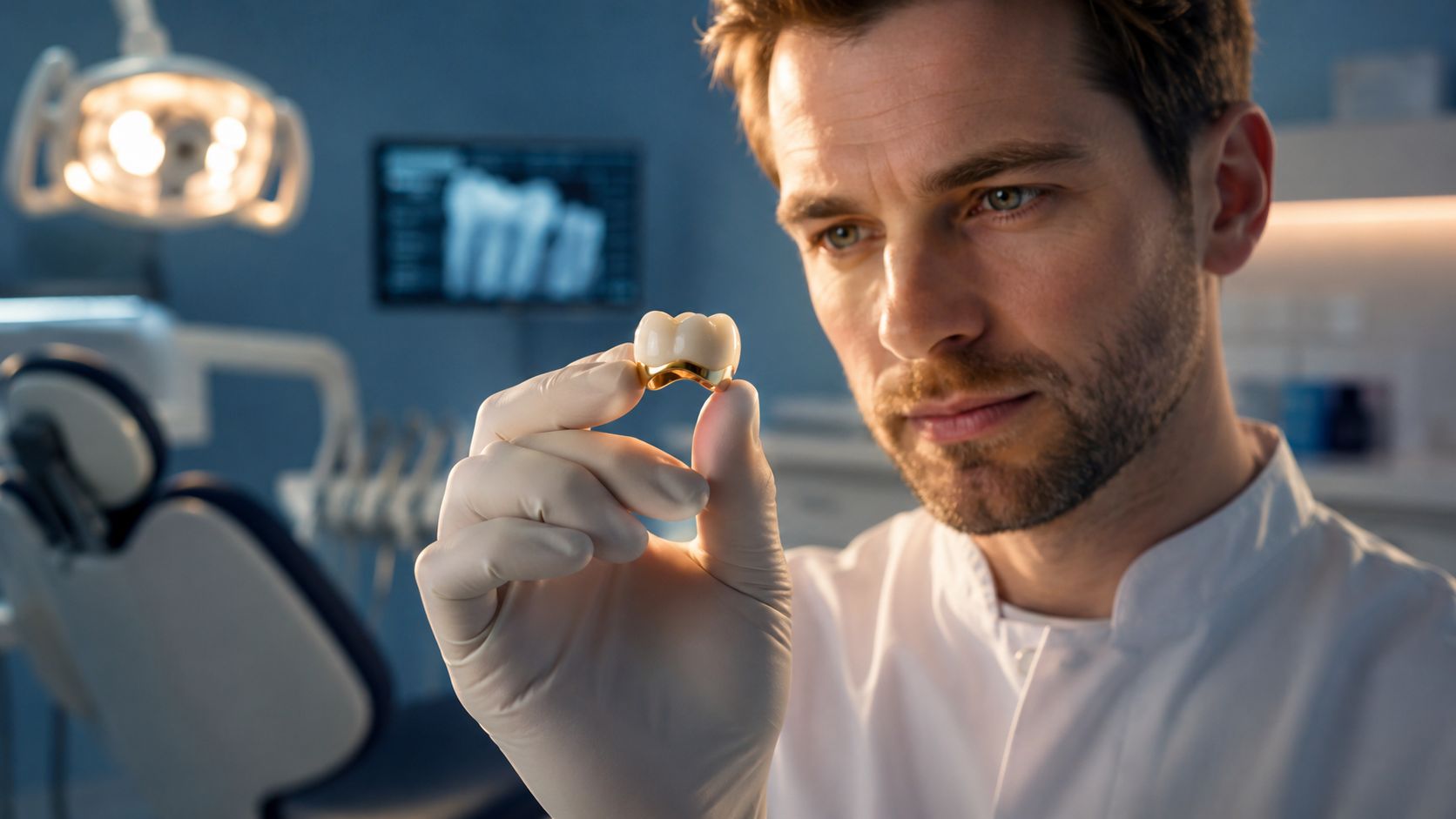
A well-cared-for dental crown typically lasts 10 to 15 years, and many last much longer. Insurance may suggest a shorter timeline, but that replacement cycle often reflects coverage rules, not the actual clinical lifespan of a healthy crown.
If you're looking at an older crown and wondering whether it needs to be replaced, you're not alone. Many patients in Fair Lawn ask that question after noticing slight sensitivity, a change near the gumline, or because their insurance says the crown is now "due." In practice, a crown should be evaluated based on fit, function, the health of the tooth underneath, and your bite, not just the calendar.
Crowns are one of the most reliable tools in restorative dentistry. They protect cracked teeth, reinforce heavily filled teeth, restore chewing strength after root canal treatment, and improve the appearance of worn or discolored teeth. For families searching for a dentist near me, a cosmetic dentist near me, or a dentist in Fair Lawn, NJ who will give honest guidance, it helps to understand what makes a crown last and what causes one to fail early.
A common scenario goes like this. A patient has a crown that feels fine, but they receive an insurance notice or hear from a friend that crowns only last a few years. That creates understandable worry. If you've invested in restorative or cosmetic dentistry, you want to know whether your tooth is still protected and whether you're facing another major dental bill.
The reassuring answer is that crowns usually last far longer than many people think. According to clinical data on crown lifespan and insurance replacement myths, most patients assume crowns "only last 5–8 years" because dental insurance mandates replacement every 5–8 years for coverage, but this is a billing policy, not a clinical lifespan. Clinical data shows 97% of crowns remain fully functional at 10 years and 85% maintain optimal performance at 15 years.
That distinction matters. Insurance companies create reimbursement rules. Dentists evaluate teeth.
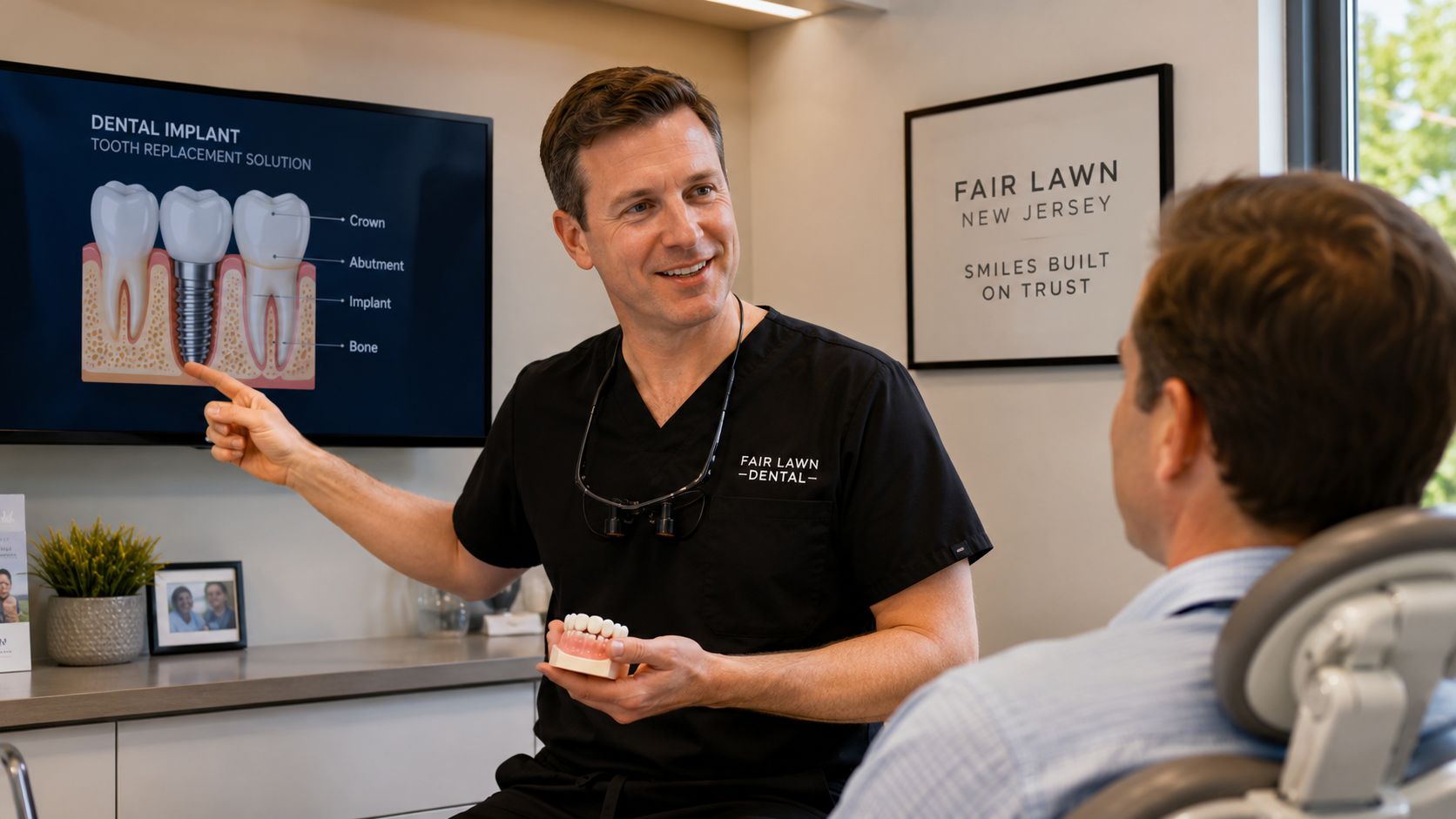
A crown can look old without being unhealthy. It can also look acceptable from the outside while the margin, cement seal, or supporting tooth needs attention. That's why a visual guess at home isn't enough.
What helps is a careful exam, updated dental x-rays when appropriate, and a real conversation about symptoms. In a practice that addresses a wide range of dental concerns, that same visit can also help if your concern turns out to involve tooth extraction, emergency dentist care, a broken filling, or planning for dental implants near me if a tooth can't be saved.
What matters most: A crown should be replaced when it is no longer protecting the tooth well, not simply because an insurance clock ran out.
A crown covers and supports a damaged tooth so you can bite comfortably and keep the tooth in function. In daily practice, crowns are often part of a bigger long-term plan that may include:
For patients in Fair Lawn, Ridgewood, and Glen Rock, the most useful question isn't just how long do dental crowns last. It's whether your current crown is still doing its job well.
Not all crowns wear the same way. Material choice affects strength, appearance, how the crown behaves under pressure, and where it works best in the mouth. A front tooth and a back molar often need different solutions.
| Material Type | Average Lifespan | Primary Advantage | Best For |
|---|---|---|---|
| Gold | Over 20 years, and can last decades with proper oral hygiene | Excellent durability | Back teeth where strength matters most |
| Porcelain-Fused-to-Metal | 10 to 15 years | Balance of strength and appearance | Many general restorative cases |
| All-ceramic or porcelain | 5 to 15 years, with some reaching 10 to 15 years or more under optimal conditions | Natural appearance | Front teeth and cosmetic zones |
| Zirconia | 20 years or longer potential, with some cases lasting 20 to 30 years with diligent care | High fracture resistance | High-load areas and patients who need more strength |
Gold crowns remain the durability benchmark. According to this review of crown longevity, gold crowns retain the highest survival rate of dental materials, with a 2015 literature review confirming a 95% survival rate over 10 years, and the potential to last decades with proper oral hygiene. The drawback is appearance. Most patients today don't want a gold crown in a visible area, but it remains an excellent functional choice for certain molars.
Porcelain-fused-to-metal crowns, often called PFM crowns, combine a metal substructure with a porcelain exterior. They have a long history in restorative dentistry because they offer a practical middle ground between strength and esthetics. They can work very well, especially when space, bite, and tooth position are favorable.
All-porcelain and ceramic crowns are popular in cosmetic dentistry because they blend beautifully with natural teeth. If you're comparing options for visible teeth and researching porcelain crown treatment options, this is often the category patients have in mind. The trade-off is that highly aesthetic materials can be less forgiving under heavy clenching or chewing habits.
Zirconia crowns are strong and versatile. They are often a smart choice for patients with heavier bite forces or for back teeth that take more stress during chewing.
Materials don't fail in the same way. The best crown isn't the one with the best marketing. It's the one that matches the tooth, the bite, and the patient's habits.
Patients often hope for a crown that is both the strongest and the most natural-looking. Sometimes that overlap exists. Sometimes it doesn't. In dentistry, better decisions come from matching the material to the situation.
If appearance matters most, ceramic may be the best fit. If force resistance matters most, zirconia or metal may make more sense. The goal isn't just to place a crown. The goal is to place the right crown.
Even the best crown material can fail early if the conditions around it are unfavorable. Longevity depends on a combination of the dentist's preparation, the health of the tooth, your bite, and your day-to-day habits.
A crown sits on a tooth, not in isolation. If the supporting tooth is structurally weaker, the crown has a harder job.
According to guidance on risks that affect crown survival, critical risk factors for crown failure include endodontic treatment on the underlying tooth, which increases hazard ratios for survival by 1.89. That means a crown on a tooth that has had root canal treatment often needs closer long-term monitoring than a crown on a vital tooth.
That doesn't mean root-canaled teeth can't do well. Many do. It means the foundation deserves respect.
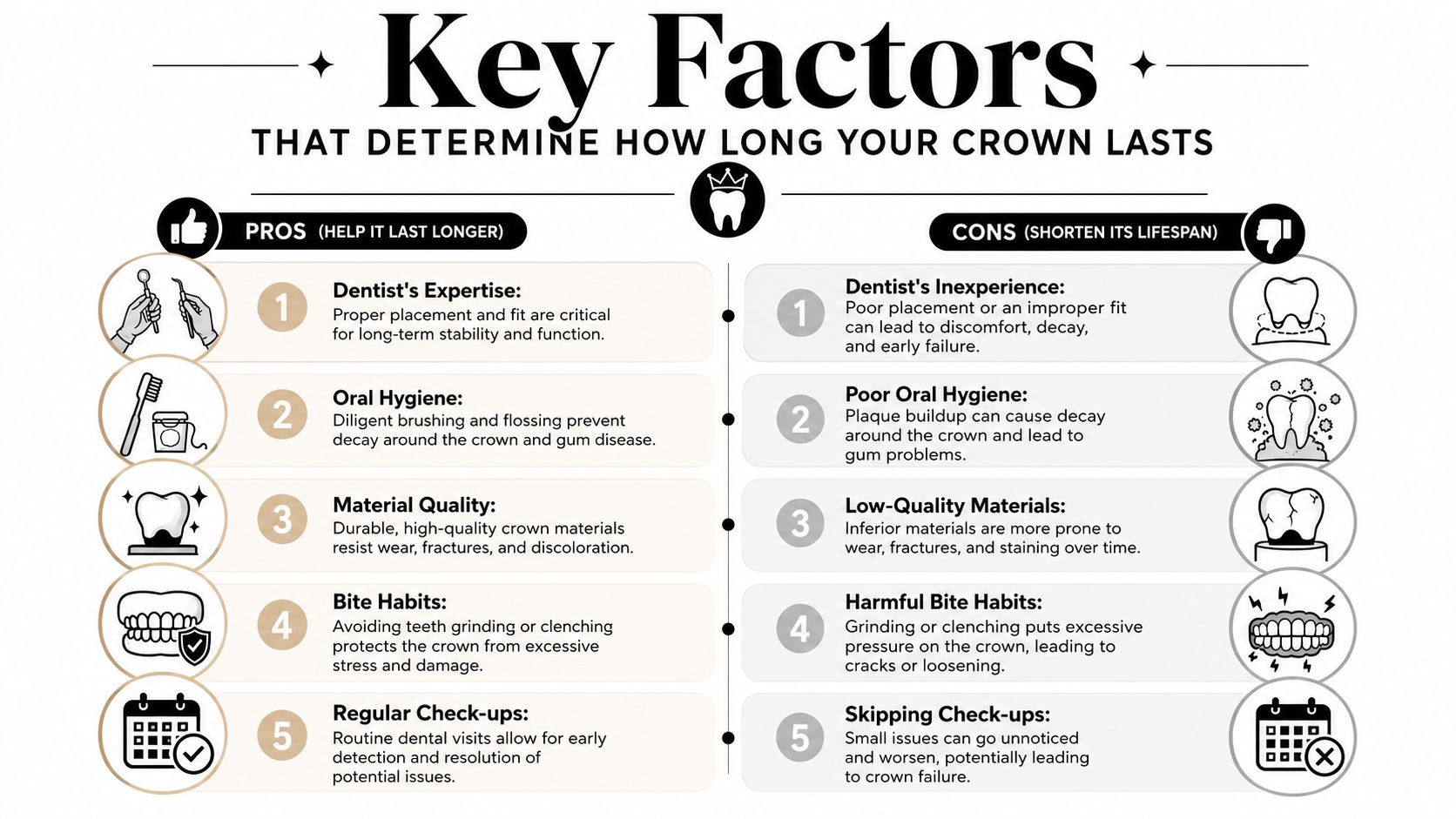
Where the crown sits in the mouth affects how it performs. The same source notes that posterior crowns on chewing teeth experience higher forces, about 150 to 200 psi, while anterior crowns experience about 30 to 50 psi, which directly affects material choice and longevity.
That surprises patients. Many assume front teeth have it easier because chewing pressure is lower. In reality, front crowns can still run into trouble if the material choice doesn't match edge-to-edge contact, nail biting, or nighttime clenching. Back teeth absorb heavier loads. Front teeth often face more chipping risks from certain habits and bite patterns.
Some crowns fail because of age. Many fail because of stress and neglect.
A strong crown on a weak tooth, in a heavy bite, with grinding habits, won't last as well as a carefully matched crown on a healthy tooth with good home care.
Crowns last longer when treatment planning is honest. That means choosing materials based on function, checking the bite carefully, and addressing contributing problems such as bruxism, gum inflammation, or unstable fillings nearby.
This is also why a well-rounded office matters. If a patient needs a crown, but the larger issue is bite imbalance, cracked tooth syndrome, missing teeth, or TMJ/TMD symptoms, the best outcome comes from treating the full picture instead of just cementing a restoration and hoping for the best.
Daily care has a direct effect on crown longevity. According to clinical statistics on how long crowns stay in good condition, approximately 90% of crowns remain in good condition after five years, and about 80-85% survive at the 10-year mark, with many lasting far longer. Those numbers make more sense when patients understand that crowns do best with consistent maintenance.

If you want your crown to last, focus on the areas patients often miss.
Patients with a temporary crown should be even more careful until the final crown is placed. If you're wearing one now, this guide on what a temporary crown does and how it works can help you know what to expect.
A crown doesn't need to hurt to need attention. These are the changes that should prompt a visit:
A short visual explanation can help if you're unsure what crown care should look like day to day.
If a crown feels different, don't wait for severe pain. Early evaluation usually gives you more options and less invasive treatment.
Patients often feel better once they know what the visit involves. A crown consultation is usually straightforward, and it starts with listening. If you're concerned about a cracked tooth, an older crown, pain while chewing, or changes in your smile, that concern guides the appointment.
A proper crown consultation typically includes a full exam of the tooth, the surrounding gums, your bite, and the restorations nearby. If needed, dental x-rays help check the tooth underneath and look for signs that can't be seen from the outside.
For new patients, this can be part of a broader new patient exam that also covers cleaning and exams, gum health, and any cosmetic concerns you may have. Sometimes a patient arrives thinking they need a crown and learns that bonding, a filling, or another conservative option is still possible. Other times, the exam shows that a tooth is no longer restorable and discussion shifts toward tooth extraction, dental implants near me, or another restorative solution.
Modern crown planning is more comfortable than many patients expect. Digital tools such as Itero digital scanning can help capture precise impressions without the mess of traditional putty. That matters because the fit of a crown affects comfort, bite, and long-term performance.
In a dental office that provides complete care, the consultation also looks beyond the single tooth. If you're dealing with crowding, wear, or cosmetic concerns, the conversation may include Invisalign, Six Month Smile, veneers, whitening, or broader smile design. If the problem began as an urgent fracture or lost crown, the visit may function more like an emergency dentist appointment and then transition into a long-term plan once pain is controlled.
The best crown consultations don't feel rushed. You should leave knowing:
Good dental care isn't just about placing a crown. It's about making sure the treatment fits the tooth, the patient, and the long-term plan for the whole mouth.
Dental crowns are designed to be durable, protective, and natural-looking. With the right material, healthy supporting tooth structure, and good home care, they can serve you well for many years. The biggest mistake patients make is assuming an insurance rule tells them when a crown has failed. It doesn't.
If you have an older crown, a tooth that hurts when you chew, visible wear, or a restoration that doesn't feel right anymore, it's worth having it checked. The same is true if you're exploring cosmetic dentist near me, need help with a cracked tooth, or want a long-term plan that may involve crowns, implants, whitening, or orthodontic care.
Patients in Fair Lawn, Ridgewood, and Glen Rock deserve practical guidance. That means preserving a good crown when it's still healthy, replacing it when it no longer protects the tooth, and choosing treatment based on what will hold up over time.
Whether your goal is relief from discomfort, better chewing function, or a brighter and more confident smile, careful diagnosis comes first. That's what helps restorative dentistry work the way it should.
If you're ready to have an old crown evaluated, discuss a cracked tooth, or explore cosmetic and restorative options, schedule a visit with Dental Professionals of Fair Lawn. Dr. Jody Bardash and the team proudly serve Fair Lawn, Ridgewood, and Glen Rock with complete dental care, including crowns, dental implants, emergency treatment, Invisalign, Six Month Smiles, cleaning and exams, and advanced cosmetic dentistry.