Emergency Dental Care Open Now in Fair Lawn, NJ
Seeking emergency dental care open now in Fair Lawn, NJ? Our dentists provide immediate pain relief and urgent treatment. Call us today for help in 2026.
Seeking emergency dental care open now in Fair Lawn, NJ? Our dentists provide immediate pain relief and urgent treatment. Call us today for help in 2026.
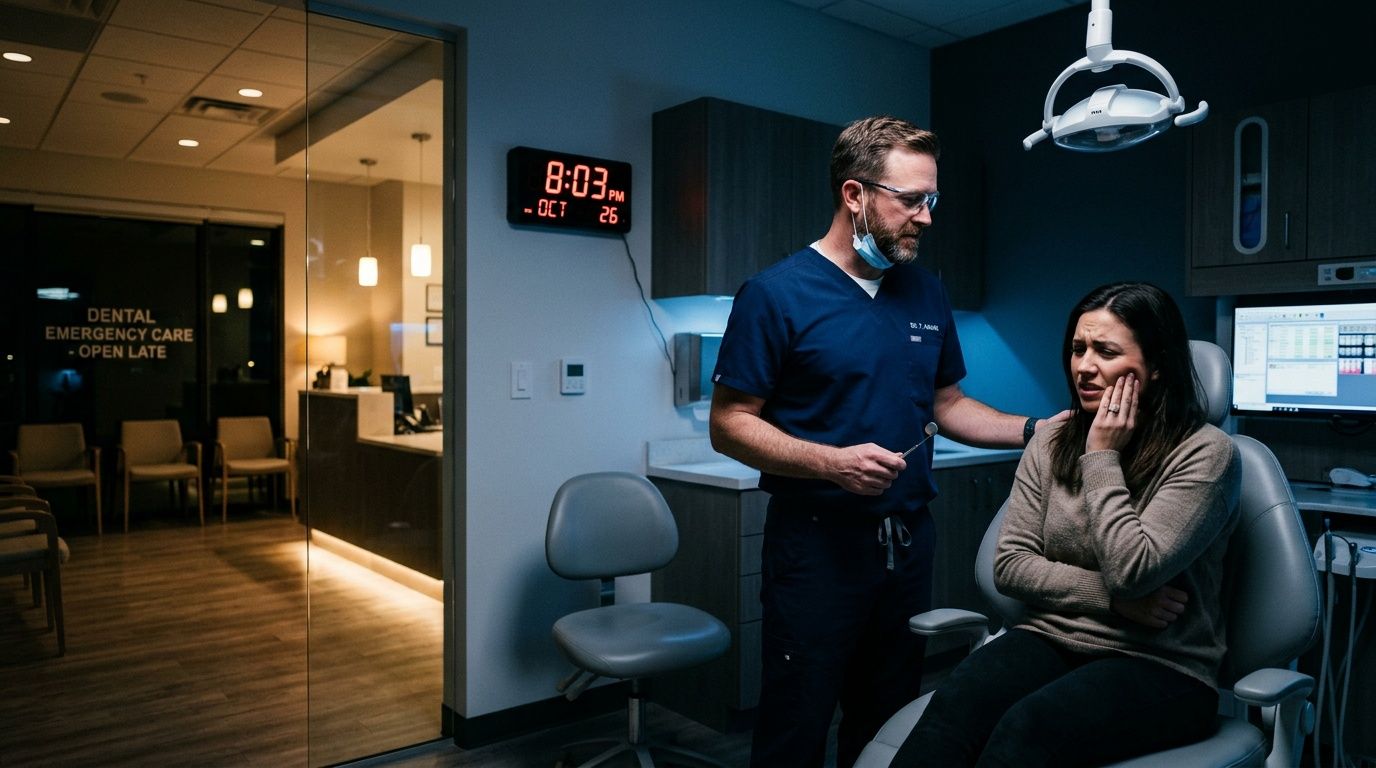
A tooth can start throbbing at 10 p.m. A child can chip a front tooth during practice. A crown can come loose in the middle of dinner. When that happens, those affected don't need a long explanation. They need to know two things right away. Is this dangerous, and who can help me now?
That's where calm triage matters. If you're searching for emergency dental care open now in Fair Lawn, you need practical answers, not guesswork. Pain, swelling, bleeding, and dental trauma can feel overwhelming, but the right next step is usually clear once you know what to look for.
For many dental problems, a hospital ER isn't the place that gives you the treatment you need. In the United States, approximately 2 million people visit hospital emergency departments for non-traumatic dental conditions each year, and those visits can cost nearly $2,500 on average, according to reporting that summarizes the trend in after-hours dental care and emergency use from NBC Right Now. In many cases, the faster and more effective answer is an urgent dental office visit.
If you're in Fair Lawn, Ridgewood, or Glen Rock and something suddenly feels wrong, start here. The goal is simple. Stay calm, protect the tooth or surrounding tissue if you can, and get to the right type of care as quickly as possible.
At home, dental emergencies rarely look dramatic at first. A toothache starts as pressure. Then it wakes you up. A cracked tooth seems minor until cold air hits it. A child says, “My tooth feels funny,” and you notice it's loose from a fall.

What patients usually need most in that moment is a way to slow the panic. Start with this. Most urgent dental problems are treatable, and many can be stabilized the same day when you act promptly.
Some problems should never wait long:
Don't judge the seriousness of a dental injury by appearance alone. A small crack can hurt more than a larger visible break if the nerve or root is involved.
A dental office can diagnose the cause of pain, take dental X-rays, numb the area, and move toward definitive treatment such as a filling, root canal start, drainage, repair, or tooth extraction. A hospital is essential for medical emergencies, but it often isn't where a tooth problem gets fully fixed.
That distinction matters in real life for families trying to decide what to do after hours in Fair Lawn. If the problem is dental, the goal is to reach a dentist who can treat the source, not only reduce symptoms for the night.
The first decision is the most important one. Are you dealing with a medical emergency that belongs in the ER, or a dental emergency that should be directed to urgent dental care?
Data summarized by Wheatland Dentist notes that 30 to 50% of ER visits for dental issues are for non-traumatic problems like abscesses or pain that could be definitively treated at a dental clinic, and that most toothaches, if not accompanied by swelling that compromises the airway, can be evaluated by a dentist within 24 hours as described here.

If any of the following apply, treat it as a medical emergency:
These situations can move beyond dentistry and need immediate medical evaluation.
These are problems a dental office is typically set up to handle:
If you're unsure whether your pain points to infection, decay, bite trauma, or a cracked tooth, this guide on common causes of dental pain can help you describe what you're feeling more clearly when you call.
| Symptom | Action to Take |
|---|---|
| Severe toothache without breathing trouble | Call us immediately for urgent dental evaluation |
| Knocked-out adult tooth | Call us immediately and bring the tooth correctly stored |
| Broken tooth with pain | Call us for same-day guidance |
| Lost filling or crown with sensitivity | Call us and protect the area until seen |
| Facial swelling affecting breathing or swallowing | Go to the ER immediately |
| Heavy bleeding that won't stop | Go to the ER immediately |
| Suspected jaw fracture or major facial trauma | Go to the ER immediately |
If you can breathe normally, control the bleeding, and the problem is centered on a tooth or gum, it's usually time to call a dentist, not a hospital.
Before you get in the car, there are a few things you can do at home that may protect the tooth and reduce discomfort.

Rinse gently with warm water to clear food debris and check whether something is trapped between teeth. If food is lodged there, floss carefully. Don't force anything under the gum, and don't place aspirin directly on the tissue.
A cold compress on the outside of the cheek can help when the area feels inflamed. Try to avoid chewing on that side until the tooth is examined.
Save any pieces you can find and bring them with you. Rinse your mouth with water and cover any area that's bleeding with clean gauze and light pressure.
Sharp edges can irritate the tongue or cheek quickly. If the edge is rubbing, avoid chewing there and call for instructions as soon as possible.
Keep the crown if you have it. Don't try to force it back into place if it doesn't seat easily.
That exposed tooth may become very sensitive to air, temperature, or pressure. Chew on the opposite side and keep the area clean until you're seen.
This is the most time-sensitive dental emergency. For a knocked-out tooth, replantation success is over 90% if the tooth is returned to its socket within 30 minutes but drops exponentially after 60 minutes, and proper storage in milk or a balanced salt solution is critical, as water can damage the root's cells, according to guidance summarized by Omni Dental Specialty in this emergency tooth article.
Use this sequence:
A knocked-out baby tooth is different from a knocked-out adult tooth. Don't try to push a baby tooth back in unless a dentist gives you that instruction.
A quick visual can help if you're dealing with injury and stress:
A few common reactions can make the situation worse:
The best at-home care is temporary. Its job is to protect the area until treatment begins.
When you're in pain, the hardest part is often making the first call. Keep it simple. Call the office, say that you're having a dental emergency, and describe the problem in one sentence first.
Useful details to have ready include:
A clear message helps the team triage quickly. For example:
“I'm in Fair Lawn and I have severe tooth pain with swelling on the lower right side.”
“My child fell and chipped a front tooth.”
“My crown came off and the tooth is very painful.”
If you're calling from Ridgewood or Glen Rock, say that too so the team can guide you on timing and arrival.
The person taking your call should help determine whether you need to come in right away, whether the issue can be stabilized with same-day guidance, or whether a next available urgent slot is appropriate. That's often the fastest way to move from panic to a plan.
If you're the kind of patient who checks online reputation before choosing care during a stressful moment, broad guidance on how patients assess provider feedback can be useful. This overview of Reviews To The Top for healthcare providers explains what people often look for when deciding whether a medical or dental office feels responsive and trustworthy.
Dental Professionals of Fair Lawn can be contacted through the practice website for urgent dental needs in Fair Lawn and nearby communities. When you call, focus on the immediate problem first. The team can walk you through next steps from there.
Most emergency visits feel easier once you know the flow. Patients often arrive tense, worried they'll hear bad news or need a long procedure immediately. In reality, the first priority is to identify the cause of the pain and stabilize the situation.
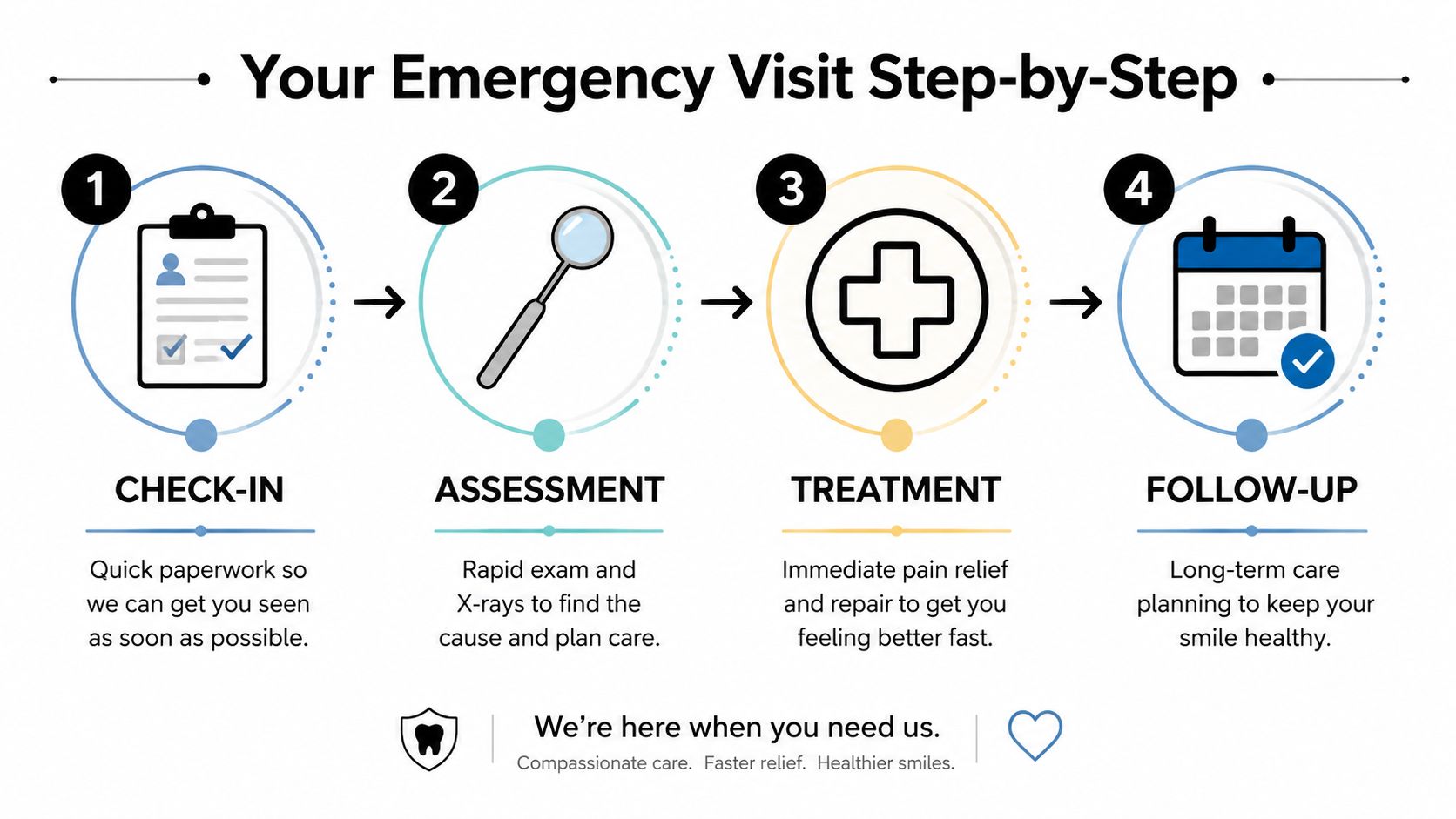
Expect a brief check-in, a review of your symptoms, and focused diagnostics. That may include digital dental X-rays and an exam of the painful area, surrounding gums, bite, and any damaged restorations.
If you like to come prepared, even glancing at general patient intake form templates can help you think about the details offices usually ask for, such as medications, allergies, insurance, and emergency contacts.
Bring:
Once the cause is clearer, the next step is relief and control. In similar urgent dental settings, a structured triage-to-treatment process results in 84% of cases involving definitive surgical procedures like extractions, with over 67% of referred patients successfully treated for immediate relief, according to supporting data summarized by Loud Family Dentistry in this emergency treatment overview.
That doesn't mean every patient needs an extraction. It means urgent care works best when the visit moves beyond guesswork and toward a concrete procedure when one is needed.
Possible treatment may include:
The goal of an emergency visit isn't always to complete every phase of treatment that day. Often it's to stop pain, control infection, protect the tooth, and create a safe plan for final care.
Many patients delay care because they're anxious, embarrassed, or afraid of discomfort. That's understandable. If that sounds like you, it helps to know that options such as sedation dentistry can make urgent treatment more manageable.
For patients who want a clearer idea of how the office handles emergency cases, the practice's dental emergencies page outlines the kinds of urgent issues commonly treated and what support is available.
True around-the-clock physical dental clinics are rare. Many after-hours concerns are first handled through phone triage, and some can safely be scheduled for the next available appointment. One source used for emergency access discussions states that 60% of after-hours calls can be resolved through phone triage or a next-day appointment, and that approach reduces patient no-shows by 25% according to Priority Emergency Dental Care. If your issue involves breathing trouble, uncontrolled bleeding, or major trauma, go to the ER.
The cost depends on what's needed. An exam and X-rays are different from a root canal start, repair, or tooth extraction. The most practical step is to call, describe the problem, and ask what information the office can provide before you arrive.
Many dental plans provide some level of coverage for emergency evaluation and necessary treatment, but benefits vary. Bring your insurance card and be ready to share your information at check-in so the office can review what applies.
That depends on the cause. Some emergencies end with a single visit. Others need a second step, such as a permanent crown after a temporary repair, follow-up after root canal therapy, replacement of a lost tooth, or monitoring healing after treatment.
Sometimes yes, sometimes no. Mild discomfort without swelling or trauma may be able to wait for prompt evaluation. Severe pain, swelling, a broken tooth with significant sensitivity, or a knocked-out adult tooth should not be pushed off if help is available.
If you need emergency dental care open now in Fair Lawn, contact Dental Professionals of Fair Lawn for urgent guidance and the next available care. If you're in Fair Lawn, Ridgewood, or Glen Rock and aren't sure whether your situation can wait, call and describe what's happening. A fast, calm conversation can tell you whether to come in immediately, protect the tooth at home for the moment, or seek medical emergency care.