Dental Implant Timeline: Your Fair Lawn, NJ Guide
Get a clear dental implant timeline from Dental Professionals of Fair Lawn. We guide Ridgewood & Glen Rock patients from consultation to final smile. Call us.
Get a clear dental implant timeline from Dental Professionals of Fair Lawn. We guide Ridgewood & Glen Rock patients from consultation to final smile. Call us.
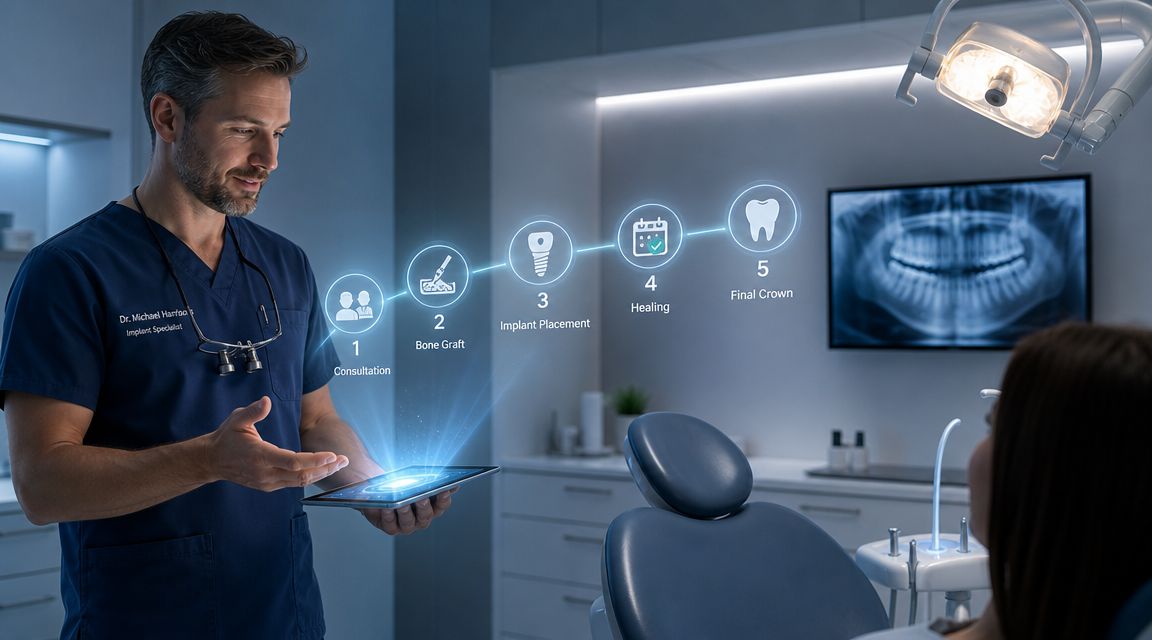
The full dental implant timeline usually takes 3 to 9 months, and it can take a year or more if you need preparatory care like a bone graft. If you're in Fair Lawn and dealing with a missing tooth, a loose tooth, or a tooth that's likely headed for extraction, the most helpful thing you can know upfront is that implant treatment is a process, not a one-day event.
A lot of patients start in the same place. They chew on one side, avoid smiling in photos, or keep telling themselves they'll deal with the problem after the next holiday, the next work project, or the next school event. Then the tooth breaks more, the gap becomes harder to ignore, or the discomfort starts to affect everyday life.
When considering a dentist near me, dental implants near me, or a dentist in Fair Lawn, NJ, a simple definition of implants is often not enough. You want a realistic calendar. You want to know what happens first, what can delay things, whether you'll be walking around with a visible gap, and when you'll finally be able to eat and smile normally again.
This guide is written the way I would explain it in a consultation. Plain language. No rushing past the confusing parts. No pretending every case takes the same amount of time.
Living with a missing tooth can feel like a small problem until it starts affecting everything else. Breakfast becomes awkward because one side of your mouth works better than the other. Talking to people at work or around town in Fair Lawn feels a little more self-conscious than it used to. If the tooth is in the back, you may not love the way chewing feels. If it's in the front, you may think about it every time you smile.
For many adults, a dental implant is the treatment that restores both function and confidence. It replaces the missing tooth root and supports a final crown that looks and feels much more like a natural tooth than a removable option. That matters if you're trying to eat comfortably, protect your jaw, and stop planning your life around one compromised tooth.
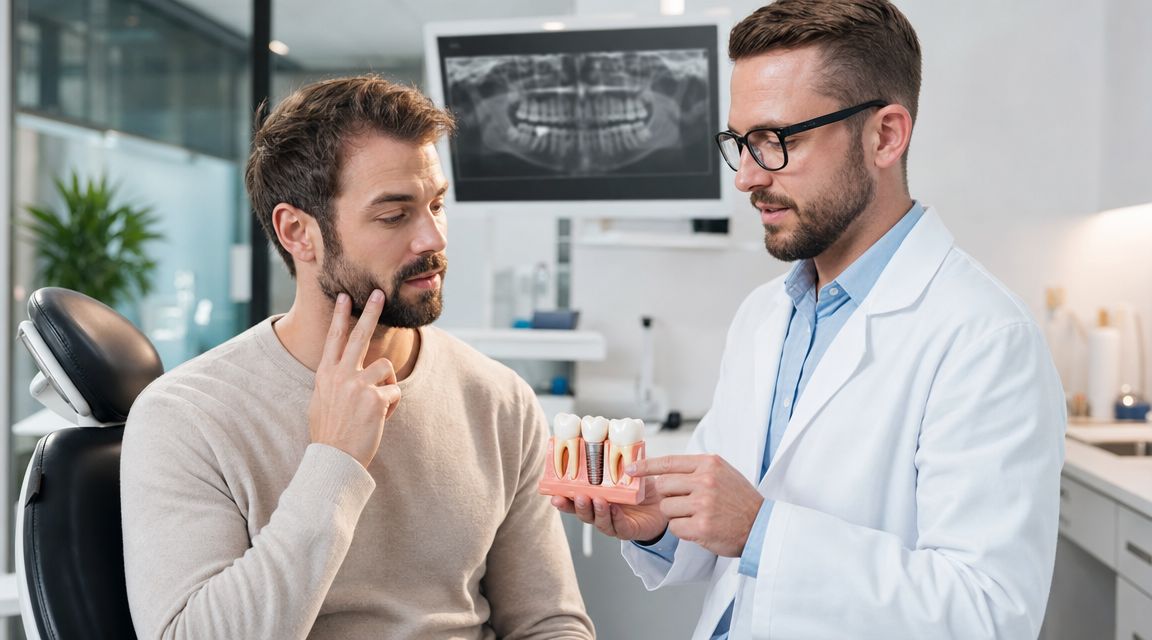
Dental implants aren't a fringe treatment anymore. Among U.S. adults missing at least one tooth, implant prevalence increased from 0.7% in 1999–2000 to 5.7% in 2015–2016, an eightfold increase, with projections suggesting it could reach 23% by 2026 if adoption accelerates. That same professional review notes that implants date back to the 1950s, and the field gained major momentum after titanium implants entered the market in 1982 because titanium made predictable osseointegration possible (implant prevalence and history data).
That rise matters for patients because it reflects something simple. More people now see implants as a dependable, long-term tooth replacement choice rather than a niche procedure.
Practical rule: The timeline isn't long because dentists want extra visits. It's long because bone healing takes time, and stable implants depend on that healing.
In a consultation, residents from Fair Lawn, Ridgewood, and Glen Rock frequently ask some version of the same questions:
A good implant plan should answer those questions in the first visit, not leave you guessing.
Your first implant appointment shouldn't feel like someone is pushing a treatment on you. It should feel like a planning visit where your dentist studies the problem, learns what matters to you, and maps out the safest path forward.
At a new patient exam, the conversation usually starts before anyone talks about surgery. What happened to the tooth? Has it been missing for a while? Are you worried about appearance, chewing, or both? Do you have dental anxiety? If you've been searching for an emergency dentist, tooth extraction, or dental implants near me, those details matter because they shape the treatment sequence.
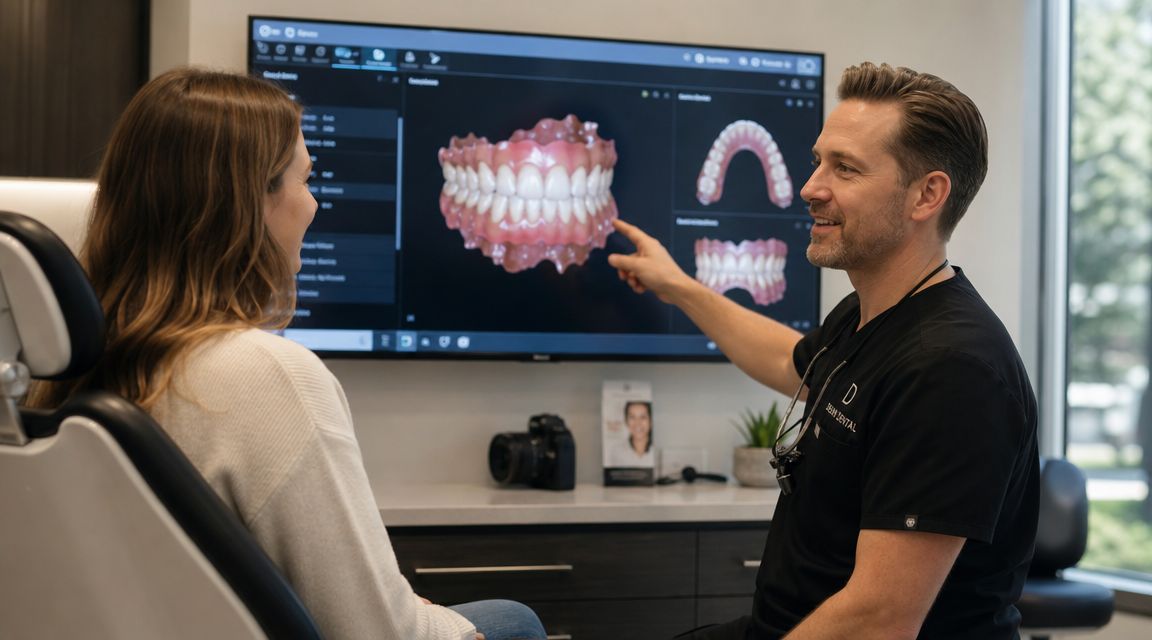
Most implant consultations include a combination of exam findings, imaging, and treatment discussion. The goal isn't only to confirm that an implant is possible. The goal is to decide how to do it predictably.
A typical first visit may include:
If advanced imaging is recommended, the reason is practical. A 3D CBCT scan can help your dentist evaluate available bone and the surrounding structures before surgery. That planning helps determine whether the site is ready now or whether steps like grafting need to happen first.
Implant treatment works best when the final tooth is considered from the beginning. In other words, the planning isn't just about placing a metal post in bone. It's about deciding where the final crown should sit, how your bite should come together, and what the gums should look like when treatment is done.
That's also why patient comfort deserves real attention. People who are nervous often do better when the office team slows the visit down, explains each step clearly, and offers supportive touches. If you've ever wondered what helps reduce dental anxiety in a clinical setting, this guide on making patients comfortable in dentistry outlines several practical ideas that match what many patients say they value most.
A personalized implant timeline is built from your bone, your bite, your health history, and your goals. Two missing teeth do not automatically mean two identical treatment plans.
For patients considering restorative dentistry, cosmetic dentistry, or even orthodontic treatment such as Invisalign or Six Month Smiles, this planning stage can also reveal whether other care should happen before or after the implant. That kind of sequencing can save time and frustration later.
This is the part of the dental implant timeline that many people don't hear about until after they're already invested in the idea of treatment. They assume the implant goes in, a crown goes on, and that's it. Sometimes it is that direct. Often, it isn't.
The hidden steps usually come down to one issue. An implant needs a strong foundation. If the existing tooth is failing, it may need to come out first. If the bone has shrunk after tooth loss, the site may need to be rebuilt. If the implant is planned in the upper back jaw, there may not be enough vertical space below the sinus.
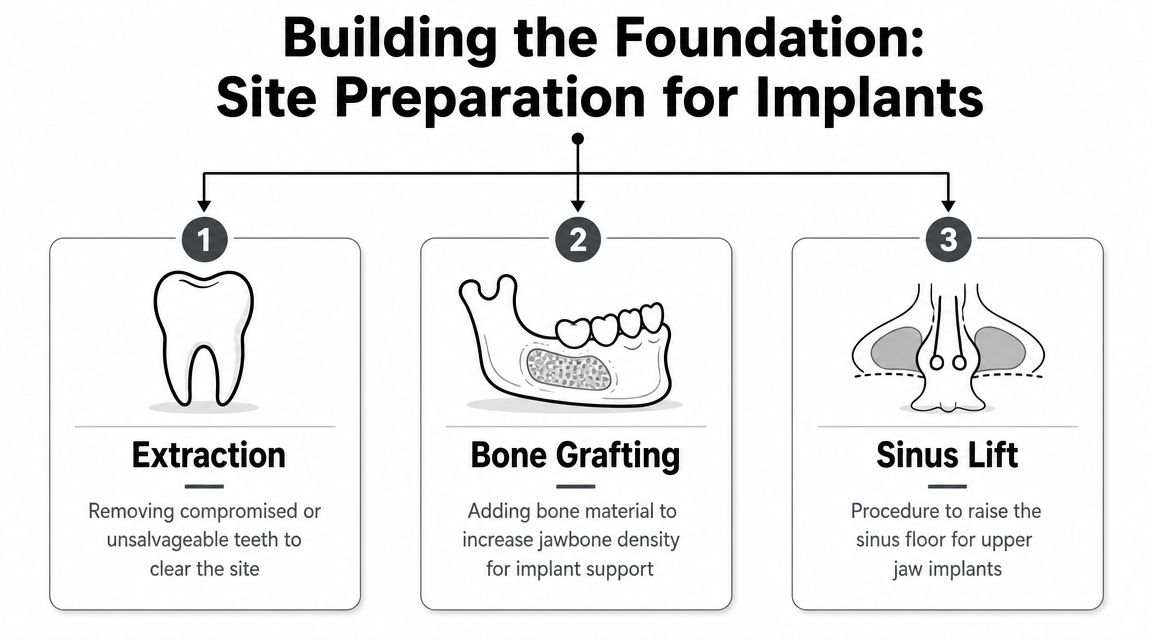
An extraction solves one problem. It removes a damaged or infected tooth. But extraction alone doesn't automatically create an ideal implant site.
After a tooth is removed, the bone and gum tissue begin to change. In some cases, your dentist may recommend preserving or rebuilding the area so the implant has enough support later. That's why treatment can feel slower than expected, even when the long-term plan is straightforward.
When bone grafting is needed, the timeline gets longer for a good reason. The added material needs time to mature before the implant can be placed or stabilized. Clinical sources report graft healing of about 4 months before implant placement, and overall treatment often extends to 9 to 12 months or longer in graft-dependent cases (bone grafting and implant timeline details).
That extra time can be frustrating when you're eager to be done. Still, skipping foundation work in a site that doesn't have enough bone can compromise the outcome.
If you'd like a clearer explanation of what grafting does and when it's recommended, this article on bone grafting for dental implants breaks it down in patient-friendly language.
The longer timeline in these cases isn't a delay for its own sake. It's what gives the implant a better chance to become stable and functional.
Patients often feel relieved when they finally hear this explained clearly. A staged plan can sound inconvenient, but it usually means your dentist is trying to build something durable rather than rush to the finish.
Once the site is ready, the treatment path becomes easier to understand. The core of the dental implant timeline is the healing period called osseointegration. That's when the jawbone fuses to the implant. It isn't visible from the outside, but it's the reason implants can function like stable tooth roots.
According to a clinical overview of the modern implant process, the full timeline typically falls in the 3 to 9 month range, with osseointegration itself commonly taking 3 to 6 months. Cases involving grafting or extraction can stretch to 9 to 12 months or up to 1 year in more complex situations, and upper-jaw implants often take longer than lower-jaw implants because bone density is typically lower in the maxilla (full implant timeline and osseointegration details).
Here's a visual overview before we walk through it in plain language.
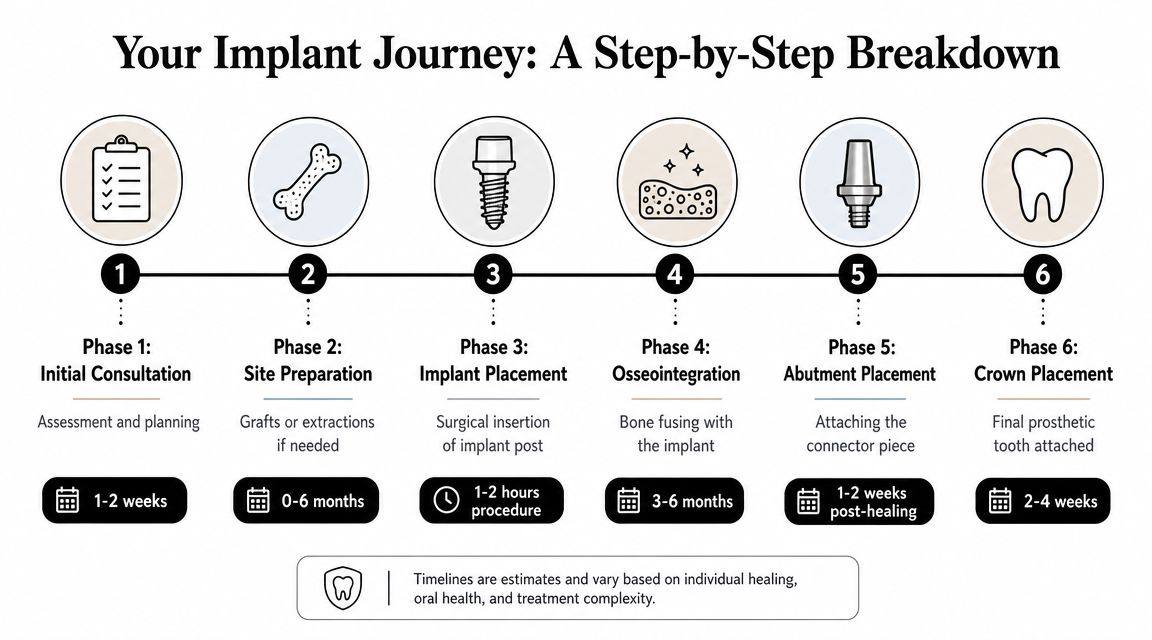
| Phase | Description | Estimated Duration |
|---|---|---|
| Initial consultation | Exam, imaging, and treatment planning | Varies by case |
| Site preparation | Extraction, bone graft, or sinus lift if needed | Varies by case |
| Implant placement | Surgical placement of the implant post | Surgical visit |
| Osseointegration | Bone fuses to the implant | 3 to 6 months |
| Abutment phase | Connector is attached after healing | Follow-up stage |
| Final crown | Custom restoration is placed | Final stage after healing |
A short video can also help if you prefer seeing the process before discussing it in person.
The first phase is planning. Your dentist confirms that the implant is the right solution, checks the available bone, and decides whether any preparation is needed first.
If no preparatory treatment is needed, you move directly to implant placement. If preparation is needed, that phase happens first and healing is allowed before the implant is placed.
On the day of surgery, the implant post is placed into the jawbone. For many patients, this is more manageable than they expected because the procedure is carefully planned and the area is thoroughly numbed. If anxiety is a major concern, sedation dentistry may be part of the conversation.
The visit itself is only one part of the story. A key milestone after surgery is not how the site looks the next day. It's whether the bone bonds properly to the implant over time.
This is the quiet middle of the process. The gums may look fairly normal long before the implant is ready for its final crown. That's where people often get confused.
You may feel better quickly, but the biology is still underway. Bone is remodeling around the implant surface and creating the stability that makes a long-lasting result possible. Lower-jaw sites often heal faster, while upper-jaw sites may need more patience because the bone is usually less dense.
After the implant has integrated, the next step is placing the abutment, the small connector that links the implant to the final restoration. Then impressions or digital scans are used to create a custom crown shaped for your bite and smile.
Once the crown is attached, the implant starts feeling much more like part of your normal routine. You can brush it, chew with it, and stop thinking about the missing tooth every time you eat or smile.
Patients often expect the hardest part of implants to be the surgery. In everyday life, the more confusing part is usually the healing window after surgery, when you look mostly normal but still need to protect the area.
A patient may return to a desk job quickly, feel fine talking with friends, and assume everything is fully healed. But healing happens in layers. Clinical guidance for patients notes that soft-tissue healing is visible and relatively quick, at about two weeks, while the underlying bone integration continues for 3 to 6 months (healing and daily life during implant recovery).
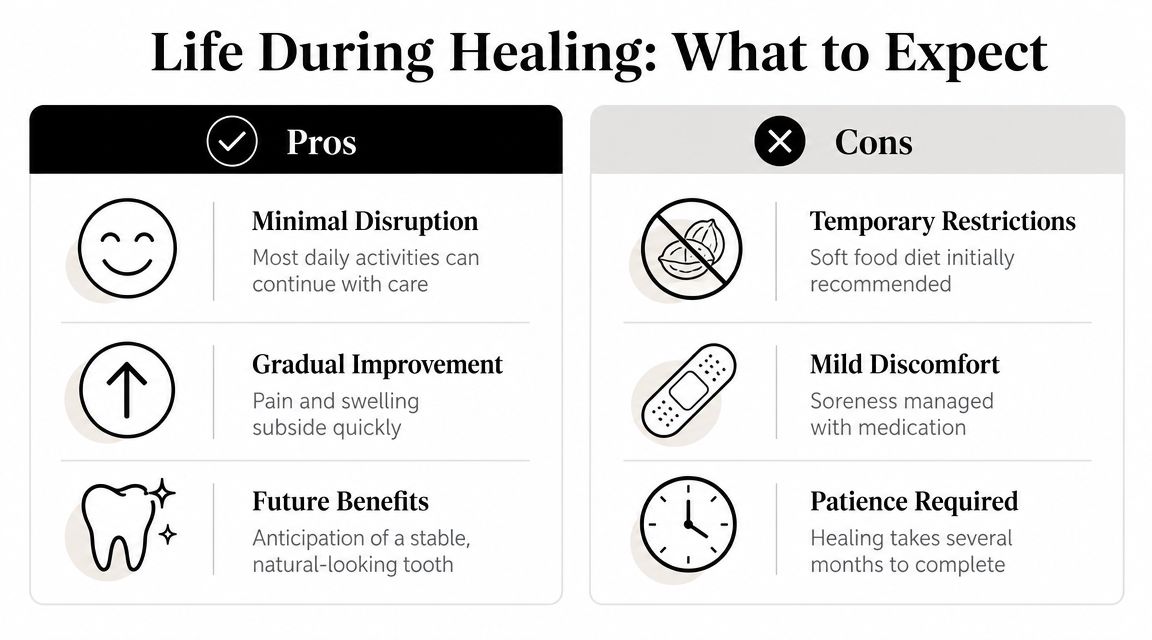
The first few days are about protecting the site and staying comfortable. The focus is on softer foods, gentle cleaning, and following the office instructions closely. Then life starts to feel normal again, even though the implant is still integrating.
That mismatch is why people need practical guidance. Feeling normal doesn't always mean the implant is ready for full chewing pressure.
During healing, judge progress by your dentist's instructions, not only by how "back to normal" you feel.
For some qualified patients, there may be accelerated full-arch solutions such as All-on-4, where a complete arch of teeth can be attached on the same day as surgery. That approach is different from the standard single-tooth implant timeline and isn't appropriate for every situation, but it's one reason a detailed consultation matters. At Dental Professionals of Fair Lawn, implant planning may also include options like sedation, photogrammetry, and digital scanning depending on the case.
Many patients inwardly worry about walking around for months with an obvious space. Sometimes a temporary tooth or other provisional solution can help during treatment. The right option depends on where the implant is located, how your bite comes together, and how much pressure the temporary would place on the healing area.
That's why "How long does it take?" is really two questions. One is about the biological timeline. The other is about what your life looks like while that timeline unfolds.
Once you understand the timeline, the next question is whether the process is worth it. For many patients, the answer comes down to daily function.
A well-planned implant doesn't just fill a space. It restores chewing in a way that feels more stable, supports a natural-looking smile, and helps the mouth function more evenly. That's a major reason implants are often considered the gold standard in restorative dentistry for single-tooth replacement.
Some benefits show up right away after the final crown is placed. You don't have to think as much about the gap when you smile or speak. Meals feel simpler again because you're not constantly adjusting where food goes.
Other benefits are quieter:
A good implant should disappear into your routine. You should notice the freedom it gives you more than the hardware itself.
For adults looking for a cosmetic dentist near me, an implant can also be part of a larger smile plan that includes crowns, whitening, or other aesthetic improvements. For patients focused on health, the value is often simpler. They want to chew comfortably, keep the rest of their bite balanced, and stop worrying about one damaged or missing tooth dictating their day.
If you've been putting this off, that's understandable. The words "implant surgery" can sound like a major leap. In reality, a clear plan and a realistic timeline can make the process feel much more manageable.
The first step is not committing to every phase today. The first step is getting answers. You want to know whether the tooth can be saved, whether an extraction is needed, whether the site has enough bone, and what your actual calendar would look like if you move forward. That's especially important if you're balancing work, family schedules, or upcoming events in Fair Lawn, Ridgewood, or Glen Rock.
Dr. Jody Bardash brings decades of experience to treatment planning, and the office offers the kinds of modern tools that help make implant care more precise and more personal. If cost is one of the reasons you've delayed care, it's worth reviewing practical options for paying for dental implants before deciding that treatment is out of reach.
A missing tooth rarely gets less complicated with time. Getting a consultation now can give you clarity, even if you decide to start treatment later.
If you're ready to talk through your options with Dental Professionals of Fair Lawn, schedule a consultation and get a personalized implant timeline based on your tooth, your bone, and your goals. Whether you need a straightforward single implant or a more staged plan after extraction or grafting, the next step is getting the right information from a local team in Fair Lawn, NJ.