Damon Braces Before and After: Real NJ Smile Transformations
See stunning Damon braces before and after results from our Fair Lawn, NJ practice. Learn how Damon braces work, the timeline, and if they're right for you.
See stunning Damon braces before and after results from our Fair Lawn, NJ practice. Learn how Damon braces work, the timeline, and if they're right for you.
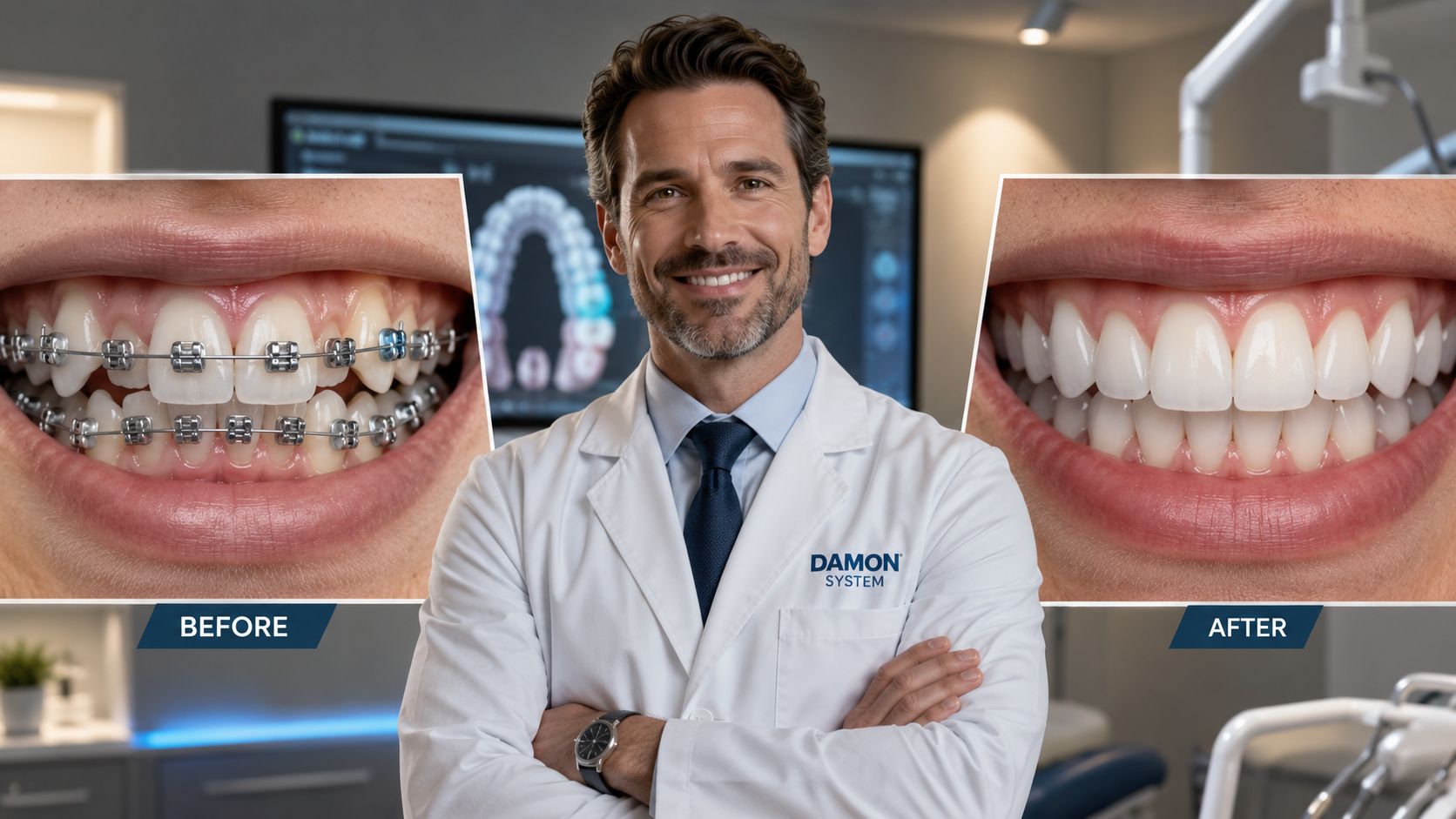
A patient from Fair Lawn recently told me she'd spent months cropping her smile out of family photos before finally searching for Damon braces before and after results. What changed her mind wasn't just seeing straighter teeth. It was understanding how orthodontic treatment could improve comfort, bite function, and facial balance at the same time.
If you're searching for a dentist near me in Fair Lawn, NJ because you're unhappy with crowding, spacing, or the way your bite feels, you're not alone. Many teens and adults from Fair Lawn, Ridgewood, and Glen Rock start in the same place. They want proof that treatment works. They want to know what their own smile could look like after braces. And they want to know whether the change is only cosmetic, or something deeper.
A “before” smile usually comes with more than one concern. Some people see crooked front teeth in photos. Others notice that their teeth don't come together comfortably when they chew. Some feel that their smile looks narrow, or that dark spaces show at the corners of the mouth when they grin.
Those concerns can affect daily life in small but constant ways:
Before and after galleries are helpful because they make treatment feel real. You can see alignment improve. You can see a smile look cleaner and more even. But photos alone don't explain why one result looks natural and another looks flat, or why a straighter smile can also feel healthier and easier to maintain.
Practical rule: The best orthodontic result isn't just straight teeth. It's a smile that fits the face, a bite that functions well, and a plan that respects long-term oral health.
That's especially important for adults comparing options like Invisalign, Six Month Smiles, or braces, and for families already looking for a cosmetic dentist near me or a new patient exam in Fair Lawn. Orthodontic treatment often overlaps with broader dental care. A patient may also need cleaning and exams, dental x-rays, restorative dentistry, or guidance about future cosmetic dentistry once alignment is complete.
The most meaningful Damon braces before and after changes usually show up in three places at once:
| What changes | What patients see | What patients feel |
|---|---|---|
| Alignment | Straighter teeth | Easier brushing and flossing |
| Smile shape | Fuller smile display | More confidence in photos |
| Bite relationship | Better tooth fit | More comfortable chewing |
That fuller picture matters if you're choosing treatment in Fair Lawn, NJ. A smile makeover should improve how your teeth look, but it should also support how your mouth functions every day.
The Damon System uses self-ligating brackets, which means the bracket holds the wire with a built-in slide instead of small elastic ties. The easiest way to picture it is a sliding door versus a latched gate. A sliding door moves with less resistance, and that lower-friction design helps the wire move more freely through the brackets.
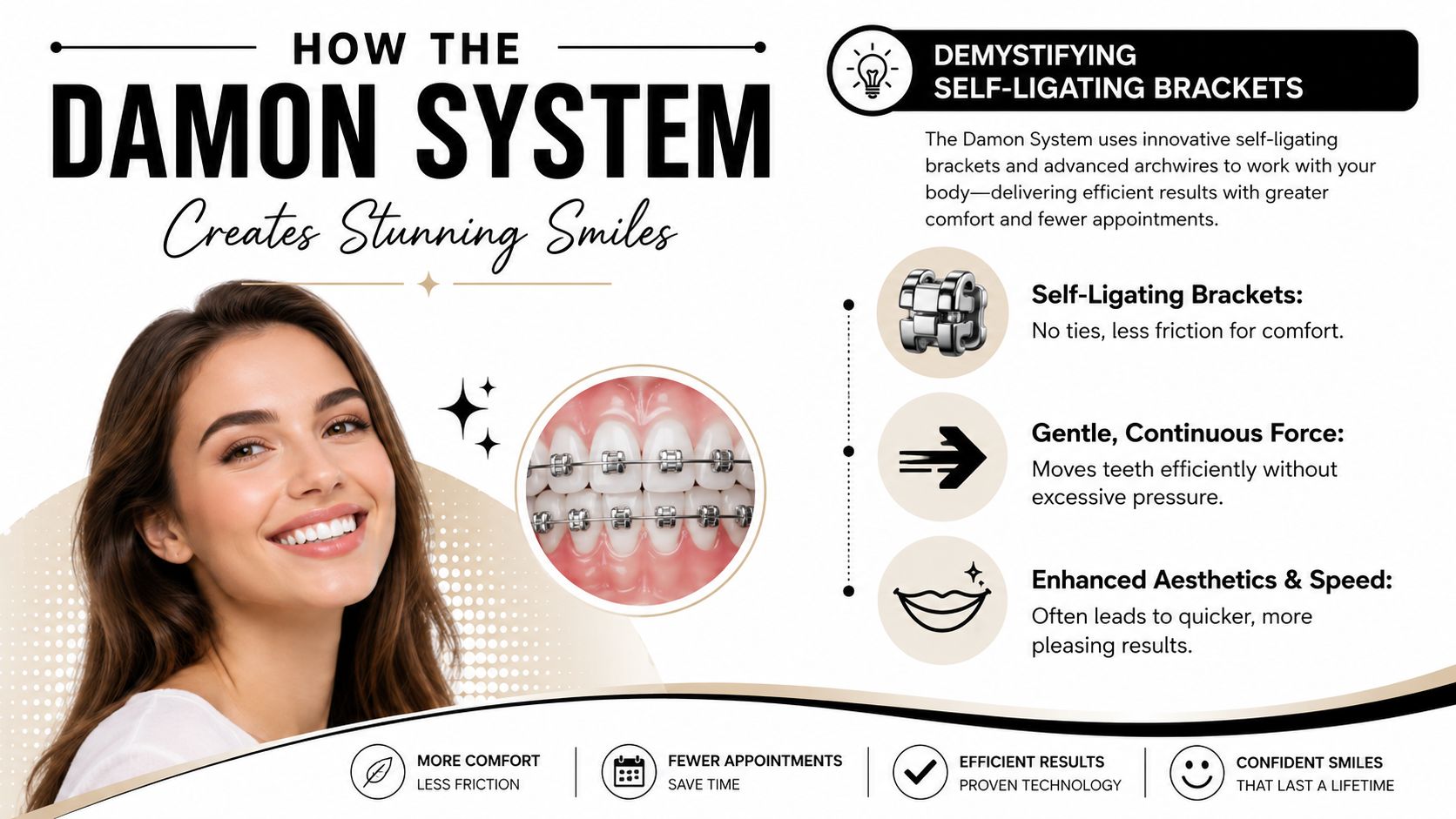
Traditional braces usually rely on elastic ties to hold the wire in place. Those ties can create more friction and can also trap more plaque. Damon brackets remove that step. The wire is still doing the work of guiding teeth, but the system applies force in a gentler, more controlled way.
That translates into a few practical advantages for patients:
Comfort isn't a minor issue. If braces constantly feel harsh, patients get discouraged fast. One reason many people ask about Damon is the feel of the system during adjustments. According to clinical data on Damon braces discomfort after adjustments, patients with Damon braces report 60% less discomfort after adjustments compared to traditional braces, primarily because there are no elastic ligatures and the slide mechanism applies gentler, low-friction force.
That doesn't mean treatment is sensation-free. Teeth are still moving, and pressure is part of orthodontics. But lower-friction mechanics can make the process more tolerable, especially for teens, busy adults, and anxious patients who already feel nervous about getting braces.
Damon works well when the treatment plan is realistic and the goals are clear. It's a strong option for patients who want fixed braces with a more compact design, especially if they're concerned about comfort, oral hygiene, or the look of their final smile.
It isn't magic. The bracket system doesn't replace diagnosis, planning, or patient cooperation.
Lower friction helps. Good mechanics help. But orthodontic success still depends on the case itself and how consistently the patient follows instructions.
If you want to compare how this system is used in practice, the Damon System treatment page gives a useful overview of the appliance and who may be a good fit for it.
One of the first questions patients ask is simple. How long will this take? With Damon braces, the answer depends on crowding, bite problems, and how consistently the patient follows through with care instructions. Still, there is a predictable treatment flow, and knowing the stages makes the process much less stressful.
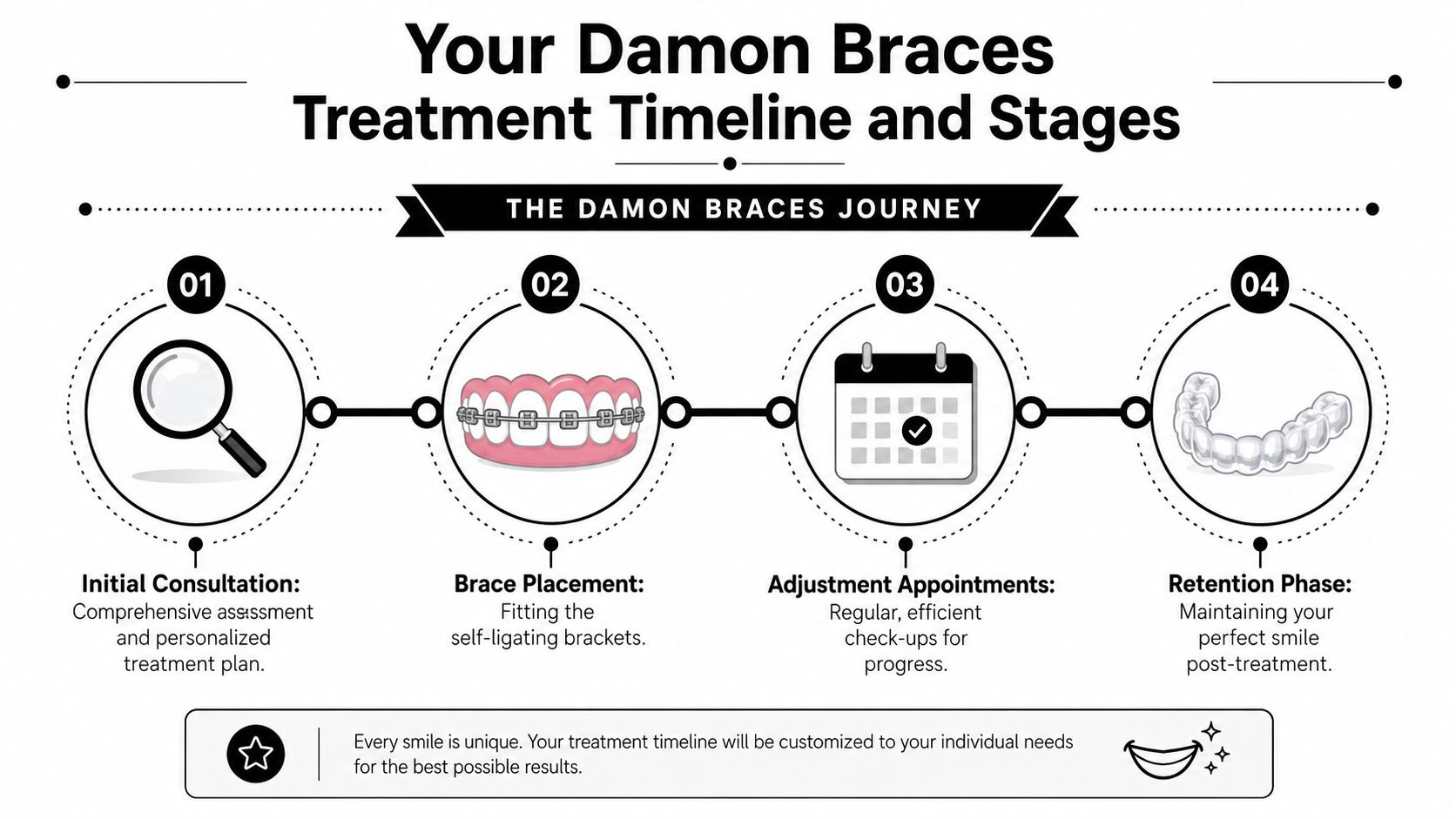
According to this Damon braces treatment timeline overview, patients wearing Damon braces complete treatment in 12 to 24 months on average. The same source notes that patients treated with Damon braces complete care approximately 2 months faster than those using conventionally ligated standard edgewise bracket systems, and appointments are typically every 8–10 weeks.
That average becomes more useful when broken into case types:
| Case type | Typical Damon timeline |
|---|---|
| Mild alignment concerns | 6 to 12 months |
| Moderate orthodontic cases | 14 to 18 months |
| Severe misalignment | 18 to 24 months |
The process tends to move in phases instead of one long blur.
During the first 1 to 3 months, patients usually see the first visible shifts. Teeth begin to uncrowd and level. This stage often brings quick encouragement because small changes show up early, even though the full bite correction is still ahead.
From months 4 to 12, the biggest straightening usually happens. This is the stage when friends and family start noticing a real before and after difference. Front teeth often look much more even, and the smile begins to open up.
From months 13 to 18, treatment focuses more heavily on detailing the bite and refining alignment. For longer cases, months 19 to 24 are reserved for final adjustments and fine-tuning before retention begins.
Most patients judge treatment by the first visible changes. Orthodontists judge it by the finish. The last phase is where a smile starts looking polished and the bite starts working the way it should.
Some factors speed things up. Others slow them down.
This is why online comparisons can be misleading. A smooth Damon braces before and after transformation comes from smart planning, consistent appointments, and careful finishing, not from the bracket alone.
The best Damon braces before and after stories show more than straight front teeth. They show what happens when alignment, bite, and facial balance improve together.
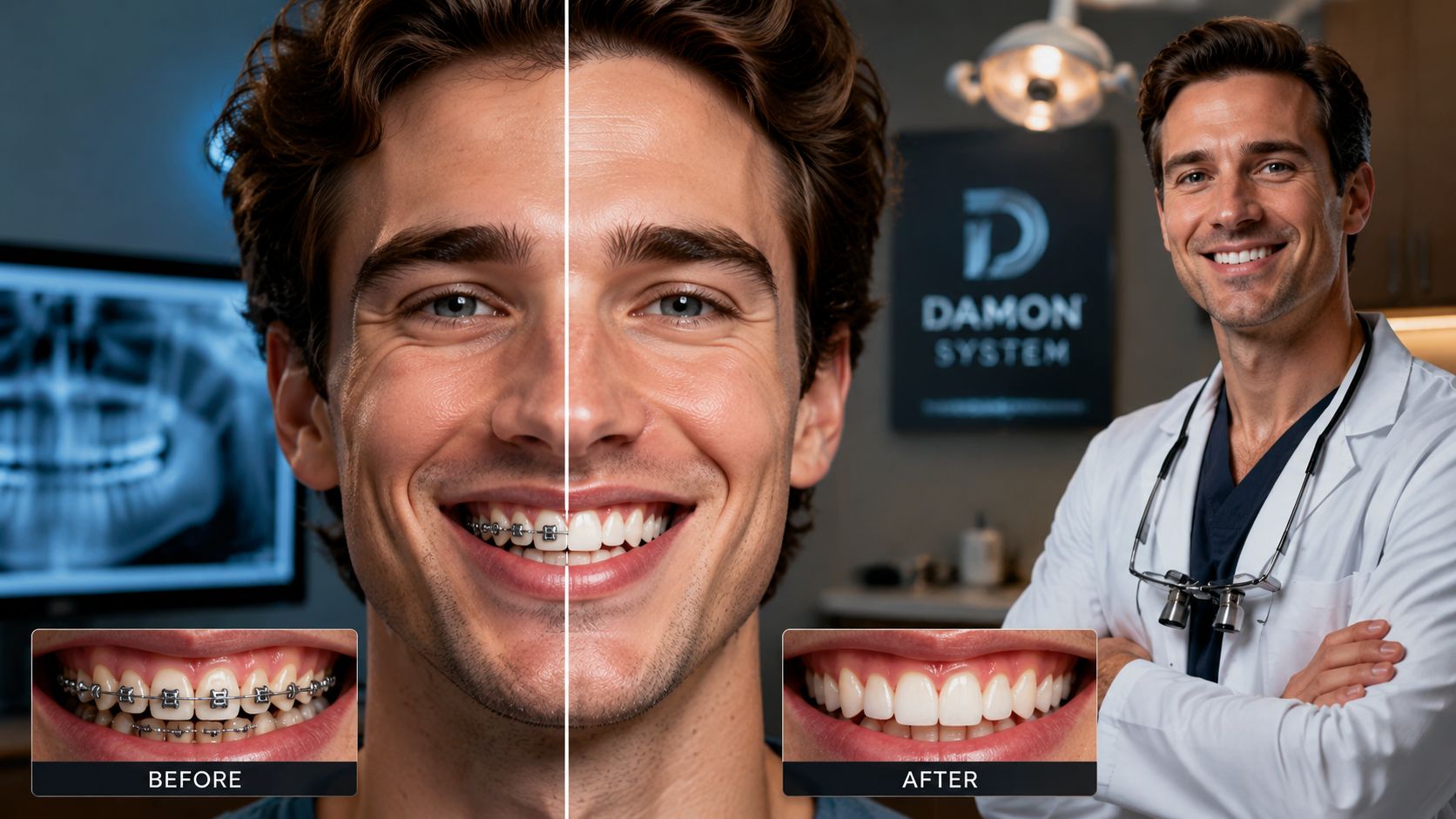
A common teenage “before” starts with significant crowding. The front teeth overlap, the canines sit high or rotate, and the smile can look visually tight in photos. Parents often begin by searching for a dentist in Fair Lawn, NJ or an orthodontic consult because brushing has become difficult and regular cleaning and exams keep turning into conversations about hard-to-reach plaque buildup.
In a case like this, Damon treatment can create a much more even arch form and a fuller smile display. The visible improvement isn't only that the teeth line up. The smile often looks broader and less shadowed at the corners. That makes the whole face look more relaxed and balanced.
Research summarized in this PubMed record on the Damon System and smile changes notes that the Damon System creates a broad arch smile that reduces dark triangles at the corners of the mouth and improves the overall facial profile. The same source adds that it significantly advances and proclines mandibular incisors to alleviate crowding, which matters because the functional bite outcome is part of the result, not just the appearance.
Adult patients often come in with a different complaint. They may say, “My teeth don't fit together right,” or “I've had one side doing all the chewing for years.” Their before photos may show moderate crowding, but the bigger issue is usually the way the bite functions.
For this kind of patient, the after result should be judged by more than straight lower incisors or a nicer selfie. A successful finish can mean better contact between the upper and lower teeth, less strain while chewing, and a profile that looks more harmonious because the dental arches are working together more naturally.
A striking smile transformation should still look like your face, just healthier, more balanced, and easier to live with.
That's the difference between a gallery image and a clinically strong result. The smile should look attractive, but it also has to hold up during real life.
When teeth line up better and the bite is improved, patients often find it easier to keep up with everyday dental care. That can support long-term mouth health and make future cosmetic or restorative work more predictable if it's ever needed.
Here's a closer look at what “after” can mean:
A short video can also help you see how these changes look in motion, not just in still photography.
Photos rarely capture speech comfort, chewing balance, or the relief patients feel when their smile finally looks natural. They also don't show the planning behind the result. Good Damon treatment isn't about forcing every patient into the same arch shape. It's about using the system thoughtfully so the final smile fits the person.
That's why an orthodontic evaluation matters more than a gallery alone. Pictures can inspire you. Diagnosis tells you what's possible.
Choosing between Damon braces, Invisalign, and traditional braces isn't only about appearance. It's about case complexity, daily habits, cleaning routines, comfort preferences, and what kind of finish the case requires.
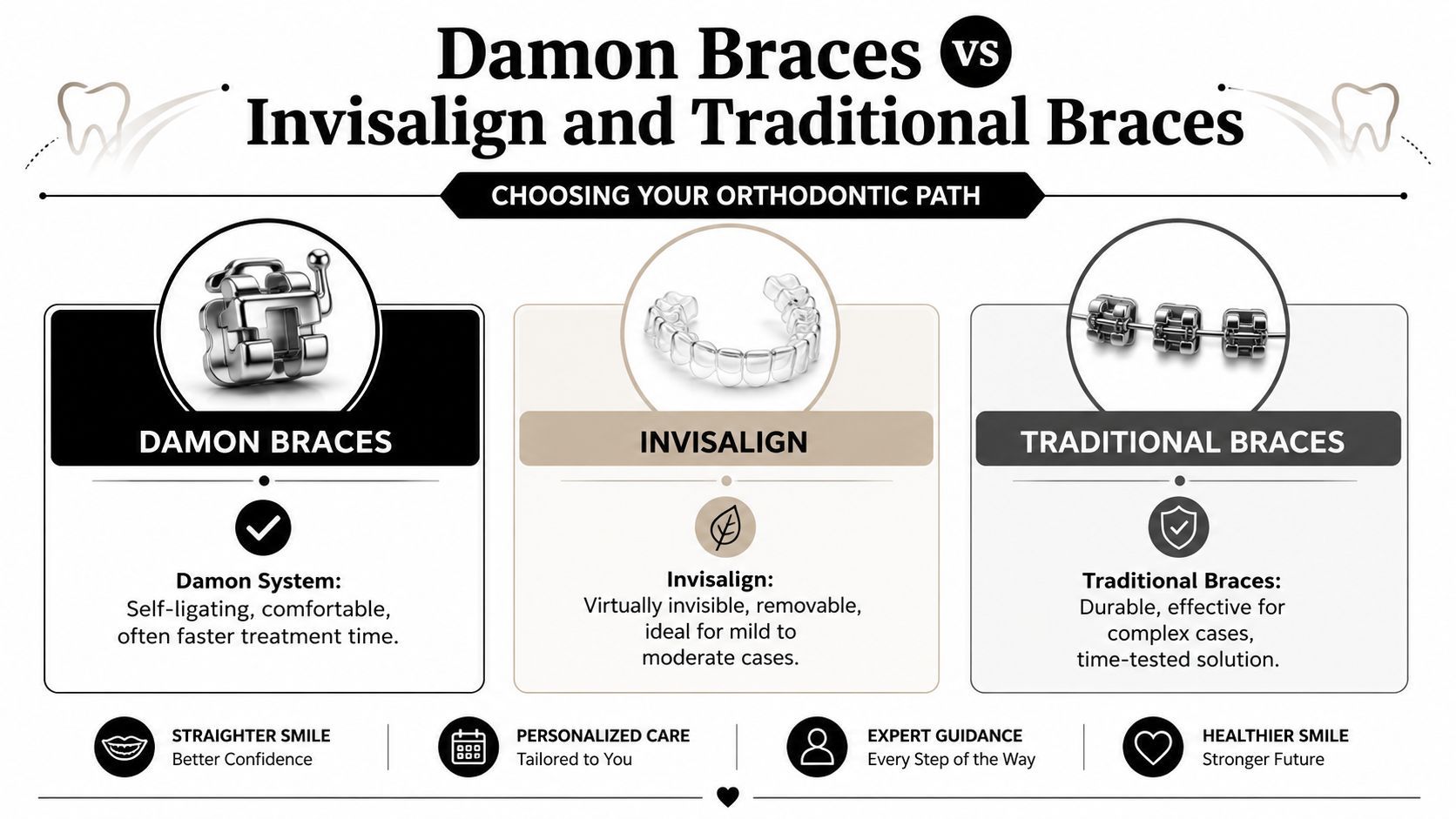
Here's the simplest way to think about the three options:
| Treatment | Best known for | Trade-offs |
|---|---|---|
| Damon braces | Fixed treatment with self-ligating mechanics | Still visible, still requires braces care |
| Invisalign | Removable, discreet trays | Depends heavily on patient compliance |
| Traditional braces | Time-tested fixed appliance | More friction and more tie-related buildup |
Damon braces and traditional braces can both treat a wide range of orthodontic problems. The biggest mechanical difference is friction during wire changes. According to this review of Damon Clear braces and the research behind them, Damon self-ligating braces reduce archwire friction, saving approximately 24 seconds per archwire change, but systematic reviews confirm that this efficiency does not always significantly shorten total treatment duration compared to conventional braces. The same source notes that patient cooperation and case complexity remain the primary determining factors.
That's the honest trade-off. Damon may offer a smoother in-office experience and a different feel during treatment, but no responsible orthodontist should promise dramatic time savings in every case.
Invisalign is a strong choice for many teens and adults who want a less noticeable option. It's especially appealing for professionals, older teens, and patients focused on convenience during meals and brushing. But because aligners are removable, success depends on consistent wear. If trays are left out too often, treatment slows down or loses precision.
For readers comparing removable aligners with fixed appliances, this outside Invisalign in Tampa guide is a useful look at how aligner treatment is typically explained for patient decision-making.
If you want a local comparison focused on the same question, the Damon braces vs Invisalign article breaks down where each option tends to fit best.
The right appliance is the one that matches the case and the patient's habits. A removable system only works if it's actually worn. A fixed system only works if the plan is managed carefully.
Some patients also ask about related cosmetic services, teeth whitening after orthodontics, or whether future restorative dentistry could improve shape once alignment is complete. Those are smart questions. Orthodontics is often one part of a larger smile plan.
Starting orthodontic treatment feels easier when the first visit is clear and pressure-free. Most patients want to know three things right away. What's wrong, what can be fixed, and what the process will feel like.
At Dental Professionals of Fair Lawn, the first appointment is designed to answer those questions in a straightforward way. The visit typically includes a clinical evaluation, digital records, and a discussion of whether Damon braces, Invisalign, Six Month Smiles, or another approach makes the most sense for your goals.
The office uses iTero digital scanning, which means there's no need for messy traditional impressions in many cases. That makes the planning process cleaner and more comfortable, especially for patients with a strong gag reflex or treatment anxiety.
One advantage of choosing a full-service office is that orthodontics can be coordinated with other needs. If a patient also needs dental x-rays, a new patient exam, emergency dental care, cosmetic dentistry, restorative dentistry, or planning for future dental implants near me searches, those conversations can happen in one place.
That matters for adults with worn teeth, teens who may need close hygiene monitoring during braces, and patients who are also dealing with TMJ concerns, sleep issues, or anxiety around treatment.
A great treatment plan doesn't help much if the office experience feels difficult. This practice offers features that remove common barriers to care:
If you've been delaying orthodontic treatment because the process felt overwhelming, the right first visit should make the next step feel manageable.
For patients in Fair Lawn, Ridgewood, and Glen Rock, the goal isn't just to begin braces. It's to begin with a plan that fits your life, supports long-term oral health, and gives you a result that looks as good as it functions.
If you're ready to explore Damon braces before and after possibilities for your own smile, schedule a consultation with Dental Professionals of Fair Lawn. Whether you're looking for a dentist near me, want to compare Damon with Invisalign, or need a full smile plan that includes cosmetic, restorative, or emergency care, the team can help you take the next step with clarity and confidence.