Damon Braces vs Invisalign: Which Is Right for You?
Comparing Damon Braces vs Invisalign? Our Fair Lawn dentists analyze comfort, cost, & results. Choose the best treatment in Ridgewood & Glen Rock, NJ.
Comparing Damon Braces vs Invisalign? Our Fair Lawn dentists analyze comfort, cost, & results. Choose the best treatment in Ridgewood & Glen Rock, NJ.
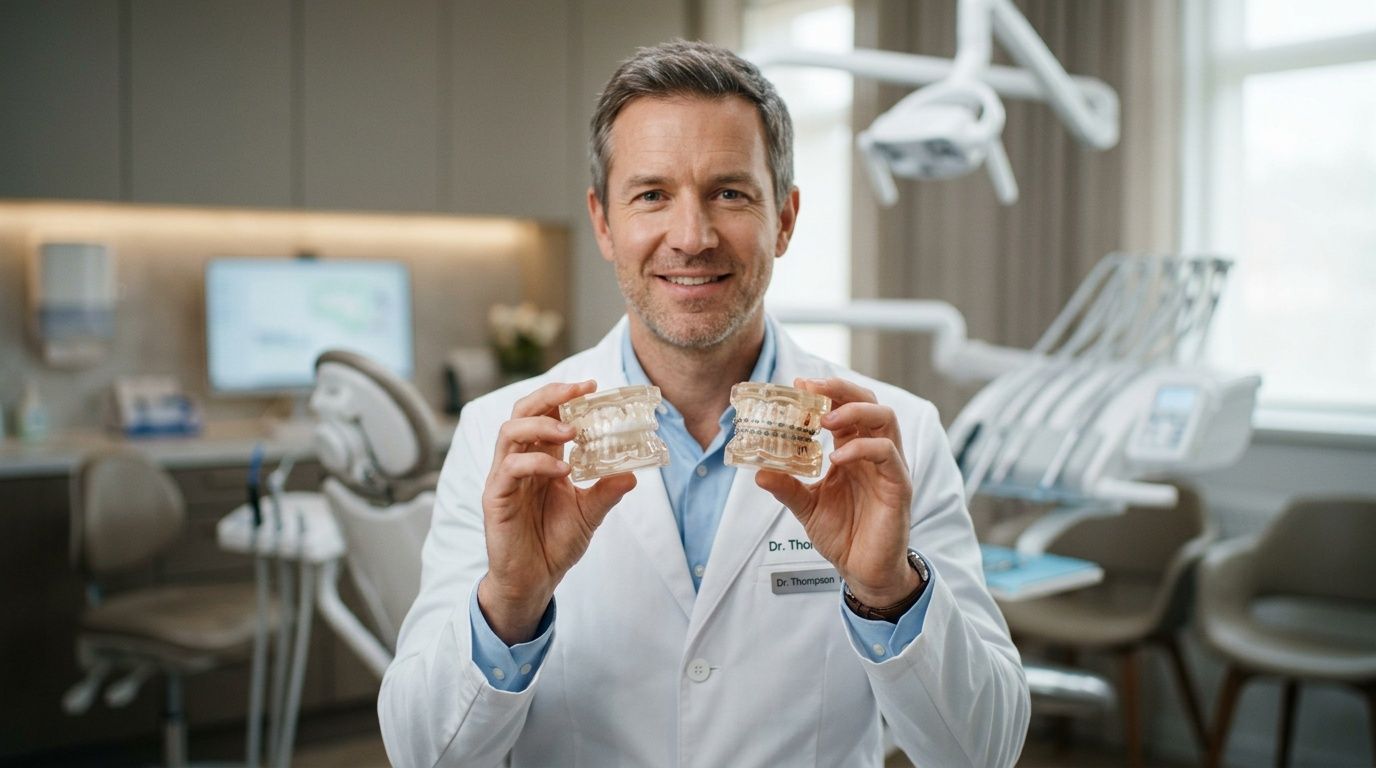
A straighter smile sounds simple until you start comparing options. Many patients in Fair Lawn, Ridgewood, and Glen Rock come in thinking they’ve already narrowed it down, then realize the true question isn’t just what looks better. It’s what will fit their case, their schedule, and their day-to-day habits.
That’s where the confusion usually starts. One person searches for a cosmetic dentist near me because they want clear aligners for work meetings. Another wants something reliable for a teenager who loses everything. Someone else has more than cosmetic concerns and needs bite correction, not just straighter front teeth.
At Dental Professionals of Fair Lawn, those conversations are part of everyday care. Dr. Jody Bardash and the team help patients sort through the practical trade-offs so they can choose with confidence, not guesswork.
A common story goes like this. A parent from Fair Lawn brings in a teen who wants the least visible option possible. The parent wants the option that won’t depend on constant reminders. An adult from Ridgewood asks about aligners because they don’t want brackets in photos. A professional from Glen Rock wants treatment that won’t keep interrupting a busy calendar.
All of them are asking the same question in different ways. Damon braces vs Invisalign. Which one is right for me?

Patients aren’t just choosing between two products. They’re choosing between two different treatment experiences.
One option is fixed in place and keeps working whether you’re busy, distracted, or tired. The other is removable and highly discreet, but it asks more from you every single day. That difference matters a lot more in real life than it does in a simple online checklist.
Practical rule: The best orthodontic system isn’t the one with the most appealing marketing. It’s the one you’re most likely to finish successfully.
In real consultations, the decision usually comes down to a short list:
For patients looking for a dentist in Fair Lawn, NJ, the goal isn’t to be talked into one system. It’s to understand what works, what doesn’t, and where each treatment shines. That’s especially important if you’re also thinking about broader smile goals like whitening, bonding, veneers, or other cosmetic dentistry after orthodontic care.
Before comparing results, it helps to know how each system moves teeth. The mechanics are different, and those differences explain a lot of the trade-offs patients notice during treatment.

Damon braces use a self-ligating bracket system. Instead of small elastic ties holding the wire in place, the bracket has a built-in slide mechanism that allows the archwire to move more freely. That lower-friction design is why Damon is often described as a gentler, more efficient braces system, according to this Damon and Invisalign treatment comparison.
Damon braces operate like a sliding door instead of a tight knot. Traditional elastic ties grip the wire more tightly. Damon brackets let the wire glide within the slot, which changes how force is delivered to the teeth.
That matters for more than comfort. The system is also known for developing the arch more broadly in appropriate cases, which is one reason many patients and clinicians associate it with a fuller smile shape.
Because Damon is fixed to the teeth, it works all day without the patient needing to remember anything beyond hygiene and food precautions. You don’t take it out for meals, sports photos, or a long day at the office. It’s always on.
That reliability is often important for:
The trade-off is obvious. Brackets are still brackets. Even clear Damon options are more noticeable than a clear aligner tray.
Damon doesn’t ask you to decide every morning whether treatment is happening today. It’s already happening.
Invisalign uses a series of custom clear aligners that fit over the teeth. Each tray is designed to make small planned movements, and the patient progresses through the sequence over time. The system relies on a digital treatment plan and staged tooth movement rather than a fixed wire-and-bracket setup. If you want a closer look at how this works in practice, the practice’s Invisalign treatment page in New Jersey outlines the basics in a patient-friendly way.
A simple analogy is a roadmap. Each aligner is one stop along the route. You wear one tray, then move to the next, then the next, with each stage guiding the teeth toward the planned result.
Invisalign is popular because it blends into everyday life. The trays are removable for meals and brushing, and they’re much less noticeable in conversation than braces.
The flexibility is the biggest appeal. You can remove aligners to eat, drink most beverages, brush, and floss. For adults who searched Invisalign near me because they want a discreet solution, that’s often the feature that makes them lean in.
But the same flexibility creates the biggest weakness. Invisalign only works properly if it’s worn as directed. If trays spend too much time in a napkin, cup holder, or bathroom counter, treatment can slow down or become less predictable.
Maintenance also matters. Aligners need regular cleaning to stay clear and fresh. Patients who are new to aligners often find practical tips in DentalHealth.com aligner cleaning advice, especially for avoiding odor and buildup without damaging the trays.
Here’s the shortest useful version:
Neither system is automatically better for everyone. The right choice depends on whether your case needs stronger mechanical control, whether appearance is your top priority, and whether your habits support a removable system.
Patients usually want the side-by-side version early, because that’s what makes the choice feel real. The chart below gives a quick view before we get into the practical details.
| Feature | Damon Braces | Invisalign |
|---|---|---|
| Appearance | Visible metal or clear brackets | Nearly invisible clear aligners |
| How it works | Fixed self-ligating brackets and archwire | Removable series of custom aligners |
| Best fit | Often strong for more complex movement and bite correction | Often ideal for mild to moderate alignment goals and high-aesthetic priorities |
| Daily responsibility | Lower compliance burden because it stays on | Higher compliance burden because it must be worn consistently |
| Eating | Food restrictions apply | Remove aligners to eat |
| Brushing and flossing | More technique required around brackets | Easier because aligners come out |
| Check-in pattern | Adjustment visits are spaced out compared with traditional braces | Tray changes and monitoring depend on case progress |
| Predictability | Strong for patients who want a fixed system | Strong when the patient is disciplined with wear |

This is the category where Invisalign usually gets the first reaction. The aligners are clear, low-profile, and hard to notice in normal conversation. For adults in client-facing jobs, that matters.
Damon is less discreet, even though clear bracket options can soften the look. If your top priority is keeping orthodontic treatment subtle in photos, meetings, and social settings, Invisalign usually has the edge.
If your treatment has to disappear into your routine visually, Invisalign often feels easier to say yes to.
Both systems can create pressure because tooth movement always does. The type of pressure is different.
Damon’s self-ligating design is intended to reduce friction compared with traditional tie-based braces, so many patients describe the feel as smoother than they expected. Invisalign avoids brackets and wires entirely, which many people find appealing, especially at the start.
Still, removable trays bring their own adjustment period. Some patients notice pressure when starting a new tray. Others find the tray edges or attachments more noticeable than they expected. Comfort isn’t only about what looks simple on paper. It’s about what you tolerate well for months.
Treatment durations and adjustment schedules are often a key focus for many families. According to this orthodontic comparison of Damon and Invisalign, Damon braces typically average about 20 months, with Damon treatments ranging from 12 to 24 months and Invisalign often ranging from 6 to 18 months for adults. The same source notes Damon adjustments are often scheduled every 6 to 8 weeks, and those fewer adjustments can reduce office visits by up to 30 to 50 percent compared with traditional braces.
Those numbers are useful, but they need context. A shorter published range doesn’t mean a faster result in every real case. Invisalign depends heavily on wear habits. Damon doesn’t depend on whether a patient remembers to put trays back in after lunch.
A separate clinical comparison in the verified data found no statistically significant difference in overall treatment duration between self-ligating braces and Invisalign in one study. That’s a reminder that the better question isn’t “Which one is always faster?” It’s “Which one is more predictable for my case and my habits?”
For patients comparing options locally, the practice’s Damon System treatment page is useful if you want to see how the fixed self-ligating approach is presented for real treatment planning.
Invisalign wins on access. You remove the trays, brush normally, floss normally, clean the aligners, and put them back in. That’s simpler for many adults who already have a solid routine.
Damon requires more careful brushing around brackets and wires. It’s manageable, but there’s no shortcut. Patients need to clean thoroughly and consistently.
Here’s the practical split:
The easier system to clean isn’t always the easier system to succeed with. Hygiene and compliance are two different issues.
This category often decides the case more than clinical charts do.
With Invisalign, you remove aligners to eat and drink most beverages. That freedom is convenient, but it also means treatment is in your hands all day. Every meal, coffee break, and social event creates another moment where the plan can drift.
With Damon, there’s less freedom but also less decision fatigue. You work around the appliance instead of managing it constantly.
For families in Fair Lawn, Ridgewood, and Glen Rock, this often comes down to one honest question. Is the patient the type who will reliably follow a removable system every day for the full course of care? If the answer is yes, Invisalign can be an excellent fit. If the answer is maybe, fixed treatment often becomes the safer choice.
The right orthodontic system depends on more than preference. Tooth movement, bite position, crowding, smile shape, and daily habits all matter. The same treatment that works beautifully for one patient can be the wrong fit for another.

This patient often starts with aesthetics. They want treatment that’s subtle in meetings, on video calls, and in social settings. If their alignment needs are mild to moderate and they’re disciplined enough to wear trays consistently, Invisalign can make a lot of sense.
But there’s a catch. The same professionals who want invisible treatment also tend to have unpredictable schedules. Long workdays, frequent coffee, business lunches, and travel can make a removable system harder to manage than expected.
A good candidate for Invisalign usually has both of these traits:
Teens often care most about how treatment looks. Parents often care most about whether treatment will stay on track.
That’s where Damon has a real practical advantage. Because it’s fixed, it keeps working even if a teen is forgetful, distracted, or tired of managing appliances. For some families, that reliability matters more than near-invisibility.
This doesn’t mean teens can’t succeed with Invisalign. Many do. But removable treatment asks for maturity every day, not just at the consultation.
Parents usually know the answer before the exam starts. If your child already struggles to keep track of chargers, water bottles, or sports gear, a fixed system may save a lot of frustration.
When crowding is significant, bite correction is more involved, or the movement needed is more demanding, Damon often becomes the stronger candidate. The self-ligating system is known for broader arch development and more controlled mechanics in cases that go beyond simple cosmetic alignment.
The verified data also notes that Damon can be ideal for severe crowding or bite correction where extractions might otherwise be considered, and one clinical comparison reported greater dento-alveolar expansion with self-ligating braces than with Invisalign.
Patients in this group often need more than straight front teeth. They may need a healthier bite, more room in the arch, or more reliable movement across multiple teeth.
Some patients don’t want brackets, food restrictions, or the feel of a fixed appliance. They want to remove treatment for meals and clean their teeth without working around wires.
For that person, Invisalign is often the better emotional fit even before it becomes the better clinical fit. If the case is appropriate and the patient is committed, that flexibility can make treatment feel much easier to live with.
A removable system tends to appeal to patients who value:
Orthodontics doesn’t always happen in isolation. Some adults are also thinking about whitening, bonding, veneers, crowns, gum reshaping, or restorative care. Others have TMJ concerns, worn teeth, or missing teeth that affect the treatment sequence.
That’s why the most useful consultation looks at the whole mouth, not just whether trays seem more convenient than brackets. In such a setting, orthodontic planning can also account for cosmetic and restorative goals so the final smile works visually and functionally.
A short self-check can help narrow your leaning before an exam:
The right answer isn’t always the most popular option. It’s the treatment that matches both your clinical needs and your actual behavior.
Patients often focus on how treatment looks during the process. The more important question is what your smile and bite will be like after the process is over.
A straight smile is only part of the outcome. You also want a smile that feels balanced, functions well, and supports long-term oral health.
Damon is often associated with a broader smile appearance because of the way self-ligating mechanics can develop the arch in appropriate cases. That can matter for patients whose main concern isn’t just one crooked front tooth, but a narrower smile or crowding that affects overall facial balance.
Invisalign can also produce excellent cosmetic results, especially in the right case. The key is matching the tool to the movement needed.
A beautiful result isn’t just about lining teeth up. It’s about the bite, the arch form, and whether the finish still looks natural on your face.
This is the part many patients don’t ask about until treatment is nearly over. Teeth can move again after orthodontics. That’s why retainers matter no matter which system you choose.
The available verified data highlights an important long-term point. According to this discussion of Invisalign and Damon stability, fixed appliances like Damon may yield 10 to 20 percent better stability in severe crowding cases because broader arch development can help reduce relapse risk without extractions. The same source notes Damon can reduce non-compliance risks for busy families and points to projected 2025 to 2026 AI-driven retention predictions favoring Damon for TMJ-linked bites.
That doesn’t mean Invisalign causes relapse by default. It means long-term stability depends on several things at once:
Retainers aren’t optional. They’re how you protect the time, money, and effort you’ve already invested.
Many adults also ask about cosmetic touch-ups after orthodontic treatment. If whitening is part of your next step, it’s smart to use information that focuses on protecting enamel. A helpful reference is this in-depth guide to enamel-safe whitening, especially for understanding why timing and product choice matter after teeth have been moved.
For teens, long-term success often comes down to household routine. For adults, it comes down to consistency. Either way, the treatment doesn’t end the day teeth look straight. It ends when the result stays stable.
Once you’ve decided to explore treatment, the next concern is usually simpler. What happens at the appointment, and will the process feel manageable?

The consultation starts with a close look at your teeth, bite, smile goals, and any symptoms that may affect planning. That can include concerns like crowding, spacing, overbite, underbite, cosmetic appearance, or jaw tension.
If you’re searching for a dentist near me because you want one office that can look at both orthodontic and broader dental needs, that full-mouth perspective matters. It helps avoid a plan that straightens teeth but ignores the bigger picture.
Modern orthodontic planning is more useful when patients can see what’s being discussed. Digital imaging and iTero scanning help eliminate messy impressions and make it easier to evaluate movement, spacing, and smile design.
That matters for confidence. Patients tend to make better decisions when they understand the logic behind the recommendation instead of hearing a generic pitch for braces or aligners.
A typical consultation often includes:
No one wants a plan that sounds good in the chair and falls apart at home. That’s why treatment choices should account for school schedules, sports, public-facing work, travel, and comfort level with maintenance.
Some patients are also balancing other care such as cleanings and exams, restorative dentistry, cosmetic dentistry, or treatment for TMJ-related concerns. A coordinated plan helps those pieces fit together.
The right orthodontic plan should work in your actual week, not just in an ideal version of your week.
Patients usually feel most at ease when they know the sequence. You come in, get evaluated, review the findings, discuss whether Damon or Invisalign fits better, and then talk through fees, insurance benefits, and financing options before committing.
That kind of clarity reduces anxiety. It also helps patients move forward without feeling rushed, whether they’re seeking orthodontics alone or combining it with services like teeth whitening, bonding, restorative care, or even future smile design work.
Not always. Some cases can be treated without extractions, especially when the treatment approach can create space effectively within the arch. The need for extractions depends on crowding, bite position, facial balance, and long-term stability goals. It should never be decided from a quick online quiz.
Sometimes, yes. Mid-course changes can happen if the teeth aren’t tracking as expected, if compliance becomes difficult, or if the treatment goals change. Whether a switch makes sense depends on the stage of treatment and what still needs to be corrected.
Six Month Smiles is another orthodontic option some adults ask about, especially when the main goal is improving the appearance of front teeth. It can be useful in selective cosmetic cases, but it isn’t a substitute for every bite correction or complex alignment problem. The right choice depends on whether you need cosmetic straightening only or a more complete orthodontic correction.
Yes. They matter for every patient. Teeth can shift after treatment with either Damon or Invisalign, which is why retainer use is part of protecting your final result.
Absolutely. Some patients straighten teeth before whitening, bonding, veneers, or other cosmetic work. Others need restorative planning first if they have worn, damaged, or missing teeth. Orthodontics often works best as part of a coordinated plan rather than a stand-alone decision.
That’s common. Many adults delay care because they don’t want to choose the wrong treatment or feel judged for putting it off. A good consultation should lower that stress, not add to it. You should leave understanding your options clearly, whether you’re considering Invisalign, the Damon System, cosmetic dentistry, or general dental care in Fair Lawn.
If you’re comparing damon braces vs invisalign and want guidance that fits your actual smile, schedule a consultation with Dental Professionals of Fair Lawn. We help patients in Fair Lawn, Ridgewood, and Glen Rock understand the trade-offs, review their options carefully, and choose treatment with confidence.