Comprehensive Dental Care in Fair Lawn, NJ: Your Guide
Looking for comprehensive dental care in Fair Lawn, NJ? Our guide explains everything from cleanings to implants. Achieve your best smile with us. Call today!
Looking for comprehensive dental care in Fair Lawn, NJ? Our guide explains everything from cleanings to implants. Achieve your best smile with us. Call today!
If you're searching for a dentist near me in Fair Lawn, NJ, there's a good chance you're not starting from a calm, ideal place. Maybe a tooth has been bothering you for weeks. Maybe you've been meaning to schedule a cleaning but kept putting it off. Maybe you've been told you need more than one thing, such as a filling, a crown, straighter teeth, or even a replacement for a missing tooth, and it all feels harder to sort out than it should.
That's where complete dental care makes a real difference. Instead of treating each problem as a separate event, it connects your exam, diagnosis, prevention, repair, comfort, and smile goals into one plan. For families and adults in Fair Lawn, Ridgewood, and Glen Rock, that means less confusion, fewer handoffs, and a clearer path from your first visit to a healthier smile you can keep.
A lot of people begin their search the same way. They type dentist in Fair Lawn, NJ or emergency dentist into Google after a broken filling, a dull ache, or a missed cleaning turns into a bigger concern. Then the questions start. Do you need one office for cleanings and another for implants? Will you need to see a separate cosmetic dentist near me if you also want Invisalign or teeth whitening? If you're nervous, who's going to make the experience feel manageable?
That uncertainty is one reason many people delay care. As of 2023, only 65.5% of adults aged 18 and older in the U.S. had a dental exam or cleaning within the past year, and 46% of adults delay care due to cost barriers, according to this dental care statistics summary. In everyday terms, plenty of good people wait longer than they want to, even when they know they shouldn't.
A Fair Lawn patient might come in thinking the visit is only about one sore tooth. During the exam, it becomes clear there are several needs at once. A cavity that needs a filling. Older dental work that should be checked. A missing tooth that's affecting chewing. Crowding that makes brushing harder. Stains that make the patient hide their smile in photos.
When care is scattered, that patient has to piece everything together alone. When care is integrated, the process feels different. One office reviews the big picture, explains priorities, and helps the patient move step by step.
The most reassuring treatment plan is usually the one that makes sense from beginning to end.
That's why many local patients looking for a dentist near me in Fair Lawn want more than a quick fix. They want an office that can connect prevention, restorative treatment, cosmetic options, and follow-up care under one roof.
For a neighborhood practice, trust is built when patients can understand what's happening and what comes next. It also helps when a practice is easy to find online through clear patient education and local search visibility. If you're curious how dental websites improve that experience, Netco Design dental SEO is a useful example of how patients often find care through service-focused local search.
In Fair Lawn, that integrated approach means your care can feel more personal and more organized. You're not just getting a list of procedures. You're getting a care path that fits your health, comfort level, and goals.
A healthy smile usually needs more than one kind of attention. You may need a cleaning to calm gum inflammation, a crown to protect a cracked tooth, and later, whitening or bonding to improve the way your smile looks. The key is having those pieces planned together, so each step supports the next instead of working in isolation.
That is what all-in-one dentistry means in daily life. Your care is organized around one mouth, one history, and one long-term goal. In a Fair Lawn office that offers integrated care under one roof, prevention, repair, and smile design are part of the same path, supported by digital imaging and clear treatment planning.
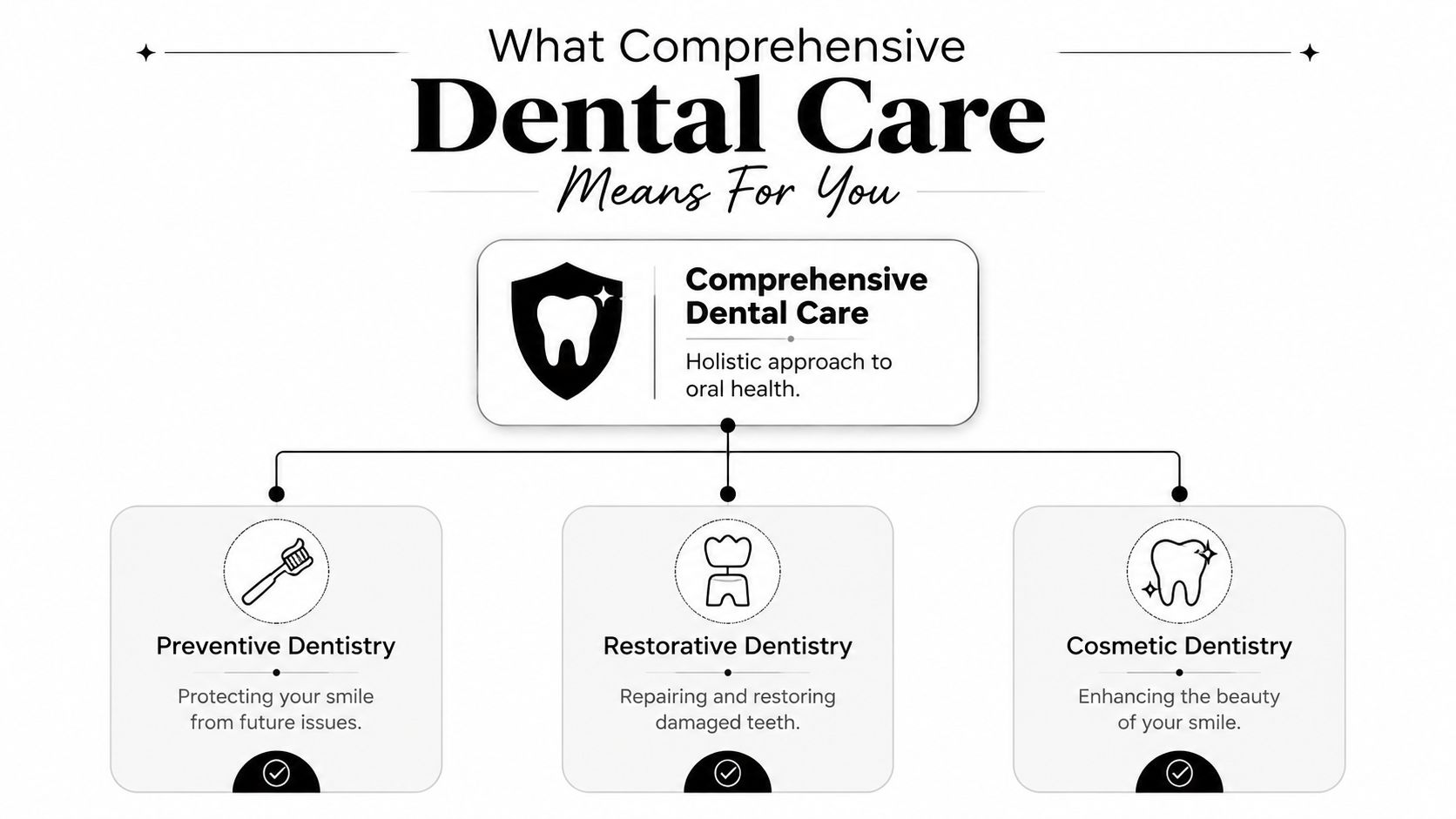
Prevention is the starting point because it gives your dentist a clear view of what is healthy, what is changing, and what needs attention first. Cleanings, exams, digital X-rays, gum checks, and home care coaching help catch small problems while they are still easier to treat.
If you want a fuller explanation of what falls under prevention, this guide to preventive dental care is a helpful next read.
The scale of oral disease helps explain why routine care should not be postponed. Oral diseases affect nearly 3.7 billion people worldwide, about 45% of the global population at some point in their lives. Untreated dental caries in permanent teeth affect an estimated 2.3 billion to 2.5 billion people globally, based on the World Health Organization oral health data portal. In practical terms, regular visits often mean fewer surprises, less discomfort, and more predictable choices.
When a tooth is decayed, cracked, worn down, or missing, restorative treatment rebuilds what your mouth needs to work well again. That can include tooth-colored fillings, crowns, bridges, dentures, root canal therapy, and implant-based solutions. The goal is simple. Help you bite comfortably, protect nearby teeth, and keep your smile stable over time.
Patients sometimes wonder whether a repair is just a short-term fix. Good planning answers that question. If your bite is uneven, your gums are inflamed, or an older filling is failing, those details affect which restoration will last and feel right.
| Area of need | How restorative care helps |
|---|---|
| Decay | Removes damaged tooth structure and seals the tooth |
| Cracks or fractures | Reinforces teeth with bonding or crowns |
| Missing teeth | Replaces support with bridges, dentures, or implants |
A well-built plan works like fitting the right parts into the same system. Each repair should make the next decision easier, not more complicated.
Cosmetic treatment focuses on appearance, but it often overlaps with comfort and function. Straightening crowded teeth can make brushing and flossing easier. Repairing worn edges can improve the way your bite comes together. Whitening, bonding, veneers, and gum contouring can also help your smile look more balanced and natural.
The best cosmetic results usually begin with healthy teeth and stable gums.
That is why all-in-one care feels different from choosing services one by one. You are not sorting through separate options on your own. You are following a coordinated plan, from diagnosis to final smile, with the same team seeing how each step fits together.
Patients don't walk into a dental office saying, “I'm ready for full-arch reconstruction.” They come in because something feels off. A tooth hurts when they bite down. A crown came loose. A gap is making it hard to chew. They want straighter teeth, but they also know they're overdue for a cleaning.
A real treatment journey usually begins with one simple step. A thorough new patient exam.
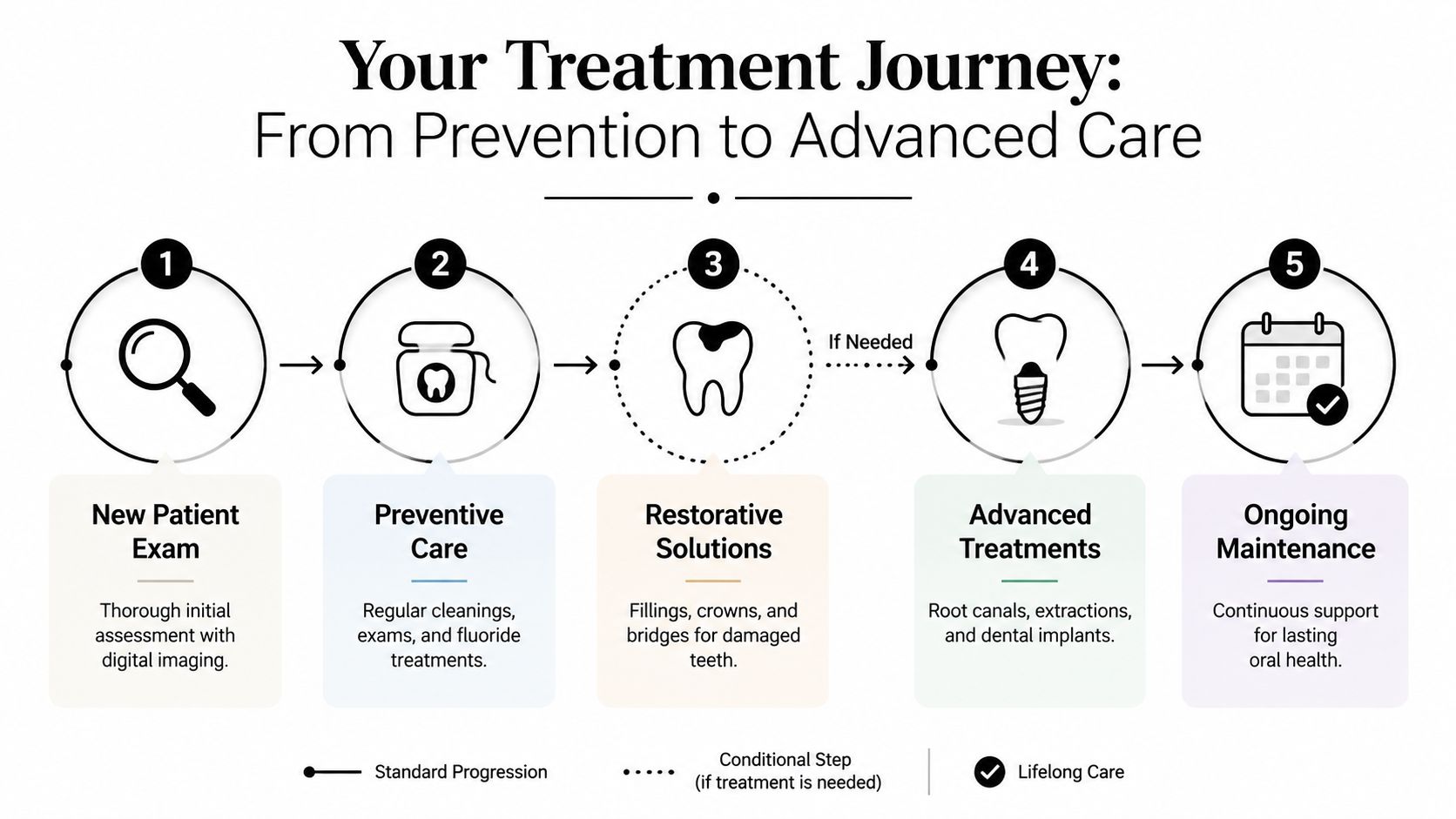
At the first visit, the team gathers the details that shape every decision after that. That may include digital X-rays, photos, an exam of the teeth and gums, and a discussion about what you've been feeling, what worries you, and what you want to improve.
That first conversation matters more than patients often expect. A person who thinks they need a single filling may be dealing with bite wear, gum inflammation, or an older restoration that's failing. Another patient who asks about tooth extraction may have a tooth that can still be saved. Someone searching for dental implants near me may need gum treatment or bone support addressed first.
Some patients leave with a simple plan. Others need care in phases. A full-service office can sequence treatment in a way that feels manageable.
Patients often feel relief when they realize not every problem has to be solved in one day. What matters is knowing the order.
When treatment is organized in phases, patients can make decisions with less stress and better understanding.
For more complex cases, planning quality becomes just as important as treatment itself. Integrated dental care is technically defined by a framework that integrates restorative, surgical, and technological components, including Cone Beam Computed Tomography (CBCT), digital radiography, intraoral scanning, and CAD/CAM prosthesis fabrication. That integration supports precise planning for advanced procedures, including full-arch implant placement such as All-on-4, as described in this overview of comprehensive dental care technology.
In plain language, tools like CBCT and intraoral scanning help the dentist see more, plan more accurately, and reduce guesswork. That matters for single implants and even more for larger cases involving bone grafting, sinus lift procedures, or full-arch restoration.
A patient may begin with one missing molar and later decide they want a more complete solution. Another may come in after years of dental problems and finally be ready to rebuild their bite. That's where a true under-one-roof model helps.
At that point, treatment can include options such as:
| Situation | Possible next step |
|---|---|
| One missing tooth | Single dental implant |
| Several missing teeth | Implant-supported bridge or denture |
| Extensive tooth loss | Full-arch treatment such as All-on-4 |
That's the value of integrated care. You don't have to start over with a new office every time your needs become more advanced. The diagnosis, the restorative work, the surgical planning, and the final smile can all connect in one continuous path.
For many patients, the moment they ask about cosmetic dentistry doesn't begin with vanity. It begins with hesitation. They smile with their lips closed. They avoid photos at family events. They notice one crooked front tooth, old bonding that stains, or uneven edges that make their smile look tired even when they feel good.
Cosmetic dentistry can change more than appearance. It often changes how freely a person speaks, laughs, and shows up in daily life.
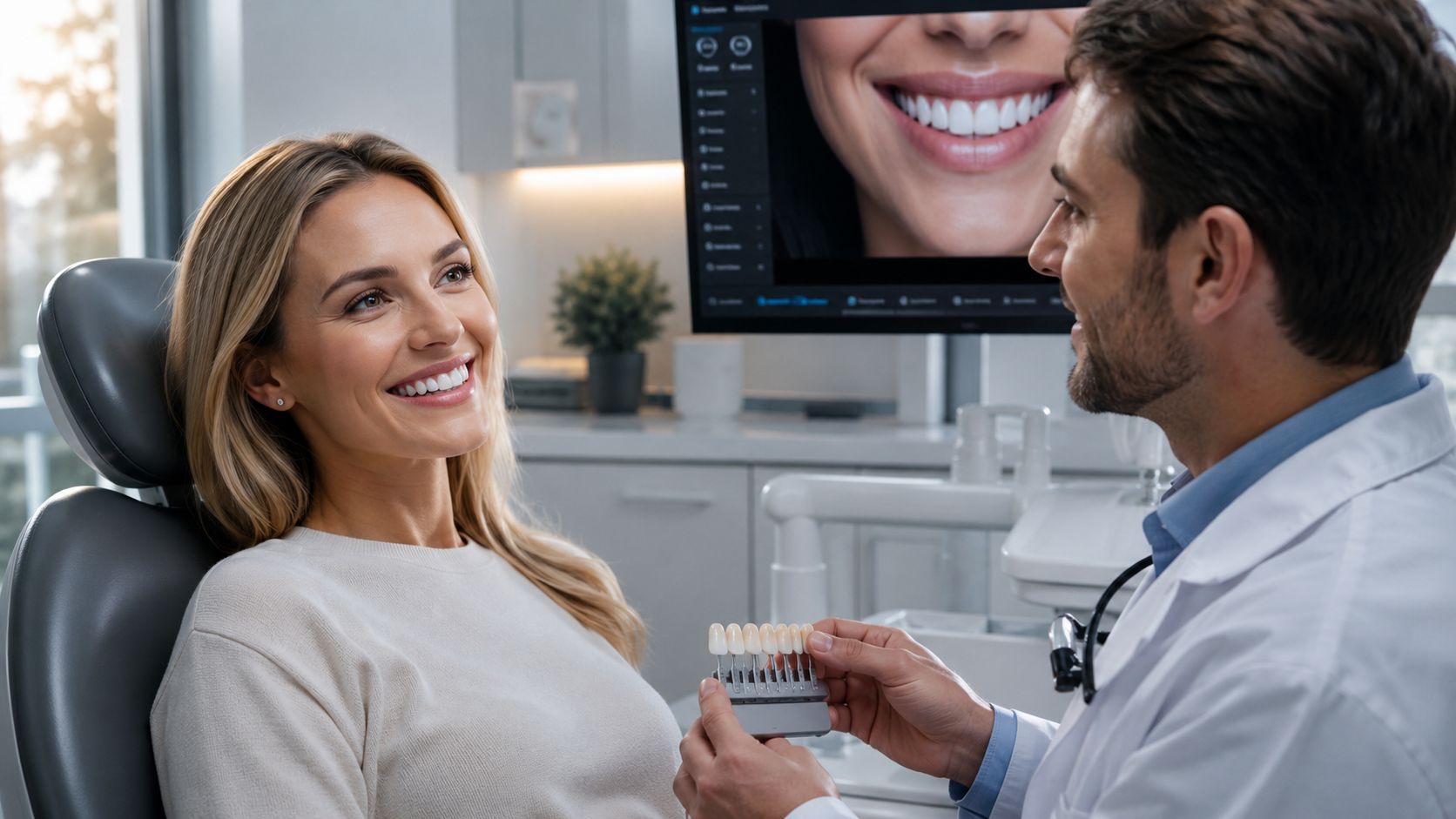
The right cosmetic plan depends on what bothers you and what your teeth need structurally. Some patients want a brighter smile with minimal treatment. Others want straighter teeth. Some need shape correction, edge repair, or a full smile redesign.
Here's how patients often think through the options:
A person searching cosmetic dentist near me usually isn't asking for one universal treatment. They're asking which option fits their face, bite, schedule, and comfort level.
Orthodontic choices can be confusing because the names sound similar but the goals may differ. Invisalign is popular with teens and adults who want a removable clear aligner approach. Six Month Smiles appeals to patients focused on cosmetic alignment in the front of the smile. The Damon System is another orthodontic option that may suit patients who want a different style of tooth movement.
The better question isn't which brand is “best.” It's which one matches your needs.
A consultation helps sort that out. If your bite is healthy and your main concern is crowding or spacing, orthodontic treatment may be the most conservative path. If the issue is worn enamel, chips, and discoloration all at once, veneers or bonding may provide a more direct cosmetic result.
For patients who want to see a smile discussion in action, this short video offers a helpful look at cosmetic care conversations in the office.
There's a big difference between cosmetic treatment that looks nice on day one and cosmetic treatment that still feels healthy and stable later. That's why good cosmetic dentistry starts with the same questions a restorative dentist asks. Are the gums healthy? Is the bite balanced? Are there old fillings or cracks that need attention first?
A beautiful smile lasts longer when the foundation under it is strong.
Patients in Fair Lawn who want Invisalign, Six Month Smiles, veneers, whitening, or a broader smile makeover usually feel most confident when the plan connects appearance with comfort and function. That's where integrated care earns its name.
You call to schedule a visit after putting dental care off for a while. Your first question is not about crowns, implants, or aligners. It is much simpler. Will this feel stressful?
For many patients, that is the true starting point.
The clinical side of dentistry matters, but the day-to-day experience matters too. People want to know whether they will be rushed, whether the plan will be explained in plain language, and whether past bad experiences will be held against them. A modern office lowers that stress by making each step easier to understand and easier to get through.
Good care starts with a plan for the person, not only the tooth. If someone feels anxious, the answer is usually structure. That can mean shorter visits, more time to ask questions, clear explanations before each step, or sedation dentistry when extra support would help.
Sedation can be useful for patients who:
An integrated office is helpful here because the same team that finds the problem can also shape the visit around your comfort. That creates a more connected experience from diagnosis through treatment, instead of sending you from place to place and asking you to retell the story each time.
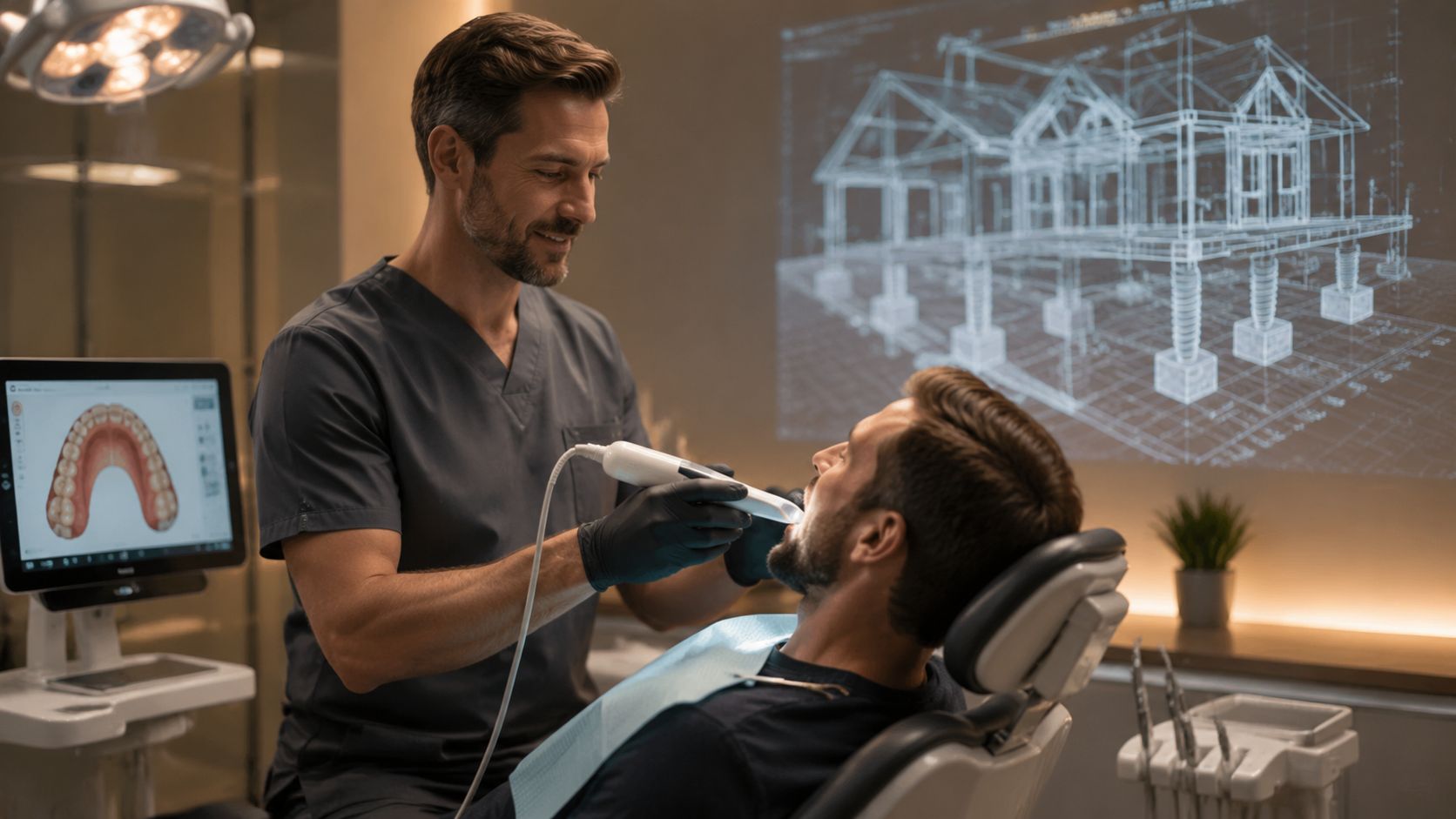
Technology changes the feel of an appointment in practical ways. Digital X-rays provide detailed images quickly. Intraoral scanners can often take the place of traditional impressions, which many patients prefer because there is less mess and less pressure in the mouth. iTero scanning is one example. It helps with Invisalign planning, crowns, and other restorative or cosmetic work by giving the team a precise digital map of your teeth.
That digital map works like a blueprint before construction starts. It helps the dentist see the starting point clearly, explain what is changing, and build each next step on better information.
At Dental Professionals of Fair Lawn, those tools support care that may include preventive visits, repair of damaged teeth, gum treatment, cosmetic work, orthodontics, implants, and comfort-focused services in one location. For patients, that often means fewer handoffs, fewer surprises, and a treatment path that feels more like one continuous journey than a collection of unrelated appointments.
Some of the biggest improvements in dentistry are not flashy. They are the small changes that help a patient stay calm, understand the plan, and follow through with care.
Patients may forget technical terms. They usually remember whether the visit felt clear and manageable.
They notice when a scan is quick. They notice when sedation is discussed in a calm, matter-of-fact way. They notice when someone explains what is happening now, what can wait, and how today's visit fits into the final goal.
That kind of experience matters for a routine exam, an emergency dentist visit, or a more advanced restorative procedure. When the office combines diagnosis, planning, treatment, and follow-up under one roof, the process tends to feel steadier and more predictable. That is what modern dental care should feel like.
Cost is one of the most common reasons people delay dental treatment. Sometimes the concern is the total price. Sometimes it's not knowing what insurance will cover. Sometimes it's the fear of agreeing to care without understanding the numbers.
That's why financial clarity is part of thorough dental care too. Patients shouldn't have to decode insurance language on their own while also trying to make health decisions.
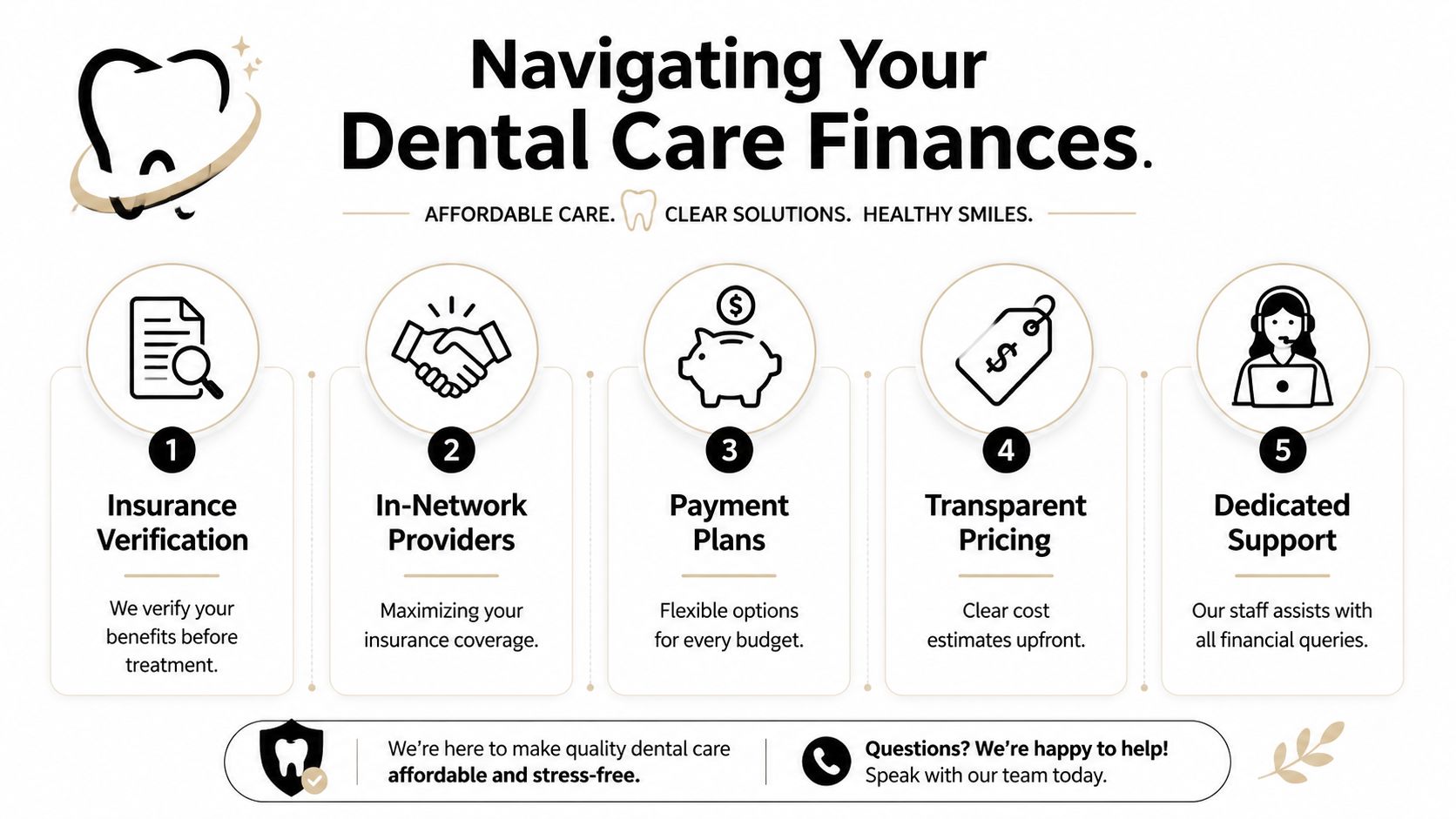
Recent data shows that 76.5 million U.S. adults lack dental insurance, which often leads people to delay treatment or depend on emergency care. That same summary notes that a routine dental cleaning typically ranges from $75 to $200, which can be difficult for uninsured households, according to these U.S. dental care statistics.
Those numbers explain why so many patients ask about pricing before they ask about treatment details. It isn't a sign they don't care about their health. It's a sign they're trying to make responsible choices.
A good front desk experience usually follows a simple sequence:
Some treatments, especially cosmetic care or advanced implant cases, may not fit neatly into standard coverage categories. That's why written estimates and plain-language explanations matter so much.
Patients in Fair Lawn often feel more comfortable when they ask direct questions like these:
Financial planning doesn't replace treatment planning. It supports it.
When a practice helps with benefit checks, claim coordination, and payment options, patients can focus more on getting healthy and less on guessing what a bill might look like. That makes it much easier to move ahead with a new patient exam, a needed crown, tooth extraction, or a larger implant case.
A good long-term dental relationship often starts with a simple moment. Your tooth feels sensitive when you drink something cold, or you realize it has been longer than you meant since your last checkup. You call one office, explain what is bothering you, and leave with a clear picture of what needs attention now, what can wait, and what can help your smile stay healthy for years.
That kind of care works best when the whole process connects from the first exam to the final result. Your cleanings, fillings, crowns, smile goals, implant planning, and follow-up visits should fit together like parts of one map. You should not have to keep retelling your history or trying to piece advice together from several places.
For families and adults in Fair Lawn, Ridgewood, and Glen Rock, that continuity can make care feel much more manageable. Familiar faces help. Shared records help. A team that can see the full picture helps most of all.
An all-in-one dental home usually means:
| What patients want | What that experience provides |
|---|---|
| Clear answers | One plan with priorities and next steps |
| Less stress | Fewer outside referrals and better continuity |
| Better comfort | A familiar team, records, and technology |
| Long-term results | Preventive, restorative, and cosmetic care that supports the same goal |
Cost still matters. As noted earlier, many adults delay dental visits because of expense, especially when treatment feels confusing or fragmented. A practice that offers a wide range of services along with clear financial guidance can make it easier to start care before small problems grow.
Starting is often simpler than patients expect.
You do not need to wait for severe pain before calling a local dentist. You also do not need to know exactly which treatment you need. Some people come in for a routine cleaning. Others want relief from a broken tooth, a fresh start after years away, or a consultation about replacing missing teeth or straightening their smile.
The first visit is there to sort that out. It works like the first appointment with a good home contractor after you notice a problem in your house. Before anyone talks about finishes or upgrades, they check the foundation, identify what needs repair, and build the plan in the right order. Dentistry works the same way. A careful exam, images, and a conversation about your goals help turn uncertainty into a step-by-step path.
If you are ready to stop piecing your dental care together, schedule a visit with Dental Professionals of Fair Lawn. Whether you need a new patient exam, an emergency visit, cosmetic treatment, or a consultation for implants or orthodontic care, the team can help you begin with a plan that makes sense and supports your smile from start to finish.