Affordable Dental Implants in Fair Lawn, NJ 2026
Get affordable dental implants in Fair Lawn, NJ. Understand costs, explore your options, and discover how we make beautiful smiles accessible. Contact us.
Get affordable dental implants in Fair Lawn, NJ. Understand costs, explore your options, and discover how we make beautiful smiles accessible. Contact us.
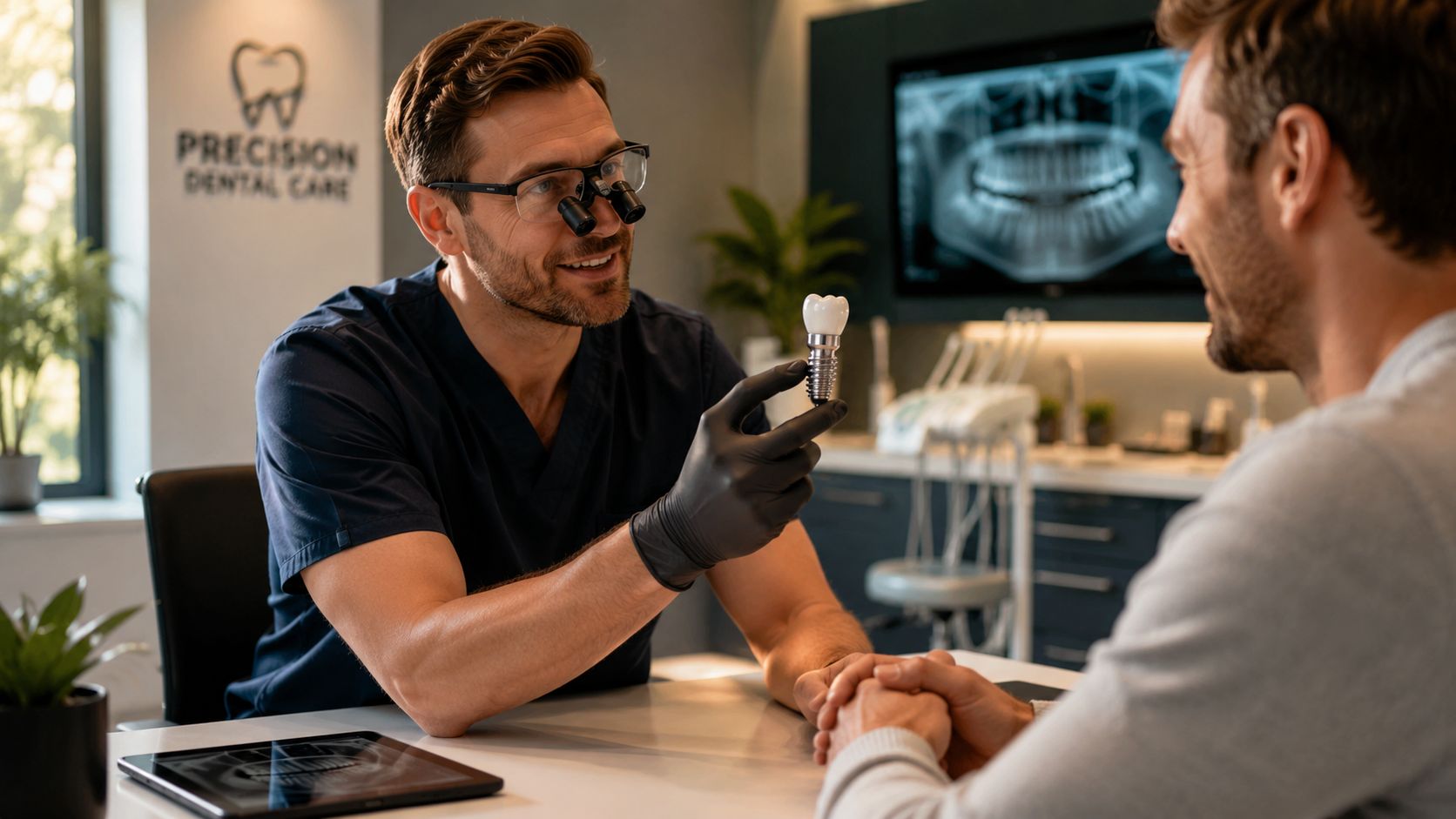
A single dental implant in the U.S. typically costs $3,000 to $6,000 per tooth for the full procedure, but there are several affordable paths to a restored smile. If you're in the Fair Lawn area and putting off care because of cost, you should know there are practical ways to lower the upfront burden without settling for a one-size-fits-all solution.
If you're reading this, there's a good chance you're dealing with more than a gap in your smile. Maybe you're chewing on one side, hiding your teeth in photos, or wondering whether a missing tooth is starting to affect the rest of your mouth. Cost is usually the next worry, and for many people, it's the biggest one.
That concern is understandable. Online prices are often confusing, and many patients searching for a dentist near me, dental implants near me, or a dentist in Fair Lawn, NJ see numbers that don't seem to match from one office to the next. Some quotes refer only to the implant post. Others include the full tooth replacement. Some leave out steps that may be necessary for a safe result.
This guide is meant to clear that up in plain language. You'll see what affects implant cost, which treatment options tend to be more budget-friendly, how candidacy is evaluated, and what financing strategies can make care more manageable for patients in Fair Lawn, Ridgewood, and Glen Rock. If you've also been looking into tooth extraction, restorative dentistry, cosmetic dentist near me, or even services like emergency dentist, Invisalign, or Six Month Smiles, it's helpful to know how implant treatment fits into a broader plan for your oral health.
A missing tooth changes everyday life in quiet ways first. You start choosing softer foods. You smile with your lips closed. You may even avoid scheduling a visit because you're worried the answer will be more expensive or more complicated than you can handle right now.
That hesitation is common. People often wait months or longer because they assume implants are out of reach, or because they think they'll be judged for putting treatment off. In reality, many patients are trying to balance work, family, insurance, and household bills while figuring out what matters most.
When a tooth is gone, the problem isn't only cosmetic. The surrounding teeth can shift, biting pressure can change, and some patients begin to notice soreness in the jaw or strain while chewing. It can also make a person less likely to schedule routine cleaning and exams, dental x-rays, or new patient exams, because the missing tooth becomes the focus of embarrassment.
Missing teeth rarely stay a single issue. They often affect comfort, confidence, and the way the rest of the mouth functions.
For some people, the next step is straightforward. One missing tooth may call for a single implant. For others, especially if several teeth are missing or failing, a broader restorative dentistry plan may make more sense. That can include extractions, implant-supported replacements, crowns, bridges, or a full-arch option.
Price matters because implant care is a real investment. In the U.S., the average cost of a single dental implant can range from $5,000 to $7,000, while complete treatment for one tooth is often quoted at $3,000 to $6,000, depending on what is included in the plan, according to Bookimed's international implant cost overview and Main Street Dental Newark's 2025 cost guide.
That doesn't mean every patient needs the same approach. It means you need clear answers before you commit. In a local search for a dentist in Fair Lawn, NJ, the most helpful information isn't just a low advertised number. It's a treatment plan that explains what you're paying for, why it matters, and what lower-cost alternatives may still protect your long-term oral health.
A dental implant fee can feel confusing at first because you are not buying a single product off a shelf. You are paying for a sequence of steps, each one designed to help the final tooth fit, function, and last well. That is why two offices can advertise very different numbers for what sounds like the same treatment.
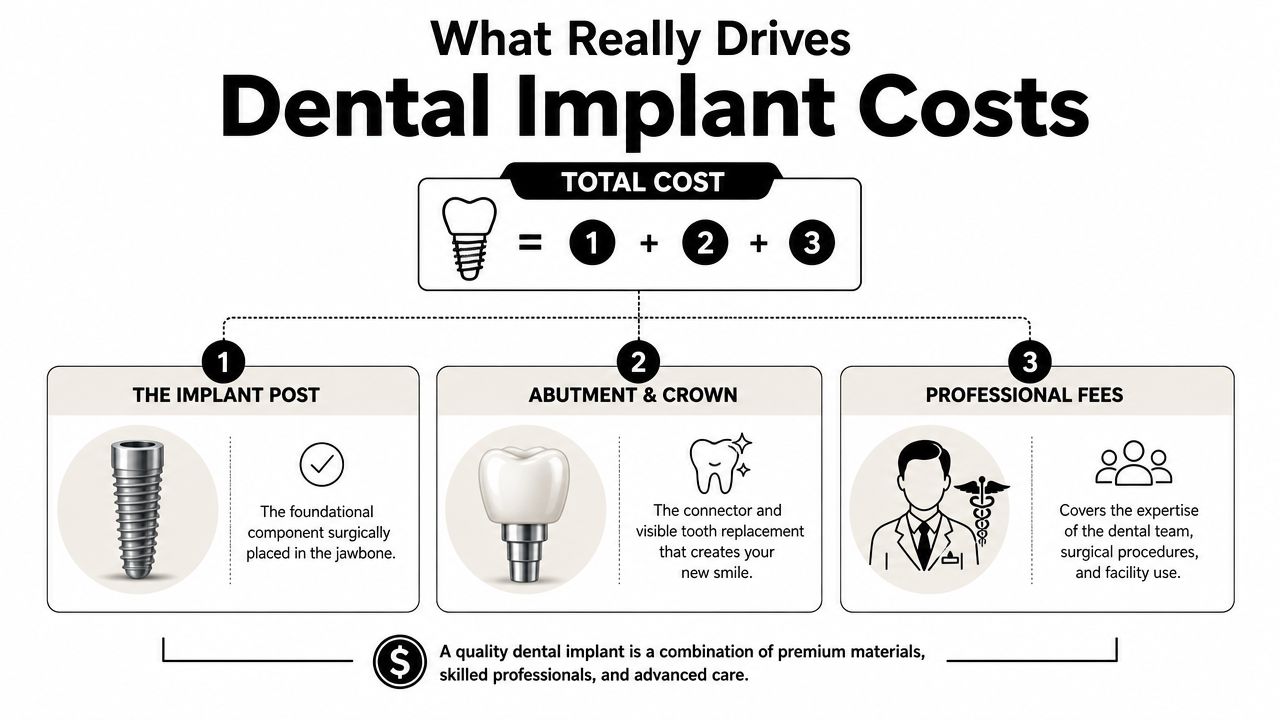
Most single-tooth implant cases include these core pieces:
| Part | What it does | Why it affects price |
|---|---|---|
| Implant post | The titanium piece placed in the jawbone | Material quality and surgical complexity matter |
| Abutment | The connector between the implant and crown | It has to fit precisely for function and stability |
| Crown | The visible tooth-colored restoration | A custom fit and natural appearance add to the total |
One simple way to read an implant quote is to ask, "Am I seeing the cost of the whole tooth, or only one part of it?" Many low advertised prices refer only to the implant post. A complete fee often includes the post, the abutment, the crown, and the visits needed to plan and finish treatment.
Implant treatment works a lot like building on a foundation. If the measurements are off, or the materials are lower quality, the final result may still look acceptable at first but create problems later.
According to this review of cheap vs premium dental implants, premium implant systems commonly use medical-grade titanium and are paired with detailed three-dimensional planning such as CBCT imaging. In practical terms, that planning helps your dentist study bone width, bone height, nearby nerves, and sinus position before surgery.
At our Fair Lawn practice, this part of care is where transparency matters most. A higher quote is sometimes covering better diagnostics, better parts, and a plan designed for your mouth instead of a one-size-fits-all approach.
Good question to ask: Does this fee include CBCT imaging, the abutment, the crown, and follow-up visits, or only the implant post?
Bone levels are one of the biggest reasons two patients receive different estimates. A patient who lost a tooth recently may have enough bone for straightforward implant placement. A patient who has been missing that tooth for years may need added support first because the jawbone can shrink after a tooth is gone.
That preparation may involve grafting bone into the site or, in some upper back cases, creating room near the sinus so an implant can be placed safely. If you want a clear explanation of that process, our guide to bone grafting for dental implants walks through what it is, why it is recommended, and how it affects treatment timing.
This is also where local context helps. In Fair Lawn, the meaningful question is not whether a national ad promises a low starting fee. The useful question is whether your exam shows a direct path to implants or a staged plan that protects the long-term result.
Professional fees reflect more than time in the chair. They also reflect diagnosis, surgical judgment, bite planning, restoration design, and the ability to spot problems before they become expensive setbacks.
That can be especially important if your case also involves tooth extraction, restorative dentistry, or teeth that have shifted into the open space. In those situations, the lowest estimate is not always the most affordable path over time.
For many Fair Lawn patients, the best value comes from a clear written treatment plan, honest discussion of what is included, and practical options for phasing care if needed. That is how implant costs start to make sense.
A patient in Fair Lawn may come in expecting one answer and one price. Implant care usually works more like choosing the right size and shape of foundation for a house. The goal is the same, a stable result, but the plan changes based on how many teeth are missing, how the bite comes together, and what kind of day-to-day maintenance feels realistic for you.

A single implant is often the cleanest solution for one missing tooth when the teeth on either side are healthy. The implant replaces the root, and a crown sits on top of it. That means the neighboring teeth do not need to be trimmed down to hold a bridge.
For many people, this feels closest to having their own tooth back. It can be a smart value in the long run because it treats one space directly instead of asking nearby teeth to share the workload.
An implant-supported bridge can make sense when several teeth are missing in a row. Instead of placing an implant for every missing tooth, we can sometimes place fewer implants and use them to support a connected set of replacement teeth.
That setup often lowers the total number of implant posts and can reduce overall treatment complexity. In plain terms, it is one of the most practical ways to restore a longer gap without rebuilding each tooth one by one.
A short video can help make these choices easier to picture in real life.
For patients missing most or all teeth on the top or bottom, All-on-4 and All-on-6 can be more practical than replacing every tooth with its own implant. These systems use a limited number of implants to support a full arch of teeth.
That changes the budget conversation in an important way. You are no longer paying for a separate implant and crown at each missing tooth site. You are building one coordinated full-arch solution. In many Fair Lawn cases, that can create a clearer path to fixed teeth while keeping the number of surgical sites lower.
Implant-supported overdentures, often called snap-on dentures, are a good fit for patients who want more hold than a traditional denture but prefer a lower-cost path than a fixed full-arch bridge. They attach to implants for added security, then come out for cleaning.
A common example is the patient whose lower denture slides while eating or speaking. A snap-on denture can improve confidence without requiring the higher investment of a permanently fixed restoration.
Mini implants may help in select situations, especially for denture stabilization or where space is limited. They are not the right answer for every full-mouth case, so the key question is not whether they are cheaper. The key question is whether they can support the kind of bite force, function, and longevity you need.
A lower starting fee does not always mean lower total cost over time. The best value is the option that fits your mouth, your goals, and the upkeep you can realistically maintain.
| Option | Best for | Main advantage | Main trade-off |
|---|---|---|---|
| Single implant | One missing tooth | Keeps nearby teeth untouched | Higher cost per tooth than grouped options |
| Implant-supported bridge | Several adjacent missing teeth | May restore more area with fewer implants | Not every bite is a good match |
| All-on-4 or All-on-6 | Full arch replacement | Fixed full-arch support with fewer implants | Requires detailed planning and case selection |
| Snap-on denture | Patients who want more denture stability at a lower cost | More secure fit than a traditional denture | Removable, with different wear and replacement expectations |
| Mini implant applications | Select stabilization or limited-space cases | Can be less invasive in the right situation | Not suitable for every full-restoration need |
Many patients also ask whether implants should be coordinated with cosmetic dentistry, teeth whitening, or orthodontic treatment such as Invisalign or Six Month Smiles. That is a planning question, not a sales question. At our Fair Lawn practice, we map out which treatment should happen first, which can wait, and which option gives you the best balance of cost, function, and confidence.
Most adults who are healthy enough for routine dental treatment can at least be evaluated for implants. The better question isn't "Am I perfect for implants?" It's "What does my mouth need for implants to succeed?"

A good candidate usually has:
If you've been searching for an emergency dentist after a broken tooth, infection, or sudden tooth loss, candidacy may start with stabilizing the immediate problem first. In many cases, urgent treatment and long-term implant planning are part of the same care path.
Needing a bone graft or sinus lift doesn't mean implants are off the table. It usually means your mouth needs preparation before the final restoration. That can happen after long-term tooth loss, advanced infection, or natural bone shrinkage over time.
Some patients also need a tooth extraction before implant treatment begins. Others may need temporary restoration, gum treatment, or additional diagnostics. These steps are part of responsible planning, not a sign that the case can't be treated.
"The best implant candidate isn't the patient with a perfect mouth. It's the patient with a clear diagnosis and a realistic treatment plan."
Implant treatment isn't typically completed in a single afternoon. The process often includes:
That timeline can vary from patient to patient, but the key point is simple. A good plan is personalized. If you're comparing local providers for dental care, don't just ask whether implants are possible. Ask what needs to happen first, and why.
For many families, "affordable" doesn't mean cheap. It means the treatment can fit real life. That's where financing strategy matters, especially for patients trying to balance dental care with other medical and household expenses.
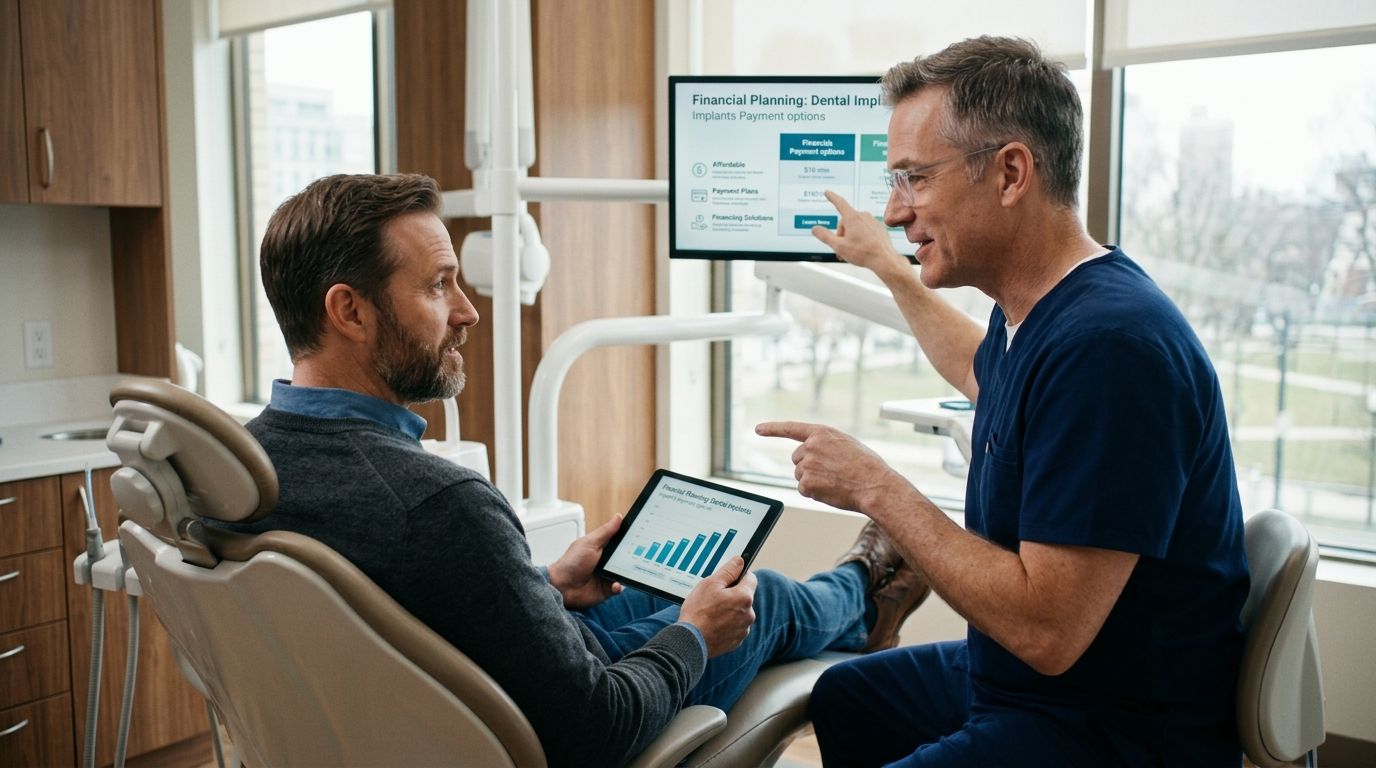
Many dental plans don't fully cover implants, but that doesn't mean they provide no help at all. Some plans may contribute toward diagnostics, extractions, crowns, or other related restorative steps. If you're also due for cleaning and exams, dental x-rays, or treatment for damaged teeth, your benefits may apply to parts of the overall plan.
Before your consultation, ask your insurer these questions:
The most useful cost strategy is often a combination of tools. According to this guide to dental implants without insurance, combining HSA or FSA funds, dental discount plan savings, and negotiated pricing can reduce effective implant costs by 30% to 40% for eligible patients.
That matters because many people only consider monthly financing, when tax-advantaged savings may help as well. The same source notes HSA or FSA contributions up to $3,850 per year for individuals in 2026, and also points to dental schools offering rates 30% to 50% lower in some situations. Even if a patient doesn't use every option, understanding the stack can make treatment feel far more manageable.
Rather than asking, "Can I pay for this all at once?" try asking:
| Question | Why it helps |
|---|---|
| Can insurance cover any preparatory care? | It may lower the cost before implant placement |
| Do I have HSA or FSA funds available? | Pre-tax dollars can reduce the effective cost |
| Can treatment be phased? | Staging care may spread costs over time |
| Are monthly payment options available? | Financing can turn a large fee into a predictable budget item |
Patients who are already managing prescription expenses may also find it helpful to review this patient guide for medication costs, especially if they're coordinating dental treatment with broader health care spending.
The most helpful financial conversation isn't about a headline price. It's about a written plan that shows what is included now, what may be needed later, and which parts are optional versus essential.
If you'd like to review available payment pathways, monthly options, and support tools in one place, you can explore implant financing information.
Financial reminder: A clear treatment sequence often reduces stress as much as a lower fee does. People make better decisions when they can see the order of care, not just the total.
Affordable dental implants become much more realistic when the cost is broken into steps you can plan for. That's often the difference between delaying care for another year and starting treatment with confidence.
By the time someone schedules an implant consultation, they've spent weeks thinking about the same questions. Will this hurt. Am I too late to fix the problem. Is this going to turn into a bigger process than I expected. A good first visit should answer those questions calmly and clearly.

At the initial visit, the goal is to understand your mouth as it is today. That includes reviewing the missing or failing tooth, checking gum health, evaluating bone support, and discussing whether a single implant, bridge, overdenture, or full-arch solution makes the most sense. If you've also been considering cosmetic dentistry, replacing old restorations, or straightening teeth with Invisalign or Six Month Smiles, those goals can be discussed as part of the overall treatment picture.
Dr. Jody Bardash brings more than 30 years of experience to patient care, and that kind of experience matters when treatment needs to be both personalized and practical. The office also offers advanced technology, including facial scanning, photogrammetry, and digital planning tools that help turn a vague concern into a precise plan.
Implant treatment should feel organized, not overwhelming. Some patients are comfortable with local anesthesia alone. Others feel much better knowing sedation dentistry is available, especially if they've had dental anxiety, need oral surgery, or are combining extractions with implant care.
The office's broader treatment range also helps when the case involves more than one issue. A patient may come in for a missing tooth and discover they also need periodontal care, a crown, a denture update, or even emergency dental services after a recent fracture or infection. Having those services in one place often makes the process feel much less fragmented.
Even with the upfront cost, implants remain one of the strongest restorative choices available. According to GM Insights' dental implants market analysis, dental implants have long-term success rates consistently above 90%, and about 178 million Americans are missing at least one tooth.
Those two facts fit together in an important way. Tooth loss is common, and implants are no longer a niche treatment. For many patients in Fair Lawn, Ridgewood, and Glen Rock, they're a realistic way to regain comfort, appearance, and bite function with a long-term solution rather than a short-term patch.
Patients often feel relief once they learn there isn't just one implant path. There are choices, and those choices can be matched to budget, comfort, and long-term goals.
A good consultation usually ends with clarity. You should leave knowing:
That kind of transparency is what helps patients move forward. Not pressure, just a plan.
If you've been delaying treatment because implant care felt too expensive, too confusing, or too intimidating, you're not alone. Most patients don't need more sales language. They need a straightforward explanation of their options and a clear path forward.
Affordable dental implants can mean different things depending on your needs. For one person, it may be a single implant placed after a tooth extraction. For another, it may be an implant-supported bridge or an All-on-4 solution that restores a full arch more efficiently. For someone else, affordability may come from timing, financing, and using tax-advantaged funds wisely.
The right plan should help you do more than fill a space. It should help you chew comfortably, speak confidently, and stop worrying that the problem will get worse if you wait. It should also fit into the larger picture of your oral health, whether that includes routine dental care, restorative work, cosmetic improvements, or urgent treatment after damage or infection.
For a dentist near me, dental implants near me, or a trusted dentist in Fair Lawn, NJ, the next best step is a personalized consultation. That's where you get answers based on your mouth, your goals, and your budget, not generic internet estimates.
Ready to explore your options with a team that serves Fair Lawn, Ridgewood, Glen Rock, and nearby New Jersey communities? Schedule a consultation with Dental Professionals of Fair Lawn to discuss implant choices, financing, comfort options, and the best next step for your smile.