Affordable Clear Aligners in Fair Lawn, NJ
Get affordable clear aligners in Fair Lawn, NJ. Discover options, costs, and safe, dentist-supervised care from Dental Professionals of Fair Lawn.
Get affordable clear aligners in Fair Lawn, NJ. Discover options, costs, and safe, dentist-supervised care from Dental Professionals of Fair Lawn.
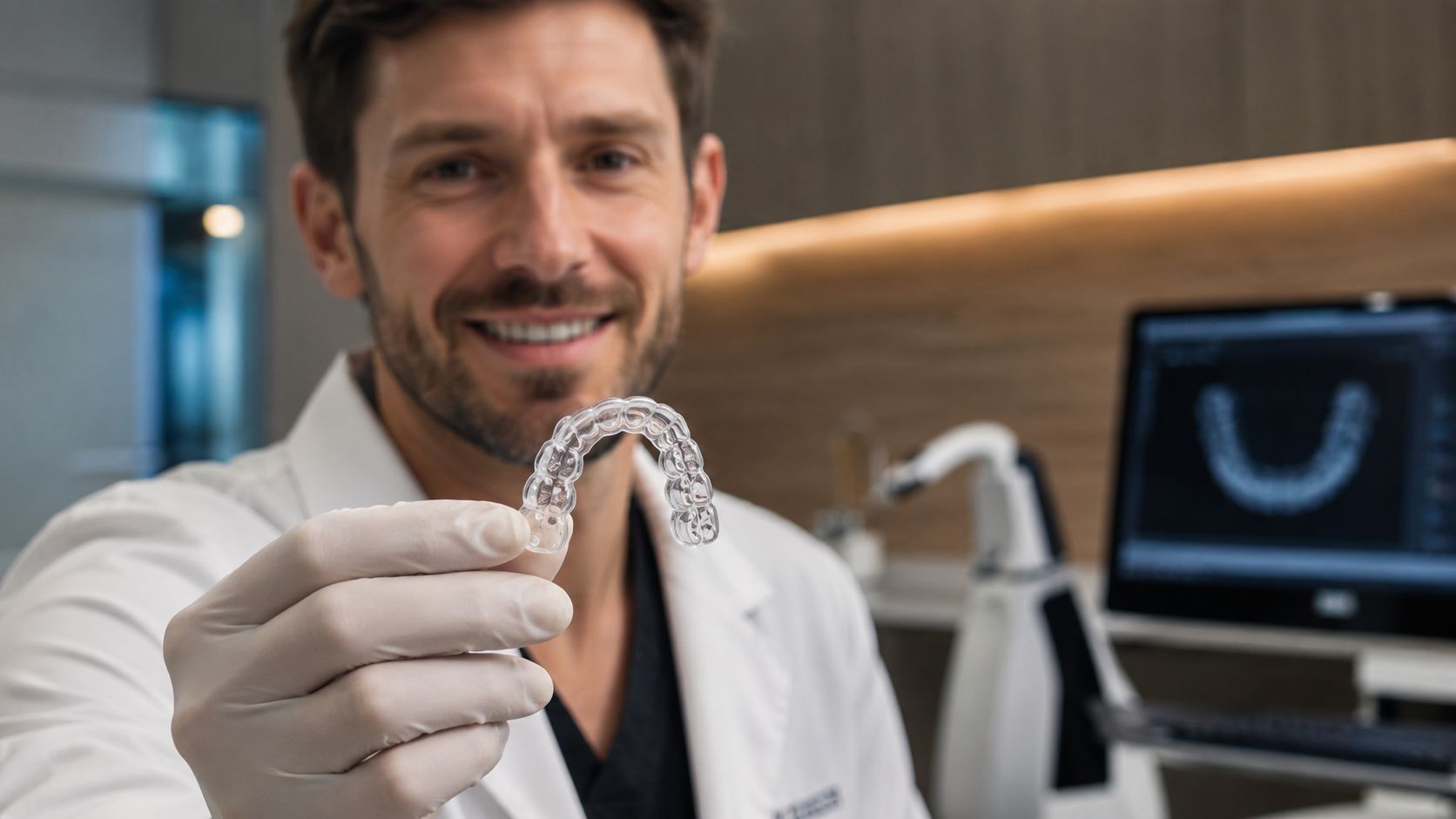
You're probably seeing the same thing many Fair Lawn patients see before they call our office. One browser tab shows a low mail-order aligner price. Another shows Invisalign from a local dentist. A third promises a fast smile makeover with almost no office visits. By that point, the question usually isn't whether clear aligners work. It's which option is safe, affordable, and worth finishing.
That confusion makes sense. Clear aligners can be an excellent treatment for the right case, but not every aligner system is built for the same level of difficulty. Cost matters, but so do diagnosis, fit, bite control, and what happens if teeth don't move as planned.
For patients looking for a dentist in Fair Lawn, NJ, or searching terms like dentist near me, cosmetic dentist near me, or Invisalign, the most useful starting point is simple. Compare aligner options by total value, not by the lowest advertised number. If you also need routine dental care, cleaning and exams, dental x-rays, or a new patient exam, those pieces matter before tooth movement starts.
If you live in Fair Lawn, Ridgewood, or Glen Rock, you may want straighter teeth without metal braces, but still want a realistic budget. That's where questions arise regarding affordable clear aligners. The challenge is that “affordable” can mean very different things depending on the material, the treatment plan, and whether a dentist is overseeing your case.
A clear aligner is a custom plastic tray that fits over your teeth and applies gentle pressure to move them gradually. Affordable clear aligners typically use medical-grade, BPA-free thermoplastic polymers and apply controlled orthodontic force of 0.5 to 1.5 N, while success depends heavily on wearing them 20 to 22 hours per day, according to this overview of affordable clear aligner mechanics and wear requirements. That sounds technical, but the takeaway is straightforward. Teeth move well when the trays fit correctly, the force is controlled, and the patient wears them consistently.
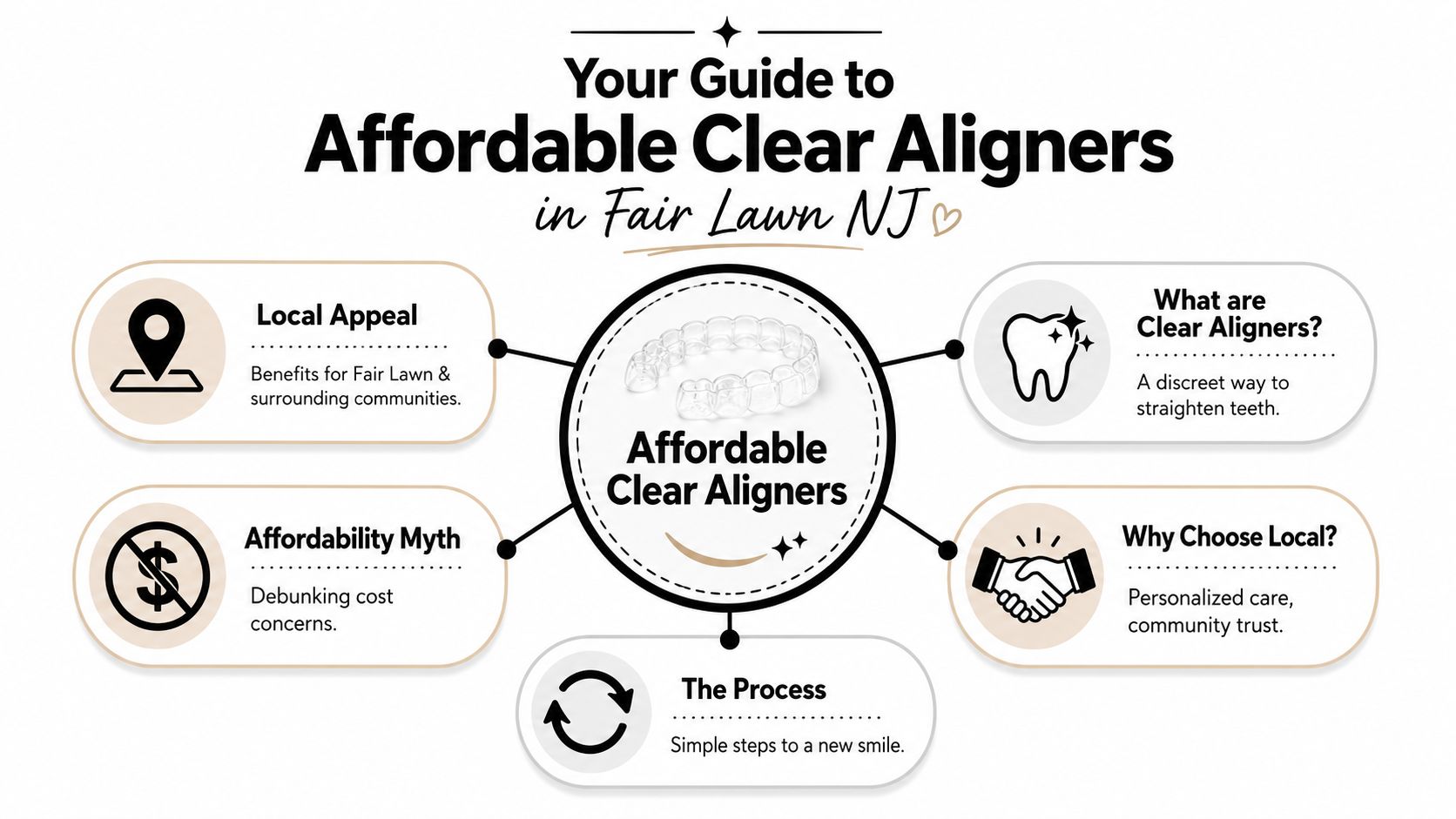
The first factor is case complexity. Mild spacing or mild crowding is usually simpler than a bite issue, rotated teeth, or larger movement that needs detailed staging.
The second is professional supervision. Some lower-cost systems reduce price by cutting office time. That can work for limited cases, but it also shifts more responsibility onto the patient.
The third is treatment design and support. If your trays stop tracking, your bite feels off, or you need refinement, the quality of the original plan matters.
Practical rule: A lower upfront fee doesn't automatically mean lower total cost.
In Fair Lawn, many people also want care that fits into real life. They may be balancing family schedules, school activities, work meetings, or even an unrelated dental issue like a cracked tooth, old filling failure, or an emergency dentist visit. Clear aligners work best when they're part of a complete dental plan, not a stand-alone online purchase.
A local cosmetic and family dental office can look at your teeth, gums, bite, restorations, and smile goals together. That matters more than most ads suggest. If someone also has interest in teeth whitening, cosmetic dentistry, restorative dentistry, or replacing missing teeth later with dental implants near me, the aligner plan should support those goals instead of creating new problems.
Practices that focus on patient communication often invest in resources beyond treatment itself, including education and community outreach. For example, if you're curious how dental offices think about patient communication and attracting new dental patients, that perspective can help explain why trustworthy practices spend time educating before recommending care.
The main decision usually comes down to two paths. One is mail-order treatment with home impressions and remote communication. The other is care supervised by a local dentist or orthodontic provider using in-person exams and digital treatment planning.
Both may look similar in ads because both use clear trays. In practice, they're very different experiences.
Benchmark data from 2026 shows the national average cost for clear aligner treatment is $5,108, while direct-to-consumer options can start at $1,095, but those lower-cost systems are contraindicated for complex cases, which are better handled by dentist-supervised systems that can use attachments and more precise staging, according to this clear aligner cost and case-selection review.
| Decision point | Mail-order aligners | Dentist-supervised aligners |
|---|---|---|
| Upfront price | Usually lower advertised entry cost | Usually higher initial quote |
| Exam before treatment | Often limited to self-reported information and impressions | Full dental evaluation before tooth movement |
| Records | Home impression kit or remote scan option | Digital scans, clinical photos, bite review, and exam |
| Best for | Mild cosmetic alignment when the case is truly simple | Mild to more involved cases requiring closer control |
| Mid-course changes | Can be slower or more limited if trays stop fitting | Adjustments can be made in office |
| Support | Remote communication | Local follow-up and direct clinical oversight |
| Problem-solving | Depends on remote system rules | Dentist can evaluate fit, tracking, gum health, and bite directly |
The cheapest path often assumes your case is simple, your impressions are accurate, and your teeth respond exactly as planned. Real mouths don't always cooperate that neatly. Fillings, gum inflammation, bite interference, clenching, and old dental work can change what's appropriate.
That's why the treatment process matters almost as much as the trays themselves. A patient may start with one goal, such as closing front spacing, and discover the bite needs more attention than expected. In those cases, local supervision usually gives you more options.
A clear tray is only part of treatment. The diagnosis is the treatment.
Dentist-supervised systems like Invisalign or Six Month Smiles are built around case selection, monitoring, and course correction. That doesn't mean every patient needs the most extensive approach. It means the right level of oversight should match the biology and mechanics of the case.
For patients comparing aligner systems with braces, this guide on clear aligners vs traditional braces is a useful next step because it puts cosmetic preferences, comfort, and control into one decision.
Some people also search for terms like Six Month Smile, tooth extraction, or cosmetic dentist near me because they want a full smile plan, not just straighter front teeth. If there's crowding caused by a bite problem, a missing tooth, or wear from grinding, aligner choice should be made in that larger context.
Use these questions before starting any aligner case:
Patients don't usually regret asking more questions. They regret starting treatment before the right questions were answered.
DIY teeth straightening appeals to people for a simple reason. It feels convenient. No waiting room, no scans, no repeated appointments, and a price that looks manageable at first glance.
The problem is that teeth don't move in isolation. They move through bone, around roots, beside gums, and into a bite that has to function every day when you chew, speak, and sleep.
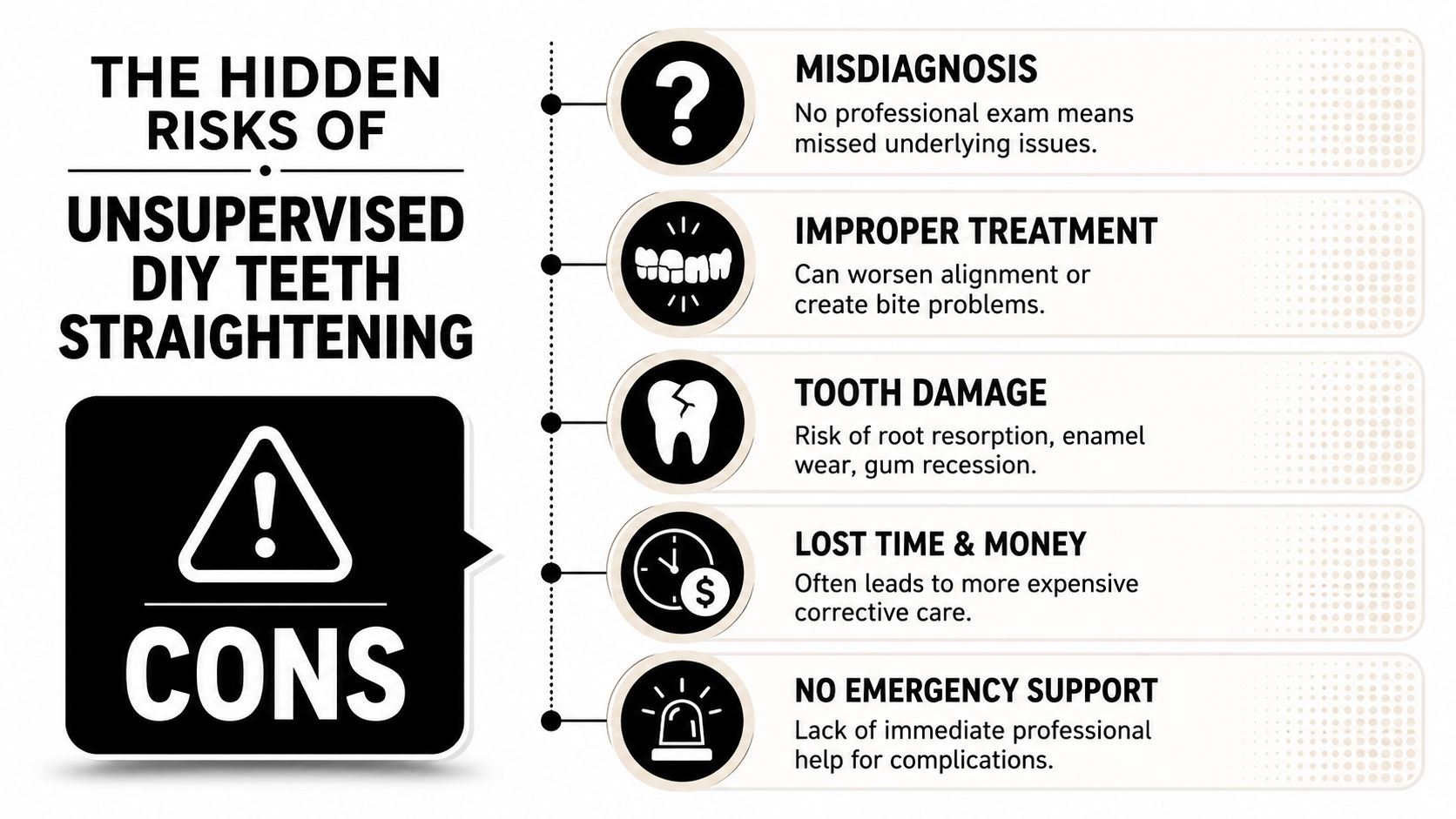
A patient can look at a mirror and see crooked teeth. What they can't see is whether there's hidden decay, bone loss, gum disease, root position concerns, or bite interference. That's where in-person diagnosis matters.
A 2026 clinical consensus found that 70% of patients self-diagnose their case complexity incorrectly, and a 2025 industry study found that 38% of patients who tried mail-order aligners for complex cases abandoned treatment within 6 months due to worsening bite alignment, according to this review of common clear aligner safety questions.
Those numbers line up with what many dentists see in practice. The issue usually isn't patient motivation. The issue is that the case wasn't simple enough for unsupervised movement.
Some complications are obvious, such as trays that don't fit or teeth that stop tracking. Others build slowly.
If an aligner system doesn't begin with a proper exam, it can miss the very reason your teeth shouldn't be moved that way.
A smile photo can't tell you whether a tooth has short roots, an old infection, unsupported bone, or a failing filling. A digital simulation also can't replace a hands-on bite check. If a patient is searching for a dentist near me because their teeth feel crowded and they've also had jaw soreness, broken fillings, or gum bleeding, those signs deserve attention before aligners start.
This is also why aligner treatment often overlaps with other services. Some patients need cleaning and exams first. Others need fillings, gum care, or a plan for future restorative dentistry. A few need to postpone orthodontic movement until a more urgent issue is addressed by an emergency dentist.
The financial risk is easy to underestimate. A low-cost system may become more expensive if it creates a bite problem or if a patient later needs corrective treatment, replacement trays, or additional dental work to stabilize the result.
That's the part many people don't factor in. The most affordable path is the one that's appropriate from the start and completed safely.
For many families in Fair Lawn and nearby communities, the biggest concern isn't whether straighter teeth would help. It's how to make treatment fit the household budget without sacrificing quality.
That's a fair concern. Clear aligner fees vary by region, and national averages are around $5,000, with state-level costs ranging from $3,600 in lower-cost states to $6,500 in higher-cost states such as those in the Northeast, depending on complexity and treatment time, according to this overview of geographic clear aligner pricing. New Jersey patients often feel that difference.
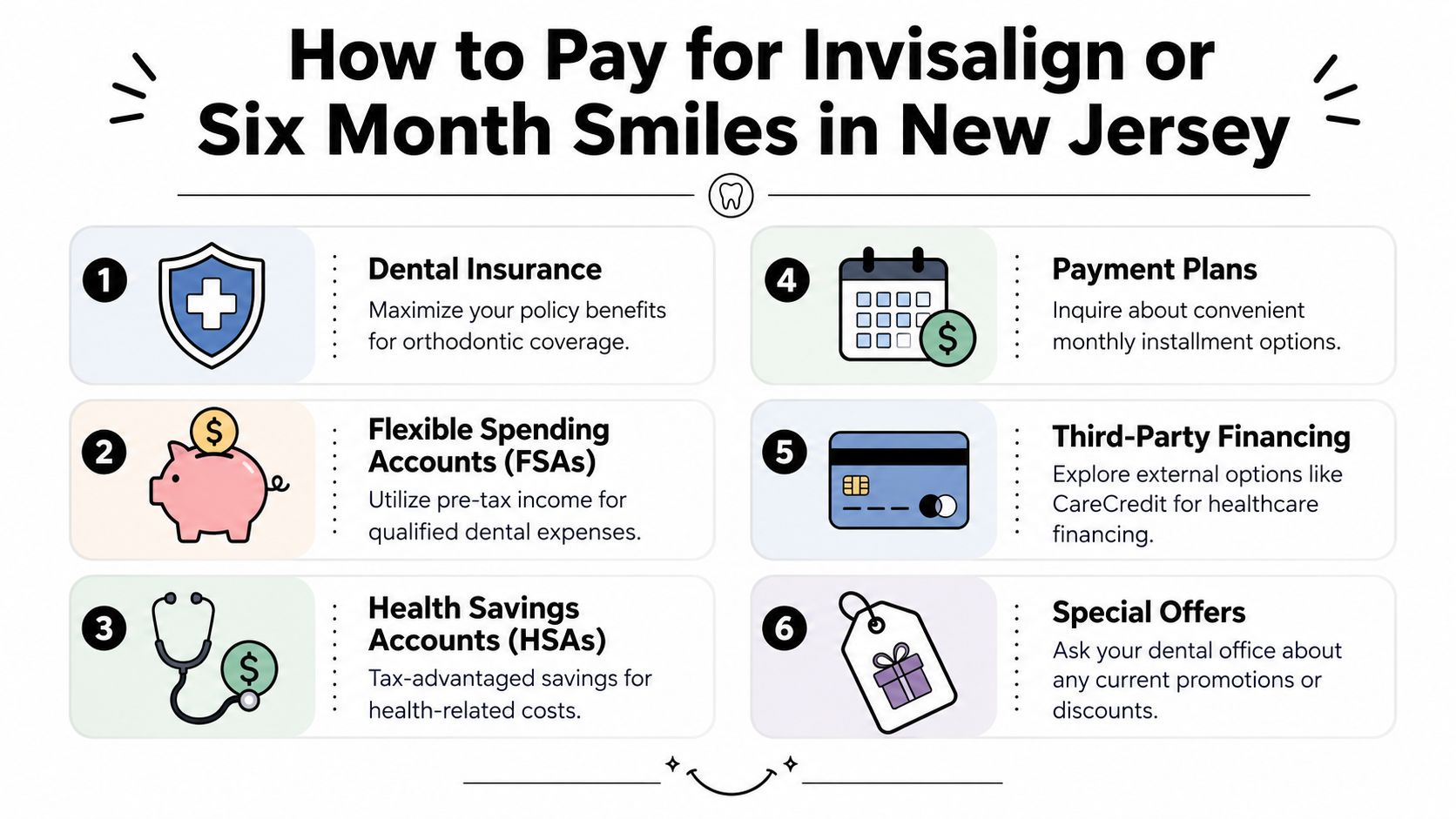
There's rarely just one payment route. Most patients do better when they combine benefits strategically.
Ask for a written breakdown of what's included. That should cover records, aligners, office visits, refinements if needed, and retainers after treatment. A low number is less helpful if it leaves out the pieces that usually determine whether the result lasts.
Ask this directly: “If my teeth don't track exactly as planned, what happens next and what does that cost?”
Patients who are comparing options often benefit from reviewing available financing information for treatment at the Fair Lawn office before making a decision. That helps turn a vague concern about cost into a specific plan.
If you're also considering cosmetic dentistry, teeth whitening, or future restorative work, supervised aligner treatment may protect that investment. Straightening teeth the right way can make later cosmetic and restorative care more predictable.
That's especially relevant for adults who are also evaluating larger treatment needs. A patient searching dental implants near me or considering replacing missing teeth may need tooth position coordinated before final restoration. In those situations, paying for precision up front often prevents more expensive corrections later.
Learning how the clear aligner process functions in a professional setting can enhance confidence. The first visit isn't about pressure. It's about finding out whether your teeth, gums, and bite make you a good candidate and whether your goals match what aligners can realistically do.
In a local setting like Fair Lawn, that first conversation is often practical. Patients from Fair Lawn, Ridgewood, and Glen Rock usually want to know how treatment will affect work, school, meals, and confidence in social settings. They also want to know whether they're signing up for a long, uncertain process.
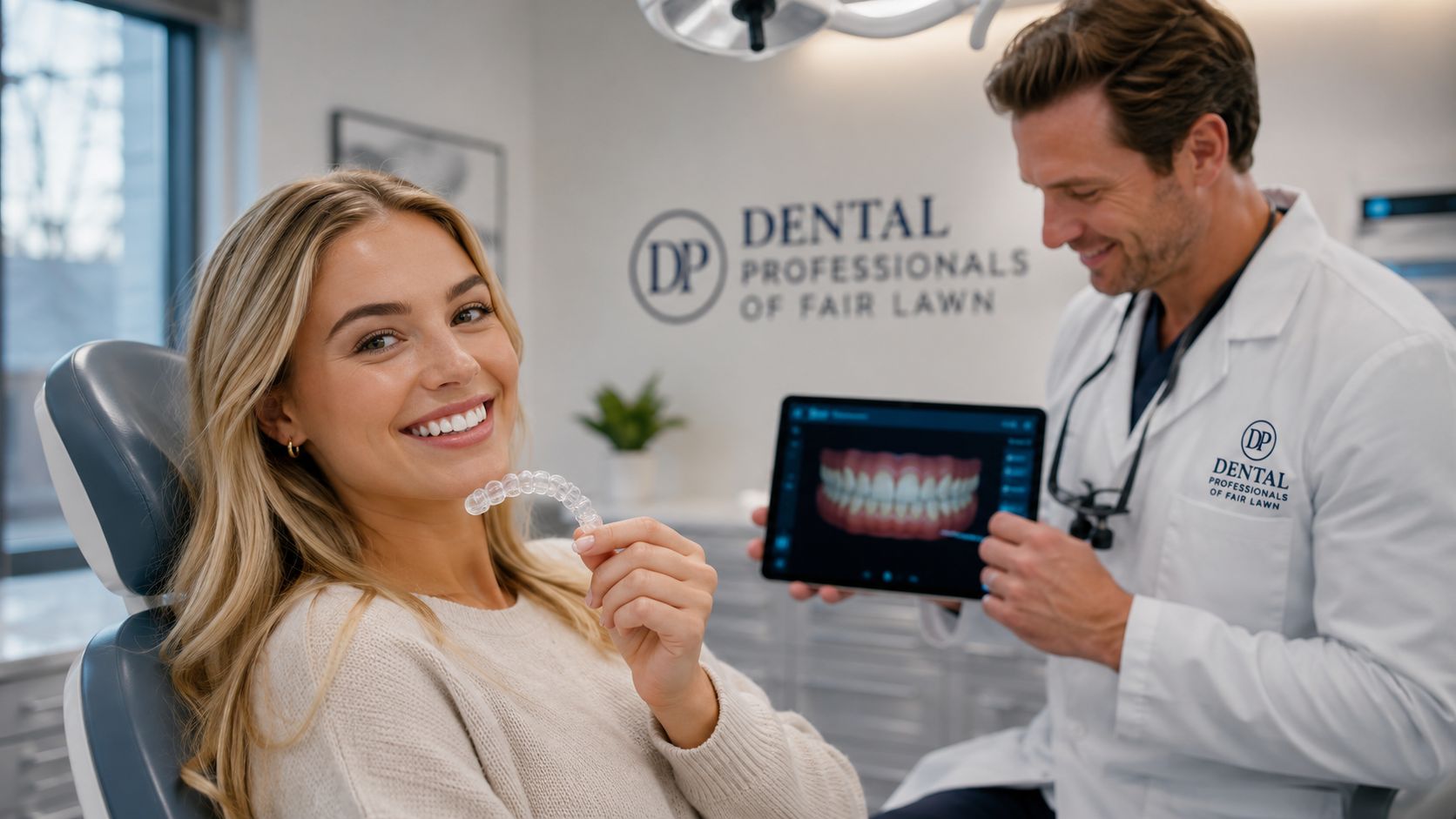
A supervised aligner case usually starts with an exam, discussion of concerns, and digital records. At Dental Professionals of Fair Lawn, that may include iTero digital scanning, which captures a detailed model of the teeth without traditional messy impressions. If you've been putting off orthodontic care because you dislike putty impressions, that detail matters more than you'd think.
A consultation may also reveal that aligners aren't the first step. Some patients need a cleaning, treatment for gum inflammation, replacement of older dental work, or evaluation of a painful tooth before beginning smile correction.
Supervision makes treatment feel more predictable. The dentist reviews how your teeth come together, whether attachments may be helpful, and whether the movement you want is cosmetic, functional, or both.
Dr. Jody Bardash and the team use that information to shape a personalized plan rather than forcing every case into the same template. For some patients, Invisalign is the right fit. For others, Six Month Smiles or another orthodontic option may make more sense based on the movements needed and the final bite goals.
Once treatment starts, the routine is simple but disciplined. You'll wear the trays most of the day, remove them to eat and drink anything that could stain or damage them, clean them regularly, and change to the next set as instructed.
Patients usually adapt quickly because the trays are removable and discreet. That's one reason Invisalign has been adopted by over 18 million patients globally, including more than 4.5 million teenagers, and why its success rate for mild to moderate misalignments is approximately 80 to 90%, according to this review of Invisalign adoption and outcomes.
Small daily habits decide whether aligner treatment feels smooth or frustrating.
Follow-up visits matter because they show whether your teeth are tracking the way the plan predicted. If one tooth is lagging, if a tray feels wrong, or if your bite is shifting in a way that needs correction, it's easier to address early.
That's one of the main advantages of working with a local office instead of depending on remote messages. If something feels off, you know where to go. If you have another need during treatment, such as a chipped tooth, sensitivity, or a separate concern related to tooth extraction, restorative dentistry, or even emergency dentist care, those conversations can happen in one place.
The final stage is retention. Teeth need support after movement, or they tend to drift. Patients often focus on getting through aligners and forget that retainers protect the work.
That's also why long-term planning matters. A stable bite, healthy gums, and well-fitting retainers do more for your smile than a rushed finish date.
Affordable clear aligners can be a smart option, but only when the treatment matches the case. The safest route usually isn't the one with the loudest ad or the lowest starting price. It's the one that begins with a real diagnosis, a clear plan, and support if something changes along the way.
For patients in Fair Lawn, Ridgewood, and Glen Rock who are comparing Invisalign, Six Month Smiles, and other smile-straightening options, a consultation gives you answers that online quizzes can't. You can learn whether your concerns are mostly cosmetic, whether your bite needs closer control, and how aligner treatment fits with your overall dental health.
Treatment length depends on how much movement is needed and how consistently the trays are worn. Mild cases usually move faster than more involved cases. The most accurate estimate comes after an exam and digital scan.
Yes. Retainers are part of protecting your result. Teeth can shift after orthodontic movement, so retention matters.
Often, yes. Aligners are frequently one part of a broader cosmetic or restorative plan. Timing matters, which is another reason local supervision helps.
Yes. You don't need to commit to learn what your options are. A consultation gives you a diagnosis, a realistic treatment path, and a clearer idea of cost.
If you're looking for a dentist in Fair Lawn, NJ who offers clear aligner treatment, cosmetic dentistry, routine dental care, and complete smile planning, contact Dental Professionals of Fair Lawn to schedule a consultation. You'll get a clear look at your options, an honest discussion of trade-offs, and a treatment plan built around safety, comfort, and long-term results.