What Is Digital Smile Design? | Dental Professionals
Curious about what is digital smile design? Learn how Dental Professionals of Fair Lawn uses DSD to preview and plan your perfect smile today.
Curious about what is digital smile design? Learn how Dental Professionals of Fair Lawn uses DSD to preview and plan your perfect smile today.
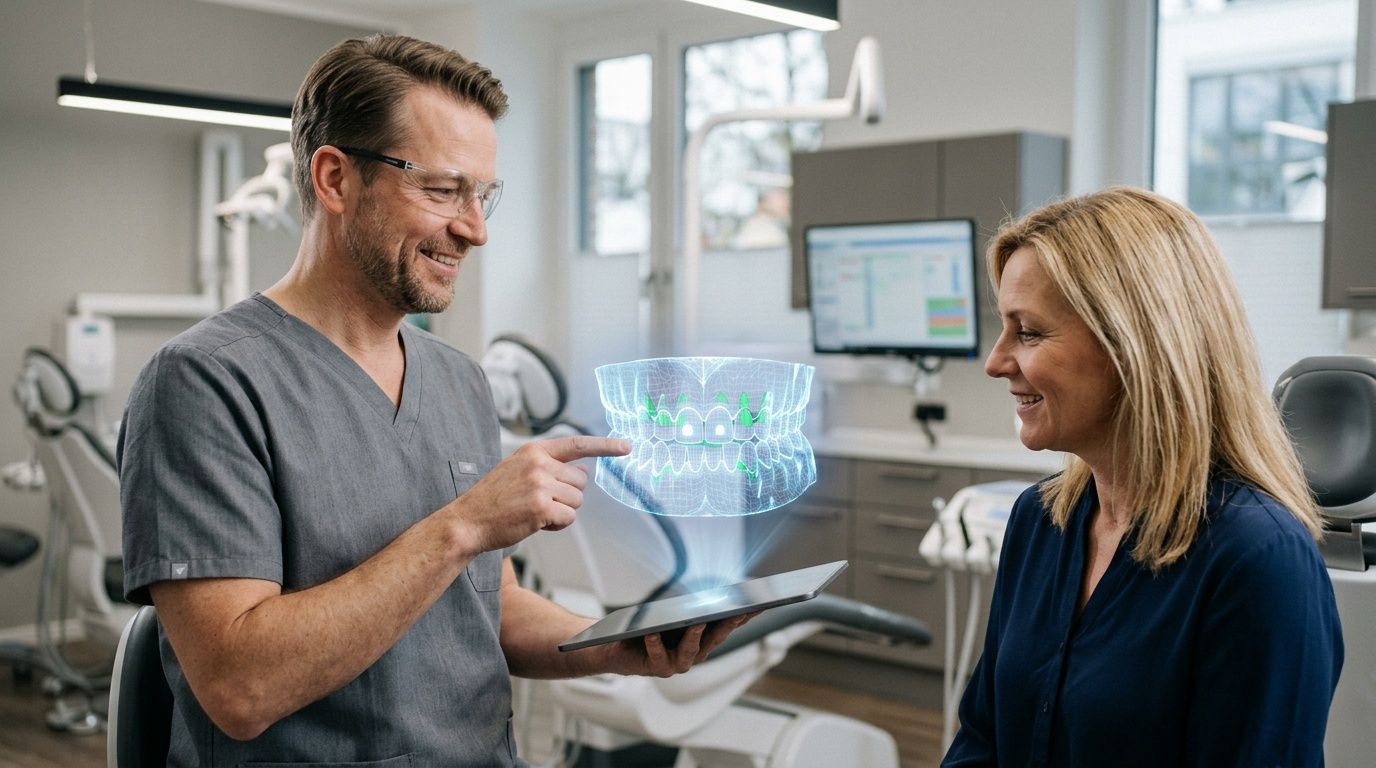
For those seeking a cosmetic dentist near me in Fair Lawn because you dislike how your smile looks in photos, you're not alone. Many people feel stuck between wanting a better smile and worrying they won't like the result. That's a hard place to be. You want straighter, brighter, more balanced teeth, but you also want to know what you're agreeing to before treatment starts.
That's where what is digital smile design becomes such an important question. Instead of asking you to imagine the outcome, this approach helps you see it, talk through it, and shape it before veneers, crowns, Invisalign, dental implants, or other cosmetic dentistry begins. For patients in Fair Lawn, Ridgewood, and Glen Rock, that can remove a lot of the uncertainty that usually comes with a smile makeover.
A lot of smile concerns begin in small moments.
You notice you always smile with your lips closed in family pictures. You angle your face during video calls. You laugh, then catch yourself. Maybe your teeth look worn, uneven, discolored, or slightly crooked. Maybe you've searched for a dentist in Fair Lawn, NJ, or a cosmetic dentist near me, because you're ready for a change but don't want to make the wrong choice.
That hesitation makes sense. Cosmetic dentistry can feel exciting and stressful at the same time.
Many people don't need a sales pitch. They need reassurance. They want to know what their smile could realistically look like, how treatment will affect their face, and whether the final result will still feel like them.
That's why modern smile planning matters. Instead of relying only on verbal descriptions or rough sketches, your dentist can use digital tools to create a more concrete preview. This gives patients a chance to react early, ask questions, and feel more confident in the plan.
A smile makeover feels very different when you can review the design before treatment instead of hoping for the best at the end.
For patients who like learning about how dental offices are improving communication and support, resources like DocsBot's dental AI solutions can also be helpful. They show how technology is being used to answer questions more clearly and make the patient experience easier to manage.
In Fair Lawn, people often come in asking about veneers, whitening, bonding, Invisalign, crowns, or dental implants because they want a healthier and more attractive smile. Just as often, they come in because they want confidence back. The emotional side matters.
If you've been putting off treatment because you're afraid of committing before you can picture the result, digital smile planning can change that experience. It turns the conversation from "trust me" into "let's look at this together."
Digital Smile Design is a planning system that helps your dentist study your teeth, gums, lips, and facial features together before cosmetic treatment begins. The easiest way to think about it is this: it's the dental version of an architect's blueprint.
An architect doesn't start building a home by guessing. They measure, plan, map proportions, and show you what the structure should look like before construction starts. Digital smile design follows the same logic for your smile.
People sometimes assume digital smile design is just a polished before-and-after picture. It isn't. It's a clinical planning process.
A review published in PMC explains that digital smile design developed as digital photography, scanners, and CAD/CAM workflows came together in dentistry. It moved from simple 2D mockups toward more advanced planning, including later 4D smile design that can use jaw-motion sensors, helping make treatment for crowns, veneers, and implants more predictable through this clinical overview of digital smile design evolution.
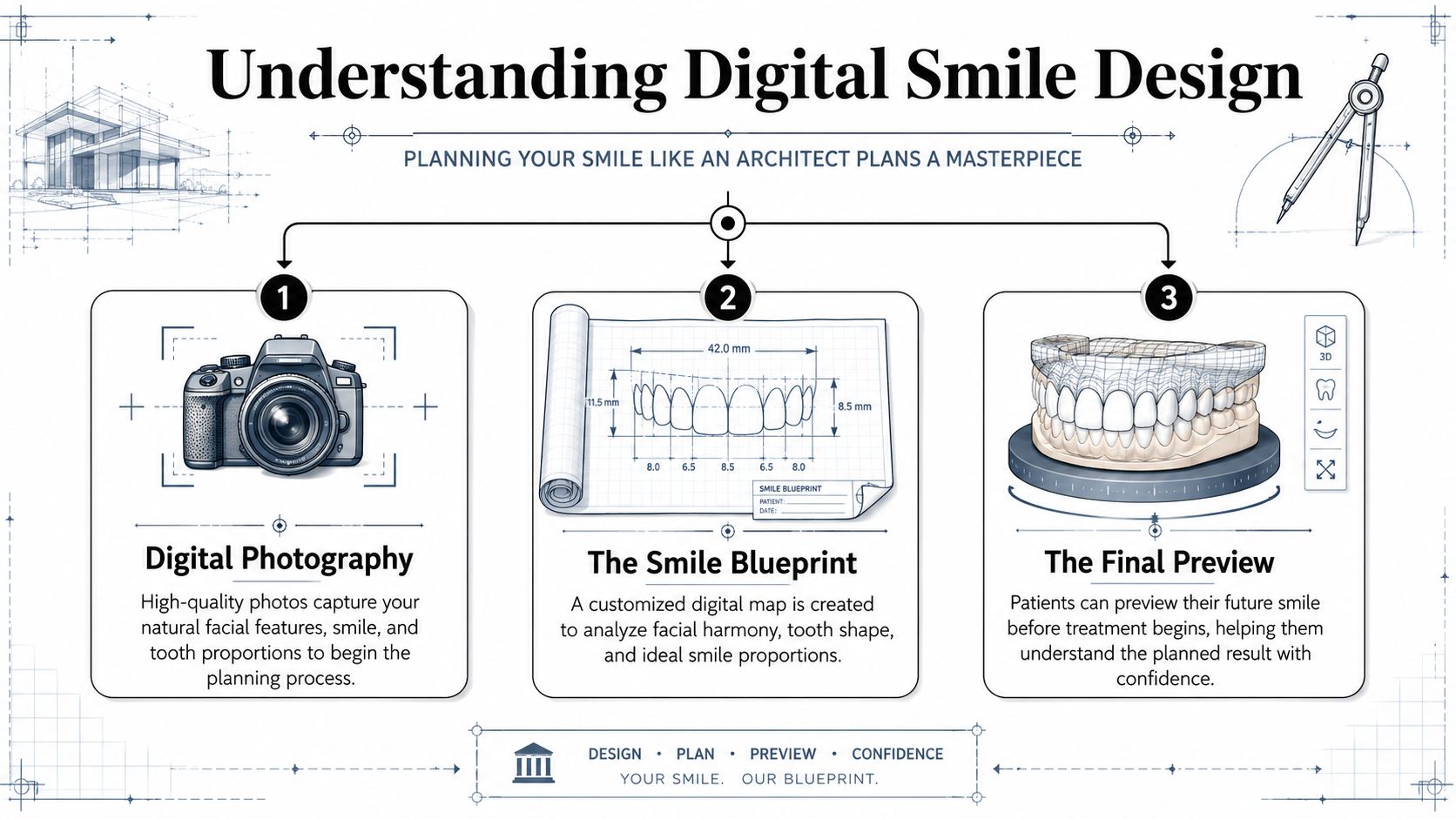
When your smile is designed digitally, the dentist isn't only looking at tooth color or tooth shape. They're also thinking about how your smile fits your face.
That usually includes factors like:
A beautiful smile isn't achieved by copying someone else's teeth; instead, it results from designing something that fits you.
Traditional cosmetic consultations sometimes leave patients trying to interpret technical language. They hear terms like veneers, contouring, bite, or restoration and still aren't sure what the final smile will look like.
Digital planning gives the conversation a visual anchor. Instead of abstract descriptions, you can review a design and respond to specific details. If you want to explore a planning-based cosmetic approach in more detail, the Fair Lawn smile design service shows how this type of customized treatment can be built around facial structure and aesthetic goals.
Practical rule: If you've ever thought, “I want cosmetic dentistry, but I need to see the direction first,” you're exactly the kind of patient who often benefits from digital smile design.
The best part of digital smile design is that it turns a vague idea into a step-by-step process. Patients usually feel calmer once they understand how the pieces fit together.
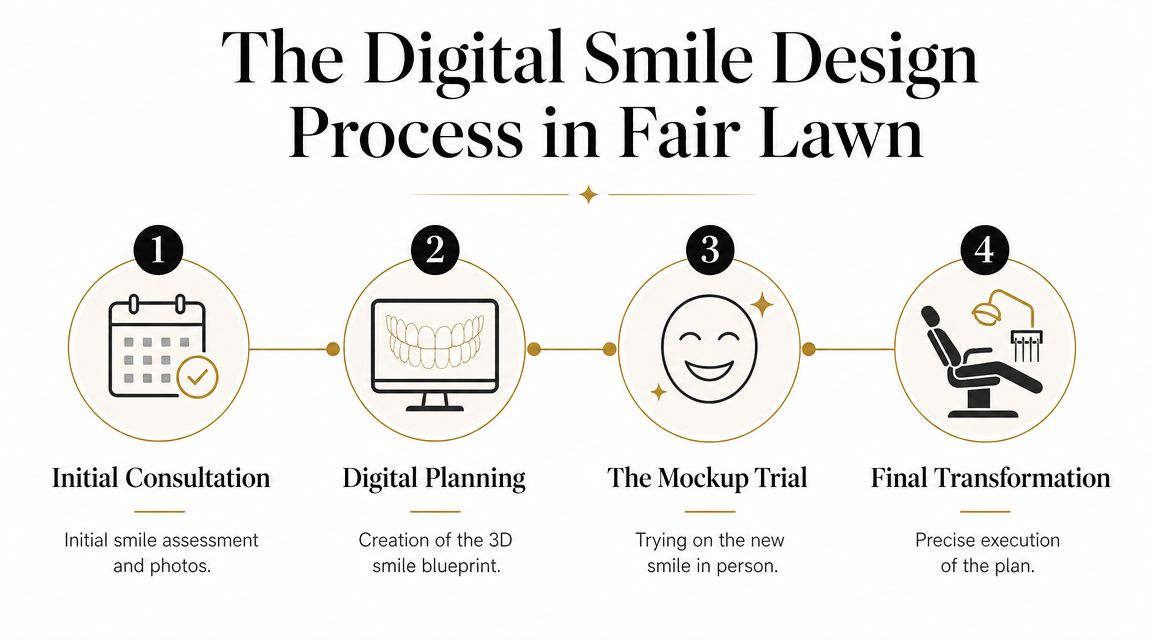
The first visit usually begins with conversation, not equipment. You talk about what bothers you and what you hope to change.
Some patients want a whiter smile. Others want to close spaces, fix worn edges, replace missing teeth, or improve symmetry. You may also be deciding between treatment types, such as veneers, bonding, Invisalign, Six Month Smiles, crowns, or dental implants. Your goals shape the design from the beginning.
Once the goals are clear, the office gathers the information needed to plan accurately. This can include photos, video, and digital scans of the teeth. These records help capture not only the teeth themselves, but also how your smile appears when you speak and smile naturally.
One evidence-based description of DSD explains that it's a data-fusion workflow combining intraoral scans and facial photographs to build a 3D model of the teeth within facial context. That allows clinicians to evaluate proportions and symmetry using stable facial landmarks and create digital mock-ups patients can review and approve, as described in this PMC article on DSD precision and planning.
Many patients are pleasantly surprised at this stage. The process isn't about choosing a generic “perfect” smile. It's about designing one that fits your features.
Some smiles need subtle changes. Others require a broader plan that combines cosmetic and restorative dentistry. If a patient has crowding, orthodontic treatment such as Invisalign or Six Month Smiles may come first. If a tooth is missing, implants may be part of the plan. If the issue is shape or wear, veneers or crowns may be more appropriate.
A digital workflow can also benefit from detailed imaging tools such as facial scanning for treatment planning, which helps align the smile design with the patient's full facial structure.
One of the most reassuring parts of the process is the mock-up or preview stage. Patients can often review a visual version of the proposed smile before committing to the final treatment path.
That changes the tone of the whole experience.
| What patients worry about | What the preview helps answer |
|---|---|
| Will the teeth look too big? | You can assess shape and proportion early |
| Will I still look like myself? | You can see whether the design fits your face |
| What if I change my mind? | Adjustments can happen before final treatment |
| How do I compare options? | You can discuss different directions more clearly |
The real value of digital smile design isn't only precision. It's relief. Patients no longer have to make cosmetic decisions in the dark.
Patients usually care less about the software than they do about what it changes for them. That's the right instinct. The strongest benefits of digital smile design show up in confidence, communication, and peace of mind.
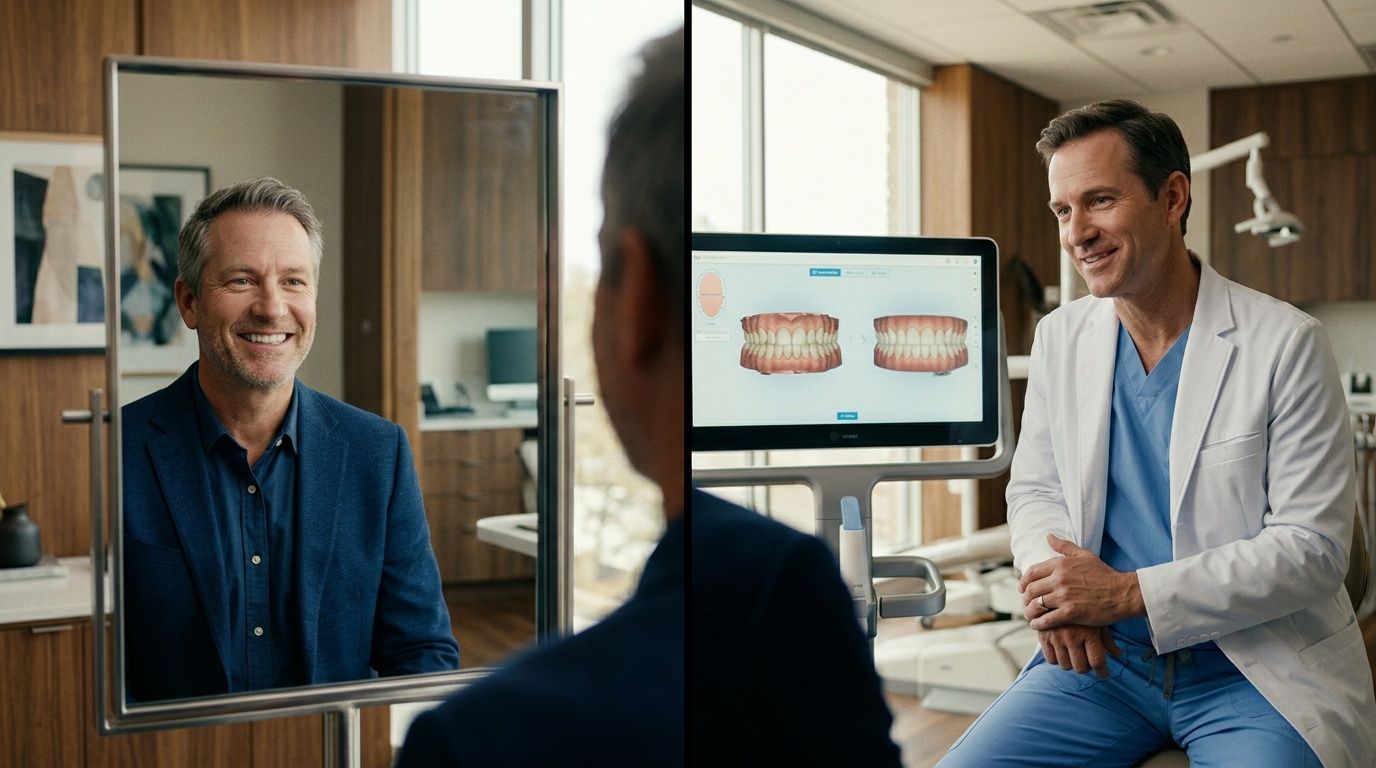
A traditional cosmetic consult can leave room for uncertainty. You hear what the dentist recommends, but you may still wonder how those recommendations translate into your actual face and smile.
Digital smile design changes that dynamic.
This isn't a fringe technology anymore. A market analysis projects the digital smile design software market will reach $151.1 million by the end of 2025, reflecting growing adoption tied to patient communication and more predictable cosmetic and restorative workflows, according to this digital smile design market report.
That growth matters because it mirrors what patients have been asking for all along. They want fewer surprises. They want clearer planning. They want to feel informed before making a decision about treatment.
Here's a short video that helps show how smile design tools support that process.
Digital smile design can support many kinds of care, including:
For many patients in Fair Lawn, this doesn't feel like a luxury add-on. It feels like a safer, more thoughtful way to plan cosmetic dentistry.
You sit down for a smile consultation in Fair Lawn expecting a sales pitch or a list of procedures. What usually happens is much more helpful. You talk about what bothers you when you see photos of yourself, what you hope could look different, and whether you want to see a possible result before deciding on treatment.
That last part matters to many patients. A Digital Smile Design consultation is often the moment the process starts to feel real, understandable, and much less intimidating.
For patients in Fair Lawn, Ridgewood, or Glen Rock, the first questions are often very practical. Will veneers look natural on my face? Should teeth be straightened before cosmetic work? If I have a missing tooth, how would an implant fit into the final smile? Can worn teeth be rebuilt without creating a bulky look? Those are the kinds of questions a good consultation is designed to answer clearly.
A strong DSD consultation begins with a conversation about you.
Your dentist will usually ask about:
That discussion is more important than many patients expect. Digital tools are useful, but they only help if the plan reflects your face, your preferences, and your everyday life.
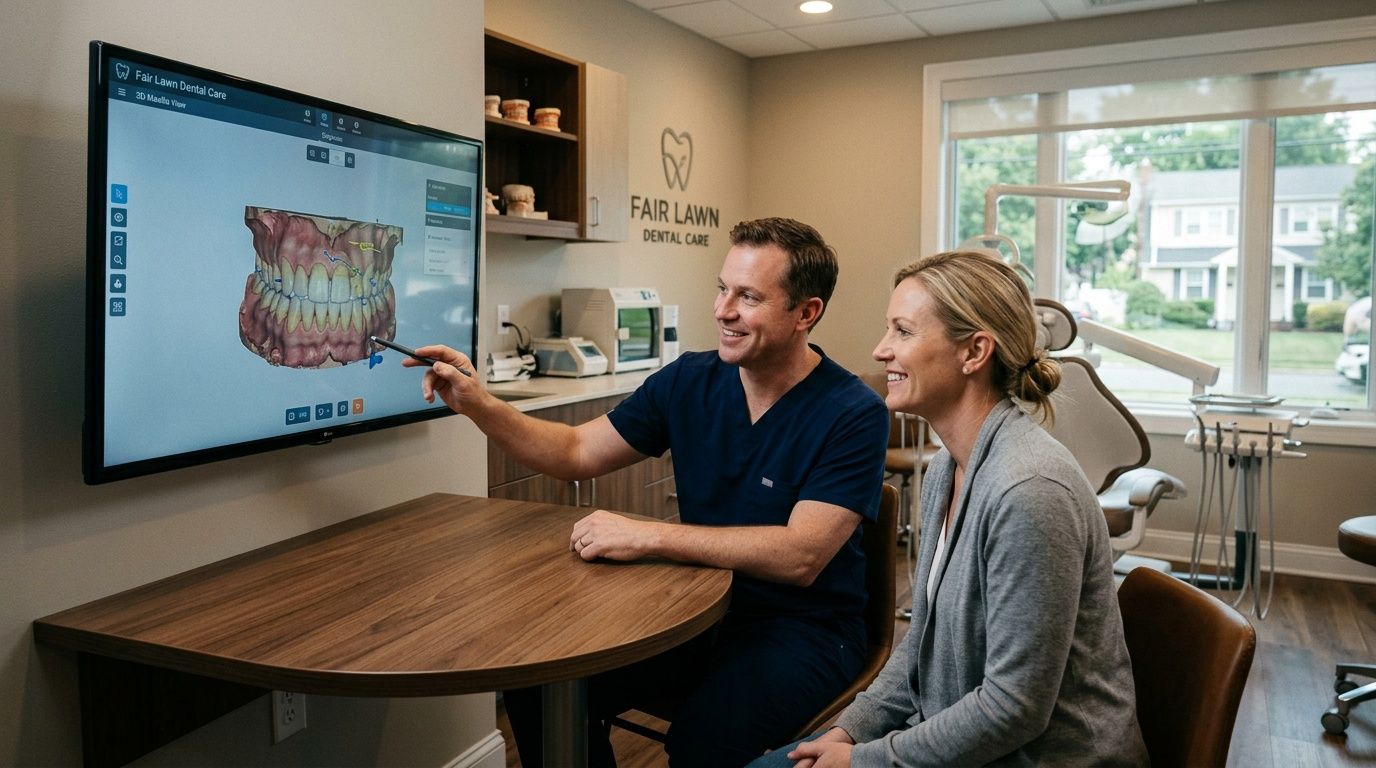
After the conversation, the next step usually includes digital photos and a scan of your teeth. Patients are often relieved by how easy this part feels. It is quick, comfortable, and far less stressful than many people expect.
These records work like a blueprint for your smile. Instead of guessing how changes in shape, length, or alignment might look, your dentist can review them with you and explain the options in a visual way. For someone who has delayed cosmetic dentistry because of uncertainty, that can be a huge relief.
If dental anxiety has kept you from booking a consultation, this visit can feel different from what you feared. Planning appointments are usually calm and low pressure. If future treatment may involve sedation, implants, extractions, or more extensive restorative care, those concerns can be discussed early so you know what to expect.
You do not need to feel fully ready before scheduling a cosmetic consultation. The consultation is often what helps you get comfortable enough to decide.
By the end of the appointment, the goal is not to rush you into treatment. The goal is to replace uncertainty with a clearer picture.
You may leave understanding which treatments fit your goals, whether that means whitening, bonding, veneers, crowns, orthodontics, implants, or a combination. You should also have a better sense of sequence. For example, some patients need alignment first, while others may be ready for cosmetic changes right away.
For many people in Fair Lawn, the biggest benefit is simple. They can see where the process is heading before they commit. That makes the decision feel less like a leap and more like a plan.
Dental Professionals of Fair Lawn includes smile planning as part of a broader range of cosmetic, restorative, implant, orthodontic, and sedation services. That can be helpful for patients whose smile goals involve more than one type of treatment under one coordinated plan.
The cost usually depends on the treatment being planned, not just the design step by itself. A simple cosmetic case and a full-mouth rehabilitation won't involve the same level of planning, materials, or treatment time.
That's why the most accurate answer comes from a consultation. Once your dentist knows whether you need veneers, crowns, whitening, Invisalign, implants, gum reshaping, or a combination, you can get a personalized estimate.
There are two timelines to think about. The first is the planning phase. The second is the actual treatment phase.
The design portion can often happen relatively early in the process because it relies on records, imaging, and discussion. The total treatment time depends on what's being done. Whitening is different from veneers. Veneers are different from Invisalign. Implants and full restorative cases take longer because healing and sequencing matter.
You may be a good candidate if you want to improve the appearance of your smile and you want to understand the outcome before treatment starts. It's especially useful for people considering:
You'll also need a healthy enough foundation for cosmetic work, or a plan to get there first if gum disease, decay, or damage needs to be treated.
No. It can help with smaller cosmetic changes too.
Some patients only want subtle adjustments, such as evening out front teeth, improving proportions, or combining whitening with bonding. Others want a more complete transformation. The value of digital planning is that it helps both types of patients make informed choices.
That's one of the main reasons people ask what is digital smile design in the first place. They don't want to commit blindly.
A consultation gives you the chance to ask questions, review possibilities, and understand the path before you move forward. For many patients, that lowers anxiety because the process feels collaborative instead of uncertain.
If you're exploring cosmetic dentistry and want a clearer picture of what's possible for your smile, schedule a consultation with Dental Professionals of Fair Lawn. If you live in Fair Lawn, Ridgewood, Glen Rock, or a nearby New Jersey community, a personalized visit can help you see your options, understand the treatment plan, and decide on your next step with confidence.