What Is Considered Cosmetic Dentistry in Fair Lawn, NJ?
Wondering what is considered cosmetic dentistry? Our Fair Lawn, NJ dentists explain veneers, whitening, and more to help you achieve your dream smile.
Wondering what is considered cosmetic dentistry? Our Fair Lawn, NJ dentists explain veneers, whitening, and more to help you achieve your dream smile.
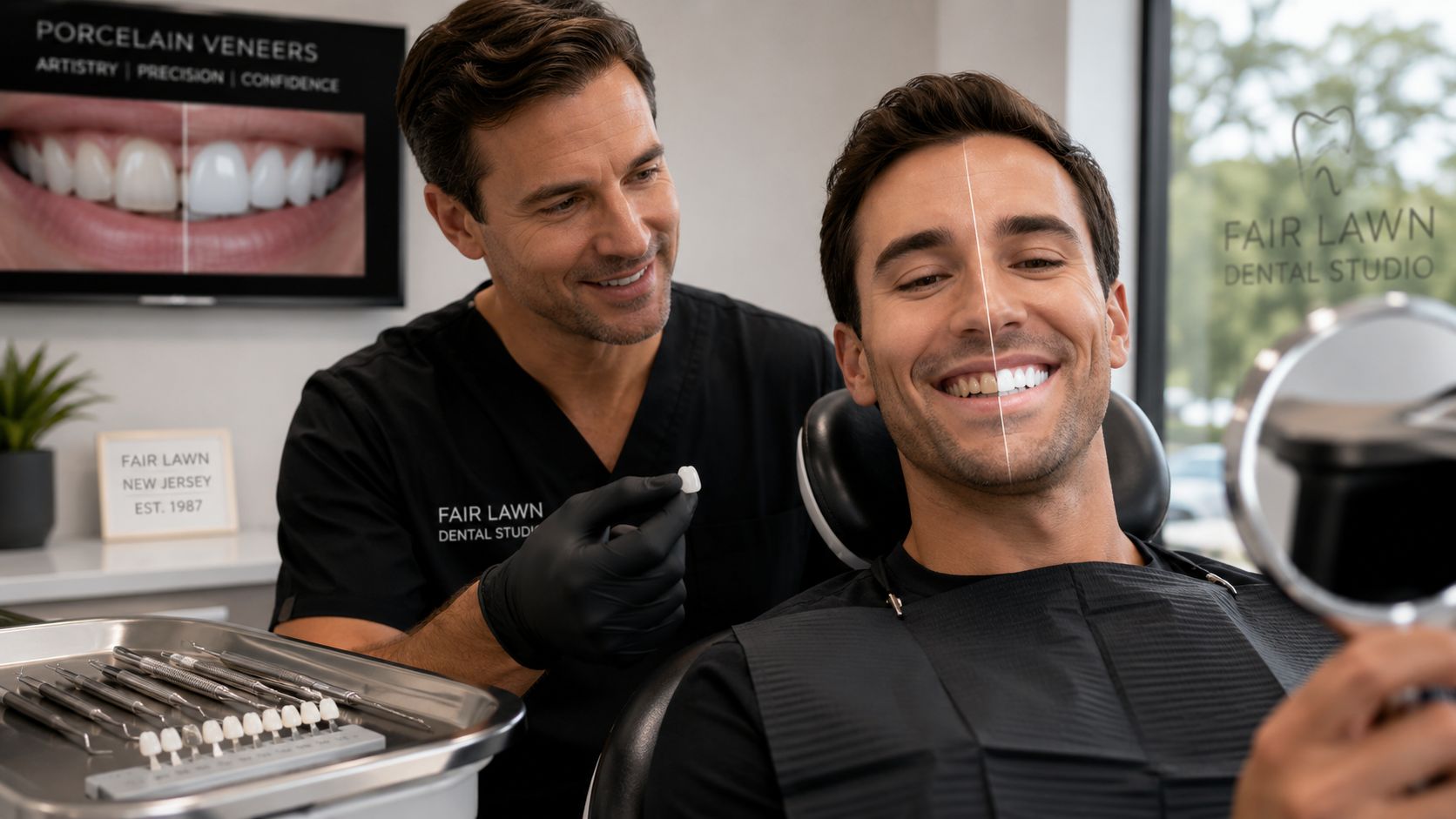
You look in the mirror before work, angle your face a little, and notice the same thing you've been noticing for months. Maybe it's staining that won't lift with store-bought products. Maybe it's a chipped edge, a small gap, or gums that show more than you'd like when you smile. Nothing may be “wrong” in the medical sense, but it still bothers you every time you see a photo.
That's usually when people start searching for a cosmetic dentist near me or a dentist in Fair Lawn, NJ. They're not always in pain. They just want to feel comfortable smiling again.
If that sounds familiar, you're not being vain. You're being practical. Your smile affects how you speak, laugh, meet people, and carry yourself. Interest in improving smile appearance has become mainstream, not rare. The worldwide cosmetic dentistry market is estimated at $35.7 billion in 2026 and projected to reach $98.31 billion by 2034 according to Fortune Business Insights' cosmetic dentistry market report.
A lot of patients in Fair Lawn wait too long before asking about cosmetic dentistry. They assume their concern is too small. It usually isn't. A front tooth that looks darker than the rest, uneven edges, old bonding, crowding, or a gummy smile can change the whole balance of your face.
That doesn't mean you need a dramatic makeover. In many cases, the smartest treatment is the most conservative one.

Patients don't walk into a consultation asking for technical procedures. They say things like:
Those are reasonable goals. They're also exactly why cosmetic care exists.
Practical rule: If your main goal is to improve how your smile looks, you're probably talking about cosmetic dentistry.
For families in Fair Lawn, Ridgewood, and Glen Rock, the first step isn't choosing veneers or whitening off the internet. It's getting a real exam with a dentist who can tell the difference between a cosmetic concern, a bite issue, and a restorative problem hiding underneath. If you're also overdue for cleaning and exams, dental x-rays, or a new patient exam, that matters too. Cosmetic work should sit on a healthy foundation.
Smile design is personal. Shade, shape, tooth proportion, and bite all need to match your face. A local office that handles cosmetic, restorative, and orthodontic planning in one place makes the process simpler, especially if you're also considering Invisalign, Six Month Smiles, bonding, veneers, or dental implants near me as part of a larger plan.
Cosmetic dentistry means dental work done primarily to improve the appearance of the teeth, gums, or bite rather than treat disease. That professional definition commonly includes teeth whitening, bonding, veneers, orthodontics, implants, and gum reshaping, as explained in this overview of cosmetic dentistry meaning.
Think of it this way. General dentistry protects health. Cosmetic dentistry refines appearance. Sometimes those goals overlap, but the main reason for treatment is what matters most.
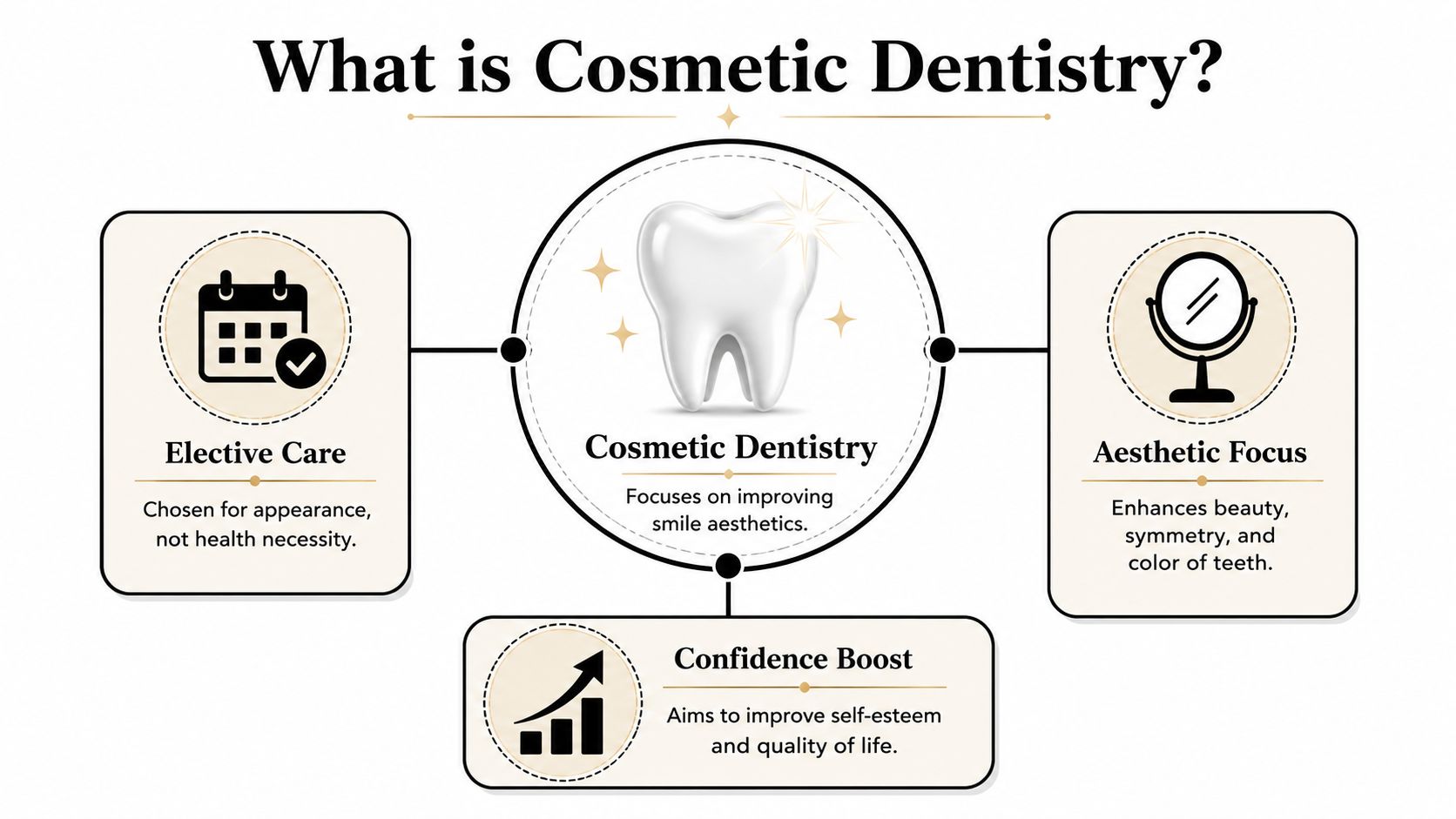
If you've been wondering what is considered cosmetic dentistry, these are the usual examples:
Some patients expect cosmetic treatment to be superficial. That's the wrong way to think about it. Good cosmetic dentistry should look natural, respect your bite, and preserve as much healthy tooth structure as possible.
Cosmetic care is different from treatment aimed mainly at infection, decay, trauma, or structural failure. If you need a filling because of a cavity, that's restorative. If you want to close a tiny space between front teeth, that's cosmetic. The materials may sometimes look similar, but the reason for doing the work is different.
If you want to explore smile-focused options in one place, you can browse the cosmetic dentistry services offered by Dental Professionals of Fair Lawn.
Cosmetic doesn't mean unnecessary. It means appearance is the primary driver of the treatment plan.
Some cosmetic procedures change color. Others change shape. Others move teeth into a better position. You shouldn't lump them together because they don't ask the same thing from your teeth.
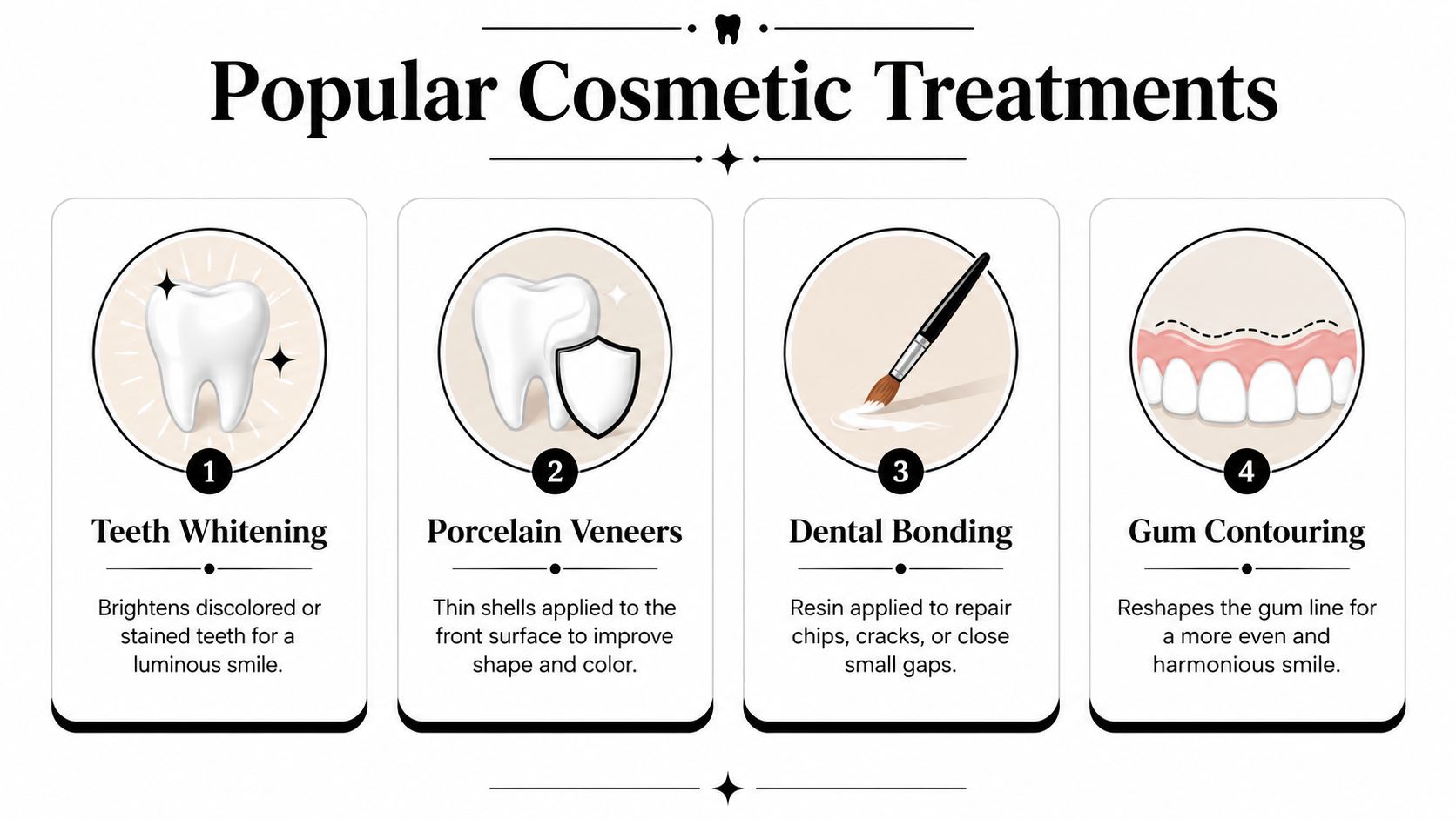
Teeth whitening is the simplest place to start if your teeth are healthy and your main complaint is color. It doesn't change the shape of the teeth. It changes the appearance of stains.
This is often the right first move for adults who say, “My teeth looked better a few years ago, but I don't want anything aggressive.” If sensitivity is a concern, it helps to review expert advice for sensitive teeth whitening from My Transformation before choosing a system.
Dental bonding and porcelain veneers both improve appearance by adding material to the visible surface of the tooth.
Bonding uses tooth-colored resin. It's useful for:
Veneers are thin shells placed on the front of the teeth. They're a stronger choice when the problem is broader than a small chip or stain. They can improve:
A simple way to think about it is this. Bonding is usually the conservative patch. Veneers are the more complete redesign.
This short video gives a helpful visual overview of common smile-improvement options.
Cosmetic procedures don't all work the same way. Some add material, such as composite bonding or porcelain veneers. Some remove tooth structure or gum tissue, such as enameloplasty or gingivectomy. Others, like bleaching, improve appearance without altering tissue structure, as outlined in this technical summary of how cosmetic procedures modify oral tissues.
That matters because the level of commitment is different.
| Treatment | What it helps | What it changes |
|---|---|---|
| Whitening | Stains and yellowing | Color only |
| Bonding | Chips, small gaps, uneven edges | Adds resin |
| Veneers | Shape, color, symmetry, wear | Adds material and may require tooth preparation |
| Gum reshaping | Gummy or uneven smile line | Removes or reshapes gum tissue |
| Invisalign or Six Month Smiles | Crowding, spacing, visible alignment issues | Moves teeth into position |
If your main issue is crooked or crowded teeth, whitening won't solve it. You need movement, not masking. That's where Invisalign or Six Month Smiles can fit. These are often great choices for adults and teens who want cosmetic alignment without the look of traditional braces.
My advice is simple. Don't choose veneers just because teeth are slightly crooked if orthodontic treatment can solve the problem more conservatively.
Patients often find this confusing, and understandably so. A crown can be restorative. It can also be cosmetic. An implant can replace a missing tooth for function, but it also changes your smile. The category depends on the primary purpose of the treatment.
That distinction matters because it often affects insurance and how a dentist documents your treatment plan. This explanation of cosmetic versus restorative classification notes that many procedures, including crowns and implants, may be considered cosmetic in some contexts.
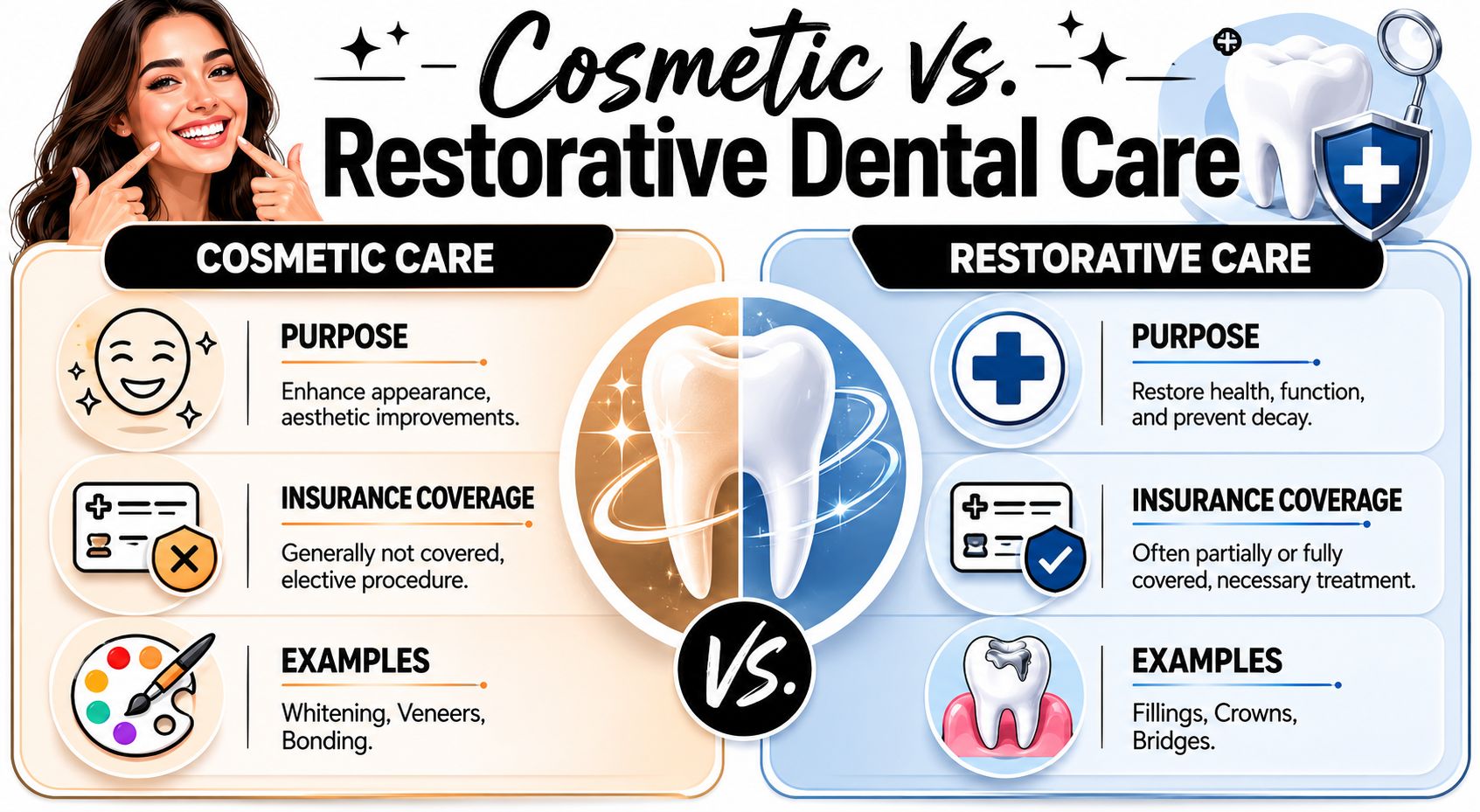
Ask one question first. Why is this being done?
If the answer is mostly appearance, it's usually cosmetic. If the answer is decay, fracture, infection, missing tooth replacement, or bite support, it may be restorative or medically necessary.
Here's a practical comparison:
Cosmetic care
Restorative care
Some treatments sit in the middle.
A front crown may be needed because the tooth is damaged. That's restorative. But shade, contour, and translucency are still cosmetic decisions. A dental implant may be necessary after tooth loss, but the visible result is part of your smile design.
Ask your dentist to separate the treatment into two parts. What is necessary for health and function, and what is optional for appearance?
That conversation helps you understand likely insurance limits, out-of-pocket choices, and whether an HSA or FSA discussion is worth having. It also keeps expectations realistic. If you searched for dental implants near me or emergency dentist after breaking a tooth, your final treatment may include both restorative and cosmetic goals.
Cosmetic dentistry can absolutely improve confidence. It can make you look more rested, healthier, and more put together. But if a dentist only talks about the “after” photo and skips the trade-offs, that's not a real consultation.
You need to know what changes are reversible, what needs maintenance, and what asks more of your natural tooth structure.
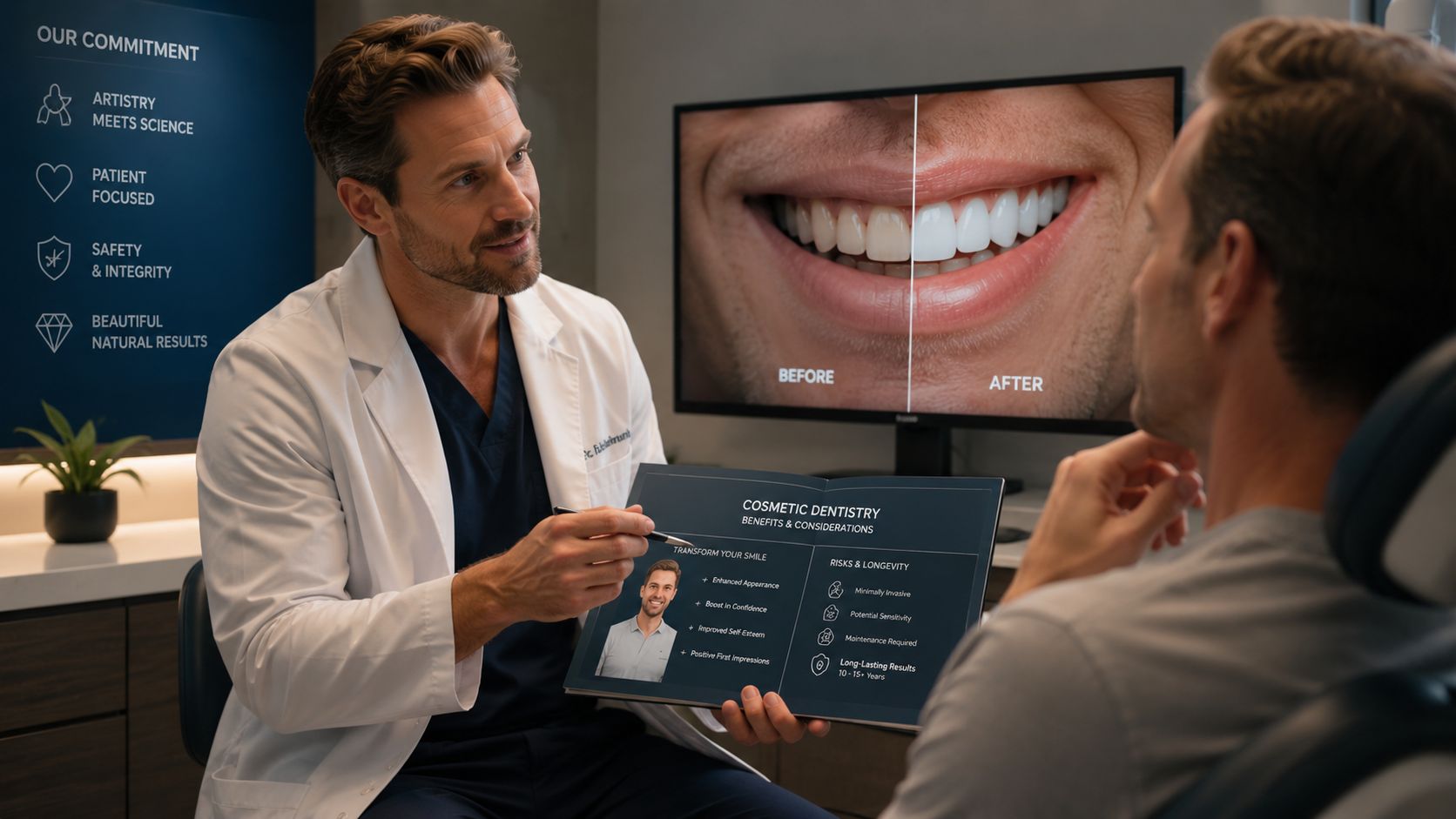
According to Cleveland Clinic's cosmetic dentistry guide, it's important to balance longevity, maintenance, and how much natural tooth structure is altered. Veneers are long-lasting but irreversible. Whitening is non-invasive but needs touch-ups.
That's the right framework for decision-making.
| Option | Main advantage | Main trade-off |
|---|---|---|
| Whitening | Conservative and simple | Needs periodic touch-ups |
| Bonding | Fast correction for small flaws | May need maintenance or replacement over time |
| Veneers | Broad aesthetic improvement | Irreversible if tooth preparation is required |
| Gum contouring | Better smile framing | Involves tissue reshaping |
| Clear aligners | Improves position rather than covering it up | Requires patient compliance |
Start with the least invasive option that can realistically give you the result you want. That usually means whitening before veneers for a color problem, orthodontics before veneers for an alignment problem, and bonding before more aggressive treatment for a minor chip.
Don't let impatience push you into permanent treatment for a temporary frustration.
A good cosmetic plan should still make sense five years from now, not just the day after treatment.
Maintenance matters too. Whitening touch-ups, retainer wear after Invisalign, polishing, nightguards for clenching, and regular cleaning and exams all protect the investment you make in your smile.
A productive cosmetic consultation should feel calm and specific. You should leave knowing what bothers you, what can be improved, what should be treated first, and what can wait. If the plan feels rushed, it probably is.
For patients in Fair Lawn, Ridgewood, and Glen Rock, a smart first visit includes an exam, photos, discussion of your goals, and a review of whether your concerns are cosmetic, restorative, orthodontic, or a mix of all three. That's especially important if you're also dealing with missing teeth, worn enamel, old crowns, TMJ issues, or dental anxiety.
Come in with clear answers to these questions:
Dental Professionals of Fair Lawn offers cosmetic planning along with restorative care, dental implants, Invisalign, Six Month Smiles, iTero digital scanning, and sedation dentistry, which makes it possible to build one treatment plan instead of juggling multiple offices.
Don't diagnose your own smile from social media. Don't assume veneers are the answer because they're the most visible treatment online. The right plan might be whitening. It might be bonding. It might be Invisalign. It might be a crown because the underlying issue is structural, not cosmetic.
If you want a clearer idea of what a larger aesthetic plan can involve, review this smile makeover overview from the practice blog.
If you're ready to talk through what is considered cosmetic dentistry and which option fits your smile, schedule a consultation with Dental Professionals of Fair Lawn. You'll get a practical evaluation, honest guidance, and a treatment plan built around your goals, your oral health, and your comfort.