Secure Fit Dentures in Fair Lawn NJ: A Patient's Guide
Tired of loose dentures? Learn about secure fit dentures, from relines to dental implants, at our Fair Lawn, NJ office. Regain confidence and smile freely.
Tired of loose dentures? Learn about secure fit dentures, from relines to dental implants, at our Fair Lawn, NJ office. Regain confidence and smile freely.
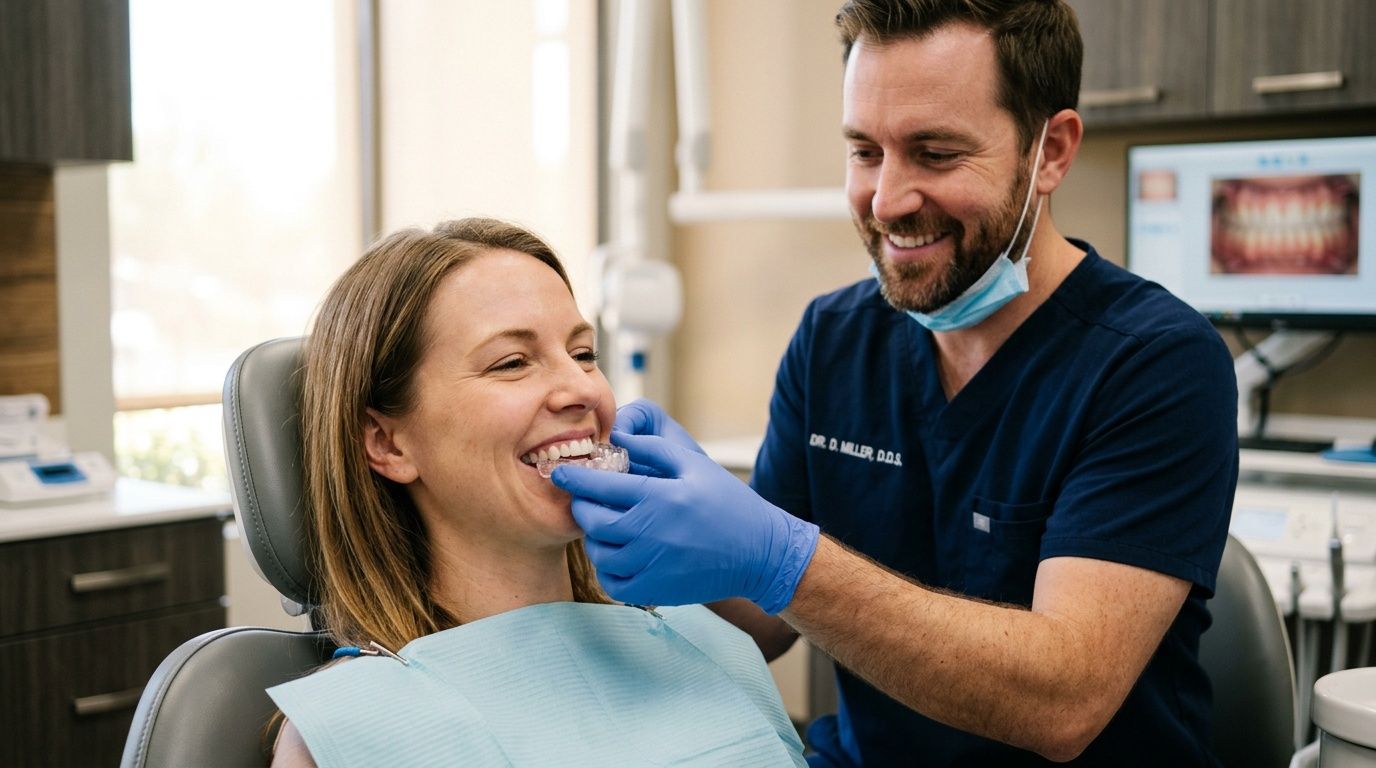
A loose denture usually starts as a small annoyance. You notice a slight shift while talking, a sore spot after dinner, or that familiar worry before eating in public. Over time, that annoyance can affect what you eat, how clearly you speak, and how comfortable you feel around other people.
Patients in Fair Lawn, Ridgewood, and Glen Rock often come in thinking they did something wrong because their denture no longer feels secure. In most cases, they didn’t. The fit changed because the mouth changed. Understanding that difference is often the first real step toward finding a lasting solution.
Dentures don’t become loose for one single reason. The biggest issue is that the foundation under them changes. After teeth are lost, the jawbone no longer receives the same stimulation from chewing, so it gradually shrinks and changes shape. A denture that once fit well can start to wobble because it’s resting on tissue and bone that no longer look the way they did when the denture was made.
That’s why a denture can feel fine at first and then steadily become less dependable. Patients often describe it as “my denture changed,” but biologically, it’s usually the ridge underneath that changed first.
Think of a denture like a shoe made for a foot shape that slowly changes. The shoe itself may still be intact, but the fit stops matching the structure underneath. In the mouth, that means less suction, more movement, and more rubbing on the gums.
For some people, the problem shows up when they’re eating. For others, it appears during speech. Certain words become harder to pronounce cleanly because the denture shifts at the wrong moment. That movement can also create pressure points, sore spots, and a cycle where patients wear the denture less because it has become uncomfortable.

Another issue is vertical dimension, which is the height relationship between the upper and lower jaws when the denture is in place. When that dimension is off, the bite becomes unstable and the muscles around the mouth have to work harder. In conventional dentures, the vertical dimension is incorrect in 98% of cases, with 71.7% too low and 26.3% too high, according to this PubMed Central report on denture quality and fit factors.
That matters because many “loose denture” complaints aren’t just about suction. They’re also about bite collapse, uneven pressure, and a prosthetic that no longer supports the mouth the way it should.
Clinical reality: If a denture keeps slipping, clicking, or causing sore spots, the problem usually isn’t patient failure. It’s a fit problem, a bite problem, a bone support problem, or a combination of all three.
The first signs are often subtle, then persistent:
Many patients exploring secure fit dentures have already tried to manage these changes on their own for months or even years. They adapt around the problem rather than fix it.
A proper exam looks beyond whether the denture is “old.” The relevant questions involve whether the bone has changed, whether the bite relationship is still correct, whether the denture base can be adjusted, and whether a more stable option would protect long-term oral health better.
If you’re weighing a repair against a more durable replacement, this comparison of dental implants vs dentures pros and cons can help clarify how each option fits different goals and lifestyles.
For many people, loose dentures aren’t just a nuisance. They’re the signal that the current solution no longer matches the current mouth.
If your denture feels loose today, there are a few safe things you can do before you’re seen professionally. These steps can help you get through meals, reduce irritation, and avoid making the problem worse. They are temporary measures, not substitutes for treatment.
A denture that suddenly starts moving more than usual should be treated carefully. Forcing it to work can turn a manageable fit issue into a painful one.

Start with the basics. Many loose-denture days are worse because of debris, dry tissue, or too much adhesive applied the wrong way.
Many avoidable problems begin when patients understandably want a quick fix, but home repairs can damage the denture or injure the mouth.
Never use super glue, household glue, hardware adhesives, or over-the-counter patch materials not intended for your specific appliance.
Avoid boil-and-bite style DIY relines unless a dentist has specifically recommended a product and shown you how to use it. Those materials can lock in a bad bite, create pressure areas, or alter the fit so much that the denture becomes harder to correct professionally.
Don’t grind, trim, or file the denture yourself. A tiny change in the wrong spot can create a larger imbalance across the whole appliance.
Some signs mean it’s time to stop experimenting and schedule care:
A temporary adhesive fix can get you through a short stretch. It won’t rebuild lost support, correct a worn bite, or stabilize advanced looseness.
Traditional dentures sit on soft tissue. As that tissue and the underlying ridge change, retention becomes less predictable. Adhesive can help manage symptoms, but it doesn’t solve the reason the denture is moving.
That’s also why patients who rely more and more on adhesive often feel disappointed. They’re trying to manage a structural problem with a surface-level product. The safer path is to use temporary measures briefly, then have the fit, bite, and base evaluated before the problem escalates.
Not every loose denture needs the same answer. Some patients do well with a professional adjustment or reline. Others are tired of repeated fixes and want secure fit dentures anchored by implants. The right choice depends on how unstable the denture is, how much the jaw has changed, what level of maintenance you’re comfortable with, and whether you want a removable or more fixed-feeling solution.

If the denture is otherwise in good condition, a professional adjustment may relieve sore spots or correct bite interferences. This works best when the underlying issue is limited and the denture still has a usable foundation.
A reline can also help when the inside surface of the denture no longer matches the gums closely. The denture is reshaped internally so it adapts better to the current ridge. In some cases, a soft lining is useful for comfort. In others, a hard reline gives a better long-term fit.
These are practical choices when the denture has become somewhat loose but the patient is not ready for surgery or the appliance still has enough structural integrity to justify preserving it.
With these dentures, many people first experience what “secure fit” really means. Instead of relying only on suction and tissue support, the denture attaches to implants placed in the jaw. It can often be removed for cleaning, but while worn, it has a much more stable feel.
The difference in function is substantial. Patients using implant-supported overdentures rated stability 9.2 out of 10, compared with 5.8 out of 10 for conventional dentures, according to this review of implant-supported versus traditional dentures.
For patients who want stronger retention without committing to a fully fixed restoration, overdentures often hit the middle ground well. They can reduce slipping during meals, make speech easier, and lessen dependence on adhesives.
Practical rule: If your biggest complaint is movement, not just appearance, an implant-retained denture is usually the first option worth discussing.
Some patients want a denture that doesn’t come out at home and feels closer to a permanent set of teeth. In those cases, a full-arch implant restoration may be the better fit. An All-on-4 approach uses strategically placed implants to support a full arch prosthesis.
This option tends to appeal to patients who are done with removable appliances altogether. It offers high stability and can be life-changing for people who have spent years planning meals, avoiding social eating, or worrying about movement during conversation.
For some mouths, especially where a patient still has certain healthy teeth or needs a different restorative plan, individual implants may be part of the long-term answer. This is usually a more customized route and depends on bone, spacing, bite forces, and overall treatment goals.
| Solution | Best For | Stability Level | Invasiveness |
|---|---|---|---|
| Traditional dentures relined or rebased | Patients whose denture is serviceable but no longer fitting closely | Moderate improvement, depends on tissue support | Low |
| Implant-supported dentures | Patients who want a removable denture with much stronger retention | High | Moderate |
| All-on-4 dental implants | Patients who want a more fixed full-arch solution with maximum stability | Very high | Higher |
A fuller overview of removable and implant-based appliances is also available on the dentures service page.
What works is matching the treatment to the underlying cause of the looseness. If the denture base is the issue, a reline may be enough. If the entire foundation is changing and retention is failing repeatedly, more adhesive and more adjustments usually won’t feel satisfying for long.
What often disappoints patients is staying in the cycle of small repairs after the appliance has already outlived what tissue support alone can reasonably provide. In a practice setting, that’s often the point where implant-based treatment stops sounding like a luxury and starts sounding like the more practical answer.
Dental Professionals of Fair Lawn offers removable and implant-based denture options, including full-arch implant treatment, as one clinical path for patients who want more dependable retention.
The first appointment is usually less dramatic than patients expect. Patients often arrive worried about pain, cost, surgery, or whether they’ve waited too long. The early phase is really about answers. The exam, imaging, and conversation are what turn a vague problem into a clear treatment path.

A consultation with Dr. Jody Bardash starts with listening. Some patients want the least invasive fix. Others say clearly that they never want to deal with a slipping denture again. Both points of view matter because treatment shouldn’t be based only on what is technically possible. It should also reflect how you want to live day to day.
The clinical workup may include a thorough new patient exam, digital impressions with the iTero scanner, facial scanning, and 3D CBCT imaging when implants are being considered. Those tools help evaluate available bone, bite position, denture fit, and whether additional procedures such as extractions, grafting, or staged treatment may be needed.
Once the findings are clear, the treatment plan becomes much easier to understand. Some patients learn that a reline is reasonable. Others find out that the existing denture can’t be trusted as a long-term solution because the fit, bite, and support have all deteriorated.
If implants are the right choice, planning also covers attachment type, whether the denture will be removable or fixed, what the healing sequence will look like, and how to keep you comfortable through treatment. For patients with anxiety, sedation dentistry can make the surgical phase much easier to tolerate.
A good treatment plan should reduce uncertainty. You should know what happens first, what happens next, and what healing will realistically feel like.
For patients who like to understand how thoughtful systems improve care in any health setting, this piece on improving patient experience in healthcare is a useful outside perspective.
If implant treatment is selected, the surgical appointment is only one part of the overall process. In straightforward cases, implant placement may be completed efficiently, then followed by a healing period before final attachment or final prosthetic delivery.
Modern dental implants, which support secure fit dentures, show a success rate of over 95% according to this overview of permanent dentures and implant outcomes. That doesn’t mean every case is simple, but it does mean the foundation is durable and predictable when planned well and maintained carefully.
Once the prosthetic phase begins, small refinements make a big difference. Bite adjustments, pressure checks, speech feedback, and home-care instructions all affect how natural the result feels. This is often the stage when patients realize the goal isn’t just “teeth that stay in.” It’s comfort, confidence, and function that feel reliable in normal life.
Follow-up visits remain part of the process. Even excellent work needs maintenance, especially when implants, attachments, and full-arch restorations are involved. Long-term success depends on hygiene, regular checkups, and catching small issues before they become larger ones.
The biggest change isn’t always what patients expect. Many think the main benefit will be a tighter denture. What they often notice first is relief. Relief that they can laugh without guarding their mouth, order food without second-guessing themselves, and stop thinking about whether their teeth will move.

A stable smile changes breakfast, lunch with friends, phone calls, family photos, and business conversations. Those moments may sound small, but they add up. When a denture feels unreliable, people often organize their routine around avoiding embarrassment.
With secure fit dentures, many patients feel more at ease eating foods they had stopped trusting themselves to handle. They also appreciate not having to think constantly about adhesive, slippage, or whether a laugh or sneeze will create an awkward moment.
Secure dentures don’t just restore teeth. They reduce the mental load that comes with unstable teeth.
A stable prosthetic can support the face better and create a more confident smile line. For patients interested in cosmetic dentistry or a broader smile makeover, this matters. Function and appearance are closely tied. When the bite is better supported and the prosthetic is more stable, the smile often looks more natural too.
There is also a long-term structural benefit. Investing in implant-supported dentures can help stop the cycle of repeated relines and replacements while helping halt jawbone resorption, which can occur in 25% of traditional denture wearers annually, based on this discussion of long-term denture value and bone preservation.
A short visual overview can help make that difference easier to picture:
The phrase “life-changing” can sound exaggerated until you’ve seen how much adaptation unstable dentures force into daily life. A dependable smile doesn’t just improve oral function. It can restore spontaneity. People go out to dinner more comfortably, speak up more freely, and stop negotiating with their teeth throughout the day.
That’s why secure fit dentures are often as much about confidence and quality of life as they are about restorative dentistry.
Tooth loss is common, and denture wear is common too. Globally, about 1 in 5 people use some form of dentures, and in the United States the number is projected to reach over 42 million by 2025, according to this denture statistics overview. If you’ve been frustrated, discouraged, or hesitant to ask about better options, you’re far from alone.
Sometimes yes, sometimes no. The answer depends on the condition of the denture, the bite, the material, and whether its shape can work properly with implant attachments. If the denture is worn, cracked, poorly balanced, or built on a faulty bite relationship, converting it may not be the best use of time or money.
A consultation can determine whether conversion is realistic or whether a new implant-compatible prosthesis would be the safer option.
That depends on whether the prosthesis is removable or fixed. Removable implant dentures are typically taken out and cleaned carefully around the attachments and tissue surfaces. Fixed full-arch restorations require cleaning under and around the prosthesis with the right tools and regular professional maintenance.
The important point is consistency. Implant-supported teeth still need daily attention, even if they feel much more like natural teeth in function.
Dental anxiety is common, especially for patients who have had years of disappointing dental experiences or who hear the word “implant” and imagine a much harder procedure than what takes place. The best first step is a consultation focused on planning, not pressure.
Ask direct questions. How long will each phase take? What kind of sedation is available? What will the first few days feel like? Patients usually feel calmer when the process becomes specific rather than abstract.
Anxiety often drops when uncertainty drops. Clear timelines, comfort options, and a written treatment plan help.
Not exactly. Nothing replaces natural teeth perfectly. But compared with a loose conventional denture, implant-supported options usually feel more stable, more dependable, and easier to trust during normal daily function.
The right goal is not perfection. The right goal is a solution that lets you eat, speak, smile, and socialize comfortably without constant worry.
Break it into decisions, not one giant number. Start with the diagnosis, then the treatment choices, then what level of stability matters most to you. Some patients also need to understand whether any public benefits may apply to parts of care. If that’s part of your planning, this guide to Medicaid dental coverage may help you frame questions for your benefits provider.
Call promptly if you have any of the following:
If you’re also searching for an emergency dentist, a dentist near me, or dental implants near me in Fair Lawn, it usually means the issue has moved beyond inconvenience. It deserves a professional evaluation.
Choose based on stability, comfort, health, and how you want your daily life to feel. If you only want to get by, short-term fixes may keep you going. If you want dependable function and less compromise, it’s worth discussing more durable options.
Patients in Fair Lawn, Ridgewood, and Glen Rock often wait longer than they should because they assume they have to “put up with” a loose denture. They don’t. Whether the answer is an adjustment, a new appliance, or implant-supported care, the problem can be assessed clearly and addressed safely.
If your denture is slipping, rubbing, or making daily life harder than it should be, schedule a consultation with Dental Professionals of Fair Lawn. A careful exam can show whether a reline, adjustment, or implant-supported solution makes the most sense for your mouth, your comfort, and your long-term goals.