Night Guard for Teeth Grinding: Find Relief in Fair Lawn
Stop jaw pain & protect your smile with a custom night guard for teeth grinding. Dental Professionals of Fair Lawn offers effective solutions in 2026.
Stop jaw pain & protect your smile with a custom night guard for teeth grinding. Dental Professionals of Fair Lawn offers effective solutions in 2026.
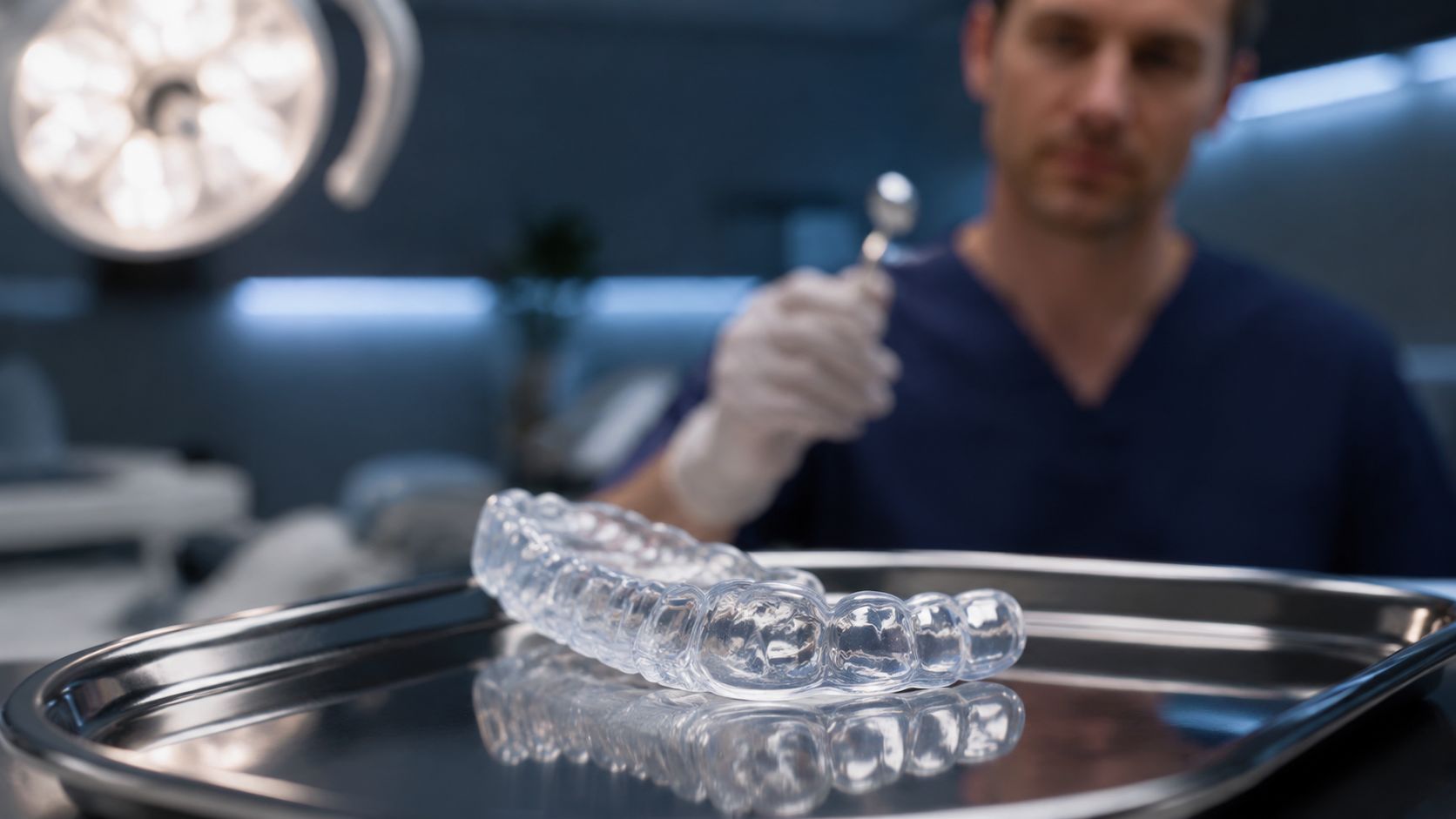
You go to bed tired, then wake up feeling like your jaw worked the night shift. Your temples ache. Your teeth feel oddly sensitive when you sip coffee. Maybe your partner has mentioned a grinding noise at night, or maybe nobody has said a word and you're just wondering why your face feels tense every morning.
That pattern is common in Fair Lawn, Ridgewood, and Glen Rock, and it often points to teeth grinding, also called bruxism. It can seem minor at first, but it can wear down enamel, strain your jaw joints, and make dental work like crowns or veneers more vulnerable over time. If you've been searching for a dentist near me, a dentist in Fair Lawn, NJ, or even an emergency dentist because of jaw pain, chipped teeth, or headaches, this is exactly the kind of issue worth having checked sooner rather than later.
A night guard for teeth grinding can be a very practical solution, but patients are often told only part of the story. Key questions often arise: Why is this happening? Will a guard help? Should you buy one at a pharmacy, or get one professionally made? And what happens during the visit if you decide to come in?
You wake up, stretch, and the first thing you notice is pressure near your temples. By breakfast, your jaw feels tired, and chewing something as simple as a bagel feels like more work than it should. Many patients in Fair Lawn are surprised to learn that this pattern can start in the mouth, not just in the head or neck.
That surprise is common because teeth grinding often leaves clues before it causes obvious tooth pain. A patient may blame a pillow, stress, or screen time. Then we examine the teeth and jaw and start to see a pattern. Small areas of wear, tender chewing muscles, and strain in the jaw joints often fit together like pieces of the same puzzle.
The symptoms are not always dramatic. Sometimes it is morning temple pain. Sometimes it is tightness near the cheeks, clicking in the jaw, or teeth that seem more sensitive than they used to be. Some patients come in for a cleaning and only then realize the flat edges on their teeth are not normal wear.
A simple rule helps here. If the discomfort is strongest when you first wake up, your jaw muscles may have been working overnight.
Head pain can have more than one cause, so a dental exam is not meant to replace medical care for every kind of headache. It does help us sort out whether clenching, grinding, or joint strain may be part of the problem. If headaches are a major concern for you, some patients also read about specialized headache and migraine therapy to better understand the wider pain picture.
A night guard is only helpful when it matches the reason you are hurting. That is why an in person exam matters. At our Fair Lawn office, we look at how your teeth meet, how your jaw joints move, where your muscles are tender, and whether existing dental work is under pressure. If you have clicking, popping, or limited opening, it also helps to learn more about TMJ treatment in New Jersey.
This part is where generic store bought guards often fall short. They can feel like buying shoes without knowing your size. If the fit is bulky, uneven, or loose, you may still clench, and sometimes the guard can make the bite feel worse. A custom approach starts with understanding your mouth first, then designing protection that fits your teeth and the way your jaw functions.
For patients in Fair Lawn, Ridgewood, and nearby towns, that local, personalized process is often the difference between guessing and getting real relief.
You wake up in Fair Lawn with a tight jaw, a dull headache near your temples, or a tooth that suddenly feels sensitive when you sip coffee. Many patients are surprised to learn those problems can start with nighttime clenching or grinding they never hear and never feel. That habit is called bruxism.
Bruxism means you press, clench, or grind your teeth without meaning to. It can happen during sleep, and it can also happen during the day while you work, drive, exercise, or concentrate. The jaw muscles are some of the strongest muscles in the body, so repeated pressure adds up fast. Over time, that strain can wear enamel, chip dental work, irritate the jaw joints, and leave your face feeling tired by morning.
A simple way to understand it is this. Your teeth are built to touch during chewing and swallowing, not to stay under pressure for hours. If they do, the system gets overworked, much like keeping your fist clenched all night would leave your hand sore the next day.
Bruxism usually has more than one cause. During an exam, we look for patterns instead of assuming every patient grinds for the same reason. Common contributors include:
That is why a one size fits all answer rarely works. A college student under stress, a parent waking up with headaches, and a patient with worn crowns may all have bruxism for slightly different reasons, and the right treatment can differ too.
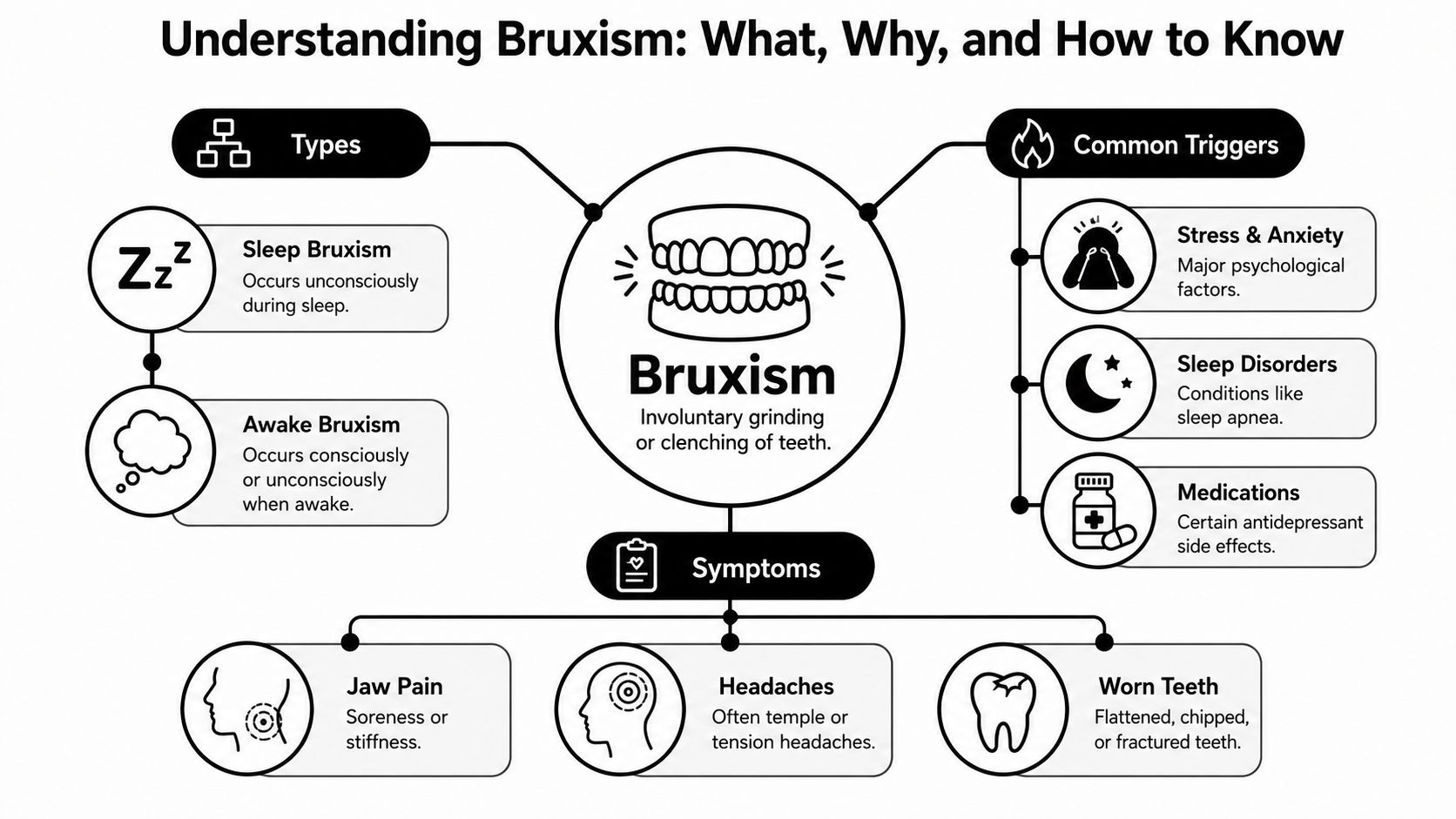
Some clues are easy to miss because they show up slowly. Others appear all at once, such as a chipped tooth or a cracked filling. Signs that often point to bruxism include:
Some patients never hear grinding sounds at night. Their partner hears it first. Other patients have no sound at all and only find out when we see wear patterns on the enamel or pressure marks along the cheeks and tongue.
If any of this sounds familiar, a professionally fitted mouth guard for teeth grinding may be part of the solution, but the first step is finding out why the grinding is happening in your case. In a local Fair Lawn office, that means checking your bite, your jaw movement, your muscle tenderness, and the condition of your teeth so treatment matches the problem instead of guessing with a generic guard from the store.
A Fair Lawn patient often comes in after trying a store-bought guard for a few weeks. The usual story is familiar. It felt bulky, slipped at night, or left the jaw feeling just as tired in the morning.
That happens because night guards are not interchangeable. They may look similar in the package, but they do very different jobs once your teeth and jaw start putting pressure on them.
The biggest differences are fit, material, and how the guard manages force. A night guard works like the tread on a tire. If the shape is wrong for the road, the ride gets rough fast.
A custom guard is made from the exact shape of your teeth and adjusted for how your bite comes together. A boil-and-bite guard softens in hot water and is pressed into place at home, which gives you a rough impression but not the same precision. A stock guard is pre-formed, so you are adapting your mouth to the guard instead of the guard to your mouth.
That difference matters most for patients who clench hard, wake with jaw pain, or want to protect crowns, veneers, fillings, or implants. Even a small fit problem can create pressure in the wrong spot.
| Feature | Custom-Fit (Dentist) | Boil-and-Bite (Pharmacy) | Stock (Pharmacy) |
|---|---|---|---|
| Fit | Made from your exact teeth | Semi-molded at home | One-size approach |
| Comfort | Usually the most comfortable | Varies from person to person | Often bulky |
| Protection level | Best for tailored support | Moderate, depends on fit | Lowest precision |
| Best use | Ongoing treatment | Short-term trial | Very temporary use |
| Severe grinding | Better option | Often not enough | Usually not appropriate |
| TMJ-related needs | Can be designed for the issue | Limited | Limited |
| Follow-up | Dentist can adjust it | No professional adjustment | No professional adjustment |
The store version usually costs less at checkout. That is the main reason many patients try it first.
The hidden cost shows up later if the guard is uncomfortable enough that you stop wearing it, or if it wears out quickly and has to be replaced again and again. A poor fit can also leave sore spots on the gums, make it harder to sleep, or encourage you to bite down in a way that keeps the muscles active instead of letting them settle.
Patients are often surprised by this part. The goal is not only to put something between the teeth. The goal is to protect the teeth and make nighttime pressure less damaging.
A dentist-made guard is chosen for your specific pattern of grinding or clenching. Some patients need a slimmer design for comfort. Others need a stronger material because they generate heavy force at night. If jaw joints are involved, the shape and bite contact may need special attention so the appliance feels stable instead of irritating.
That is where local care makes a real difference for someone in Fair Lawn. At a dental office, your guard is part of a treatment plan, not a guess from a pharmacy shelf. Your dentist can check how it fits, adjust high spots, and make sure it is helping rather than adding strain.
If you want to see how a professionally fitted custom mouth guard for teeth grinding compares with generic options, that page gives a closer look at the benefits of a guard made for your bite.
Patients often worry that getting a custom guard will be complicated, messy, or uncomfortable. In a modern office, it's usually much simpler than they expect.
A typical visit starts with a conversation. You describe what you're feeling. Morning headaches, tight jaw muscles, chipped teeth, poor sleep, or sensitivity. Your dentist checks for wear patterns, bite changes, and jaw tenderness as part of your exam.
The goal isn't just to hand you a guard. It's to learn what kind of guard makes sense for your case.
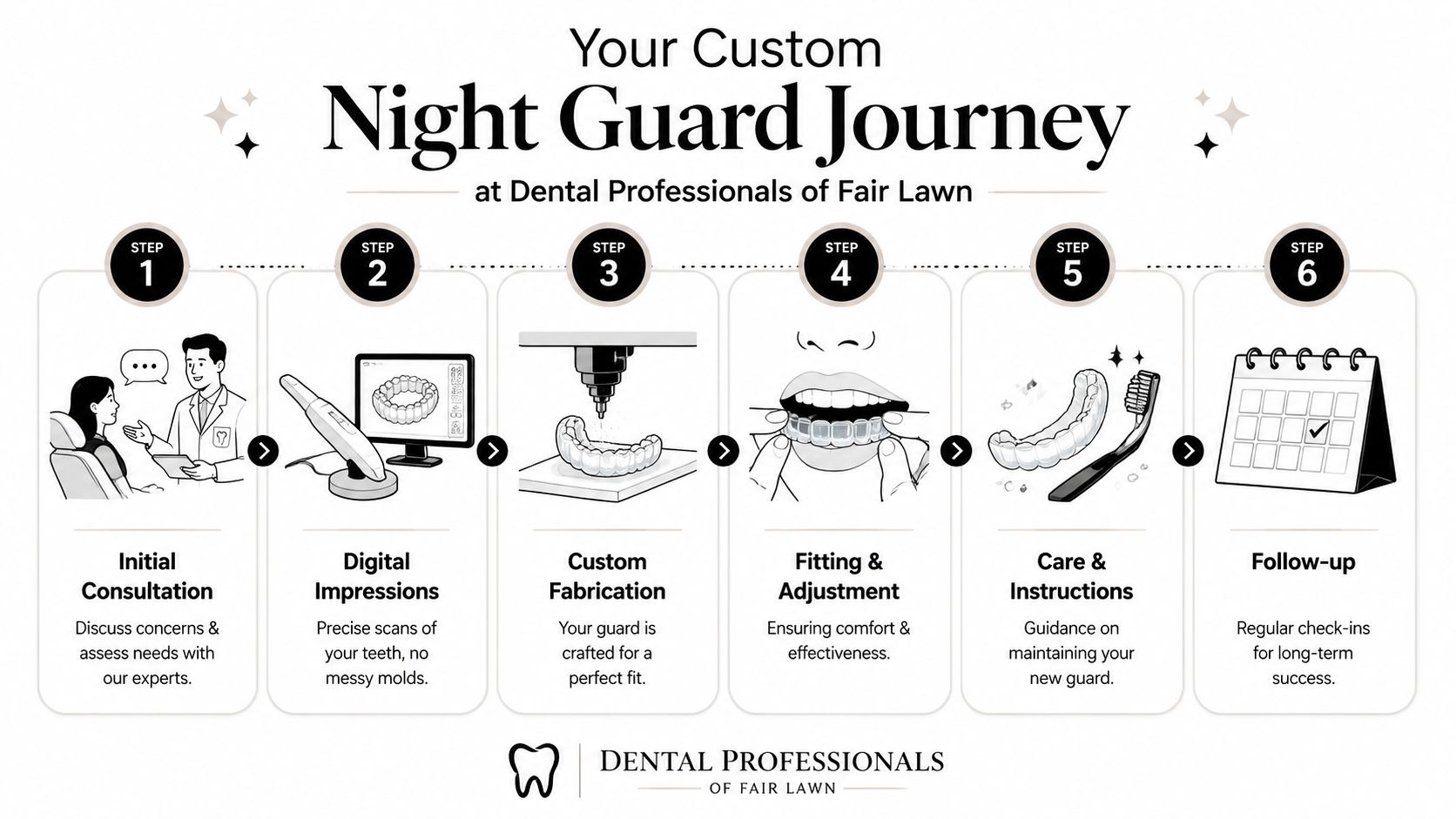
Many patients are relieved to learn that digital tools can replace old-style putty impressions. With iTero digital scanning, the office can capture a precise model of your teeth without goopy trays. That makes the process cleaner and easier, especially for people with a sensitive gag reflex.
Not every night guard should feel thick and bulky. For most bruxism cases, the optimal thickness is between 1mm and 3mm, which provides the best balance of comfort and durable protection, according to this review of night guard thickness.
That detail matters because patients often assume thicker automatically means better. It doesn't. The right appliance needs enough strength to protect your teeth, but it also has to feel natural enough that you'll sleep with it.
The best guard is the one that matches your bite and your grinding pattern, not the one that simply feels the heaviest.
Dr. Bardash evaluates the wear on your teeth, how your jaws come together, and whether your symptoms suggest heavy grinding, clenching, or a TMJ-related pattern. From there, the lab fabricates the appliance to fit your mouth closely.
For a quick visual on what professional appliance care can look like in practice, this short video gives helpful context:
When your guard comes back, you don't just pick it up and hope for the best. The fit is checked carefully. Your dentist makes sure it seats properly, feels stable, and doesn't create pressure spots or awkward bite contact.
You'll also get clear instructions on when to wear it, how to clean it, and when to come back if anything feels off. That final adjustment step is one of the biggest differences between a local custom appliance and a generic store-bought option.
A custom night guard only helps if you care for it well and keep wearing it. I often tell Fair Lawn patients to treat it like a retainer or a pair of prescription glasses. It is built for your mouth, and it works best when it stays clean, stable, and in good shape.
Used night after night, your guard helps absorb the pressure your teeth and jaw would otherwise take directly. That can mean less wear on enamel, less stress on crowns or veneers, and fewer mornings that start with a tired, tight jaw. For patients who have already invested in dental work, that protection matters.
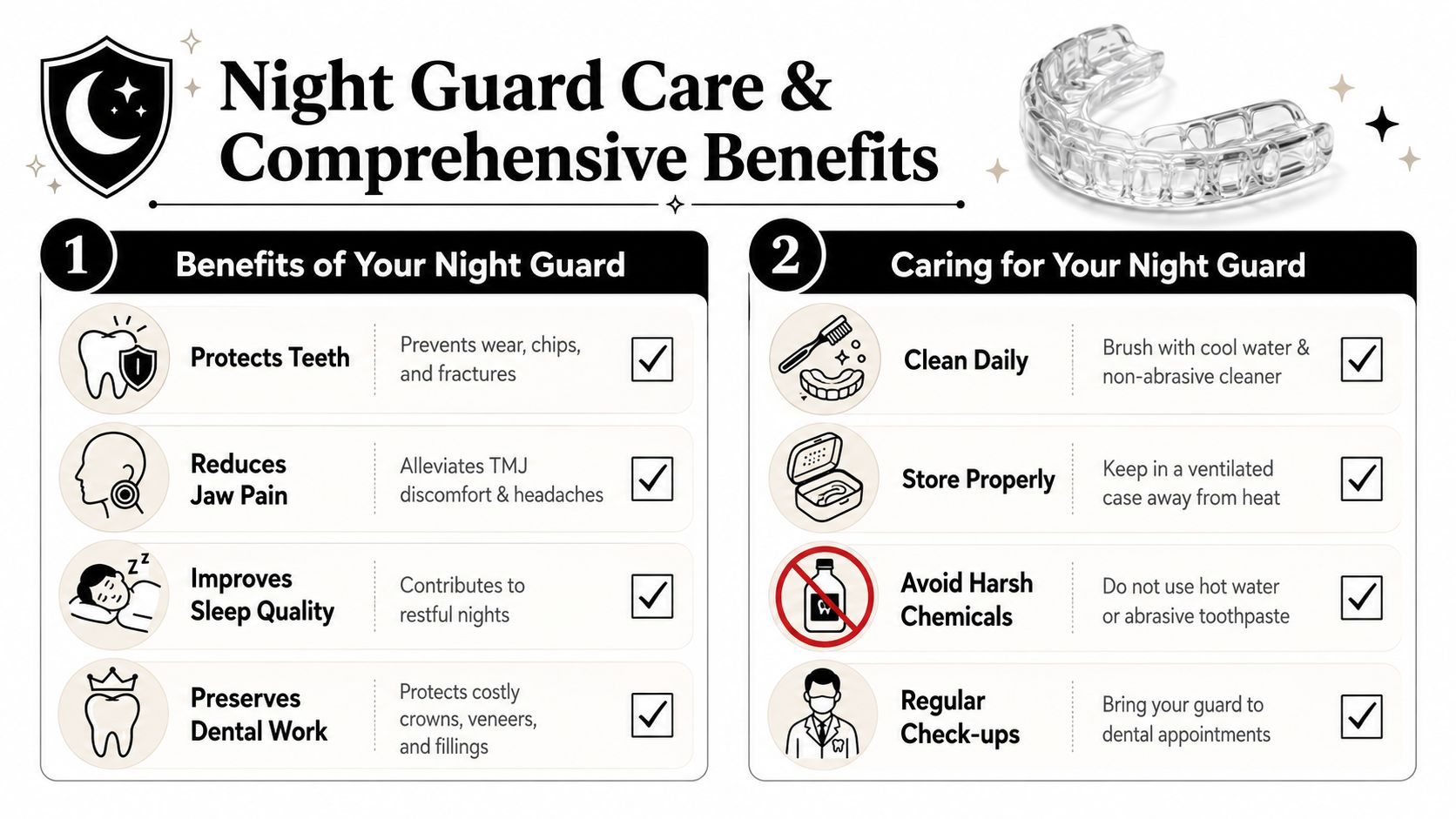
A well-fitted appliance supports several parts of your oral health at once:
That last point is one reason custom matters. A generic guard may feel bulky, shift during sleep, or change how your teeth meet. A professionally fitted guard from a Fair Lawn office is adjusted for your bite, so it has a better chance of feeling comfortable enough to use.
If whole-body tension plays a role in your clenching, some patients also like reading broader wellness perspectives such as PosturaZen's Birch Wellness article. It does not replace dental care, but it can help you think about stress and body habits that affect the jaw.
The routine is simple.
A warped guard is a little like a shoe that has lost its shape. It may still go on, but it no longer supports you the way it should.
Custom guards usually last longer than store-bought versions because the material and fit are made for your bite. Lifespan still depends on how heavily you grind, how well you clean it, and whether the fit stays accurate as your teeth change over time. This guide on night guard lifespan gives a helpful overview of what affects durability.
Call for a check if the guard starts feeling loose, rough, thinner than before, or harder to seat fully. Small changes matter. A guard can look fine in the case and still stop protecting your teeth the way it did when it was first fitted.
A guard protects your teeth. It doesn't solve every reason you grind.
That's one of the biggest misunderstandings patients have. It's critical to understand that night guards do not stop the grinding behavior itself. They protect teeth from damage, while underlying issues like stress or sleep quality need their own treatment approach, as explained in this night guard FAQ.

Some patients need a broader plan built around the cause of their grinding. Depending on the exam, that can include:
When someone has frequent jaw tightness, poor sleep, and visible tooth wear, treating only one piece may leave them frustrated. A better approach asks what's driving the clenching in the first place and what support could lower that strain over time.
For readers interested in broader wellness perspectives around stress and recovery, PosturaZen's Birch Wellness article offers another way to think about supportive care habits outside the dental office.
The practical takeaway is simple. A guard is often the first line of defense for your teeth. It's not always the whole answer.
Patients usually ask the same few questions before moving forward, and they're good ones.
Coverage depends on your plan. Some dental plans contribute when the appliance is considered medically necessary to protect teeth or reduce damage from grinding. The easiest next step is to let the office review your benefits before treatment begins.
A properly made and monitored custom appliance is designed to fit your teeth accurately. Problems are more likely with poorly fitting store-bought guards or with appliances that are worn out and never rechecked. That's one reason follow-up matters.
Most patients need an adjustment period. The first few nights can feel unfamiliar, but a custom guard is far easier to adapt to than a bulky generic one. If the fit is precise, many people stop noticing it quickly.
Call if you wake with jaw pain, keep getting morning headaches, notice tooth sensitivity, or see chipping or flattening on your teeth. Those signs deserve a professional look, especially if you're also searching for a dentist in Fair Lawn, NJ, a cosmetic dentist near me, or help with cleaning and exams, dental x-rays, new patient exams, emergency dentist care, tooth extraction planning, restorative dentistry, or Invisalign.
The right visit doesn't just answer whether you need a guard. It helps you understand what your mouth is telling you before the damage gets harder to fix.
If you're ready for answers and a personalized plan, Dental Professionals of Fair Lawn welcomes patients from Fair Lawn, Ridgewood, Glen Rock, and nearby New Jersey communities. Whether you need a custom night guard for teeth grinding, help with jaw pain, cosmetic dentistry, dental implants, emergency dental services, or a new patient exam, the team can evaluate your symptoms and guide you toward the right care. Schedule a consultation to protect your teeth, ease morning discomfort, and feel confident about your next steps.