New Jersey Dentures: Your Fair Lawn Guide to a New Smile
Seeking New Jersey dentures? Our Fair Lawn guide covers types, costs, and process. Restore your smile with Dental Professionals of Fair Lawn. Contact us!
Seeking New Jersey dentures? Our Fair Lawn guide covers types, costs, and process. Restore your smile with Dental Professionals of Fair Lawn. Contact us!
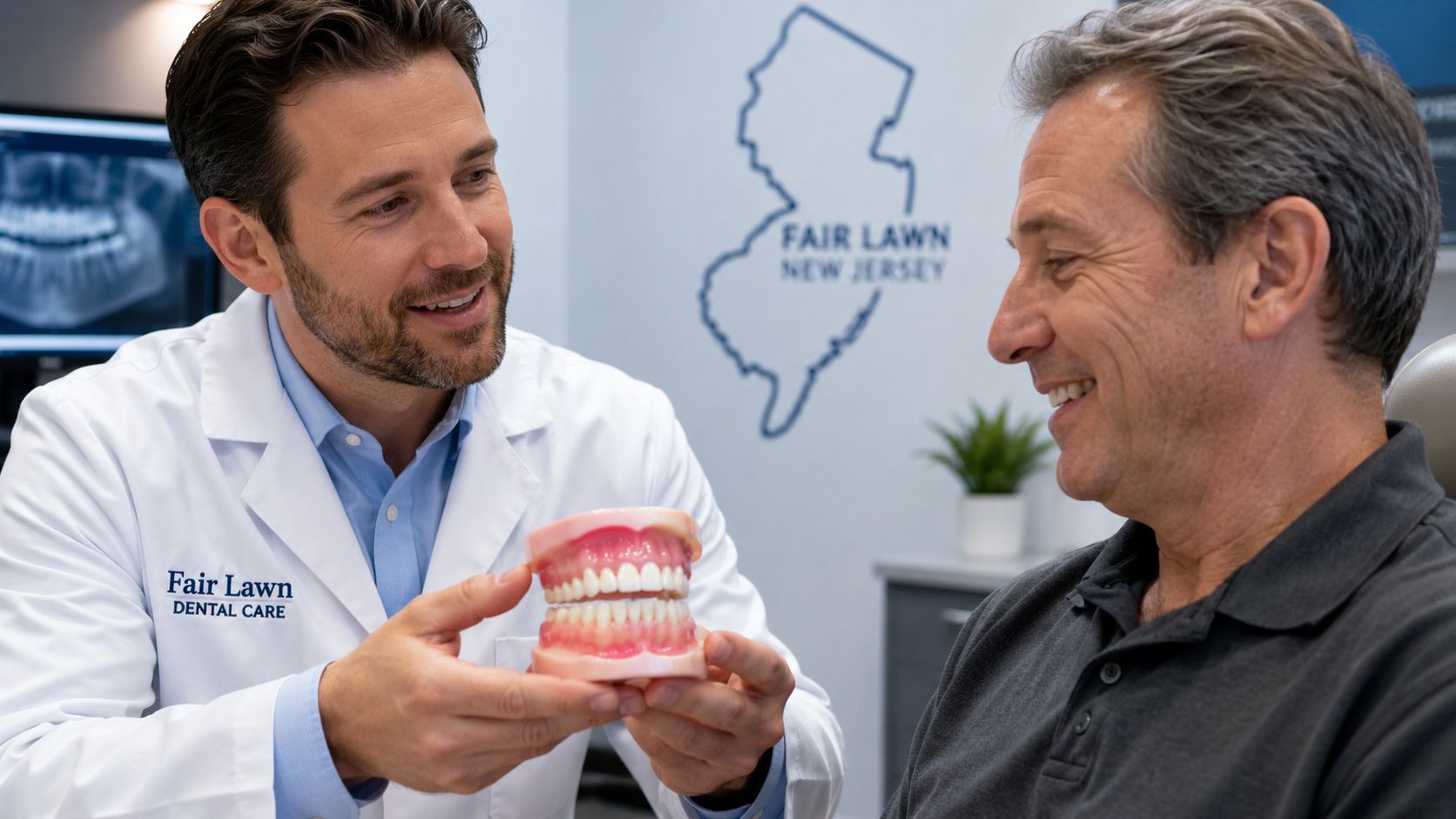
If you're reading this, there's a good chance something has already changed in your day-to-day life. Maybe you're chewing on one side because certain foods feel impossible now. Maybe you cover your mouth when you laugh. Maybe a loose tooth, several missing teeth, or an old denture that doesn't fit the way it used to has turned simple moments into stressful ones.
That situation is more common than many people realize. The National Center for Health Statistics reports that 66% of adults ages 40 to 64 are missing at least one natural tooth in the United States, a group that includes many people in New Jersey, as noted in this denture overview. Missing teeth can affect much more than appearance. They can change how you eat, speak, and feel about yourself.
For many patients in Fair Lawn, Ridgewood, and Glen Rock, dentures are the step that brings normal life back. Meals feel easier. Speech becomes more natural. Smiling stops feeling like something to avoid. For those considering a dentist near me, a dentist in Fair Lawn, NJ, or even comparing options like dental implants near me, a clear local guide that explains the process in plain language is helpful.
This guide walks through how dentures work, who they help, what your options look like, and what to expect in a Fair Lawn dental office from consultation through aftercare. If you've also been looking into restorative dentistry, tooth extraction, emergency dentist visits, or cosmetic treatments like teeth whitening, Invisalign, or Six Month Smile, you'll see how dentures can fit into a broader plan for a healthy, confident smile.
Maria had stopped ordering salad when she went out to lunch with friends. Crunchy vegetables caught under her partial, and chewing felt awkward. At home, she chose softer foods and spoke a little less in group conversations because she worried people noticed the spaces in her smile. What bothered her most wasn't vanity. It was the feeling that her mouth was controlling her life.
Patients across Fair Lawn often describe the same quiet losses. They miss biting into an apple, smiling in family photos, or speaking without thinking about every word. Missing teeth can make you feel older than you are, and they can wear on your confidence in ways that are hard to explain to other people.
The change isn't just cosmetic. When teeth are missing, your bite can shift. You may avoid certain foods, chew less effectively, or feel irritation in the gums and jaw. Some people develop headaches from straining to bite properly. Others find that social situations become tiring because they're constantly monitoring how they look when they talk.
A good denture plan doesn't just replace teeth. It helps restore routine.
Missing teeth can make a patient feel isolated. Replacing them often restores confidence just as much as function.
When you're looking for help, convenience and trust matter. You want a team close to home that understands your goals, listens carefully, and can explain your options without rushing you. That matters whether you're seeking dentures, cleaning and exams, dental x-rays, a new patient exam, or a full restorative plan that may also include extractions or implants.
Patients in Fair Lawn, Ridgewood, and Glen Rock often want one thing more than anything else. They want to know there's a practical path forward. There usually is. Dentures can be made to match your needs, whether you're replacing several teeth, an entire arch, or exploring a more stable implant-supported option for long-term comfort.
Dentures are removable prosthetic appliances that replace missing teeth and help support normal chewing, speaking, and appearance. Some replace a full arch of teeth. Others replace only a few missing teeth. In plain terms, they're custom-made to fit your mouth so daily life feels manageable again.
Patients sometimes assume dentures are only for people who've lost every tooth. That's not true. You may be a candidate if you've lost several teeth, have advanced dental problems that make saving teeth unrealistic, or need a complete restoration after years of wear, decay, gum disease, or injury.

A consultation usually makes things much clearer. Many people who search for a cosmetic dentist near me are surprised to learn that their concern is partly cosmetic and partly functional. Dentures can help in both areas.
You may want to ask about dentures if:
In New Jersey, there is an important patient-safety step before any new denture is made. State regulations require that a licensed dentist examine the patient and provide a written medical statement confirming the patient was examined within the last six months and that no oral pathology is present that would prevent denture fabrication, according to the New Jersey denture fabrication requirement.
That rule protects patients. It means a denture isn't treated like a simple product. Your dentist needs to evaluate the gums, bone support, remaining teeth, bite, and overall oral health first. If there are infections, painful teeth, irritated tissue, or signs that another treatment should come first, those issues need attention before a denture is made.
Practical rule: If you're considering New Jersey dentures, the first appointment isn't about selling you a device. It's about making sure your mouth is healthy enough for the right treatment.
Some readers worry they're "too far gone" for treatment. Others worry they're not bad enough yet. Both concerns are common. Denture candidacy isn't about fitting a stereotype. It's about whether replacing missing teeth will help restore comfort and function in a safe way.
A proper evaluation may also lead to other recommendations, depending on your situation. Some patients need restorative dentistry first. Some need extractions. Some qualify for implant-supported dentures. Others may keep healthy natural teeth and use a partial denture to fill the gaps.
The term New Jersey dentures covers a few different solutions, and the right one depends on how many teeth are missing, how much support your mouth needs, and how you want the final result to feel day to day. Dentures are engineered as removable appliances that rest on the gum tissue. A complete upper denture has a full-plate design over the hard palate for stability, while a lower denture has a horse-shoe shape. They are commonly made from durable, stain-resistant resin materials, as described by Glenwood Dental Group's denture explanation.
That technical description matters because it answers a question many patients ask right away. "How does it stay in?" The answer depends on the type of denture and the support available from your gums, jaw shape, existing teeth, or implants.
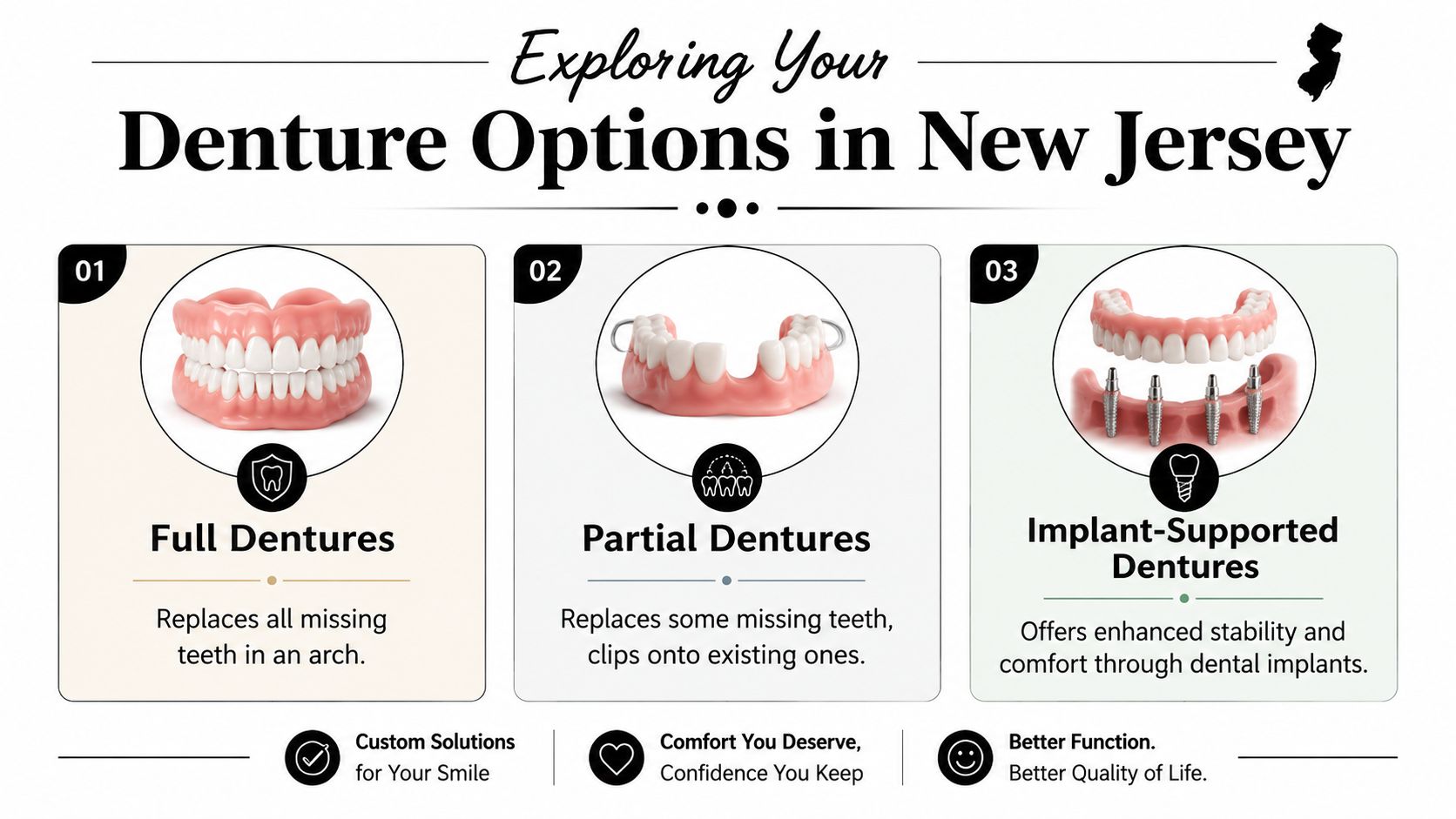
Complete dentures replace all missing teeth in the upper arch, lower arch, or both. They're often appropriate when no healthy natural teeth remain in that arch, or when remaining teeth can't be predictably restored.
Many patients like complete dentures because they can restore a full smile without surgery. They can also be an important option after multiple extractions. If you've been searching for a dentist in Fair Lawn, NJ because you're missing many teeth and want a straightforward path back to function, complete dentures may be part of that conversation.
Partial dentures replace some missing teeth while working around the teeth you still have. They can help fill spaces, improve appearance, and reduce the burden on the remaining natural teeth.
A partial often makes sense when several teeth are healthy and worth keeping. Instead of removing everything, your dentist can preserve what is stable and replace what's missing. For patients who want a conservative restorative option, that can be a very practical choice.
Implant-supported dentures combine a denture with the added stability of dental implants. These are often the option patients ask about when they search for dental implants near me and want more security than a traditional removable denture can provide.
They usually feel more stable during eating and speaking because the denture has implant support. Some patients also prefer this route because it can reduce the slipping they associate with older-style dentures. If you're weighing this against more traditional removable options, this detailed look at dental implants vs dentures pros and cons can help frame the discussion before your consultation.
| Feature | Complete Dentures | Partial Dentures | Implant-Supported Dentures |
|---|---|---|---|
| Best for | Patients missing all teeth in an arch | Patients missing several teeth but keeping some natural teeth | Patients missing many or all teeth who want added stability |
| Support | Gum tissue and jaw contours | Remaining teeth plus gum support | Dental implants plus denture structure |
| Removability | Removable | Removable | Varies by design and treatment plan |
| Feel during eating | Functional, but may take adaptation | Often familiar for patients keeping natural teeth | Typically more secure than conventional removable dentures |
| Surgical component | Usually no | Usually no | Often yes, because implants are placed first |
| Ideal patient goal | Restore a complete smile and chewing ability | Fill gaps while preserving healthy teeth | Improve retention, comfort, and confidence |
A denture doesn't have to be one-size-fits-all. The right choice depends on your mouth, your habits, and your long-term goals.
The best denture isn't the one with the most features. It's the one that fits your health needs and daily routine. If you want a removable solution after significant tooth loss, complete dentures may be the right fit. If you still have strong natural teeth, a partial can preserve them. If stability is your top priority, implants may deserve a closer look.
That decision becomes easier when your dentist reviews your bite, remaining teeth, gum health, and whether any treatment like extractions, bone grafting, or implant planning should happen first.
For many patients, the hardest part is not the denture itself. It's not knowing what happens first, what comes next, or whether the process will be uncomfortable. A clear sequence usually lowers anxiety right away.
At a Fair Lawn office, denture care generally moves in steps. Each one has a purpose, and each one helps create a better fit and a more natural result.

The first visit focuses on evaluation. Your dentist examines your mouth, discusses your symptoms, reviews any missing or failing teeth, and looks at whether you need supporting care such as extractions, gum treatment, or implant planning. If you're also dealing with pain, swelling, or a broken tooth, emergency dentist concerns and restorative needs can also be addressed during this visit.
After the evaluation comes planning and records. That often includes measurements, photos, and digital impressions. Modern tools such as the iTero scanner can help capture detailed information for a more customized fit, depending on the clinical situation. The goal is to create a denture that looks right, feels balanced, and works with your bite instead of against it.
A try-in appointment gives you and your dentist a chance to evaluate the look and feel before the final denture is delivered. This stage matters more than patients expect. It lets your dentist check bite position, tooth appearance, lip support, and comfort. Small changes here can make a big difference later.
When the final denture is ready, your dentist places it, checks pressure areas, and gives you clear instructions on wearing, removing, and cleaning it. If your treatment involves implants, the sequence may include surgical planning and healing time before the final prosthesis is attached. For patients considering that route, implant treatment in New Jersey is often part of the same broader restorative conversation.
New Jersey also has a denture identification requirement. The state mandates a permanent denture marking requirement under Admin Code 45:6-19.2, which calls for dentures to be permanently marked with the patient's name and Social Security number during fabrication for identification purposes, as explained by AVA Denture ID's summary of the New Jersey rule.
That detail may sound surprising, but it is part of how dentures are handled under state standards. It's another reminder that a denture is a custom medical appliance, not a generic off-the-shelf item.
Adjustment visits aren't a sign something went wrong. They're part of the process. Your gums and muscles need time to adapt, and even a carefully made denture may need small refinements after you start wearing it regularly.
A follow-up appointment can help with:
Most patients need an adaptation period. A good fit often comes from careful adjustments, not from expecting perfection on day one.
One practical example is Dental Professionals of Fair Lawn, which offers restorative care that can include dentures, extractions, digital scanning, implant planning, and follow-up adjustments in one clinical setting. For many patients, keeping those pieces coordinated makes the process feel less fragmented.
Cost is one of the first things patients think about, and it's also one of the most confusing parts of denture treatment. Many websites make dentures sound simple by quoting a flat number, but that's rarely how real treatment works. The final cost depends on what type of denture you need, the materials used, whether teeth need to be removed first, and whether your case involves implant support or related procedures.
In New Jersey, denture costs can vary by up to 45% based on provider and materials, and many patients delay full-arch replacement because pricing for more complete solutions isn't clearly explained. That confusion is especially common when people are comparing removable dentures with implant-supported options that may involve other steps before the final teeth are made.
The price usually reflects more than the denture itself. A patient replacing several missing teeth with a partial may have a very different treatment path from someone who needs full-arch restoration after multiple extractions.
Here are some of the factors that often shape the total:
Insurance can help, but coverage details are often less straightforward than patients expect. Some plans distinguish between removable dentures, major restorative services, and implant-related components. Others may cover part of the process but not every step needed to complete it.
That means the most useful financial conversation isn't "How much is a denture?" It's "What does my specific treatment plan include, and what portion might my plan recognize?" If you're trying to protect your household budget while planning care, this practical guide on advice for medical financial security offers smart questions to ask before committing to larger health expenses.
Ask for a written breakdown. Patients make better decisions when they can see what belongs to the denture itself and what belongs to supporting treatment.
A denture isn't just a line item. It's part of your ability to eat comfortably, speak clearly, and stop organizing life around missing teeth. The right conversation about cost should include function, expected maintenance, comfort, and whether a lower starting price would serve you well over time.
That kind of transparency matters if you're comparing restorative dentistry, dental implants, or a plan that also includes tooth extraction and follow-up care.
Getting dentures is a big step. Learning how to live with them well is what protects that investment. The first few weeks are usually a period of adjustment, and small habits make a real difference in comfort and longevity.
According to the American College of Prosthodontists, approximately 90% of people in the United States who have lost all their teeth wear dentures, making dentures the most common solution for complete oral restoration, as noted in this denture statistics article. That long history is reassuring. Dentures are familiar, effective, and manageable for many patients once they learn the routine.

A denture should be cleaned consistently and handled gently. Even strong materials can crack if dropped on a hard sink or countertop.
A simple home routine usually includes:
Chewing may feel different at first. Many patients do better when they start with softer foods and take smaller bites while they learn how the denture moves. Speech can also take a little practice. Reading out loud at home often helps your mouth adapt more quickly.
If something feels persistently wrong, don't just push through it. A sore spot, a loose fit, or a clicking bite usually means the denture needs an adjustment.
A denture should improve daily life. If it causes ongoing pain or instability, schedule a check rather than trying to "get used to it."
Even with full dentures, you still need dental visits. Your dentist checks the fit, examines the soft tissues, and watches for irritation or changes that could affect comfort and health over time. If you have partial dentures, those visits are also important for protecting the natural teeth that remain.
Patients often think dentures mean they're done with the dentist except for repairs. In reality, regular follow-up helps keep the appliance functioning well and helps your mouth stay healthy.
When patients look for a dentist near me, they usually want more than a close address. They want a place where they feel heard, where treatment is explained clearly, and where their options aren't reduced to a one-size-fits-all answer. Denture care works best when the office can connect diagnosis, treatment planning, restorative care, and long-term support.
For patients in Fair Lawn, Ridgewood, and Glen Rock, that means looking for an office that can evaluate not only the denture itself but the full picture. You may need a new patient exam, dental x-rays, extractions, implant planning, or support for dental anxiety before you ever reach final delivery. Some patients also want to coordinate dentures with other goals, such as cosmetic dentistry, teeth whitening, or orthodontic conversations around Invisalign or Six Month Smile for remaining teeth in a partial case.
Experience matters because denture cases are rarely only about replacing teeth. They often involve bite changes, tissue health, comfort adjustments, and long-term planning. Technology matters because detailed records and precise measurements can improve fit. Compassion matters because many patients seeking dentures have been putting off care for a long time and need a calm, respectful process.
Dr. Jody Bardash brings 30+ years of experience, and the practice offers a broad range of services in one setting, including preventive, restorative, implant, cosmetic, and surgical care. That kind of range helps when your case doesn't fall neatly into one category.
Many patients feel relieved when one office can handle the details that surround dentures, not just the denture itself. If a patient needs sedation because they're anxious, or implant planning because stability matters most, or emergency attention for a painful tooth before restorative work begins, that continuity makes the process easier to follow.
Fair Lawn patients also tend to value access and familiarity. It's easier to stay on schedule with follow-up care when your dental home is nearby and your team already understands your case history.
The right denture office doesn't just deliver a prosthesis. It helps guide the full transition back to daily comfort, eating, speaking, and smiling.
If you're ready to stop guessing and start getting answers, a consultation is the next step. That's where your dentist can examine your mouth, explain what's possible, and help you compare complete dentures, partial dentures, and implant-supported options based on your actual needs.
If you're looking for thoughtful, local guidance on dentures, schedule a consultation with Dental Professionals of Fair Lawn. A visit can help you understand your options, clarify cost and insurance questions, and take the first step toward eating, speaking, and smiling with more confidence again.