Dentist in Fair Lawn NJ: A Guide to Safe Teeth Whitening
Learn how to whiten teeth safely at home with our guide. Get a brighter smile in Fair Lawn, NJ with trusted tips from your local cosmetic dentist.
Learn how to whiten teeth safely at home with our guide. Get a brighter smile in Fair Lawn, NJ with trusted tips from your local cosmetic dentist.
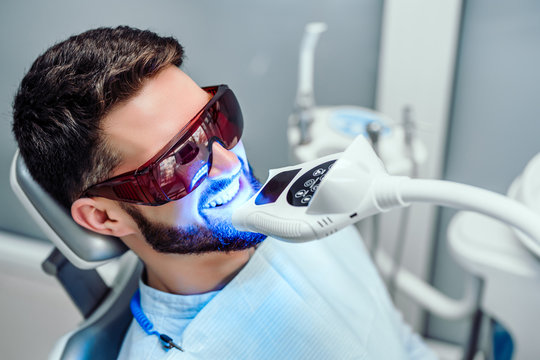
Are you looking for a cosmetic dentist near you in Fair Lawn, Glen Rock, or Ridgewood because you're unhappy with the color of your teeth? You're not alone. Many of our neighbors want a bright, confident smile, but with busy lives, the question is often how to achieve it safely and effectively. At-home whitening can seem like a great solution, but it's important to proceed with caution.
Here at Dental Professionals of Fair Lawn, we understand that tooth discoloration can make you feel self-conscious. As your trusted local dentist, we want to help you navigate your options safely. This guide will address your concerns about at-home whitening, explain how it works, and clarify when it's time to seek professional care from a dentist in Fair Lawn, NJ. Our goal is to empower you to achieve a whiter smile without compromising your oral health.
Before starting any whitening treatment, it's helpful to understand why your teeth aren't as white as you'd like. There are two main types of tooth stains. Extrinsic stains are on the surface of your enamel, caused by things like coffee, tea, red wine, and smoking. Intrinsic stains, on the other hand, are deeper within the tooth and can be caused by aging, certain medications, or old injuries.
Most over-the-counter products are designed to tackle extrinsic stains. They typically use a peroxide-based agent (like hydrogen peroxide or carbamide peroxide) that seeps into the microscopic pores of your enamel. This triggers a chemical reaction that breaks down the discolored molecules, revealing a whiter tooth surface underneath. This process is why starting with a healthy mouth is critical; if you have a cavity or crack, the whitening agent can reach the tooth's nerve and cause significant pain.
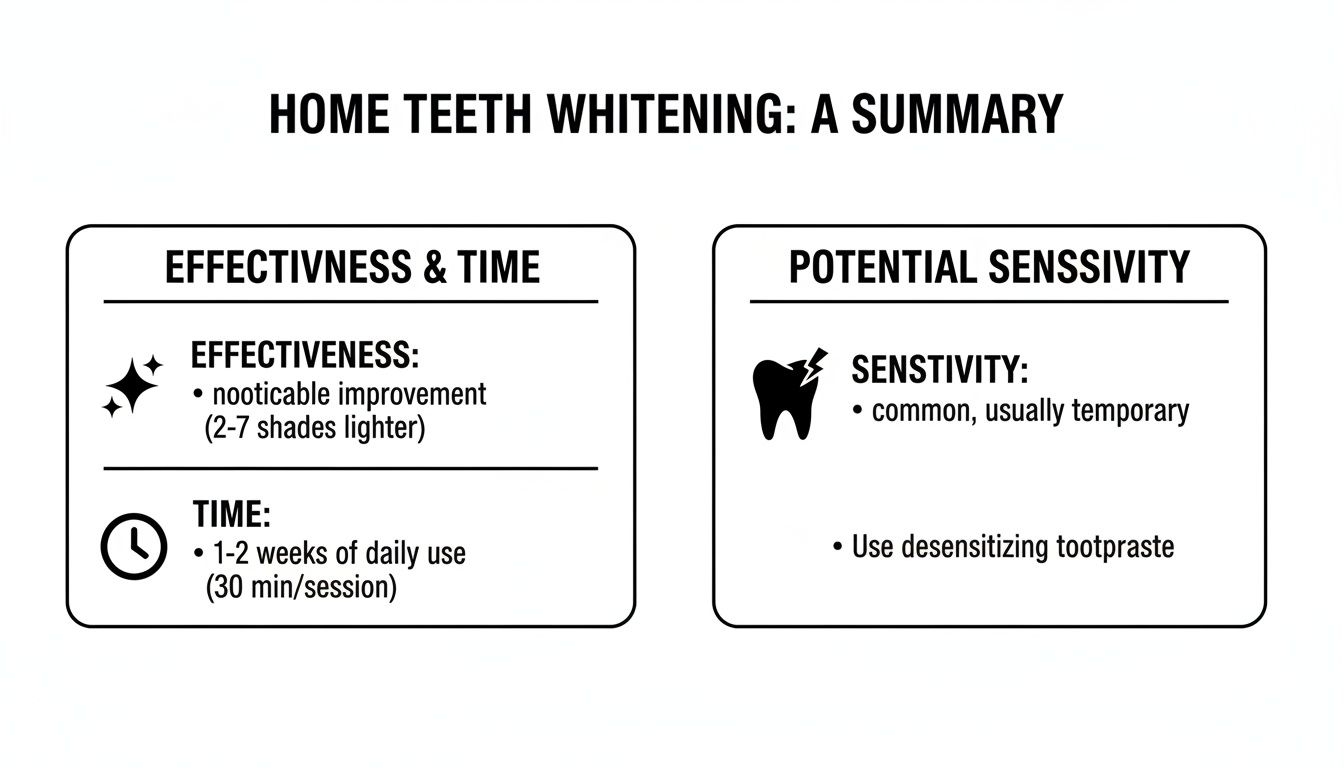
When you're searching for a solution, you'll find many options, from whitening strips to gels and toothpastes. They vary in strength, time commitment, and potential for sensitivity.
| Method | Best For | Typical Time to Results | Potential for Sensitivity |
|---|---|---|---|
| Whitening Toothpastes | Surface stain removal & maintenance | 2-6 weeks | Low |
| Whitening Strips | Convenience & noticeable whitening | 1-2 weeks | Moderate |
| Whitening Gels/Pens | Targeting specific spots or single teeth | 1-2 weeks | Moderate |
| Custom-Fit Trays | Comprehensive, even whitening | 1-2 weeks | Moderate to High (but manageable) |
As you can see, faster, more dramatic results often come with a higher chance of sensitivity, which is a key factor for many people.
While DIY kits offer convenience, professional guidance from a dentist ensures both safety and superior results. A check-up is the essential first step. As your local cosmetic dentist in Fair Lawn, we can perform a new patient exam and take dental X-rays to ensure you don't have underlying issues like cavities or gum disease that could be worsened by whitening agents.
Seeking professional care offers numerous benefits:
Ever wonder what's actually happening when you pop on a whitening strip? Before you jump into any at-home treatment, it's worth understanding the science. Knowing how these products work is the key to getting the results you want safely.
First off, not all tooth discoloration is created equal. The most common stains are extrinsic—these are the surface-level culprits from things like coffee, tea, red wine, and smoking. Think of them as a thin film sitting on top of your enamel.
Then you have intrinsic stains, which live deeper inside the tooth itself. These can come from the natural aging process, certain medications taken during childhood, or even an old injury to a tooth. Most of the kits you find at the drugstore are really only designed to tackle those surface-level extrinsic stains.
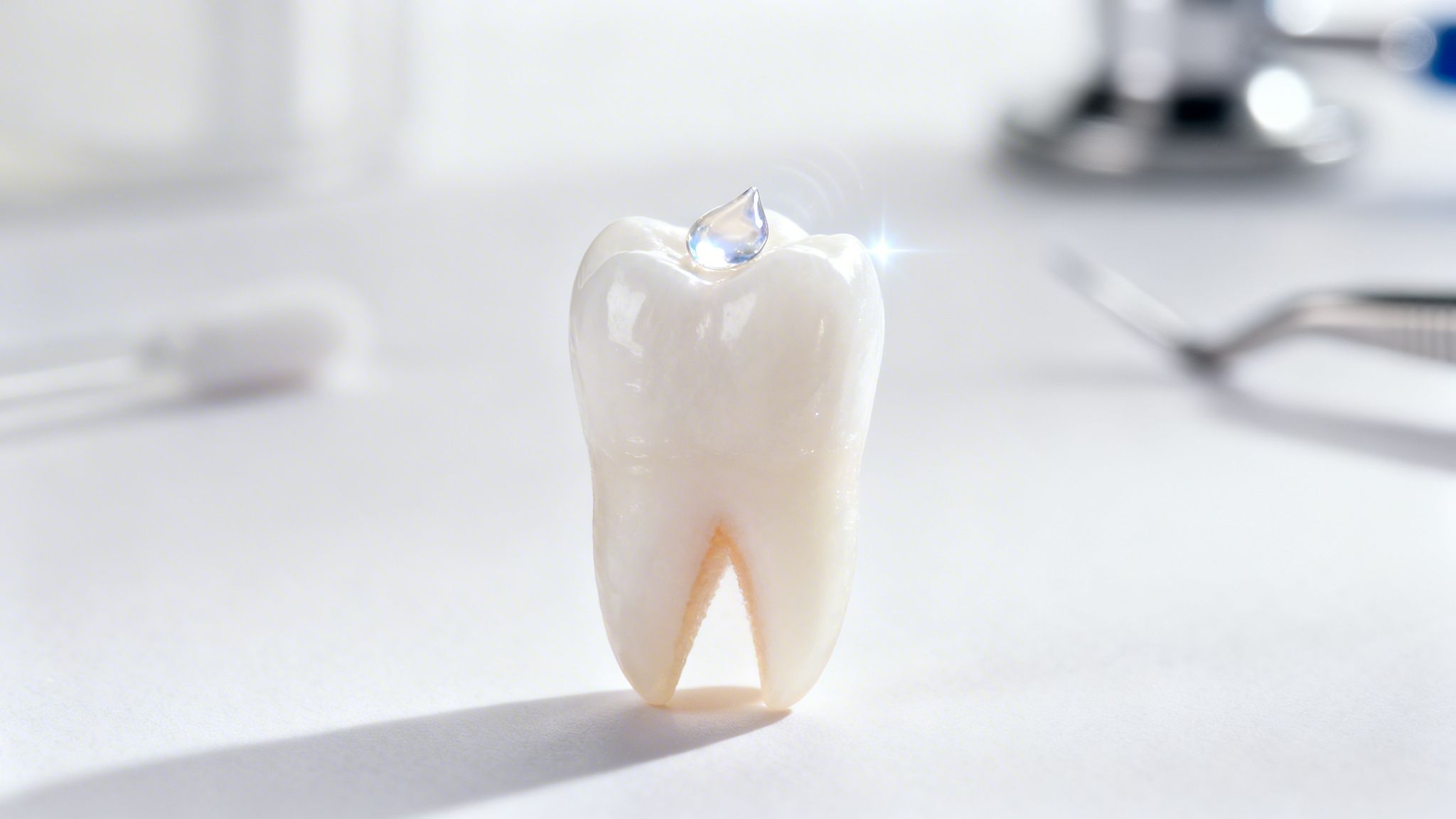
The magic ingredient in almost every effective whitening product is a peroxide-based agent, usually hydrogen peroxide or carbamide peroxide. These are the active compounds that do the heavy lifting.
Your tooth enamel isn't a solid, smooth surface; it's covered in thousands of microscopic pores. The whitening gel seeps into these tiny openings and kicks off a chemical reaction called oxidation. This process essentially breaks down the discolored molecules that cause stains, dissolving them and revealing the whiter tooth surface that was there all along.
This is precisely why you need a healthy mouth to start. If you have cavities, leaky fillings, or cracks in your teeth, that whitening agent can travel deep into the nerve of the tooth. That can cause some serious pain. A quick check-up is always a good idea before you begin.
When you browse the aisle, you’ll notice that different products list different peroxide concentrations. It’s tempting to reach for the strongest one, assuming it will work the fastest. But this is where you need to be careful.
Higher concentrations can whiten more quickly, but they also dramatically increase the risk of painful tooth sensitivity and gum irritation. For safe at-home whitening, sticking to the instructions and recommended treatment time is non-negotiable.
A good rule of thumb is to start with a lower concentration. It might take a bit longer to see results, but it's much kinder to your teeth and gums. In fact, some studies show that while hydrogen peroxide is effective, up to 80% of people using it experience some temporary sensitivity.
You’ve probably seen some "peroxide-free" whitening products on the market, too. These often rely on other ingredients like phthalimidoperoxycaproic acid (PAP) or even simple abrasives like sodium bicarbonate (baking soda).
While these can be much gentler, they typically don't deliver the same dramatic, deep whitening as peroxide. They're better at buffing away very light surface stains rather than lifting set-in discoloration. If your teeth are extremely sensitive, they might be a decent starting point, but manage your expectations. You can learn more about what causes teeth staining to figure out which approach might be best for you.
Ultimately, understanding how whitening works empowers you to use any product with the care and respect your long-term dental health deserves. Making an informed choice is your first step toward a brilliant, healthy smile you can feel good about.
Let's talk about the most common side effect of teeth whitening: sensitivity. It's that quick, sharp “zing” you might feel when you sip a cold drink. The first thing to know is that it's almost always temporary and, more importantly, completely manageable.
This sensitivity happens because the whitening agent—usually a peroxide—is doing its job. It seeps through tiny, microscopic pores in your tooth enamel to reach the dentin layer below, which is much closer to the tooth's nerve. This can cause some mild, short-term irritation. Think of it as a sign the product is working, but it should never be truly painful.
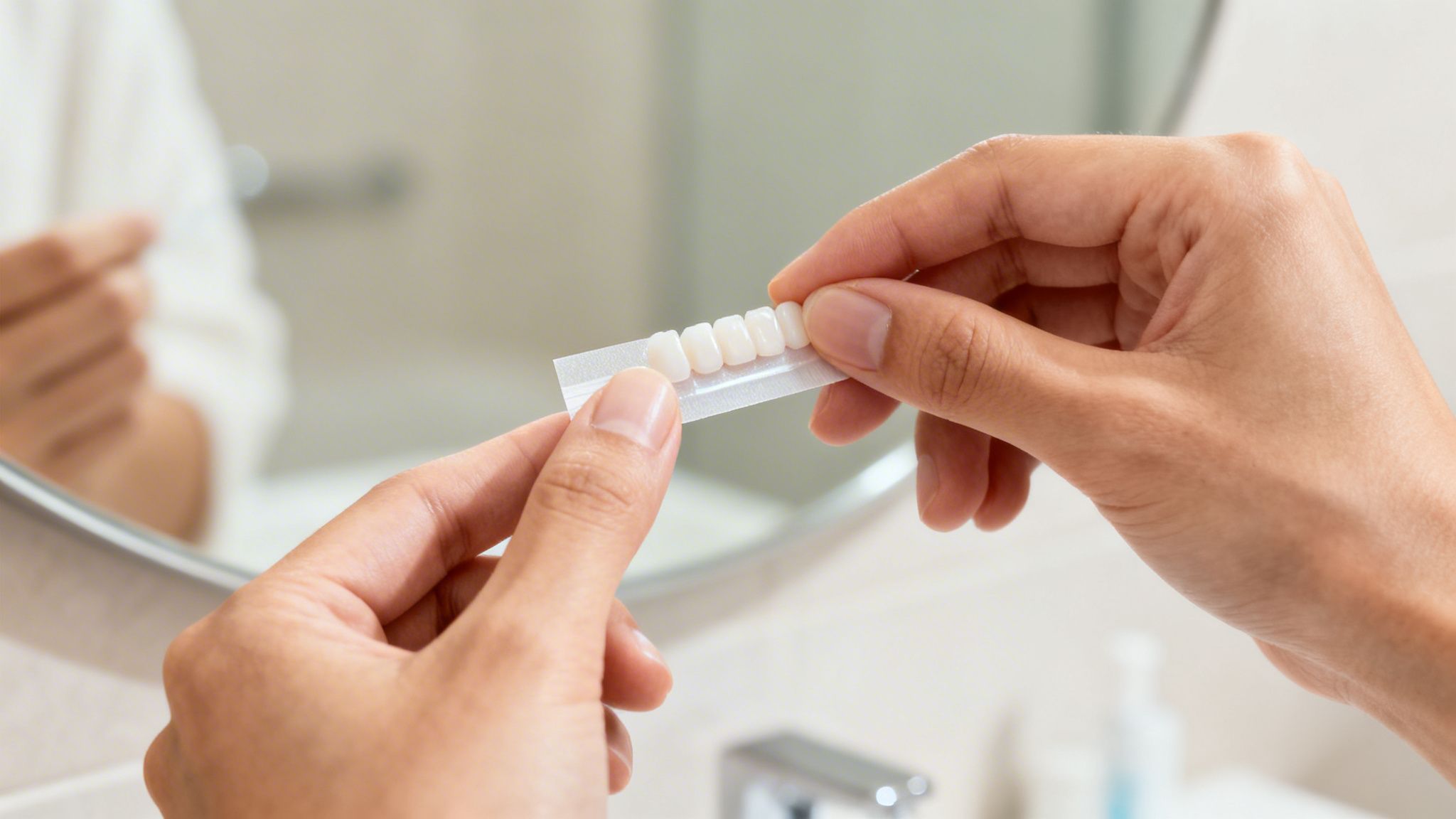
The best way to deal with whitening sensitivity is to get out in front of it. A little bit of prep work can make your entire experience much more comfortable.
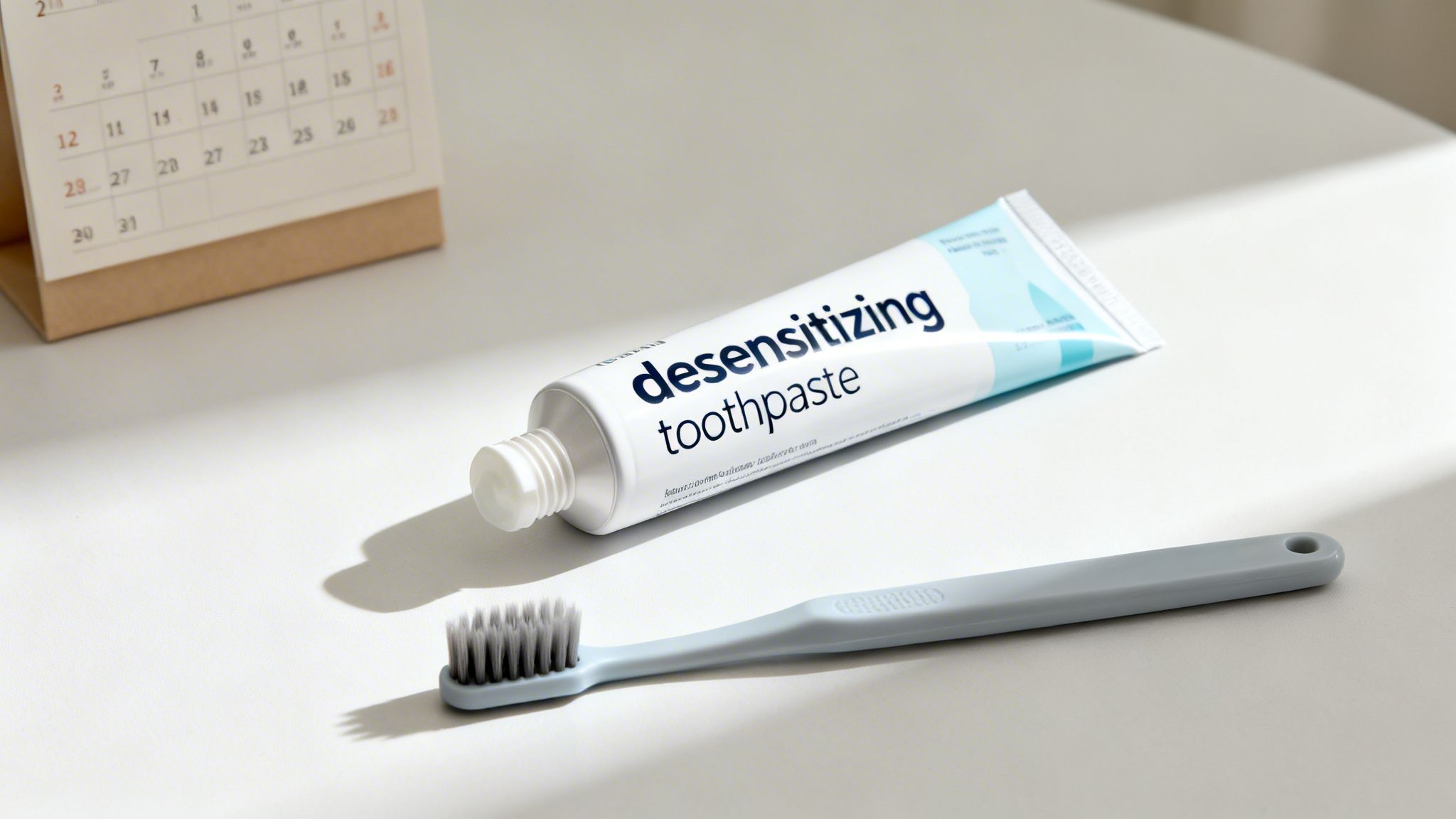
Here’s a pro tip: start using a desensitizing toothpaste for about two weeks before you plan to begin whitening. Look for one with active ingredients like potassium nitrate or stannous fluoride. These work by plugging up those microscopic pores, effectively shielding the nerve from the whitening gel before you even start.
Not all whitening kits are created equal, especially when it comes to sensitivity. It's tempting to grab the one with the highest peroxide concentration for the fastest results, but this also brings a much higher risk of discomfort.
A 2023 study confirmed that while hydrogen peroxide is great for lifting deep stains, it's also a primary cause of sensitivity. In fact, some reports show it affects up to 80% of users. As dental professionals, we always stress that starting with lower concentrations is the safest bet for anyone learning how to whiten teeth safely at home.
For our patients in nearby Ridgewood and Glen Rock, we almost always suggest starting low and slow. A comfortable, gradual journey to a brighter smile beats a fast but painful one every single time.
Even with the best preparation, you might still feel a twinge of sensitivity. If that happens, don’t just grit your teeth and push through it. It’s simply your body's signal to adjust your routine.
If you start feeling that familiar zing, here’s your game plan:
These small tweaks put you back in the driver's seat, making sure your whitening experience is a positive one from start to finish.
While mild sensitivity is normal, some red flags mean it's time to stop and give a professional a call. If you notice any of the following, please pause your at-home treatments and contact our office:
At Dental Professionals of Fair Lawn, we can take a look and see if an underlying issue, like a hidden cavity or gum recession, is the real culprit. Your oral health is always our top priority, and we’re here to help you get that brilliant smile safely.
While at-home teeth whitening kits look easy and promising, they aren't always the best place to start. I often tell my patients to think of it like painting a house—you wouldn't put a fresh coat of paint over cracked walls or water damage. The same logic applies to your teeth. Before you do anything, you need a healthy foundation.
Knowing when to put down the DIY kit and call a professional can save you from some serious discomfort and prevent you from making a problem worse. If you have any ongoing dental issues or existing dental work, a quick visit to your dentist in Fair Lawn, NJ, is the smartest first move.
The first rule of whitening is to start with a healthy mouth. Applying powerful peroxide gels to teeth with untreated problems is asking for trouble. It can turn a simple cosmetic goal into a painful dental emergency.
Here are a few red flags that mean you should absolutely see a dentist before whitening:
Over-the-counter kits are strong, and it's worth remembering that around 46% of U.S. adults over 30 have some form of gum disease. While the kits themselves are generally safe when used correctly on healthy teeth, a dentist's evaluation is the only way to know if you have an underlying issue that could cause a painful complication.
One of the biggest mistakes we see with at-home whitening involves existing dental work. It's a simple fact: whitening products only work on natural tooth enamel.
This is a critical point to remember: materials used for crowns, veneers, dental bonding, and fillings will not whiten. If you whiten the natural teeth around them, you can end up with a mismatched, uneven smile that looks worse than when you started.
If you have any restorations on your front teeth, you really need to consult a cosmetic dentist near me here in the Fair Lawn area. We can develop a smart treatment plan, which often involves whitening your natural teeth first and then professionally replacing the old dental work to perfectly match your brilliant new shade. For truly uniform, brilliant results, we can create custom-fitted whitening trays that guarantee every surface of every tooth gets the attention it deserves.
At-home kits are designed to tackle surface-level stains—the kind you get from coffee, tea, or red wine. But they often don't stand a chance against deeper, intrinsic stains. These are discolorations that come from inside the tooth itself, often caused by:
For these types of deep-set stains, over-the-counter products just aren't powerful enough to make a noticeable difference. If your at-home efforts are falling flat or causing you a lot of sensitivity, it's a clear sign to seek professional advice from a team like the one at 4squares Dentistry.
Here at Dental Professionals of Fair Lawn, we have access to professional-grade treatments specifically designed to beat tough stains. Our methods deliver safer, faster, and much more dramatic results than anything you can buy in a store. You can learn more by checking out our guide on the professional teeth whitening services we offer.
While at-home whitening can deliver good results, think of this guide as your starting point, not the final word. The best, safest, and most brilliant smiles are almost always a team effort. Here at Dental Professionals of Fair Lawn, we see ourselves as your partners in this process, ensuring you get the results you want without risking your oral health. With over 30 years of experience, Dr. Jody Bardash and our team have been guiding families in Fair Lawn, Ridgewood, and Glen Rock toward brighter smiles.
Before you start any whitening regimen, we can't stress this enough: get a professional check-up first. We always recommend a new patient exam to kick things off. It lets us get a full picture with a thorough exam and dental X-rays, so we can spot any hidden decay or gum disease. Trying to whiten your teeth when these issues are present can lead to serious sensitivity and pain, and it simply won't work correctly.
Once we know your teeth and gums are healthy, we can talk about the fun stuff—your whitening plan! While the at-home methods we’ve discussed are effective, for those who want truly noticeable and lasting results, our professional cosmetic services are the way to go.
We can help you choose the right path for your specific goals:
Professional Take-Home Whitening Kits: Forget ill-fitting, one-size-fits-all strips. Our kits use custom-molded trays created just for you. This perfect fit ensures the powerful, professional-grade gel covers each tooth evenly and, just as importantly, keeps it off your sensitive gums.
In-Office Teeth Whitening: This is your fastest ticket to a dazzling smile. If you have a wedding, reunion, or big presentation coming up, our in-office treatment delivers the most dramatic and immediate results. It’s powerful, safe, and all done in a single visit.
Complete Smile Makeovers: Is whitening just one piece of the puzzle? If you’re also thinking about straightening your teeth with Invisalign or perfecting their shape with porcelain veneers, we can map out a complete smile makeover. We’ll sequence your treatments to ensure every element works together for a stunning final result. We even offer other orthodontic solutions like Six Month Smile.
We get it. For many people, a trip to the dentist brings up a lot of anxiety. That’s why we’ve built our modern Fair Lawn office to be a calm and welcoming space. From the moment you walk in, our goal is to make you feel comfortable and at ease.
For anyone who feels especially anxious, we also offer sedation dentistry. It’s a safe and common option that helps you relax completely during your appointment. You can get the care you need, from a tooth extraction to dental implants, without the fear or stress. Your comfort is our priority.
Whether you just need a cleaning and exam or are ready to explore a full smile makeover, we’re here to help. As your local dentist in Fair Lawn, NJ, our commitment is to help you achieve a smile that is not only bright but also genuinely healthy.
Even with the best instructions, it's natural to have a few questions before you get started. We hear these all the time from our patients across Fair Lawn, Ridgewood, and Glen Rock, so let's clear up some of the most common concerns.
That's the big question, isn't it? With at-home kits, you can typically expect your brighter smile to last anywhere from a few months up to a year. Honestly, it all comes down to your daily habits.
If you have a daily coffee or tea routine, enjoy red wine, or use tobacco, you'll find that new stains will start to creep back in much sooner. To keep your results looking fresh, great oral hygiene is key. Rinsing your mouth with water after that cup of coffee can make a big difference. We also suggest using a whitening toothpaste a couple of times a week as a maintenance tool and planning for a quick touch-up treatment when you feel you need it.
This is something we absolutely need to be careful about. Whitening gels do not change the color of dental restorations like crowns, veneers, or even tooth-colored fillings. They only work on natural tooth enamel.
If you try to whiten your teeth at home with existing dental work, you’ll end up with a noticeable mismatch. The natural teeth will get lighter, making your restorations look dark, dull, or yellow in comparison.
If you have cosmetic work and are thinking about whitening, your first move should be a consultation at our Fair Lawn office. A cosmetic dentist can map out a strategy for you. Usually, this means whitening your natural teeth to your desired shade first, and then we replace the older restorations to create a perfect, seamless match.
We see these DIY trends all over the internet, and frankly, they can be incredibly damaging. Many "natural" ingredients are the opposite of safe.
Once enamel is gone, it's gone for good. This kind of damage can lead to permanent tooth sensitivity and leave you more vulnerable to cavities. When it comes to your teeth, stick with products that have the ADA Seal of Acceptance or come recommended by a dental professional.
Embarking on your whitening journey is always best when guided by a professional who knows your smile. Here at Dental Professionals of Fair Lawn, we're dedicated to helping our community get the bright results they want, safely. Don't wait to address your cosmetic concerns or put off necessary dental care.
Schedule your appointment today and let our team help you achieve the healthy, brilliant smile you deserve.