How to Prepare for Oral Surgery: Your Fair Lawn Guide
Learn how to prepare for oral surgery with our patient guide from Dental Professionals of Fair Lawn. Get tips on fasting, medication, and recovery.
Learn how to prepare for oral surgery with our patient guide from Dental Professionals of Fair Lawn. Get tips on fasting, medication, and recovery.

If you’ve just been told you need oral surgery, your first reaction is usually a mix of relief and worry. Relief, because there’s finally a plan for the tooth pain, infection, broken tooth, or implant problem that’s been bothering you. Worry, because “surgery” sounds like a big step.
That reaction is normal. Many patients in Fair Lawn, Ridgewood, and Glen Rock start by searching for a “dentist near me,” an “emergency dentist,” or help with a tooth extraction because they want answers quickly but also want to feel safe. Good preparation makes a real difference. It lowers stress, helps the day run smoothly, and gives your body a better chance to heal well.
At our office, preparation isn’t treated like paperwork. It’s part of the care itself. Clear instructions, honest conversations about sedation, and practical planning at home can turn an overwhelming appointment into a manageable one.
A typical patient story goes like this. Someone comes in with a painful tooth, a cracked molar, swelling around a wisdom tooth, or a long-delayed plan for dental implants. They expect to talk about the procedure. What surprises them is how much of the outcome depends on what happens before the procedure.
That’s why a thoughtful plan matters as much as the treatment itself. If you’re preparing for an extraction, implant placement, or another procedure listed on our oral surgery page, the goal is simple. Reduce avoidable risk, protect your comfort, and make recovery easier.
Patients often worry about the wrong things. They focus on whether the appointment will feel intimidating, but the more important questions are usually practical. What medications need review? Will you need a ride home? What should you eat the night before? How should you set up your home afterward?
A smooth oral surgery experience usually starts several days before you sit in the chair.
That’s especially true when sedation is involved, when a tooth has been infected for a while, or when the procedure is more complex, such as dental implants or a surgical extraction. People who prepare well tend to feel more in control. They also avoid the preventable problems that come from missed instructions, rushed planning, or poor home setup.
The good news is that how to prepare for oral surgery is straightforward when it’s broken into clear steps. The rest of this guide walks through those steps in plain language so you know what to do, what not to do, and what helps.
The consultation is where oral surgery becomes a plan instead of a question mark. This visit matters whether you’re coming in for a tooth extraction, dental implants, or treatment after a dental emergency. It’s the time to get specific about your health, your comfort level, and what recovery is likely to look like for you.
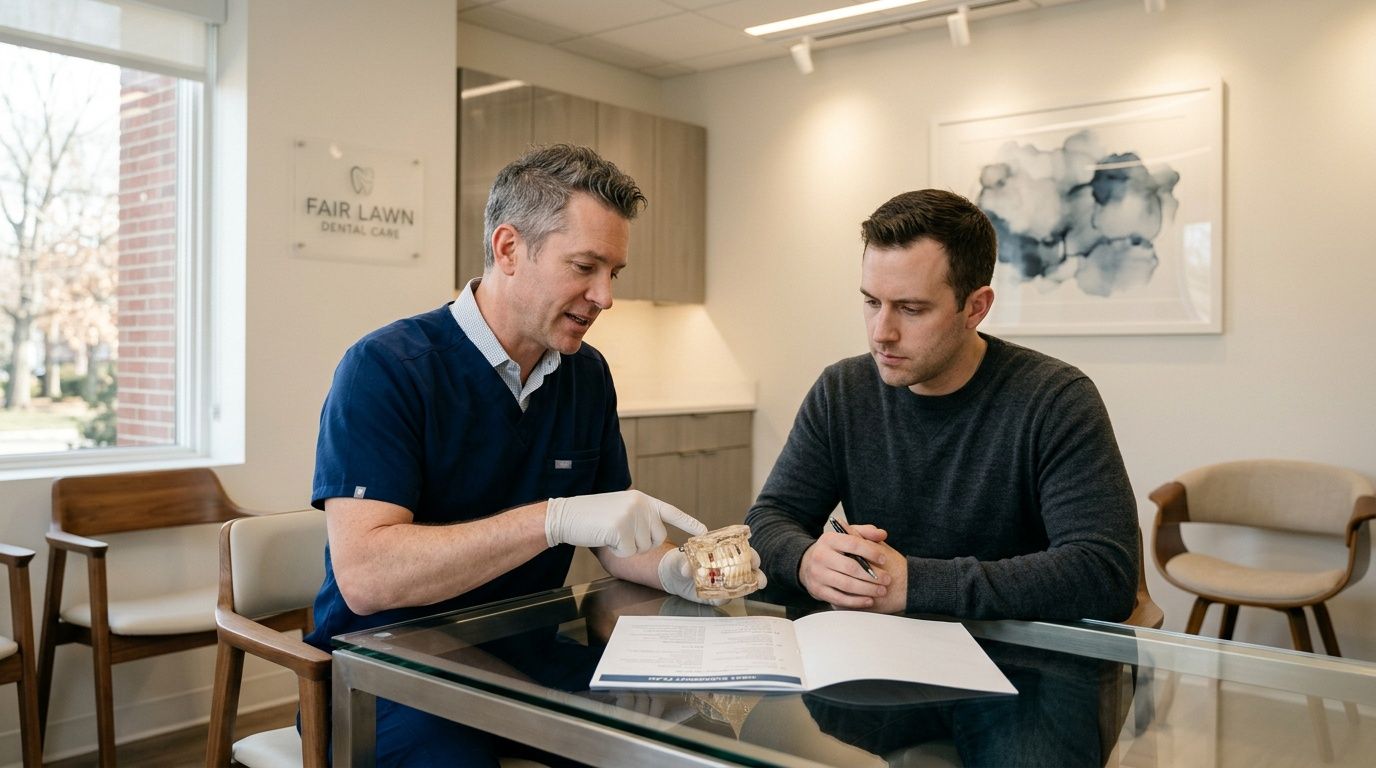
The most useful consultation is an honest one. Bring a current list of medications, vitamins, and supplements. Mention any history of heart conditions, diabetes, blood pressure issues, allergies, prior reactions to anesthesia, smoking, jaw pain, TMJ symptoms, or sleep apnea.
Those details change planning. A medication that seems routine to you may affect bleeding, sedation, or healing. A habit like smoking may influence timing and post-op instructions. If you’ve had a difficult dental experience before, say so. That matters too.
A lot of patients assume brushing and flossing before surgery is just a general reminder. It’s more than that. Perioperative oral management has been identified as a significant protective factor against postoperative complications. Research found a relative risk of 0.43, with an approximate 57% risk reduction in serious postoperative complications in oncological surgery for patients who received thorough oral care protocols before surgery, according to this review of perioperative oral management. The main takeaway for everyday dental patients is practical. Healthier gums, less plaque, and better bacterial control make surgery safer.
Patients sometimes ask, “Will it hurt?” That’s a fair question, but it shouldn’t be the only one. Ask the questions that help you prepare well.
Consider bringing a short list like this:
These questions help more than generic reassurance does. They replace guessing with instructions.
The practical side of planning often determines how calm you feel the day before surgery. If you’ll need sedation, arrange time off and transportation well in advance. If your procedure will affect speaking or eating for a day or two, plan your work and family schedule around that reality instead of hoping you’ll “figure it out.”
A few tasks are worth finishing early:
Practical rule: If something would be annoying to do with a numb mouth or after sedation, do it the day before.
Some preparation steps are effective. Others just make patients feel busy.
| What helps | What doesn’t help |
|---|---|
| Sharing a full medical history | Assuming “it’s probably in my chart” |
| Following brushing and hygiene instructions | Aggressive brushing that irritates the gums |
| Asking about medication changes in advance | Stopping medications on your own |
| Filling prescriptions before the appointment | Waiting until after surgery to make a plan |
| Arranging help at home | Hoping a ride will “work itself out” |
If you’re a new patient, this planning may also happen as part of a broader exam process that includes imaging, review of symptoms, and discussion of long-term goals. That’s especially useful when oral surgery connects to larger treatment, such as restorative dentistry, cosmetic dentistry, Invisalign planning after extractions, or implant-supported replacement.
Fear of pain usually isn’t the whole story. Most anxious patients are also worried about control, sounds, time in the chair, and not knowing how they’ll feel once treatment starts. Sedation planning helps when it matches the procedure and the person.
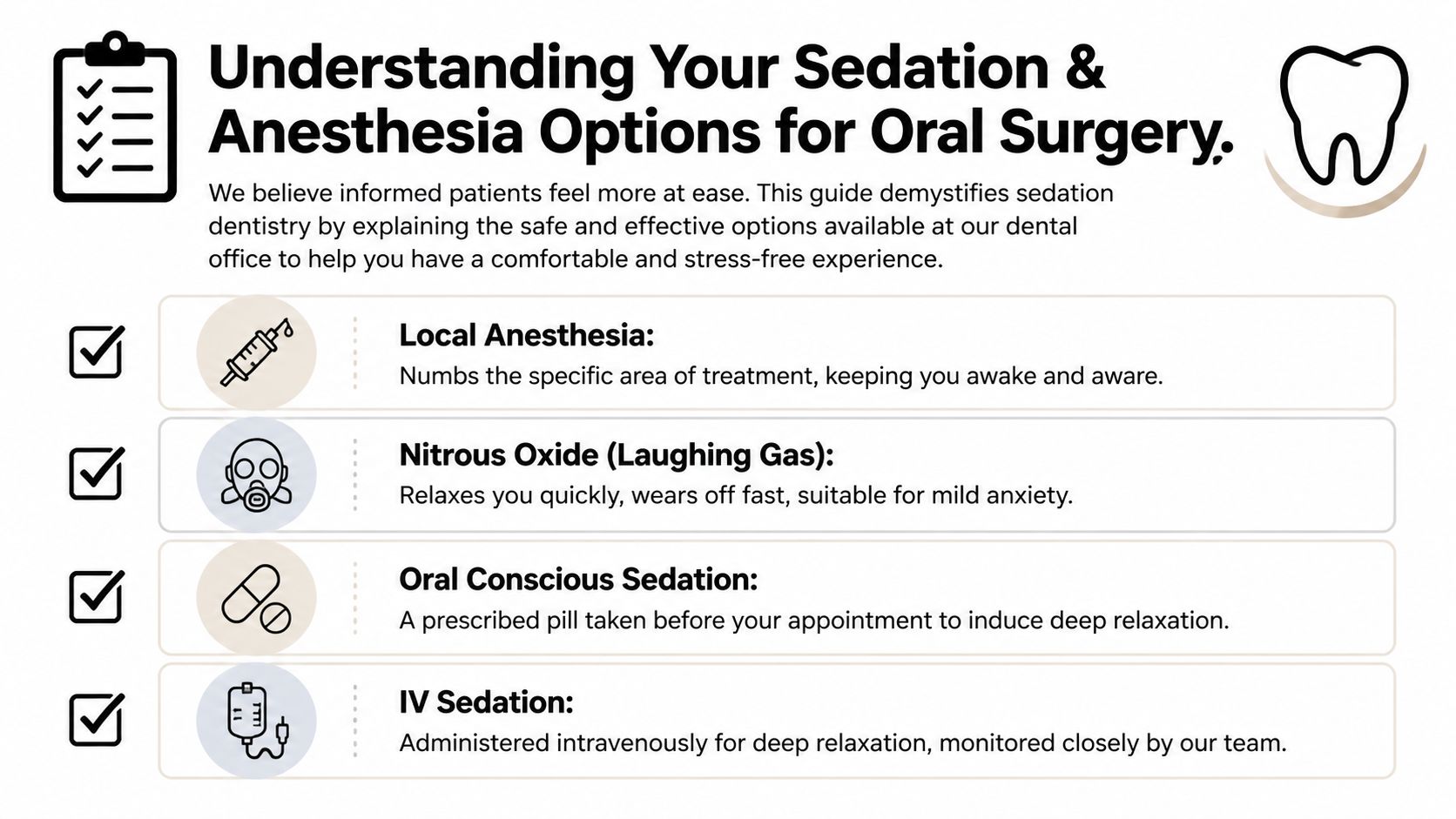
Here’s how patients usually think about sedation once it’s explained clearly.
| Option | What it does | Best fit |
|---|---|---|
| Local anesthesia | Numbs the treatment area while you stay awake | Straightforward procedures and patients comfortable with treatment |
| Nitrous oxide | Helps you relax quickly and wears off relatively fast | Mild anxiety, shorter procedures |
| Oral conscious sedation | A prescribed pill helps you feel deeply relaxed | Moderate anxiety or patients who tense up easily |
| IV sedation | Creates a deeper level of relaxation with close monitoring | Longer procedures, stronger anxiety, more complex surgery |
Local anesthesia is the foundation for many oral surgery visits. You’re awake, but the area being treated is numb. Many patients do well with this alone, especially for simpler extractions or focused surgical treatment.
Nitrous oxide is often a good middle ground. It can take the edge off without making the day feel as involved as deeper sedation. For anxious patients, that shift in body tension can matter a lot.
Oral conscious sedation and IV sedation are different conversations because they involve more planning and stricter pre-op instructions. If you’re exploring sedation dentistry in New Jersey, the right choice depends on the procedure, your medical history, and how anxious you typically feel in a dental setting.
Sedation doesn’t work well when patients treat the preparation casually. This is one of the clearest trade-offs in oral surgery. The deeper the sedation, the more important the protocol becomes.
According to this pre-operative oral surgery guide, non-compliance with instructions like discontinuing blood thinners can increase bleeding risk by 5-10 fold, and tobacco use can increase infection rates by 2-4x. That’s why medication review, smoking cessation before surgery, and fasting instructions are never optional details.
Sedation can make treatment feel easier. It does not make preparation less important.
If you take aspirin, warfarin, or another blood thinner, do not stop it on your own. The decision has to be coordinated properly. The same goes for diabetes medications, supplements, and anything else you take daily.
The best sedation choice isn’t always the strongest one. A patient with mild nervousness and a short procedure may do very well with local anesthesia and reassurance. A patient with significant dental anxiety, a strong gag reflex, TMJ tension, or a longer implant appointment may benefit from something more supportive.
This is also where honesty helps. If you tend to panic once you’re in the chair, say that before the day of surgery. If you’ve had a poor numbing experience in the past, mention it. If lying open for a long time aggravates your jaw, that should be part of planning.
A few common situations come up often:
Many people hear “sedation” and assume they’ll be completely unaware. That’s not always the case. Some methods are designed for relaxation, not full unconsciousness. Others involve deeper sedation but still require careful monitoring and strict compliance with instructions.
What works is a realistic mindset. Sedation is there to improve comfort, reduce fear, and make treatment more manageable. What doesn’t work is treating it like a convenience add-on while ignoring the medical instructions that keep it safe.
The final twenty-four hours are about discipline, not improvising. If you’ve prepared well up to this point, the night before should feel quiet and simple.
The CDC notes that oral surgical procedures require enhanced infection control, and standard preoperative instructions typically require patients to fast from food and drink for 8-10 hours before surgery and arrange for someone to drive them home and stay with them for 24 hours when anesthesia is involved, as explained in the CDC guidance on oral surgical procedures. That advice is practical, not bureaucratic.
The night before, keep things simple:
What to bring is just as important as what to leave home.
| Bring | Leave at home |
|---|---|
| Photo ID | Jewelry |
| Insurance information if needed | Valuables |
| A written medication list | Heavy makeup |
| Your escort’s contact details | Nail polish if you were told to remove it |
Don’t try to squeeze in errands. Don’t plan to drive yourself “just in case.” Don’t show up unsure about what medications you took.
Arrive with enough time to settle in. If you wear contact lenses, consider whether glasses may be more comfortable that day. If your stomach feels nervous, that’s common. What matters is that you’ve followed the instructions.
Some patients like a quick visual reminder before the appointment:
Day-of advice: If anything about your instructions is unclear that morning, call before you leave home instead of making an assumption.
Patients do best when they treat the day like a medical appointment, not a normal errand. Good preparation means no rushed breakfast, no last-minute pharmacy stop, and no hoping a family member can “probably” pick you up.
What backfires is casual thinking. A small mistake, especially around fasting or transportation, can delay the procedure or make the day less safe. The easier choice is to make the day boring. Boring is good on surgery day.
A comfortable recovery usually starts before you leave for the appointment. When people wait until after surgery to figure out pillows, food, gauze, medications, and where they’ll rest, the first evening feels much harder than it needs to.
Choose one quiet place where you can rest without having to keep getting up. A couch corner, recliner, or bed with supportive pillows works well. Keep your phone charger, tissues, gauze, medications, water, and ice packs within reach.
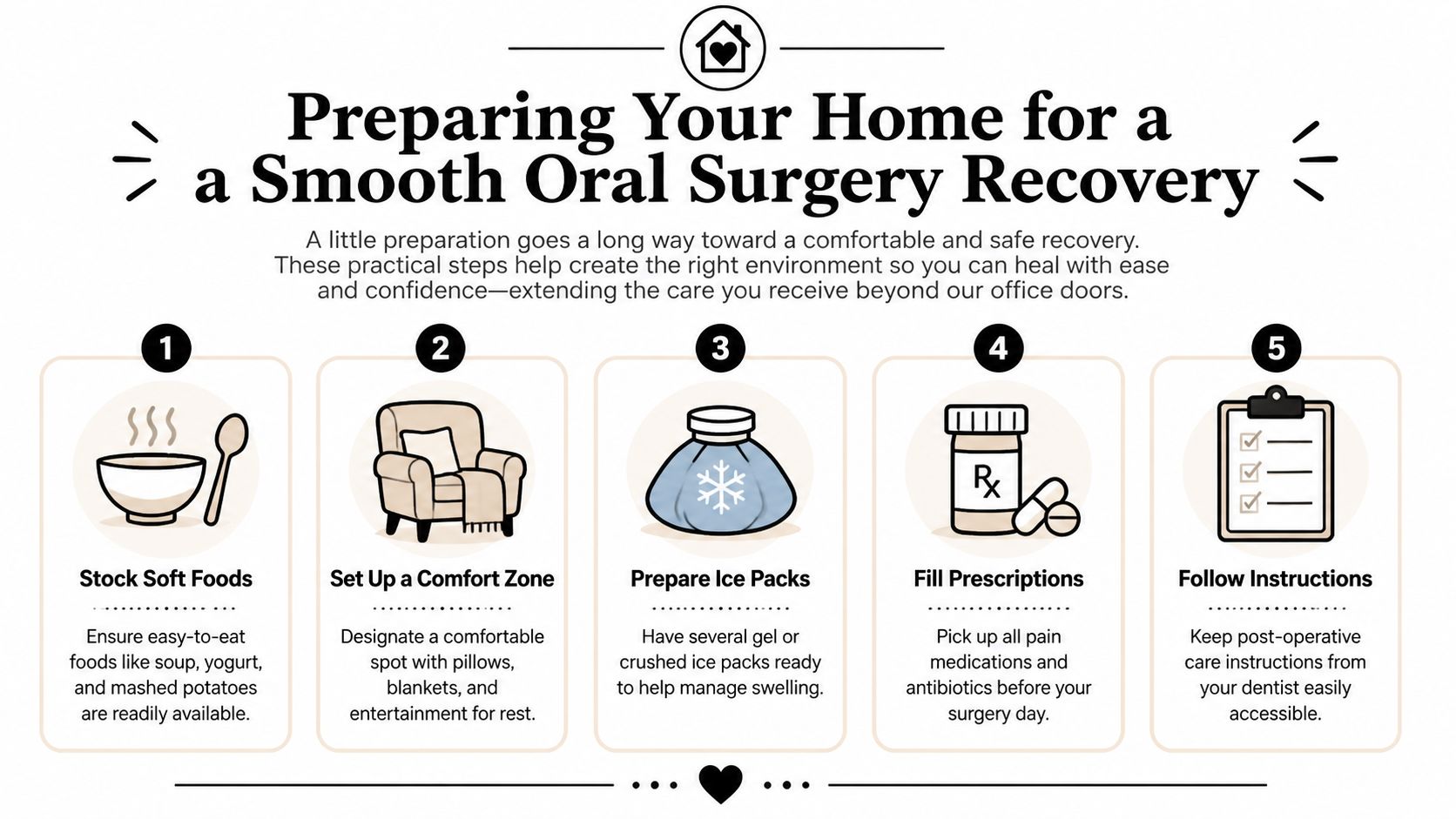
According to Cigna’s oral surgery recovery guidance, optimizing the home recovery environment can cut complication rates by 30-50%. That same guidance highlights practical steps such as keeping the head raised 30-45° for 48-72 hours, using ice packs in 20-minute cycles, and avoiding straws to help prevent dry socket, which occurs in 2-5% of extraction cases.
The best recovery supplies are simple. You don’t need a cabinet full of products. You need the basics ready before you’re tired and numb.
Keep these on hand:
For families who want a broader home setup checklist, DME Superstore's home care guide is a useful general resource for organizing the space, reducing trip hazards, and thinking ahead about comfort needs.
Recovery goes more smoothly when everything you need is already within arm’s reach.
The first day or two should be quiet. Rest helps. Pushing through chores usually doesn’t.
A few common trade-offs are worth knowing:
| Helps healing | Common mistake |
|---|---|
| Head elevated on pillows | Lying flat for long periods |
| Cool, soft foods | Crunchy, spicy, or very hot foods |
| Ice packs on and off | Using heat too early |
| Gentle aftercare exactly as instructed | Aggressive rinsing or spitting |
| Drinking from a cup | Using a straw |
You should also think about the first evening realistically. If you have young children at home, line up help. If you usually sleep flat, build your pillow setup in advance. If your prescription needs pickup, get it done before the procedure.
Some patients recover from a tooth extraction with a fairly quiet evening. Others feel more tired than expected, especially after sedation. Both experiences can be normal. The point is to remove unnecessary friction.
If your treatment involves advanced planning, such as implant surgery or a full restorative sequence, even simple tools can help the process feel more organized. In some practices, including Dental Professionals of Fair Lawn, technologies such as facial scanning or photogrammetry may be part of treatment planning for complex implant-related care. For patients, that usually means more precise communication about fit, positioning, and follow-up expectations.
What works after surgery is rest, hydration within your instructions, soft food, and following the written guidance you were given. What doesn’t work is trying to “get back to normal” by dinner time.
Preparation changes when the patient is a child, an older adult, someone with TMJ pain, or someone who has delayed care because of fear. A one-size-fits-all checklist misses too much.

Children usually do best when adults keep the explanation short and steady. Tell them where they’re going, who will be helping, and what the first part of the day will look like. Don’t overload them with descriptions they didn’t ask for.
A few helpful habits for parents:
The biggest mistake is trying to talk a child out of their feelings. It works better to acknowledge them and keep the routine predictable.
Older adults often need more coordination than reassurance. Medication lists, transportation, mobility support, and meal planning all matter. If the patient uses a walker, has balance concerns, or depends on a caregiver, those details should be arranged before the procedure day.
Caregivers can help by confirming:
If the patient tends to forget instructions after appointments, the caregiver should be the one listening closely and asking follow-up questions.
Dental anxiety isn’t always just fear of dentistry. Sometimes it’s physical. Patients with TMJ or TMD may clench before appointments, tighten during treatment, and leave with jaw soreness layered on top of the surgical area.
A 2023 study found that 40% of oral surgery patients report preoperative anxiety linked to prior TMJ issues, yet only 15% receive individualized preparation protocols. The same source notes that integrating pre-op TMJ assessments and sedation options like nitrous oxide can reduce anxiety by up to 60%, according to this discussion of oral surgery and anxiety considerations.
That matters in a family practice. If you already know you clench, have trouble staying open for long periods, or tense up before treatment, say it early. Useful preparation may include a shorter morning schedule, extra jaw support planning, a sedation discussion, or a more deliberate approach to breaks and positioning.
Some anxious patients don’t need more courage. They need a better plan.
Patients preparing for dental implants, bone grafting, or a more complex restorative sequence usually need more than day-before instructions. They need to think in phases. The surgery is one part. Healing, temporary changes in eating, follow-up visits, and final restoration all matter.
That’s also true for adults juggling cosmetic goals with function. Someone replacing a missing tooth may also be thinking about smile design, bite comfort, or later orthodontic treatment such as Invisalign or Six Month Smiles. Good planning respects that bigger picture.
For these patients, the right mindset is patience. What works is understanding the timeline and protecting healing. What doesn’t work is treating implant surgery like a single isolated appointment with no effect on the weeks that follow.
Oral surgery feels less intimidating when you know what to expect and why each instruction matters. The strongest preparation plan is usually the simplest one. Be honest about your health, ask practical questions, follow the medication and fasting instructions carefully, arrange help before the procedure, and set your home up for recovery in advance.
That approach supports more than convenience. It supports safety. It also makes the experience easier for families balancing work schedules, school pickups, childcare, and caregiving responsibilities in Fair Lawn, Ridgewood, and Glen Rock.
Patients looking for a dentist in Fair Lawn often want more than a procedure. They want clear communication, a calm environment, and a team that takes their concerns seriously. That matters whether you need a tooth extraction, sedation for anxiety, dental implants, emergency dental care, or broader restorative and cosmetic dentistry.
Dr. Jody Bardash and the team understand that people rarely come to an oral surgery consultation feeling completely relaxed. They come with questions, worries, and often a lot going on outside the office. Good care meets that reality. It doesn’t rush past it.
If you’ve been searching for help with how to prepare for oral surgery, the main takeaway is reassuring. You do not need to figure this out alone. With the right plan and the right support, oral surgery can feel organized, safe, and far more manageable than you may expect.
If you’re preparing for a tooth extraction, dental implants, sedation dentistry, or another procedure, Dental Professionals of Fair Lawn is here to help you feel informed, comfortable, and ready for every step. Contact the office to schedule a consultation and get a personalized plan for oral surgery in Fair Lawn, NJ.