How Sedation Dentistry Works in Fair Lawn, NJ
Anxious about the dentist? Learn how sedation dentistry works with our guide to nitrous oxide, oral, & IV options at Dental Professionals of Fair Lawn.
Anxious about the dentist? Learn how sedation dentistry works with our guide to nitrous oxide, oral, & IV options at Dental Professionals of Fair Lawn.
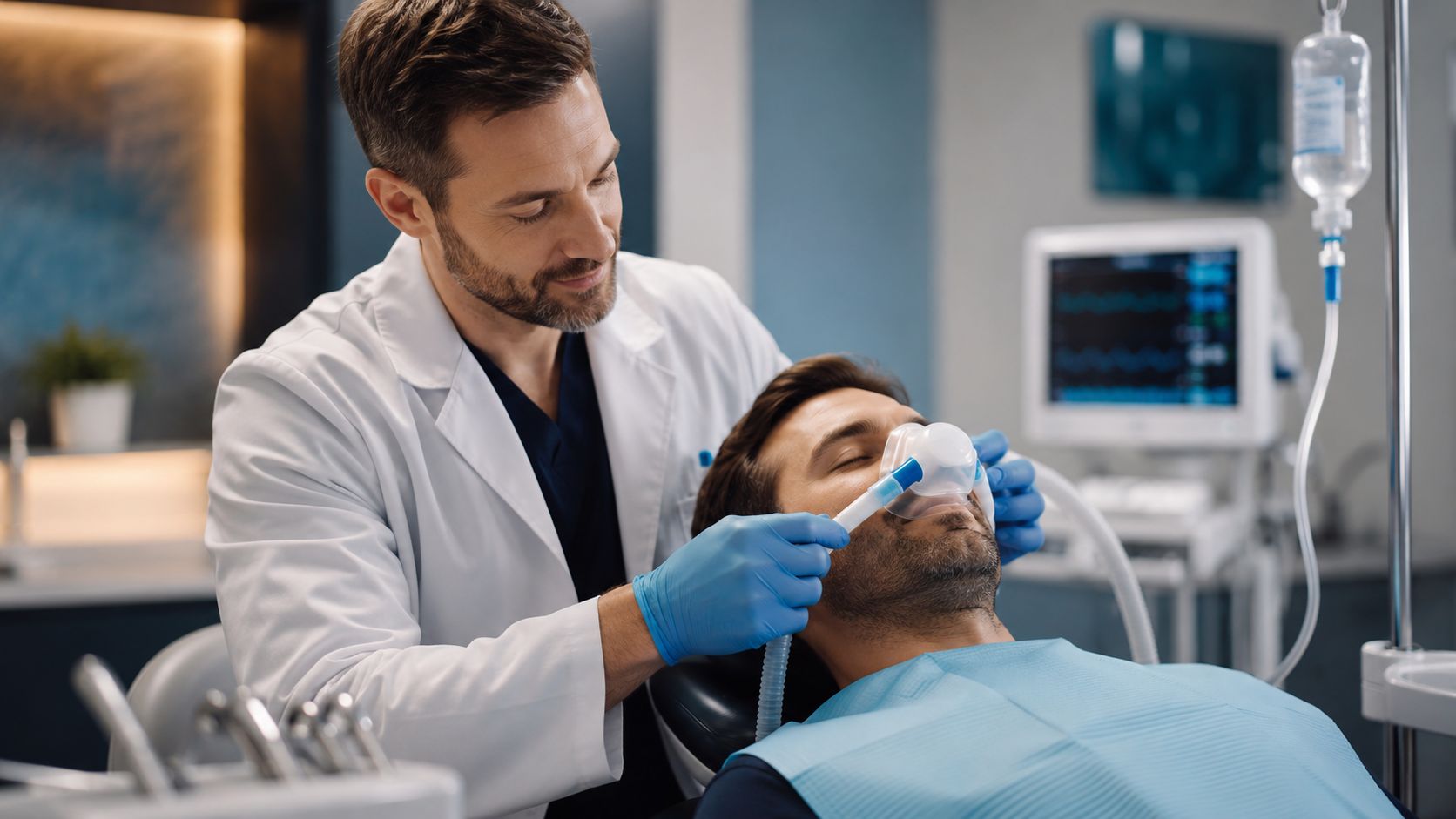
You keep meaning to call the dentist. Maybe it's for a tooth extraction, a broken filling, a cleaning that's long overdue, or a consultation about dental implants near me because you're tired of hiding your smile. But each time you get close to booking, the same feeling shows up. Tight chest. Racing thoughts. A memory of a past visit that didn't go well.
That reaction is more common than many people realize. Fear of pain, fear of losing control, fear of needles, fear of the sound of dental instruments, or even embarrassment about how long it's been can all keep good people from getting the care they need. The problem is that waiting usually turns a small issue into a bigger one.
If you've been searching for a dentist near me or a dentist in Fair Lawn, NJ who understands anxiety and explains things clearly, it helps to know how sedation dentistry works before you ever sit in the chair. When you understand the process, the visit feels more manageable. You know what the medication does, what it doesn't do, and how your comfort and safety are protected from start to finish.
A lot of anxious patients follow the same pattern. A tooth starts bothering them. They chew on the other side for a while. Then they avoid cold drinks. Then they start searching online for an emergency dentist, tooth extraction, or even cosmetic dentist near me because they want relief but don't know if they can face the appointment.
That kind of delay doesn't mean you're careless. It usually means you've been trying to protect yourself from an experience that feels overwhelming.
Patients in Fair Lawn, Ridgewood, and Glen Rock often come in carrying more than a dental problem. They bring worry, guilt, and a long list of “what if” questions. What if I panic. What if it hurts. What if I can't stay calm long enough to finish. Those are real concerns, and they deserve a calm, respectful answer.
Dental anxiety is not a character flaw. It's a barrier to care, and barriers can be addressed.
When a practice takes anxiety seriously, the appointment feels different from the beginning. The conversation slows down. Your concerns aren't brushed aside. You're given options, including sedation choices that can make treatment feel easier and more predictable.
That matters whether you need a routine visit, cleaning and exams, dental x-rays, new patient exams, restorative care, or a more involved procedure such as oral surgery, Invisalign, Six Month Smile, or implant planning. Sedation isn't only for major procedures. It's also for people who need help getting through a dental visit without feeling flooded by fear.
For many patients, the most important first step is hearing this: you don't have to “tough it out.” There are safe, structured ways to help you feel calm and cared for while getting the treatment your mouth needs.
Sedation dentistry uses medication to help patients feel calm, relaxed, and more comfortable during dental care. It doesn't always mean being fully asleep. In many cases, you're still able to respond, follow simple directions, and get through treatment with far less stress.
That's where many people get confused. They hear “sedation” and picture general anesthesia in a hospital setting. In a dental office, sedation often works more like a dimmer switch than an on-off button. The goal is to match the level of relaxation to the procedure and to your personal comfort needs.
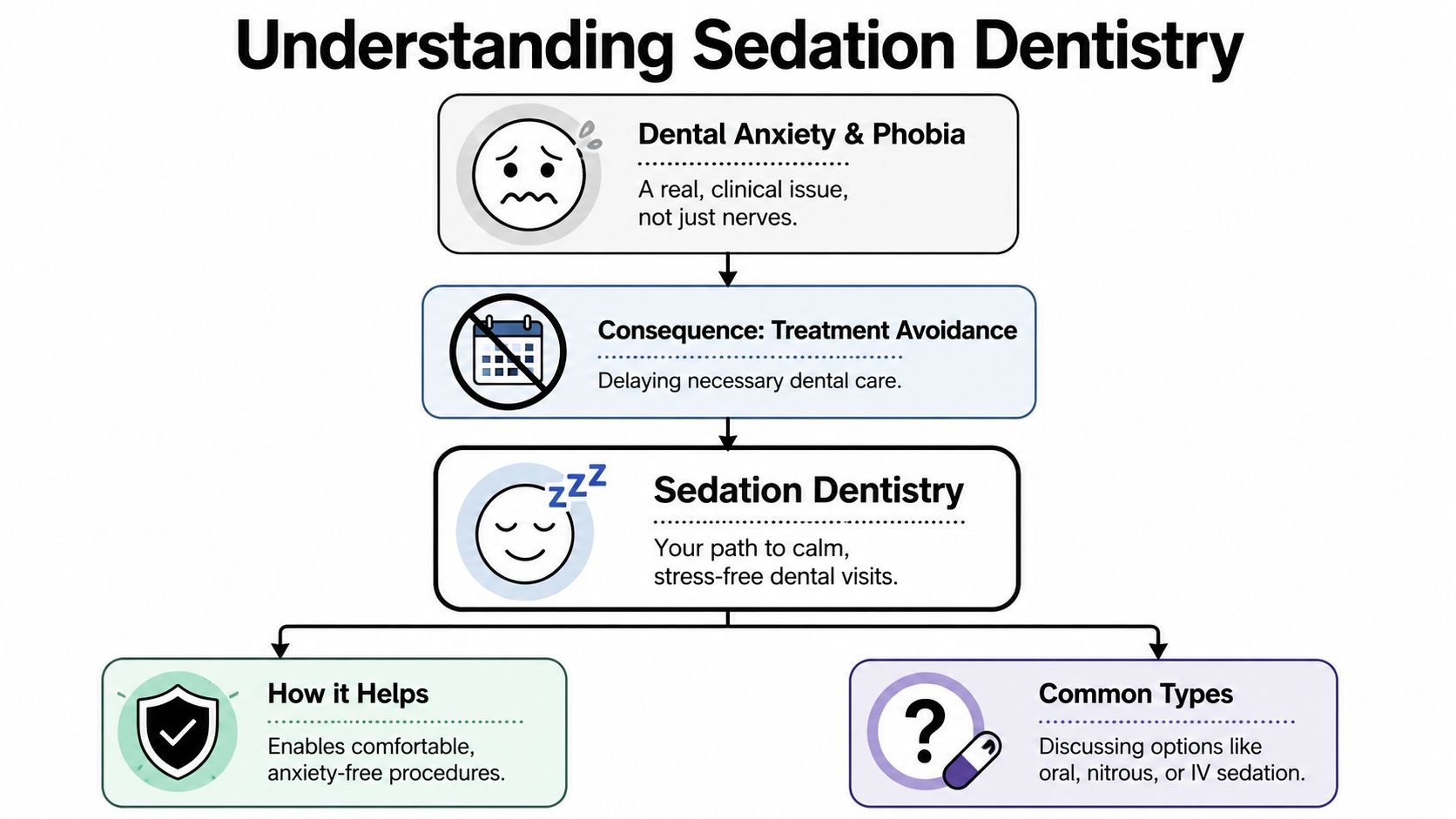
Think of sedation in four broad levels:
In everyday dental care, the most common goal is comfortable relaxation rather than complete unconsciousness. That helps many patients complete treatment they've been postponing, including restorative dentistry, cosmetic work, and urgent care.
Anxiety affects more than your thoughts. It can make your body tense, increase your sensitivity, and make even a simple appointment feel hard to tolerate. Sedation helps lower that stress response so treatment can feel smoother for both you and the clinical team.
For some patients, the biggest benefit is emotional. They stop dreading every sound and every step. For others, the benefit is practical. They can sit comfortably longer, tolerate treatment more easily, and move forward with care that supports a healthy, bright smile.
One medication often discussed in dental sedation is midazolam. Clinical evidence described in the National Library of Medicine review on dental sedation notes that midazolam is the most frequently used pharmacological agent for inducing moderate sedation in dental surgical procedures, with a favorable safety profile and no associated cardiopulmonary complications when administered prior to treatment. That same review notes that an intranasal spray formulation can achieve a moderate sedation level in approximately 30 minutes.
Practical rule: Sedation doesn't replace good dental care. It supports it by helping you stay calm enough to receive it.
Sedation dentistry can be helpful if you:
For many families searching for a dentist in Fair Lawn, NJ, understanding how sedation dentistry works is what finally turns “I should go” into “I can do this.”
Not every patient needs the same level of support. Some people only want the edge taken off. Others need a deeper sense of calm to make treatment possible. The right option depends on your health history, the procedure, and how anxiety shows up for you.
Nitrous oxide, often called laughing gas, is inhaled through a small nose mask during treatment. It's typically chosen by patients who want light relaxation and a fast return to normal afterward. You stay awake, but the appointment often feels easier, less tense, and less emotionally charged.
Many patients like nitrous oxide for shorter visits, fillings, hygiene appointments, or situations where they want help relaxing without a long recovery. If you want to learn more about this option, this guide on dentists that use nitrous oxide gives more context on how it's used in dental settings.
Oral sedation is taken in pill form before the appointment. Patients often choose it when they want a deeper sense of calm than nitrous oxide usually provides. You're still conscious, but you'll likely feel drowsy, relaxed, and less focused on the procedure itself.
This option can be a good fit for people with stronger dental anxiety, for those having a longer visit, or for anyone who's had trouble getting through treatment in the past. Because the medication can leave you groggy afterward, you should plan ahead for transportation and recovery time at home.
IV sedation is the option many anxious patients ask about when they want the most controlled and predictable experience available in a dental office setting. It's administered through a vein, which allows the clinical team to adjust the level of sedation in real time during the procedure.
According to the video explanation of IV dental sedation, intravenous sedation is considered the safest and most predictable form of dental sedation. It allows clinicians to dynamically “ride the wave of consciousness,” adjusting sedation depth during treatment so a patient can remain fully relaxed yet semi-responsive.
That real-time control matters. If a procedure becomes more stimulating, sedation can be deepened. If the team needs you to respond during a bite check or another brief moment, it can be lightened. For many patients, that balance is what makes difficult care finally feel possible.
Some patients say the biggest relief is knowing they won't have to white-knuckle the entire appointment.
| Comparing Your Sedation Options | |||
|---|---|---|---|
| Sedation Type | How It Works | Best For | Recovery Time |
| Nitrous Oxide | Inhaled through a nose mask during treatment | Mild to moderate anxiety, shorter visits, patients who want lighter support | Usually quick recovery after the visit |
| Oral Sedation | Taken as a pill before treatment | Stronger anxiety, longer appointments, patients who want deeper relaxation without IV medication | Recovery is longer, and a ride home is typically needed |
| IV Sedation | Delivered through a vein and adjusted throughout treatment | Significant anxiety, longer or more involved procedures, patients who want the most precise control | Recovery requires monitoring and transportation planning |
A simple way to think about it is this:
Dental Professionals of Fair Lawn offers nitrous oxide, oral conscious sedation, and IV sedation as part of a broader approach to comfortable dental care.
For most anxious patients, the biggest question isn't whether sedation sounds helpful. It's whether it's safe. That's the right question to ask.
Safe sedation starts long before any medication is given. It begins with a careful health review, a conversation about your medical history, current medications, past experiences with sedation, and the kind of procedure you're having. That information helps determine which option is appropriate and whether treatment should move forward that day.
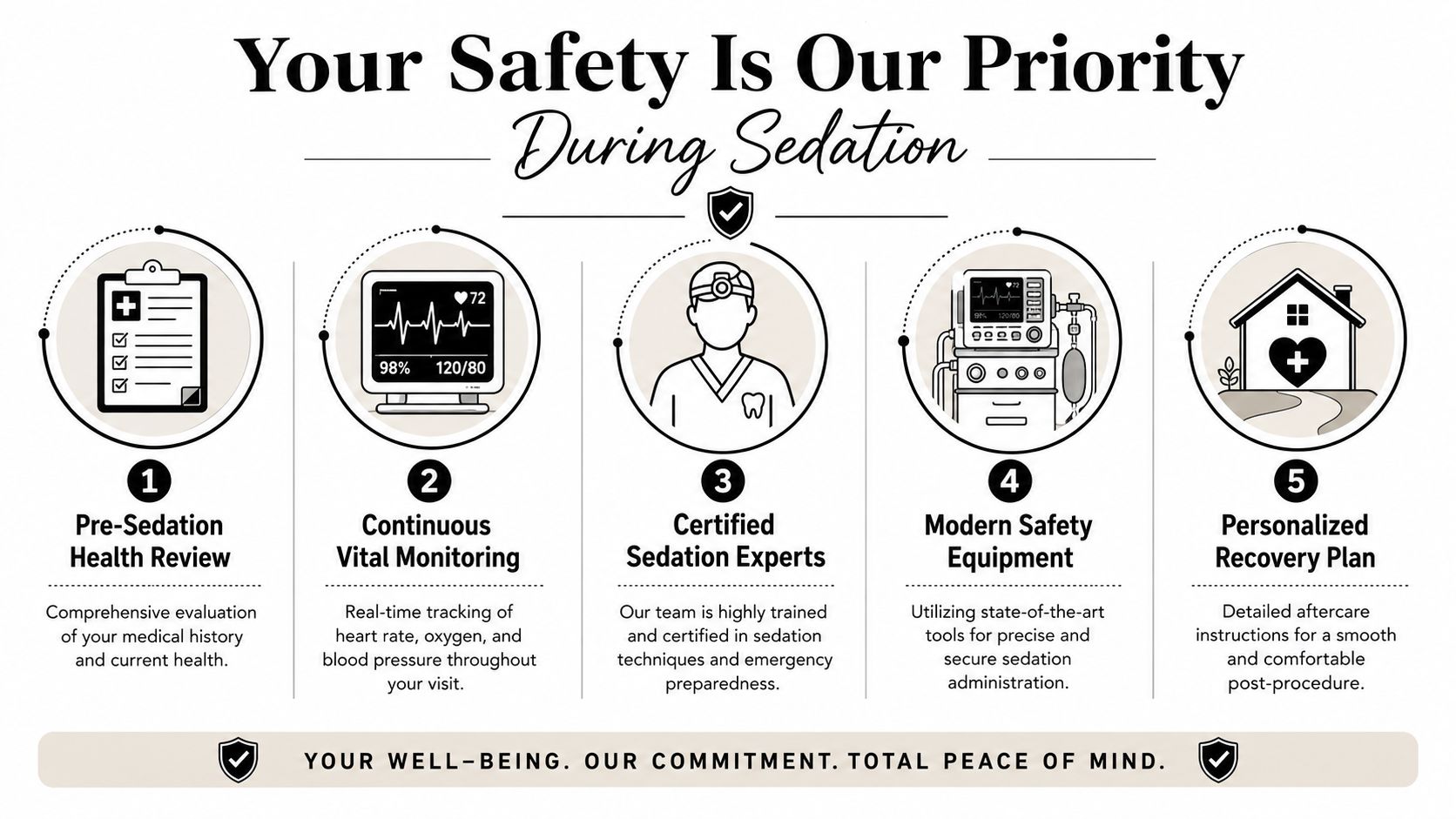
When sedation is used properly, your team doesn't just “check on you” once in a while. They monitor you throughout the procedure. In a well-run sedation visit, clinicians track your comfort and your vital signs continuously so they can respond right away if anything needs adjustment.
That includes watching key markers such as:
Modern monitoring matters because sedation should never be casual. It should be deliberate, measured, and supervised by trained professionals using established protocols and proper equipment.
Equipment is only part of the picture. The other part is the people using it. Sedation requires clinical judgment, preparation, and the ability to respond calmly in real time.
Patients who want to understand the anesthesia background behind this care can review the credentials of Dr. Jonathan Mendia, dentist anesthesiologist. That kind of specialized expertise helps answer the question many anxious patients privately bring into the office: who is watching over me while I'm trying to relax?
Safety takeaway: The right sedation plan is personalized. It isn't chosen for convenience. It's chosen for fit.
Safety doesn't end when the procedure ends. Patients need clear aftercare instructions, guidance about eating and activity, and help arranging a smooth trip home when the type of sedation requires it. A good recovery plan reduces confusion and helps families know what's normal, what to expect, and when to call the office.
When people understand these safeguards, sedation feels less mysterious. It becomes what it should be: a structured, well-monitored tool that helps you receive dental care more comfortably.
Fear often grows in the gaps. If you don't know what happens before sedation, when it starts, or what recovery looks like, your mind tends to fill in the blanks. A predictable plan makes a big difference.
Early in the process, you'll talk through your concerns, your medical history, and the kind of treatment you need. That visit helps determine which sedation method fits you and whether you're a candidate for it.
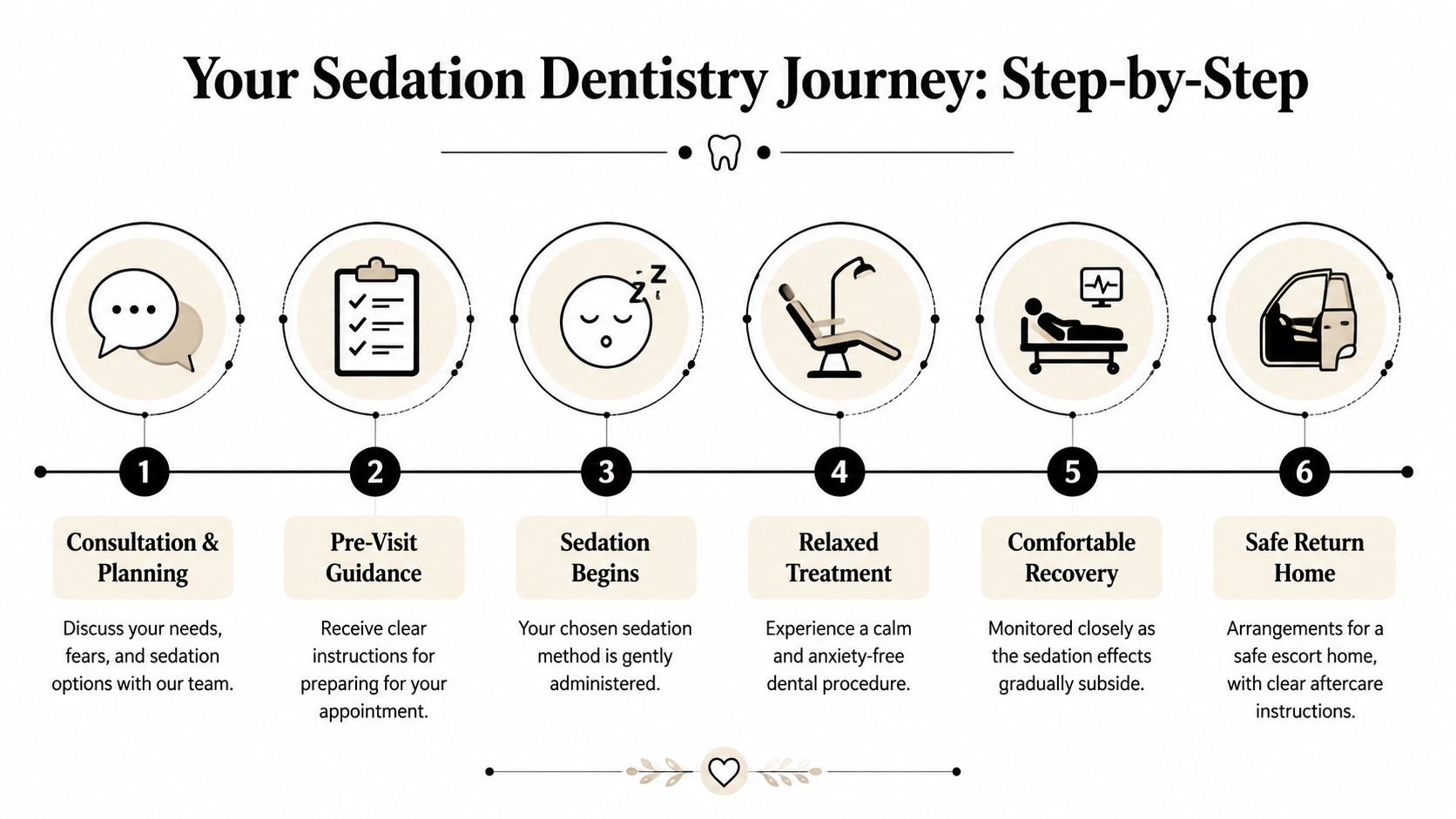
Preparation instructions matter because they help your sedation work as intended and support a smoother recovery. Depending on the sedation type, you may be told when to stop eating or drinking, what medications to take as usual, what to wear, and whether you'll need someone to drive you home.
This is also the time to ask practical questions. If you're worried about memory, needles, gagging, recovery, or how you'll feel afterward, say so. Sedation visits tend to go better when patients know what to expect and the team knows what worries them most.
When you arrive, the team reviews the plan, confirms your health information, and gets you settled. If you're using nitrous oxide, the medication begins through a mask over the nose. If you're using oral sedation, the calming effect is already underway by the time treatment starts. If you're receiving IV sedation, the medication is administered and adjusted as needed while you're monitored.
A short video can help make that feel more familiar.
Many patients are surprised by how uneventful the start feels. There isn't usually a dramatic moment. Instead, you gradually feel your body relax, your thoughts slow down, and the appointment become less emotionally intense.
During treatment, the team focuses on your comfort while completing the dental work itself. That might include restorative dentistry, oral surgery, dental implants near me searches that finally turn into a real implant consultation, or care for urgent pain.
Afterward, your recovery depends on the type of sedation used. Some patients feel clear-headed fairly quickly. Others feel sleepy for a while and need a quiet remainder of the day. Before you leave, you'll get instructions for home care, activity, and who should stay with you if needed.
A calm visit usually comes down to four steps:
That's how sedation dentistry works in real life. Not as a mystery, but as a process.
Clinical skill matters. So does the atmosphere you walk into.
For many patients in Fair Lawn, Ridgewood, and Glen Rock, choosing a new dentist comes down to a simple question: will I feel judged, rushed, or ignored, or will someone listen? Comfortable care starts with that answer long before treatment begins.
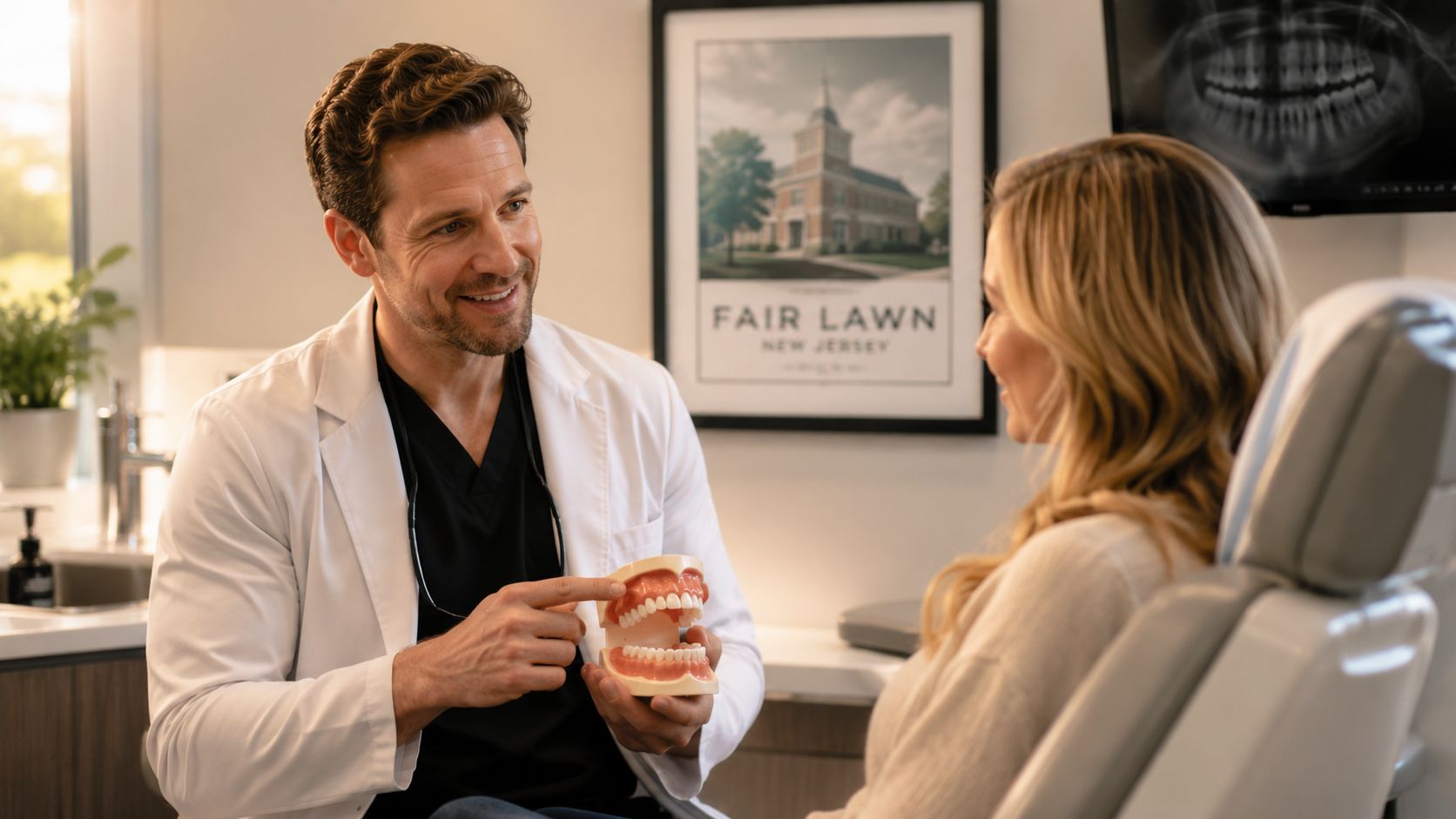
A modern office can support that experience. So can technology, careful planning, and a team that explains things in plain language. But compassion is what often changes the story for an anxious patient. It's the pause before treatment begins. It's being told what's happening before it happens. It's having your fear treated as important, not inconvenient.
People searching for a dentist near me, cosmetic dentist near me, or emergency dentist aren't only looking for credentials. They're often looking for relief, clarity, and a place where they can finally move forward with care they've delayed.
That may mean:
The right dental office doesn't just treat teeth. It helps patients feel steady enough to accept treatment.
When care feels personal and respectful, sedation becomes part of a larger promise. Not just comfort during the procedure, but a better overall experience from the first phone call through recovery at home.
A few questions usually remain, even after you understand the basics.
Usually, no. Many forms of dental sedation are designed to help you feel very relaxed while still able to respond to simple directions. That's one reason patients often do well with it. The goal is comfort, not necessarily total unconsciousness.
If your treatment plan calls for a deeper level of sedation, that will be discussed in advance so you know exactly what kind of experience to expect.
The cost depends on the type of sedation used, how long the procedure takes, and the treatment being performed. Insurance coverage also varies by plan and by whether sedation is considered medically or procedurally necessary.
The most useful next step is to ask for a personalized estimate before treatment. A good consultation should make the financial side feel as clear as the clinical side.
This is one of the most important questions a parent can ask. In general, most children recover quickly after sedation. Still, parents deserve honest guidance about the recovery window, not vague reassurance.
The NCBI StatPearls resource on pediatric procedural sedation is associated with the point that 18% of children under age 7 in a 2025 meta-analysis showed temporary attention deficits or emotional lability for up to 3 days after certain oral sedatives. That doesn't mean lasting harm, and the same guidance notes that most children recover quickly, but it does mean parents should know what temporary changes can look like and when to check in.
A transparent office will explain expected behavior after sedation, tell you what is normal, and give you a clear way to follow up if your child seems unusually emotional, sleepy, or out of routine.
You're not the first person, and you won't be judged for it. Anxiety, busy schedules, finances, embarrassment, and previous bad experiences all make people postpone care. What matters now is taking the next small step.
That step might be a new patient exam, a second opinion, a consultation for a painful tooth, or a conversation about options for implants, cosmetic dentistry, or restorative treatment. You don't need to solve everything at once. You just need a place to start.
If you've been searching for a dentist in Fair Lawn, NJ who offers calm, clearly explained care, this is a good time to schedule a consultation and talk through your options face to face.
If dental fear has kept you from getting the care you need, contact Dental Professionals of Fair Lawn to request a consultation. You can discuss sedation options, ask questions about treatment and recovery, and get a clear plan for moving forward comfortably in Fair Lawn, Ridgewood, or Glen Rock.