How Much Do Sealants Cost Without Insurance? 2026 Guide
Discover how much do sealants cost without insurance in NJ. Our 2026 guide covers price per tooth, factors, and ways to save at our Fair Lawn dentist office.
Discover how much do sealants cost without insurance in NJ. Our 2026 guide covers price per tooth, factors, and ways to save at our Fair Lawn dentist office.
Dental sealants without insurance usually cost $30 to $60 per tooth, which makes them one of the more affordable preventive treatments in dentistry. For most families, that upfront cost is far easier to manage than paying for a filling later.
If you're reading this after hearing that your child “should get sealants,” you're probably asking the same question most parents ask in the chair. How much is this going to cost me if I don't have dental insurance? That concern is completely reasonable, especially when you're trying to budget for more than one child, plus cleanings and exams, and all the other everyday expenses that come with family life in Fair Lawn, Ridgewood, and Glen Rock.
Parents often expect sealants to be expensive because anything done at the dentist can feel like it might turn into a large bill. In reality, sealants are usually recommended because they are a simpler, lower-cost way to protect the grooves of back teeth before decay starts. That's an important distinction. You're not paying for repair. You're paying to help avoid repair.
For families searching for a dentist near me, a dentist in Fair Lawn, NJ, or even broader services like emergency dentist, tooth extraction, Invisalign, Six Month Smiles, cosmetic dentist near me, or dental implants near me, preventive care is often what keeps those more involved treatments from becoming urgent. Sealants are a good example of that. They don't replace brushing, flossing, cleaning and exams, or dental x-rays, but they can make cavity-prone molars easier to protect.
A parent comes in for a routine checkup, hears that the back adult teeth have erupted, and then has to make a quick decision about sealants. The first concern is usually simple. What will this cost without insurance?
That question deserves a straight answer from a local office, not a vague national estimate with no context. Families in Fair Lawn, Ridgewood, and Glen Rock usually want to know what they may be asked to pay here, how fees are typically structured, and whether there is a sensible way to fit preventive care into the family budget.
The most useful place to start is the fee per tooth and the number of molars that need treatment. Some children only need sealants on newly erupted first molars. Others may be candidates for additional back teeth as they come in. That difference changes the total more than any broad average ever will.
Self-pay pricing for sealants is often quoted by tooth count. In practical terms, parents should expect the estimate to reflect how many cavity-prone molars are being sealed, whether those teeth are fully erupted, and whether the visit is combined with other preventive services already due.
That is why I encourage parents to ask for two things right away. Ask which teeth the dentist recommends sealing, and ask for the fee listed per tooth. A clear breakdown helps you compare options, plan timing, and avoid surprises at checkout.
Practical rule: Ask for the estimate by tooth count, not just a single total for the visit.
Local cost discussions should be more specific than broad internet averages. In Bergen County, the final out-of-pocket amount can depend on the office fee schedule, the child's age and eruption pattern, and whether the appointment includes an exam, cleaning, or dental x-rays on the same day.
Parents also want to know whether sealants are worth paying for when money is tight. In many cases, they are. A sealant is a relatively small preventive expense compared with the cost and time involved in treating a cavity after decay starts in the deep grooves of a molar.
That trade-off matters for busy families. A short preventive visit now can reduce the chance of needing a filling appointment later, along with numbness, drilling, and a higher bill.
A parent in Fair Lawn often calls with the same practical question: “What will this cost me if I'm paying myself?” The clearest answer starts with the fee for each tooth, because that is the part of the estimate you can use to budget.
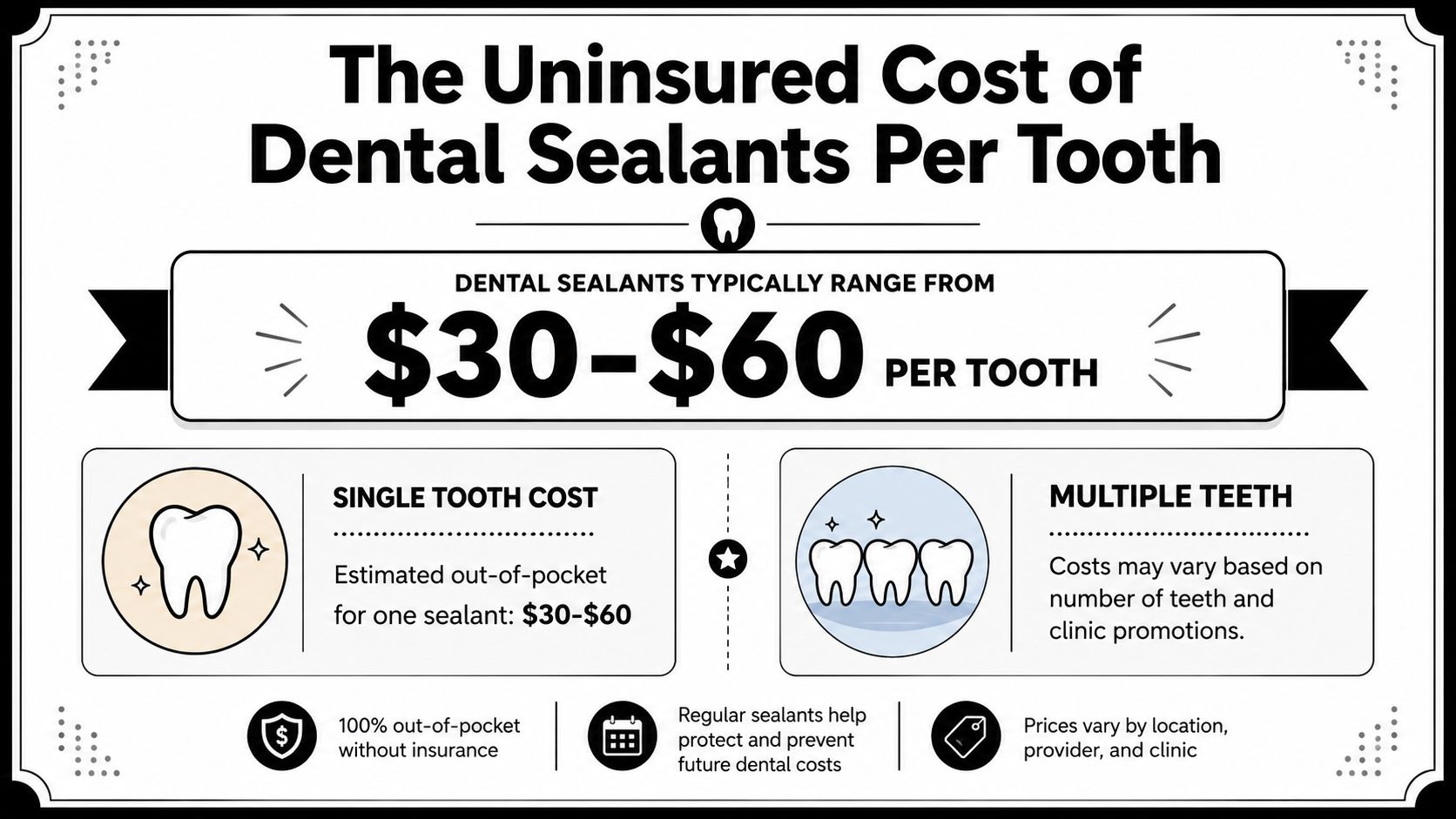
Without insurance, sealants are often billed per tooth. Many offices quote a range of about $30 to $60 per tooth. In some areas, fees run higher. For example, MetLife's oral health library on dental sealants references an average of about $66 per tooth, which helps explain why Bergen County parents may hear numbers above the low end of national pricing.
For a family trying to plan ahead, the math is simple once the office tells you which teeth are ready now.
| Situation | Typical self-pay estimate |
|---|---|
| 1 tooth | $30 to $60 |
| 4 molars | $120 to $240 |
| 6 molars | $180 to $360 |
That table gives you a starting point, not a final quote. A child may only need the first permanent molars sealed at one visit, then return later when other back teeth have erupted enough to treat properly. In real life, that timing matters just as much as the posted fee.
Parents in Fair Lawn, Ridgewood, and Glen Rock should expect local fees to reflect local practice costs. Office rent, staffing, scheduling time, and the details of the visit all affect the final number. A practice that takes time to evaluate whether a tooth is ready to seal may not look identical on price to an office giving a fast bundled total.
That does not mean one office is automatically better than another.
What matters is whether the recommendation is specific, the estimate is clear, and the child is having the right teeth treated at the right time. I always tell parents to be cautious with vague totals. A low upfront quote can become less appealing if you still do not know how many teeth are included.
Before you approve treatment, ask for direct answers to these points:
For families without insurance, this kind of transparency matters. It makes it easier to compare quotes, schedule care in stages if needed, and protect the teeth most likely to trap food and plaque before a small prevention problem turns into a filling.
A parent in Fair Lawn may call two offices and hear two different prices for the same preventive service. That usually comes down to how the visit is structured, how many teeth are ready to treat, and what it costs to run a dental office in this area.

The biggest driver is still the number of teeth being sealed, but that is not the whole story. In real practice, the final fee also reflects chair time, moisture control, the child's age and cooperation, and whether the teeth are fully erupted and ready to seal properly. The American Dental Association's patient guidance on dental sealants also explains that sealants are painted onto the chewing surfaces of back teeth, which means the fee is tied more to professional time and technique than to a large amount of material.
A clear estimate should account for a few practical factors:
Parents sometimes assume a higher fee means a fancier product. Usually, that is not what is happening.
In most general practices, the sealant material is a small part of the cost. The larger expenses are the trained team member placing it, the dentist checking that the tooth is the right candidate, the equipment already in the room, and the time set aside to do the procedure carefully. The National Institute of Dental and Craniofacial Research describes sealants as a thin coating placed in the pits and fissures of molars to help prevent decay, which supports what we see every day in practice. The product is straightforward. Proper placement is what matters most (NIDCR explanation of dental sealants).
That is why a very low quote is not always the best value. If the tooth is not isolated well, or if a partially erupted molar is sealed too early, the sealant may not last as well as it should.
The most helpful comparison is not just the dollar amount. It is whether the office explains which teeth are being treated, why those teeth are good candidates now, and what the full self-pay cost will be in this community.
For families in Fair Lawn, Ridgewood, and Glen Rock, honest local guidance matters more than a broad national average. A clear per-tooth fee, a realistic treatment timeline, and a plan for later-erupting molars usually tell you more than a vague package price ever will.
For a child, sealants are usually one of the easiest procedures in the office. Parents often expect something more involved, but the visit is usually quick, gentle, and very straightforward.
To make the process easier to picture, this visual shows the basic flow:
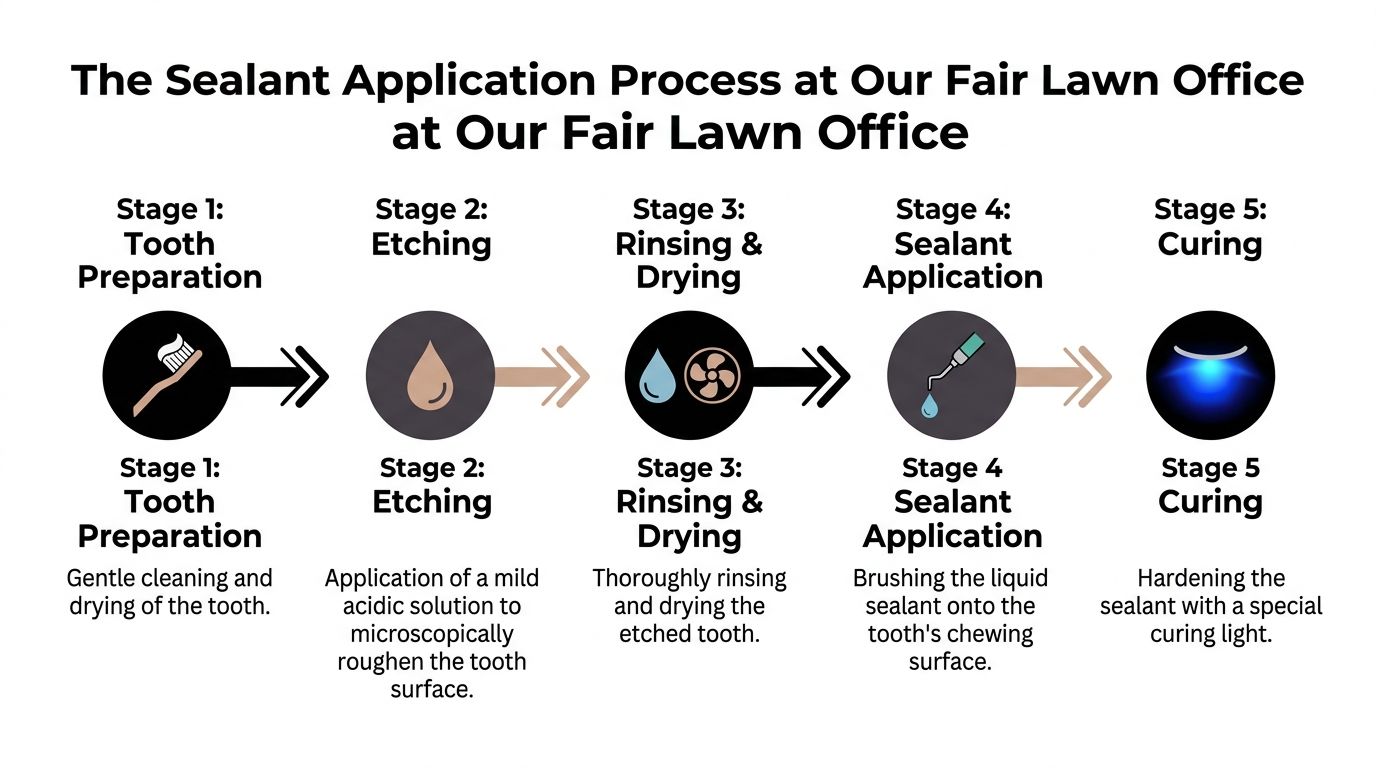
The biggest relief for many families is this. Sealants are preventive. That means there usually isn't drilling, shots, or the kind of appointment children tend to worry about when they hear the word “dental treatment.”
Most children stay comfortable throughout the visit because the steps are simple and the tooth stays intact. The goal is to protect the grooves of the molar, not to remove tooth structure.
Here is the usual sequence:
Parents who want a closer look at the treatment can review the practice's sealants service page.
Most kids don't need much preparation beyond knowing the visit will be simple. It helps to describe it in child-friendly language. The dentist cleans the tooth, paints on a protective coating, and uses a blue light to make it hard.
This short video gives a helpful overview of what that kind of visit looks like in practice:
“For nervous children, calm expectations help more than long explanations.”
A smooth appointment isn't only about comfort. It also helps parents follow through with preventive care before decay starts. That's especially valuable for children who already need regular cleaning and exams, cavity monitoring, or periodic dental x-rays as their permanent teeth come in.
For anxious patients, comfort-focused care can make a real difference. Families who are also exploring broader services such as restorative dentistry, cosmetic care, or even future orthodontic treatment usually appreciate starting with something easy and confidence-building.
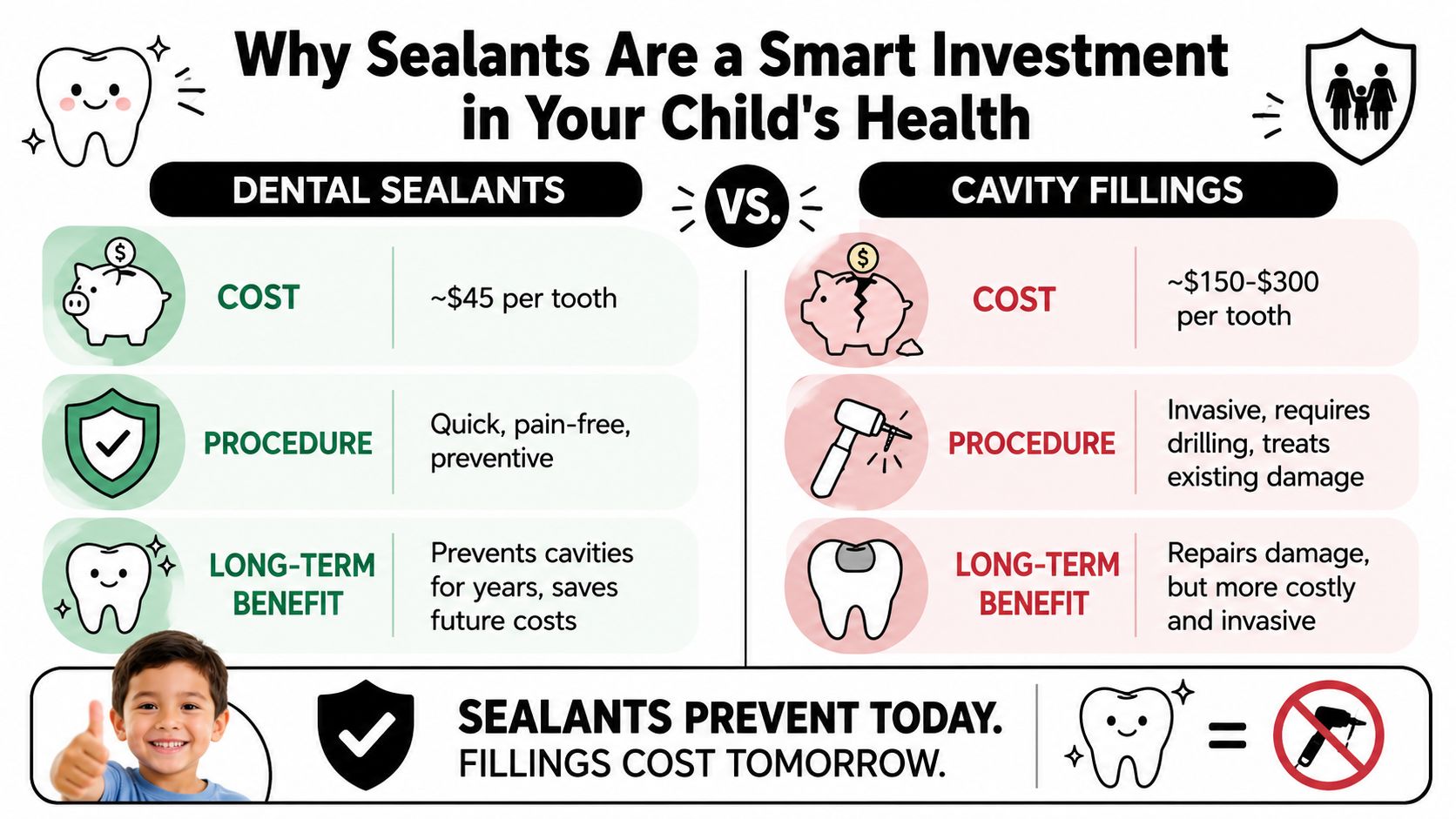
A common conversation in our Fair Lawn office starts with a parent asking whether sealants are really worth paying for out of pocket. My answer is usually simple. Preventing decay on a healthy molar is easier, less expensive, and better for your child than treating a cavity after food and bacteria settle into those deep grooves.
Sealants matter most on back teeth because those surfaces are hard for children to clean well, even with good brushing habits. The Centers for Disease Control and Prevention explains that sealants can prevent many cavities in the chewing surfaces of permanent molars, which is exactly why dentists recommend them early for cavity-prone children (CDC guidance on dental sealants for children).
The trade-off is not sealant versus nothing. It is a modest preventive fee today versus the cost of repair later if decay starts.
A filling often means more than one line item on a family budget. There is the restorative visit itself, possible x-rays, numbness, time away from school or work, and the reality that a filled tooth may need additional treatment over the years. Sealants help parents avoid some of that cycle on the teeth that get cavities most often.
| Treatment | Typical purpose | Budget impact for families without insurance |
|---|---|---|
| Sealant | Protect a healthy chewing surface before decay starts | Usually lower and easier to plan for |
| Composite filling | Repair a tooth after a cavity forms | Usually higher per tooth and less predictable |
That difference matters more in families with two or three children, where one delayed preventive decision can turn into several restorative appointments.
Parents usually ask about price first. They also care about how treatment affects their child.
Sealants can reduce the chance that a child will need drilling on a new permanent molar. That means less anxiety, less loss of healthy tooth structure, and fewer early negative dental experiences. Those are real benefits, especially for children who are already nervous in the chair.
A practical way to look at it: sealants are often one of the least expensive ways to protect a child from a more involved dental bill.
Families in Fair Lawn, Ridgewood, and Glen Rock usually do not need another generic national average. They need clear guidance on what makes sense for their child and what they would pay in this area.
That is why I recommend asking for a written estimate before the visit and reviewing available payment and financing options for preventive dental care if cost is the main concern. Parents who are comfortable discussing fees can also learn how to negotiate medical bills effectively when paying out of pocket for healthcare. In dentistry, the same principle applies. Ask questions early, compare prevention with likely repair costs, and make the decision while the tooth is still healthy.
Sealants are not a substitute for brushing, flossing, fluoride, or regular checkups. They are one practical layer of protection for the teeth that need it most. For many children, that makes them a smart investment in long-term oral health.
The hardest part for many families isn't deciding whether sealants are useful. It's figuring out how to pay for them at the right time, especially if you're also covering routine dental care for siblings.

Generic online averages often fall short. As discussed in a guide to dental sealant costs and payment transparency, many third-party pages don't explain how a self-pay estimate is built, how bundled pricing works, or how families should budget for multiple children in fee-for-service markets like New Jersey.
The best approach is practical, not theoretical. Ask for the actual estimate you would pay at that visit.
A useful financial conversation should answer questions like these:
Families who want to explore payment arrangements can review the office's patient financing options.
Bundling can be helpful when it makes clinical sense. If a child is already due for a checkup, combining sealants with preventive care may save time and make the overall treatment plan easier to follow.
Financing can also be the right move. Parents sometimes assume financing is only for major restorative dentistry, dental implants, or cosmetic dentist near me searches that lead to veneers and whitening. It can also help with preventive services when a family is paying out of pocket.
If you're trying to get more comfortable discussing self-pay medical expenses in general, this guide on how to negotiate medical bills effectively offers useful ideas on asking the right questions and understanding itemized costs.
Clear pricing doesn't just lower stress. It helps families say yes to care before a small issue turns into a bigger one.
Waiting until decay appears usually costs more. So does approving treatment without understanding the estimate. Parents do better when they slow the conversation down enough to ask how many teeth are included, whether future erupting molars will be billed separately, and what payment options are available now.
That kind of transparency is especially important for families balancing preventive care with other needs such as new patient exams, teeth whitening for adults, restorative dentistry, or unexpected emergency dentist visits.
Families in Fair Lawn, Ridgewood, and Glen Rock don't need vague answers about children's dental care. They need honest guidance, a sensible treatment plan, and a clear explanation of cost. Sealants fit that standard well because they are simple, preventive, and often easier to budget for than restorative treatment after decay starts.
For parents searching for a dentist near me or a dentist in Fair Lawn, NJ, that kind of clarity matters. The same is true for adults looking into cosmetic dentistry, teeth whitening, dental implants near me, Invisalign, Six Month Smiles, or urgent care from an emergency dentist. Good dentistry starts with trust, and trust starts with straightforward communication.
Preventive treatment doesn't usually feel dramatic. It isn't as visible as a smile makeover or as urgent as a tooth extraction. But it often has the biggest long-term effect on comfort, cost, and oral health.
Sealants are a strong example of that mindset. They help protect vulnerable molars during the years when cavities often begin. They also support the broader goals families already care about, including fewer dental surprises, healthier checkups, and a more confident relationship with dental visits.
If your child has newly erupted molars, has deep grooves on back teeth, or has been told sealants may be a good idea, it's worth asking for an estimate and a clear recommendation. If you're a new patient family, that visit can also be a good time to talk about cleaning and exams, dental x-rays, restorative dentistry, cosmetic options, or future orthodontic planning.
A thoughtful consultation should leave you with answers, not pressure. You should know which teeth are being considered, why they matter, and what the out-of-pocket cost is likely to be.
If you have questions about sealants, preventive care, cosmetic dentistry, restorative treatment, or you're looking for a compassionate Dental Professionals of Fair Lawn team for your family, schedule a visit to discuss your options and get a clear, personalized estimate.