Hidden Tooth Decay: Your Fair Lawn Dentist Explains
Worried about hidden tooth decay? Our Fair Lawn dentists use advanced diagnostics to find and treat cavities you can't see. Schedule your exam today.
Worried about hidden tooth decay? Our Fair Lawn dentists use advanced diagnostics to find and treat cavities you can't see. Schedule your exam today.
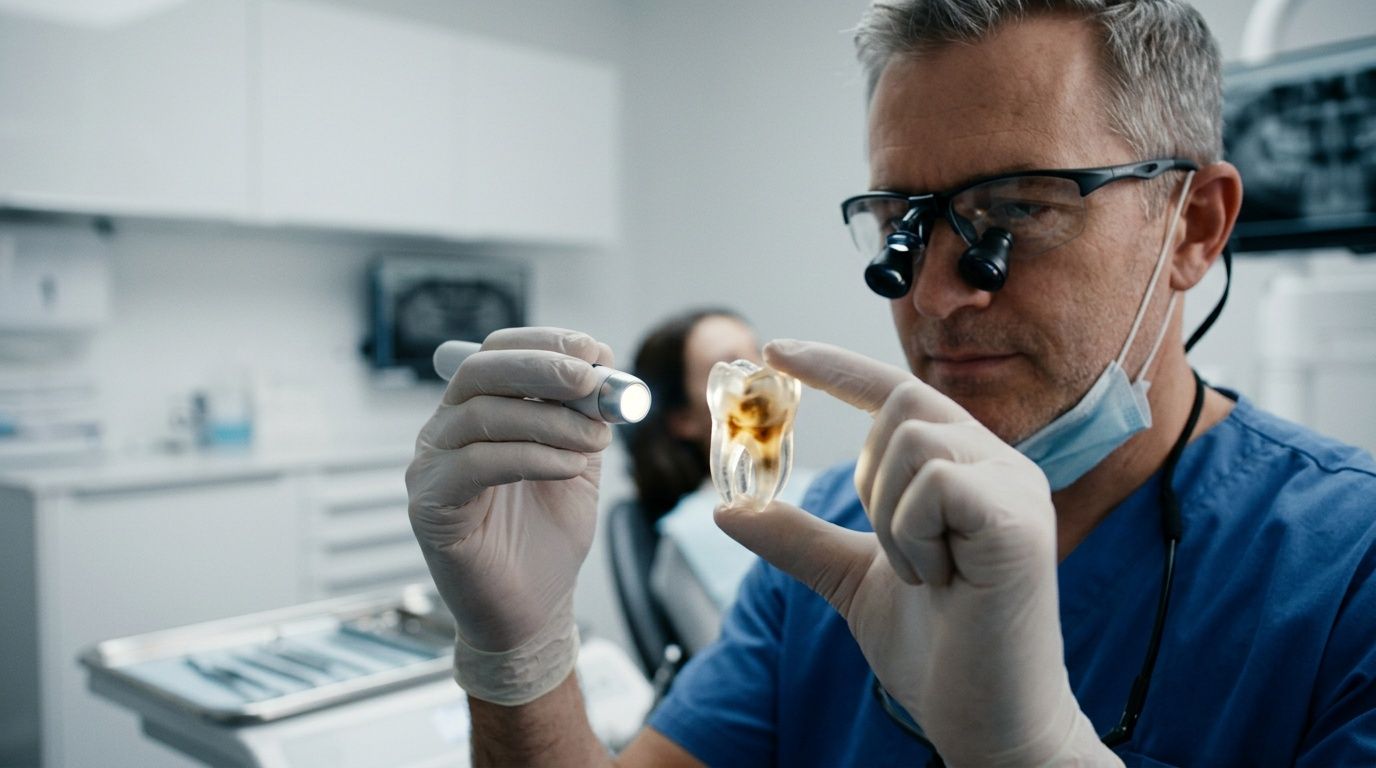
A tooth can hurt, feel sensitive, or seem “off” even when you can’t see a hole in the mirror. That uncertainty is what makes hidden tooth decay so stressful. You know something isn’t right, but you can’t tell whether it’s minor sensitivity, a cracked tooth, or a cavity growing where your toothbrush and your eyes can’t reach.
That kind of worry is common in family dentistry. It’s also one reason regular exams matter so much. Untreated dental caries affects 2.5 billion people globally with permanent teeth decay, and 25.9% of adults ages 20 to 44 have untreated cavities, according to published oral health figures summarized here. Hidden problems are part of why decay can stay in place longer than people expect.
The good news is that hidden tooth decay is manageable. Modern dentistry gives us ways to find it early, confirm what’s really happening, and treat it before it turns into a bigger repair. If you live in Fair Lawn, Ridgewood, or Glen Rock, understanding how this works can replace a lot of fear with clarity.
A patient might say, “It only hurts when I chew on one side,” or “Cold water bothers this tooth, but I don’t see anything wrong.” That’s often the first sign of hidden tooth decay. The tooth may look fine on the outside while the damage is starting between teeth, under the gumline, or under an older filling or crown.
That disconnect is what makes hidden decay so unsettling. People often expect a cavity to be obvious. They expect a dark spot, a visible chip, or constant pain. Hidden decay doesn’t always work that way.
When you can’t identify the source of discomfort, your mind fills in the blanks. You may worry that the problem is severe, or you may talk yourself into waiting because the tooth “looks normal.” Both reactions are understandable.
A dentist’s job in that moment isn’t just to find decay. It’s to remove the guesswork.
Hidden tooth decay often feels more alarming because patients can sense a problem before they can see one.
In a careful dental exam, we don’t rely on appearance alone. We look at symptoms, bite pressure, contact points between teeth, past dental work, and images that show what’s happening below the surface. That’s especially important for children, teens, and adults who are trying to stay ahead of a bigger restorative problem.
If you’ve been searching for a dentist near me, an emergency dentist, or a dentist in Fair Lawn, NJ because of a confusing toothache, hidden decay is one possibility worth ruling out. The same is true if you’ve had cosmetic dentistry, older fillings, or sensitivity around a back molar that hasn’t gone away.
You don’t need to decide on treatment before you know the diagnosis. Start with an exam. Once the source is clear, the next step is usually much less overwhelming than patients expect. Sometimes the answer is a small filling. Sometimes it’s a crown, root canal therapy, or a plan for restorative dentistry. The relief often starts when the mystery ends.
Think of hidden tooth decay like an iceberg. The part you can see is small. The larger part sits below the surface. With teeth, the visible surface may look intact while decay is developing in places that are hard to inspect at home.

This isn’t rare enough to ignore. A significant study found that 15% of teeth that appeared clinically sound, with no visible signs of enamel decay, had hidden dentin caries lesions that were only detectable on bitewing radiographs, as reported in the 1992 study indexed on PubMed.
This is one of the most common forms of hidden decay. It starts in the contact area where two teeth touch. Those tight spaces trap plaque and food, and they’re difficult to clean fully with brushing alone.
You may not notice anything at first. Later, you might feel sensitivity when flossing, chewing, or drinking something cold.
Subgingival decay forms lower on the tooth, near or below the gums. Because the area is harder to see, irritation there can be mistaken for “just gum trouble” when decay is involved too.
This kind of decay can also overlap with root exposure, plaque buildup, or an area that’s difficult to clean because of tooth position.
A tooth that already has a filling or crown isn’t immune to decay. Bacteria can collect around the edges of a restoration. If the seal is compromised or plaque sits there regularly, a new cavity can start underneath or around it.
That’s one reason old dental work sometimes needs monitoring even when it still looks acceptable from the outside.
Molars have natural pits and grooves. Some are narrow enough that even good brushing doesn’t clean them well. Decay can begin in those fissures before there’s an obvious hole.
Children and teens are especially vulnerable in newly erupted back teeth, but adults can have this problem too.
Patients who’ve invested in cosmetic dentistry often assume the covered tooth is fully protected. That isn’t always the case. Hidden decay can still form at the margins of veneers or crowns if plaque collects there over time. A clinical patient education article on hidden cavities under restorations notes that poor hygiene at those margins can allow bacteria to affect the underlying tooth structure, often without symptoms until the problem is advanced.
Practical rule: If a tooth hurts, catches floss, or feels different, don’t assume it’s “nothing” just because the surface looks fine.
Some hidden cavities announce themselves early. Others stay quiet until they’re larger. That’s why symptoms are useful clues, not a perfect test.

One of the frustrating parts of hidden tooth decay is that it can develop with very little sensation. A patient may feel nothing until the cavity reaches deeper layers of the tooth.
That’s especially important for anyone with veneers or crowns. As noted earlier, hidden decay at the margins of cosmetic work may progress without obvious symptoms until it’s more advanced.
A short video can help you understand how dentists think about these hidden areas during an exam.
A good rule is simple. If a symptom repeats, don’t wait for it to become severe. A tooth that feels “not quite right” over several days or weeks deserves a professional look.
That applies whether you need a routine exam, a new patient exam, or an emergency dentist visit for sudden pain. In many cases, the earlier the diagnosis, the simpler the treatment.
The biggest problem with hidden decay is that your eyes can’t reliably find it. The biggest advantage of modern dentistry is that we don’t have to rely on eyesight alone.
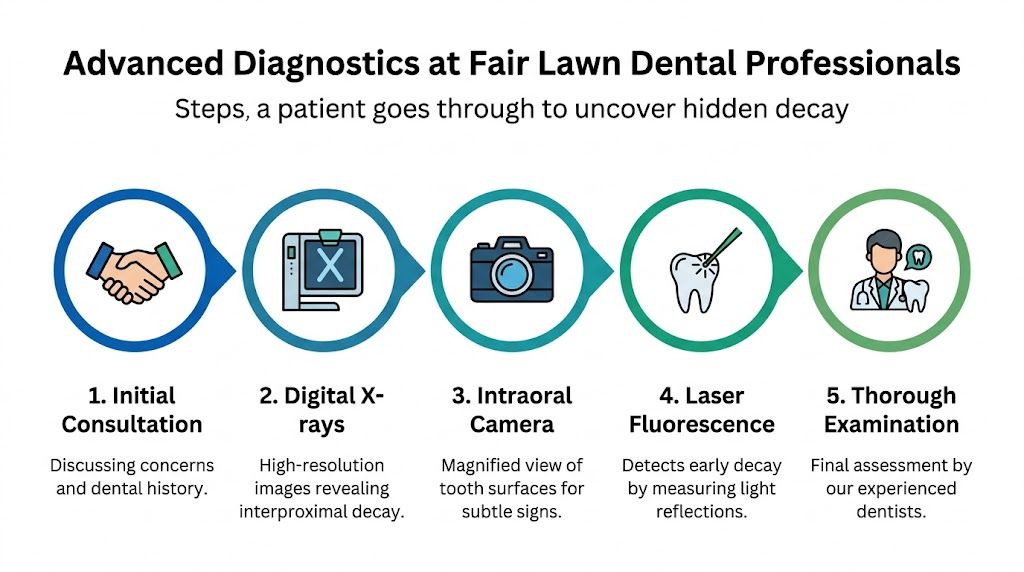
Bitewing X rays are one of the most useful tools for finding decay between teeth. They show the areas where the enamel may still look intact from the outside, but darker changes inside the tooth suggest a cavity is developing.
This is one reason routine oral exams and dental X rays matter even when you’re not in pain. A problem can be present before you can feel it or see it.
Some practices also use laser cavity detection tools such as DIAGNOdent. These devices shine light onto the tooth and measure changes in fluorescence linked to bacterial byproducts and tooth demineralization. According to a clinical overview of hidden cavity detection technology, modern laser fluorescence tools can detect hidden decay with over 90% specificity, helping dentists identify non-cavitated lesions long before they’re visible on a standard image.
That matters for peace of mind as much as diagnosis. If you’re anxious about an unknown problem, a more precise exam can narrow the answer quickly.
An intraoral camera lets patients see what the dentist sees. Magnified images of a suspicious groove, an old filling margin, or a dark area near the gumline can make the conversation much clearer.
Digital scanning, including Itero technology, adds another layer of detail. A scan can document the shape of teeth, monitor changes over time, and help plan restorative or cosmetic treatment if decay has affected a visible area.
No single device replaces a skilled clinical exam. Dentists combine symptoms, bite checks, X rays, visual findings, laser readings, and digital images to build an accurate diagnosis.
The goal of advanced diagnostics isn’t to make treatment more complicated. It’s to make the diagnosis more certain.
That certainty matters whether you’re dealing with a small cavity, a cracked tooth, a failing crown, or a problem that turns out not to be decay at all. For many patients, that’s the moment anxiety starts to drop.
Treatment depends on how early the decay is found and how far it has traveled into the tooth. The best plans preserve as much healthy structure as possible while stopping the decay from moving deeper.
If a dentist finds very early demineralization before a true cavity has opened, treatment may focus on strengthening the tooth surface and improving home care. That can include targeted fluoride and better plaque control in the area.
These are the cases where early diagnosis really helps. Once decay breaks through and creates a defect in the tooth, remineralization alone usually won’t solve it.
When decay has created a cavity, a tooth-colored filling is often the most conservative solution. The dentist removes the damaged portion and restores the shape and function of the tooth with a bonded material that blends naturally.
For hidden decay between teeth, the filling may be small on the outside even if the cavity wasn’t visible at home. Patients are often surprised by that. The repair can still be straightforward.
If hidden decay has removed enough internal tooth structure, a filling may not provide enough support. In that case, a crown may be the better choice to protect the remaining tooth from fracture.
This is common when decay develops under an old filling, under a crown, or in a back tooth that handles a lot of chewing force.

If decay reaches the inner nerve tissue, the tooth may need root canal therapy. That sounds intimidating to many patients, but the purpose is simple. It removes infected or inflamed tissue, cleans the inside of the tooth, and helps preserve the tooth rather than lose it.
After root canal treatment, many teeth also need a crown for strength.
Sometimes hidden decay is discovered late, and the tooth is no longer restorable. In that situation, tooth extraction may be the healthiest option. That doesn’t mean you’re out of choices.
Depending on the tooth and your goals, replacement may include:
If hidden decay affects a front tooth, treatment isn’t just about removing bacteria. It’s also about protecting your smile. That may involve careful restorative dentistry, cosmetic bonding, a crown, or coordination with cosmetic dentist near me services such as veneers or whitening after the tooth is healthy again.
The best treatment is the one that solves the disease first and restores comfort, function, and appearance second.
Many patients delay care because they’re worried about pain, noise, or loss of control. Today’s care is much gentler than people expect. Local anesthesia keeps treatment comfortable, and some patients benefit from sedation dentistry when anxiety is high or more extensive work is needed.
The important part is not guessing. Once hidden decay is identified, your dentist can explain exactly what the tooth needs and what can wait.
A first visit for hidden tooth decay usually feels much calmer than patients expect. Patients often arrive worried about what the dentist will find. They leave relieved that they finally have a clear explanation.

You check in, review your concern, and describe what you’ve been noticing. Maybe it’s sensitivity on the right side. Maybe floss keeps catching near an old filling. Maybe your child says a tooth hurts even though you can’t see a cavity.
From there, the exam becomes focused and practical. The dentist reviews the area, checks the bite, and uses the appropriate imaging or digital tools to look beneath the surface. If you’re anxious, the conversation matters as much as the technology. A good team explains what they’re seeing in plain language and doesn’t rush you.
Practices that invest in comfort tend to remove a lot of the fear before treatment even begins. Clear communication, unrushed explanations, and respect for patient anxiety make a real difference. If you’re interested in the broader thinking behind that approach, this guide on how to improve patient experience gives helpful context on why the details of a healthcare visit matter so much.
For patients in Fair Lawn, Ridgewood, and Glen Rock, that means a visit should feel organized, welcoming, and clear from the front desk to the treatment room.
Some people haven’t seen a dentist in years because the unknown feels overwhelming. Others are comfortable with cleanings but become nervous when they hear words like crown, root canal, or extraction.
That’s where comfort options help. Sedation dentistry, careful numbing, and step by step explanation can turn a stressful appointment into one that feels manageable. For families, that calm environment matters just as much as clinical skill.
You can’t inspect every risky area in your mouth at home, but you can reduce the conditions that let hidden decay start. Prevention works best when it targets the spots where cavities like to hide.
Brushing matters, but hidden decay often begins where bristles don’t clean well. Daily flossing helps disrupt plaque between teeth, especially in the back where contact points are tight.
If flossing is difficult, ask your dentist or hygienist to show you a better technique. Small changes in angle and consistency can make a big difference.
A practical prevention routine often includes:
Orthodontic treatment can help with prevention too. When teeth overlap tightly, plaque can sit in narrow spaces that are hard to reach. That’s one reason some adults and teens find that Invisalign or Six Month Smile treatment improves not only appearance but also daily cleaning access.
Hidden tooth decay often goes unnoticed until symptoms become apparent. The better approach is to assume some areas need professional monitoring even when your mouth feels normal.
If you want fewer dental surprises, keep the small routines consistent and the checkups regular.
That’s the most reliable way to avoid turning a hidden problem into a filling, crown, or more involved restorative treatment later.
Not once a true cavity has formed. Very early enamel changes may sometimes be managed before a hole develops, but established decay doesn’t heal itself. If you wait, the problem usually gets larger and more expensive to repair.
Most patients do well with local anesthesia, and many are surprised by how comfortable treatment feels. If you’re especially nervous, ask about sedation options. Anxiety is common, and dentists see it every day.
Pain isn’t a reliable measure of cavity size. Hidden decay may stay quiet for a while and still worsen underneath the surface. Waiting can limit your conservative treatment options.
Yes. The restoration covers the tooth, but the tooth structure at the edges can still be vulnerable if plaque collects there regularly. That’s why existing dental work still needs routine exams.
They look at the full picture. Symptoms help, but diagnosis usually involves a clinical exam and imaging, sometimes with digital or laser-based tools for more detail.
If extraction is necessary, your dentist can discuss replacement options such as a bridge or dental implants. The right choice depends on your health, the location of the tooth, and your long-term goals.
If you have swelling, significant pain, pain with biting, or a symptom that’s getting worse quickly, don’t put it off. An emergency dentist visit may be the right move.
If you’re dealing with unexplained sensitivity, pain when chewing, or concern about a tooth that looks normal but doesn’t feel right, Dental Professionals of Fair Lawn can help you get answers. Their team serves Fair Lawn, Ridgewood, Glen Rock, and nearby New Jersey communities with modern diagnostics, preventive care, restorative dentistry, cosmetic treatment, Invisalign, dental implants, and patient-comfort options including sedation. Schedule a visit to get clarity, protect your smile, and move forward with confidence.