Fair Lawn: Emergency Dental Care Without Insurance
Find emergency dental care without insurance in Fair Lawn, NJ. Get immediate steps, cost options, and local providers. Call Dental Professionals today.
Find emergency dental care without insurance in Fair Lawn, NJ. Get immediate steps, cost options, and local providers. Call Dental Professionals today.
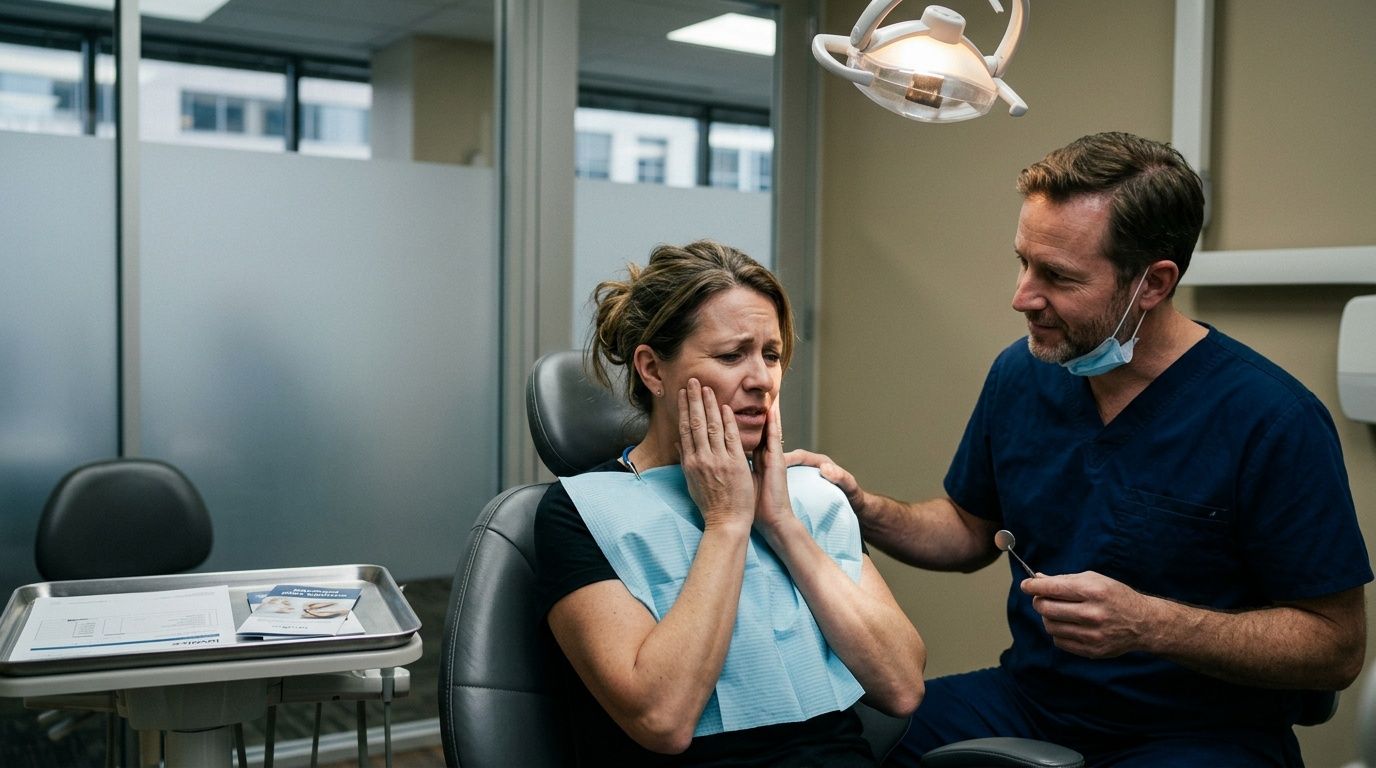
A sudden toothache changes your whole day. One minute you're trying to get through work, school pickup, or dinner in Fair Lawn. The next, you're holding your jaw, searching for an emergency dentist, and wondering how you'll pay for it without insurance.
If that's where you are right now, take a breath. Dental pain feels overwhelming, but it is manageable. The worst move is waiting and hoping it settles down on its own. Problems that start as a cracked filling, an irritated nerve, or a gum infection usually get harder, more painful, and more expensive when you delay.
In these situations, clear thinking matters. You need to know what to do at home, when to call a dentist, when to go to the hospital, and how to get emergency dental care without insurance without putting yourself in a worse financial spot.
It usually starts the same way. You bite down and feel a sharp crack. Or you wake up at 3 a.m. with throbbing pain that won't let you sleep. Then the second panic hits. You don't have dental insurance, and now every option sounds expensive.

That fear is justified. Hospital care for dental pain is often the wrong place to spend your money. According to CareQuest reporting on dental emergency costs, emergency room visits for dental pain cost three times more than a planned visit to a dentist, with an average cost of $749 for a non-hospitalized visit.
Many believe they have two choices. Suffer at home or go to the ER. That's not a good decision tree for a dental problem.
If your issue is a severe toothache, a broken tooth, a lost filling, swelling around a tooth, or pain when biting, your first call should usually be an emergency dentist in Fair Lawn, NJ. A dental office can diagnose the source, take dental X-rays, and give you actual treatment. That may mean a filling, root canal therapy, drainage, or tooth extraction. The ER usually can't do that.
Practical rule: If the problem is coming from a tooth or gums, start with a dentist unless you have trouble breathing, trouble swallowing, severe trauma, or uncontrolled bleeding.
When you're in pain, keep it simple:
If you're in Fair Lawn, Ridgewood, Glen Rock, or nearby, the right move is speed plus a plan. Pain relief matters, but the ultimate goal is stopping the cause.
Before you get to a dentist, you need to calm the pain and keep the situation from getting worse. Home care won't fix the problem, but it can buy you time safely.

Start with a warm salt-water rinse. Use it gently. The point isn't to scrub the area. It's to help reduce irritation and wash away food particles that may be trapped around the tooth or gum.
Use a cold compress on the outside of your face if you have swelling. Cold helps constrict blood vessels and can reduce the pressure that makes dental pain feel intense.
A broken tooth often hurts because air, temperature, or pressure reaches a sensitive inner layer. A lost filling can do the same thing.
Do this right away:
If a sharp edge is cutting your tongue or cheek, cover it carefully with dental wax if you have it. If you don't, just avoid touching the area and get seen quickly.
The goal at home is control, not cure. Keep the area clean, reduce swelling, and stop making the injury worse.
A short visual guide can help if you're trying to make decisions while in pain:
An abscess can feel like intense pressure, swelling, a bad taste, or pain that seems to spread into the jaw. Don't ignore that.
You should not try to pop it, cut it, or press on it. That can push infection into surrounding tissue and make things worse. Rinse gently and get urgent dental care.
People often make painful situations worse with home remedies they found online.
| Avoid this | Why it's a bad idea |
|---|---|
| Putting aspirin on the gum | It can irritate soft tissue |
| Using very hot compresses on the face | It may worsen swelling |
| Chewing “to test it” | It can deepen a crack or trigger severe pain |
| Waiting for the weekend to pass | Small problems often turn into bigger ones |
If you need emergency dental care without insurance, don't let the money question stop your first call. Ask what the office can do today and what can wait. That's how you stay in control.
When pain spikes, people default to the hospital. For true medical emergencies, that's exactly right. For most dental emergencies, it isn't.
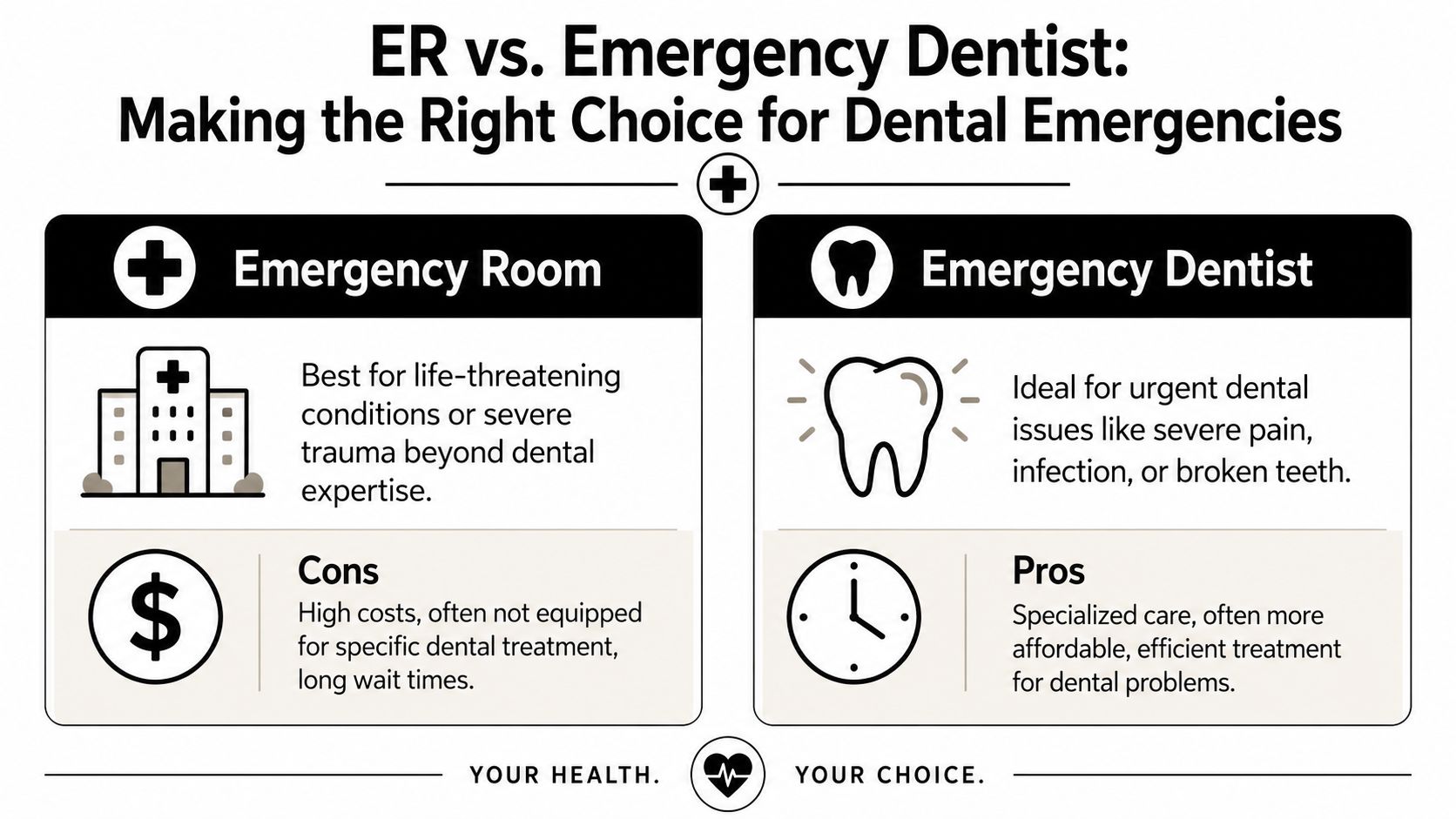
According to the CDC data brief on tooth-related emergency visits, tooth disorders led to an average of 1.94 million emergency department visits each year in the United States during 2020 to 2022. A large share of those visits could have been handled more effectively and more affordably in a dental office because emergency rooms aren't set up for definitive dental treatment.
This is the short list. If you have any of these, don't debate it:
Those are medical emergencies, not just dental emergencies.
This is the list most patients in Fair Lawn are dealing with:
| Symptom | Best first stop |
|---|---|
| Severe toothache | Emergency dentist |
| Broken or cracked tooth | Emergency dentist |
| Lost filling or crown | Emergency dentist |
| Swelling around a tooth | Emergency dentist |
| Gum pain with pressure | Emergency dentist |
| Pain when biting | Emergency dentist |
A dentist can examine the area, take digital X-rays, and treat the source. That's the point people miss. Pain medicine alone doesn't remove decay, stabilize a fracture, or treat a failing restoration.
An ER doctor may help with temporary pain control or medication for infection, but the hospital usually can't provide the dental procedure that ends the crisis. You may leave with instructions to see a dentist anyway.
That means two appointments, more waiting, and more cost.
If you can speak normally, breathe normally, and the issue is centered in your tooth or gums, an emergency dentist is usually the smarter first call.
If you're unsure, use this test. Ask yourself: Do I need a hospital because my overall health is in danger, or do I need a dentist because my tooth is the problem? Most of the time, the answer is the second one.
If you want a more detailed breakdown, read this guide on whether you should go to the ER for tooth pain. It helps you sort out the gray areas quickly.
The right choice saves time, money, and unnecessary frustration. In emergency dental care without insurance, making the right first call matters almost as much as the treatment itself.
If you don't have insurance, you still have options. But not all options are equal when you're in real pain.
Some people start with public clinics, community health centers, or teaching programs. Those resources matter, and for routine needs they can help. The problem is speed. A dental emergency doesn't care that the clinic only accepts walk-ins during a narrow morning window or that the next available appointment isn't soon.

The WebMD guide to low-cost dental care options notes that some public resources have limited walk-in windows such as 8:20 to 11 AM and 1 to 3:30 PM, and waits can stretch for weeks. That's not practical when you have active pain, facial swelling, or a broken front tooth.
People often focus only on sticker price. That's understandable, but it misses the bigger issue. Delayed care can turn a manageable problem into a larger one.
Here is the practical comparison:
| Option | Best for | Main drawback in an emergency |
|---|---|---|
| Community clinic | Budget routine care | Limited hours and delays |
| Dental school | Lower-cost planned treatment | Slower scheduling and longer visits |
| Private practice with financing | Fast urgent treatment | Requires upfront payment discussion |
If you need emergency dental care without insurance in Fair Lawn, NJ, your best option is often a private office that can see you quickly and discuss payment clearly. Not because public resources are bad. Because pain changes the math.
A private office can usually do several things in one place:
Fast treatment is not a luxury when you have swelling, infection, or pain that keeps you from eating or sleeping.
Don't just ask, “How much is it?” Ask better questions.
That last question matters. In many emergencies, the office can focus on the urgent problem first and map out the rest later. That's often the most realistic path for families trying to manage costs in Fair Lawn, Ridgewood, and Glen Rock.
Affordable care isn't just about finding the cheapest line on a spreadsheet. It's about finding the fastest safe path to relief and a plan you can follow.
This is the part many hesitate to inquire about. Ask anyway. Cost doesn't get easier by avoiding it.
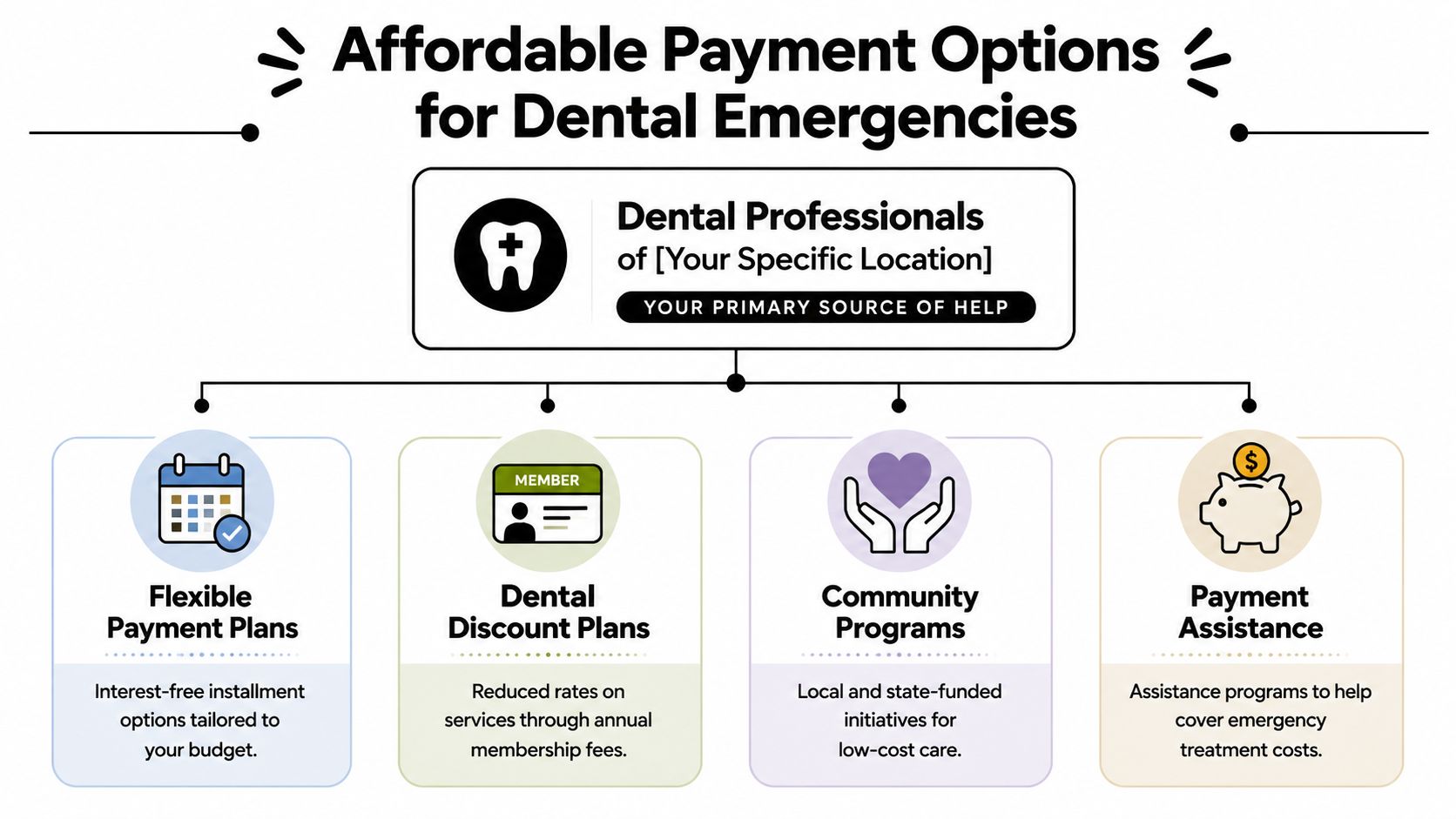
The good news is that uninsured patients often move forward with treatment when a practice gives them real options. According to data on emergency treatment acceptance and payment options, treatment acceptance during emergency dental visits is approximately 93.3% when patients are presented with viable payment options.
You need the diagnosis before you can make a smart financial decision. An emergency exam tells you what is urgent, what can wait, and whether you're dealing with something simple or something that needs immediate treatment.
That conversation changes everything. Instead of thinking, “I can't afford dental work,” you can ask the right question, which is, “What do I need to do today to get out of pain safely?”
Not every office handles payment the same way, but these are the options worth asking about first.
Third-party financing
Many offices work with financing companies such as CareCredit or Sunbit. These programs can spread the cost over time, which is often the difference between immediate care and delaying treatment.
In-house membership plans
Some practices offer savings plans for uninsured patients. These plans can reduce the cost of exams, dental X-rays, and treatment. They also help with future cleanings and exams, which is how you reduce the chance of another emergency.
Phased treatment
This is one of the smartest options. Handle the urgent issue first. If you need additional restorative dentistry later, the office can map out that next step in a way that fits your budget.
Transparent new-patient pricing
Some offices offer reduced-cost entry points for uninsured patients so they can get diagnosed quickly and make a decision.
A calm financial conversation is part of good emergency care.
Clear fees reduce panic. When patients know the diagnosis and the payment path, they make better decisions.
A practical next step is reading this guide on how much a dentist visit costs without insurance. It helps you think through the exam, X-rays, treatment planning, and follow-up costs in plain language.
Don't judge the entire situation by the cost of one procedure you found online. You don't know what treatment you need until a dentist examines you. A lost filling, a cracked cusp, an abscess, and a deep cavity can all feel like “tooth pain,” but they don't lead to the same treatment plan.
And don't wait because you're embarrassed about the money conversation. Dental teams hear this every day. Say it clearly: “I don't have insurance. I need to know the most important treatment first and what payment options you have.”
That's not awkward. That's responsible.
When you call with a dental emergency, the first thing you need is a calm voice and a clear next step. You should expect both.
The front desk should ask what happened, where the pain is, whether there's swelling, and whether you're having trouble breathing or swallowing. That quick phone triage matters. It helps the team decide whether you need an emergency dental appointment or immediate hospital care.
At the visit, the dentist starts with the basics. Where does it hurt? When did it start? What makes it worse? Then the clinical team takes the images needed to see the issue. In many emergencies, that means digital X-rays and a focused exam.
From there, you should get a straightforward explanation in plain English. Not jargon. Not vague promises. You need to know whether the issue is decay, infection, a fracture, a failed crown, or something else entirely.
A typical emergency treatment discussion may include:
This part matters. You should not feel blindsided.
A well-run office explains the diagnosis, the immediate treatment options, and the costs before doing the work whenever the situation allows. If you're anxious about payment processing, tools like One For All Medical Billing for payments show the kind of systems many healthcare practices use to make billing and payment handling more organized and easier for patients to understand.
One of the biggest failures in emergency care is fragmentation. A patient goes to one place for pain relief, gets told to call somewhere else for the actual treatment, and then life gets in the way.
Research on emergency dental referrals found that only 31% of 247 patients followed up for definitive treatment, and 75% of failed referrals were unreachable by telephone in the week after the emergency visit, according to this study on emergency dental referral follow-up. That's exactly why continuity matters. When the same office handles the emergency exam, treatment plan, and next visit, patients are far more likely to finish care.
Good emergency dentistry doesn't stop when the pain drops. It includes a plan for what happens next.
Many patients aren't just worried about cost. They're worried about fear, embarrassment, or the memory of a bad dental experience. That's real. A modern office should address that directly with a patient-centered approach, clear explanations, and, when appropriate, sedation dentistry for anxious patients.
If you're in pain right now, you don't need perfection. You need a competent team, a diagnosis, and a practical path forward. That's what a proper emergency dental visit should give you.
If you need Dental Professionals of Fair Lawn for emergency dental care without insurance, call now and explain exactly what's happening. The team can help you sort out whether you need urgent dental treatment, what your next step should be, and how to move forward with a clear financial plan. If you're in Fair Lawn, Ridgewood, Glen Rock, or a nearby New Jersey community, don't wait for the pain to get worse. Get examined, get answers, and get relief.